
Reviewed · HIKING & NATIONAL PARKS
Bukhansan National Park- The Summit Course
Seoul’s best mountain day is a serious workout. Bukhansan’s Baek-un-dae peak reaches 836 meters, making it the highest point in Seoul, yet the hike begins close enough to the city for a half-day outing. I like the efficient route, which reaches the summit in about four hours instead of the usual six, and I like having guide Koa handle the route, pace, and safety on a mountain where rescues are common.
The optional tofu lunch is another strong point. It adds a genuine local meal rather than a rushed snack, and the restaurant can accommodate meat eaters, vegetarians, and vegans. The catch is the difficulty: a 600-meter climb in only 2.1 kilometers is steep, rocky, and tiring, while the final rope-assisted section can unsettle anyone with a fear of heights.
In This Review
- Key Points Before You Book
- Why Bukhansan Makes a Good Seoul Day Trip
- Meeting Koa at Bukhansan Ui Station
- The First Climb: 600 Meters in 2.1 Kilometers
- Baek-un-dae and the Rope-Assisted Finish
- Views, Pace, and the Group Experience
- Lunch: Handmade Tofu After the Summit
- What the $67 Price Actually Covers
- Who Will Enjoy This Hike Most
- Practical Preparation for the Morning
- Should You Book Bukhansan’s Summit Course?
- FAQ
- Where does the Bukhansan summit hike begin?
- What time does the group leave?
- How long does the activity last?
- How high is the summit?
- How difficult is the climb?
- Can I skip the rope-assisted section?
- Is lunch included?
Key Points Before You Book
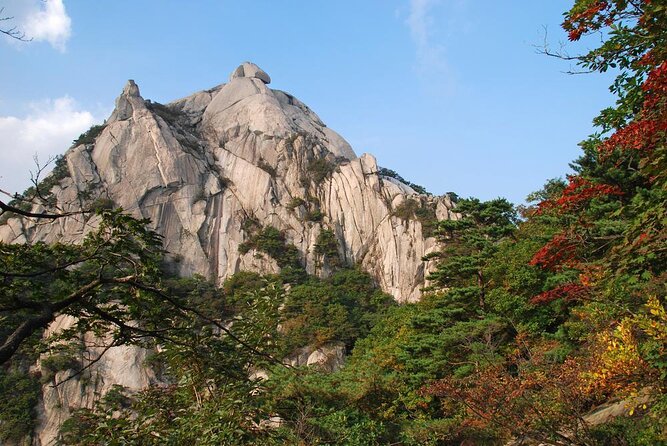
- 836-meter Baek-un-dae summit: This is the highest peak in Seoul, with a real mountain finish rather than a simple park walk.
- A steep 2.1-kilometer ascent: You gain about 600 meters, roughly like climbing 200 floors of stairs.
- Rope-assisted summit section: The final 20 to 30 minutes include exposed-feeling, 25 to 45-degree climbing with ropes.
- Guide Koa’s biggest strength: He keeps the pace moving, gives climbing tips, remembers names, and focuses on group safety.
- Optional handmade tofu meal: Lunch costs about 9,000 to 15,000 KRW and may change how you think about tofu.
- Early start matters: Meet outside Exit 2 at Bukhansan Ui Station. The group leaves at 8:15 am and waits only 15 minutes.
Why Bukhansan Makes a Good Seoul Day Trip
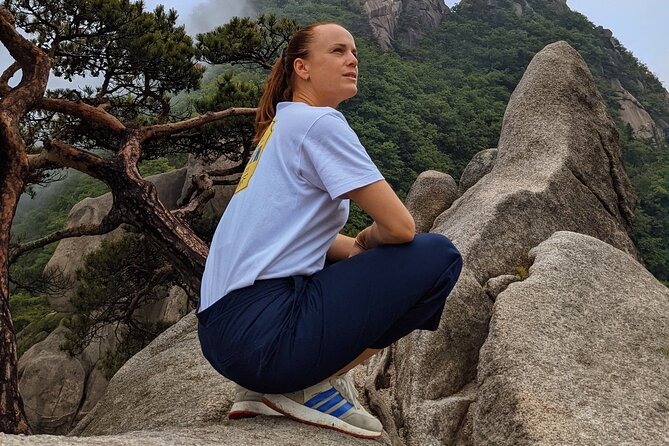
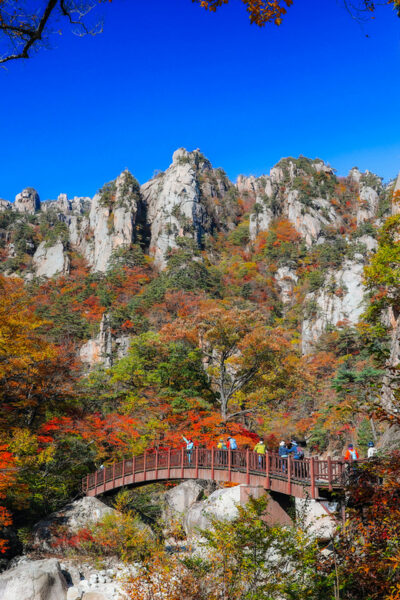
Bukhansan National Park sits on the boundary of Seoul and Gyeonggi Province, so you can trade city streets for granite slopes without giving up a full day. That location is the main appeal. You get a proper mountain outing, then return to the same meeting point after about 4.5 hours.
The summit course is not built around a long scenic stroll. It is designed to get you up and down efficiently. The route saves time by focusing on the direct climb to Baek-un-dae, then returning down the same general way. That makes the experience practical for a busy Seoul schedule, but it also means the climb is concentrated and demanding.
I would not call this a casual hike. The description of a 600-meter gain over 2.1 kilometers tells you more than the word moderate ever could. You will spend much of the uphill section on a sustained climb, with little chance to settle into an easy rhythm.
The reward is clear: you reach the highest peak in Seoul under your own power. That gives the day a satisfying goal, and the final summit section provides the memorable drama many people want from a mountain hike.
More Hiking Trips in Seoul
- Private Hiking tour to Bukhansan Peak(Baegundae: 836.5m) with Mountain Expert
★ 5.0 · 113 reviews - Bukhansan National Park: The Summit Course
★ 5.0 · 53 reviews - Private Hiking to Bukhansan & Korean Style Spa(Include Lunch)
★ 5.0 · 32 reviews
Meeting Koa at Bukhansan Ui Station
The meeting point is outside Exit 2 of Bukhansan Ui Station. This detail deserves attention because Bukhansan has more than one station with a similar name. Do not confuse Bukhansan Ui with Bukhansan Bogungmun Station.
You should study your route on Naver Map the night before and leave early. The group leaves sharply at 8:15 am, and the waiting time for late arrivals is limited to 15 minutes. That is reasonable for a mountain outing, but it leaves little room for a wrong train, a missed exit, or a slow start.
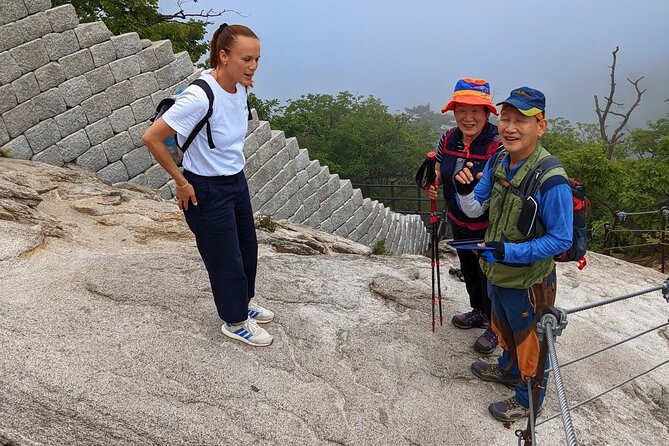
The guide is Koa, an English-speaking leader who has received especially strong praise for his energy and people skills. He makes a point of speaking with each person, remembers names, and keeps conversation going while the group climbs. That matters on a hard ascent, where a silent guide would make the uphill work feel even longer.
The group also appears to be kept fairly small. That helps with pacing and gives Koa a better chance to watch how everyone is handling the climb. You are not simply being pointed toward a trail and left to manage the hard bits alone.
The First Climb: 600 Meters in 2.1 Kilometers
The uphill portion is the heart of this experience. Over roughly 2.1 kilometers, you gain about 600 meters of elevation. In practical terms, the climb can take 100 to 120 minutes, depending on the group’s pace and conditions.
That is a steep ratio. Imagine going up and down around 200 floors of stairs, with rocks and uneven footing added to the equation. You need moderate fitness, but the wording should not lull you into thinking this is an easy walk.
The good news is that the group comes back down the same way. If you need to stop before the summit, you can rest and the guide can pick you up on the way back. That makes the route more forgiving than a long point-to-point hike. You have a clear retreat option rather than being committed to a full loop.
Still, you should be honest about your knees, stamina, and comfort on rough ground. One particularly useful distinction comes from the course itself: it may be considered moderate by Korean hiking standards, but some international visitors find it harder than expected. Fitness levels vary, and regular gym workouts do not always prepare you for steep rock steps.
Wear proper shoes with reliable grip. The supplied information does not specify footwear requirements, so you should not assume ordinary sneakers will feel ideal on every section. Hiking poles can be borrowed around one-third of the way up, which may help with balance and downhill control.
Crampons are also available to borrow at that point. Their usefulness depends on the conditions, but their presence suggests the operator takes changing trail surfaces seriously. Bug spray, a first aid kit, and a raincoat when needed are included, adding useful support without making the hike feel over-equipped.
Baek-un-dae and the Rope-Assisted Finish
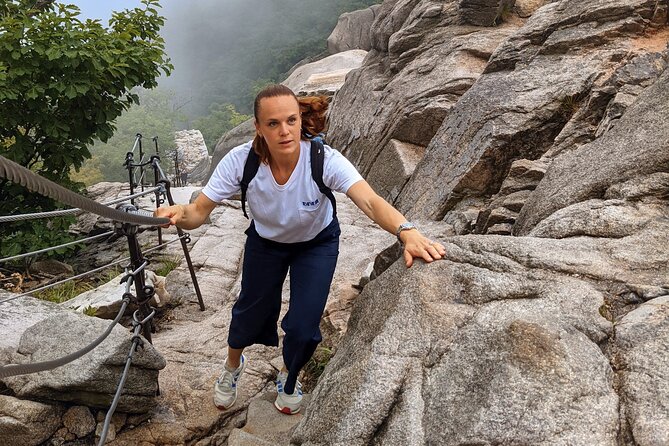
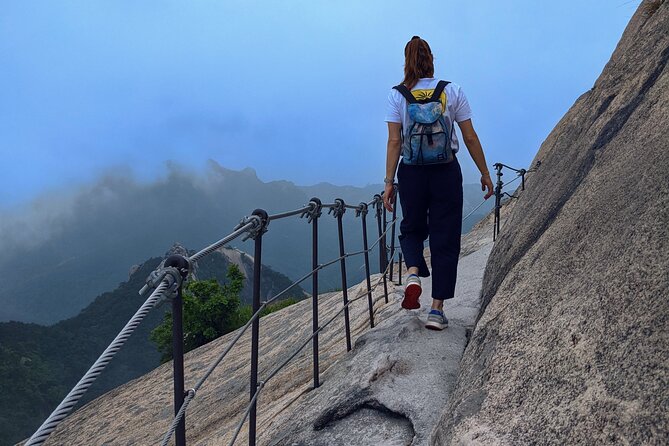
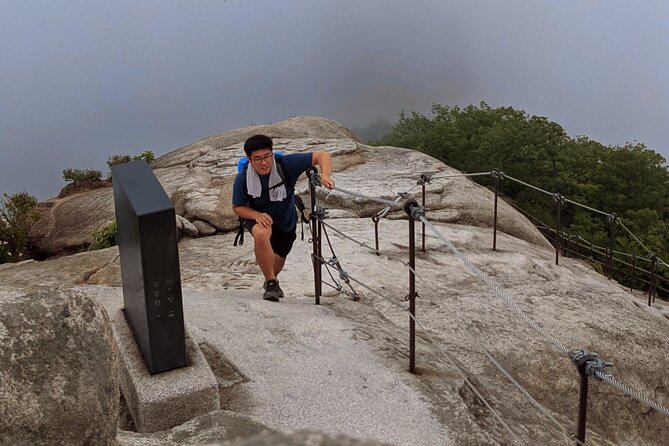
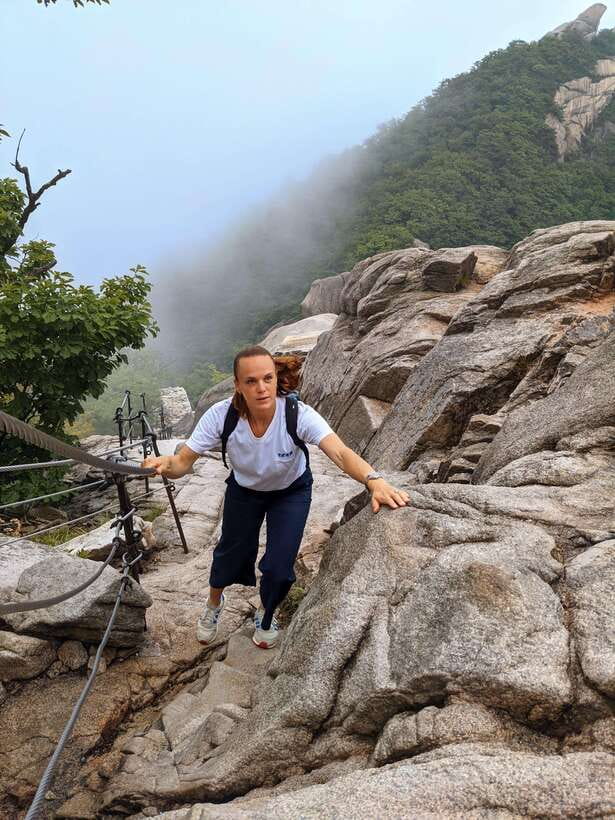
The final approach to Baek-un-dae is where this hike changes character. You will encounter climbing at angles of roughly 25 to 45 degrees, with ropes available for assistance. This section usually takes around 20 to 30 minutes.
You are not expected to free-climb a rock face. The ropes provide support, and the guide gives advice about going up and down. But the angle and exposure can still feel scary, particularly if you are uncomfortable with heights.
That fear is not a minor concern. The course makes it possible to skip this final section and take a break while the rest of the group continues. If you know heights are a problem, discuss it with Koa before reaching the summit approach rather than forcing yourself into a situation that feels unsafe.
For confident hikers, this is likely the most exciting part of the day. It turns the summit into something earned. You are using your hands, watching your footing, and paying attention to the rope and the rock. The experience is more active than a standard uphill trail, and the sense of achievement should be stronger because of it.
The tradeoff is that the summit finish can slow the group and add nerves. You may love the challenge, or you may decide that reaching the top is less important than staying comfortable. The flexible route lets you make that call.
More hiking trips:
- Bukhansan Mountain Private Hike with Lunch
★ 5.0 · 26 reviews - Seoraksan National Park Ulsanbawi Hiking from Seoul
★ 5.0 · 15 reviews - Seoul: Mt. Seoraksan National Park Autumn Foliage Day Tour
★ 4.3 · 15 reviews - Private Day Trip to Seoraksan National Park
★ 5.0 · 14 reviews
Views, Pace, and the Group Experience
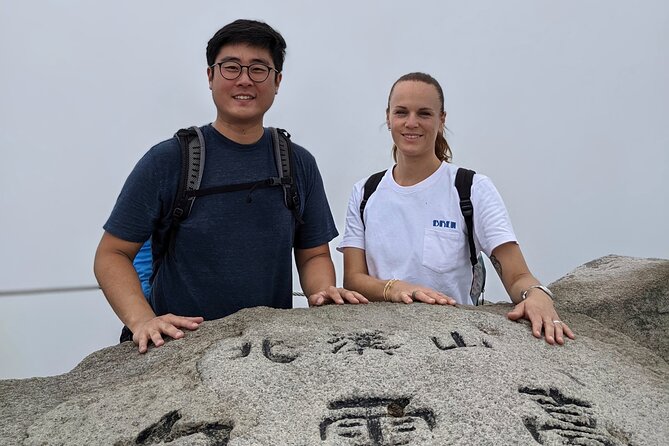
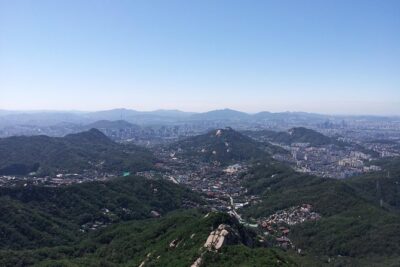
Bukhansan’s appeal is not only the summit number. It is the contrast between a major Korean city and a rugged national park so close to it. As you climb, the setting shifts from an accessible park entrance into a more demanding mountain environment.
The early start is a smart part of the plan. Starting in the morning helps avoid some of the later crowds, and an early departure leaves time to finish the hike and enjoy lunch without rushing. The mountain can become busier later, so the 8:15 am start is worth treating as part of the experience rather than an inconvenience.
Koa’s approach also helps shape the day. He has been praised for being humorous, energetic, and attentive, not just for getting everyone to the top. He keeps the group connected, talks with people individually, and gives practical advice on climbing and descending.
That social side can be a real bonus. You may arrive alone and leave having met people from several countries. Hiking tends to create easy conversation because everyone is sharing the same uphill effort, especially during rest breaks.
The pace is intended to be steady and manageable, but this is still a group activity. Strong hikers may sometimes want to move faster, while less experienced people may need more pauses. The option to stop and rejoin the guide on the descent reduces some pressure, though you should be prepared for the group to work around different abilities.
Lunch: Handmade Tofu After the Summit
After the hike, you may have time to eat at a restaurant specializing in tofu dishes. Lunch is optional and paid separately, usually costing 9,000 to 15,000 KRW.
The appeal is that the restaurant makes its tofu from scratch. That gives the meal more character than a standard post-hike bowl of noodles or convenience-store snack. The food may even change your view of tofu, especially if you have only encountered the bland, packaged version.
The menu also includes meat, so this is not limited to vegetarians. Vegan and vegetarian diners can be accommodated, which makes the meal a practical choice for a mixed group. You should treat lunch as an optional add-on rather than a guaranteed part of the activity, since it depends on time after the hike.
A shared meal can be one of the best parts of the day. After a steep climb, sitting down with local food and possibly enjoying makgeolli gives the outing a distinctly Korean finish. It also lets the group relax after the more technical summit section.
If you have a tight afternoon booking, keep an eye on the clock. The listed duration is about 4.5 hours, while the route itself is described as roughly four hours. Lunch adds extra time, so do not schedule a major attraction immediately afterward.
What the $67 Price Actually Covers
At $67 per person, this is not the cheapest way to walk in Bukhansan. You could enter the national park independently and avoid a guide fee. The question is what you value.
Here, the price pays for route planning, an English-speaking guide, group pacing, and help on the steepest sections. Bukhansan is not a mountain I would treat casually, especially when the climb is concentrated and the final section requires ropes. Having Koa manage the logistics can be worth more than the raw trail access.
The included gear also adds practical value. Bug spray, a first aid kit, and a raincoat when needed are provided. Crampons and hiking poles can be borrowed around one-third of the way up. Water is not included, but you can buy it at a convenience store at the beginning.
Lunch is not part of the $67. Plan to bring or buy water separately, and carry enough energy for the climb. The supplied details do not list a full meal or snacks as included, so you should not expect food before the optional restaurant stop.
For a visitor with limited time in Seoul, the efficient route strengthens the value. You get a guided summit attempt in around half a day, rather than spending six hours or more working out the route alone. For an experienced hiker who is comfortable navigating Korean trails, the independent option may make more financial sense.
Who Will Enjoy This Hike Most
I would recommend this course to you if you want a real physical challenge close to Seoul and have enough fitness for a sustained uphill climb. It suits people who enjoy reaching a clear summit, do not mind rocky footing, and like the added excitement of a rope-assisted finish.
It is also a good fit if you prefer not to solve every route and safety question yourself. Koa’s English, humor, and attention to individual hikers make the group feel more supported. The early start and direct route are especially useful when your Seoul itinerary is packed.
You should think twice if you have bad knees, limited stamina, or a strong fear of heights. You can skip the final climbing section, but the earlier ascent is still steep. The fact that you can stop and be met on the way down helps, yet it does not turn the hike into an easy outing.
Families with young children should not assume the course is suitable simply because it lasts half a day. The information provided does not give a minimum age or a detailed accessibility rating. The steep elevation gain and rope section make individual fitness and confidence important.
Practical Preparation for the Morning
Buy water at the convenience store near the start. Do not wait until you are already climbing, since the course does not include water.
Check the weather and prepare for changing conditions. A raincoat can be provided if needed, but suitable clothing and shoes remain your responsibility. The trail is rocky, and reliable footing matters more than looking polished for photos.
Use Naver Map to confirm the station and exit. Again, the correct point is outside Exit 2 of Bukhansan Ui Station, not Bukhansan Bogungmun Station. A small navigation mistake can cost the entire 15-minute late-arrival window.
Expect a workout, not a gentle sightseeing tour. You may want to pace yourself early, save energy for the last climb, and listen closely to Koa’s advice on both the ascent and descent.
The experience offers free cancellation up to 24 hours before departure and allows you to reserve while paying later. Those terms make it easier to wait for a suitable weather forecast, though you should still check the current conditions before heading out.
Should You Book Bukhansan’s Summit Course?
Book it if you want Seoul’s highest peak, a compact schedule, and a guide who adds real value on a steep and sometimes intimidating route. The combination of Koa’s care, the efficient trail plan, the rope-assisted finish, and the optional tofu lunch makes this more than a simple walk in the park.
Skip it if you are looking for an easy nature break or dislike heights and steep, uneven climbs. The route is short in distance but not gentle in effort.
For moderately fit hikers who want a memorable mountain challenge without giving up an entire day, this is a strong choice. Just arrive early, bring water, wear proper shoes, and treat the word moderate with caution.
FAQ
Where does the Bukhansan summit hike begin?
Meet guide Koa outside Exit 2 of Bukhansan Ui Station. Do not confuse it with Bukhansan Bogungmun Station.
What time does the group leave?
The group leaves at 8:15 am sharp. The guide can wait up to 15 minutes for late arrivals.
How long does the activity last?
The activity lasts about 4.5 hours. The hike itself takes roughly four hours, and an optional lunch may require additional time.
How high is the summit?
Baek-un-dae reaches 836 meters, or 2,743 feet. It is the highest peak in Seoul.
How difficult is the climb?
The ascent gains about 600 meters over 2.1 kilometers and usually takes 100 to 120 minutes. You need moderate fitness, and the rocky route can feel harder than a typical moderate walk.
Can I skip the rope-assisted section?
Yes. The final 20 to 30 minutes of climbing can be avoided if you are uncomfortable with heights. You can take a break while the others continue.
Is lunch included?
No. The optional tofu lunch costs about 9,000 to 15,000 KRW per person. The restaurant also serves meat and can accommodate vegan and vegetarian diners.
More National Parks
- Naejangsan National Park Autumn Foliage One Day Tour from Seoul
★ 4.5 · 9 reviews - Hike and Explore the Wonder of Bukhansan National Park with hiking professional(including Lunch)
★ 5.0 · 9 reviews - Hike at Mt. Bukhansan National Park with professional Guide(including Lunch)
★ 5.0 · 5 reviews - Songnisan National Park & Beopjusa Temple UNESCO site Private Tour
★ 5.0 · 4 reviews
Just added around Seoul
- Seoraksan National Park & Nami Island★ 4.5 · 3 reviews
- Strawberry Picking, Winter Sled with Eobi Ice Valley from Seoul★ 4.5 · 3 reviews
- Seoul Full Day small group Tour★ 5.0 · 3 reviews
- Seoul Korean BBQ Dinner Experience with Secret Food Tours★ 5.0 · 3 reviews
- Rice Wine Tasting with Sommelier – Finest Makgeolli (& Soju)★ 5.0 · 3 reviews
- Majang Meat Market Experience: Private Tour with Han-woo Beef BBQ★ 5.0 · 3 reviews
- Seoul: Alpaca World and Nami Island (with Garden / Railbike)★ 5.0 · 3 reviews
- Max Out Seoul: Must Visit City Highlights Panoramic Day Tour★ 5.0 · 3 reviews
Hiking & National Parks, compared.
South-West Jeju Essentials: Hallasan & Signature Highlights
Read our review →
South-West Jeju Essentials: Hallasan & Signature Highlights
Read our review →
Jeju island Southern UNESCO Day Tour With Hallasan MT
Read our review →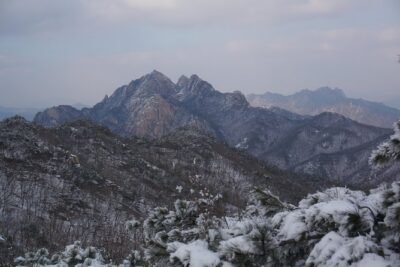
Private Hiking tour to Bukhansan Peak(Baegundae: 836.5m) with Mountain Expert
Read our review →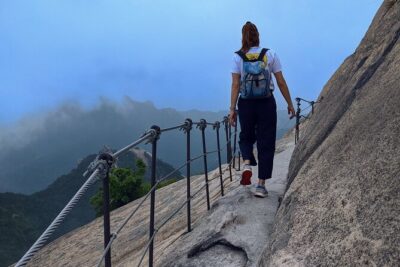
Private Hiking to Bukhansan & Korean Style Spa(Include Lunch)
Read our review →
Mt. Seoraksan National Park Autumn Foliage Day Tour
Read our review →Browse the lists this tour appears in