
Reviewed · JEJU ISLAND TOURS
Jeju: Western and Southern Sightseeing Day Tour
Six stops, one long day, plenty of Jeju. This 10-hour guided tour is a smart way to see the island’s western and southern sides without renting a car or wrestling with unfamiliar roads. I like the mix of volcanic scenery and cultural sites, especially the Jusangjeolli cliffs and Cheonjeyeon Falls. I also like that transport, admission fees, parking, and tolls are covered. The tradeoff is simple: this is a full day, with plenty of walking and some steep steps.
The route is well suited to a first visit or a short stay. Guides such as Han, Jina, Hays, Ruby, Jessie, and Elin have been praised for clear English, warm personalities, local stories, and practical help. You should expect an active schedule rather than a slow, lingering day, and lunch is your own expense.
In This Review
- Key points to know before booking
- Why this route works for a one-day visit
- Hallasan’s 1100 Altitude Wetland
- Bomunsa Temple beneath Sanbangsan
- O’Sulloc Green Tea Fields and Museum
- Songaksan views and lunch break
- Jusangjeolli’s volcanic stone columns
- Cheonjeyeon Falls, the Pond of God
- The guide makes the long day easier
- Transport, pace, and comfort
- Who should book this Jeju day tour?
- Should you book it?
- FAQ
- Where does the tour start?
- Where does the tour finish?
- How long is the tour?
- Which attractions are included?
- Is lunch included?
- Does the tour include entrance fees?
- Is the tour conducted in English?
- What happens if the weather is very bad?
- What should I wear?
Key points to know before booking
- Six major stops in western and southern Jeju: You visit Hallasan’s 1100 Altitude Wetland, Bomunsa Temple, O’Sulloc, Songaksan, Jusangjeolli Cliff, and Cheonjeyeon Falls.
- A strong choice without a rental car: Round-trip transport connects Jeju City with sights spread across the island.
- The day includes real walking: Cheonjeyeon Falls and Bomunsa Temple involve steps, while Songaksan adds trails and lookout points.
- The scenery changes constantly: You move from high mountain wetland to volcanic cliffs, coastal views, tea fields, waterfalls, and a sea-facing temple.
- Lunch is not included: You get free time around Songaksan, with the guide suggesting local restaurants and dishes.
- Weather can change the route: In very bad weather, the Hallasan stop may be replaced with another attraction.
Why this route works for a one-day visit
Jeju is not a compact sightseeing town. Its best natural sights are scattered across the island, and public transport can make a day of several stops awkward. This trip solves that problem with a single vehicle, a guide, and a route that links two broad parts of Jeju.
The price is about $55 per person. That is good value if you would otherwise pay for a rental car, fuel, parking, admission fees, and navigation. You also gain local explanations during the drive, which is useful at places where the scenery alone does not explain Jeju’s volcanic past or island culture.
You should not expect a private tour or lots of time at every stop. The day is planned around several short visits, so the aim is variety. If you want to hike one trail at length or sit by a waterfall for an hour, this schedule will feel brisk. If you want a broad introduction to Jeju, it makes much more sense.
Pick-up is available at Ocean Suites Jeju Hotel at 8:00 a.m. or Lotte Duty Free near Lotte City Hotel at 8:30 a.m. The bus returns to those same meeting points. Tell the operator at least a day ahead if you need to change your pick-up point.
More Jeju trips:
- Jeju: Eastern Jeju UNESCO Spots Day Tour
★ 4.9 · 1,148 reviews - East Jeju Essentials – Seongsan Ilchulbong (UNESCO) & Haenyeo
★ 5.0 · 939 reviews - Jeju: Southern Top UNESCO Spots Bus Tour
★ 4.9 · 648 reviews
Hallasan’s 1100 Altitude Wetland
The first stop takes you up toward Hallasan, South Korea’s highest mountain. The 1100 Altitude Wetland sits on the mountain and offers a quick introduction to Jeju’s high-country nature. You get around 40 minutes here, enough for a walk and a look at the wetland setting without turning the day into a mountain hike.
This stop is especially useful because it gives the tour a different feel from the coastal attractions later on. The air, vegetation, and open views can change quickly at altitude, so bring a light outer layer even if Jeju City feels warm.
The schedule describes this as a visit to Hallasan, but you are not climbing the mountain. You are stopping at the 1100 area. In very bad weather, the bus may skip Hallasan and visit another attraction instead. That is a sensible safety choice, but it means your exact route depends partly on conditions.
Bomunsa Temple beneath Sanbangsan
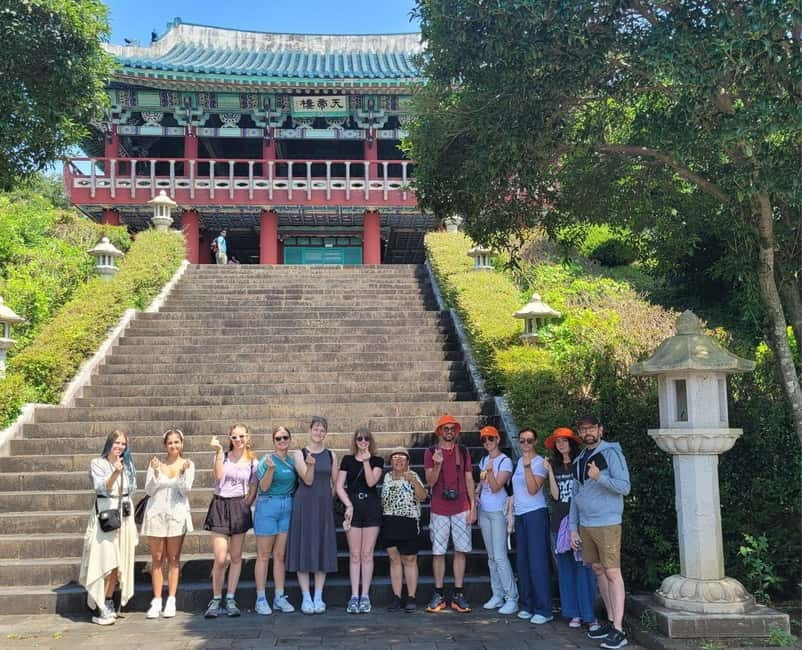
Bomunsa Temple comes next, with about 30 minutes for a guided visit. Set at Mt. Sanbangsan and facing the ocean, the temple gives the day a cultural pause between natural sites. You can walk around the grounds, take in the sea-facing setting, and see one of Jeju’s well-known Buddhist temples.
Half an hour is enough for a look around, but not for a slow temple visit. The approach includes steps, so comfortable shoes matter. If you have limited mobility, ask your guide what parts of the stop are practical before setting off.
The guides add real value here. Jina has been praised for sharing local legends, stories about island life, and details about how people live in Jeju. That kind of commentary helps you see Bomunsa as more than a photogenic building beside a mountain.
O’Sulloc Green Tea Fields and Museum
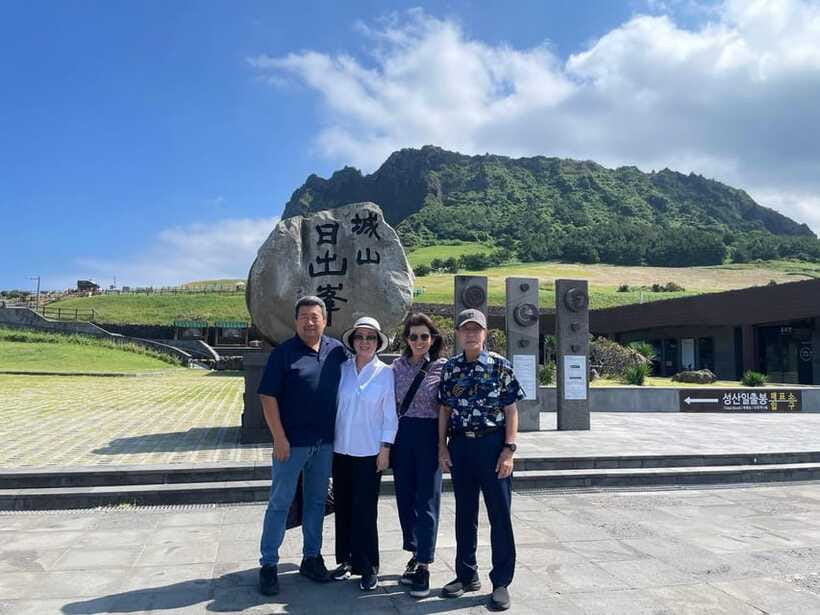
The O’Sulloc stop lasts about an hour and changes the pace again. You can walk beside the neat green tea fields, take photographs, and visit the tea museum. Green tea snacks, including bread and ice cream, are available for purchase.
This is one of the easier stops on the route. After the steps at the temple and the walking around the natural sites, the tea fields give you space to slow down. It is also a practical place to buy a drink or snack, particularly in hot weather.
The visit is not only about photographs. The museum introduces traditional tea culture, giving you a small cultural connection to the farming side of Jeju. You should keep your expectations measured, though. This is a sightseeing stop with time to browse, not a long formal tea lesson.
Several people have singled out the tea museum and nearby café options as a pleasant part of the day. If you have time, look for green tea bread or ice cream. You pay for those yourself, just as you pay for lunch.
A completely different kind of day out in Jeju:
- South-West Jeju Essentials: Hallasan & Signature Highlights
★ 5.0 · 620 reviews - Jeju Island English Private & Flexible Tour any number anywhere
★ 5.0 · 561 reviews - East Jeju: Day Tour with Seongsan Peak & Haenyeo Performance
★ 4.9 · 478 reviews - South-West Jeju Essentials: Hallasan & Signature Highlights
★ 5.0 · 443 reviews
Songaksan views and lunch break
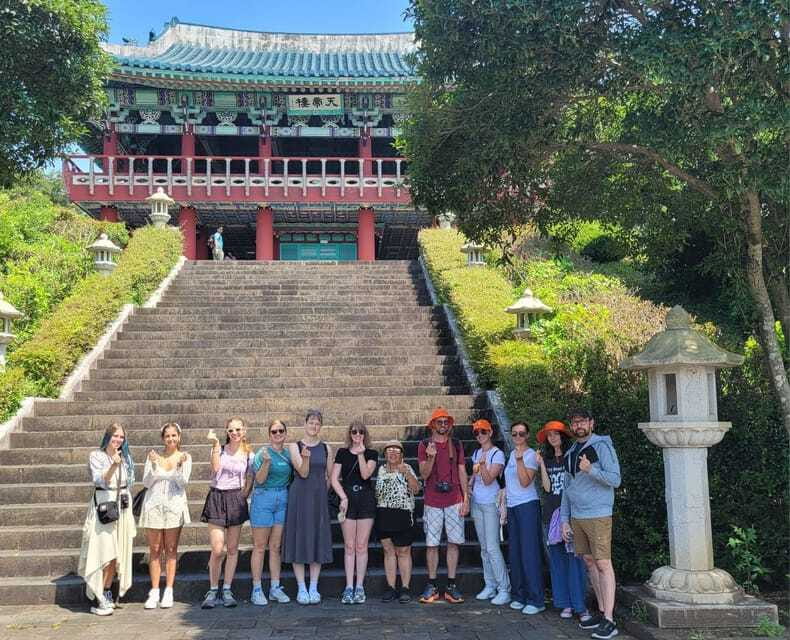
Songaksan is one of the more active and scenic stops, with about an hour to walk and enjoy the views. The area offers broad coastal scenery and a chance to see Hallasan in the distance when the weather is clear.
Some tours include sections of small trails and lookout points here, and one person specifically praised Olle Trail 10. The route can feel energetic, so do not treat this as a quick roadside photo stop. You will want sturdy shoes, water, and protection from the sun in summer.
This is also the planned lunch break. Food is not included, but the guide recommends local restaurants and dishes, and you have free time to choose and eat. One person particularly enjoyed the Korean barbecue lunch, while another found the lunch venue less appealing. That difference is worth noting: lunch is convenient and local, but the exact restaurant may not suit everyone.
The guide’s help can make the meal easier, especially if Korean food is new to you. Jina has been praised for giving visitors a quick introduction to Korean cuisine. Still, bring a little flexibility. The schedule is moving, and this is not a restaurant-focused food tour.
Jusangjeolli’s volcanic stone columns
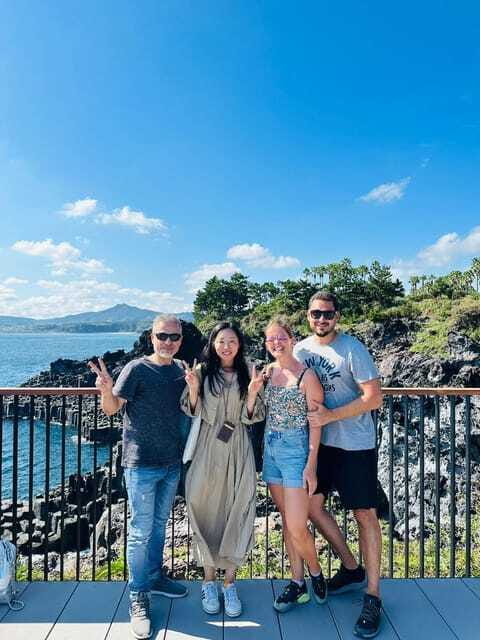
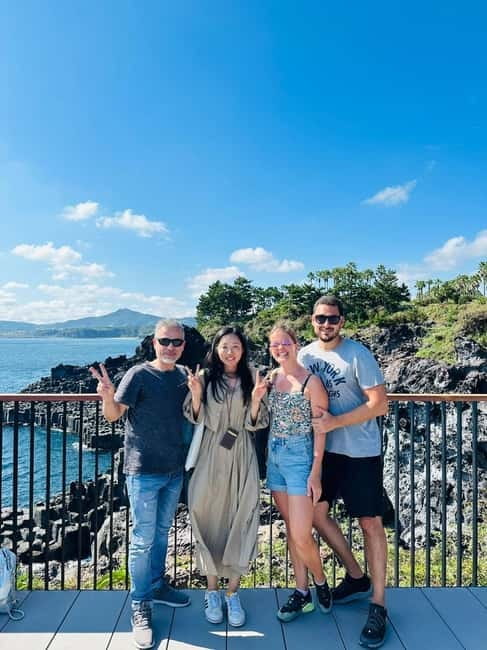
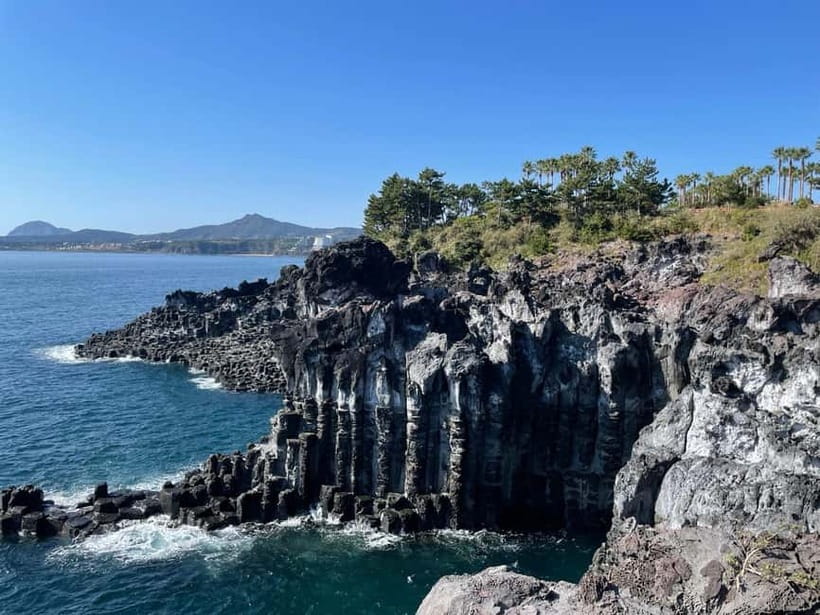
Jusangjeolli Cliff is one of the strongest stops for understanding Jeju’s volcanic character. Ancient lava formed the unusual pillar-like rock columns along the coast, creating a dramatic wall of dark stone beside the sea.
You get about 30 minutes here. That is enough to reach the viewing area, take photographs, and hear the basic explanation of how volcanic activity shaped the cliffs. It is not enough for an extended coastal walk, so frame this as a focused viewpoint.
The site gives you one of the clearest visual reminders that Jeju is a volcanic island. The regular shapes of the columns look almost engineered, although they were made by cooling lava. Keep an eye on the clock, since the group needs to return to the bus for the final stop.
Cheonjeyeon Falls, the Pond of God
Cheonjeyeon Falls is the last major attraction and one of the most rewarding. Its name means Pond of God, and the waterfall is arranged in three sections. The first drops into a pond about 21 meters deep, then the water continues over two more falls before reaching the sea.
You have around 40 minutes here. The site is green and wooded, a welcome contrast after the open coast at Songaksan and Jusangjeolli. The setting feels cooler and more enclosed, but reaching the viewpoints means walking and climbing steps.
This is not a flat stroll. The paths can be demanding, particularly in hot, humid weather or after rain. One person described the waterfall and temple sections as involving steep steps, while another enjoyed the small hikes and trails throughout the day. Wear shoes with a firm sole, and do not save your water for the afternoon.
Cheonjeyeon works well as the final nature stop because it gathers several Jeju themes in one place: water, volcanic terrain, forest, and the sea beyond. The time is short, but the visit has enough variety to feel worthwhile.
The guide makes the long day easier
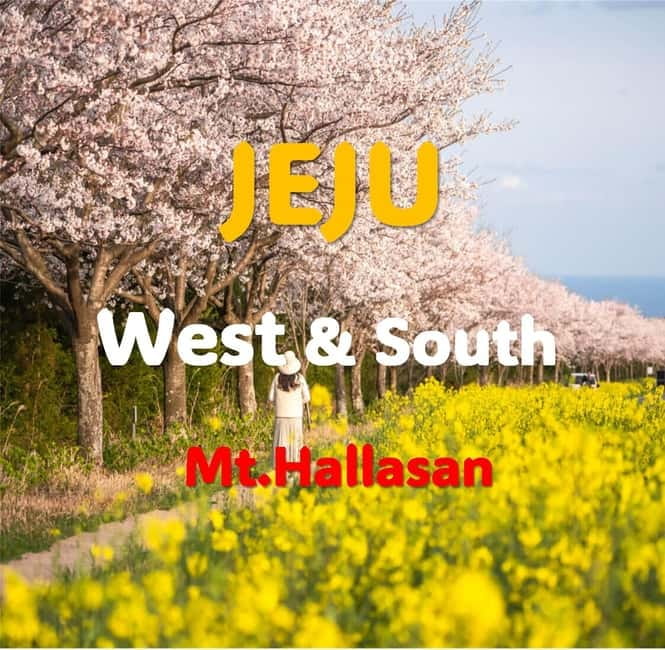
The strongest part of this experience is the guiding. Names vary by departure, but Han, Jina, Hays, Ruby, Jessie, Elin, and other guides have been praised for friendly service, clear English, humor, and local knowledge.
That matters on a packed route. A good guide explains the next stop on the bus, then gives you time to take photographs and explore instead of talking continuously at every viewpoint. Ruby was praised for balancing information with jokes, while Jina was often noted for stories about Jeju’s people, legends, and daily life.
You should also expect help with practical questions. Guides recommend food, answer questions, explain where to walk, and help the group stay on time. Clear English is especially valuable if English is not your first language. One person specifically appreciated Han’s calm explanations and easy-to-understand speech.
The experience is not dependent on one named guide, so you cannot guarantee Han, Jina, or Hays when booking. Still, the repeated praise for the guiding team suggests that this is more than a simple bus transfer between attractions.
Transport, pace, and comfort
The bus removes the stress of driving across Jeju, but comfort depends on how full the vehicle is. One person found the bus a little cramped when it was at full capacity, although the driver was praised. The transport is described as highly rated overall, with 90 percent of ratings giving it a perfect score.
The schedule runs roughly from morning until late afternoon, making this a serious full-day outing. You will spend time on the road, but the distance between the sights is part of the value. Without transport, fitting these stops into one day would be difficult.
The pace is active. You walk at the wetland, temple, tea fields, Songaksan, cliffs, and waterfall. The route is not presented as a strenuous hike, but the steps and repeated walking add up. In August, heat and humidity made the activity feel harder for some people, while rainy weather did not prevent others from enjoying the views.
Bring water, sunscreen, rain protection, and comfortable shoes. You can bring luggage if you inform the staff in advance. If you plan to visit Dongmun Market after the tour, the Ocean Suites drop-off is about a 10-minute walk from the market.
Who should book this Jeju day tour?
I would choose this tour if you have only one full day in Jeju, do not want to drive, or want a guide to handle the route and explain local culture. It is also a good fit for solo visitors, since the group structure makes a wide-ranging day easy to manage.
You will probably enjoy it if you like natural sights, short walks, viewpoints, and a few cultural stops. The combination of Hallasan, volcanic cliffs, a waterfall, tea fields, a temple, and Songaksan gives you a broad picture of Jeju in one day.
I would hesitate if you want a slow schedule, a long hike, or complete control over lunch and photo time. The route is fixed, the stops are timed, and the day can feel intense. Families and older visitors should consider the steps at Bomunsa and Cheonjeyeon before booking.
Cancellation is free up to 24 hours before the start, and you can reserve now and pay later. The operator contacts you through WhatsApp the day before, so provide a working number and contact them if no message arrives by 8:00 p.m.
Should you book it?
Book this tour if your Jeju time is limited and you want maximum variety for about $55. The included transport, entrance fees, parking, tolls, and live English guide make the price fair, especially compared with arranging a car and route yourself.
Skip it if you prefer one major attraction at a time or dislike timed group outings. For most first-time visitors, though, this is a practical and lively introduction to Jeju, with enough local explanation to make the scenery mean more than a collection of pretty photographs.
FAQ
Where does the tour start?
You can meet the tour at Ocean Suites Jeju Hotel at 8:00 a.m. or at Lotte Duty Free, next to Lotte City Hotel, at 8:30 a.m. The exact meeting point depends on the option booked.
Where does the tour finish?
The bus returns to Ocean Suites Jeju Hotel and Lotte Duty Free, the two stated drop-off locations.
How long is the tour?
The experience lasts about 10 hours and runs as a full-day sightseeing trip.
Which attractions are included?
The route includes Hallasan’s 1100 Altitude Wetland, Bomunsa Temple, O’Sulloc Green Tea Field, Songaksan, Jusangjeolli Cliff, and Cheonjeyeon Falls.
Is lunch included?
No. Lunch and drinks are not included. You have free time at Songaksan, and the guide recommends local restaurants and menu choices.
Does the tour include entrance fees?
Yes. Attraction admission tickets, round-trip transportation, tolls, and parking fees are included.
Is the tour conducted in English?
Yes. The tour includes a live English-speaking guide.
What happens if the weather is very bad?
If extreme weather prevents a visit to Mt. Hallasan, the tour replaces that stop with another attraction.
What should I wear?
Wear comfortable shoes because the tour includes walking, trails, and steep steps at places such as Cheonjeyeon Falls and Bomunsa Temple.
Just added around Jeju
- East of jeju tour for Seogwipo Gangjeong Cruise Customers★ 4.5 · 3 reviews
- Seogwipo(the southern city of Jeju) Art Museum Walking Tour★ 5.0 · 3 reviews
- Private Tour in South Jeju including Yacht Cruise★ 5.0 · 3 reviews
- Jeju Island, Seongsan Ilchulbong, Discover Scuba Diving★ 4.5 · 3 reviews
- Jeju: Western & Southern Jeju Hydrangea Festival Tour★ 5.0 · 3 reviews
- Jeju: Small Group Tour w/Pink Muhly & Tangerine Picking★ 5.0 · 3 reviews
- Jeju: Hiking Mt. Hallasan, South Korea’s Highest Mountain★ 5.0 · 3 reviews
- Jeju: BTS Are You Sure?! Filming Locations Private Taxi Tour★ 5.0 · 3 reviews
Jeju Island Tours, compared.
East Jeju Essentials – Seongsan Ilchulbong (UNESCO) & Haenyeo
Read our review →
South-West Jeju Essentials: Hallasan & Signature Highlights
Read our review →Jeju Island English Private & Flexible Tour any number anywhere
Read our review →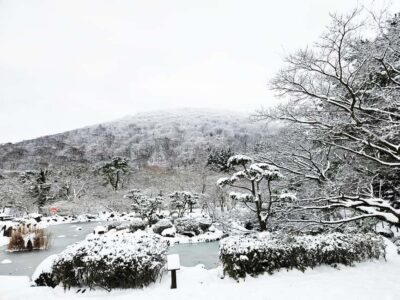
East Jeju: Day Tour with Seongsan Peak & Haenyeo Performance
Read our review →South-West Jeju Essentials: Hallasan & Signature Highlights
Read our review →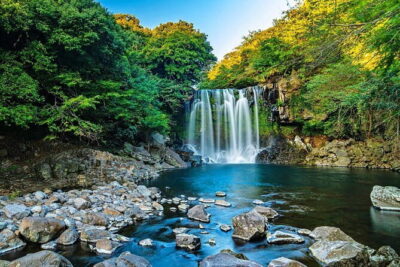
Jeju Southern UNESCO Full Day Tour with Mt.Halla
Read our review →Browse the lists this tour appears in