
Reviewed · EVENING EXPERIENCES
From Seoul: Suwon Hwaseong Fortress Night Tour
Korea’s ancient walls look different after dark. I like this four-hour outing for its calm walk along a UNESCO-listed fortress and its strong storytelling, especially when guides such as Shin, Leo, Sophie, and Henry bring Suwon’s past into focus. You also get comfortable transport from Seoul, which matters after a full day in the capital. The main trade-off is simple: there is a fair amount of walking, and the summer Friday-to-Sunday version visits Suwon Haenggung Palace instead of Haengnidan-gil, with no dinner or snack stop.
I also like the small-group feel. Some departures have been private in practice, while the private option lets you set a more personal pace. The fortress lights, broad city views, and quiet evening air make this a fine change from Seoul’s crowded shopping streets, though anyone wanting a full meal, a long palace visit, or a wheelchair-friendly route should choose carefully.
In This Review
- Key points at a glance
- Why Suwon works better at night
- The ride from Seoul to Suwon
- Understanding King Jeongjo’s plan
- Walking the illuminated fortress walls
- The fortress’s clever design
- Haenggung-dong and Haengnidan-gil
- The summer palace alternative
- Guide quality and group size
- Is $69 a fair price?
- Who will enjoy this tour most?
- FAQ
- How long does the Suwon Hwaseong Fortress night tour last?
- Where does the tour meet in Seoul?
- Is hotel pickup available?
- Which languages are available?
- What happens on summer weekend departures?
- Is food included?
- What should I bring?
- Can wheelchair users join?
- Should you book it?
Key points at a glance
- A rare completely walled city: Suwon is presented as South Korea’s only completely walled city, giving the fortress a setting that feels tied to everyday urban life rather than separated from it.
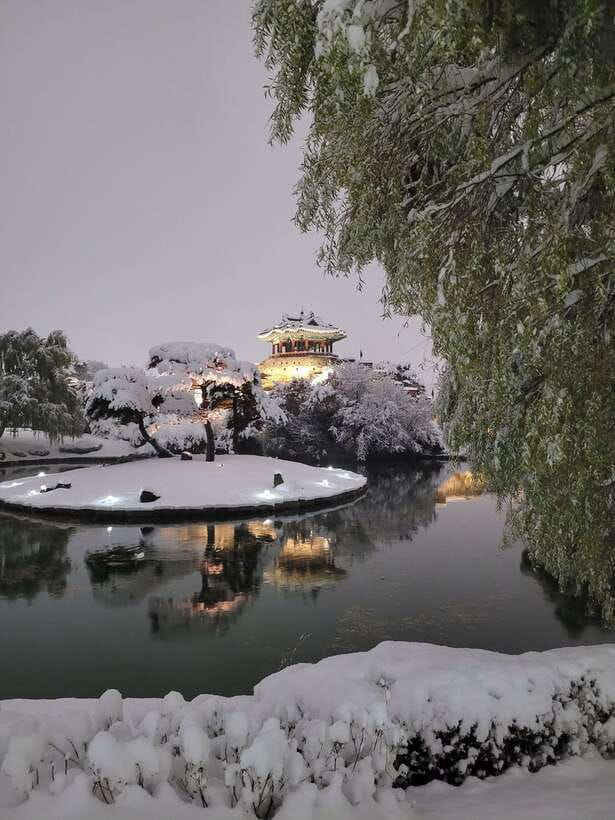
- The walls glow after sunset: Hwaseong’s gates, towers, and stone defenses take on a softer look at night, with good opportunities for city views and photographs.
- Joseon politics add drama: Your guide explains King Jeongjo’s plans for Suwon, his wish to be closer to his father’s grave, and the possibility that Suwon could have become a new capital.
- Haengnidan-gil adds modern Suwon: Traditional hanok houses sit beside cafes, restaurants, and television filming locations in Haenggung-dong.
- Summer weekends change the plan: From June through September on Fridays, Saturdays, and Sundays, the tour visits Suwon Haenggung Palace instead of Haengnidan-gil, and no dinner or snack break is included.
- The guides receive the strongest praise: Shin, Leo, Sophie, Henry, Dragon, Chloe, and others are often singled out for clear explanations, patience, humor, and help with photographs.
Why Suwon works better at night
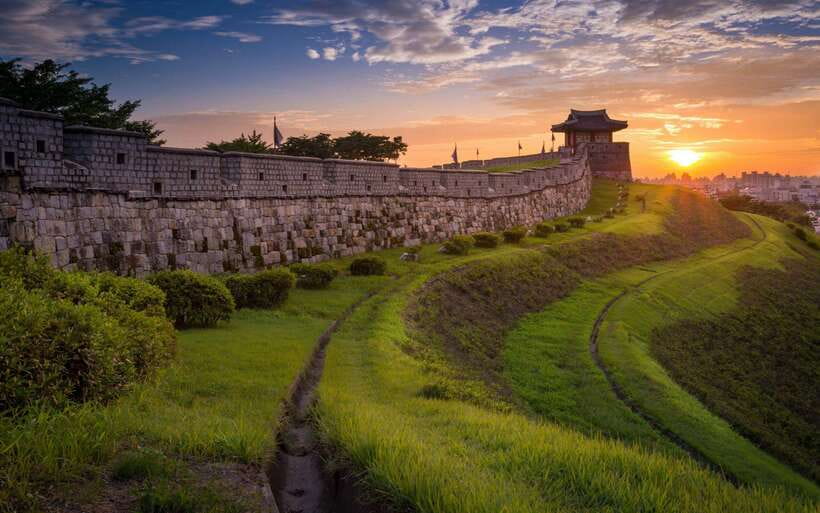
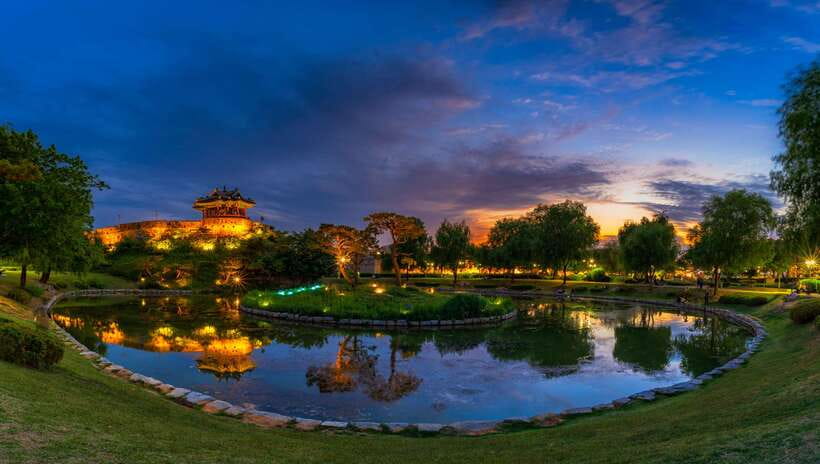
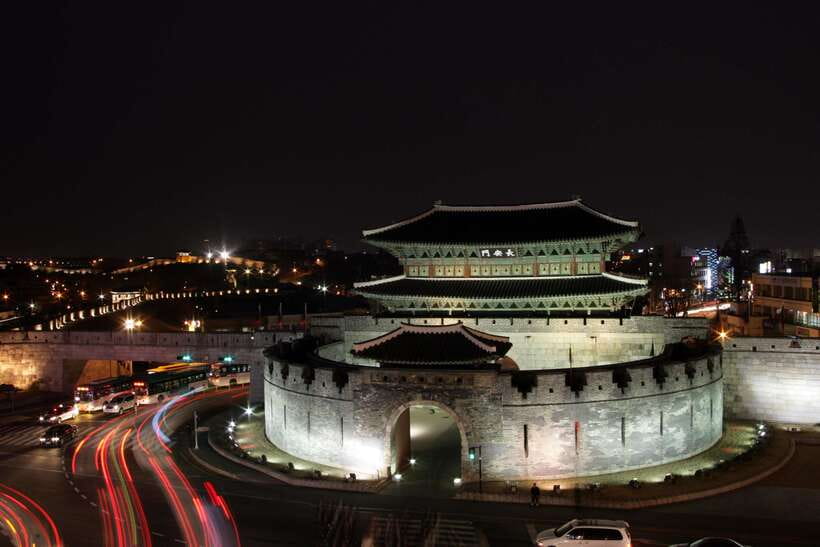
Suwon Hwaseong Fortress is not just a single gate or palace courtyard. It is a long defensive complex wrapped around the historic center of Suwon, with walls, gates, watchtowers, and other military structures spread across the city.
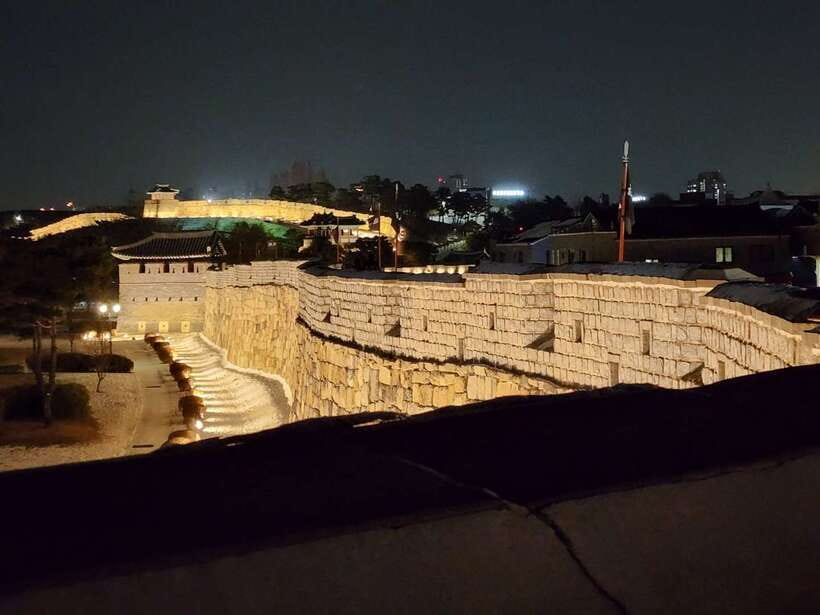
At night, you see the site in a quieter mood. Artificial lighting outlines the old stonework without turning the walk into a loud evening show. The effect is especially appealing if you have already spent time among Seoul’s bright signs and dense traffic.
I would not book this as a replacement for every major Seoul palace. Instead, think of it as a chance to see Joseon-era planning in a broader setting. You walk on historic ground, look down over Suwon, and hear how architecture, royal family politics, and military needs shaped the city.
The tour lasts about four hours, including the ride from Seoul and the return to central Seoul. That makes it manageable on a short visit. You get a proper introduction to Suwon without giving up an entire day.
More Evening Tours in Seoul
- Seoul: Night Market Food Tour with Local Guide
★ 4.9 · 943 reviews - Seoul: Evening Dark History, Folklore & Ghost Story Walking Tour
★ 5.0 · 593 reviews - Small-Group Night Food Tour in Seoul with Korean BBQ
★ 5.0 · 304 reviews
The ride from Seoul to Suwon
The tour begins at the front of Sejong Hotel, near Myeongdong. Optional pickup is available from centrally located hotels in areas including Gangnam, Myeongdong, Gwanghwamun, Itaewon, and Dongdaemun.
If your hotel or guesthouse sits outside the easy central route, you may be asked to meet at a nearby central hotel or subway station. Check this point before booking, especially if you are carrying luggage or traveling with children.
Transport is one of the tour’s practical strengths. You avoid working out the Seoul to Suwon connection, finding the fortress entrance, and arranging a late return on your own. Drivers have been praised for safe, courteous service, while guides often begin explaining the site during the ride.
One guide, Leo, used a visual lesson on the way to Suwon and made it interactive. That is a smart use of travel time. The fortress becomes easier to understand once you know the basic family story and the reason the walls were built.
Understanding King Jeongjo’s plan
The fortress makes more sense when you know about King Jeongjo, one of the most important Joseon rulers connected with Suwon. He wanted to move closer to the tomb of his father, Crown Prince Sado, whose tragic death at the hands of his own father, King Yeongjo, shaped the royal family’s story.
Jeongjo’s connection to Suwon was personal, political, and practical. The city offered a base near his father’s burial site, and the fortress helped protect and organize a place that could have gained even greater importance as a royal center.
Your guide should connect these events to the buildings around you rather than simply list dates. Thomas, for example, was praised for explaining the story of Crown Prince Sado and how the young son who witnessed the tragedy later became King Jeongjo.
This is where the guide makes a real difference. Without context, a gate is a photogenic old structure. With context, the same gate becomes part of a royal plan shaped by grief, succession, defense, and ambition.
Walking the illuminated fortress walls
Expect a moderate amount of walking, often along the walls and around the main fortress features. Comfortable shoes are essential. The route includes steps and some steep sections, and handrails may not be available everywhere.
The walk is not a flat city stroll. You need enough balance and energy for uneven ground, inclines, and repeated stops. Visitors with walking difficulties may still manage with a caring guide and a slower pace, but the experience is not suitable for wheelchair users.
The reward is the view. From the higher parts of the fortress, Suwon’s lights spread below you. The contrast between old defensive walls and the modern city gives the tour much of its appeal.
Photography is another strong point. Guides including Henry and Shin have helped with pictures at scenic spots, while one private tour guide even assisted with proposal photographs. Bring a phone or camera, but also leave time to simply look around. The best part of a night walk can be the pause between photo stops.
The lighting is attractive rather than theatrical. Do not expect a large-scale light show or an elaborate performance. One visitor felt that a wall light show would have added something, but the existing illumination already makes the fortress particularly appealing after sunset.
More evening tours:
- Seoul Night Palace & Market Food Tour with Vehicle
★ 5.0 · 275 reviews - Seoul: Guided City Wall Sunset Hike with Korean Dinner
★ 4.9 · 227 reviews - Special City Night Tour
★ 5.0 · 162 reviews - Korean Drinking Games Night (non-drinkers are also welcome)
★ 5.0 · 125 reviews
The fortress’s clever design
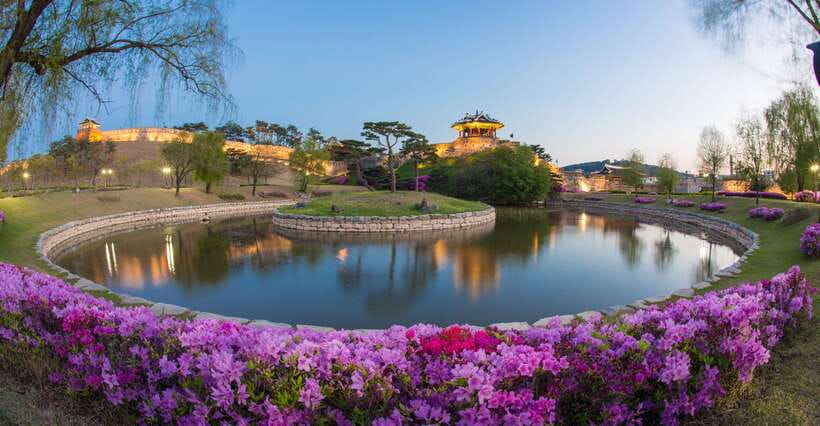
The tour also explains how Hwaseong was built. Jeong Yak-yong, often described as one of Korea’s most inspiring old architects and thinkers, played a major role in the design.
The fortress combines military planning with practical construction methods. Its design drew on Chinese ideas while adapting them to local needs. The result was not simply a tall wall. The complex included gates, towers, defensive positions, and carefully planned access points.
Your guide can point out details that are easy to miss when walking alone. The stone walls may look straightforward at first, but their shape and supporting structures reflect a careful response to defense, movement, and visibility.
This is one reason I prefer a guided visit here. The site covers enough ground that you could easily see the main outline without grasping how the pieces worked together. A good explanation turns the walk into a lesson in Joseon-era engineering without making it feel like a classroom.
The quality of guiding is consistently important. Sophie was praised for explaining the fortress before arrival, then showing the major sites carefully while adding wider stories about Korean culture. Dragon was noted for strong English and detailed explanations. Chloe received particular praise for patience with older visitors and for finding less obvious spots.
Haenggung-dong and Haengnidan-gil
On the standard itinerary outside the summer weekend schedule, the evening continues in Haenggung-dong, also called Haengnidan-gil. This neighborhood gives you a different view of Suwon.
Traditional Korean houses, or hanoks, line streets that now include cafes, restaurants, and small businesses popular with younger residents. The area has a relaxed feel, with historic buildings sharing space with modern food and coffee spots.
This stop helps balance the fortress. After military walls and royal politics, you see a living neighborhood where old architecture remains part of ordinary city life.
The district also has strong connections to Korean television. You can check out the kimbap restaurant owned and run by Woo Young-woo’s father in Extraordinary Attorney Woo. Other dramas filmed in the area include Our Beloved Summer and The Uncanny Counter.
The tour does not promise a full food crawl, and dinner and drinks are not included. If you want a substantial meal, plan around the schedule or eat after drop-off in Myeongdong. The neighborhood is more about atmosphere, streets, and a few recognizable locations than a formal restaurant experience.
The summer palace alternative
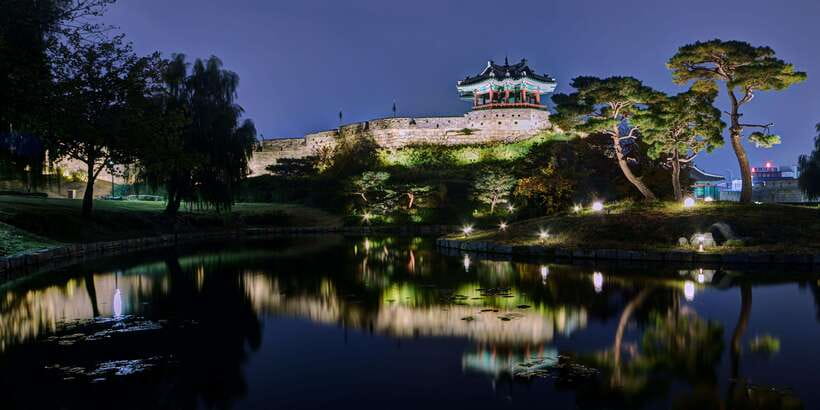
From June through September, Friday, Saturday, and Sunday departures visit Suwon Haenggung Palace instead of Haengnidan-gil. This seasonal change is important when you compare dates.
A haenggung was a temporary residence for royalty, and Suwon Haenggung Palace is the largest of these royal temporary palaces. At night, its lit courtyards and buildings provide a more concentrated setting for photographs.
This version may suit you if you prefer palace architecture to cafes and television locations. It also keeps the tour focused on royal Suwon, though you lose the neighborhood walk and there is no dinner or snack break during the summer schedule.
The supplied details do not specify every seasonal starting time or the exact length of each stop, so check the date-specific plan before you pay. The tour runs rain or shine, and summer weather can be warm or wet despite the evening timing.
Guide quality and group size
The guide is the biggest variable in a history-focused outing, and this experience has a strong record in that area. English and Japanese tours are available, and private groups can be arranged.
Names that come up often include Leo, Shin, Sophie, Henry, Dragon, Chloe, and Jung. Their strengths differ slightly. Leo is praised for clear communication, visual teaching, and detailed explanations. Shin is described as patient and easy to talk with. Sophie combines history with humor and wider cultural context. Henry is noted for friendly English and a willingness to help with photographs.
That personal touch matters more here than it would on a simple transfer. The fortress has many structures, and the political story can be complicated. A guide who answers questions well helps you understand why Suwon mattered instead of leaving you with a collection of attractive walls.
Small groups also help. Several departures have felt almost private, and one couple found themselves alone with the guide. If you value questions, personal pacing, or photography, the private option may be worth the extra cost.
Is $69 a fair price?
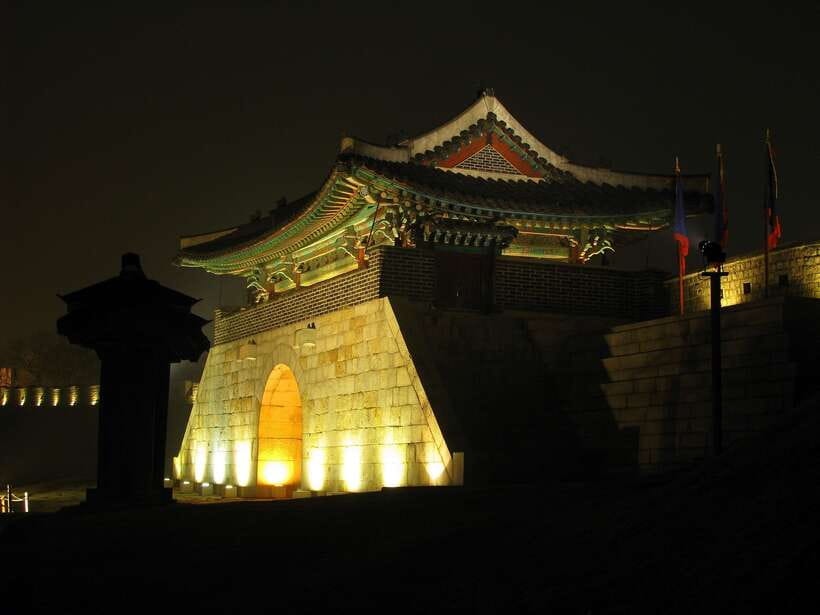
At $69 per person, the tour is not the cheapest way to reach Suwon. You are paying for transport from Seoul, a guide, admission, and a planned evening route.
The value is strongest if you have limited time, do not want to arrange the journey yourself, or care about the story behind the fortress. A self-guided visit may cost less, but you would need to manage transport, entrance details, route planning, and the return to Seoul.
The price also makes more sense when the group is small. You receive more direct attention, and the guide can adjust the pace or answer questions without addressing a large crowd. In private groups, that extra attention becomes even more useful.
The cost does not include dinner, drinks, travel insurance, or standard hotel pickup and drop-off. Private-tour customers can receive hotel pickup and drop-off, while other participants meet at the stated central location or an arranged nearby point.
I would consider the tour good value for a first visit to Suwon, particularly if you want an evening activity that combines transport and interpretation. I would look elsewhere if your priority is a cheap independent outing or a full dinner experience.
Who will enjoy this tour most?
You are a good match for this tour if you enjoy walking, old architecture, royal stories, and evening photography. It also suits first-time visitors who want to leave Seoul for a few hours without planning a separate Suwon day.
Families can benefit from the guide’s stories, although unaccompanied minors are not allowed. Couples may like the illuminated walls and city views, and the private option can work well for a proposal or special occasion.
History fans should pay close attention to the guide’s discussion of King Jeongjo, Crown Prince Sado, fortress construction, and the possible capital-city plan. Television fans will enjoy the Haengnidan-gil locations when that seasonal route applies.
I would be cautious if you have serious mobility limitations. The route involves walking, steps, and steep sections, and it is not suitable for wheelchair users. Also bring a light rain layer or weather protection if conditions look poor, since the tour runs in rain or shine.
Free cancellation is available up to 24 hours before departure, and you can reserve now while paying later. Those policies help if your Seoul plans are still moving, but you should still check the exact departure time and meeting instructions for your date.
FAQ
How long does the Suwon Hwaseong Fortress night tour last?
The tour lasts four hours, including transportation between Seoul and Suwon.
Where does the tour meet in Seoul?
The standard meeting point is in front of the front desk of Sejong Hotel.
Is hotel pickup available?
Pickup is available as an option from centrally located Seoul hotels in areas such as Gangnam, Myeongdong, Gwanghwamun, Itaewon, and Dongdaemun. Private tours include hotel pickup and drop-off. If your accommodation is difficult to access or outside the central area, you may meet at a nearby central hotel or subway station.
Which languages are available?
Live guiding is available in English and Japanese.
What happens on summer weekend departures?
From June through September on Fridays, Saturdays, and Sundays, the tour visits Suwon Haenggung Palace instead of Haengnidan-gil. No dinner or snack break is included on those summer departures.
Is food included?
No. Dinner and drinks are not included. The standard route may include time in Haenggung-dong, where cafes and restaurants are found, but the tour does not include a meal.
What should I bring?
Wear comfortable shoes because the tour involves a moderate amount of walking, including steps and some steep sections.
Can wheelchair users join?
No. The tour is not suitable for wheelchair users.
Should you book it?
Book this tour if you want Suwon’s fortress explained, photographed, and reached without transport hassles. The night lighting, city views, royal family story, and small-group attention give it more substance than a quick stop at a famous gate.
I would choose a date that visits Haengnidan-gil if you want hanoks, cafes, and drama locations. Choose the summer palace version if royal buildings and night photography appeal more to you. Pack good shoes, check the seasonal route, and leave room for dinner afterward if you want more than a short neighborhood stop.
For a first visit from Seoul, this is a well-priced, well-organized way to see one of Korea’s most important historic sites after the daytime crowds have thinned.
Just added around Seoul
- Seoraksan National Park & Nami Island★ 4.5 · 3 reviews
- Strawberry Picking, Winter Sled with Eobi Ice Valley from Seoul★ 4.5 · 3 reviews
- Seoul Full Day small group Tour★ 5.0 · 3 reviews
- Majang Meat Market Experience: Private Tour with Han-woo Beef BBQ★ 5.0 · 3 reviews
- Seoul Korean BBQ Dinner Experience with Secret Food Tours★ 5.0 · 3 reviews
- Rice Wine Tasting with Sommelier – Finest Makgeolli (& Soju)★ 5.0 · 3 reviews
- Max Out Seoul: Must Visit City Highlights Panoramic Day Tour★ 5.0 · 3 reviews
- Seongsu-dong Walking Tour: K-Pop, Culture, Cheer, Friends & Relax★ 4.5 · 3 reviews
Evening Experiences, compared.
Evening Dark History, Folklore & Ghost Story Walking Tour
Read our review →
Small-Group Night Food Tour in Seoul with Korean BBQ
Read our review →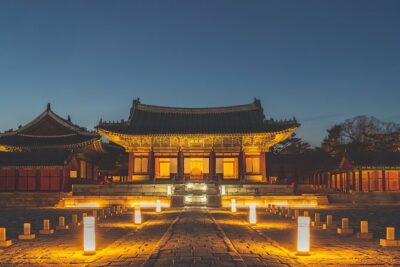
Seoul Night Palace & Market Food Tour with Vehicle
Read our review →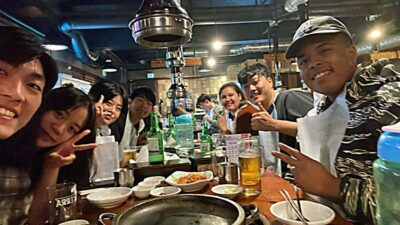
Guided City Wall Sunset Hike with Korean Dinner
Read our review →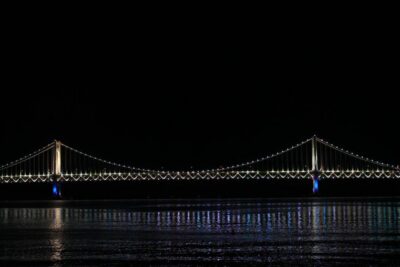
Night Viewpoints with Evening Cruise w/ Fireworks
Read our review →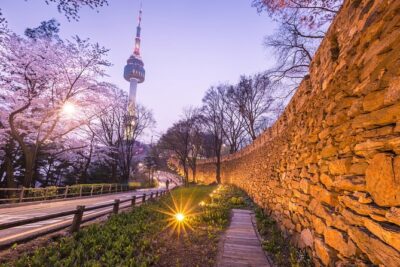
Browse the lists this tour appears in