Reviewed · HANBOK & PALACE EXPERIENCES
Seoul Night Palace & Market Food Tour with Vehicle
Seoul rewards night owls. This four-hour tour pairs Changgyeonggung Palace after dark with Korean food at Gwangjang Market and a final stop at Jogyesa Temple. You get history, local customs, street food, and short vehicle transfers without having to plan the route yourself.
I like the mix of palace stories and market eating, especially since the evening moves beyond the usual sightseeing checklist. I also like the guides’ personal touch. Ron, Janice, Mia, Bruce, Lia, Sen, and others receive repeated praise for clear explanations and friendly care. The main caution is walking: this is not a sit-down food tour, and the palace grounds, neighborhoods, and market require a fair number of steps.
In This Review
- Key points at a glance
- Why this Seoul night tour works
- Changgyeonggung Palace and the stories behind the lights
- Gwangjang Market turns dinner into the main event
- Jogyesa Temple provides a calm final stop
- The walking and vehicle balance
- Guides are a major part of the value
- Is $79 a good deal?
- Who should book this evening
- Should you book the Seoul night palace and market tour?
- FAQ
- Where does the tour start?
- What time does the tour begin?
- Where does the tour end?
- Is hotel pickup included?
- What food is included?
- Is there a vegan meal option?
- Does the vehicle cover the whole tour?
- Does the tour operate in bad weather?
Key points at a glance
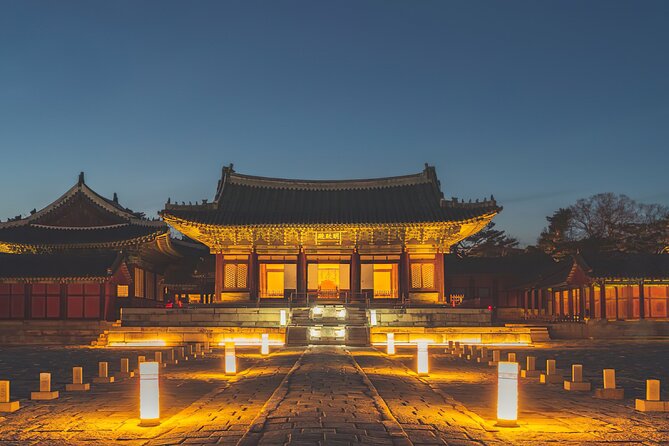
- Changgyeonggung at night: Spend about an hour among illuminated palace buildings, with stories about the royal compound and its sad past.
- A full Korean meal: Expect traditional pancakes, rice wine, raw beef, chopped live octopus, dumplings, and a twisted donut snack.
- Short vehicle transfers: An air-conditioned vehicle links the main stops, but it does not replace walking between every sight.
- Three different sides of Seoul: The route moves from royal history to market food and then to Korean Buddhist culture.
- Guides make the difference: Mia, Janice, Ron, Bruce, Lia, Katie, Enoch, and Sen are among the guides praised for warmth and strong storytelling.
- Good value at $79: Entrance fees, dinner tastings, snacks, guiding, and transportation are included, though the group may be as large as 99 people.
Why this Seoul night tour works
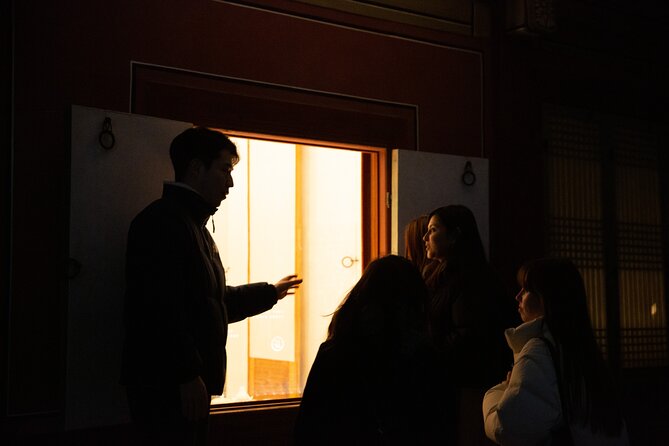
This experience is best understood as a small evening sampler of Seoul, not a specialist food crawl or a long palace tour. In four hours, you visit a royal palace, one of the city’s best-known traditional markets, and a major Buddhist temple. That gives you useful context for the city without asking you to commit a full day.
I like the way the stops balance one another. Changgyeonggung shows Seoul through the old royal court. Gwangjang Market brings you into everyday eating culture. Jogyesa offers a quieter finish and an introduction to Korean Buddhism. The route gives you different moods rather than repeating the same kind of attraction.
The night setting helps. Palace roofs and lanterns look different under evening lighting, and the market becomes a natural place for dinner. In summer, though, the 6:00 p.m. start may still feel like late afternoon until around 8:00 p.m. The photographs can suggest a darker setting than you actually get in June, July, and August.
The tour starts at 6:00 p.m. near Hyehwa Station Exit 4. You first walk from the station to the palace, then use the vehicle between attractions. It ends at Jogyesa Temple, near Anguk Station, where the guide explains how to get back to your accommodation.
More Evening Tours in Seoul
- Seoul: Night Market Food Tour with Local Guide
★ 4.9 · 943 reviews - Seoul: Evening Dark History, Folklore & Ghost Story Walking Tour
★ 5.0 · 593 reviews - Small-Group Night Food Tour in Seoul with Korean BBQ
★ 5.0 · 304 reviews
Changgyeonggung Palace and the stories behind the lights
The first stop lasts about an hour and includes admission. Changgyeonggung is often praised for its nighttime appearance, with lit buildings and garden areas creating a calmer setting than you might find during a busy daytime visit.
The guide does more than point out rooflines. The palace has a particularly sorrowful story among Korea’s royal compounds, and the tour uses that past to explain royal life, power, family conflict, and the changes that affected the palace over time. This storytelling is a major reason to choose the tour even if food is your main interest.
The palace section is not a full architectural study. You have about an hour, and the rest of the evening still has to fit in the market and temple. Think of it as a focused introduction with memorable stories rather than an exhaustive visit.
You should also prepare for uneven ground and high steps. One useful suggestion from the evening experiences is to bring a small flashlight for the palace grounds, especially if you visit in colder or darker months. Comfortable shoes matter here, and they matter even more later in the evening.
There is another timing issue. The tour is advertised as a night experience, but the palace may still be partly in daylight at the beginning, depending on the season. A summer booking gives you a later sunset, while a winter booking offers darker skies but colder temperatures. One group received hand warmers during a very cold evening, but you should still dress for the conditions.
Gwangjang Market turns dinner into the main event
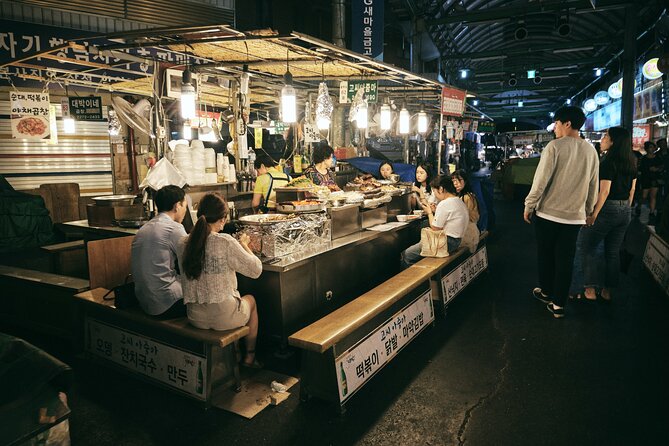
After the palace, the tour continues to Gwangjang Market, sometimes spelled Kwangjang Market. This is the evening’s food center, and you should arrive hungry. Dinner includes a selection of Korean foods rather than one single dish.
The included food is unusually adventurous for a general sightseeing tour. You may try:
- Jeon, Korean savory pancakes
- Makgeolli, a traditional rice wine
- Chopped live octopus
- Raw beef
- Dumplings
- A twisted donut snack
- Other market foods served as part of the meal
The live octopus and raw beef are not minor details. They can be the most memorable part of the evening, but they will not suit everyone. If you prefer familiar cooked food, tell the guide what you can and cannot eat. The food experience is generous, yet the exact selection can depend on the group and what is available.
The market visit appears to combine a reserved restaurant table with food stalls and snack stops. That arrangement matters. You are not simply handed a voucher and left to find dinner alone. The guide explains what you are eating, how Korean diners approach the dishes, and which foods may be new to you.
This is also where expectations need careful handling. Some people will consider the tour a very good food experience because the meal is plentiful and includes several traditional items. Others may expect a longer food crawl with many separate tastings across the market. The program is better suited to someone who wants dinner plus cultural explanation than to a dedicated food enthusiast seeking ten or fifteen small samples.
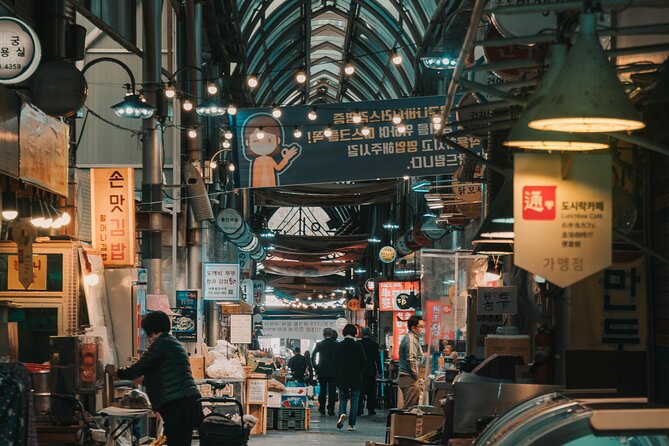
The market can be less crowded in the evening than during peak daytime hours, which makes it easier to follow the guide and focus on the food. Still, it remains a working market. Noise, tight spaces, and a quick pace are part of the setting. You are there to eat in a real public market, not in a quiet cooking classroom.
The included twisted donut snack is a nice practical touch. The tour provides a skip-the-line snack stop, so you get a sweet finish without spending extra time waiting. That small detail helps when the group is moving on a schedule.
Jogyesa Temple provides a calm final stop
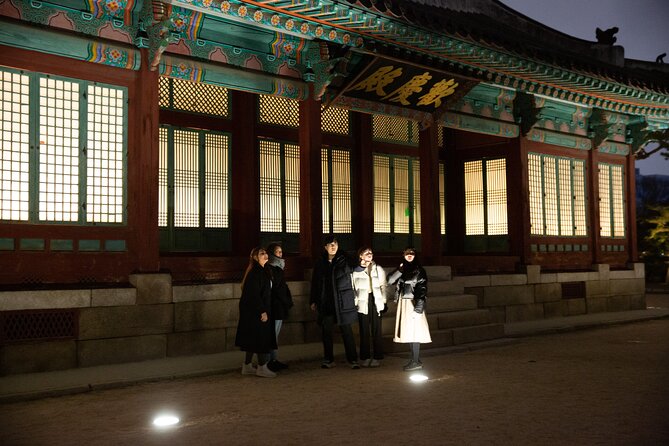
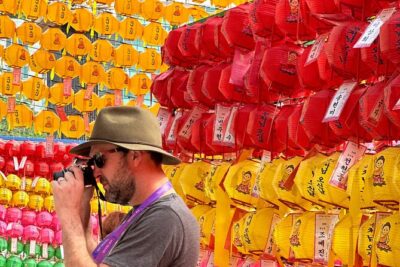
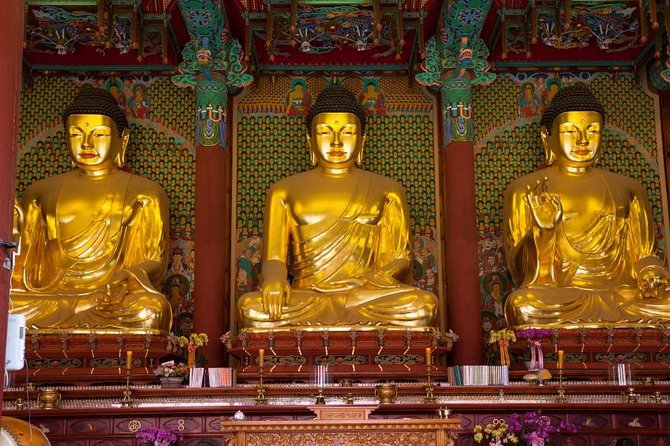
The last scheduled stop is Jogyesa Temple, with about 30 minutes to look around and hear about Korean Buddhism. The guide explains how Buddhism became part of Korean life and points out the temple’s lanterns and evening lighting.
Jogyesa is a useful contrast to the market. After food, chatter, and city movement, the temple offers a quieter place to finish the route. The stop is short, so you will not get an extended religious or architectural visit. You will get a compact introduction and time to see the illuminated setting.
The temple’s night appearance will appeal to some people more than others. If you want to study details of the site, daytime may offer better visibility. If you enjoy lanterns and a peaceful close to a busy evening, the nighttime visit makes sense.
The tour ends in front of Jogyesa Temple, near Anguk Station. This is not a hotel drop-off unless you book a private option with pickup and drop-off service. The guide helps explain how to return home, which is useful if you are still learning Seoul’s subway system.
More Market Visits in Seoul
- Seoul Street Food Market Tour
★ 5.0 · 1,226 reviews - Local Home Korean Cooking Class & Market Adventure in Seoul
★ 5.0 · 1,024 reviews - Downtown Seoul Guided Food & Market Tour with 8+ Local Tastings
★ 5.0 · 580 reviews - Seoul: Korean Cooking Class at a Local Home and Market Tour
★ 5.0 · 348 reviews
The walking and vehicle balance
The vehicle is helpful, but do not mistake this for a coach tour. The tour begins with a walk from Hyehwa Station to Changgyeonggung Palace, and you continue on foot inside the palace, through the market, and around the central Seoul neighborhoods connecting parts of the route.
Several people especially enjoyed walking through areas such as Ikseon-dong and Insadong. These sections add atmosphere and let you see cafés, traditional-style buildings, shops, and ordinary evening street life between the formal stops. They also add to the step count.
The vehicle provides transfers between attractions. That can be a relief in winter, during rain, or after a large dinner. One especially cold evening included hand warmers, and another group completed the route in heavy rain. The tour operates in rain or snow unless conditions make it impossible, so bring suitable clothing rather than assuming the vehicle will keep you indoors.
I would not choose this tour if you have serious walking limitations. The route is described as mostly flat, but there is a lot of walking and some uneven surfaces and high steps at the palace. If you enjoy walking after dinner, the pace should feel manageable. If you need frequent rest stops, the four-hour schedule may feel demanding.
Guides are a major part of the value
The strongest part of this experience is often the guide. The names that come up repeatedly include Mia, Janice, Ron, Bruce, Lia, Katie, Enoch, Sen, and J. Their styles vary, but the praise centers on the same qualities: warmth, clear storytelling, practical help with food, and attention to the group.
Mia is praised for keeping a group moving when one person arrived late, while still treating the late arrival with care. Janice receives strong marks for both market guidance and palace information. Ron is described as friendly and easy to talk with. Katie brought energy to the palace stories, and Sen connected the food, buildings, and cultural background into one evening.
That personal guidance matters at Gwangjang Market. A first visit can be confusing, especially when menus are unfamiliar and some dishes are served in ways you may not expect. The guide gives you a starting point and helps turn the meal into a cultural exchange rather than a guessing game.
The possible weakness is group size. The maximum is listed as 99 people, which is far larger than an intimate food walk. A large group can make conversations harder and may slow movement through the market. Guide quality also varies from person to person, and one very negative experience specifically criticized the guide’s manner. That appears to be an exception among the supplied feedback, but it is fair to keep the possibility in mind.
Is $79 a good deal?
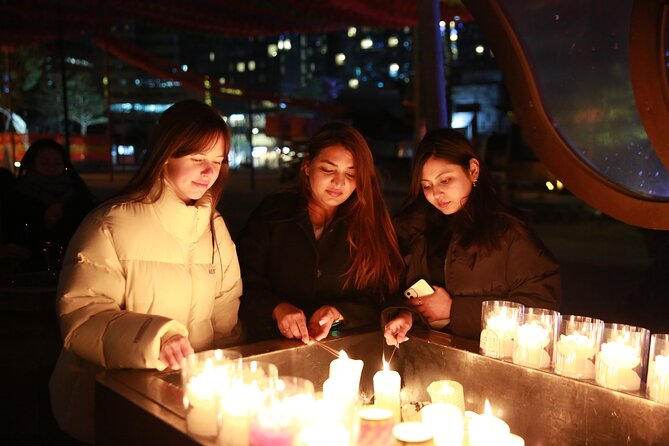
At $79 per person, the price is reasonable if you plan to use all parts of the program. It includes palace admission, an English-speaking licensed guide, dinner tastings, the twisted donut snack, and air-conditioned transportation between attractions.
You are also paying for route planning and interpretation. You could visit Changgyeonggung, Gwangjang Market, and Jogyesa Temple on your own for less, but you would need to research the sites, work out the transfers, decide what to order, and manage the timing. The tour’s value is strongest for a first visit to Seoul or for anyone who wants a ready-made evening.
The value drops if you mainly want a large number of food tastings. One meal with several shared dishes is not the same as a dedicated market crawl. It also may not suit you if you want to spend a long time at the palace or temple, since each stop has a fixed place in the four-hour schedule.
The inclusion of raw beef and live octopus makes the price feel better for adventurous eaters. Vegetarians and vegans need extra planning. A vegan meal can be arranged for an additional $10, paid in cash to the guide before the tour, and consists of separate vegetable bibimbap for each person. The supplied information specifically confirms a vegan option, but it does not describe other dietary substitutions.
Who should book this evening
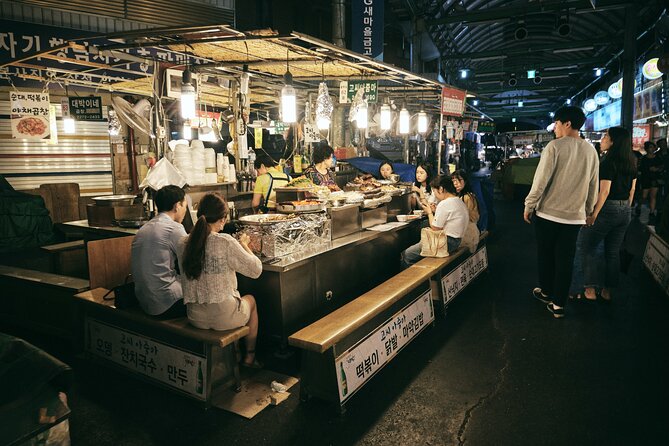
I would recommend this tour to you if you want several sides of Seoul in one night and prefer an organized route. It suits first-time visitors, families who can manage the walking, couples, solo visitors who want company, and anyone curious about Korean food but unsure where to start.
It is also a good first or second day activity. The guide can introduce customs, food etiquette, palace history, Buddhism, and neighborhood geography early in your stay. You may then feel more confident ordering food and exploring markets on your own later.
I would hesitate if you want a quiet, small-group experience, have mobility concerns, or expect a serious food crawl. I would also check the season before booking. In summer, the first half may not look fully nocturnal. In winter, the cold can be sharp. Rain and snow do not automatically cancel the tour, so pack accordingly.
The cancellation policy is straightforward: cancel at least 24 hours before the 6:00 p.m. start for a full refund. Cancellations within 24 hours are not refunded. If the operator cancels because of weather or because too few people book, you are offered another date or a full refund.
Should you book the Seoul night palace and market tour?
Book it if you want history, dinner, and local guidance in one compact evening. The palace stories, generous meal, and friendly guides give the tour more substance than a simple sightseeing transfer. The air-conditioned vehicle is a real help when the weather turns cold or wet.
Go in with the right expectations. You will walk a lot, the group may be large, and the food portion is a guided Korean dinner rather than a nonstop tasting marathon. For $79, it is a solid introduction to Seoul after dark, especially when you want someone else to handle the route and help you make sense of the menu.
FAQ
Where does the tour start?
The tour starts at Hyehwa Station Exit 4 in Seoul.
What time does the tour begin?
The start time is 6:00 p.m., and the experience lasts about four hours.
Where does the tour end?
It ends at Jogyesa Temple, in front of Anguk Station. The guide explains how to return home.
Is hotel pickup included?
Hotel pickup and drop-off are not included for the standard tour. Pickup and drop-off are available only for private bookings.
What food is included?
The included dinner features traditional Korean pancakes, rice wine, chopped live octopus, and raw beef. Snacks include a twisted donut, and the market portion may also include dumplings and other foods.
Is there a vegan meal option?
Yes. A separate vegetable bibimbap can be arranged for $10 USD, or 14,000 Korean won, paid in cash to the guide before the tour begins.
Does the vehicle cover the whole tour?
No. The tour begins with a walk from Hyehwa Station to Changgyeonggung Palace. Vehicle transportation is provided for transfers between attractions, while additional walking is required at the stops and along the route.
Does the tour operate in bad weather?
The tour operates as scheduled in rain or snow unless the weather makes the experience impossible. If poor weather causes cancellation, you are offered a different date or a full refund.
More Street Food Tours
- Seoul: Gyeongbok Palace, Bukchon Village, and Gwangjang Tour
★ 5.0 · 1,044 reviews - Seoul Fun Food Tour: 12 different food tastings
★ 5.0 · 266 reviews - The Award-Winning PRIVATE Food Tour of Seoul: The 10 Tastings
★ 4.5 · 128 reviews - Seoul Night Tour (Gwangjang Market, Royal Palace and Naksan Park)
★ 5.0 · 92 reviews
More Hanbok and Palace Experiences
- Seoul: Gyeongbok Palace, Bukchon Village, and Gwangjang Tour
★ 4.9 · 2,321 reviews - Best Seoul City Tour (Gyeongbokgung Palace,Insadong,Namsan Tower)
★ 5.0 · 1,647 reviews - Small-Group Royal Palace and Seoul City Tour (hotel pick-up)
★ 5.0 · 1,474 reviews - Seoul City Sightseeing Tour Including Gyeongbokgung Palace, N Seoul Tower, and Namsangol Hanok Village
★ 5.0 · 1,423 reviews
Just added around Seoul
- Seoraksan National Park & Nami Island★ 4.5 · 3 reviews
- Strawberry Picking, Winter Sled with Eobi Ice Valley from Seoul★ 4.5 · 3 reviews
- Seoul Full Day small group Tour★ 5.0 · 3 reviews
- Seoul Korean BBQ Dinner Experience with Secret Food Tours★ 5.0 · 3 reviews
- Rice Wine Tasting with Sommelier – Finest Makgeolli (& Soju)★ 5.0 · 3 reviews
- Majang Meat Market Experience: Private Tour with Han-woo Beef BBQ★ 5.0 · 3 reviews
- Seongsu-dong Walking Tour: K-Pop, Culture, Cheer, Friends & Relax★ 4.5 · 3 reviews
- Seoul: Alpaca World and Nami Island (with Garden / Railbike)★ 5.0 · 3 reviews
Hanbok & Palace Experiences, compared.

Gyeongbok Palace, Bukchon Village, and Gwangjang Tour
Read our review →
Best Seoul City Tour (Gyeongbokgung Palace,Insadong,Namsan Tower)
Read our review →
Small-Group Royal Palace and Seoul City Tour (hotel pick-up)
Read our review →
Seoul City Sightseeing Tour Including Gyeongbokgung Palace, N Seoul Tower, and Namsangol Hanok Village
Read our review →Gyeongbok Palace, Bukchon Village, and Gwangjang Tour
Read our review →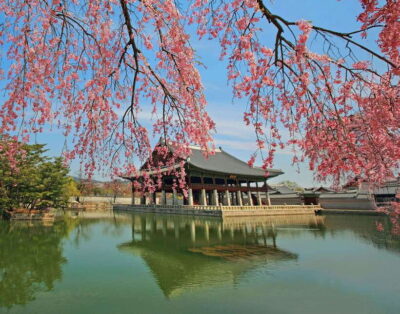
Seoul Highlights: Gyeongbok Palace, Insadong & N Seoul Tower
Read our review →