
Reviewed · HANBOK & PALACE EXPERIENCES
Seoul City Half Day Tour-Gyeongbok Palace Guard Changing Ceremony
Seoul’s royal heart is a fine place to begin. This three-hour morning tour gives you a quick, useful introduction to the city through Jogyesa Temple, Gyeongbokgung Palace, the Blue House area, and a colorful guard-changing ceremony. I like the efficient coach transport, which lets you cover several central sights without sorting out Seoul’s busy streets and subway connections on your first morning. I also like the guides, especially names such as Kelly, Emily, Sunny, Gabby, and Ray, who are repeatedly praised for clear explanations, local stories, patience, and help with photos.
The main drawback is the final ginseng shopping stop. It is described as a museum or cultural visit, but the actual experience can feel more like a sales presentation. If you dislike organized shopping, this part may sour an otherwise worthwhile tour. The palace, temple, and guide-led history are the real reasons to book.
In This Review
- Key Points at a Glance
- Why This Tour Works for a First Morning in Seoul
- Jogyesa Temple: A Quiet Start in Central Seoul
- Cheongwadae Sarangchae and the Blue House
- Gyeongbokgung Palace and the Gwanghwamun Ceremony
- The Museum Stop: Useful Context, but Check the Details
- The Ginseng Center: The Tour’s Clear Weak Spot
- Guides Make the Difference
- Transport, Pickup, and the End of the Morning
- Tuesday Changes and Seasonal Planning
- Who Should Book This Seoul Tour?
- Should You Book It?
- FAQ
- How long is the Seoul City Half-Day Tour?
- What sights are included?
- Is hotel pickup included?
- Where does the tour end?
- Is the Gyeongbokgung Palace admission included?
- Does the tour run on Tuesdays?
- Is lunch included?
- What is the cancellation policy?
Key Points at a Glance
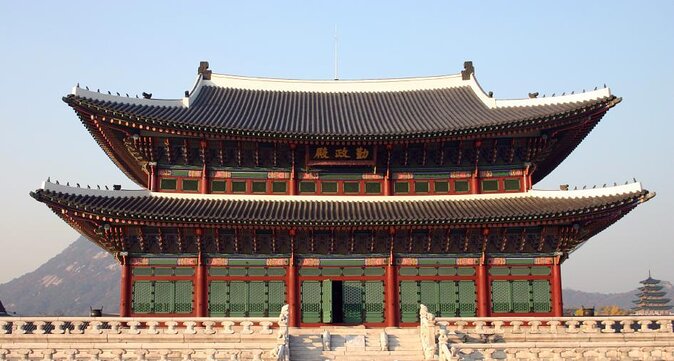
- See the guard ceremony at Gwanghwamun Gate: The brightly dressed guards perform a formal, carefully timed ceremony outside Seoul’s most famous palace.
- Start with Jogyesa Temple: This central Buddhist temple offers a peaceful change from the traffic and tall buildings around it.
- Use a coach to save time: Hotel pickup and air-conditioned transport make the morning easier for first-time visitors.
- Learn Seoul’s story from a local guide: Guides such as Kelly, Emily, Sunny, Gabby, and Ray are praised for history, practical tips, and friendly help.
- Expect a shopping stop: The ginseng center can involve a strong sales pitch, so set your expectations before booking.
- Plan around Tuesday closures: Gyeongbokgung Palace and the National Folk Museum are closed on Tuesdays, with replacement sights provided.
Why This Tour Works for a First Morning in Seoul
At $38 per person, this is priced as an orientation tour rather than a full-day cultural program. You are paying for transportation, hotel pickup, an English or Chinese-speaking guide, palace admission, and a tightly arranged route through central Seoul.
That can be good value if you have just arrived, are jet-lagged, or want someone else to handle the morning’s movements. Seoul is easy to explore independently once you understand the subway, but a coach tour removes the early guesswork. You can sit back while the guide explains what you are seeing.
The tour lasts about three hours, leaving your afternoon open. That timing matters. You can continue around City Hall, Myeongdong, Insadong, or another part of central Seoul rather than losing a whole day to sightseeing.
The group can be as large as 40 people, although some departures may be smaller. A large group means less flexibility and more time gathering people, but it also keeps the price low. A few people received pickup in a smaller vehicle, including one group collected in a comfortable SUV. Do not count on that, but it shows that transport can vary by departure size.
More City Tours in Seoul
- Best Seoul City Tour (Gyeongbokgung Palace,Insadong,Namsan Tower)
★ 5.0 · 1,647 reviews - Small-Group Royal Palace and Seoul City Tour (hotel pick-up)
★ 5.0 · 1,474 reviews - Seoul City Sightseeing Tour Including Gyeongbokgung Palace, N Seoul Tower, and Namsangol Hanok Village
★ 5.0 · 1,423 reviews
Jogyesa Temple: A Quiet Start in Central Seoul
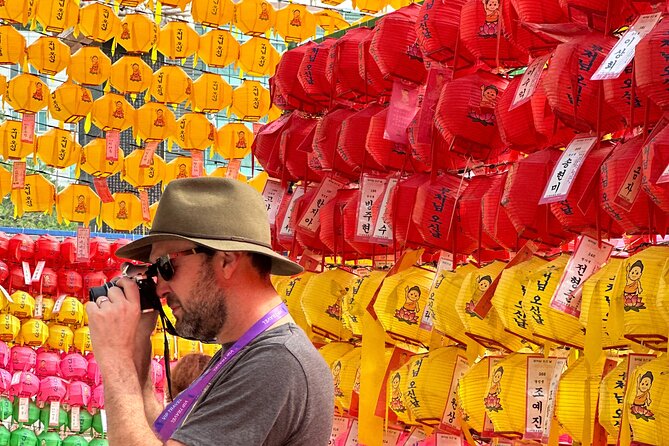
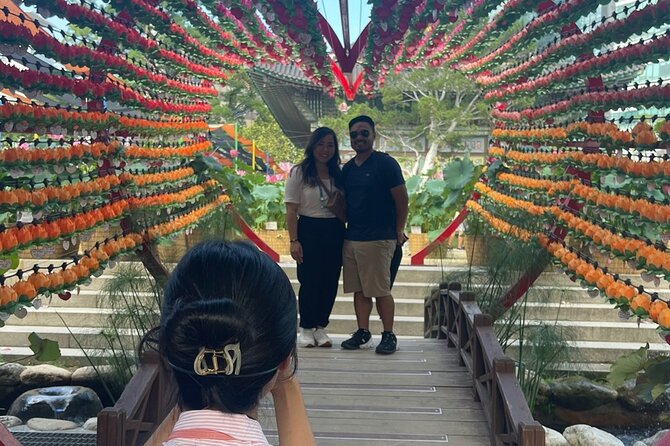
The morning begins at Jogyesa Temple, one of the key places connected with Korean Buddhism. It was first established in 1935 and sits in downtown Seoul, where its tree-lined entrance provides a calm pause from the surrounding city.
Your guide leads you through the grounds, points out a seven-story pagoda, and takes you into the main temple building to see an important Buddha statue. The visit lasts about 40 minutes, enough time to understand the site without turning the tour into a long religious architecture lesson.
I like this opening because it gives you contrast right away. Seoul is not only royal palaces, shopping streets, and modern towers. Jogyesa introduces a living religious tradition before the tour moves into Korea’s royal past.
The stop is best for you if you enjoy seeing places that still serve their original purpose. If temples are not your interest, it may feel brief and less exciting than the palace. One useful advantage is the guide. Several guides are praised for explaining cultural meaning in a friendly way rather than simply pointing at buildings.
Cheongwadae Sarangchae and the Blue House
After Jogyesa Temple, the coach continues to Cheongwadae Sarangchae, an exhibition hall focused on Korea’s presidents, Korean traditions, and UNESCO World Heritage Sites in Korea. The displays offer a short introduction to the country’s modern political story and cultural identity.
The schedule allows about 30 minutes here. That is enough for a quick look, but not enough for a careful museum visit. Think of it as context between the temple and the palace rather than a major attraction in its own right.
The route also passes the Blue House, known in Korean as Cheongwadae, which served as the presidential home. The comparison with the White House helps explain its role, but this is mainly a pass-by view rather than a detailed interior visit.
This part is useful because it links different eras of Seoul. You see Buddhist tradition, presidential Korea, and then the Joseon royal court. The stops are short, but together they give the morning a clear shape.
Gyeongbokgung Palace and the Gwanghwamun Ceremony
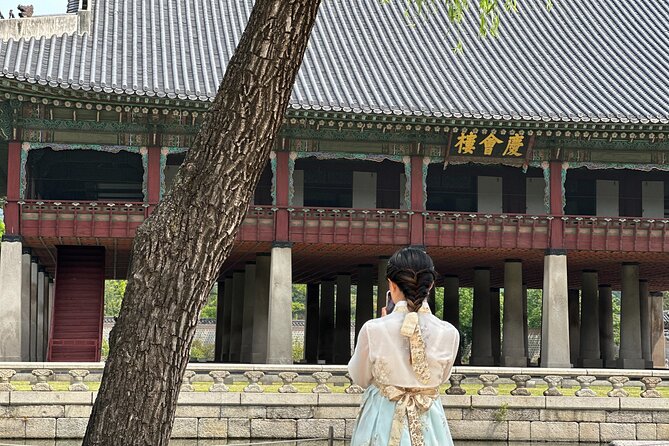
Gyeongbokgung Palace is the centerpiece. Built in 1394, it was the main royal residence during the Joseon Dynasty and is the largest of Seoul’s Five Grand Palaces. The broad compound, formal gates, courtyards, and restored royal buildings provide the tour’s strongest sense of place.
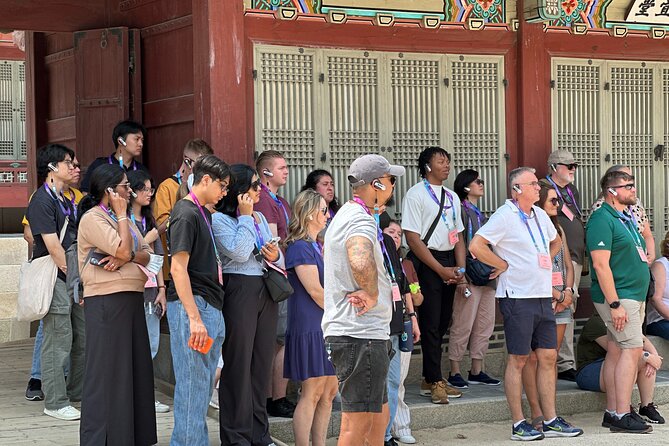
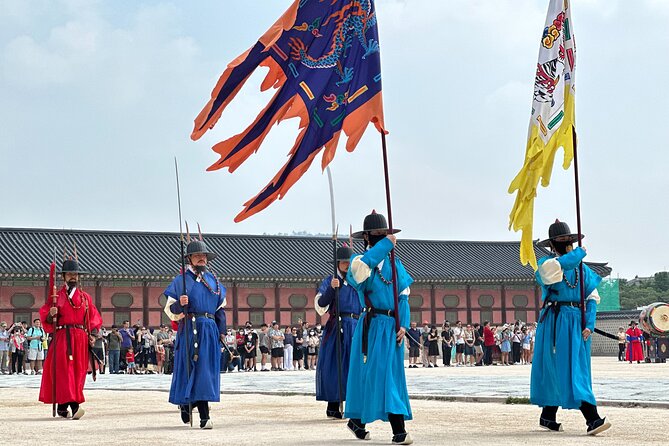
You spend about an hour at the palace, including the guard-changing ceremony at Gwanghwamun Gate. The ceremony is carefully choreographed, with uniforms, banners, music, and precise movements. It is a short performance, but it has enough color and ceremony to become the morning’s most memorable photo opportunity.
Your guide’s position can make a real difference. Ray is specifically praised for knowing the best place to stand, while another visitor was grateful that the guide secured a front-row view. That is one of the practical benefits of joining a guided visit. At a popular ceremony, the difference between a clear view and a view through a forest of phones can be considerable.
The palace visit is not only about photographs. A good guide can explain why the buildings are arranged as they are and place the royal compound within Korea’s history. Emily, Kelly, Crystal, Henry, and others are praised for answering questions and making the past easier to follow.
Allow for outdoor walking here. One person specifically advised bringing a hat because the palace grounds can be very sunny. Another found the summer heat difficult, while a winter visit took place during heavy snow and bitter cold. Wear shoes suited to walking and dress for the forecast. The palace experience is mostly outside, so weather affects it more than the coach portion.
More hanbok and palace experiences:
- Seoul: Gyeongbok Palace, Bukchon Village, and Gwangjang Tour
★ 4.9 · 2,321 reviews - Seoul: Gyeongbok Palace, Bukchon Village, and Gwangjang Tour
★ 5.0 · 1,044 reviews - Seoul Highlights: Gyeongbok Palace, Insadong & N Seoul Tower
★ 4.7 · 726 reviews - Seoul: Hanbok Rental with Gyeongbokgung Palace Entry
★ 4.6 · 611 reviews
The Museum Stop: Useful Context, but Check the Details
The scheduled museum portion is listed as the National Folk Museum of Korea, with about 30 minutes allocated. The supplied description also refers to the National Palace Museum of Korea, which is a different institution, so the exact museum stop may depend on the operating schedule and route.
Either way, the museum component is short. You should see it as an added cultural stop, not a full museum tour. The value comes from gaining background on Korean traditions, royal life, or national heritage before continuing your own sightseeing.
If museums are important to you, you may want to return independently for a longer visit. The half-day format favors range over depth. It gives you several introductions, then leaves you to choose which subjects deserve more of your time.
The Ginseng Center: The Tour’s Clear Weak Spot
The final stop is a ginseng center or ginseng shopping visit, listed as about 30 minutes and with no separate admission charge. Ginseng is an important Korean product, and the stop may include a short explanation of its history and use.
The problem is the sales pressure. The visit can feel like being led into a shop, seated for a presentation, and encouraged to buy products. One person compared it to a time-share sales session. Another said the palace and temple were excellent but disliked being kept in a room for the sales pitch. Some people may enjoy browsing or buying Korean ginseng, but you should not mistake this for a standard museum visit.
This matters because 30 minutes is a significant share of a three-hour tour. The stop can also feel especially frustrating after an otherwise cultural morning. If you are willing to treat it as the cost of a low-priced organized tour, it may be manageable. If you want every minute devoted to sights, this is a real reason to choose a different experience.
Guides Make the Difference
The strongest part of this tour is the guide service. The best guides do more than repeat dates. They keep a group moving, explain unfamiliar customs, answer questions, help with photographs, and adjust their approach to the people in front of them.
Kelly is praised for her history knowledge and gentle manner. Emily receives repeated praise for clear communication and useful explanations. Sunny is described as cheerful and engaging, and one person appreciated her restaurant suggestions for lunch afterward. Gabby is praised for patience and kindness, while Ray helped position a group for a better view of the ceremony.
There are also examples of practical care. A driver returned to collect someone who became lost on the way to the meeting point. Another guide waited for a person arriving 20 minutes late from the airport. These are not guarantees, but they show why contact details and a little communication matter if your arrival is tight.
Guide quality can vary, as it does on any group tour. One person found the historical explanations limited, despite liking the friendly guide and comfortable bus. If you want an academic treatment of Joseon history, hire a private guide or spend more time at the palace afterward. If you want clear orientation and local stories, this format is a better fit.
Transport, Pickup, and the End of the Morning
Hotel pickup is offered in Seoul, and the coach is air-conditioned. The advertised starting point is City Hall Station, with the end listed at Seoul City Hall. Other details state that drop-off may be at City Hall, Myeongdong, or Itaewon, so check the exact arrangement for your departure.
The coach is a practical advantage. Seoul’s major sights are not far apart on a map, but traffic, street crossings, and group movement can consume time. You still have walking at Jogyesa Temple and Gyeongbokgung Palace, but the road sections are handled for you.
The tour does not include lunch or hotel drop-off. That is not a major problem because you finish around midday, when you can choose your own meal. Insadong is a handy area for Korean food, and one guide helped a group find a restaurant there, but this is personal advice from the guide rather than a formal part of the tour.
Most people can participate, but you should be comfortable with walking and outdoor conditions. The group size may reach 40, so anyone wanting a quiet, slow-paced visit should consider a private option.
Tuesday Changes and Seasonal Planning
Gyeongbokgung Palace and the National Folk Museum close every Tuesday. The tour provides replacement sights, but the supplied details describe two different Tuesday plans: one mentions Deoksugung Palace, while another lists Changdeok Palace and Bukchon Hanok Village.
Because of that difference, confirm the Tuesday route before you pay. A replacement plan can still be worthwhile, but it will not be the same experience as Gyeongbokgung and its guard ceremony. If the ceremony is your main reason for booking, choose another day.
Weather also deserves attention. The experience requires good weather, and poor conditions can lead to a different date or a full refund. Summer heat and winter snow have both affected past departures, so a hat, water, and suitable clothing are sensible additions.
Who Should Book This Seoul Tour?
I would book this if you have limited time, are new to Seoul, or want a guided introduction before exploring alone. It is especially useful on your first morning, when hotel pickup, coach transport, and a local guide can save mental energy.
It also suits people who want the guard ceremony but do not want to plan palace admission and timing themselves. The guide can help you reach a good viewing position and connect the ceremony with the wider palace visit.
I would not book it if you strongly dislike shopping stops, prefer long museum visits, or want to explore at your own pace. The ginseng visit is not a minor footnote for everyone. It takes time and can include pressure to buy.
At $38, the tour offers solid value for transport, admission, a guide, and several major sights. The tradeoff is a fixed route, a possible group of 40, short visits, and the sales stop. The overall rating is 4.6 from 357 ratings, with 92 percent recommending it, which fits the experience: strong sightseeing and guide service, weakened by one avoidable commercial stop.
Should You Book It?
Book this half-day tour if you want to get your bearings fast and see Seoul’s main historic sights with help from a local guide. Jogyesa Temple and Gyeongbokgung Palace give the morning real cultural weight, and the guard ceremony is worth arranging around.
Before booking, confirm the Tuesday replacement route and accept that the ginseng center may be a sales visit rather than a museum. If you can live with that compromise, this is an affordable, efficient start to Seoul. If not, explore the palace and temple independently and keep your morning free from scheduled shopping.
FAQ
How long is the Seoul City Half-Day Tour?
The tour lasts approximately three hours and takes place in the morning.
What sights are included?
The route includes Jogyesa Temple, Cheongwadae Sarangchae, a view of the Blue House, Gyeongbokgung Palace, the guard-changing ceremony, a museum stop, and a ginseng center.
Is hotel pickup included?
Yes. Hotel pickup in Seoul is offered, and the tour also lists City Hall Station as a starting point.
Where does the tour end?
The listed end point is Seoul City Hall. Other details state that drop-off may also be available at City Hall, Myeongdong, or Itaewon, so confirm the exact location for your departure.
Is the Gyeongbokgung Palace admission included?
Yes. Palace admission and the guard-changing ceremony are included in the tour price.
Does the tour run on Tuesdays?
The tour can run on Tuesdays, but Gyeongbokgung Palace and the National Folk Museum are closed that day. Replacement sights are used, with the supplied details listing Deoksugung Palace in one description and Changdeok Palace and Bukchon Hanok Village in another.
Is lunch included?
No. Lunch is not included, but the tour ends around midday, leaving you free to choose a restaurant.
What is the cancellation policy?
You can cancel at least 24 hours before the start time for a full refund. Cancellations or changes made within 24 hours are not accepted for a refund. If poor weather or insufficient bookings cause the tour to be canceled, you will be offered another date or a full refund.
Just added around Seoul
- Seoraksan National Park & Nami Island★ 4.5 · 3 reviews
- Strawberry Picking, Winter Sled with Eobi Ice Valley from Seoul★ 4.5 · 3 reviews
- Seoul Full Day small group Tour★ 5.0 · 3 reviews
- Majang Meat Market Experience: Private Tour with Han-woo Beef BBQ★ 5.0 · 3 reviews
- Seoul Korean BBQ Dinner Experience with Secret Food Tours★ 5.0 · 3 reviews
- Rice Wine Tasting with Sommelier – Finest Makgeolli (& Soju)★ 5.0 · 3 reviews
- Max Out Seoul: Must Visit City Highlights Panoramic Day Tour★ 5.0 · 3 reviews
- Seongsu-dong Walking Tour: K-Pop, Culture, Cheer, Friends & Relax★ 4.5 · 3 reviews
Hanbok & Palace Experiences, compared.

Gyeongbok Palace, Bukchon Village, and Gwangjang Tour
Read our review →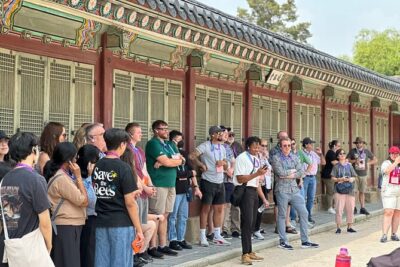
Best Seoul City Tour (Gyeongbokgung Palace,Insadong,Namsan Tower)
Read our review →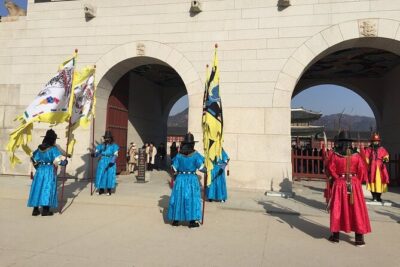
Small-Group Royal Palace and Seoul City Tour (hotel pick-up)
Read our review →
Seoul City Sightseeing Tour Including Gyeongbokgung Palace, N Seoul Tower, and Namsangol Hanok Village
Read our review →Gyeongbok Palace, Bukchon Village, and Gwangjang Tour
Read our review →
Seoul Highlights: Gyeongbok Palace, Insadong & N Seoul Tower
Read our review →

Small Group Seoul Highlight Tour opt. Hanbok & Tea Ceremony
Read our review →Browse the lists this tour appears in