
Reviewed · HANBOK & PALACE EXPERIENCES
Small-Group Royal Palace and Seoul City Tour (hotel pick-up)
Seoul’s old royal quarter rewards a full day. This tour ties together two major palaces, a Buddhist temple, traditional shopping streets, and a market, with guides such as Mr. Young, BK, Lua, Sookee, and Yeoni adding history and local color. I like the small-group format and the easy hotel pickup. My main caution is that traffic, a ginseng-center stop, and several short visits can make the day feel tightly packed.
I also like the thoughtful weekday alternatives. On Monday, Changdeokgung gives way to Bukchon Hanok Village, while Tuesday closures bring a different palace plan and another Bukchon visit. Lunch is now on your own in Insadong, which gives you choice but means the old promise of an included meal no longer applies.
In This Review
- Key points at a glance
- Why this eight-hour Seoul tour works
- Jogyesa Temple: calm beside Jongno traffic
- Gwanghwamun and Gyeongbokgung: Seoul’s grand royal opening
- The National Folk Museum: useful context, limited time
- The Blue House: an outside look at modern power
- The ginseng center: educational stop with a sales angle
- Insadong: the best place to pause for lunch
- Changdeokgung: the quieter palace choice
- Namdaemun Gate and Market: a lively final stop
- Transport, walking, and the pace of the day
- What the $56.44 price really covers
- Who should book this tour?
- FAQ
- How long does the Seoul palace tour last?
- Is hotel pickup included?
- Where does the tour end?
- Is lunch included?
- What happens if Changdeokgung is closed on Monday?
- What happens on Tuesday when Gyeongbokgung is closed?
- Can the royal guard ceremony be cancelled?
- How large is the group?
- What is included in the price?
- Should you book it?
Key points at a glance
- Two royal palaces in one day: Visit Gyeongbokgung, the Joseon dynasty’s main palace, and UNESCO-listed Changdeokgung.
- A small group of up to 16: The format allows more personal questions and easier pacing than a large coach tour.
- A useful first-day introduction: Jogyesa Temple, Gwanghwamun, the Blue House, Insadong, and Namdaemun cover old and modern Seoul.
- Weekday substitutions matter: Palace closures are handled with Bukchon Hanok Village and a revised palace schedule.
- Hotel pickup is a real convenience: Pickup is offered in central Seoul, though the tour ends at City Hall or Myeongdong rather than returning to your hotel.
- Budget around lunch and shopping time: The $56.44 price includes admissions, guide service, transport, and bottled water, but not lunch.
Why this eight-hour Seoul tour works
For a first visit, Seoul can feel huge. Royal palaces sit near Buddhist temples, markets, museums, and modern government buildings, but these sights are spread across several districts. This tour handles the transport and gives you a clear story of how the city developed.
The day begins around 9 a.m. and lasts about eight hours. Pickup is available from hotels in central Seoul, with meeting times adjusted by location. You travel in a comfortable vehicle with a local English-speaking guide and driver-guide arrangement. The maximum group size is 16, although some departures may be much smaller. One couple reported a group of only three, which is about as personal as a shared city tour gets.
The strongest part of the experience is the guiding. Mr. Young is repeatedly praised for his history, humor, timing, and help with photographs. BK is noted for shaping his explanations to suit adults and young teens. Lua is described as friendly and attentive, while Sookee brings palace intrigue and modern Korean history to life. The exact guide is assigned by departure, so you cannot count on a particular person, but the tour clearly depends heavily on who leads it.
More City Tours in Seoul
- Best Seoul City Tour (Gyeongbokgung Palace,Insadong,Namsan Tower)
★ 5.0 · 1,647 reviews - Seoul City Sightseeing Tour Including Gyeongbokgung Palace, N Seoul Tower, and Namsangol Hanok Village
★ 5.0 · 1,423 reviews - Seoul: Dark Side of the City and Ghost Stories Walking Tour
★ 4.8 · 484 reviews
Jogyesa Temple: calm beside Jongno traffic
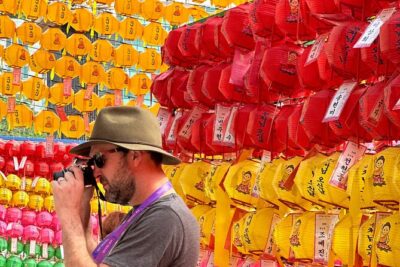
Jogyesa Temple is a smart opening stop. It sits in busy Jongno, yet the temple grounds feel quiet and composed once you step away from the street. Colorful decorations and large golden Buddha statues give you immediate visual contrast with Seoul’s office blocks and traffic.
You have about 30 minutes here, and admission is free. That is enough time for a brief look, photographs, and a guide’s explanation of Korean Zen Buddhism. Do not expect a long temple study session. The value is in seeing how religious life remains part of central Seoul, not in spending hours at the site.
This stop also helps set up the day’s larger theme. Seoul is not only a modern capital. Its older customs, ceremonies, architecture, and spiritual practices still sit in plain view between subway stations and commercial streets.
Gwanghwamun and Gyeongbokgung: Seoul’s grand royal opening
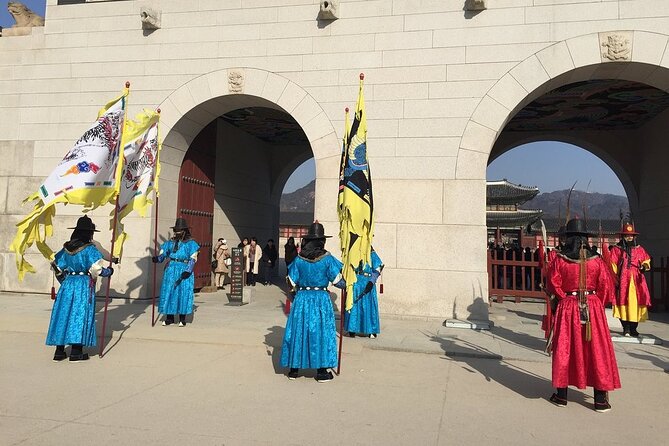
Keep your camera ready at Gwanghwamun Gate. The changing of the royal guard is scheduled for the morning visit, and you will spend about 20 minutes watching the ceremony before entering Gyeongbokgung Palace.
The ceremony may be cancelled in poor weather, so treat it as a bonus rather than the entire reason to book the tour. If conditions cooperate, it adds movement and color to what could otherwise be a purely architectural visit.
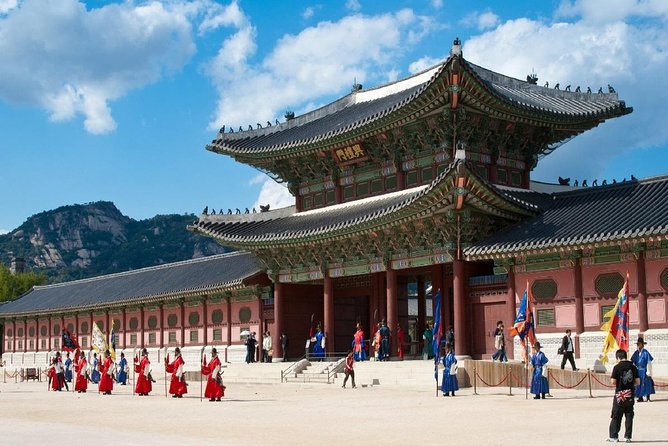
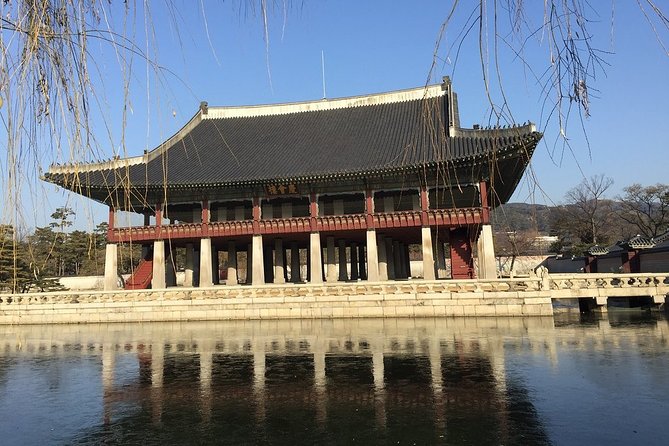
Gyeongbokgung was the main palace of the Joseon dynasty. The tour gives you about an hour inside, with admission included. This is the place where the scale of royal Seoul becomes clear: formal gates, courtyards, palace buildings, and broad views toward the northern hills.
A good guide makes a large difference here. The buildings can look similar if you do not understand their roles, and the Joseon royal family has enough court politics to fill several television dramas. Guides such as Mr. Young and Sookee are praised for explaining palace intrigue without losing sight of daily life and wider Korean history.
The National Folk Museum: useful context, limited time
Within the palace grounds, the National Folk Museum of Korea gives the day a more human focus. Rather than concentrating only on kings and formal buildings, it shows how ordinary life developed from earlier periods into modern Korea.
You have about 20 minutes, which is the weakest time allocation for anyone who enjoys museums. One visitor specifically felt this stop was rushed. I agree that you should see it as a short orientation, not a full museum visit.
The guide can point out displays about household life, social classes, customs, and daily work. If this subject interests you, make a note to return independently with more time. The museum’s inclusion is valuable, but the schedule asks you to keep moving.
More hanbok and palace experiences:
- Seoul: Gyeongbok Palace, Bukchon Village, and Gwangjang Tour
★ 4.9 · 2,321 reviews - Seoul: Gyeongbok Palace, Bukchon Village, and Gwangjang Tour
★ 5.0 · 1,044 reviews - Seoul Highlights: Gyeongbok Palace, Insadong & N Seoul Tower
★ 4.7 · 726 reviews - Seoul: Hanbok Rental with Gyeongbokgung Palace Entry
★ 4.6 · 611 reviews
The Blue House: an outside look at modern power
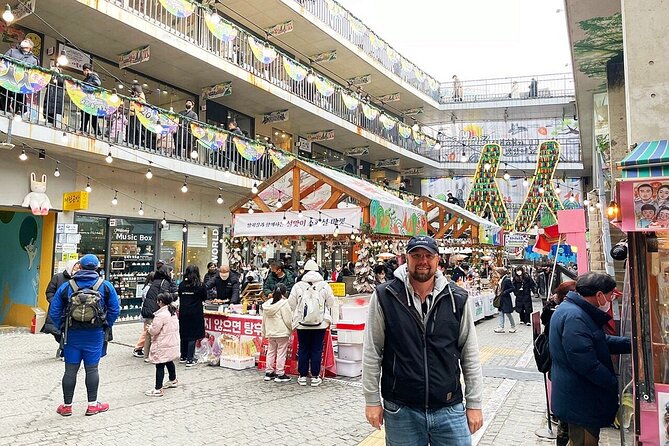
The Blue House, or Cheong Wa Dae, is viewed from outside. It was built on the grounds of a Joseon royal garden and served as the official presidential residence until May 2022.
The stop connects royal Seoul with the modern republic. You can see the blue-roofed complex with Mt. Bukak behind it, a setting that helps explain why this area has long held political importance.
Do not expect an interior tour. The attraction here is the setting and the brief explanation of the building’s role. Depending on the exact order and traffic, the Blue House may be introduced around the palace portion of the morning rather than as a long standalone visit.
The ginseng center: educational stop with a sales angle
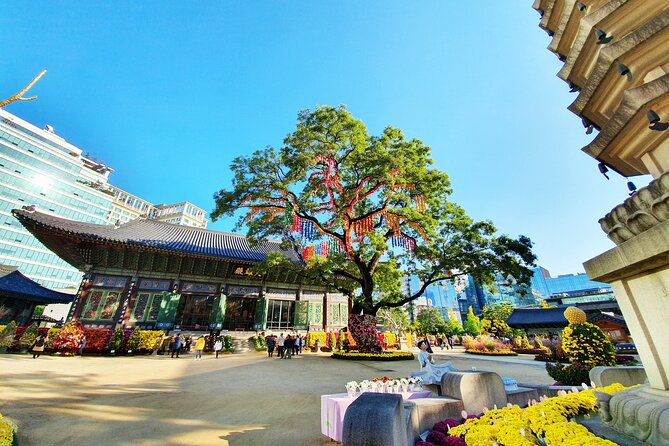
Before Insadong, the tour visits the Government-Approved Korean Ginseng Center, also described as the Cheongha Korea Ginseng Museum. You spend about 30 minutes tasting ginseng tea, seeing products, and learning why ginseng is important in Korean culture.
This is the most divisive part of the schedule. Some people enjoy the explanation and the chance to sample a traditional product. Others find the stop unnecessary, especially on a full day when museum time is already short.
My advice is simple: treat it as an educational shopping stop, not a core Seoul sight. You are not required to buy anything. If you are interested in Korean food, health traditions, or gifts, you may find it worthwhile. If your priority is architecture and local neighborhoods, this is the easiest segment to regard as filler.
Insadong: the best place to pause for lunch
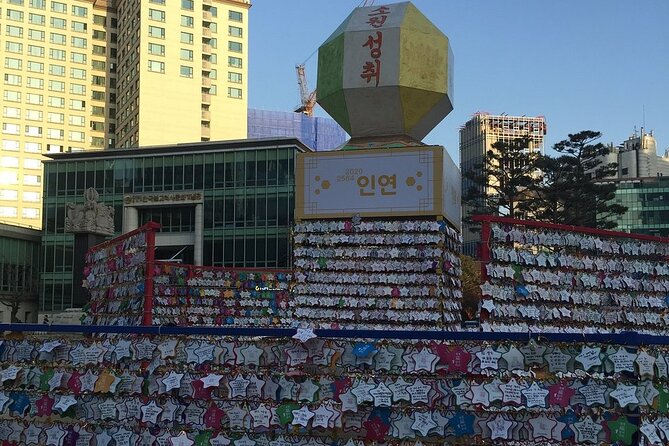
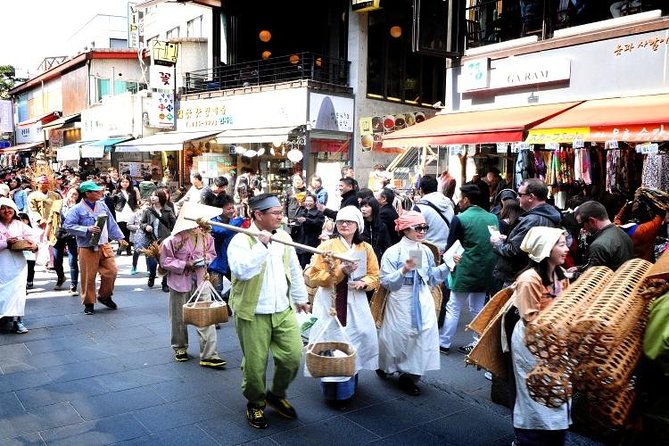
Insadong is one of the day’s most useful stops because it combines culture, shopping, and a break from the vehicle. You have about 1 hour and 20 minutes here, enough time to eat and browse traditional goods, antique shops, tea houses, and craft-oriented stores.
Lunch is no longer included from September 1, 2024. You have free time to choose your own meal in Insadong, so budget separately for food. This change is actually helpful for diners with different tastes, allergies, or budgets, but it puts the responsibility on you to decide where and when to eat.
One guide, Yeoni, reportedly offered an optional arranged lunch for people who did not want to search for a restaurant. That may depend on the day and guide, so do not assume it is part of the package. If you want a leisurely shopping session, plan to return to Insadong on another day. The scheduled break gives you a taste, not a thorough neighborhood visit.
Changdeokgung: the quieter palace choice
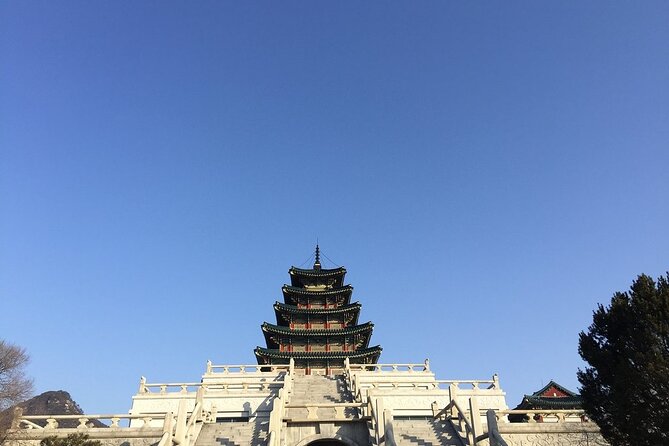
Changdeokgung was built in 1405 as the second royal villa after Gyeongbokgung. It later served as the principal palace for several Joseon kings and is considered the best preserved of Seoul’s major palaces. Its UNESCO designation reflects its cultural importance and the way its buildings fit the surrounding grounds.
The tour allows about an hour here, with admission included. Compared with Gyeongbokgung’s grand formal scale, Changdeokgung often feels more intimate and connected to its wooded setting. The guide’s explanations help you understand why the two palaces matter in different ways.
The schedule changes by weekday:
- On Mondays, Changdeokgung is closed, so the tour visits Bukchon Hanok Village instead.
- On Tuesdays, Gyeongbokgung and the National Folk Museum are closed. The plan shifts to Changdeokgung, including the Secret Garden, followed by Bukchon Hanok Village in the afternoon.
These substitutions are a strong feature, but check the day of your booking carefully. A palace-focused itinerary on one weekday may become a more neighborhood-focused day on another. The Secret Garden is specifically included in the Tuesday alternative, which several people considered a highlight.
Namdaemun Gate and Market: a lively final stop
The last stop is Namdaemun, also called Soongryemun. The gate dates to 1396, during King Taejo’s reign, and is recognized as Korea’s most important National Treasure. You have about 30 minutes for the gate and nearby Namdaemun Market.
This is a brief visit, so you will not cover every corner of the market. Use the time to look at the gate, sample the atmosphere, and get a first sense of Seoul’s traditional commerce. If shopping is your main goal, return independently when you can move at your own pace.
Ending at a market is a good choice. After a day of dynasties and formal courtyards, Namdaemun brings you back to everyday Seoul. You may finish with shopping bags, which is why the driver’s help carrying purchases was appreciated on one departure.
Transport, walking, and the pace of the day
The vehicle saves you from stitching together several subway journeys, especially when you are still learning Seoul’s districts. It is also a comfort on a long sightseeing day. The tradeoff is road traffic. One assessment noted that transfers can take a fair amount of time, and Seoul traffic can slow the schedule.
You need moderate physical fitness. Expect walking through palace compounds, temple grounds, market areas, and streets, with time spent standing during explanations and the guard ceremony. Wear supportive shoes and bring layers. Winter can be very cold, and Sookee specifically warned one winter group to dress properly.
The pace is generally described as well judged. Several people liked the balance between guided commentary and free time, while one person wanted longer in the Folk Museum. That tells you what kind of tour this is: efficient sightseeing, not leisurely museum study.
What the $56.44 price really covers
At $56.44 per person, the price is strong for a full day in Seoul. It includes central hotel pickup, transportation, an English-speaking local guide, bottled water, and palace entrance fees. Paying separately for two palace admissions and arranging this route on your own would take more planning, even before accounting for transport.
The value is greatest if you are visiting Seoul for the first time, staying centrally, and want historical context rather than a simple hop between photo stops. A guide can explain the Joseon dynasty, the guard ceremony, the Blue House, and Korean daily life in a connected way.
The price is less attractive if you already know Seoul well or want long, unstructured time at each place. You also need to add lunch, and hotel drop-off is not included. The tour ends at City Hall or Myeongdong, so check how that fits your evening plans.
Who should book this tour?
I would choose this tour for a first Seoul visit, a short stay, or a family that wants the day organized. The small group works well for people who want to ask questions, and the guides have been praised for adapting explanations to mixed ages and nationalities.
It is also a good fit if you want history presented in plain language. Mr. Young, BK, Lua, Sookee, and other guides are often praised for their warmth, humor, timing, and cultural explanations. Still, the guide assignment is not guaranteed, so expect the quality of the day to depend partly on your assigned leader.
I would hesitate if you dislike shopping stops, prefer to choose every restaurant yourself, or want to spend half a day in one palace. The ginseng center takes time, the museum visit is short, and traffic can eat into sightseeing hours.
FAQ
How long does the Seoul palace tour last?
The tour lasts approximately eight hours and begins at about 9 a.m.
Is hotel pickup included?
Yes. Pickup is included from hotels in central Seoul, with the meeting time adjusted according to the location.
Where does the tour end?
Hotel drop-off is not included. The tour ends at City Hall or Myeongdong.
Is lunch included?
No. Since September 1, 2024, lunch has not been included. You have free time to choose your own meal in Insadong.
What happens if Changdeokgung is closed on Monday?
On Mondays, the tour replaces Changdeokgung Palace with Bukchon Hanok Village.
What happens on Tuesday when Gyeongbokgung is closed?
On Tuesdays, the tour visits Changdeokgung, including the Secret Garden, and visits Bukchon Hanok Village in the afternoon. Gyeongbokgung Palace and the National Folk Museum are closed that day.
Can the royal guard ceremony be cancelled?
Yes. The changing ceremony at Gwanghwamun Gate may be cancelled because of bad weather.
How large is the group?
The tour has a maximum of 16 people and proceeds with a minimum of two.
What is included in the price?
The $56.44 price includes hotel pickup in central Seoul, an English-speaking local guide, driver-guide service, bottled water, and entrance fees. Lunch and hotel drop-off are not included.
Should you book it?
Book this tour if you want a well-organized first look at Seoul’s royal center, with two palaces, a temple, traditional neighborhoods, and a market in one day. The price is fair, the small group is a plus, and strong guides such as Mr. Young, BK, Lua, and Sookee can turn a busy schedule into a clear story.
Skip it if you want a slow palace day, dislike the ginseng stop, or need a hotel return. Check your weekday, prepare for walking and winter weather, and budget for lunch. For most first-time visitors with limited time, this is an efficient and worthwhile introduction to Seoul.
Just added around Seoul
- Seoraksan National Park & Nami Island★ 4.5 · 3 reviews
- Strawberry Picking, Winter Sled with Eobi Ice Valley from Seoul★ 4.5 · 3 reviews
- Seoul Full Day small group Tour★ 5.0 · 3 reviews
- Seoul Korean BBQ Dinner Experience with Secret Food Tours★ 5.0 · 3 reviews
- Rice Wine Tasting with Sommelier – Finest Makgeolli (& Soju)★ 5.0 · 3 reviews
- Majang Meat Market Experience: Private Tour with Han-woo Beef BBQ★ 5.0 · 3 reviews
- Seongsu-dong Walking Tour: K-Pop, Culture, Cheer, Friends & Relax★ 4.5 · 3 reviews
- Seoul: Alpaca World and Nami Island (with Garden / Railbike)★ 5.0 · 3 reviews
Hanbok & Palace Experiences, compared.

Gyeongbok Palace, Bukchon Village, and Gwangjang Tour
Read our review →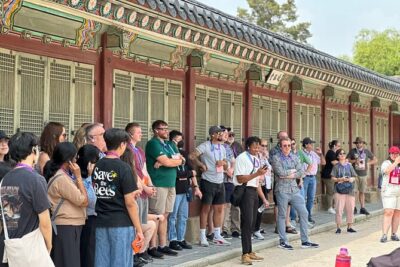
Best Seoul City Tour (Gyeongbokgung Palace,Insadong,Namsan Tower)
Read our review →
Seoul City Sightseeing Tour Including Gyeongbokgung Palace, N Seoul Tower, and Namsangol Hanok Village
Read our review →Gyeongbok Palace, Bukchon Village, and Gwangjang Tour
Read our review →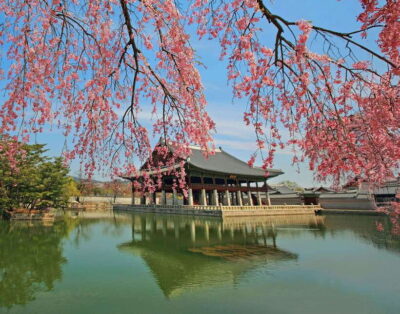
Seoul Highlights: Gyeongbok Palace, Insadong & N Seoul Tower
Read our review →
Seoul City Half Day Tour-Gyeongbok Palace Guard Changing Ceremony
Read our review →
Small Group Seoul Highlight Tour opt. Hanbok & Tea Ceremony
Read our review →Browse the lists this tour appears in