
Reviewed · SHOW
Small Group Tour East Jeju Cherry Blossom & Woman Diver Show
Spring arrives fast on Jeju Island. This nine-hour East Jeju tour brings together King Cherry Blossoms, yellow canola fields, volcanic coastlines, and traditional villages in one well-packed day. I especially like the mix of outdoor scenery and local culture, plus the small group size of no more than 15 people. The main tradeoff is time: with so many stops, several visits are short, and the day includes a good deal of driving.
I also like the practical hotel pickup and the chance to eat at a local restaurant rather than a large tour-bus stop. Guides June Goh and Lina have been praised for clear English, friendly conversation, punctual service, and thoughtful attention to preferences. At $120 per person, the tour is not cheap, but it covers transport, admissions, a professional guide, and a full circuit of East Jeju’s major spring sights.
In This Review
- Key points to know before booking
- Why this East Jeju day works well in spring
- Jeonnonglo Road and Samsunghyeol: the first blossoms
- Noksan-ro: a ten-kilometer spring postcard
- Lunch in Seogwipo, with a local focus
- Seongsan Ilchulbong: the day’s main physical challenge
- The women divers show at Umutgae Coast
- Seopjikoji and the coast near Seongsan
- Seongeup Folk Village and 600 years of local life
- Transport, guide quality, and the small-group advantage
- Is $120 a fair price?
- Who should book this tour?
- FAQ
- When does the tour operate?
- What time does the tour start?
- Is hotel pickup included?
- How many people can join the tour?
- Is lunch included?
- Is the women divers show guaranteed?
- Should you book the East Jeju cherry blossom tour?
Key points to know before booking
- King Cherry Blossoms in season: The tour runs around late March and early April, when Jeju’s large-petaled cherry trees are at their best.
- Nine stops in one day: You visit Jeonnonglo Road, Samsunghyeol, Noksan-ro, Seongsan Ilchulbong, Seopjikoji, Seongeup Folk Village, and more.
- A real cultural encounter: The women divers show includes singing work songs and entering the sea to return with catches, weather permitting.
- Small-group transport: A minivan carries groups of one to seven, while eight to 15 people travel by minibus.
- Moderate but real walking: Seongsan Ilchulbong includes a 1.2-kilometer hiking route that takes about an hour.
- Lunch costs extra: Plan about $10 for food, with vegetarian choices available.
Why this East Jeju day works well in spring
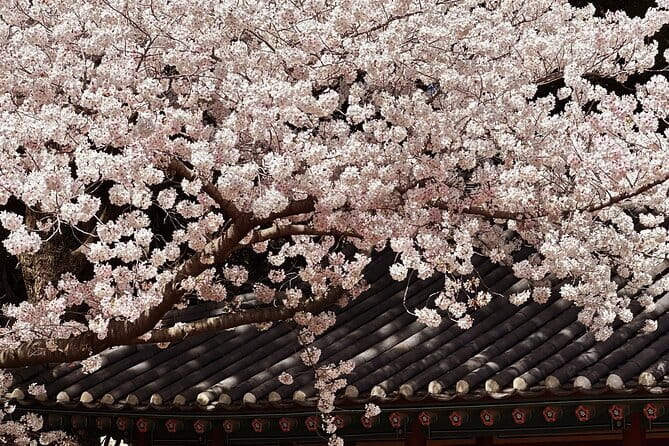
Jeju’s spring scenery is the star here. The island’s King Cherry Blossom is known for unusually large petals, giving the trees a fuller, more dramatic look than many ordinary cherry varieties. The flowering period is short, usually from late March to early April, so timing matters more than almost anything else.
This tour also gives you a useful contrast. Cherry trees and canola flowers provide the bright spring color, while Seongsan Ilchulbong and Seopjikoji show Jeju’s volcanic coast. Seongeup Folk Village adds a human side to the day, and the women divers show connects you with a long-standing island tradition.
I like that the route does not stop at flowers alone. A photo-focused trip can become repetitive, especially if the weather is gray or the blossoms are past their peak. Here, the scenery changes often enough to keep the day moving.
The drawback is the schedule. Nine stops sound generous, but the total day includes about three hours and 45 minutes of travel time from pickup through drop-off. You will see a lot, but you will not have unlimited time at every place.
More Jeju trips:
- Jeju: Eastern Jeju UNESCO Spots Day Tour
★ 4.9 · 1,148 reviews - Jeju: Western and Southern Sightseeing Day Tour
★ 4.8 · 972 reviews - East Jeju Essentials – Seongsan Ilchulbong (UNESCO) & Haenyeo
★ 5.0 · 939 reviews
Jeonnonglo Road and Samsunghyeol: the first blossoms
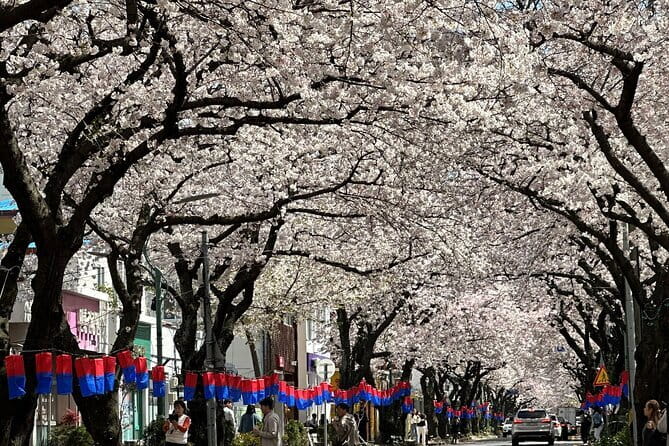
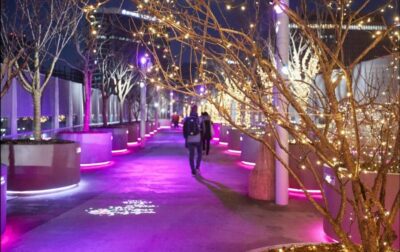
The first stop is Jeonnonglo Road, a well-known cherry blossom street in Jeju City. During the King Cherry Blossom Festival, the road becomes car-free and is decorated with blue lanterns and tulips. Old cherry trees line the route, creating an easy opening walk and a good chance to take photographs without committing to a long hike.
The listed visit is only 15 minutes. That is enough for a quick stroll and pictures, but not enough for a slow festival visit if the road is crowded. Think of it as a first taste of the blossoms rather than a full morning here.
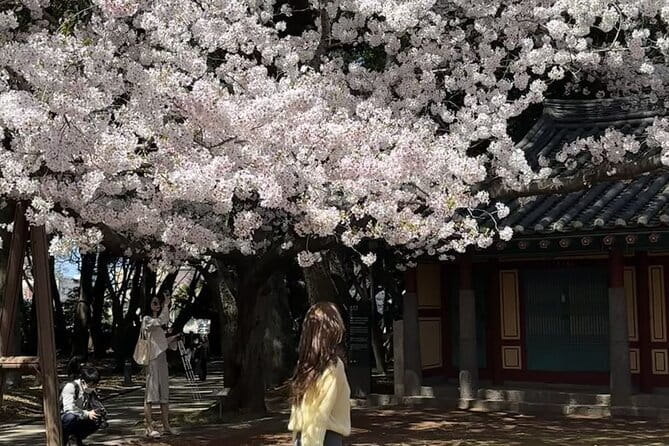
Next comes Samsunghyeol, where three sacred holes are tied to the origin story of Jeju. The site has a solemn feel, and the old trees add to its appeal. A 200-year-old cherry tree provides one of the day’s best photo settings.
You have about 50 minutes here, a more comfortable stop than Jeonnonglo Road. Your guide can help explain why this place matters beyond its appearance. That context is useful because Samsunghyeol is not simply another flower-viewing point. It links the natural setting with Jeju’s founding mythology.
Noksan-ro: a ten-kilometer spring postcard
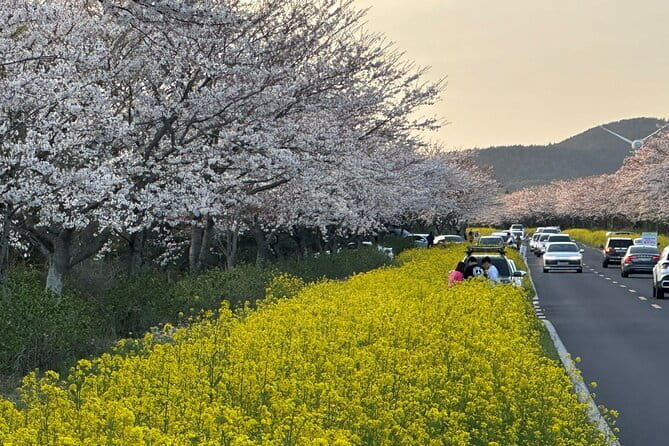
Noksan-ro is one of the most memorable visual stops. Along this roughly ten-kilometer road, canola flowers and cherry blossoms appear together, with yellow fields beneath pale blossoms. The road is often photographed as a classic Jeju spring scene.
The tour allows about 20 minutes here. That gives you time to enjoy a selected section and take pictures, but not to explore the entire road. This is another place where the small-group format helps. A compact vehicle can reach scenic areas that may be less practical for a large coach, and the group can get out without the fuss of a major bus tour.
The timing of the flowers remains the key uncertainty. If you book close to the season but arrive before full bloom, the display may be lighter. If you arrive late, petals may already be falling. The tour requires good weather, and poor conditions can lead to a different date or a full refund.
Lunch in Seogwipo, with a local focus
Around midday, the group stops in Seogwipo for lunch. Food is not included, and the suggested cost is about $10. Vegetarian menus can be suggested, which is helpful if you need a meat-free option.
The real value here is flexibility. The guide can take you to a local restaurant that a large bus may not be able to use. That usually means less time spent in a generic group dining room and more chance to choose a meal suited to your taste.
Still, you should treat lunch as a practical stop rather than a formal food tour. The supplied information does not promise a particular restaurant or dish, so the exact experience may vary. Bring a payment method suitable for the day, and tell the guide about dietary needs early.
A completely different kind of day out in Jeju:
- Jeju: Southern Top UNESCO Spots Bus Tour
★ 4.9 · 648 reviews - South-West Jeju Essentials: Hallasan & Signature Highlights
★ 5.0 · 620 reviews - Jeju Island English Private & Flexible Tour any number anywhere
★ 5.0 · 561 reviews - East Jeju: Day Tour with Seongsan Peak & Haenyeo Performance
★ 4.9 · 478 reviews
Seongsan Ilchulbong: the day’s main physical challenge
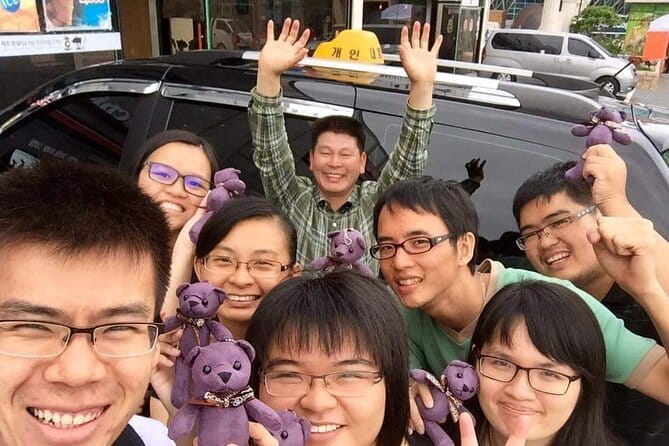
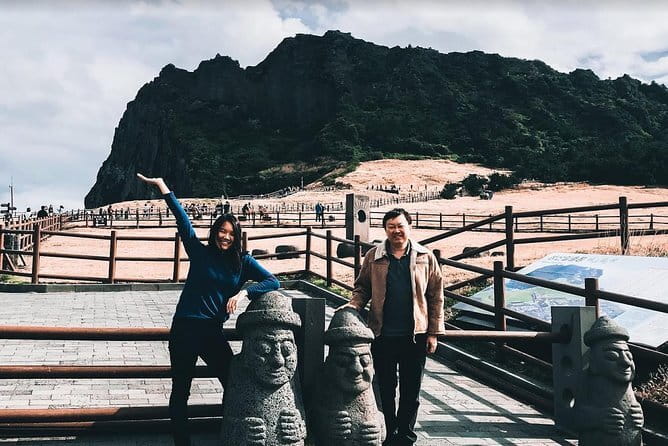
Seongsan Ilchulbong is the tour’s biggest natural landmark. This volcanic tuff cone rises 180 meters above the sea and has a distinctive bowl-shaped summit. The route includes a 1.2-kilometer hiking trail and usually takes about an hour.
The climb is short enough for many people to manage, but it is still the most demanding section of the day. You should be comfortable walking uphill and allow for uneven or tiring sections. If you prefer gentle sightseeing, this stop may feel more strenuous than the flower roads and village paths.
The reward is the view from above. The summit provides broad views toward the sea and the surrounding area, making this more than a quick photo stop. It is also a useful counterpoint to the low coastal views at Seopjikoji later in the day.
An hour goes quickly. I would use the time for the climb and the main viewpoints rather than trying to linger at every turn. Listen carefully to your guide’s meeting instructions, since the group still has several stops ahead.
The women divers show at Umutgae Coast
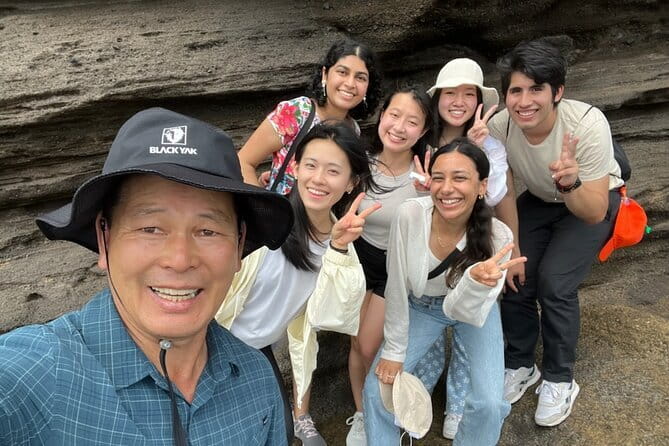
At Umutgae Coast, women divers from Seongsan Village present an outdoor performance, weather permitting. You can hear work songs and watch them enter the water before returning with catches. The show lasts about 20 minutes, within a 30-minute stop.
This is one of the tour’s most meaningful elements. Jeju’s women divers are recognized as UNESCO cultural heritage, and the performance offers a direct look at a tradition tied to work, community, and the sea. It is not just a scenic pause. It gives the day cultural weight.
Keep your expectations realistic. This is an outdoor show, and it depends on conditions at sea. It may be canceled or changed if the weather is poor. The experience also takes place in a public coastal setting rather than a large theater, so the conditions may feel simple and exposed.
You should also remember that the women divers are presenting a living tradition, not merely putting on a costume display. Watch respectfully, listen to the songs, and let the guide explain the cultural background.
Seopjikoji and the coast near Seongsan
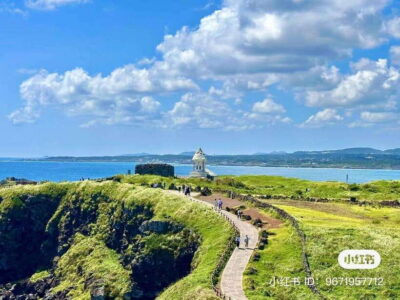
Seopjikoji offers a different view of East Jeju. Here, canola flowers, a white lighthouse, grazing Jeju horses, and the outline of Seongsan Ilchulbong come together in one open coastal setting.
You have about 50 minutes, enough to walk, take photos, and enjoy the sea air. The location is especially attractive in spring, when the canola adds color to the coastal scenery. It is also a good stop after the uphill walk at Seongsan Ilchulbong because the experience is more relaxed.
The scenery is open and exposed, so the weather can shape your visit. On a clear day, the views should be the main event. On a windy or cloudy day, you may want to keep your walk brief and use the time for photographs near the most recognizable features.
This stop also gives you another view of Seongsan Ilchulbong. Seeing the volcanic cone from the coast helps you understand its shape and position better than viewing it only from the summit.
Seongeup Folk Village and 600 years of local life
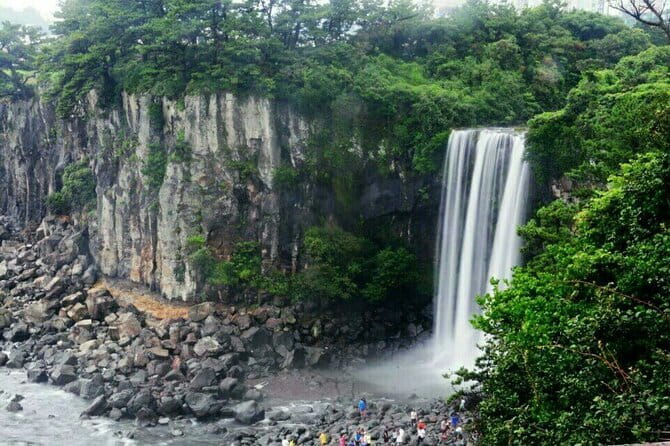
The final major cultural stop is Seongeup Folk Village. It served as a county office for 500 years and remains a living community. You walk past traditional stone houses, old zelkova trees, and features connected with Jeju’s traditional way of life.
The visit lasts about 30 minutes. That is enough for an introduction, but not a long, unhurried village exploration. I would pay close attention to the guide here, since the value lies in understanding how the village functioned and why the stone-built homes look different from ordinary modern neighborhoods.
The village adds balance to the day. The earlier stops emphasize nature and scenery, while Seongeup helps you see Jeju as a place shaped by families, work, administration, and local customs. The fact that it remains a living community matters. You are not simply walking through a preserved set built only for tourists.
Because the stop is short, you may leave with a broad impression rather than a detailed study of village life. That is appropriate for a one-day route, but visitors wanting extended cultural visits should consider spending more time in the area on another day.
Transport, guide quality, and the small-group advantage
Pickup and drop-off are offered within the downtown Jeju City area near Jeju International Airport. The start time is 8:30 a.m., so you should be ready before then and confirm that your accommodation falls inside the stated pickup area.
Groups of one to seven use a minivan. Groups of eight to 15 use a minibus. This is far more personal than a large coach, especially on roads leading to scenic stops and smaller local restaurants.
The guide is central to the experience. June Goh has been praised for punctuality, polite service, clear English, easy conversation, and quick replies to questions. Lina has also been singled out for warm, attentive service. Those details matter because this is a long day with many moving parts.
A good guide can adjust explanations to the group, point out what is worth seeing at each stop, and help with lunch choices. The tour includes a driver or certified professional driving guide, so you are not left to manage Jeju’s roads yourself.
The format suits people who want structure but dislike a large tour crowd. You still follow a fixed schedule, but the group is small enough for direct communication and more personal care.
Is $120 a fair price?
At $120 per person, this is a mid-to-high-priced day tour. Lunch, personal spending, and tips are extra, so the final cost will be a little higher.
The price becomes easier to justify if you value convenience. It includes hotel pickup and drop-off within the stated Jeju City area, transportation, a professional driver or guide, and admissions. You also cover a large portion of East Jeju in one day without arranging separate taxis, buses, or entrance tickets.
The route includes several places that would be awkward to connect independently in a single day, especially if you are unfamiliar with Jeju’s roads. The small group and local restaurant option add more value than a basic sightseeing bus.
It is less attractive if you already have a rental car, prefer slow travel, or want to spend half a day at one cherry blossom road. You are paying for coverage and ease, not maximum time at each location.
Tips are recommended but not compulsory. Free cancellation is available up to 24 hours before the start time. If bad weather cancels the experience, you can receive a different date or a full refund.
Who should book this tour?
I would choose this tour if you have limited time on Jeju and want the eastern part of the island organized into one day. It suits first-time visitors, spring photographers, couples, families, and anyone who wants nature and culture without handling transport.
It is also a good fit if you appreciate a guide who can explain local customs in clear English. The comments about June’s communication and Lina’s helpful service are especially encouraging for visitors who want an easy day with plenty of guidance.
I would hesitate if your main goal is a quiet, slow cherry blossom walk. The itinerary is full, and the long driving periods mean you will spend more time moving than you might expect from the stop list.
FAQ
When does the tour operate?
The cherry blossom season is generally from late March to early April. The exact timing of full bloom can vary, and the tour requires good weather.
What time does the tour start?
The tour starts at 8:30 a.m.
Is hotel pickup included?
Yes. Pickup and drop-off are included for hotels within the Jeju City downtown area near Jeju International Airport.
How many people can join the tour?
The maximum group size is 15 people. Groups of one to seven use a minivan, while groups of eight to 15 use a minibus.
Is lunch included?
No. Lunch is excluded and costs about $10. Vegetarian menus can be suggested.
Is the women divers show guaranteed?
No. The outdoor show at Umutgae Coast is subject to weather conditions. It includes women divers from Seongsan Village singing work songs and entering the water to return with catches.
Should you book the East Jeju cherry blossom tour?
Book it if you want a well-organized spring day that combines King Cherry Blossoms, canola fields, a volcanic summit, coastal views, a women divers show, and a traditional village. The route is ambitious, but the small group, included transport, and attentive guide service make it practical for a first visit.
Skip it if you want to linger at one site or prefer to set your own pace. For most visitors with only a short stay, though, the $120 price buys a useful amount of sightseeing and removes much of the transport hassle. Just choose your date carefully, expect a full day, and leave room in your schedule for weather to shape the coastal stops.
Just added around Jeju
- East of jeju tour for Seogwipo Gangjeong Cruise Customers★ 4.5 · 3 reviews
- Seogwipo(the southern city of Jeju) Art Museum Walking Tour★ 5.0 · 3 reviews
- Private Tour in South Jeju including Yacht Cruise★ 5.0 · 3 reviews
- Jeju Island, Seongsan Ilchulbong, Discover Scuba Diving★ 4.5 · 3 reviews
- Jeju: Western & Southern Jeju Hydrangea Festival Tour★ 5.0 · 3 reviews
- Jeju: Small Group Tour w/Pink Muhly & Tangerine Picking★ 5.0 · 3 reviews
- Jeju: Hiking Mt. Hallasan, South Korea’s Highest Mountain★ 5.0 · 3 reviews
- Jeju: BTS Are You Sure?! Filming Locations Private Taxi Tour★ 5.0 · 3 reviews
Show, compared.


Jeju Eastern UNESCO Sites Day Tour with Haenyeo Show
Read our review →
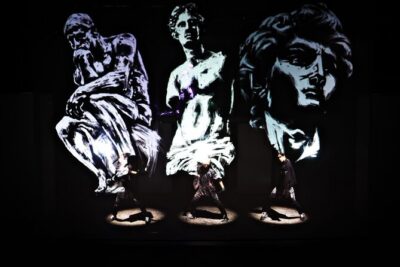
Painters Show in Gwanghwamun Theater (nearby Seodaemun station)
Read our review →
Browse the lists this tour appears in