
Reviewed · BUSAN TOURS
Busan Seafood Tour : Oyster village Tour with Oyster cuisines
Oysters give Busan a saltwater side street. This four-hour outing takes you from Hadan Station by city bus to an island fishing village where oyster farming shapes daily life, then serves a lunch built around fresh local oysters. I like the small group size, capped at 15, and the way the tour connects working food culture with a real village rather than keeping you inside central Busan.
I also like that the price includes round-trip bus fare and lunch, including oyster soup with rice and an oyster pancake. The main consideration is seasonal timing: this tour runs only from November through February, and the weather can force a cancellation or change of date. You should also be comfortable walking around a working seaside village and taking public transportation.
In This Review
- The oyster village experience in brief
- Why this is a different Busan food tour
- Meeting at Hadan Station and riding toward the coast
- Walking through a working oyster village
- Watching oyster shucking before lunch
- Oyster soup, rice, and a proper local lunch
- What the $180 price really covers
- Winter timing, weather, and what to bring
- Who will enjoy this tour most
- Practical details that shape the day
- Should you book the Busan oyster village tour?
- FAQ
- Where does the tour begin?
- Where does the tour end?
- How long does the tour last?
- What food is included?
- Are alcoholic drinks included?
- How do you travel to the oyster village?
- When is this tour available?
- What happens if bad weather cancels the tour?
The oyster village experience in brief
- A real oyster-farming village near Busan: You visit a coastal community where oyster production is part of everyday work.
- Hands-on local context: You can see oyster-farming tools and workers shucking oysters.
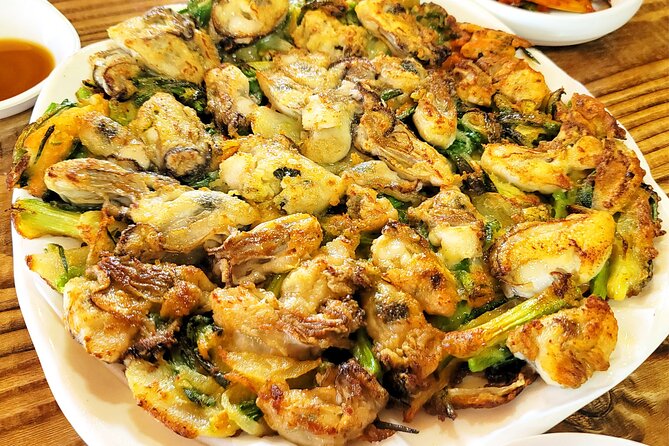
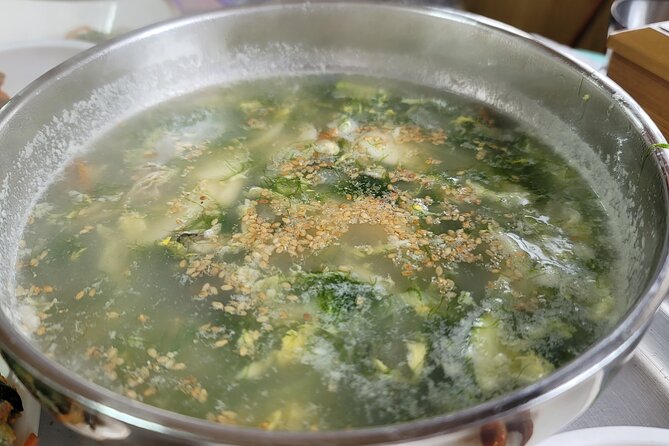
- Fresh seafood lunch included: The meal features oyster soup with rice and oyster pancake.
- Public transport is part of the outing: You ride a city bus from Hadan Station rather than traveling in a private coach.
- A compact winter activity: Departures run from November through February, when oyster dishes are a seasonal highlight.
- Personal guiding matters here: Guides identified as Su Yang and Mr Chang have been praised for explaining food culture, Korean drinking customs, history, and the oyster trade.
Why this is a different Busan food tour
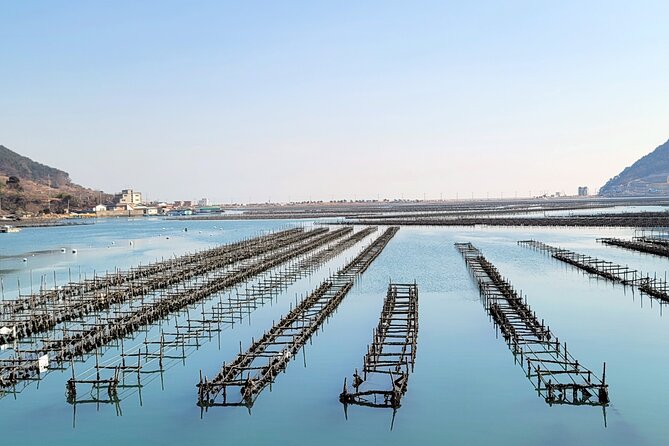
Busan is easy to associate with beaches, markets, and its role as Korea’s major port. This trip adds another layer: the food on your plate is tied to the village around you.
That link is the reason I find this outing appealing. You do not simply sit down at a seafood restaurant and order oysters. You first see the setting where oyster farming takes place, look at the equipment used in the work, and watch oyster shucking. Then the meal makes more sense. The soup and pancake are not abstract local specialties. They are connected to the place you have just walked through.
The village is on an island near Busan, reached by city bus from Hadan Station. That alone gives the trip a more local feel than a standard sightseeing transfer. It also means the journey is part of the experience, not just dead time between attractions. Still, a city bus is less private and controlled than a tour vehicle. If you value door-to-door comfort, this may feel basic.
The group limit of 15 is another useful detail. It is small enough for a guide to answer questions and explain what you are seeing without shouting across a crowd. It is not a private tour, though, and the exact feel will depend on how many people book that day.
More Busan trips:
- Busan: Gyeongju Guided Day Trip to Three Kingdoms Capital
★ 4.8 · 1,925 reviews - Small Group Full Day Busan Tour (Max 6 Pax)
★ 5.0 · 1,464 reviews - From Busan: Gyeongju UNESCO World Heritage Guided Day Tour
★ 4.8 · 1,250 reviews
Meeting at Hadan Station and riding toward the coast
The scheduled meeting point is Exit 3 at Hadan Station on Subway Line 1, station number 102. The listed start time is 10:00 in the morning.
The bus ride to the village is included in the price, as is the return fare. You should arrive ready to use ordinary public transportation and allow enough time to find the correct subway exit. The route starts in the city but soon shifts the tone of the day from urban Busan to a smaller coastal community.
The published schedule places arrival at the oyster village around 11:30. That gives you roughly an hour and a half for the outward trip, meeting, and transfer. The exact route and bus ride may vary, so I would not plan a tight appointment immediately after the tour.
The information also says pickup is offered, while the stated meeting plan begins at Hadan Station. Those details do not fully match. I would confirm the pickup arrangement before booking if you need collection somewhere other than Hadan. The clearly stated meeting point is Hadan Station Exit 3.
Walking through a working oyster village

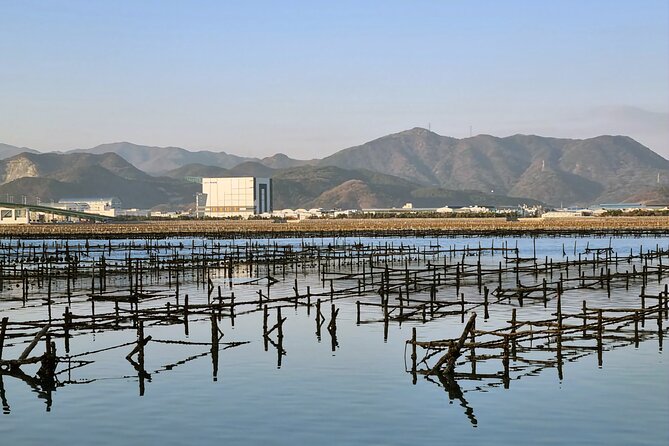
Once you arrive, the focus turns to the village itself. The tour is designed for looking around, taking photographs, and learning how oyster farming fits into local life.
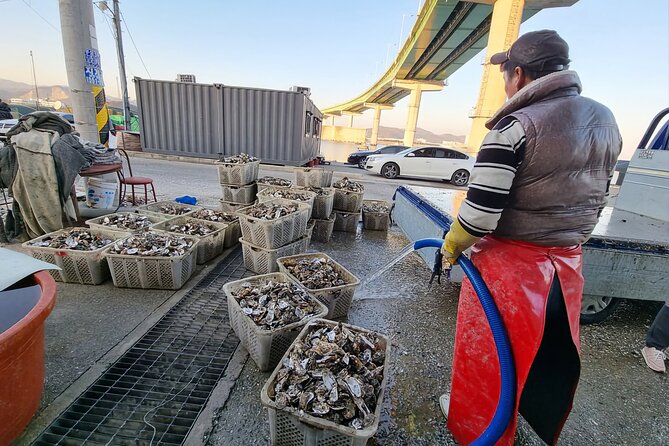
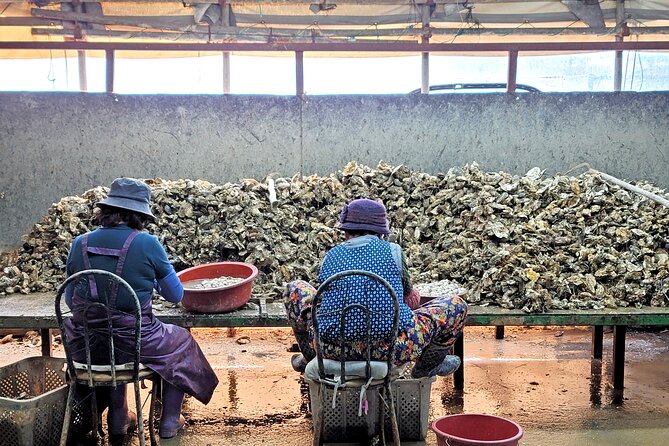
You can expect to see tools used in oyster farming and workers shucking oysters. These details give the walk its purpose. You are not just photographing a pretty shoreline. You are seeing the equipment and labor behind a familiar seafood item.
The guides also bring wider Korean context into the walk. Su Yang has been praised for combining oyster explanations with Korean history, while Mr Chang has been described as attentive to the group’s needs. The available descriptions suggest that guiding is a strong part of the outing, especially if you want more than a quick photo stop.
The walking portion is not described as strenuous, but the tour asks for a moderate level of physical fitness. That is worth taking seriously. You may be walking through a functioning fishing village rather than along a polished city promenade. Wear practical shoes and expect outdoor conditions, particularly in the cooler months.
Photography is encouraged, and the village provides a useful subject: tools, boats or work areas may be visible, and the oyster operation gives you something specific to document. Still, remember that this is a working community. Follow the guide’s direction about where to stand and when it is appropriate to take pictures of people at work.
Watching oyster shucking before lunch
The opportunity to see oyster shucking is one of the most useful parts of the tour. It puts a human face on the seafood industry and helps you understand that the meal is built on skilled, repetitive work.
Oyster shucking also changes how you approach the lunch. You have seen the shellfish handled before it reaches the kitchen, so the dishes feel tied to the village rather than presented as generic restaurant fare.
The timing is important. The schedule places the village visit around 11:30, followed by lunch at 12:00. That creates a short transition from sightseeing to eating. If the restaurant is busy, the timing may stretch. One account describes a wait of about 30 minutes at a famous and popular oyster restaurant on the island. That is not necessarily a flaw. It suggests the restaurant can be in demand, but you should not assume lunch will always begin exactly at noon.
A wait can be less irritating when the meal is the main reason for the trip. Still, if you dislike uncertain meal timing, ask the guide how the restaurant handles busy periods. The short tour schedule leaves limited room for delays before the return bus.
A completely different kind of day out in Busan:
- Busan Private Tour with licensed tour guide + private vehicle
★ 5.0 · 1,143 reviews - Busan: Coastal Treasures Beach Train, Culture Village & More
★ 4.7 · 832 reviews - Busan’s Cultural Wonders with Beach Train & Gamcheon Village etc
★ 4.5 · 663 reviews - Gyeongju UNESCO World Heritage Guided Day Tour from Busan
★ 5.0 · 660 reviews
Oyster soup, rice, and a proper local lunch
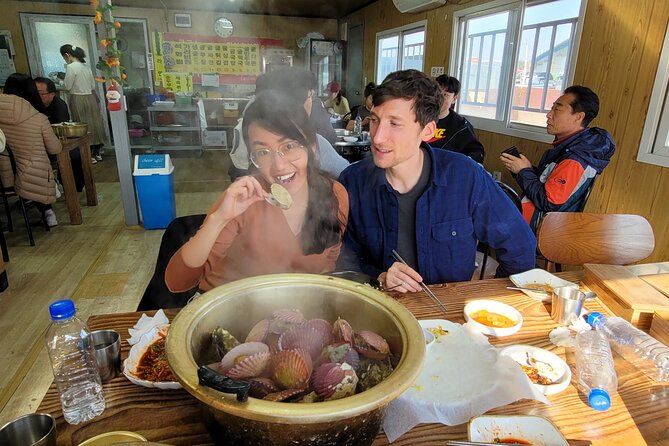
Lunch includes oyster soup with rice and an oyster pancake. These two dishes give you different ways to taste the same local ingredient.
The soup with rice should appeal if you prefer a warm, straightforward meal. It also fits the winter season well, since departures run from November through February. The oyster pancake offers a different texture and a more savory, shared-table style of eating.
The food is the centerpiece of the outing, so this is not a tour for someone who merely wants to look at oysters. You should be open to seafood and to a meal centered on one ingredient. The experience does not list alternative dishes or special dietary substitutions, so anyone with an allergy or a strong food restriction should ask before booking.
The guide explains Korean food culture and drinking culture while you eat. That context is valuable because Korean meals are shaped by more than individual dishes. How food is shared, how soup and rice appear together, and how alcoholic drinks fit into social meals can all help you read the table more clearly.
Alcoholic beverages are not included. You may be able to purchase them at the restaurant, but that is not guaranteed by the tour details. The safest assumption is that your included meal covers the oyster soup, rice, and pancake only.
What the $180 price really covers
At $180 per person, this is not a budget seafood lunch. You are paying for a guided half-day outing, the round-trip bus fare, and the included meal, along with the time and interpretation that connect the village to the food.
The value depends on what you want from Busan. If you only want to eat oyster dishes, you can likely find a cheaper meal in the city. If you want a guide to take you beyond the usual central sights, explain oyster farming, help with the bus journey, and provide cultural context at lunch, the price becomes easier to justify.
The small maximum group of 15 helps. A guide can spend more time answering questions than on a large coach excursion. The outing also gives you access to a setting that is not part of the standard first-day Busan route.
There is a tradeoff: transportation is by city bus, not a private vehicle, and the whole activity lasts only about four hours according to the headline description. The detailed schedule runs from 10:00 to 14:30, so I would budget four and a half hours including the return to Hadan. The difference is minor, but it matters if you are arranging another booking that afternoon.
Winter timing, weather, and what to bring
This experience is available only from November through February. That limited calendar is one of its attractions, since you are visiting during the stated oyster season, but it also removes flexibility from your Busan plans.
The tour requires good weather. If poor weather causes cancellation, you are offered another date or a full refund. That policy is reassuring, but you should still avoid placing an important evening reservation too close to the scheduled return.
Bring clothing suitable for a cool outdoor walk and shoes that can handle village streets or uneven surfaces. The tour does not promise an indoor substitute for the village visit, so prepare for time outside. A phone or camera is useful because taking pictures is part of the village visit.
The activity is near public transportation, and the bus fare from Hadan Station to the destination is included. Travel insurance is not included. Cancellation is free up to 24 hours before the start time, while cancellations or changes made less than 24 hours ahead are not refunded or accepted.
Who will enjoy this tour most
I would recommend this outing to you if you want food with a sense of place. It suits curious eaters, seafood fans, photographers, and anyone who has already seen Busan’s major urban sights and wants a different side of the city.
It is also a good match if you enjoy listening to a guide explain how ordinary local life works. Su Yang’s reported mix of oyster farming and Korean history, along with Mr Chang’s attention to group needs, suggests that the human guidance adds real value.
Families with older children may enjoy the village setting and the visual work of oyster shucking, but the moderate fitness requirement and public bus ride are worth considering. The tour is less suitable if you want a private vehicle, a polished attraction, a choice of many lunch dishes, or a guarantee that every minute will run on schedule.
You should also think carefully about seafood allergies. Oysters are the central theme, and the included lunch is built around them. The available information does not describe alternate meals.
Practical details that shape the day
The tour starts at Hadan Station Exit 3 at 10:00 and ends back at the same meeting point around 14:30. The stated route is simple: meet, ride to the oyster village, explore, eat lunch, return by bus, and finish at Hadan.
Confirmation is normally sent at booking. If you book within nine days of the travel date, confirmation may arrive within 48 hours and depends on availability. That is a small but important reason not to wait until the last minute during the four-month operating period.
Free cancellation applies when you cancel at least 24 hours before the start time. Bad weather is handled with a new date or full refund. Since the tour runs only in winter, check the date carefully before making other fixed plans.
Should you book the Busan oyster village tour?
Book it if you want to understand where Busan seafood comes from, not just sample it. The combination of a local bus ride, a working oyster village, oyster shucking, and a meal of soup, rice, and pancake gives the day a clear story.
Skip it if you are looking for the cheapest seafood meal or prefer private transport and a tightly controlled schedule. At $180, the food alone does not justify the cost. The value lies in the access, the guide, and the connection between village work and Korean dining culture.
For the right person, this is a memorable winter side trip from Busan. Confirm the Hadan meeting details, check your seafood needs, leave room for a possible restaurant wait, and keep your afternoon schedule flexible.
FAQ
Where does the tour begin?
It begins at Hadan Subway Station, Exit 3, on Line 1, station number 102.
Where does the tour end?
The activity ends back at the original meeting point at Hadan Station.
How long does the tour last?
The experience is described as approximately four hours. The detailed schedule runs from 10:00 until about 14:30, including the return to Hadan Station.
What food is included?
Lunch includes oyster soup with rice and an oyster pancake.
Are alcoholic drinks included?
No. Alcoholic beverages are not included in the tour price.
How do you travel to the oyster village?
You take a city bus from Hadan Station to the island village, with round-trip bus fare included.
When is this tour available?
The tour is available from November through February.
What happens if bad weather cancels the tour?
You are offered a different date or a full refund if the experience is canceled because of poor weather.
Just added around Busan
- Korean UNESCO World Heritage Tour including Gyeongju, Andong and Daegu(2N3D)★ 5.0 · 3 reviews
- Busan Bliss: Panoramic Yacht & Urban Exploration with Sky Capsule★ 5.0 · 3 reviews
- Busan day trip including Gamcheon culture village from Seoul by KTX train★ 5.0 · 3 reviews
- 1 Day Private Busan Guided Tour★ 4.5 · 3 reviews
- 2-DAYS Busan Customized and Included Night tour★ 5.0 · 3 reviews
- Full-Day Jinhae Cherry Blossom festival Private tour★ 5.0 · 3 reviews
- Busan Dialect Class with local snack★ 5.0 · 3 reviews
- From Busan: Gyeongju Small Group Photo Tour & Hotel Pick-up★ 5.0 · 3 reviews
Busan Tours, compared.

Gyeongju Guided Day Trip to Three Kingdoms Capital
Read our review →

Gyeongju UNESCO World Heritage Guided Day Tour
Read our review →
Busan Private Tour with licensed tour guide + private vehicle
Read our review →Coastal Treasures Beach Train, Culture Village & More
Read our review →
Busan’s Cultural Wonders with Beach Train & Gamcheon Village etc
Read our review →
Gyeongju UNESCO World Heritage Guided Day Tour from Busan
Read our review →Private Busan Tour -Explore Cultural Landmarks with a Local Guide
Read our review →Browse the lists this tour appears in