
Reviewed · GYEONGJU HERITAGE TOURS
Gyeongju UNESCO World Heritage Guided Day Tour from Busan
Ancient Korea makes a fine day trip. This full-day outing takes you from central Busan to Gyeongju, the former Silla capital, with round-trip coach transport, an English, Chinese, or Korean-speaking guide, and several important historic sites. I especially like the choice between a wider UNESCO-focused route and a museum route, plus the chance to see Bulguksa Temple and Donggung Palace and Wolji Pond in the same day.
The main tradeoff is time. At 10 to 12 hours, this is a large serving of Gyeongju, and some stops can feel rushed. You should also expect plenty of walking outdoors, long stretches on the bus, and meals at your own expense. Guides such as Sol, Vincent, Irene, Bobby Kim, Lucy, and Roy have earned warm praise for keeping large groups moving while adding useful cultural context.
In This Review
- Key points at a glance
- Why Gyeongju is worth the long ride from Busan
- Choosing between the UNESCO and Museum routes
- Bulguksa Temple: a strong opening at 70 minutes
- Yangdong Folk Village: the longest and most atmospheric stop
- Daereungwon and Hwangnidan-gil: tombs beside modern Gyeongju
- Woljeonggyo Bridge: a short but photogenic pause
- Donggung Palace and Wolji Pond after dark
- What the Museum route adds
- Guides, group size, and the coach ride
- Meals, weather, and what to bring
- Who should book this Gyeongju day trip?
- Should you book it?
- FAQ
- How long does the Gyeongju tour from Busan last?
- Where does the tour depart from?
- What transport is used?
- What languages are available?
- What is included in the tour price?
- Are meals included?
- What does the UNESCO route include?
- What does the Museum route include?
- How large can the group be?
- Can I cancel for a full refund?
Key points at a glance
- Two routes suit different interests: Pick the UNESCO option for Yangdong Village, royal tombs, Woljeonggyo Bridge, and Donggung Palace and Wolji Pond, or the Museum option for Gyeongju National Museum and more time around Hwangnidan-gil.
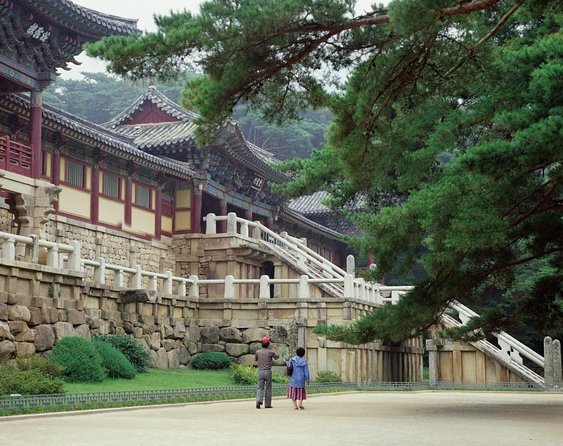
- Bulguksa is the essential first stop: The Silla-era temple combines colorful wooden buildings, stone pagodas, and a calm setting with a guided visit of about 70 minutes.
- Yangdong Village takes time: The UNESCO route allows about two hours and 15 minutes here, making it the most substantial stop and one of the best places to see traditional Korean houses and village life.
- The evening sights are a highlight: Wolji Pond and Woljeonggyo Bridge can be especially photogenic later in the day, with reflections and illuminated architecture.
- This is a full, active day: The group may reach 43 people, and you will walk, climb hills, wait for the group, and spend several hours on the road.
- Meals are not included: Lunch and dinner are paid separately, so vegetarians and anyone with dietary needs may want to plan ahead.
Why Gyeongju is worth the long ride from Busan
Gyeongju feels different from Busan almost at once. Busan is a coastal city of subways, apartment towers, markets, and steep streets. Gyeongju is shaped by Silla-era temples, burial mounds, old village homes, museum collections, and open countryside.
For centuries, Gyeongju served as the center of the Silla Kingdom. That gives the day a clear thread: Buddhist art at Bulguksa, aristocratic burial traditions at Daereungwon, traditional homes at Yangdong, royal leisure at Donggung and Wolji, and gold crowns and relics at the museum.
I like this trip because the sites are not all variations of the same temple. You move through different parts of Korean culture and history. The drawback is that Gyeongju is spread out, so a guided coach makes the route easier but cannot remove the travel time.
The tour costs about $57.14 per person. For that price, you get transport, a guide, and the listed entrance fees for the chosen route. That is good value if you want to see several distant sites in one day and do not want to arrange regional buses or taxis.
It is less compelling if you prefer slow visits. You are paying for coverage and convenience, not long, quiet hours at every monument.
More Historical Tours in Busan
- From Busan: Gyeongju UNESCO World Heritage Guided Day Tour
★ 4.8 · 1,250 reviews - Old Korea Thousand History Tour of Gyeongju from Busan
★ 5.0 · 518 reviews - Busan history and market food tour with local chef
★ 5.0 · 58 reviews
Choosing between the UNESCO and Museum routes
The UNESCO route is the broader day. It includes Bulguksa Temple, Yangdong Folk Village, Daereungwon Tomb Complex, Hwangnidan-gil Street, Woljeonggyo Bridge, and Donggung Palace and Wolji Pond.
The Museum route includes Bulguksa, Hwangnidan-gil, and Gyeongju National Museum. This option drops Yangdong, Daereungwon, Woljeonggyo, and Donggung and Wolji, replacing some outdoor stops with a closer look at Silla objects.
Choose the UNESCO route if you want variety, village scenery, royal tombs, and the evening pond. It is the better fit for a first visit when you want to see the famous places rather than study artifacts indoors.
Choose the Museum route if golden crowns, Buddhist relics, and historical objects appeal more than walking through a traditional village. It may also suit you if you prefer a more focused cultural day, though the exact pace still depends on traffic and group timing.
The choice matters. Do not book one option casually and assume the routes are almost identical.
Bulguksa Temple: a strong opening at 70 minutes
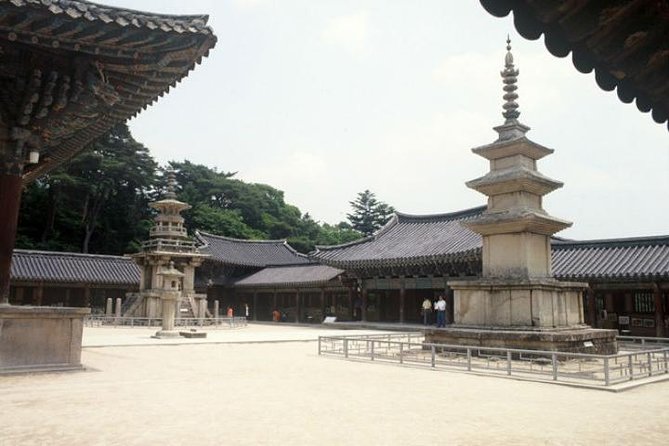
Bulguksa is the day’s main architectural stop. Built in the eighth century, the temple is closely tied to Silla Buddhism and is recognized as a UNESCO World Heritage site.
Allow yourself to look beyond the brightly painted surfaces. The stone stairways, pagodas, courtyards, and carefully arranged buildings show how the complex joins religious ideas with physical design. A guide can help explain what you are seeing, which is useful here because the details are easy to miss when you are simply taking photographs.
The scheduled visit lasts about one hour and 10 minutes. That gives you enough time for an introduction and a walk through the main areas, but not endless wandering. One useful approach is to stay with the guide for the first explanation, then use free time for photographs and a slower look.
Comfortable shoes matter. The day includes hills, steps, and outdoor paths, and Bulguksa sets the pattern early.
Yangdong Folk Village: the longest and most atmospheric stop
On the UNESCO route, Yangdong Village receives about two hours and 15 minutes. That is generous compared with the other stops, and it needs the time.
Yangdong is known as Korea’s largest and best-preserved traditional village. Houses sit among low mountains and rolling countryside, with old buildings, paths, walls, and slopes creating a very different experience from a city attraction. You are not simply looking at one historic building. You are walking through a whole settlement.
This is one of the tour’s best chances to see how traditional Korean homes fit into their surroundings. The setting also gives you a break from tightly packed urban streets.
There is a practical catch: much of the visit is outside, and the paths can involve hills. Bring shoes you can walk in and clothing that works across changing temperatures. One useful meal stop is connected with the village, but lunch is not included. Food feedback is mixed. Some people enjoy the traditional Korean set meals, while others find the portions small for the price. A vegetarian may want to bring food, since the available choices can be limited.
The village is also where the tour’s pace can become noticeable. Two hours sounds generous, but a guided introduction, walking between areas, photographs, and lunch can use it quickly.
More Historical Tours in Gyeongju
- From Busan: Echoes of Silla Gyeongju Historical Day Tour
★ 4.8 · 55 reviews - Gyeongju Historic Areas Day Tour with Sky Capsule from Busan
★ 5.0 · 18 reviews - From Busan: Gyeongju Historical Day Tour with Sky Capsule
★ 4.7 · 17 reviews - Gyeongju The UNESCO World heritage sites tour(Private tour)
★ 5.0 · 17 reviews
Daereungwon and Hwangnidan-gil: tombs beside modern Gyeongju
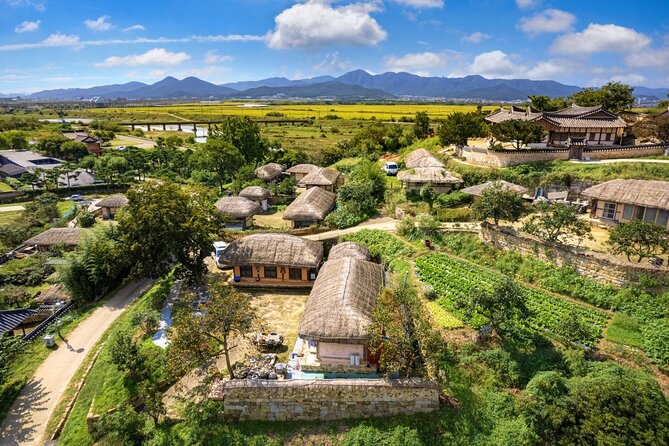
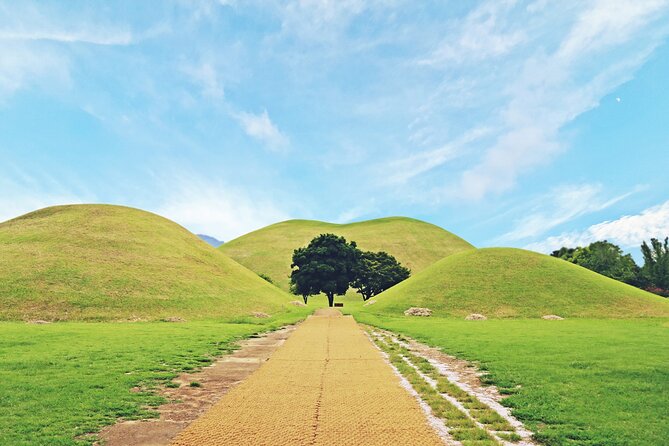
Daereungwon Tomb Complex contains 23 Silla-era tombs and is known as the Park of Royal Tombs. The large grassy burial mounds are unlike the stone tombs and imperial monuments you may have seen elsewhere in Asia. Their rounded shapes rise gently from the ground, making the site feel open and surprisingly quiet.
The planned visit is about 45 minutes. That is enough to enter Cheonmachong Tomb, whose ticket is included on the UNESCO route, and to hear the basic explanation. It is not enough for a long archaeological study.
Next comes Hwangnidan-gil Street, also scheduled for about 45 minutes. This popular area mixes old-style hanok buildings with cafés, food shops, and small stores. It is a useful contrast after the temple and tombs: Gyeongju’s past is still visible, but the street also has a modern social life.
The stop can feel oddly timed late in the day. After hours of walking, you may want to sit rather than browse. Dinner is also your own responsibility, and the street offers many choices, but finding a balanced meal quickly can take some effort. Credit cards are accepted at many places, though that detail can vary by shop.
If you want snacks, coffee, or a few photographs of the old-meets-new look, Hwangnidan-gil works well. If you are already tired, use the time as a rest stop.
Woljeonggyo Bridge: a short but photogenic pause
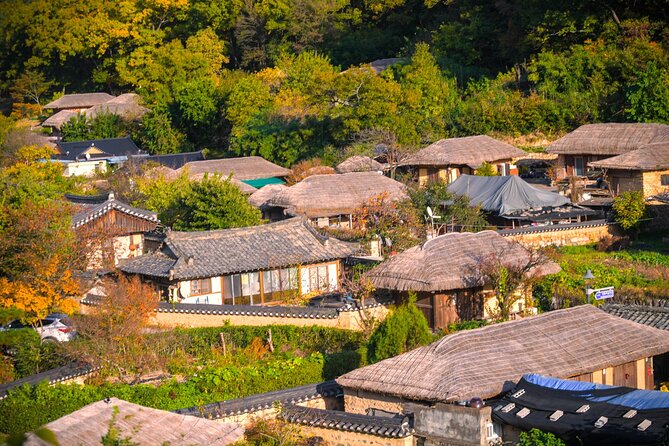
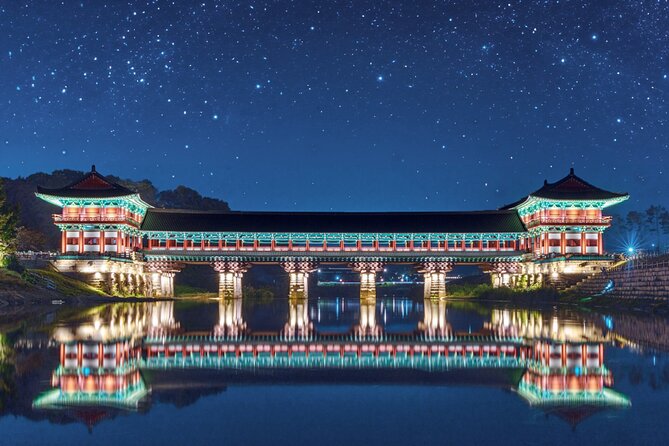
Woljeonggyo Bridge gets about 20 minutes. That is brief, but the bridge is an appealing visual stop.
Its stone arches and traditional Korean design recall old construction methods, while later illumination can give the structure a warmer evening appearance. The short visit is mainly for orientation and photographs, not an extended historical tour.
Keep expectations sensible. Twenty minutes does not allow for a long walk around the area. Stay close to the guide’s meeting point and take photographs promptly. This is one of those stops where the tour delivers a memorable view without pretending there is time for a full exploration.
Donggung Palace and Wolji Pond after dark
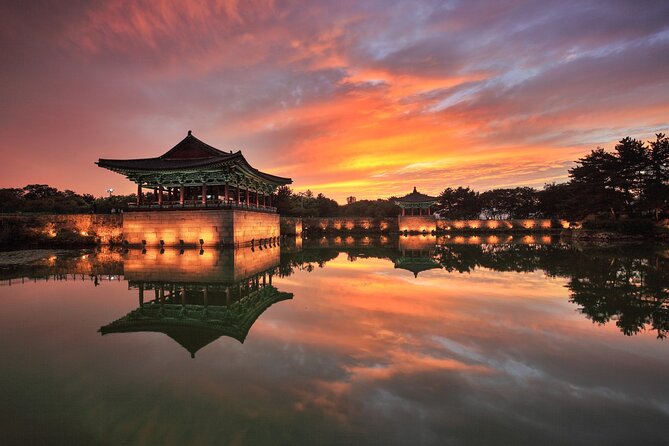
Donggung Palace and Wolji Pond is scheduled for about one hour and is often the emotional high point of the day. The pond was created in 674 and formed part of a royal palace complex. Reflections from the water and the illuminated buildings can make this stop feel more special than its daytime description suggests.
The night setting changes how you see the site. Instead of focusing only on stones, foundations, and historical dates, you notice the relationship between water, buildings, and light. Several guides, including Bryan and Victoria, have been praised for making the long day enjoyable through clear explanations and an upbeat manner.
The timing is not guaranteed. Traffic and weather can alter the order or length of stops, and some departures return before the full evening effect. Still, if you enjoy night photography, this is a strong reason to select the UNESCO route.
The entrance fee is included on that route. Bring a phone or camera with enough battery, but remember that the group will have a fixed meeting time.
What the Museum route adds
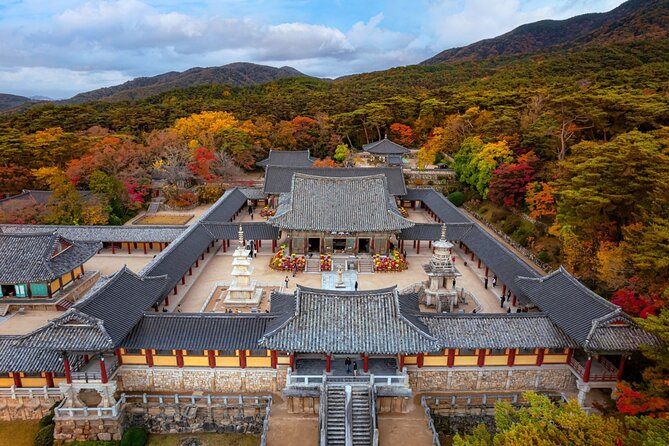
The Gyeongju National Museum is the main alternative to the outdoor-heavy UNESCO route. Its collection includes Silla golden crowns, Buddhist objects, and other artifacts connected with Gyeongju’s past.
This stop gives physical meaning to what you see at the tombs and temples. A burial mound can look simple from outside, but museum objects help you picture the status, craft, and beliefs connected with Silla society.
The museum visit lasts about one hour. Admission is listed as free for this route. You still visit Bulguksa and Hwangnidan-gil, so the Museum option is not an indoor-only day.
If you find archaeological objects more rewarding than village paths, this is likely your better choice. If your priority is seeing Yangdong and the nighttime pond, select UNESCO instead.
Guides, group size, and the coach ride
The guide is a major part of the experience. Strong guides such as Sol, Vincent, Irene, Bobby Kim, Lucy, Charles, Roy, Juna, Tomy, Lan, and Bryan have been praised for clear explanations, organization, photography help, and good humor.
A capable guide matters because the schedule is tight. You need clear meeting instructions, short historical explanations, and someone who notices when a person is missing. Guides also help bridge language needs, since English, Chinese, and Korean services are available.
The group can reach 43 people. That is a substantial crowd, so do not expect a private-tour feel. You may spend time waiting for people at meeting points, and free time can feel less free when you need to watch the clock.
The air-conditioned coach or minivan is a real benefit. Gyeongju’s attractions are separated by distance, and driving saves you from piecing together public transport. The tradeoff is several hours seated in traffic, especially on a busy day. One departure took roughly 9 a.m. to 9 p.m., though the exact duration varies.
Central Busan pickup makes the trip practical for many people. Confirm your exact pickup point and allow extra time, since the tour may use more than one central location.
Meals, weather, and what to bring
Meals are not included. Lunch is often connected with the village portion of the UNESCO route, while dinner is generally arranged on your own near Hwangnidan-gil or another stop.
Plan with flexibility. Some people enjoy the traditional Korean lunch, while others find it expensive or too small. If you have dietary restrictions, especially vegetarian needs, pack a backup meal or snack. You should also budget separately for drinks, lunch, dinner, and personal purchases.
Most of the day is outdoors. Wear shoes with good support and bring layers. Conditions can shift between the morning departure, warm daytime walking, and a cooler evening near the pond. Sun protection and water are sensible, though the supplied information does not promise that refreshments are provided.
A phone is useful for meeting instructions and photos. The tour information also notes that WhatsApp and a Google account may be needed for full participation, although workarounds are possible. If that creates a problem, sort it out before departure rather than asking the guide to fix it during a crowded day.
Who should book this Gyeongju day trip?
I would recommend it to first-time visitors based in Busan who want a broad introduction to Silla history without arranging transport themselves. Families with older children, history fans, photographers, and anyone with only one free day can get a lot from the route.
It also suits you if you like a guide to explain what you are seeing. The difference between a royal tomb, a Buddhist temple, and a palace pond is much clearer with context.
I would hesitate if you dislike early starts, long coach rides, large groups, hills, or fixed schedules. This is not a restful countryside outing. It is a packed sightseeing day, and the return time can be late.
The overall rating is 4.8 from 660 ratings, with 97 percent recommending it. That matches the main pattern: the places and guides are the strongest parts, while the usual complaints involve length, rushed visits, food value, and time spent waiting or shopping.
Should you book it?
Book the UNESCO option if this is your only Gyeongju visit and you want the widest mix of temples, village homes, tombs, bridge views, and an evening palace pond.
Book the Museum option if you prefer artifacts and a more focused museum visit over Yangdong Village and the additional outdoor monuments.
At $57.14, the tour offers solid value for a very full day, especially because transport and key entrance fees are covered. I would book it with realistic expectations: you are buying access to a lot of Gyeongju in one day, not a slow private tour. Pack food insurance, wear proper shoes, keep your schedule free until late, and you will be better prepared to enjoy what this outing does best.
FAQ
How long does the Gyeongju tour from Busan last?
The tour lasts approximately 10 to 12 hours. Actual timing can change because of traffic and weather.
Where does the tour depart from?
Round-trip transportation is provided from central Busan pickup locations. The exact meeting point is provided after booking.
What transport is used?
Transport is by air-conditioned coach or minivan.
What languages are available?
The tour provides English, Chinese, and Korean-speaking guides.
What is included in the tour price?
Transport and the listed entrance fees are included. On the UNESCO route, this includes Yangdong Village, Donggung and Wolji, and the Cheonmachong Tomb ticket.
Are meals included?
No. Lunch and dinner are not included, and you pay for your own food and personal expenses.
What does the UNESCO route include?
It includes Bulguksa Temple, Yangdong Folk Village, Daereungwon Tomb Complex, Hwangnidan-gil Street, Woljeonggyo Bridge, and Donggung Palace and Wolji Pond.
What does the Museum route include?
The Museum route includes Bulguksa Temple, Hwangnidan-gil Street, and Gyeongju National Museum.
How large can the group be?
The tour can have a maximum of 43 participants.
Can I cancel for a full refund?
Yes. You can cancel at least 24 hours before the experience start time for a full refund. Changes or cancellations made less than 24 hours before departure are not accepted for a refund.
More Busan Trips
- Busan: Gyeongju Guided Day Trip to Three Kingdoms Capital
★ 4.8 · 1,925 reviews - Small Group Full Day Busan Tour (Max 6 Pax)
★ 5.0 · 1,464 reviews - Busan Private Tour with licensed tour guide + private vehicle
★ 5.0 · 1,143 reviews - Busan: Coastal Treasures Beach Train, Culture Village & More
★ 4.7 · 832 reviews
More Historical Tours
- Echoes of Silla Gyeongju Historical Guided Day Tour from Busan
★ 5.0 · 14 reviews - UNESCO World Heritage Gyeongju & Busan Two-city Private Tour.
★ 5.0 · 7 reviews - From Busan: Gyeongju Full-Day Historical Tour
★ 4.1 · 6 reviews - Korean UNESCO World Heritage Tour including Gyeongju, Andong and Daegu(2N3D)
★ 5.0 · 3 reviews
Just added around Busan
- Korean UNESCO World Heritage Tour including Gyeongju, Andong and Daegu(2N3D)★ 5.0 · 3 reviews
- Busan Bliss: Panoramic Yacht & Urban Exploration with Sky Capsule★ 5.0 · 3 reviews
- Busan day trip including Gamcheon culture village from Seoul by KTX train★ 5.0 · 3 reviews
- Busan Seafood Tour : Oyster village Tour with Oyster cuisines★ 5.0 · 3 reviews
- 1 Day Private Busan Guided Tour★ 4.5 · 3 reviews
- 2-DAYS Busan Customized and Included Night tour★ 5.0 · 3 reviews
- Full-Day Jinhae Cherry Blossom festival Private tour★ 5.0 · 3 reviews
- Busan Dialect Class with local snack★ 5.0 · 3 reviews
Gyeongju Heritage Tours, compared.

Gyeongju Guided Day Trip to Three Kingdoms Capital
Read our review →
Gyeongju UNESCO World Heritage Guided Day Tour
Read our review →
Old Korea Thousand History Tour of Gyeongju from Busan
Read our review →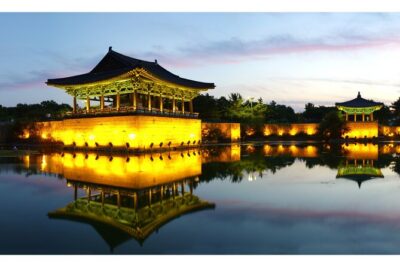
Gyeongju UNESCO sites Private tour with licensed tour guide
Read our review →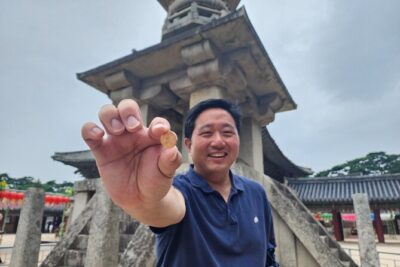
Private Gyeongju Tour – Explore Gyeongju UNESCO Sites
Read our review →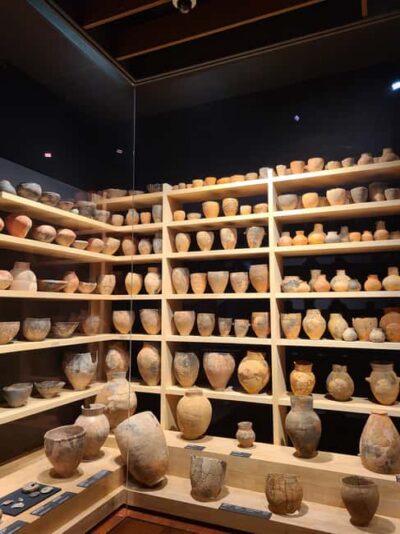
Gyeongju UNESCO Legacy Tour with National Museum
Read our review →
UNESCO Heritage Tour Including Bulguksa Temple
Read our review →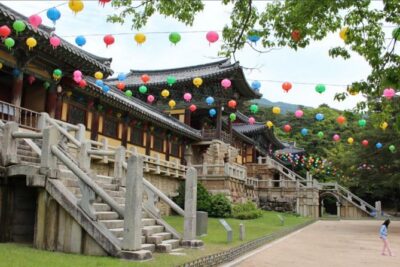
Gyeongju UNESCO World Heritage Sites and History Full-Day Tour with Lunch
Read our review →Browse the lists this tour appears in