
Reviewed · GYEONGJU HERITAGE TOURS
Korean UNESCO World Heritage Tour including Gyeongju, Andong and Daegu(2N3D)
Ancient Korea fits neatly into three busy days. This private tour links Gyeongju’s Silla treasures with Andong’s traditional village life, Haeinsa’s famed Buddhist scriptures, and Daegu’s food and medicine districts. I like the daily hotel pickup and private vehicle, and I also like that your guide can help bridge the language gap at sites that are hard to reach by public transportation. The main drawback is cost: at $988.49 per person, with lodging and lunches extra, this is a serious splurge.
You should also expect long touring days and plenty of time in the vehicle. Still, the ability to shape the pace for your own group is valuable, especially for families or first-time visitors who want several UNESCO sites without managing Korean rail connections and local buses. Guide Peter is specifically praised for helping make the trip enjoyable.
In This Review
- Key points to know before booking
- Why this three-day route works from Busan
- Day one: Silla Korea at Seokguram and Bulguksa
- Cheonmachong Tomb and the Silla royal collection
- Day two: Hahoe Folk Village and Andong traditions
- A short taste of Andong soju
- Day three: Haeinsa and the Tripitaka Koreana
- Daegu’s herbal medicine district and Seomun Market
- What the $988.49 price really buys
- Who should book this private UNESCO tour
- Practical details that affect your decision
- Should you book it?
- FAQ
- Where does the tour start?
- How long does the experience last?
- Is the tour private?
- Are hotel stays included?
- Are meals included?
- Can I request vegetarian arrangements?
- Can I cancel for a full refund?
Key points to know before booking
- Gyeongju delivers the strongest historical day: Bulguksa, Seokguram, Cheonmachong Tomb, and the National Museum create a clear picture of Silla Korea.
- Andong offers a different kind of heritage: Hahoe Folk Village shows traditional houses and the continuing connection of the Pungsan Ryu clan.
- Haeinsa is the emotional high point for many visitors: Its mountain setting and preservation of the Tripitaka Koreana give the final day real weight.
- The private format saves time: Hotel pickup, a private air-conditioned minivan, onboard WiFi, and direct transfers remove much of the practical work.
- The price favors small groups: The more people sharing the private vehicle, the easier it is to justify the per-person cost.
- You must budget for two nights in Daegu: Accommodation and lunch are not included, though the operator can recommend places to stay.
Why this three-day route works from Busan
This tour is built for you if South Korea’s major city sights are only part of your plan. Starting from Busan at 8:00 a.m., you travel inland to three culturally important areas: Gyeongju, Andong, and Daegu.
The route is ambitious. You are not simply visiting one temple and returning to Busan. You are moving through several periods and traditions, from Silla royal culture to Joseon-era village life, from Buddhist scholarship to modern Daegu market culture.
The private setup matters here. Public transport can get you near some of these places, but connecting all of them in three days would require careful planning. With a driver and guide, you can spend your energy looking out the window or listening to explanations rather than checking departure boards.
Your group is the only group on the activity. That gives you some freedom to tailor the day, although the listed stops and travel distances still make this a fairly full schedule. Bottled water and WiFi are included, which are small comforts on longer road sections.
More Historical Tours in Busan
- From Busan: Gyeongju UNESCO World Heritage Guided Day Tour
★ 4.8 · 1,250 reviews - Gyeongju UNESCO World Heritage Guided Day Tour from Busan
★ 5.0 · 660 reviews - Old Korea Thousand History Tour of Gyeongju from Busan
★ 5.0 · 518 reviews
Day one: Silla Korea at Seokguram and Bulguksa
The first day begins with two of Korea’s most important Buddhist sites. Seokguram is a hermitage connected with Bulguksa Temple, high above the East Sea. Its grotto contains Buddhist sculpture and shares UNESCO recognition with Bulguksa.
You have about an hour here. That is enough for a focused visit, though not a slow, meditative one. The site’s appeal is not only the sculpture inside the grotto. The setting above the coast adds a sense of distance from the modern world, even though you are visiting as part of a carefully timed tour.
Next comes Bulguksa, meaning Temple of the Buddha Land. Allow about 1 hour and 10 minutes. This is the more extensive temple visit, with stone stairways, courtyards, and the famous Dabotap and Seokgatap pagodas.
I like the way these two stops work together. Seokguram gives you a concentrated encounter with Buddhist art, while Bulguksa shows how that religious vision was expressed through a full temple complex. If you only have time for one day in Gyeongju, this pairing gives you a strong introduction.
Your guide can add value here by explaining the Silla-era background and pointing out details you might otherwise walk past. The tour description promises a professional driver and guide, but individual guiding style can vary. The named guide Peter received especially warm praise, so you can ask the operator about guide assignment if that matters to you.
Cheonmachong Tomb and the Silla royal collection
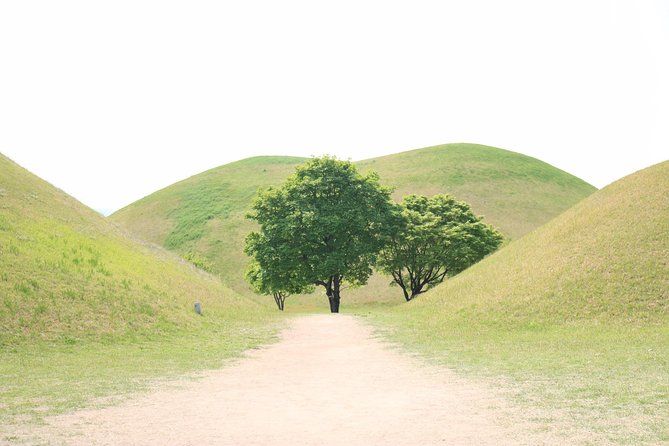
After the temples, the focus shifts to burial customs and archaeology at Cheonmachong Tomb. The name means Heavenly Horse Tomb, referring to a painting of a flying horse found during excavation in 1973.
The tomb belonged to an unknown Silla king. You have roughly 1 hour and 10 minutes here, which gives you time to understand the scale and purpose of the burial mound rather than merely photographing it from outside.
This stop is useful because it shows another side of Gyeongju. The temples reveal public religion and royal patronage. Cheonmachong gives you a more direct sense of royal burial practices and the material culture placed with a ruler.
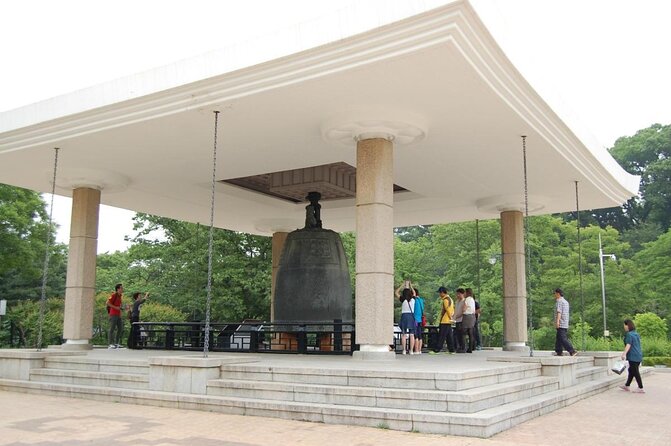
The final stop is the Gyeongju National Museum, with about 1 hour and 20 minutes. Its collection includes around 3,000 Silla relics, including King Seongdeok’s Bell, also called the Emille Bell, and National Treasure No. 29.
I would pay close attention here even if museums are not normally your main interest. The objects at the museum help explain what you saw at the temple and tomb. Without that context, Gyeongju can become a string of beautiful but disconnected sights.
Day one is full. Seokguram and Bulguksa are the major draws, while Cheonmachong and the museum make the history easier to understand. The drawback is that each visit is timed. You get breadth, not the freedom to linger at every courtyard or gallery.
Day two: Hahoe Folk Village and Andong traditions
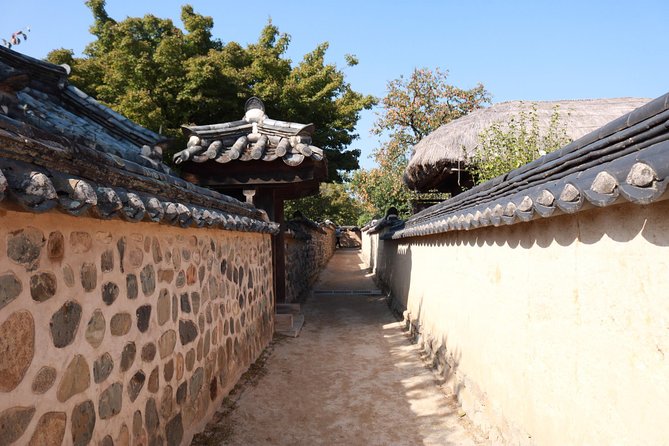
The second day moves away from royal Silla monuments and into traditional village life. Andong Hahoe Folk Village is a UNESCO World Heritage site and home to descendants of the Pungsan Ryu clan.
You have three hours here, the longest single stop of the tour. That extra time is welcome. Hahoe is best understood by walking through its traditional houses and streets rather than rushing through a short photo stop.
The value of a private guide is especially clear in a place like this. A guide can explain how the village remains connected to a particular family lineage and how the homes differ from a modern Korean neighborhood. You can also ask for more time in the areas that interest you most, within the day’s overall schedule.
Do not expect Hahoe to feel like an ordinary open-air museum. The attraction is the preserved village form and its cultural continuity. At the same time, three hours may feel brief if you want to inspect every building or take a very slow walk.
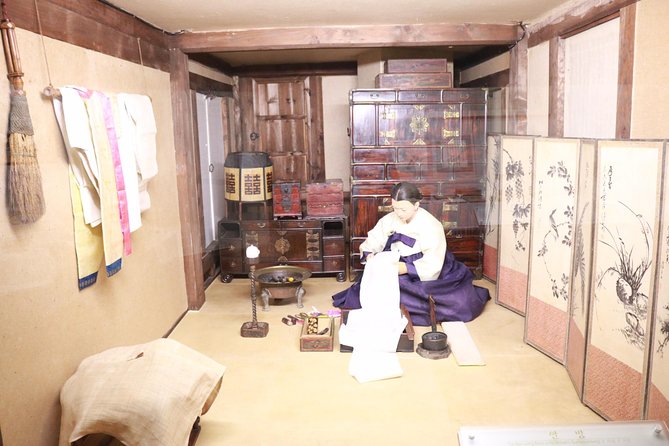
Next, the Andong Folk Museum gives you an hour to look at everyday life and important ceremonies. Andong is closely associated with Confucian culture, and the museum helps put the village visit into a wider setting.
I find this pairing particularly useful. Hahoe gives you the physical setting, while the museum supplies objects and explanations about domestic life, customs, and ceremonies. Together, they make Andong more than a pretty stop on a road trip.
More Historical Tours in Gyeongju
- From Busan: Echoes of Silla Gyeongju Historical Day Tour
★ 4.8 · 55 reviews - Gyeongju Historic Areas Day Tour with Sky Capsule from Busan
★ 5.0 · 18 reviews - From Busan: Gyeongju Historical Day Tour with Sky Capsule
★ 4.7 · 17 reviews - Gyeongju The UNESCO World heritage sites tour(Private tour)
★ 5.0 · 17 reviews
A short taste of Andong soju
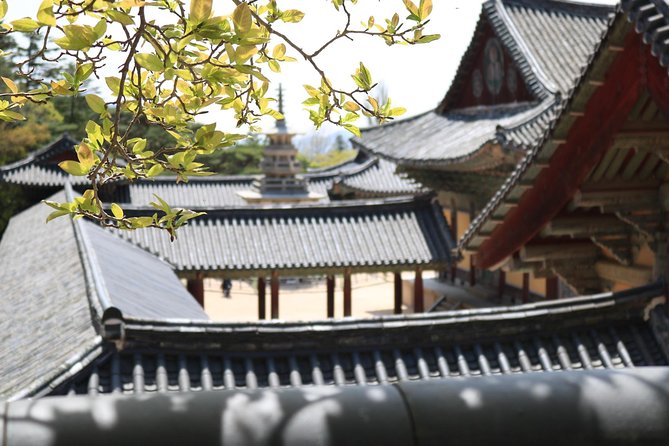
The Andong Soju Museum takes about 30 minutes. It explains how the traditional liquor is made and presents local food items. You can also taste Andong soju.
This is a small stop, but it adds a local flavor that temples and museums cannot provide. It also breaks up the cultural sightseeing with something practical and sensory. If you do not drink alcohol, tell the operator when booking and ask what part of the visit is suitable for you.
Vegetarian arrangements are available if requested in advance. Lunch is not included, so you should plan to purchase meals separately. The tour operator can provide information about accommodation and can recommend places to stay in Daegu for the two nights.
Day three: Haeinsa and the Tripitaka Koreana
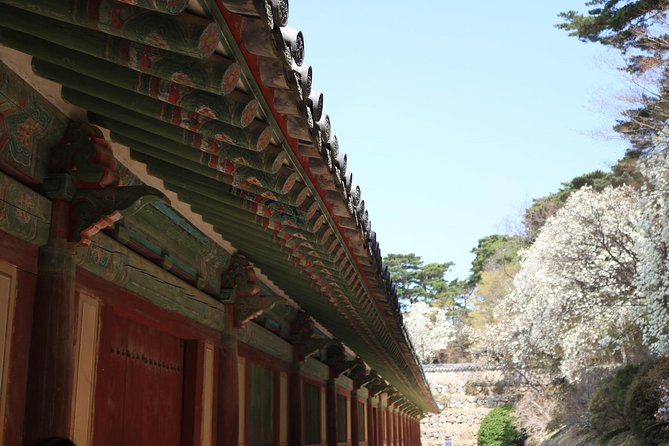
Haeinsa Temple is the major stop on the third day, with about 1 hour and 30 minutes on site. It is one of Korea’s Three Jewel Temples and sits in the Gaya Mountains.
The temple is best known as the home of the Goryeo Daejanggyeong, commonly called the Tripitaka Koreana. This collection of Buddhist scriptures is central to the site’s importance and gives Haeinsa a different character from Bulguksa.
Bulguksa is closely tied to Silla’s royal Buddhist culture. Haeinsa is known for safeguarding a major body of Buddhist learning. I like having both temples in the same trip because they show that Korean Buddhist heritage is not one single experience.
The setting also helps. The temple’s mountain location gives the visit a quieter feel than a city attraction. One family account singled out Haeinsa on a misty Sunday morning as especially beautiful. Weather cannot be promised, of course, but the comment points to the atmospheric quality that can make this stop memorable.
The 90-minute visit is enough for a meaningful introduction, though again, the schedule does not invite a long private retreat. Wear comfortable shoes and be ready for walking around a historic temple site.
Daegu’s herbal medicine district and Seomun Market
After Haeinsa, the tour returns to Daegu for two shorter urban stops. At Daegu Yangnyeongsi, you spend about 40 minutes around one of Korea’s recognized centers of traditional medical culture.
You can see different herbs and visit the museum to learn about traditional medical care. This is a good counterpoint to the temples and village. Instead of focusing on royal power or religious buildings, it shows a practical tradition tied to health, trade, and daily life.
The final stop is Seomun Market, one of Korea’s largest and liveliest markets. You have about 50 minutes to look at local foods, clothing, and fashion items.
That is enough time for a first taste, but not enough for a leisurely market crawl. Since lunch is not included, Seomun Market may be a useful place to buy food, depending on the timing of your visit. The supplied details do not promise a specific meal or food tasting, so plan to pay for anything you eat yourself.
I like ending in a market rather than with another formal monument. After three days of temples, tombs, museums, and village houses, Seomun offers a more current view of Daegu. It also gives you a chance to shop for practical souvenirs instead of collecting only photographs.
What the $988.49 price really buys
At $988.49 per person, this is not a budget excursion. The price includes a private vehicle, air-conditioned minivan transport, a driver and professional guide, hotel pickup and drop-off, bottled water, onboard WiFi, and admission tickets for the listed paid attractions.
It does not include two nights of accommodation in Daegu or lunch. Those extra costs matter, so calculate the full trip price before booking.
The strongest value is convenience. You are paying to connect places that are difficult to combine by public transportation, while keeping the trip private. Families may appreciate not having to shepherd children through multiple transfers. Couples and small groups may value the ability to adjust the pace and ask for direct explanations.
The value is less convincing for a solo visitor or a strict budget traveler. If you are comfortable arranging trains, buses, hotels, and tickets yourself, a self-guided trip may cost less. The tour earns its price through time saved, private transport, and reduced planning stress.
Group discounts are offered, but the details are not provided. Ask about the discount before booking, particularly if your party is large. The more people sharing the private arrangements, the better the per-person value is likely to feel.
Who should book this private UNESCO tour
I would recommend it most strongly to first-time visitors who want a broad introduction to historic Korea beyond Seoul and Busan. It suits people who prefer a guide’s explanations and do not want to solve every transport problem alone.
It is also a good fit for families, older visitors who value hotel pickup, and small groups with limited time. The private format means your companions set the social atmosphere, not strangers in a large coach.
You should think twice if you want slow mornings, long café breaks, or extended time at one temple. The itinerary covers a lot of ground, and the 8:00 a.m. start plus several timed visits creates a purposeful pace.
The tour can begin from Gyeongju or another city near Busan, according to the supplied details. Confirm the exact pickup plan and hotel arrangements before you pay, especially if you are not starting in Busan.
Practical details that affect your decision
Confirmation is provided at booking, and free cancellation is available up to 24 hours before the start time. Changes or cancellations inside that window are not accepted for a refund.
Most people can participate, and the tour is near public transportation, though the main benefit is that you do not need to use it for the sightseeing route. Vegetarian food arrangements are available when requested at booking.
The tour has received a top overall rating from three submitted ratings, with especially strong praise for the temples, the access to hard-to-reach UNESCO sites, and the quality of the family experience. That is encouraging, but it is still a small sample, so I would treat the rating as useful evidence rather than a guarantee.
Should you book it?
Book this tour if you want maximum cultural coverage with minimum transport planning. Gyeongju is the star, Haeinsa may be the most atmospheric stop, and Hahoe Folk Village gives the itinerary a human scale that temples alone cannot provide.
Skip it if $988.49 per person feels too high once you add hotels and meals, or if you prefer to travel slowly and independently. Before booking, ask about your guide, confirm the two Daegu hotel nights, request any vegetarian arrangements, and check how group discounts apply.
For a small private party that values comfort, direct transfers, and a carefully connected route, this is a strong three-day introduction to Korea’s UNESCO heritage and living traditions.
FAQ
Where does the tour start?
The standard start time is 8:00 a.m. in Busan, with hotel pickup and drop-off offered.
How long does the experience last?
The tour lasts approximately three days and includes two nights in Daegu, with accommodation booked separately.
Is the tour private?
Yes. Only your group participates, and transport is provided by private air-conditioned minivan.
Are hotel stays included?
No. Accommodation in Daegu for two nights is not included. The operator can provide information and recommend places to stay.
Are meals included?
Lunch is not included. You need to budget separately for meals and any food purchased during the trip.
Can I request vegetarian arrangements?
Yes. A vegetarian option is available, but you should advise the operator when booking.
Can I cancel for a full refund?
Yes, if you cancel at least 24 hours before the experience start time. Cancellations or changes made less than 24 hours before the start are not accepted for a refund.
More Historical Tours
- Busan history and market food tour with local chef
★ 5.0 · 58 reviews - Echoes of Silla Gyeongju Historical Guided Day Tour from Busan
★ 5.0 · 14 reviews - UNESCO World Heritage Gyeongju & Busan Two-city Private Tour.
★ 5.0 · 7 reviews - From Busan: Gyeongju Full-Day Historical Tour
★ 4.1 · 6 reviews
More Andong and Hahoe Trips
- Andong Hahoe Folk Village Day Tour From Busan
★ 5.0 · 4 reviews - Andong Hahoe Village [UNESCO site] Premium Private Tour from Seoul
★ 5.0 · 24 reviews - Andong Hahoe Folk Village [UNESCO World Heritage] Private Tour from Seoul
★ 4.0 · 7 reviews - Andong: UNESCO Sites, Mask Dance, and Secret Garden & Bridge
★ 5.0 · 5 reviews
Just added around Busan
- Busan Bliss: Panoramic Yacht & Urban Exploration with Sky Capsule★ 5.0 · 3 reviews
- Busan day trip including Gamcheon culture village from Seoul by KTX train★ 5.0 · 3 reviews
- Busan Seafood Tour : Oyster village Tour with Oyster cuisines★ 5.0 · 3 reviews
- 1 Day Private Busan Guided Tour★ 4.5 · 3 reviews
- 2-DAYS Busan Customized and Included Night tour★ 5.0 · 3 reviews
- Full-Day Jinhae Cherry Blossom festival Private tour★ 5.0 · 3 reviews
- Busan Dialect Class with local snack★ 5.0 · 3 reviews
- From Busan: Gyeongju Small Group Photo Tour & Hotel Pick-up★ 5.0 · 3 reviews
Gyeongju Heritage Tours, compared.

Gyeongju Guided Day Trip to Three Kingdoms Capital
Read our review →
Gyeongju UNESCO World Heritage Guided Day Tour
Read our review →
Gyeongju UNESCO World Heritage Guided Day Tour from Busan
Read our review →
Old Korea Thousand History Tour of Gyeongju from Busan
Read our review →
Gyeongju UNESCO sites Private tour with licensed tour guide
Read our review →
Private Gyeongju Tour – Explore Gyeongju UNESCO Sites
Read our review →
Gyeongju UNESCO Legacy Tour with National Museum
Read our review →
UNESCO Heritage Tour Including Bulguksa Temple
Read our review →Browse the lists this tour appears in