
Reviewed · FULL-DAY TOURS IN SEOUL
Ganghwa Island – Full day private tour
Ganghwa puts Korea’s borderlands within reach. This eight-hour private trip trades Seoul’s crowded streets for old fortresses, a mountain temple, village life, and a Peace Observatory only about two kilometers from North Korea. I like the private minivan and guide, which let you travel at your own pace, and I like the mix of military history, religion, food, and rural scenery.
The main drawback is the price: $220 per person, with at least two people required, and lunch is not included. The optional luge ride also costs extra. Still, for a couple or small group wanting a flexible day outside Seoul, the price can make sense, especially since hotel pickup, transport, guiding, water, and listed entrance fees are covered.
In This Review
- Ganghwa Island at a glance
- Why Ganghwa makes a good escape from Seoul
- Gwangseongbo Fortress and the 1871 American conflict
- Jeondeungsa Temple inside Samrangseong Fortress
- The optional Ganghwa Seaside Resort luge ride
- Ganghwa Pungmul Market and the taste of island life
- Looking across the border at the Peace Observatory
- Yeonmijeong Pavilion for another border view
- Ganghwa Anglican Cathedral and outside influence
- What the private vehicle adds to the day
- Is $220 per person a fair price?
- Who will enjoy this Ganghwa day trip?
- Should you book this tour?
- FAQ
- How long does the Ganghwa Island private tour last?
- What time does the tour start?
- Is hotel pickup included?
- Is transportation provided?
- Is this a private tour?
- How many people are required to book?
- Is lunch included?
- Is the luge ride included?
- Can you see North Korea during the tour?
Ganghwa Island at a glance
- North Korea is roughly two kilometers away at the Peace Observatory, where binoculars provide a close look across the border.
- Gwangseongbo Fortress and Jeondeungsa Temple connect Ganghwa to conflicts with the United States and France during the Joseon period.
- A private vehicle and driver-guide make this easier than piecing together several distant sights by public transport.
- Ganghwa Pungmul Market gives you a look at island produce and local specialties, not just monuments.
- Yeonmijeong Pavilion and Ganghwa Anglican Cathedral add broad views and a different chapter of Korean history.
- The day begins at 8:30 a.m. with pickup from hotels in Seoul and runs for about eight hours.
Why Ganghwa makes a good escape from Seoul
Ganghwa Island sits close enough to Seoul for a full-day outing, yet it feels far removed from the capital. The change is the point. Instead of high-rise streets and packed shopping areas, you get farmland, sea views, historic sites, and a quieter look at everyday South Korea.
I especially like the way this trip joins several parts of Korean life. Ganghwa is not presented only as a military site or only as a pretty island. You see fortifications, Buddhist worship, Christian influence, traditional food, and the uneasy closeness of North Korea.
The private format matters here. You are not sharing the vehicle with a large group, so your guide can explain difficult subjects in a way that suits you. The strongest praise has centered on guides such as Mr. Lee and Miae, who were described as warm, enthusiastic, and good at giving Western visitors useful historical context.
That last point is important. Ganghwa’s past includes conflicts that may not be familiar to you, including fighting with American forces in 1871 and French forces in 1866. A guide who can explain why the island mattered to the Joseon dynasty will turn a quick stop into something you remember.
More Full-Day Tours in Seoul
- Full Day Tour In The Soop BTS Ver in PyeongChang Filming Location
★ 5.0 · 1,709 reviews - Seoul City Private Full-Day Tour Including Lunch
★ 5.0 · 469 reviews - Full-day Customizable Private Seoul Highlight Tour
★ 5.0 · 301 reviews
Gwangseongbo Fortress and the 1871 American conflict
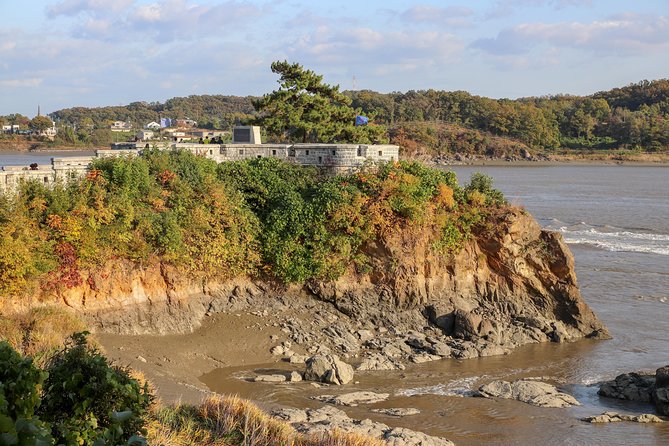
Your first major stop is Gwangseongbo Fortress, visited for about 30 minutes with admission included. This was a battlefield during the 1871 conflict with the United States, and its position helps explain why Ganghwa mattered so much.
Ganghwa served as an important approach to Seoul. Its waterways and position near the capital gave it military value, so fortifications here were not placed at random. As you walk around the site, your guide can connect the walls and defensive setting to the pressure Joseon Korea faced from foreign powers.
Half an hour is enough for an introduction, photographs, and a clear explanation of the site. It is not enough for a long, unhurried historical visit, so listen closely and ask questions while you are there.
This stop will suit you if you enjoy military history and want more than a scenic drive. If fortresses are not your thing, it may feel brief and somewhat austere. The setting, however, gives the stop a sense of place that a museum display cannot provide.
Jeondeungsa Temple inside Samrangseong Fortress
Next comes Jeondeungsa Temple, with about 40 minutes to visit. Admission is included. The temple sits within Samrangseong Fortress, another place tied to conflict, including the French campaign of 1866.
The attraction here is the contrast. You move from defensive walls and foreign pressure into a Buddhist setting with mountain surroundings and a calmer mood. The visit offers a useful introduction to Korean Buddhism without requiring you to spend half a day at a religious complex.
I would use this stop to slow down. Notice the temple buildings, the setting, and the way religious life shared space with military defense. You do not need to be a Buddhist art expert to appreciate the change in atmosphere.
Forty minutes passes quickly. The tour is designed to show you the main character of the temple rather than provide a detailed study of every building. If you want extended quiet time for photography or contemplation, mention that to your guide, though the overall schedule may limit your options.
The optional Ganghwa Seaside Resort luge ride
The Ganghwa Seaside Resort is scheduled for about 50 minutes, but the luge ride is optional and not included in the tour price. If you want a recreational break, you can choose to ride a luge down the hill. If not, this portion gives the day a less historical pause.
This is a useful feature for mixed groups. One person may enjoy fortresses and temples, while another wants an active amusement. Families or younger visitors may find the luge more appealing than another heritage stop.
The important practical point is cost and time. The admission is not covered, and the experience may change the rhythm of the day. Ask your guide about the current ride arrangements and price before committing. If your priority is history, food, and the border observatory, you may prefer to keep this stop short or skip the ride.
More Private Tours in Seoul
- Private DMZ Tour (No Shopping): 3rd Tunnel & Suspension Bridge
★ 5.0 · 607 reviews - Private DMZ the 3rd Tunnel Tour from Seoul (optional Red Bridge)
★ 5.0 · 429 reviews - Seoul Highlights & Hidden Gems Tours by Locals: Private + Custom
★ 5.0 · 359 reviews - Premium Private DMZ Tour & (Suspension Bridge or N-Tower) include lunch
★ 5.0 · 348 reviews
Ganghwa Pungmul Market and the taste of island life
The traditional Ganghwa Pungmul Market receives about 30 minutes, with no admission charge. This may be one of the most useful stops for understanding the island as a living community rather than a collection of historic sites.
Markets show you what a place produces, eats, and sells. Here, you can look for Ganghwa specialties and get a sense of local agriculture and rural commerce. The market is also a good place to ask your guide about products you do not recognize.
The time is short, so do not expect a long meal or a full market tour. Lunch is not included, and the supplied experiences point to food such as fish barbecue and coffee as possible pleasures during the day. Treat the market as a chance to see local goods and discuss lunch plans with your guide.
Food is one area where the private format can help. Your guide may be able to explain what you are seeing and help the group decide how to use its time. Still, the tour does not promise a particular restaurant or meal, so keep your expectations flexible.
Looking across the border at the Peace Observatory
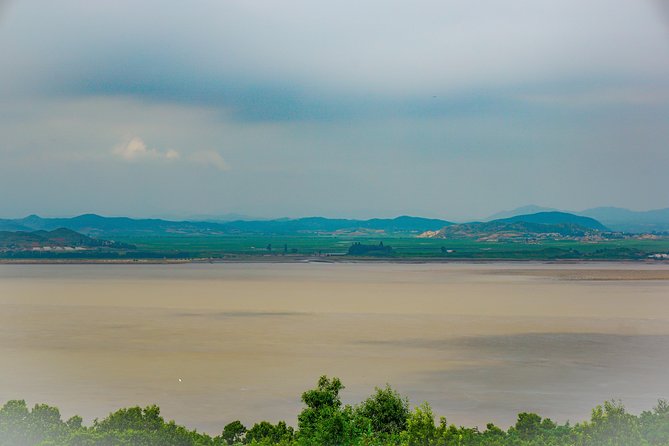
The Peace Observatory is the emotional center of the day. You spend about 40 minutes here, with admission included, using binoculars to view North Korean territory and the lives of people across the water. The distance is said to be only about two kilometers, which makes the border feel unusually close.
This is not a sightseeing viewpoint in the ordinary sense. The view carries political weight. You are looking toward a country that is physically near but closed off in many ways, and the guide’s explanation can help you understand what you are seeing.
Do not expect a dramatic city skyline or a guaranteed close-up of individual people. The experience depends on visibility, the viewing equipment, and what can be seen from the observatory. The value lies in the location and the chance to consider the division of the Korean Peninsula from a civilian viewpoint.
The binoculars are an important part of the stop. Use them carefully, and give yourself time to look rather than rushing through for a photograph. This is the point where a good guide can make a major difference. Mr. Lee was praised for sharing engaging facts throughout the day, and that kind of commentary is especially useful here.
Yeonmijeong Pavilion for another border view
Yeonmijeong Pavilion provides another 30-minute stop, free of charge. From here, you can take in views of the island and get another look toward North Korea.
The pavilion works well after the observatory because it gives you a second perspective. You are not simply checking off another viewpoint. You can compare the feeling of a formal observation post with the more open setting of a traditional pavilion.
This is also a good photography stop, though the day’s exact views will depend on weather and visibility. The schedule allows enough time to look around without turning the visit into a long hike.
The physical demands of the tour are moderate rather than extreme. You should be comfortable walking around fortresses, temple grounds, viewpoints, and market areas. The tour provider asks for a moderate fitness level, so this is not the best choice if you need a fully step-free day.
Ganghwa Anglican Cathedral and outside influence
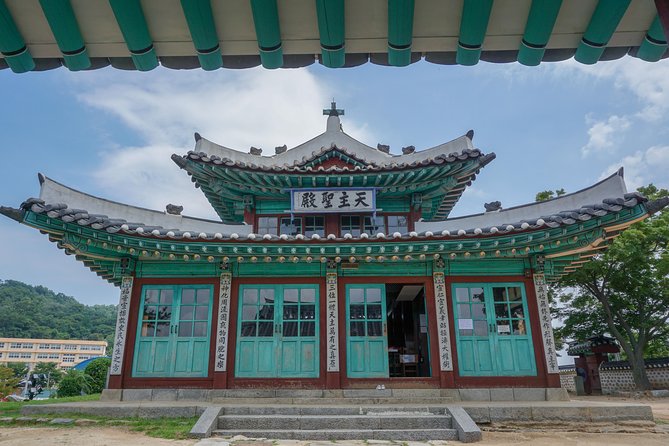
The final listed stop is Ganghwa Anglican Cathedral, visited for about 30 minutes at no admission cost. Ganghwa’s location made it an entry point toward Seoul, and western visitors reached the island through this area. The cathedral reflects that outside influence.
This stop adds needed balance to the day. You have already seen Buddhist and military sites, and now you get evidence of Christian activity and contact between Korea and the West. It helps you understand that Ganghwa was not isolated, even though its rural character may feel removed from Seoul.
The cathedral is not presented as a grand European church transplanted to Korea. Its importance comes from its place in Ganghwa’s story. Your guide can explain why western religious buildings appeared here and how the island’s location shaped those encounters.
Thirty minutes should be enough for a look around and some historical context. As with the other short stops, the visit is broad rather than highly specialized.
What the private vehicle adds to the day
Hotel pickup and drop-off are included for hotels in Seoul. The tour starts at 8:30 a.m. and uses an air-conditioned minivan, with the driver also serving as your guide.
That arrangement is a real advantage for this route. Ganghwa’s sights are spread across the island, and a private vehicle removes the need to work out several connections. You can also ask questions between stops instead of waiting for the next formal explanation.
A private tour does not automatically mean unlimited flexibility. The day includes seven stops within roughly eight hours, so the timing is fairly full. The optional resort visit, lunch, traffic, and time spent at the observatory may affect how long you have at each place.
Still, the format is much more personal than a large coach excursion. Your group is the only group participating, and the guide can respond to your interests. The strongest compliments have focused on this human element: good explanations, enthusiasm, help with food, and a friendly approach.
Bottled water is included. Lunch is not, so budget for it separately and discuss the plan early in the day. The experience also requires at least two people per booking, making it a better fit for couples, families, or friends than solo visitors.
Is $220 per person a fair price?
At $220 per person, this is not a budget day trip. With the two-person minimum, the starting cost for a private booking is $440 before lunch and any luge charges.
The value comes from what the price bundles together: Seoul hotel pickup and return, private air-conditioned transport, a driver-guide, bottled water, and admission to the included sites. You are also paying for convenience and a route that would take more planning to manage alone.
For a couple, the cost may be reasonable if you want a full day with personal guidance and do not want to navigate Ganghwa independently. For a larger group, the private format can become more attractive because everyone shares the vehicle and guide rather than buying separate transport arrangements.
I would not choose this tour if your main goal is the cheapest possible way to reach the island. I would consider it if you value context, comfort, and the ability to ask questions. The perfect five rating from 14 submitted ratings and a 100 percent recommendation record suggest the format has worked especially well for people seeking a personal day outside Seoul, though you should still judge the price against your own budget.
Who will enjoy this Ganghwa day trip?
I would recommend it most strongly to:
- Couples who want a private day beyond Seoul
- Families or friends who prefer a vehicle to public transport
- People interested in Korean military history and the divided peninsula
- Visitors who want to see rural life, markets, and historic religion in one day
- Anyone who benefits from a guide explaining Korean history in clear terms
You may want another experience if you prefer long visits at one or two sights, extensive hiking, or a fixed food tour. The schedule samples many places, so it favors variety over deep time at each stop.
Book well ahead if your dates are fixed. The experience is booked an average of 32 days in advance, and confirmation is sent within 48 hours, subject to availability. Free cancellation is available until 24 hours before the start time. After that cutoff, refunds and changes are not accepted.
Should you book this tour?
Book it if you want to see a side of South Korea that Seoul cannot provide, especially with a guide who can connect the fortresses, temple, market, cathedral, and border views. The Peace Observatory is the strongest reason to go, while the private minivan and guide make the long day easier.
I would book with two expectations: lunch and the luge cost extra, and the tour covers many stops in limited time. If that tradeoff suits you, this is a thoughtful, well-rounded day trip with real historical weight and a welcome change of pace from the capital.
FAQ
How long does the Ganghwa Island private tour last?
The tour lasts approximately eight hours.
What time does the tour start?
The scheduled start time is 8:30 a.m.
Is hotel pickup included?
Yes. Pickup and drop-off are included for hotels located in Seoul.
Is transportation provided?
Yes. Transport is provided in an air-conditioned minivan.
Is this a private tour?
Yes. Only your group participates in the private activity.
How many people are required to book?
A minimum of two people is required per booking.
Is lunch included?
No. Lunch is not included in the tour price.
Is the luge ride included?
No. The Ganghwa Seaside Resort luge ride is optional, and its admission is not included.
Can you see North Korea during the tour?
Yes. At the Peace Observatory, you can use binoculars to look toward North Korea, which is described as approximately two kilometers away. You can also get a view toward North Korea from Yeonmijeong Pavilion.
More Full-Day Tours
- Full-Day Tour in Mt. Seorak & Nami (+Rail Bike Option)
★ 5.0 · 186 reviews - Full-Day Palace Tour in Seoul
★ 5.0 · 155 reviews - Full Day- Essential Seoul City Tour & Gourmet Tour(including Lunch and Dinner)
★ 5.0 · 73 reviews - Full Day Private Tour Nami Island, Garden & Petite France
★ 5.0 · 57 reviews
Just added around Seoul
- Seoraksan National Park & Nami Island★ 4.5 · 3 reviews
- Strawberry Picking, Winter Sled with Eobi Ice Valley from Seoul★ 4.5 · 3 reviews
- Seoul Full Day small group Tour★ 5.0 · 3 reviews
- Majang Meat Market Experience: Private Tour with Han-woo Beef BBQ★ 5.0 · 3 reviews
- Seoul Korean BBQ Dinner Experience with Secret Food Tours★ 5.0 · 3 reviews
- Rice Wine Tasting with Sommelier – Finest Makgeolli (& Soju)★ 5.0 · 3 reviews
- Max Out Seoul: Must Visit City Highlights Panoramic Day Tour★ 5.0 · 3 reviews
- Seongsu-dong Walking Tour: K-Pop, Culture, Cheer, Friends & Relax★ 4.5 · 3 reviews
Full-Day Tours in Seoul, compared.
Full Day Tour In The Soop BTS Ver in PyeongChang Filming Location
Read our review →
Seoul City Private Full-Day Tour Including Lunch
Read our review →
Full-day Customizable Private Seoul Highlight Tour
Read our review →
Full-Day Tour in Mt. Seorak & Nami (+Rail Bike Option)
Read our review →
Full Day- Essential Seoul City Tour & Gourmet Tour(including Lunch and Dinner)
Read our review →
Full Day Private Tour Nami Island, Garden & Petite France
Read our review →
Seoul City Full Day Tour – Changdeok Palace (wearing Hanbok)
Read our review →Browse the lists this tour appears in