
Reviewed · DMZ & BORDER TOURS
Private DMZ the 3rd Tunnel Tour from Seoul (optional Red Bridge)
The border is only an hour from Seoul. This private DMZ tour combines hotel pickup, a dedicated guide, and comfortable transport with the Third Tunnel, Dora Observatory, and Imjingak Park. I like the freedom of having your own vehicle and guide, and I like how the itinerary connects military sites with personal stories of divided families. The main drawback is that the route can change with little warning because the DMZ remains an active military area.
The tour costs $500 per group of up to six, so it makes the most sense for a family or group that can share the price. Guides such as Ray, Alice, Lina, Sua, and Diane have earned especially warm praise for clear explanations and friendly service. Bring your passport, expect a long day, and keep your schedule flexible.
In This Review
- Key points to know before you book
- Why this private DMZ tour works well for small groups
- Imjingak Park puts the division in human terms
- Crossing toward the controlled zone
- Walking into the Third Tunnel
- Looking north from Dora Observatory
- Tongilchon and the agricultural side of the DMZ
- The optional red Gamaksan Chulleong Bridge
- Is $500 good value for six people?
- Practical advice for a smoother day
- Who should book this experience?
- Should you book the private Seoul DMZ tour?
- FAQ
- How long does the private DMZ tour from Seoul last?
- How many people can join the private tour?
- Is hotel pickup included?
- Do I need to bring my passport?
- Is lunch included?
- Can the itinerary or start time change?
Key points to know before you book
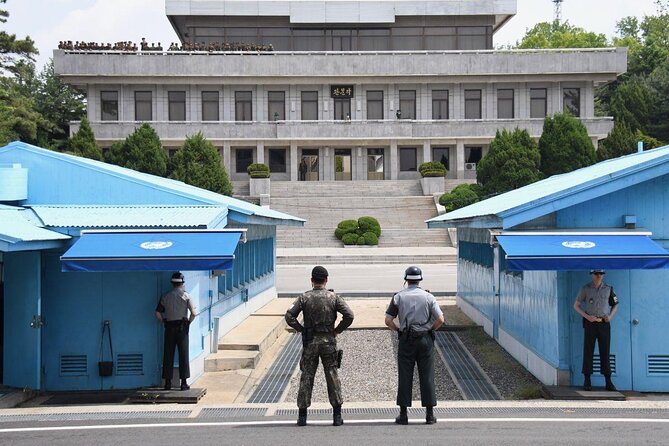
- The Third Tunnel is the physical highlight: You walk down into a tunnel built by North Korea and discovered in 1978.
- Dora Observatory offers a direct view toward North Korea: Binoculars help you look toward Kijong-dong and Kaesong City.
- Imjingak Park gives the day emotional weight: The Bridge of Freedom, Mangbaedan altar, war-damaged locomotive, and Peace Bell show how ordinary families experienced the division.
- Private transport is useful for a group: Pickup and drop-off in downtown Seoul save you from arranging several subway and taxi connections.
- The optional Gamaksan Chulleong Bridge changes the tone: This red suspension bridge adds a scenic walk and an extra hour, but it may not fit every departure.
- Military rules control the schedule: Start times and stops can change because of security conditions, weather, or other issues.
Why this private DMZ tour works well for small groups
A visit to the Korean Demilitarized Zone is not a normal sightseeing trip. The DMZ is a 4-kilometer-wide buffer created by the 1953 armistice, and access is controlled by military rules. That makes a guide useful, not just convenient. You need someone who can explain what you are seeing and help you understand why a quiet field or bridge carries so much meaning.
This experience is designed for up to six people. Your day begins with pickup at a downtown Seoul hotel, or you can meet the guide and driver at a nearby subway station. You ride in a private vehicle with your own guide, although smaller groups must transfer to a group shuttle bus once inside the DMZ.
That last detail matters. The tour is private for your party during the main journey, but it does not mean your vehicle travels through every restricted area alone. Military access rules take priority. I would book this arrangement for families, couples traveling together, or friends who want a more personal pace than a large coach tour allows.
The guide quality can make a big difference. Alice has been praised for her clear explanations and careful coordination, while Ray is known for mixing strong historical detail with humor. Lina has also been flexible enough to coordinate an added strawberry-picking stop when it suited the route. These details suggest a service that can feel personal rather than mechanical, though guide assignments are not guaranteed.
More Private Tours in Seoul
- Private DMZ Tour (No Shopping): 3rd Tunnel & Suspension Bridge
★ 5.0 · 607 reviews - Seoul City Private Full-Day Tour Including Lunch
★ 5.0 · 469 reviews - Seoul Highlights & Hidden Gems Tours by Locals: Private + Custom
★ 5.0 · 359 reviews
Imjingak Park puts the division in human terms
The first major stop is Imjingak Pyeonghwa-Nuri Park, usually called Imjingak Park. Opened in 2005, it was created as a place connected with peace and reunification, close to the DMZ.
You have about 30 minutes here. That is enough to walk around and take in several important sights, though not enough for a slow visit to every corner. The park is more than a photo stop. It helps you shift from Seoul’s modern energy to the personal cost of a divided peninsula.
At the Bridge of Freedom, you can think about the 12,773 prisoners of war who crossed back into South Korea in 1953. The wooden bridge was temporary, but its name has lasted. You cannot treat it as just another bridge over a river. It carries the memory of people returning home after years of war and captivity.
Nearby, Mangbaedan Memorial Altar recalls families separated from relatives in North Korea. Families gather there during holidays such as Chuseok, when Korean people traditionally honor their ancestors. The site can feel quiet and restrained, which is part of its power. You are not being shown a battlefield alone. You are being shown an ongoing family wound.
The Imjin River Dokgae Bridge offers another reminder of the war. Its steel structure was destroyed and rebuilt, and its remaining historic elements are linked with the fighting of the 1950s. You view it from a designated point rather than treating it as an ordinary crossing.
The rusted steam locomotive at Jangdan Station may be the most immediately striking object in the park. Bombing derailed it in 1950, and it has been preserved since 1953. Its bullet marks and damaged metal make the war visible in a way that dates and political explanations cannot.
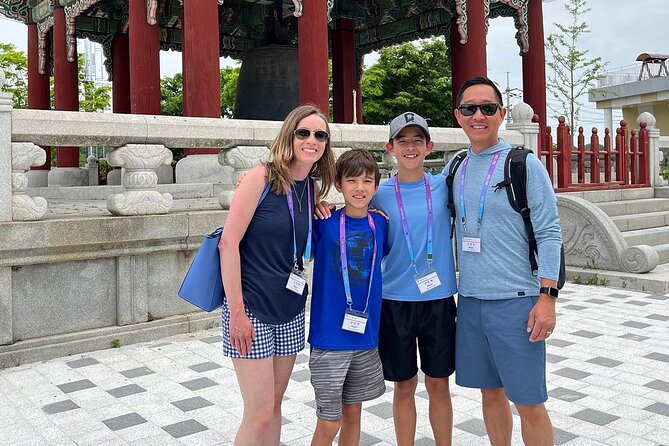
You will also see Pyeonghwauijong, the 21-ton Peace Bell. Cast in 2000, it represents hope for reunification. The bell is a symbolic stop, but it rounds out the park’s message: this place remembers loss while still pointing toward peace.
Crossing toward the controlled zone
The Unification Bridge opened in 1998 and links the area around Imjingak with the route toward the DMZ. You cross or pass through this section with military checkpoints nearby, so the mood changes quickly.
From the vehicle, you may see the Imjin River running alongside the route. The water looks calm, but the setting is not casual. The closer you move toward the border, the more clearly you feel that this is a working security zone rather than a museum created for tourists.
The itinerary allows about 10 minutes for the bridge area, followed by a short bus ride through the border region. Do not expect unlimited freedom to stop wherever you wish. This is one reason a guide matters. They can explain the rules and help you make good use of the time available.
Walking into the Third Tunnel
The Third Tunnel of Aggression is the tour’s most physical stop. North Korea built this 1,635-meter passage, which was discovered in 1978. It is about 2 meters high and 2 meters wide, and it lies roughly 52 kilometers from Seoul.
You descend into the tunnel for about 30 minutes. The walk is not simply a stroll through a broad exhibition hall. The passage is enclosed, and the return route includes the uphill walk back to the surface. If you dislike confined spaces or have difficulty with a steep walk, consider this before booking.
The tunnel gives the political story a physical shape. The border is no longer an abstract line on a map. You are walking through a passage created for infiltration, then repurposed as a place where visitors can learn about the conflict.
The admission ticket is included, but the stop may be tiring in hot weather because you still spend time walking outdoors around the wider tour. Wear practical shoes. There is no special dress code for the DMZ, but comfortable clothing and footwear will make the day easier.
This is also a place where your guide’s explanations are valuable. The basic facts are easy to repeat, but the context helps you understand why the tunnel matters and how it fits into the broader armistice system.
More DMZ and border tours:
- Best DMZ Tour Korea from Seoul (Red Suspension Bridge Optional)
★ 5.0 · 41,422 reviews - DMZ Tour: 3rd Tunnel, Option(Suspension Bridge, Boat) from Seoul
★ 5.0 · 21,373 reviews - DMZ tour south Korea from Seoul (NK experience hall, defector)
★ 5.0 · 20,599 reviews - Seoul: DMZ Tour with Optional Suspension Bridge
★ 4.8 · 5,277 reviews
Looking north from Dora Observatory
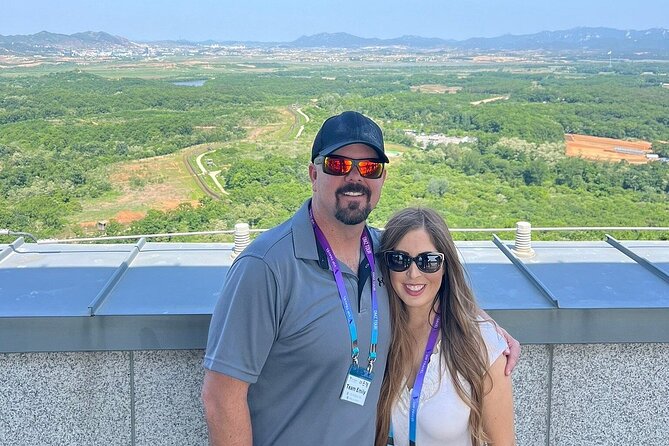
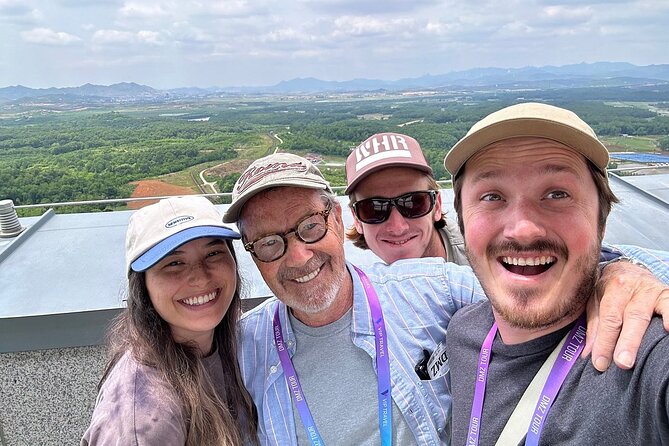
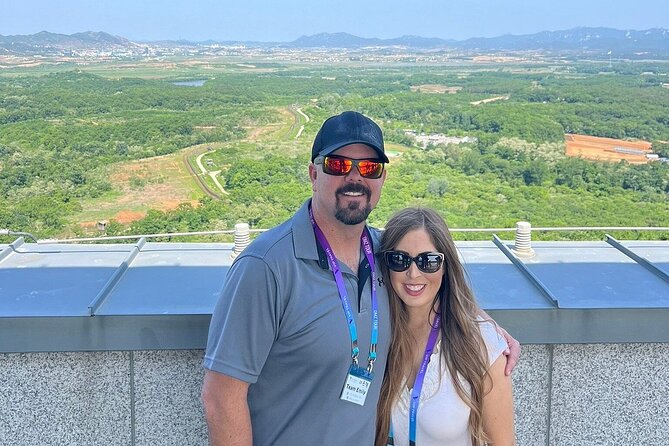
Dora Observatory sits on Dorasan and offers one of South Korea’s closest public views toward North Korea. You have about 30 minutes to look across the border, with binoculars available for seeing features such as Kijong-dong’s propaganda village and Kaesong City.
Your view depends on conditions. Weather can affect visibility, and military rules can affect where you may stand or what you can photograph. Do not expect a dramatic city panorama every time. The value is in the act of looking across a live border, knowing that the apparently quiet fields are part of one of the world’s most heavily watched divides.
A guide can help you identify what you are seeing. This is also the stop where patient observation pays off. Give yourself time to use the binoculars and listen to the explanation rather than rushing through for a single picture.
Several people have praised guides for helping with photos at the best viewpoints. Diane, in particular, has been singled out for combining detailed explanations with attentive photo help. That may be useful if you are traveling with children or want a group picture without asking another visitor.
Tongilchon and the agricultural side of the DMZ

Tongilchon-gil takes you along a quieter road near Tongilchon village, beyond the Civilian Control Line. The village is associated with farmland and Jangdan soybeans, a local crop with a good reputation in Korea.
This stop gives the day a needed change of pace. After memorials, checkpoints, and military sites, you see an area where people still work the soil near one of the world’s most tense borders. The contrast is useful. The DMZ is not only fences and soldiers. It is also a place where ordinary rural life continues under unusual restrictions.
The listed time is about 30 minutes. The stop may feel less dramatic than the tunnel or observatory, but I would not dismiss it. It helps you understand the border as a lived area, not only as a historic line.
The optional red Gamaksan Chulleong Bridge
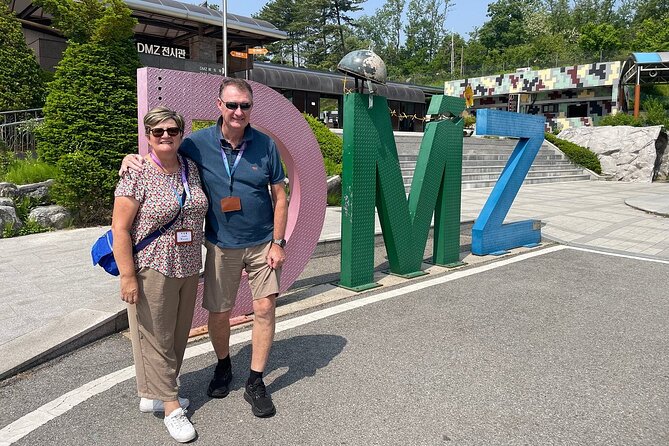
If you choose the optional Gamaksan Chulleong Bridge, plan on about an extra hour. The red suspension bridge is 150 meters long and hangs about 30 meters above the ground. It was built in 2018 in honor of Korean War heroes.
This addition changes the tour from a focused historical visit into a broader day with a scenic walk. The bridge offers a physical challenge and a different kind of view, but it may not suit everyone. If your priority is the DMZ itself, you may prefer more time at the core stops. If you enjoy walking and want a break from memorials and military explanations, the bridge can be a good extra.
Ask about the option when booking and confirm the added costs. The tour information lists optional admission, parking, and toll fees separately, so the final amount may depend on the selected route.
Is $500 good value for six people?
At first glance, $500 sounds expensive. Divide it among six people and it comes to about $83 per person before any optional charges. For a full eight-hour day with private pickup, a driver, and a professional English or Chinese-speaking guide, that can be reasonable.
The value is strongest when you fill the vehicle. A group of six gets a far better per-person rate than a couple paying the entire group price. For two people, the cost is harder to justify unless private transport, hotel pickup, and personal guiding matter a great deal to you.
You also save time and effort. The DMZ is not a place where you can always improvise your route. A private pickup keeps the morning simple, and the driver handles the long transfer from Seoul. You can ask questions throughout the day instead of waiting for a guide to return to your section of a large coach.
Lunch is not included. You should plan for that, since the tour lasts about eight hours and the itinerary includes several short stops. The supplied information does not promise a set meal or a specific restaurant, so ask the operator how lunch fits into your departure.
Practical advice for a smoother day
Bring your passport. It is required on the tour day, and military checkpoints make this a serious requirement rather than a casual suggestion.
Keep your schedule open around the stated start time. Military guidelines can change the departure time, and the route may be altered because of security matters or weather. The operator says refunds are not available when the schedule changes for those reasons, so avoid booking this on a day when you have a tightly timed evening flight or another fixed activity.
There is no special dress code. Still, I would choose comfortable shoes for the Third Tunnel and the optional red bridge. You may spend time walking outdoors between stops, so dress for the day’s weather.
Photography rules may vary by location. Follow the guide’s instructions near observation points, bridges, and checkpoints. The DMZ is a real security area, not a film set.
Cancellation is free if you cancel at least 24 hours before the experience begins. Changes or cancellations inside that window are not accepted for a refund.
Who should book this experience?
I would recommend it to anyone who wants more context than a quick border photo. Families can benefit from the private vehicle and the ability to ask questions at their own pace. The positive guide feedback also suggests that children and teenagers can stay engaged when the guide explains the war in a clear, lively way.
It is also a good fit for people who value convenience. Downtown pickup, a dedicated driver, and a full-day route remove much of the planning burden.
I would be more cautious if you dislike enclosed spaces, steep walking, military restrictions, or uncertain schedules. The Third Tunnel is not optional in the main route, and the day cannot be treated like a standard sightseeing bus trip. You must accept that stops, timing, and access can change.
Should you book the private Seoul DMZ tour?
Book it if you are traveling with a group of four to six and want a serious, well-explained visit to the border. The combination of Imjingak’s memorials, the Third Tunnel, Dora Observatory, and Tongilchon gives you both the political story and the human side of the division.
For a couple, compare the price with a shared tour before committing. For a full group, the cost becomes much more attractive, especially with hotel pickup and private transport.
I would add the Gamaksan Chulleong Bridge only if you want an active scenic stop and can spare the extra hour. The main route already provides a full day of meaningful places. Go with an open schedule, bring your passport, and choose this tour for understanding, not just for a border photograph.
FAQ
How long does the private DMZ tour from Seoul last?
The tour lasts approximately eight hours, including transportation from Seoul and visits to the DMZ, Imjingak Park, the Third Tunnel, Dora Observatory, and other sites.
How many people can join the private tour?
The price covers one private group of up to six people. If your group has fewer than 30 people, you still need to transfer to a group shuttle bus once inside the DMZ.
Is hotel pickup included?
Yes. Free hotel pickup and drop-off are offered in downtown Seoul. You may also meet the guide and driver at a nearby subway station.
Do I need to bring my passport?
Yes. A passport is required on the tour day because the route enters a controlled military area.
Is lunch included?
No. Lunch is not included in the tour price.
Can the itinerary or start time change?
Yes. The start time and schedule may change because of military guidelines, security issues, or weather. The operator says refunds are not available when the itinerary changes for these reasons.
Just added around Seoul
- Seoraksan National Park & Nami Island★ 4.5 · 3 reviews
- Strawberry Picking, Winter Sled with Eobi Ice Valley from Seoul★ 4.5 · 3 reviews
- Seoul Full Day small group Tour★ 5.0 · 3 reviews
- Majang Meat Market Experience: Private Tour with Han-woo Beef BBQ★ 5.0 · 3 reviews
- Seoul Korean BBQ Dinner Experience with Secret Food Tours★ 5.0 · 3 reviews
- Rice Wine Tasting with Sommelier – Finest Makgeolli (& Soju)★ 5.0 · 3 reviews
- Max Out Seoul: Must Visit City Highlights Panoramic Day Tour★ 5.0 · 3 reviews
- Seongsu-dong Walking Tour: K-Pop, Culture, Cheer, Friends & Relax★ 4.5 · 3 reviews
DMZ & Border Tours, compared.

Best DMZ Tour Korea from Seoul (Red Suspension Bridge Optional)
Read our review →
DMZ Tour: 3rd Tunnel, Option(Suspension Bridge, Boat) from Seoul
Read our review →
DMZ tour south Korea from Seoul (NK experience hall, defector)
Read our review →
DMZ Insider Tour: 3rd Tunnel, NK Defector Meet & Red Bridge
Read our review →

Signature DMZ Tour: Exclusive Defector Talk & Suspension Bridge
Read our review →
Thrilling Korean DMZ 3rd Tunnel Tour from Seoul + Red Bridge Rush
Read our review →DMZ Past and Present: Korean Demilitarized Zone Tour from Seoul
Read our review →Browse the lists this tour appears in