
Reviewed · WALKING TOURS
Seoul moonlight walking tour with local historian
Seoul shines brightest from its hills. This two-hour evening walk links Hyehwa’s theater district with Ihwa Mural Village, Naksan Park, and the old Seoul City Wall, while local guides explain how education, class, politics, and daily life have shaped the city. I especially like the excellent night views and the way the tour connects famous sights with ordinary Korean society. I also like that guides such as Jessica, Ethan, June, and Smin bring humor and personal insight rather than giving you a string of dates.
The main drawback is the uphill route. You will handle stairs and sloping streets, sometimes in warm weather and possibly with insects around the park. The tour is a good value at $31.98 per person, but it suits you best if you can walk uphill comfortably and want context, not just photographs.
In This Review
- Key points to know before booking
- Starting in Hyehwa, where Seoul gets theatrical
- Marronnier Park and the cultural life of Daehak-ro
- Naksan Park turns geography into history
- Ihwa Mural Village and the social story behind the art
- The Seoul City Wall at sunset and after dark
- What the guide adds beyond a viewpoint
- Fitness, weather, and what to bring
- Is $31.98 a fair price?
- Who should book this Seoul night walk?
- Should you book the Seoul Moonlight Walking Tour?
- FAQ
- How long is the Seoul moonlight walking tour?
- How much does the tour cost?
- Where does the tour begin?
- Where does the tour end?
- How many people can join the tour?
- Are admission tickets included?
- What happens if the weather is poor?
Key points to know before booking
- Hyehwa gives the tour a lively opening, with theaters, music, art, and university culture around Marronnier Park.
- The route climbs through Ihwa Mural Village, where the guide discusses hillside housing, income, and the people who have lived there.
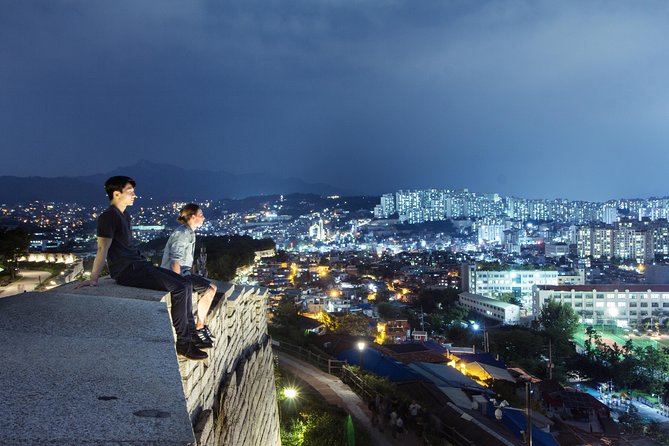
- Naksan Park and the Seoul City Wall bring the big payoff, with wide evening views across Seoul.
- The history is tied to present-day Korea, including university entrance pressure, social class, changing neighborhoods, and the location of the capital.
- The group can include up to 20 people, so the experience is social but not fully private.
- Wear comfortable shoes, charge your phone, and bring bug spray, especially if you hope to stay for sunset and city lights.
Starting in Hyehwa, where Seoul gets theatrical
The tour begins near Hyehwa120 on Daehak-ro in Jongno District. This is a useful meeting point because the surrounding area is already part of the story. Hyehwa is associated with university life, small theaters, live performances, and young people out for the evening.
Your first stop is the Seoul University Hospital Medical Museum. The planned visit lasts about 10 minutes and is free. The focus here is not a long museum visit, but a look at university culture in Korea, including the unusual idea that the highest place students can reach in the country is tied to admission and academic success.
That opening gives the tour a sharper edge than a standard sightseeing walk. You begin with a social question: why does education carry so much weight in Korean life? Guides also use this part of the route to explain present-day university culture and the pressure around entrance exams.
I like this choice because it gives you a way to read the rest of the walk. The old wall, hillside homes, and city lights are not isolated sights. They become part of a larger story about who gets opportunities, who lives on the hills, and how Seoul has changed.
More Walking Tours in Seoul
- Seoul: Nighttime Hidden Gems Walking Tour
★ 5.0 · 775 reviews - Seoul: Evening Dark History, Folklore & Ghost Story Walking Tour
★ 5.0 · 593 reviews - Seoul: Dark Side of the City and Ghost Stories Walking Tour
★ 4.8 · 484 reviews
Marronnier Park and the cultural life of Daehak-ro
Next comes Marronnier Park, usually for about five minutes. This is a short stop, but it helps explain why Hyehwa feels different from the polished commercial districts that many visitors see first.
The park area is known for live theater and shows. You may encounter music, performers, or people heading to a production, though the exact atmosphere will vary by evening. The guide points out the link between the streets, nearby universities, and Seoul’s theater culture.
Do not expect a formal performance as part of the tour. Marronnier Park works more as a local orientation point. It shows you a part of Seoul that is social, creative, and tied to everyday city life.
That is one reason I would book this early in a Seoul visit. The route introduces you to an area you might otherwise pass through on the way to more famous sights. It also gives you local suggestions for food and activities, something guide Ethan has been praised for doing during the walk.
Naksan Park turns geography into history
From Hyehwa, the route heads uphill toward Naksan Park. The park stop is listed at around 10 minutes, but the walking between stops is part of the experience, so the tour is not simply five short talks connected by transport.
At Naksan, the guide explains how Seoul became the capital and how the city changed as that position developed. This is a useful place for the discussion because the height gives you a physical sense of Seoul’s shape. You can look across the city while thinking about why this location mattered.
The hill also changes the pace. You are no longer in the flat streets near the theaters. The climb begins in earnest, and the city starts opening below you. Several people praise the easy pace, but the route still includes a fair number of stairs. One practical comment is repeated in different ways: be ready to walk uphill.
The guides are a major part of the value. Jessica is described as funny and detailed, Ethan as calm, entertaining, and open to questions, June as friendly and passionate about Seoul’s past, and Smin as warm and clear in English. Guide assignments can change, so do not book solely for one particular person. Still, the team’s approach appears consistent: history mixed with current culture and room for questions.
There is one important qualification. At least one participant found the English and storytelling less effective with a particular guide. That seems to be an isolated weak point beside the strong response overall, but it is worth remembering if precise English explanations are your top priority.
Ihwa Mural Village and the social story behind the art
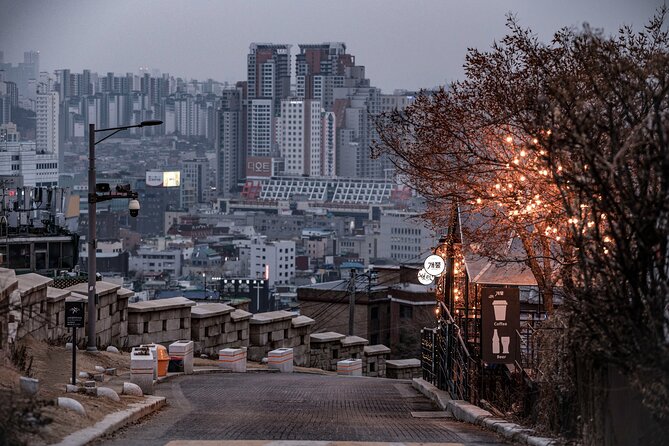
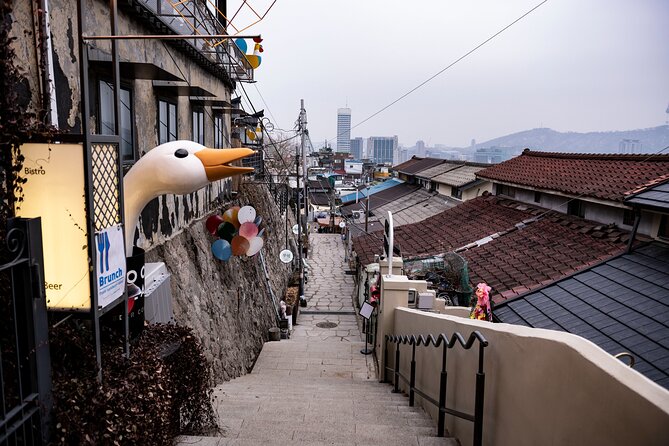
The route then reaches Ihwa Mural Village, where the planned stop lasts about 20 minutes. This is likely the most visually familiar part of the walk, with murals and painted streets on the hillside.
The guide does more than point out colorful walls. The discussion centers on the fact that many hillside villages in Seoul were home to people with fewer financial resources. That context matters. Without it, the area can look like a cheerful photo stop. With it, you begin to see the neighborhood as a place shaped by income, housing, redevelopment, and the long-term lives of its residents.
I appreciate this part because it avoids treating local homes as a backdrop. Your guide can explain why people settled on hills, how the area gained its artistic identity, and how social conditions affect where people live. The supplied description also frames Ihwa as a place foreign visitors may not find easily on their own, though the murals themselves are now known.
Keep your camera ready, but stay aware that this is a residential area. The tour information does not promise a particular mural, and the neighborhood’s appearance can change. Focus on the guide’s explanation as much as the photographs.
The climb may feel harder here, especially if you have already walked all day. Comfortable shoes are essential. One useful tip from the feedback is to charge your phone before starting. The views and evening scenes make this a phone-heavy walk, and there is no special equipment supplied.
More walking tours:
- Gangnam Walking Tour on Youth and Society in Seoul Korea
★ 5.0 · 401 reviews - Seoul: Gyeongbok Palace and Bukchon Hanok Walking Tour
★ 4.8 · 157 reviews - Best Walking Tour to Gyeongbok Palace Bukchon Hanok Village
★ 5.0 · 138 reviews - Highlights & Hidden Gems With Locals: Best of Seoul Private Walking Tour
★ 4.5 · 83 reviews
The Seoul City Wall at sunset and after dark
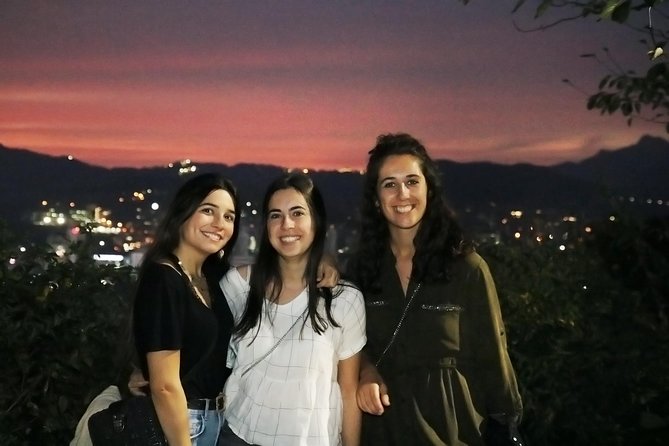
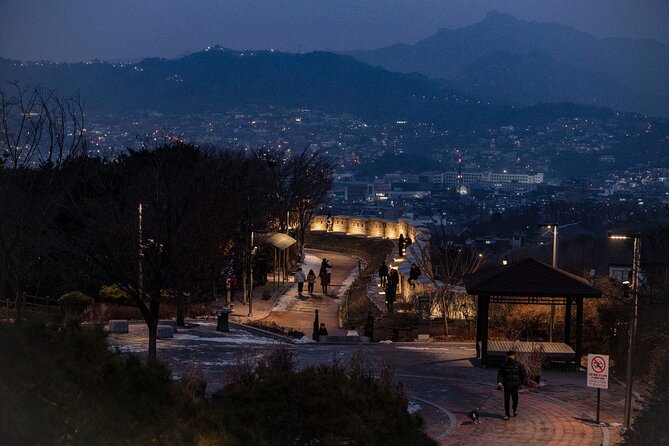
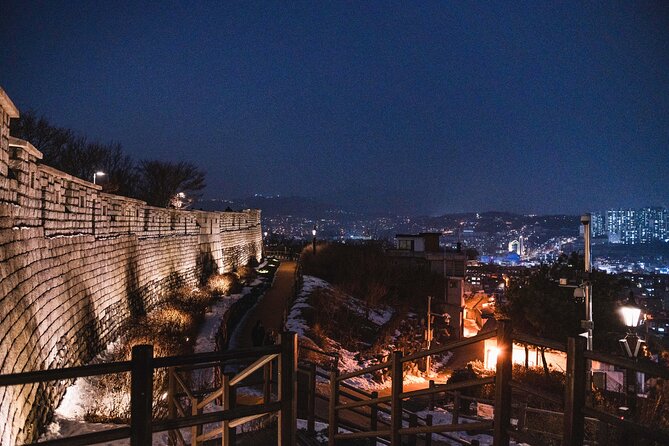
The final major section follows the historic Seoul City Wall. This is the emotional high point of the tour. The wall is both a surviving monument and a walking route with broad views over the capital.
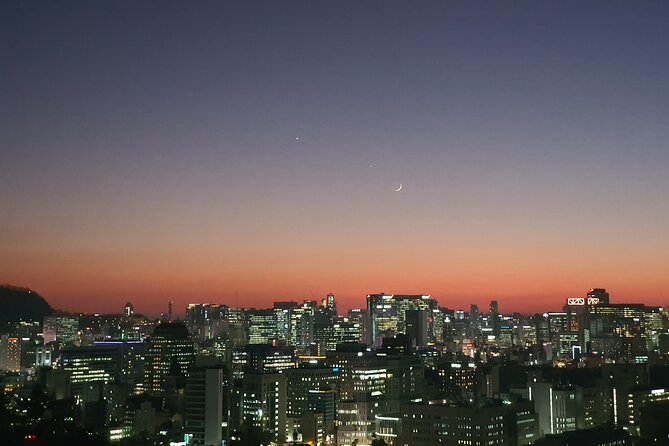
The timing is designed around evening light, so you may see the city shift from sunset colors to a field of lights. The exact view depends on the season, weather, and start time, but the appeal is clear: the higher you climb, the more of Seoul appears below you.
This is also where the tour’s title makes sense. Moonlight is not just a label for a nighttime outing. The wall, hill, and city lights create a quieter mood than the busy streets at the start. Guides stop to explain the wall’s historical role and the way Seoul expanded around it.
The route has also been associated with a location featured in K-Pop Demon Hunters, which may interest fans of the film. The main reason to come, though, is the combination of old stonework and modern Seoul views. You get a physical reminder of the city’s past with high-rise districts and lights stretching beyond it.
Several people describe the wall walk as worth the stairs. I would agree with that assessment for anyone who enjoys city viewpoints. If you dislike hills, however, the final view may not justify the effort. This is not a flat evening stroll.
What the guide adds beyond a viewpoint
A viewpoint alone can be photographed in minutes. The guide is what turns this route into a useful introduction to Seoul.
The strongest commentary links old history with current life. You may hear about capital formation, university entrance culture, social class, hillside housing, Korean values, and the way modern Seoul fits into the wider world. Guides are also praised for answering questions and adapting the pace for photographs.
The tone seems friendly rather than academic. Jessica is repeatedly described as humorous, while Ethan is praised for mixing frank discussion with jokes. June is noted for making facts both clear and entertaining. Smin is described as particularly strong in English and as someone who gives careful explanations.
That variety is helpful for a group tour. You get information, but the evening does not feel like a lecture. It can also be a good way to meet people if you are visiting alone, since the walk gives you two hours of shared conversation and a clear activity.
Still, group tours depend on the person leading them. The maximum group size is 20, which is manageable but not intimate. If the group fills, you may need to stay close to hear every explanation, especially on streets with background noise.
Fitness, weather, and what to bring
The tour lasts about two hours and requires no special supplies. That does not mean it is effortless. You will walk uphill, climb stairs, and later come back down. The route is not presented as a difficult hike, but it is more active than a flat city walk.
I would bring:
- Comfortable shoes with good grip
- A fully charged phone
- Water, especially in warm weather
- Bug spray for the park and wall areas
- Weather-appropriate clothing
The experience requires good weather. If poor weather cancels the tour, you are offered another date or a full refund. You can also cancel for a full refund up to 24 hours before the start time. Changes or cancellations inside that window are not accepted.
Most people can participate, but the description does not promise a fully accessible route. Because of the stairs and hills, you should judge the walk by your own mobility and stamina.
Is $31.98 a fair price?
At $31.98 per person, this is not the cheapest way to see Naksan Park. You can reach public parks and city wall paths without paying for admission. The price is paying for the route, the local explanation, the timing, and the confidence that you will find the best viewing points without guessing your way through unfamiliar streets.
The value is strongest if you care about context. A self-guided visit may give you the same wall and lights, but probably not the discussion about education, class, hillside neighborhoods, and Korean society. The tour also saves planning time, since the route connects several nearby places in a sensible order.
There is no dinner included. A food session may take place after the walk, but it is optional and costs extra. That arrangement is practical because you can choose your own meal, though you should not mistake the food session for part of the $31.98 package.
With free admission at every listed stop and no transport included, the tour is not an attraction bundle. It is a guided local walk. For a first visit to Seoul, I think the fee is reasonable if you want a thoughtful introduction to the city rather than a checklist of major landmarks.
Who should book this Seoul night walk?
I would recommend it to first-time visitors who want to understand Seoul through both history and current life. It is also a strong choice for solo visitors, couples, and curious adults who enjoy asking questions and seeing a city after dark.
You will get the most from it if you:
- Like walking tours with social and historical discussion
- Want views without arranging a complicated evening route
- Are interested in Korean education, housing, and class
- Enjoy neighborhoods beyond the standard tourist circuit
- Can manage hills and stairs
- Want local food suggestions after the tour
I would hesitate if you need a flat route, dislike group activities, or only want quick photo stops. I would also avoid booking it as your main plan during uncertain weather, since the experience depends on outdoor conditions.
Should you book the Seoul Moonlight Walking Tour?
Yes, if you want a lively two-hour introduction to Seoul that combines city lights, old walls, and present-day culture. The best parts are the hilltop views and the guide’s effort to explain why the neighborhoods look and function as they do.
Book it near the start of your Seoul stay if you want local ideas for later. Choose another activity if stairs are a serious concern. Wear good shoes, charge your phone, bring insect repellent, and leave room for an optional meal afterward. At $31.98, this is a fair buy for guided insight and evening scenery, not simply for access to places that are free.
FAQ
How long is the Seoul moonlight walking tour?
The tour lasts approximately two hours.
How much does the tour cost?
The listed price is $31.98 per person.
Where does the tour begin?
It begins at Hyehwa120, Daehak-ro, Jongno District, Seoul, South Korea.
Where does the tour end?
The activity ends back at the meeting point.
How many people can join the tour?
The maximum group size is 20 people.
Are admission tickets included?
Yes. The listed stops have no admission charge, and no special walking-tour supplies are required.
What happens if the weather is poor?
The tour requires good weather. If it is canceled because of poor weather, you can choose another date or receive a full refund.
Just added around Seoul
- Seoraksan National Park & Nami Island★ 4.5 · 3 reviews
- Strawberry Picking, Winter Sled with Eobi Ice Valley from Seoul★ 4.5 · 3 reviews
- Seoul Full Day small group Tour★ 5.0 · 3 reviews
- Seoul Korean BBQ Dinner Experience with Secret Food Tours★ 5.0 · 3 reviews
- Rice Wine Tasting with Sommelier – Finest Makgeolli (& Soju)★ 5.0 · 3 reviews
- Majang Meat Market Experience: Private Tour with Han-woo Beef BBQ★ 5.0 · 3 reviews
- Seongsu-dong Walking Tour: K-Pop, Culture, Cheer, Friends & Relax★ 4.5 · 3 reviews
- Seoul: Alpaca World and Nami Island (with Garden / Railbike)★ 5.0 · 3 reviews
Walking Tours, compared.
Evening Dark History, Folklore & Ghost Story Walking Tour
Read our review →Dark Side of the City and Ghost Stories Walking Tour
Read our review →
Gangnam Walking Tour on Youth and Society in Seoul Korea
Read our review →
Gyeongbok Palace and Bukchon Hanok Walking Tour
Read our review →
Best Walking Tour to Gyeongbok Palace Bukchon Hanok Village
Read our review →
Highlights & Hidden Gems With Locals: Best of Seoul Private Walking Tour
Read our review →
Street photoshoot and Seoul Hidden gem History Walking Tour
Read our review →Browse the lists this tour appears in