
Reviewed · HANBOK & PALACE EXPERIENCES
Best Walking Tour to Gyeongbok Palace Bukchon Hanok Village
Seoul’s past is only a few steps from its present. This three-hour walking tour links Gwanghwamun Gate, Gyeongbokgung Palace, the National Folk Museum, Bukchon Hanok Village, and Insadong in one compact route. I especially like the small maximum group of eight and the way the tour connects royal architecture with ordinary Korean life. Guides such as Jay Kim, Stella, Jack, Paul, and Joe have also made the experience personal with clear history, local stories, food tips, and help with photographs.
The main caution is the uneven guide experience. Many guides are praised for warm, detailed explanations, but a few have been described as low-energy or unable to answer basic questions. You should also expect steps, uphill walking, and a fair amount of time on your feet. At $88 per person, this is best for someone who wants an organized introduction rather than a quick photo stop.
In This Review
- Key points to know before booking
- Why this route works for a first day in Seoul
- Starting near Gwanghwamun and the King Sejong statue
- Gyeongbokgung Palace and the changing of the guard
- The National Folk Museum and everyday Korean life
- Walking toward Bukchon Hanok Village
- Finishing in Insadong, with Seoul still ahead
- The guide can make or break the experience
- Is $88 a fair price?
- Timing, transport, and physical effort
- Who should book this walking tour?
- Should you book it?
- FAQ
- How long is the Gyeongbokgung and Bukchon walking tour?
- What is included in the price?
- Does the tour include the royal guard changing ceremony?
- How large is the tour group?
- Where does the tour start and finish?
- Is the tour suitable for someone with walking difficulty?
Key points to know before booking
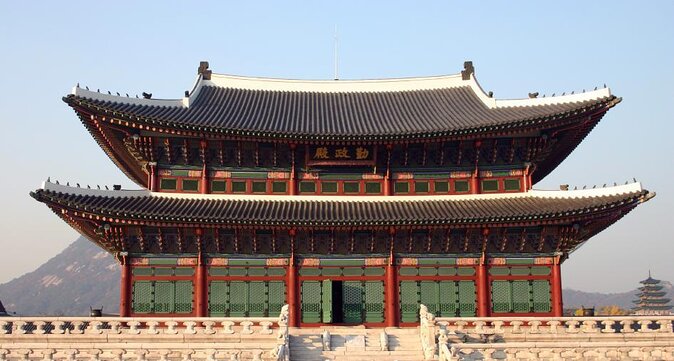
- Gyeongbokgung Palace is the centerpiece: You get about an hour inside Seoul’s grand Joseon-era palace, including the royal guard changing ceremony.
- The group is capped at eight people: That is small enough for questions and a more personal pace.
- The National Folk Museum adds daily-life context: Its collection includes more than 98,000 artifacts connected to Korean history.
- Bukchon is scenic but uphill: The historic village includes traditional houses, narrow lanes, steps, and slopes.
- The route finishes in Insadong: You can continue with Korean food, crafts, tea shops, and shopping after the tour.
- Guide quality matters here: Strong guides such as Stella, Jay Kim, Jack, Joe, and Paul have earned especially warm praise, but the experience can vary.
Why this route works for a first day in Seoul
Seoul can feel enormous at first. Modern towers, crowded streets, historic gates, food stalls, and quiet residential lanes all sit close together, but the connections are not always obvious. This tour gives you a useful first map of the city’s royal center.
The route moves from the past and present around Gwanghwamun to Gyeongbokgung Palace, then toward Bukchon Hanok Village and Insadong. That progression matters. You are not looking at an isolated monument. You are seeing how the old capital fits into the modern city.
I like this format for a first full day because the guide can explain what you are seeing as you go. The tour is not only about palace roofs and pretty streets. It also covers the Joseon Dynasty, traditional construction, Korean lifestyles, language, architecture, and the way Seoul has changed.
The rating is listed as 4.8 from 138 ratings, with 97 percent recommending the experience. That is a strong result, though it should not hide the importance of guide assignment. The best accounts describe guides who answer questions, link one sight to the next, and adjust the outing to the group.
More Walking Tours in Seoul
- Seoul moonlight walking tour with local historian
★ 5.0 · 940 reviews - Seoul: Nighttime Hidden Gems Walking Tour
★ 5.0 · 775 reviews - Seoul: Evening Dark History, Folklore & Ghost Story Walking Tour
★ 5.0 · 593 reviews
Starting near Gwanghwamun and the King Sejong statue
The stated meeting point is 24-1 Taepyeongno 2-ga in Jung District. The tour then takes you toward Gwanghwamun and the King Sejong statue, an early stop that helps frame Korea’s story before you enter the palace.
King Sejong is especially useful as an introduction because the tour can connect his reign with Korean language and culture. One highly praised guide, Paul, explained the Korean language outside the building where it was conceived. That kind of detail gives the early part of the walk a human touch instead of turning it into a string of dates.
The area also represents the contrast that defines central Seoul. You begin among present-day city streets, then approach the gates and walls of the royal compound. The point is not simply to photograph the transition. It lets you see how the capital’s modern identity grew around an older center.
If you are meeting a guide in a busy part of Seoul, look carefully at the confirmation details and any messages sent before departure. Jay Kim was praised for sending a description of his clothing so he could be found easily. That is a small but useful habit in a crowded city.
Gyeongbokgung Palace and the changing of the guard
Gyeongbokgung Palace receives about one hour of the scheduled tour, and admission is included. The palace is the main reason to choose this experience, so the time is focused rather than leisurely.
The tour includes the royal guard changing ceremony. This gives you a lively visual entry into the palace, with uniforms, movement, and formal ritual before the guide turns to the buildings and their purpose. Exact ceremony conditions can affect the pace, so do not expect unlimited time at every courtyard.
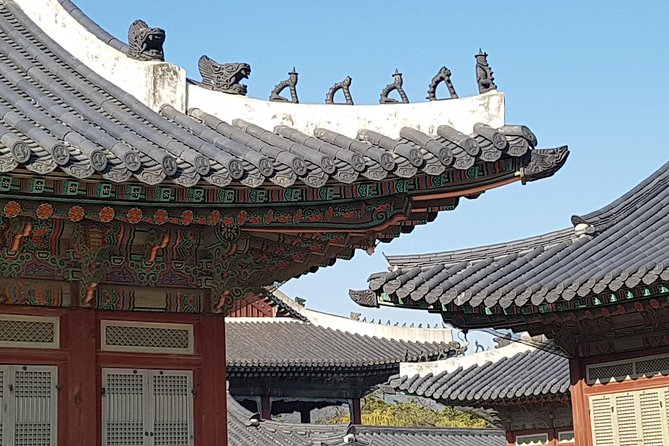
Inside, the guide explains Joseon Dynasty history and points out traditional construction techniques. That is where a good guide earns the fee. Without context, palace buildings can blur together. With an explanation of how spaces were arranged and how royal life worked, the courtyards become easier to read.
Several guides have been praised for making these details accessible. Jay Kim connected the palace’s story with the broader story of Korea, while Joe was praised for combining historical facts with personal stories. Jack was especially appreciated for linking one sight to earlier parts of the walk, helping the history feel connected instead of scattered.
You should have time for photographs and for looking around, but this is not a full-day palace study. If you want to inspect every building, read every sign, or spend a long time sitting in the complex, you may prefer to visit independently afterward.
The tour’s short format is also its strength. You get a clear introduction without giving up an entire day in Seoul. Families may find the guided pace useful. One parent specifically praised Stella for keeping a child interested through stories and explanation.
The National Folk Museum and everyday Korean life
The National Folk Museum of Korea adds a needed change of focus. Gyeongbokgung shows royal power and formal architecture. The museum turns to ordinary life and presents more than 98,000 artifacts related to South Korea’s history.
That matters because palace tours can overemphasize kings, ceremonies, and grand buildings. The museum helps you think about clothing, customs, household life, and the routines of people who lived beyond the royal court. The supplied information does not promise a fixed amount of museum time, so your visit will depend on the guide’s pacing and the rest of the route.
This section is particularly valuable if you know little about Korea before arriving. Guides have been praised for explaining not only the sites but also culture and day-to-day living. Joe, Paul, and Stella received especially strong praise for making those connections clear.
One guide also used personal stories and photographs when answering questions. That can make a difference in a museum, where objects need explanation to become meaningful. I would use this stop to ask about anything that confused you at the palace. The tour is designed to connect the two.
More hanbok and palace experiences:
- Seoul: Gyeongbok Palace, Bukchon Village, and Gwangjang Tour
★ 4.9 · 2,321 reviews - Best Seoul City Tour (Gyeongbokgung Palace,Insadong,Namsan Tower)
★ 5.0 · 1,647 reviews - Small-Group Royal Palace and Seoul City Tour (hotel pick-up)
★ 5.0 · 1,474 reviews - Seoul City Sightseeing Tour Including Gyeongbokgung Palace, N Seoul Tower, and Namsangol Hanok Village
★ 5.0 · 1,423 reviews
Walking toward Bukchon Hanok Village
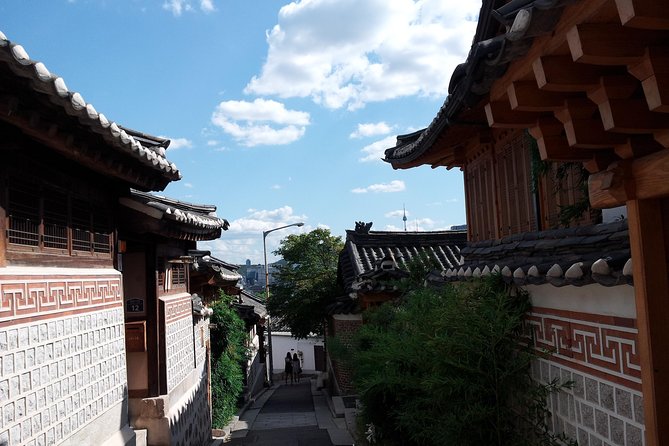
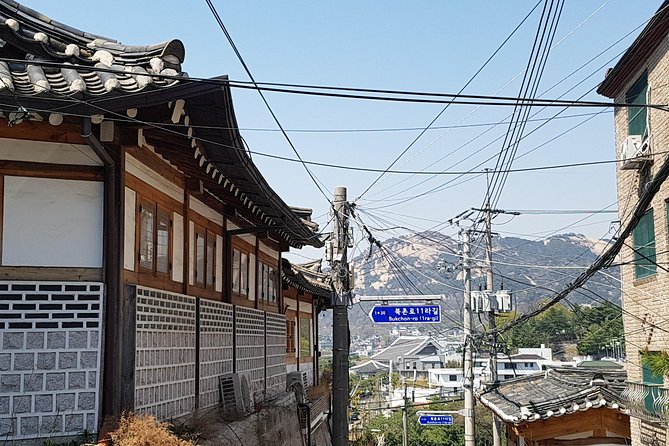
The route between Gyeongbokgung and Bukchon is part of the experience, not dead time. You leave the royal compound and move through an area where traditional houses and modern city life meet.
Bukchon Hanok Village receives roughly 30 minutes, with no separate admission charge. The short visit is enough to see traditional houses, look into selected areas, and learn about Korean lifestyles from the past to the present. It is not enough for a slow, unplanned wander through every lane.
The village is also the most physically demanding section. You should expect uphill walking, steps, and uneven effort. The tour is not recommended for people who have difficulty walking on steps or uphill sections, and a moderate level of physical fitness is advised.
Wear comfortable shoes and practical clothing. That advice appears repeatedly for good reason. Seoul’s historic streets reward walking, but they are less forgiving than a smooth museum floor. If rain arrives, the slopes and steps become a greater concern.
Bukchon is a living neighborhood, not just an open-air display. That means you should keep your voice down, respect private homes, and follow the guide’s instructions about where to pause. The available information emphasizes looking inside traditional houses and learning about former lifestyles, but it does not promise entry into every home.
The village is visually rewarding, yet the short time may leave you wanting more. If Bukchon is high on your list, plan to return after the tour, provided your energy and schedule allow it.
Finishing in Insadong, with Seoul still ahead
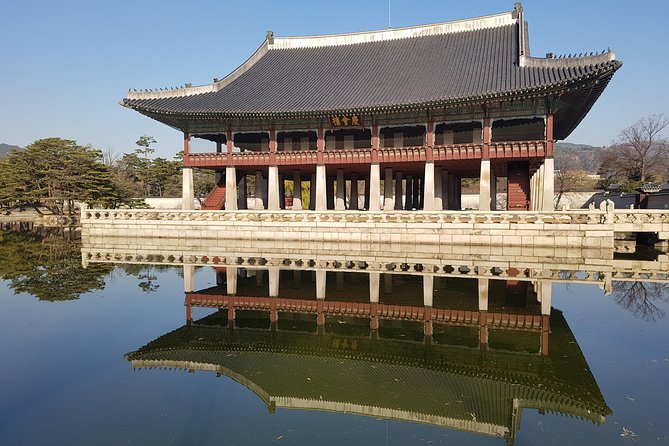
The tour ends at 75-5 Insadong in Jongno District. This is a smart finish because Insadong gives you an easy place to continue exploring after the formal walk.
The guides have offered restaurant and food suggestions, and one guide ended the outing with a recommendation for typical Korean dishes. Another took time to share street food. These extras are not guaranteed, but they show why a strong guide can make the tour feel more useful than a standard march between landmarks.
Insadong is also a practical place to pause after the uphill walk through Bukchon. You can use the area as a handoff point for food, shopping, or further sightseeing. The tour itself does not include lunch or street food, so budget separately if you want to follow a guide’s recommendation.
I like tours that finish somewhere worth staying. You are not dropped beside an anonymous station with the day’s main sights behind you. Instead, you finish in one of central Seoul’s established cultural areas.
The guide can make or break the experience
This is the most important qualification. The strongest guides are described as warm, enthusiastic, clear, and proud of their country. Stella is repeatedly praised for excellent English, energy, and the ability to hold a family’s attention. Jay Kim is praised for detailed palace history and for making the city easy to understand.
Jack has received strong praise for teaching history in a connected way, welcoming questions, and giving time for photographs. Joe has been praised for answering questions with facts and images. Paul has received both very strong and very negative feedback, which shows how much the individual presentation can shape the day.
The weaker experiences describe guides who rambled, spoke in a monotone, gave only basic information, or sent people to Google and YouTube for answers. That is a fair concern at this price. You are paying not only for admission but also for interpretation.
The small group limit helps when the guide is good. With no more than eight people, you can ask about architecture, royal life, food, language, or modern Seoul without shouting across a crowd. Some departures have ended up with only one booking, creating a private or nearly private experience. That can be wonderful with the right guide, but a low-energy guide becomes harder to avoid when there is no group interaction.
Is $88 a fair price?
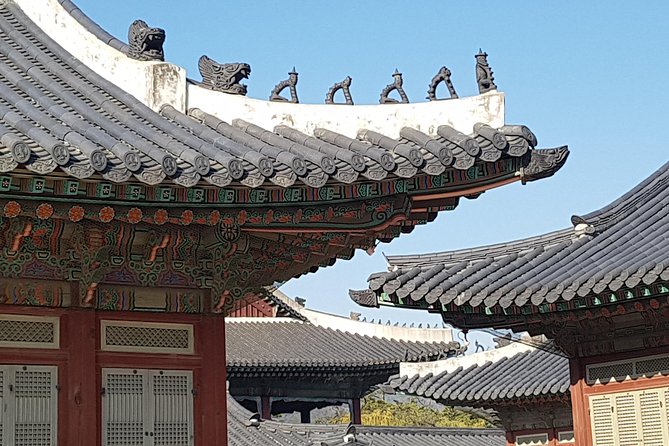
The price is $88 per person, including the professional guide and admission fee. At first glance, that is not a bargain for a three-hour walking tour. The value depends on how much you want help with history, navigation, and cultural context.
If you visit Gyeongbokgung and Bukchon independently, you can spend less. You will also need to organize the route, understand what you are seeing, monitor the time, and decide how to connect the palace with the museum, village, and Insadong.
For a first visit, the price can make sense if you value structure and conversation. The small group size is a real advantage, and a strong guide can turn a short visit into a useful introduction to Korean history and culture. The inclusion of palace admission removes one small task, though it does not transform the tour into a low-cost option.
I would book this for my first or second day in Seoul, especially if I had only limited time. I would not book it solely for the changing ceremony or for photographs. You can see attractive palace views without paying for a guide. The fee is justified by the explanation, connections, and practical help.
Timing, transport, and physical effort
The advertised duration is approximately three hours. The start point is near public transportation, and the finish is in Insadong. You should allow extra time before and after the tour if you have another fixed booking, since the walking pace and group questions can affect the exact finish.
This is not a gentle stroll. Gyeongbokgung itself involves walking across a large complex, and Bukchon adds steps and uphill lanes. The tour requires moderate physical fitness and is not suitable for people who have difficulty with steps or inclines.
A mobile ticket keeps the entry process simple. Confirmation is provided at booking. Because the experience requires good weather, poor conditions can lead to a different date or a full refund. Cancellation is free up to 24 hours before the start time, while later cancellations and changes are not accepted.
The group requires a minimum number to operate. If that minimum is not reached, you are offered another date or experience, or a full refund. These policies are worth noting if your Seoul schedule is tight.
Who should book this walking tour?
I think this tour suits first-time visitors who want a clear introduction to Seoul’s royal center without spending a full day on one subject. It also works well for families, provided everyone can manage the walking and uphill sections.
It is a good match if you enjoy asking questions, want help understanding Korean history, or feel uneasy navigating major sights on your own. The small group can make the outing more relaxed than a large coach tour.
You may want another option if you have limited mobility, dislike hills, or prefer to explore at your own pace. Independent visitors who want several hours inside Gyeongbokgung and Bukchon will probably find three hours too short.
The tour is also less appealing if you expect every guide to deliver the same standard. The overall score is strong, but the mixed guide experiences mean you should treat the named guide feedback as useful evidence, not a guarantee of assignment.
Should you book it?
Book this tour if you want one efficient introduction to Seoul’s royal history, traditional homes, and everyday culture. The route is well chosen, the entrance fee is included, the group is small, and the finish in Insadong gives you a useful next stop.
I would book it early, since the experience is often reserved about 30 days ahead. Wear shoes made for steps and hills, keep your schedule flexible around the three-hour estimate, and arrive ready to ask questions. If your guide is Stella, Jay Kim, Jack, Joe, or another strong presenter, the tour can give you a memorable framework for the rest of your time in Seoul.
If you need easy walking, long independent visits, or guaranteed guide quality, skip it and visit the sights on your own. For most first-time visitors who want context rather than just photographs, this is a worthwhile, compact choice.
FAQ
How long is the Gyeongbokgung and Bukchon walking tour?
The tour lasts approximately three hours.
What is included in the price?
The $88 price includes a professional guide and the admission fee. The tour also uses a mobile ticket.
Does the tour include the royal guard changing ceremony?
Yes. The itinerary includes the royal guard changing ceremony at Gyeongbokgung Palace.
How large is the tour group?
The experience has a maximum of eight participants.
Where does the tour start and finish?
It starts at 24-1 Taepyeongno 2-ga in Jung District, Seoul. It finishes at 75-5 Insadong in Jongno District.
Is the tour suitable for someone with walking difficulty?
The tour requires moderate physical fitness and is not recommended for people who have difficulty with steps and uphill walking.
More Walking Tours
- Seoul: Dark Side of the City and Ghost Stories Walking Tour
★ 4.8 · 484 reviews - Gangnam Walking Tour on Youth and Society in Seoul Korea
★ 5.0 · 401 reviews - Highlights & Hidden Gems With Locals: Best of Seoul Private Walking Tour
★ 4.5 · 83 reviews - Street photoshoot and Seoul Hidden gem History Walking Tour
★ 5.0 · 68 reviews
More Hanok Village Visits
- Seoul: Gyeongbok Palace, Bukchon Village, and Gwangjang Tour
★ 5.0 · 1,044 reviews - Seoul: Suwon Hwaseong Fortress & Korean Folk Village Tour
★ 4.7 · 214 reviews - Seoul: Gyeongbok Palace and Bukchon Hanok Walking Tour
★ 4.8 · 157 reviews - Experience Korean Cooking in Modern Hanok Kitchen
★ 5.0 · 118 reviews
Just added around Seoul
- Seoraksan National Park & Nami Island★ 4.5 · 3 reviews
- Strawberry Picking, Winter Sled with Eobi Ice Valley from Seoul★ 4.5 · 3 reviews
- Seoul Full Day small group Tour★ 5.0 · 3 reviews
- Majang Meat Market Experience: Private Tour with Han-woo Beef BBQ★ 5.0 · 3 reviews
- Seoul Korean BBQ Dinner Experience with Secret Food Tours★ 5.0 · 3 reviews
- Rice Wine Tasting with Sommelier – Finest Makgeolli (& Soju)★ 5.0 · 3 reviews
- Seongsu-dong Walking Tour: K-Pop, Culture, Cheer, Friends & Relax★ 4.5 · 3 reviews
- Seoul: Alpaca World and Nami Island (with Garden / Railbike)★ 5.0 · 3 reviews
Hanbok & Palace Experiences, compared.

Gyeongbok Palace, Bukchon Village, and Gwangjang Tour
Read our review →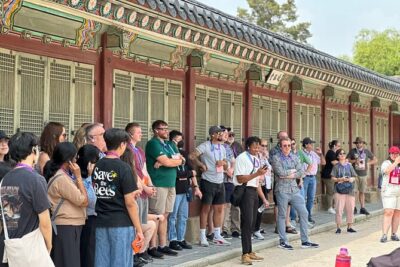
Best Seoul City Tour (Gyeongbokgung Palace,Insadong,Namsan Tower)
Read our review →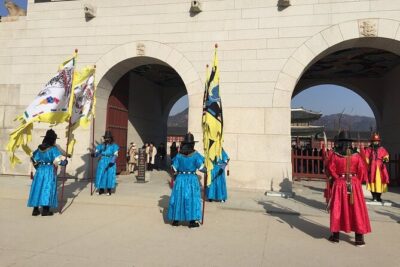
Small-Group Royal Palace and Seoul City Tour (hotel pick-up)
Read our review →
Seoul City Sightseeing Tour Including Gyeongbokgung Palace, N Seoul Tower, and Namsangol Hanok Village
Read our review →Gyeongbok Palace, Bukchon Village, and Gwangjang Tour
Read our review →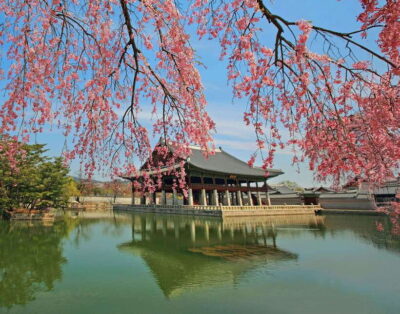
Seoul Highlights: Gyeongbok Palace, Insadong & N Seoul Tower
Read our review →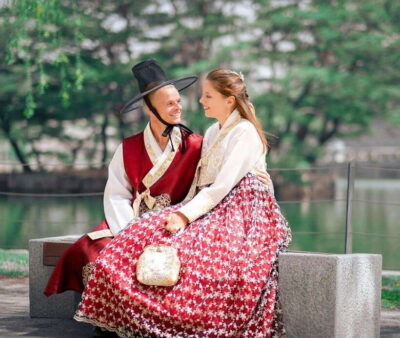
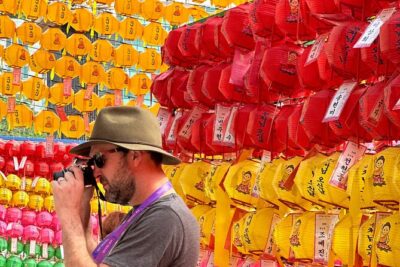
Seoul City Half Day Tour-Gyeongbok Palace Guard Changing Ceremony
Read our review →Browse the lists this tour appears in