
Reviewed · HANBOK & PALACE EXPERIENCES
Seoul Palace Morning Tour
Seoul’s royal past fits neatly into one morning. I like the three-hour route, which links Jogyesa Buddhist Temple, Gyeongbok Palace, Gwanghwamun Gate, and the changing of the guard without asking you to plan several separate visits. I also like the friendly guide service, air-conditioned vehicle, included admissions, and hotel pickup. The main drawback is the forced ginseng-center stop, which can take time away from the sights.
This is a useful first look at Seoul, especially if you have only a short stay or want help getting your bearings. Guide Chloe has earned praise for sharing stories, taking photos, and suggesting a good lunch afterward. Still, you should confirm your pickup details carefully, since communication has not always been smooth and the tour ends at City Hall rather than returning you to your hotel.
In This Review
- Key points to know before booking
- A compact morning through Seoul’s old and new centers
- Jogyesa Temple and the quiet start to the morning
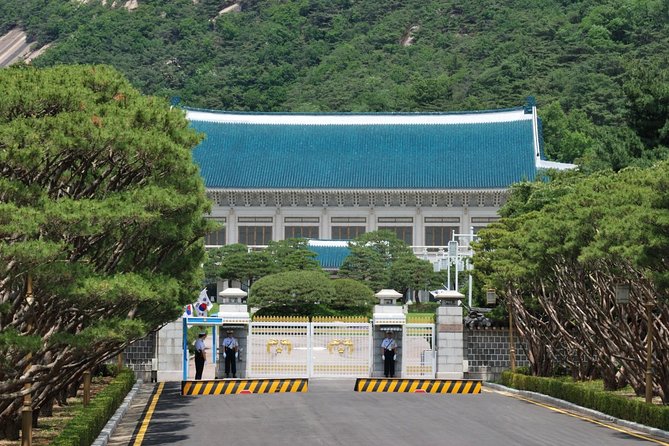
- Passing the Blue House without a formal stop
- Gyeongbok Palace and the Joseon royal court
- The National Folk Museum adds daily life
- Gwanghwamun Gate and the changing of the guard
- The ginseng-center stop is the clear compromise
- Guides, pace, and group size
- Is $40 a fair price?
- Who should book this morning tour?
- Should you book it?
- FAQ
- What is the Seoul Palace Morning Tour?
- What time does the tour start?
- Is hotel pickup included?
- Does the tour return me to my hotel?
- Is transportation provided?
- Are entrance fees included?
- Can I see the Blue House?
- What will I see at Gyeongbok Palace?
- Does the tour include shopping?
- How large can the group be?
Key points to know before booking
- Jogyesa’s old trees and painted main hall: See roughly 500-year-old locust and baeksong trees, plus a colorful Buddhist building dating to 1938.
- Gyeongbok Palace in one focused visit: The route covers the throne hall, royal offices, living quarters, banquet pavilion, and the National Folk Museum.
- The guard ceremony is the morning finale: The tour returns to Gwanghwamun Gate for the royal changing-of-the-guard performance.
- The Blue House is a drive-by sight: Security rules mean you pass it in the vehicle rather than stop outside.
- A ginseng-center stop is built in: This is useful if you want Korean health products, but unwelcome if you prefer more palace time.
- City Hall is the end point: You can continue sightseeing from central Seoul, but hotel drop-off is not included.
A compact morning through Seoul’s old and new centers
The Seoul Palace Morning Tour costs $40 per person and lasts about three hours. For that price, I see it as a practical orientation tour rather than a full study of Joseon architecture or Korean Buddhism.
You get a driver and professional guide, hotel pickup, an air-conditioned vehicle, and entrance fees. Those inclusions matter in Seoul, where moving between central sights can take planning, especially if you are still learning the city’s layout or cannot comfortably manage a morning of walking and public transport.
The group can reach up to 30 people. That keeps the cost low, but it also means the pace and guide’s attention may vary. One useful lesson from the feedback is that a guide may speak quickly, leaving little time to look carefully at each building. If you prefer lingering over details, this format may feel hurried.
The tour begins at 9:00 am. Pickup is offered from your Seoul hotel, although exact pickup arrangements deserve attention. Confirm the time and meeting point before the morning of the tour, particularly if you are staying in a guesthouse or a property with an unusual entrance. Some pickup arrangements have taken place at a nearby station rather than directly outside the lodging.
More hanbok and palace experiences:
- Seoul: Gyeongbok Palace, Bukchon Village, and Gwangjang Tour
★ 4.9 · 2,321 reviews - Best Seoul City Tour (Gyeongbokgung Palace,Insadong,Namsan Tower)
★ 5.0 · 1,647 reviews - Small-Group Royal Palace and Seoul City Tour (hotel pick-up)
★ 5.0 · 1,474 reviews
Jogyesa Temple and the quiet start to the morning
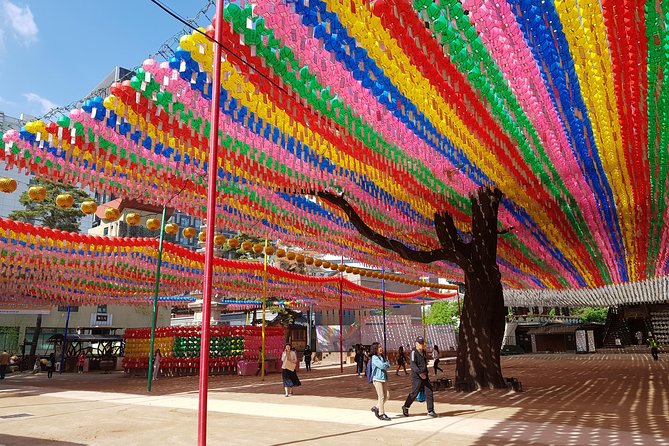
Jogyesa Buddhist Temple gives the tour a welcome change of mood before the palace visit. It is presented as the center of Zen Buddhism in Korea, and the first details you are likely to notice are the old trees in front of Daeungjeon, the temple’s main building.
The locust trees and baeksong tree are described as about 500 years old. The baeksong is designated as a Natural Monument, which gives the courtyard more meaning than a quick photo stop might suggest. Look up at the branches, then compare their age with the building behind them.
Daeungjeon was built in 1938. Its painted decoration uses multiple colors, and inside is a statue of Seokgamoni. In front of the building, a seven-story stone pagoda contains Jinsinsari. Your guide can help explain what you are seeing, which is valuable here because the courtyard’s symbols and structures may not be obvious if you are visiting independently.
I like the temple’s place in the itinerary. It introduces Korean religious life before the tour shifts to royal power, government, and court ceremony. The visit is also likely to be calmer than the palace portion, though the short schedule means you should not expect a long meditation or study period.
Passing the Blue House without a formal stop
After Jogyesa, the vehicle passes the Blue House on the way to Gyeongbok Palace. The Blue House is described as the president’s residence in the tour information, with the Prime Minister also referenced in the overview. Either way, the practical point is simple: this is a security-sensitive government area.
You cannot stop in front of the Blue House. You will see it from the vehicle, so keep your expectations modest. This part is best treated as a useful orientation to Seoul’s government district, not as a photographed attraction with time to explore.
The drive-by also shows how the tour balances several major sites in a short morning. You receive context and a visual introduction, but not an in-depth visit. If the Blue House is a top priority for you, this tour will not replace a dedicated visit or viewing opportunity. The supplied information does not promise a stop, and the itinerary clearly says you pass it in transit.
Gyeongbok Palace and the Joseon royal court
Gyeongbok Palace is the heart of the tour. Built as the main palace of the Joseon Dynasty, it is the most famous royal site on this route and the place where the guide’s historical explanations matter most.
The Joseon Dynasty lasted roughly five centuries, and the palace helps put that long period into physical form. Rather than seeing only an exterior gate, you move through several buildings linked to court life and government.
The route includes:
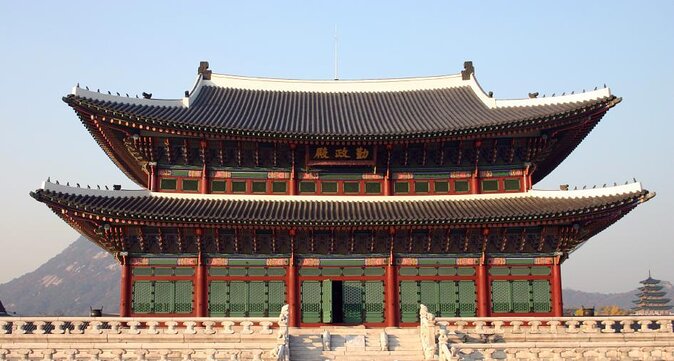
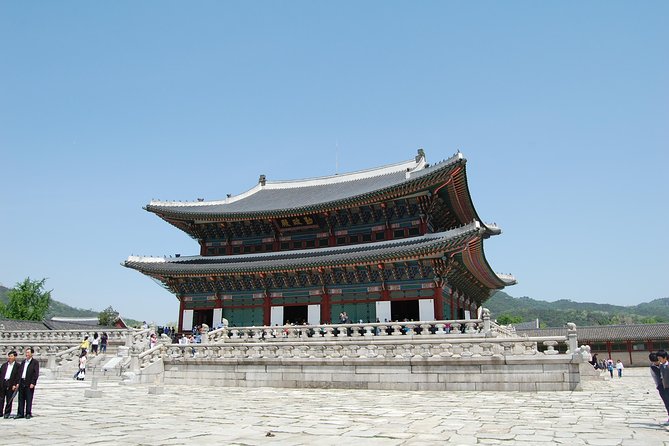
- Geunjeongjeon, the main throne hall, where formal royal business took place.
- Sajeongjeon, the king’s office and a reminder that government work happened within the palace compound.
- Gangnyeongjeon, the king’s living quarters.
- Gyotaejeon, the queen’s living quarters.
- Gyeonghoeru, the pavilion used for formal banquets with foreign envoys.
This selection gives you a useful contrast between ceremony, administration, private life, and diplomacy. I especially like the inclusion of the living quarters and banquet pavilion. A palace can seem like a series of impressive roofs if you only see its grandest hall. These stops help you picture how people worked, lived, and received visitors inside the court.
The compromise is time. Gyeongbok Palace has many buildings, and a three-hour tour also includes two other sites, transport, a ceremony, and shopping. You will see important highlights, but you will not have the freedom to inspect every courtyard or wander at your own pace.
A guide can also make the palace easier to read. Details such as a building’s function, the difference between royal and official spaces, and the role of foreign envoys are more memorable when explained on the spot. Ask questions early if your guide is moving quickly. One criticism of the tour was that the guide spoke too fast and did not leave enough time to look, so do not hesitate to signal that you need a moment.
A few more trips of this kind worth comparing:
- Mt. Seorak+Nami Island+Garden of Morning Calm Day Trip from Seoul
★ 5.0 · 959 reviews - Seoul: Nami Island and Garden of Morning Calm opt Railbike
★ 4.6 · 907 reviews - Day Trip to Nami Island with Rail bike and The Garden of Morning Calm
★ 4.5 · 459 reviews - Trip to Nami Island with Petite France & Italian Village, Garden of Morning Calm
★ 4.5 · 373 reviews
The National Folk Museum adds daily life
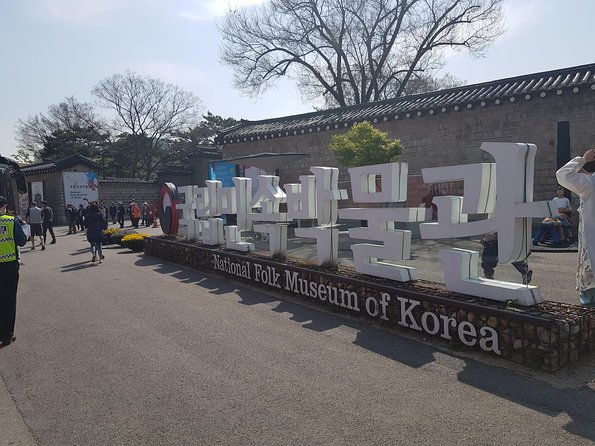
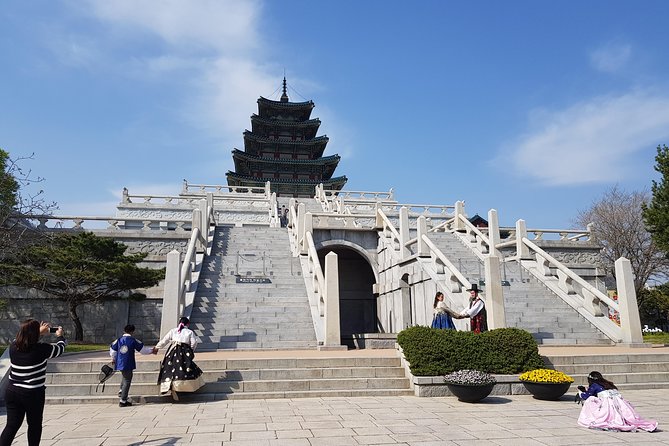
The Korean National Folk Museum is part of the Gyeongbok Palace visit. Its focus is traditional Korean daily life and culture, giving the morning a useful shift from royal buildings to ordinary routines and social customs.
That contrast improves the palace experience. Royal residences show the state from the top, while a folk museum can help you think about food, work, family life, customs, and material culture. The stated purpose is educational, helping you better understand traditional Korean lifestyle.
The exact amount of museum time is not specified, so expect the visit to fit around the larger palace route. If you are especially interested in the museum, you may want to return independently rather than rely on this morning for a complete visit. The tour gives you an introduction, not necessarily the time to examine every display.
Gwanghwamun Gate and the changing of the guard
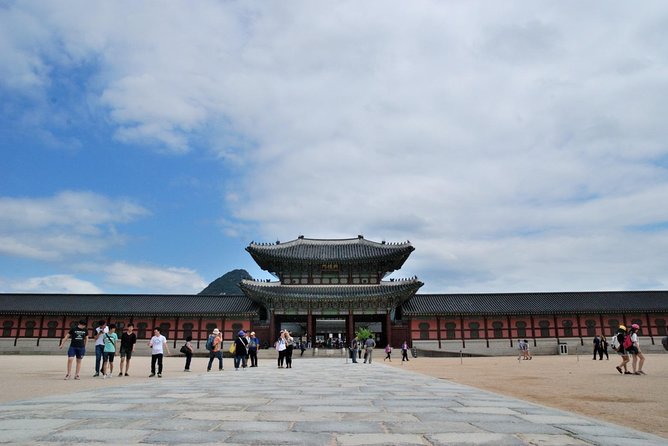
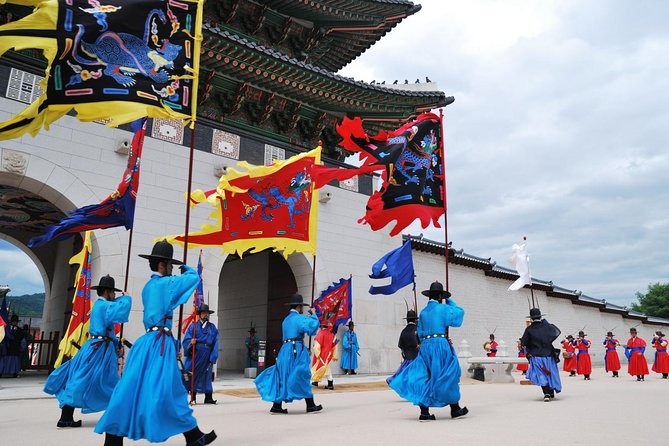
The tour finishes its main sightseeing at Gwanghwamun Gate, the south gate of Gyeongbok Palace. The changing of the guard ceremony is described as one of the key moments of the morning, and it is easy to understand why.
After temple courtyards, palace halls, and museum displays, the ceremony provides movement and color. It also connects the palace to the public entrance where royal authority was presented to the city. If you enjoy historical performances, this is likely to be the most satisfying part of the itinerary.
The ceremony schedule can be important, but the supplied details do not give a separate performance time or promise that every departure will see the full event. Ask your guide about the timing at the start of the morning. One piece of direct feedback rated the guard change as the best part of the outing, while the rest was still considered interesting but less clearly explained.
Gwanghwamun is also a convenient place to end. The tour returns you to central Seoul at City Hall, an area close to other attractions. You can continue your day from there instead of losing time traveling back to your hotel.
The ginseng-center stop is the clear compromise
The final stop at a ginseng center is included in the route. This is not an optional shopping suggestion. It is one of the tour’s listed stops, and the feedback makes clear that it can be a sticking point.
If you want to buy Korean ginseng or learn about a well-known local product, the stop may suit you. If shopping is not part of your travel plan, the visit can feel like a tourist-trap detour. The strongest complaints focus on the amount of time spent there, with one person saying the shopping stop lasted longer than time at the main sights.
That criticism matters because the tour already packs a great deal into three hours. Every minute at the store is a minute not spent inside Gyeongbok Palace or the museum. I would book this experience only if you accept the ginseng stop as part of the bargain.
You may be able to browse briefly and wait, but the tour information does not promise that you can skip the stop or leave the group. Do not assume you can exchange it for extra palace time. If you strongly dislike organized shopping, choose a palace-only or private alternative instead.
Guides, pace, and group size
The guide is central to the value of this experience. The best version of the tour includes a pleasant, helpful guide who adds stories, explains the sites, takes photos, and offers practical suggestions for the rest of your day. Chloe is specifically praised for doing all of those things, including recommending a restaurant for lunch.
The tour also includes both a driver and a professional guide, so you are not responsible for navigating between the stops. The air-conditioned vehicle is a welcome feature after walking around temple and palace grounds.
Still, the group may contain as many as 30 people. A large group can make it harder to hear, especially if the guide speaks quickly or the party spreads out. Stay close enough to hear the explanations, and ask for clarification when needed. The itinerary works best when you treat it as a guided highlights tour, not a slow private lesson.
Communication before the tour is another area where you should be careful. There have been conflicting expectations over hotel pickup, drop-off, and whether the experience is private or shared. It is a group tour, not a private vehicle reserved just for your party. Confirm your hotel, pickup time, and end point through the operator before you go.
Is $40 a fair price?
At $40, the tour offers solid value if you want transport, a guide, and admission handled in one package. You visit a Buddhist temple, pass a major government site, enter Seoul’s leading royal palace, see a museum, watch the guard ceremony, and finish in central Seoul.
Doing all of that independently could cost less in entrance fees, but you would need to arrange transport, work out the route, and provide your own explanations. The tour’s value is greatest for first-time visitors, families, and anyone with only one free morning.
The price is less attractive if you mainly want extended time at Gyeongbok Palace. The palace itself deserves more than a quick circuit, and the ginseng stop reduces the time available for sightseeing. In that case, a self-guided palace visit may give you more control.
Admissions are included, and lunch is not. Infant meals are also not included. Plan your food after the tour, since the end point at City Hall puts you near other attractions and dining options, though the tour does not specify a restaurant.
Who should book this morning tour?
I would recommend it to you if you want a broad first look at Seoul’s traditional sights without spending a full day on one palace. It is also a good fit if you value hotel pickup, an air-conditioned vehicle, included entrance fees, and a guide who can explain unfamiliar details.
Families may appreciate the short duration and variety. Children can see a temple, palace buildings, costumes and ceremony, then finish before a full day of sightseeing becomes tiring. The changing of the guard adds a visual finish that works well for younger visitors.
I would hesitate if you want a slow pace, detailed photography time, or a private experience. I would also skip it if a shopping stop irritates you. The group size, drive-by Blue House visit, and City Hall drop-off are not problems for everyone, but they should match your plans.
Free cancellation is available when you cancel at least 24 hours before the 9:00 am start. Changes made within that window are not accepted, so decide early if the shopping stop or group format is a deal breaker.
Should you book it?
Book this tour if you want an efficient introduction to Seoul’s royal and Buddhist landmarks, and you are happy to trade some independence for transport and live explanation. The best parts are Jogyesa’s old trees, Gyeongbok Palace’s varied buildings, and the guard ceremony at Gwanghwamun Gate.
Skip it if you want maximum palace time or strongly dislike organized shopping. Before paying, confirm the pickup location and remember that the tour ends at City Hall. With those conditions clear, $40 is a reasonable price for a well-packed morning, especially when a warm, attentive guide such as Chloe leads the group.
FAQ
What is the Seoul Palace Morning Tour?
It is an approximately three-hour guided tour of Jogyesa Buddhist Temple, the Blue House area, Gyeongbok Palace, the Korean National Folk Museum, and Gwanghwamun Gate.
What time does the tour start?
The stated start time is 9:00 am.
Is hotel pickup included?
Yes. Hotel pickup in Seoul is included, although you should confirm the exact pickup time and meeting location in advance.
Does the tour return me to my hotel?
No. Hotel drop-off is not included. The tour ends at City Hall in Seoul.
Is transportation provided?
Yes. The tour includes an air-conditioned vehicle with a driver and guide.
Are entrance fees included?
Yes. All entrance fees for the included attractions are covered.
Can I see the Blue House?
You pass the Blue House in the vehicle. The itinerary says you cannot stop in front of it because it is a security area.
What will I see at Gyeongbok Palace?
The route includes Geunjeongjeon, Sajeongjeon, Gangnyeongjeon, Gyotaejeon, and Gyeonghoeru.
Does the tour include shopping?
Yes. One shopping-center stop at a ginseng center is included.
How large can the group be?
The tour can have a maximum of 30 participants.
Just added around Seoul
- Seoraksan National Park & Nami Island★ 4.5 · 3 reviews
- Strawberry Picking, Winter Sled with Eobi Ice Valley from Seoul★ 4.5 · 3 reviews
- Seoul Full Day small group Tour★ 5.0 · 3 reviews
- Majang Meat Market Experience: Private Tour with Han-woo Beef BBQ★ 5.0 · 3 reviews
- Seoul Korean BBQ Dinner Experience with Secret Food Tours★ 5.0 · 3 reviews
- Rice Wine Tasting with Sommelier – Finest Makgeolli (& Soju)★ 5.0 · 3 reviews
- Max Out Seoul: Must Visit City Highlights Panoramic Day Tour★ 5.0 · 3 reviews
- Seongsu-dong Walking Tour: K-Pop, Culture, Cheer, Friends & Relax★ 4.5 · 3 reviews
Hanbok & Palace Experiences, compared.

Gyeongbok Palace, Bukchon Village, and Gwangjang Tour
Read our review →
Best Seoul City Tour (Gyeongbokgung Palace,Insadong,Namsan Tower)
Read our review →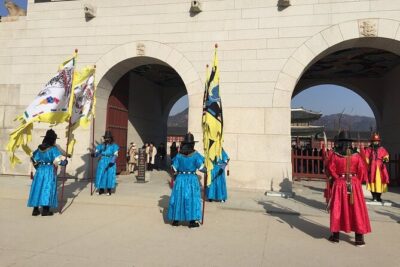
Small-Group Royal Palace and Seoul City Tour (hotel pick-up)
Read our review →
Seoul City Sightseeing Tour Including Gyeongbokgung Palace, N Seoul Tower, and Namsangol Hanok Village
Read our review →Gyeongbok Palace, Bukchon Village, and Gwangjang Tour
Read our review →
Seoul Highlights: Gyeongbok Palace, Insadong & N Seoul Tower
Read our review →
Seoul City Half Day Tour-Gyeongbok Palace Guard Changing Ceremony
Read our review →Browse the lists this tour appears in