
Reviewed · PRIVATE TOURS IN SEOUL
DIY Seoul Private Tour: Select 4 places you want to go
Four stops, one private car, your Seoul. This private day tour lets you choose four places from a wide menu of palaces, markets, temples, museums, parks, and shopping districts. I like the true flexibility and the chance to travel with a guide such as Joseph, John, or Sebastian, rather than follow a fixed group route. I also like the air-conditioned vehicle, which saves time across this sprawling city.
The main catch is simple: four stops require firm choices. Seoul offers far more than one day can hold, and traffic may make distant combinations less efficient. Lunch costs extra, and most stops allow about an hour, so this works best when you want a broad first look rather than a slow, detailed visit to every site.
In This Review
- Key points to know before booking
- Why this custom Seoul day works
- Gyeongbokgung and the royal palace choices
- Bukchon, Insadong, and Ikseon-dong
- Markets and Seoul food stops
- Parks, water, and open-air Seoul
- Museums, war memory, and Korean Buddhism
- Modern Seoul: DDP, COEX, and The Hyundai Seoul
- How to build the smartest four-stop route
- Guide quality and private transport
- Is $183 per person a fair price?
- Who should book this Seoul tour?
- Should you book the DIY Seoul Private Tour?
- FAQ
- How many places can I choose?
- How long does the experience last?
- Is transportation included?
- Is this a private activity?
- Are admission tickets included?
- Is lunch included?
- Can the itinerary be customized?
- Is pickup available?
- What happens if bad weather cancels the tour?
Key points to know before booking
- Pick four from 23 Seoul sights: Mix royal palaces, food markets, museums, temples, parks, shopping streets, and modern architecture.
- Private transport saves time: Your group rides in an air-conditioned vehicle with a driving guide.
- Guides can adjust the day: Joseph, John, Tiger, SJ, Leo, Eddie, Sebastian, Taylor, Paul, and Jimmy are among the guides praised for friendly service, clear English, and flexibility.
- Palaces come with useful context: Gyeongbokgung and Changdeokgung include admission, while a guide can help with ceremonies and court history.
- Food is not included: Ask your guide for help choosing lunch. One visitor received a local recommendation for gom tang, a comforting ox-bone soup.
- The price favors small groups: At $183 per person, the value improves when several people share the private vehicle and guide.
Why this custom Seoul day works
Seoul can feel easy to explore on a map and slow to cross in real life. A palace in Jongno, a market near the city center, and a temple in Gangnam may look close together, but city traffic and walking time add up. This tour gives you a private vehicle and a driver-guide for roughly eight to nine hours, so you can connect places that would be awkward to combine on your own.
You choose four destinations before the day begins. The menu is broad enough to fit very different interests. You can focus on Joseon-era palaces, spend the day around markets and food, compare old neighborhoods with modern Seoul, or build a shopping and design route.
The tour is not a fixed lecture with everyone following a flag. Your group alone takes part. That matters if you have limited time, mobility concerns within your party, different interests, or a strong preference for small groups.
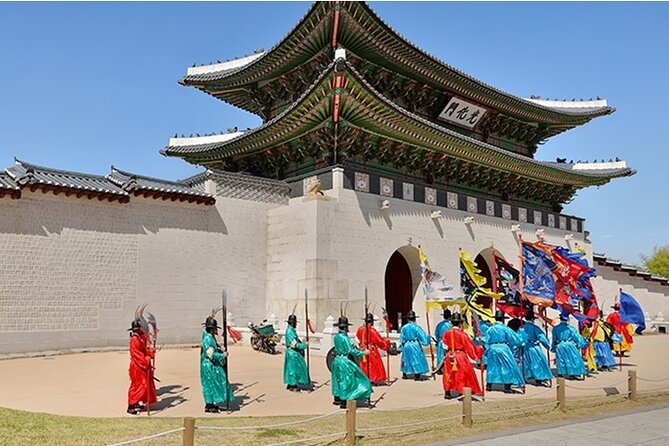
The strongest part of the experience is the human help. Joseph is praised for rearranging a plan at short notice and finding good viewing positions for the palace guard ceremony. Sebastian helped one first-day visitor exchange currency, choose food, and order at a COEX food court. Those are small services, but they can remove much of the friction from a first day in Korea.
Your guide may also help you adjust the order of stops. Still, flexibility is not magic. Four far-flung destinations can create a long day in traffic, so group sights by area whenever possible.
More Private Tours in Seoul
- Private DMZ Tour (No Shopping): 3rd Tunnel & Suspension Bridge
★ 5.0 · 607 reviews - Seoul City Private Full-Day Tour Including Lunch
★ 5.0 · 469 reviews - Private DMZ the 3rd Tunnel Tour from Seoul (optional Red Bridge)
★ 5.0 · 429 reviews
Gyeongbokgung and the royal palace choices
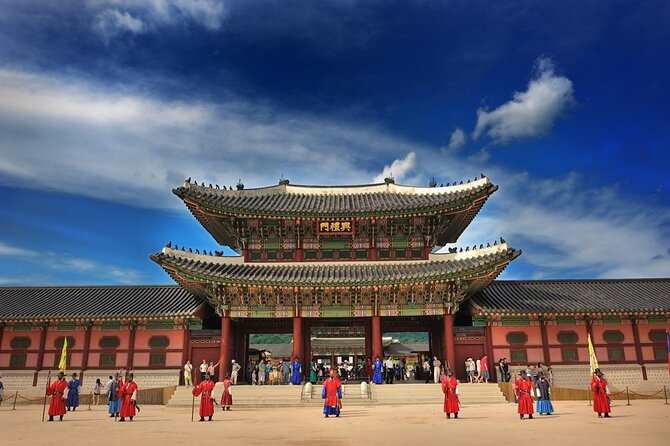
Gyeongbokgung is the grand choice. It was the main palace of the Joseon Dynasty and sits at the center of Seoul. Its broad courtyards, formal gates, and royal buildings give you the clearest introduction to Korea’s former court life.
Plan about 90 minutes here. That is enough for an overview, major buildings, photographs, and some historical explanation. It is not enough for every corner of the complex. If you want to see the changing of the guard ceremony, tell the operator and guide in advance so the timing can be arranged. Joseph has helped visitors find a good viewing spot.
Gyeongbokgung pairs well with Bukchon Hanok Village or Insadong. You get royal architecture first, then traditional homes, tea shops, galleries, and narrow lanes. Renting hanbok before entering the palace is another option mentioned in the tour experience, though the rental itself is not listed as included.
Changdeokgung offers a different palace mood. UNESCO recognized it as a World Cultural Heritage site in 1997, and its design fits the surrounding ground rather than imposing one grand axis. Choose it if you prefer a palace with a more natural setting and a quieter feel than the broad spaces of Gyeongbokgung.
Changgyeonggung is another Joseon palace option. King Sejong built it as Suganggung for his retiring father, King Taejong. It often served as a residence for royal family members, so it can feel more domestic in purpose than Gyeongbokgung.
You should not try to visit all three palaces in one day along with three other major stops. Pick one palace unless royal architecture is your main reason for booking. Admission is included for the palace stops designated in the program, but the experience does not include lunch or personal insurance.
Bukchon, Insadong, and Ikseon-dong
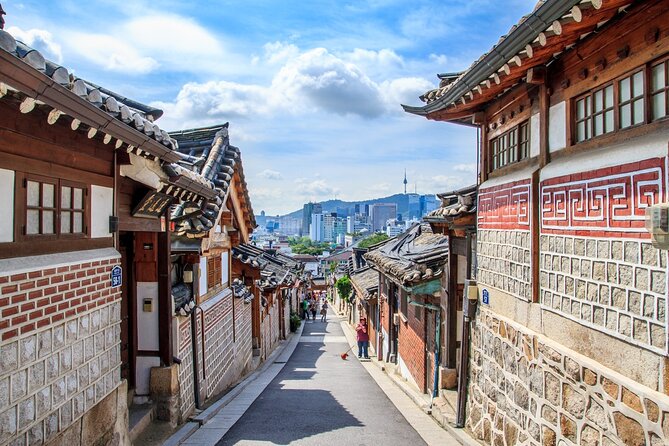
Bukchon Hanok Village sits among Gyeongbokgung, Changdeokgung, and Jongmyo Shrine. Its traditional hanok houses date from the Joseon period, and its lanes offer some of Seoul’s most recognizable views.
The drawback is that Bukchon is not one single attraction with a clear entrance and exit. It is a living neighborhood. You may see only a few lanes in an hour, especially if you stop for photographs. One useful tip is to ask your guide about both the residential lanes and the nearby commercial area, since they offer different experiences.
Insadong is a good choice for a slower cultural hour. Its alleys hold galleries, traditional restaurants, teahouses, and cafes. The best part is often away from the main road, where the small lanes lead to places that are easy to miss without local direction.
Ikseon-dong gives you a younger, more modern take on old Seoul. The hanok neighborhood began in the 1920s, and its narrow alleys now contain cafes, restaurants, and small shops. It is a strong pick if you want old rooflines with contemporary food and design.
Tiger, one of the guides assigned to this experience, received special praise for combining Korean history with humor and for making Ikseon-dong and the Korean War Museum especially memorable. That points to the value of a guide here: the streets are pleasant to wander, but context helps you understand why the old buildings matter.
A palace plus Bukchon plus Insadong or Ikseon-dong makes a sensible central Seoul route. Add Gwangjang Market for food, but know that four stops can become rushed if you spend too long shopping or eating.
Markets and Seoul food stops
Gwangjang Market is the historic market choice. It was Korea’s first permanent market and has operated for more than 100 years. You can expect food stalls, local shoppers, and a compact look at an older side of Seoul’s commercial life.
A market stop is best when you are ready to eat on your own schedule. Lunch is not included, but your guide can help you choose a dish and navigate the ordering process. One guide helped arrange a local meal of gom tang, an ox-bone soup, showing how useful this tour can be for anyone unsure what to order.
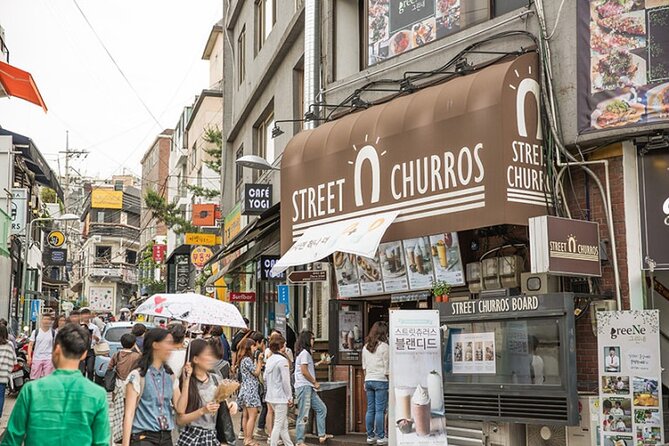
Mangwon Market offers a different feel. It is in Mapo-gu and is especially popular with younger locals. The market has food alleys and small businesses, making it a good choice if you want a neighborhood market rather than a major sightseeing stop.
Myeongdong Shopping Street is for cosmetics, clothes, shoes, accessories, brand-name stores, and department stores. It is easy to combine with a central palace or Cheonggyecheon Stream, though it is less rewarding if your priority is old Seoul or museums.
Choose Gwangjang if food and long-running market life matter most. Choose Mangwon for a more local neighborhood mood. Choose Myeongdong if shopping is a central goal. Trying to cover two markets plus a palace may leave too little time to eat properly.
A few more trips of this kind worth comparing:
- Best DMZ Tour Korea from Seoul (Red Suspension Bridge Optional)
★ 5.0 · 41,422 reviews - DMZ Tour: 3rd Tunnel, Option(Suspension Bridge, Boat) from Seoul
★ 5.0 · 21,373 reviews - DMZ tour south Korea from Seoul (NK experience hall, defector)
★ 5.0 · 20,599 reviews - Seoul: DMZ Tour with Optional Suspension Bridge
★ 4.8 · 5,277 reviews
Parks, water, and open-air Seoul
Yeouido Hangang Park gives you a break from museums and historic buildings. It sits beside the Han River in Yeouido, Seoul’s center for politics, media, banking, and finance. The park hosts events, including the Yeouido Cherry Blossom Festival.
Seoul Forest is another good outdoor choice. Opened in 2005, it is divided into four areas, including a Culture and Art Park and an Educational Experience Park. Pick it if you want green space and a sense of how residents use the city for leisure.
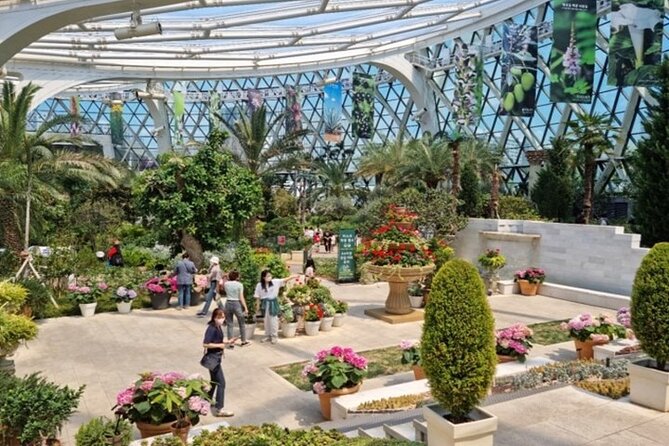
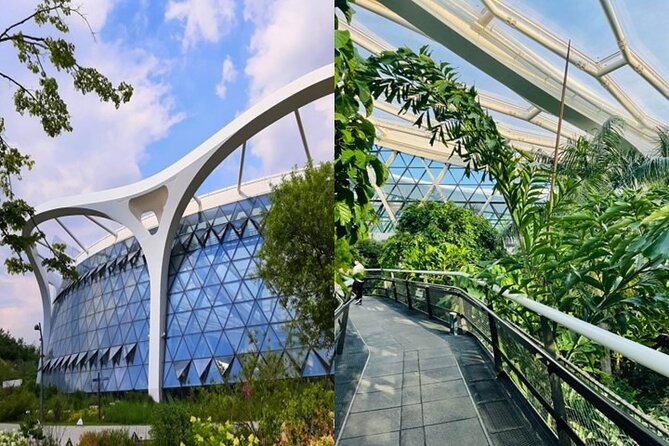
Seoul Botanical Garden includes outdoor theme gardens based on the Korean traditional garden and a greenhouse featuring tropical and Mediterranean plants from 12 cities. It is the strongest park choice for plant lovers, though its location may make it a poor match with central palaces and markets in a single day.
Cheonggyecheon Stream runs 11 kilometers through downtown. The stream was restored as part of an urban renewal project, making it a useful place to see how Seoul reshaped a major central corridor. A one-hour stop gives you a walk and a city view, not the full length of the stream.
Outdoor stops depend on weather. The operator requires good weather and offers another date or a full refund if poor conditions force cancellation. Even in good weather, select parks only when you genuinely want open air, since a museum or market may offer better value on a short first visit.
Museums, war memory, and Korean Buddhism
The War Memorial of Korea is one of the most meaningful choices on the menu. Established in 1994, it commemorates patriotic martyrs and houses about 33,000 artifacts. The visit can be powerful, but it is not light entertainment. Give it your attention rather than adding it as a quick filler between shopping streets.
The National Museum of Korea covers art and culture from ancient times onward and holds more than 420,000 artifacts. One hour only gives you an introduction. Pick this museum if you want a broad first look, then mark it for a longer return visit if your schedule allows.
Seoul Museum of Art, or SeMA, occupies a three-story building with six exhibition halls, a lecture hall, and a public art library. It suits anyone who wants a focused art stop rather than palace architecture or retail.
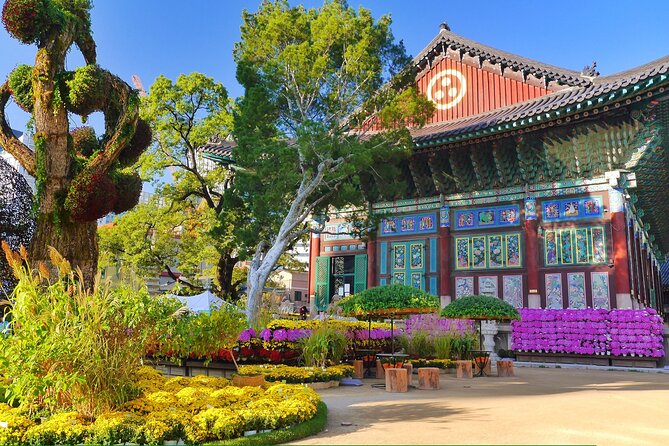
Jogyesa Temple is the head temple of the Jogye order of Korean Buddhism. The temple dates to the late fourteenth century, though fire destroyed the original building. Its central Seoul location makes it easy to pair with Insadong, Cheonggyecheon, or another Jongno stop.
Bongeunsa Temple sits north of COEX in Gangnam. It was built during the reign of Silla King Weongseong in 794, and Queen Jeonghyeon later refurbished it in 1498. Choose it with COEX if you want a contrast between Buddhist tradition and modern commercial Seoul.
Modern Seoul: DDP, COEX, and The Hyundai Seoul
Dongdaemun Design Plaza, known as DDP, is the design-focused choice. It hosts exhibitions, fashion shows, forums, conferences, and other events. The complex includes spaces with names such as Allimteo, Beaumteo, and Sallimteo.
DDP works well for architecture fans and anyone who wants a sharp contrast with the palaces. It is less suitable if you want a guided historical story, since the appeal is mainly design, events, and the building complex itself.
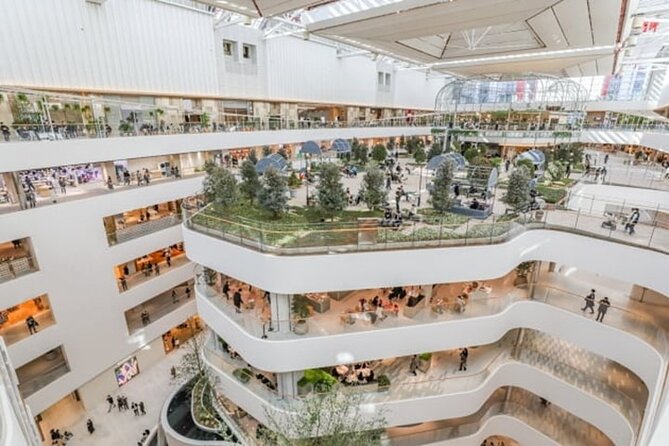
Starfield COEX Mall combines fashion, food, culture, and entertainment in central Seoul. Its Starfield Library is a major draw, and the mall can be useful on a rainy day. Sebastian helped one visitor learn how to order food in the COEX food court, which is the kind of practical support that makes a large complex less confusing.
The Hyundai Seoul is another modern retail stop in Yeouido. Its first floor, called Exclusive Label, includes global designer brands such as Gucci, Prada, and Balenciaga. Creative Ground on B2 adds another retail and design angle.
Do not choose all three modern stops. Pick DDP for design, COEX for a broad indoor mix and the library, or The Hyundai Seoul for high-end retail. Pair one of them with Bongeunsa Temple for a strong old-and-new contrast.
How to build the smartest four-stop route
Your four choices should reflect a theme and a workable area. Here are several sensible combinations:
- First taste of Seoul: Gyeongbokgung, Bukchon, Insadong, and Gwangjang Market.
- Palaces and old neighborhoods: Gyeongbokgung, Changdeokgung, Ikseon-dong, and Jogyesa Temple.
- Food and shopping: Gwangjang Market, Myeongdong, Mangwon Market, and COEX.
- History and memory: Gyeongbokgung, Changdeokgung, the War Memorial, and the National Museum.
- Modern Seoul: DDP, COEX, Bongeunsa Temple, and The Hyundai Seoul.
- Parks and city life: Yeouido Hangang Park, Seoul Forest, Cheonggyecheon Stream, and Seoul Botanical Garden.
I would avoid combining Seoul Botanical Garden, Mangwon Market, COEX, and Gyeongbokgung unless you accept a lot of driving. The day lasts eight to nine hours, but listed sightseeing times add up to only about four hours. The rest is available for transport, meals, and transitions, not unlimited extra sightseeing.
Tell the operator your priorities before the day. Guides have adjusted routes, made minor same-day changes, and helped match meals to personal preferences. Still, last-minute changes work best when they do not require crossing the whole city.
Guide quality and private transport
The guide is central to the value. Names associated with strong experiences include Joseph Hwang, John, Tiger, SJ, Leo, Eddie, Sebastian, Taylor, Paul, and Jimmy. The most praised qualities are clear English, good historical explanation, punctuality, courtesy, humor, and a willingness to change the plan.
A private air-conditioned vehicle is especially useful in Seoul’s summer heat or during a full day of walking. It also lets your group store shopping bags and avoid repeatedly figuring out new routes between distant stops.
The vehicle is not a substitute for walking. Bukchon, palace grounds, market lanes, and temple areas all require time on foot. Wear comfortable shoes and think of the car as a connector between neighborhoods, not a rolling sightseeing platform.
The tour has earned a 4.9 rating from 30 ratings, with 97 percent recommending it. That is a strong record, but the sample is small. The most consistent praise focuses on guide service and flexibility, not on a single must-see route.
Is $183 per person a fair price?
At $183 per person, this is not the cheapest way to see Seoul. Public transportation and self-guided visits will cost much less, especially for a solo visitor or couple comfortable planning every detail.
The price makes more sense for a family or small group that wants a private vehicle, a guide, and four admissions where designated. It also has value for a first visit when time is tight and you want help with meals, palace timing, directions, and cultural context.
Lunch, insurance, and anything not specified are extra. Ask how your chosen destinations fit the four included places, especially if you are considering admission-based attractions. Group discounts are offered, which can improve the per-person value.
Who should book this Seoul tour?
I would recommend it to first-time visitors, families, couples who dislike large groups, and anyone with a short Seoul stay. It is also useful if your group has a mix of interests, since one person can choose a palace, another a market, and another a modern shopping stop.
It is less suitable if you enjoy slow museum visits, long meals, or exploring every side street by subway. Four stops in one day gives you range, but not depth.
Free cancellation is available up to 24 hours before the start time. Changes made within 24 hours are not accepted, and poor weather may lead to a new date or full refund. The activity is near public transportation, most people can participate, and only your group joins the tour.
Should you book the DIY Seoul Private Tour?
Book it if you want Seoul arranged around your interests rather than around a standard route. The best value comes from choosing four stops that are spread across a clear theme, then using the guide for history, food decisions, timing, and local navigation.
I would choose Gyeongbokgung, Bukchon, Gwangjang Market, and Insadong for a first visit. If you have already seen the palace district, build a more personal day around the War Memorial, Ikseon-dong, Bongeunsa Temple, or a market.
Skip it if your main goal is to spend several hours inside one museum or wander without a schedule. For everyone else, the private car and adaptable guide can turn a demanding Seoul day into a manageable one.
FAQ
How many places can I choose?
The tour includes four sightseeing places. You select those destinations from the available Seoul attractions.
How long does the experience last?
The day lasts approximately eight to nine hours. Individual stops generally allow about one hour, with Gyeongbokgung allowing about 90 minutes and Jogyesa Temple about 50 minutes.
Is transportation included?
Yes. Private transportation in an air-conditioned vehicle is included, along with a driving tour guide.
Is this a private activity?
Yes. Only your group participates in the activity.
Are admission tickets included?
Admission tickets are included for designated attractions. Many outdoor areas, streets, markets, and temples are listed with free admission.
Is lunch included?
No. Lunch is not included. Personal travel insurance and anything not mentioned in the details are also excluded.
Can the itinerary be customized?
Yes. You choose four places based on your interests in history, food, culture, parks, shopping, museums, or modern Seoul.
Is pickup available?
Pickup is offered. The experience is also near public transportation.
What happens if bad weather cancels the tour?
The experience requires good weather. If poor weather causes cancellation, you are offered a different date or a full refund. You can cancel for a full refund up to 24 hours before the start time.
Just added around Seoul
- Seoraksan National Park & Nami Island★ 4.5 · 3 reviews
- Strawberry Picking, Winter Sled with Eobi Ice Valley from Seoul★ 4.5 · 3 reviews
- Seoul Full Day small group Tour★ 5.0 · 3 reviews
- Majang Meat Market Experience: Private Tour with Han-woo Beef BBQ★ 5.0 · 3 reviews
- Seoul Korean BBQ Dinner Experience with Secret Food Tours★ 5.0 · 3 reviews
- Rice Wine Tasting with Sommelier – Finest Makgeolli (& Soju)★ 5.0 · 3 reviews
- Max Out Seoul: Must Visit City Highlights Panoramic Day Tour★ 5.0 · 3 reviews
- Seongsu-dong Walking Tour: K-Pop, Culture, Cheer, Friends & Relax★ 4.5 · 3 reviews
Private Tours in Seoul, compared.
Private DMZ Tour (No Shopping): 3rd Tunnel & Suspension Bridge
Read our review →
Seoul City Private Full-Day Tour Including Lunch
Read our review →
Private DMZ the 3rd Tunnel Tour from Seoul (optional Red Bridge)
Read our review →
Seoul Highlights & Hidden Gems Tours by Locals: Private + Custom
Read our review →
Premium Private DMZ Tour & (Suspension Bridge or N-Tower) include lunch
Read our review →
Private Airport Transfer : Incheon to/from Seoul (up to 7 pax)
Read our review →
Flexible Private Guided Tour in Seoul (Optional Incheon Layover)
Read our review →
Browse the lists this tour appears in