
Reviewed · DMZ & BORDER TOURS
DMZ tour south Korea from Seoul (NK experience hall, defector)
The border is closer than you think. This Seoul DMZ tour makes the divided Korean Peninsula easier to understand through sites such as Freedom Bridge, the 3rd Infiltration Tunnel, and Dora Observatory. I like the clear historical explanations from guides such as Katie, Sadie, Felicity, and Yeoni, and I especially like the added conversation with a North Korean defector, when available.
At about $26.04 per person, the tour offers strong value for a seven-hour outing, with coach transport and entrance fees included. The main drawback is that the DMZ is a controlled military area, so parts of the route can change or close without warning, and the tunnel involves a steep walk.
In This Review
- Key points to know before booking
- Why visit the DMZ from Seoul?
- Starting in Seoul and heading north
- Imjingak Park and the Freedom Bridge
- The DMZ Theater and Exhibition Hall
- Walking through the 3rd Infiltration Tunnel
- Dora Observatory and the view toward North Korea
- Unification Village and Dorasan Station
- The North Korean defector conversation
- Choosing the full-day bridge option
- Guides, group rhythm, and organization
- Price, practical comfort, and possible closures
- Who should book this Seoul DMZ tour?
- Should you book it?
- FAQ
- How long does the Seoul DMZ tour last?
- Where does the tour start and finish?
- Is hotel pickup included?
- Do I need my passport?
- Is the North Korean defector conversation included?
- How difficult is the 3rd Infiltration Tunnel?
- Is the JSA included?
- What does the tour price include?
- Can the itinerary change or be canceled?
Key points to know before booking
- The 3rd Infiltration Tunnel is physical: Expect a steep, narrow walk underground, with the return climb harder than the descent.
- Dora Observatory depends on conditions: On a clear day, binoculars can reveal North Korean territory and the model village of Kijongdong.
- The defector session adds personal context: The live conversation can be the most memorable part of the day, especially if you want more than military facts.
- The tour begins and ends in central Seoul: The stated meeting point is City Hall, though pickup arrangements should be confirmed directly.
- The full-day option adds a bridge stop: Depending on the selected option, you may visit Gamaksan Chulleong Bridge or the Majang Lake Suspension Bridge.
- Bring your passport and sensible shoes: A valid passport is required, and comfortable clothing matters in the tunnel.
Why visit the DMZ from Seoul?
The Korean Demilitarized Zone is a 2.5-mile, or 4-kilometer, strip separating North and South Korea. It was established in 1953 after the Korean War. Despite its name, it is not simply a quiet nature area. It is a heavily controlled border zone with military restrictions, memorials, observation points, and reminders of a conflict that technically ended with an armistice rather than a peace treaty.
I like this tour because it gives you several ways to approach that complicated subject. You see physical evidence, including artillery and the tunnel. You look toward North Korea from Dora Observatory. You also hear explanations from a guide who can connect the sites to the larger story of Korea’s division.
That range matters. A museum alone can feel distant. A lookout alone can feel like a photo stop. Together, the sites show how the division affects geography, transport, villages, families, and daily life.
The tour is also an efficient choice if you are based in Seoul. The ride north takes about 50 minutes, depending on traffic and the group’s pickup arrangements. The entire experience lasts roughly seven hours, although the half-day and full-day versions follow different schedules.
More DMZ and border tours:
- Best DMZ Tour Korea from Seoul (Red Suspension Bridge Optional)
★ 5.0 · 41,422 reviews - DMZ Tour: 3rd Tunnel, Option(Suspension Bridge, Boat) from Seoul
★ 5.0 · 21,373 reviews - Seoul: DMZ Tour with Optional Suspension Bridge
★ 4.8 · 5,277 reviews
Starting in Seoul and heading north
The tour information gives City Hall in central Seoul as both the start and end point. Some departures include hotel pickup, but the details are not fully consistent, so I would confirm the exact arrangement, pickup time, and meeting place with the local operator before the morning of the tour. Incheon pickup is not available.
This is one place where good communication makes a real difference. Sadie received particular praise for checking in through WhatsApp, sending a photo of the bus and license plate, and making sure the group knew where to meet. That sort of practical help is useful around City Hall, where several tour buses may leave in the morning.
Transport is by air-conditioned coach, with a maximum group size of 40 people. That is not a tiny private tour, but it is a reasonable format for a military zone with fixed access rules. The guide usually explains the background while you ride, which helps you understand the meaning of each stop before you arrive.
Your passport is essential. You do not need to send a copy in advance, but you must carry a current valid passport on the day.
Imjingak Park and the Freedom Bridge
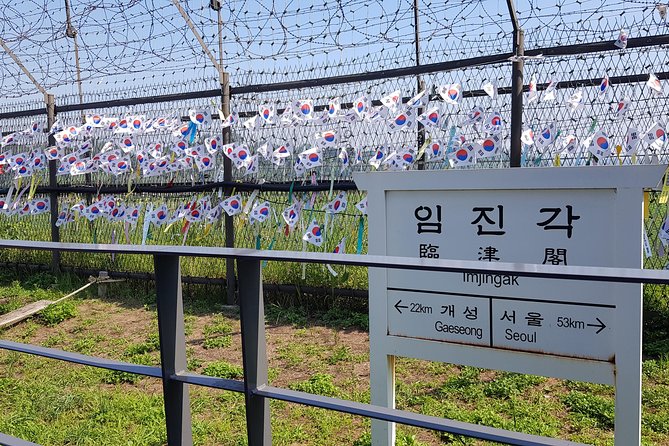
Imjingak Park is the first major stop. It sits along the Imjin River and contains artillery, war-related objects, and memorial features connected with the Korean conflict. The park helps establish the human cost of the division before you reach the more restricted DMZ sites.
The nearby Freedom Bridge is especially meaningful. Nearly 13,000 Korean prisoners of war crossed it after the conflict ended. It is not just an old bridge to photograph. It represents the movement of people who had been held during the war and the painful separation that followed.
You usually have about 30 minutes here. That is enough for the key sights, though not enough for a slow, self-guided visit to every corner of the park. Listen closely to the guide before walking away from the group, since the meeting time matters throughout the day.
The DMZ Theater and Exhibition Hall
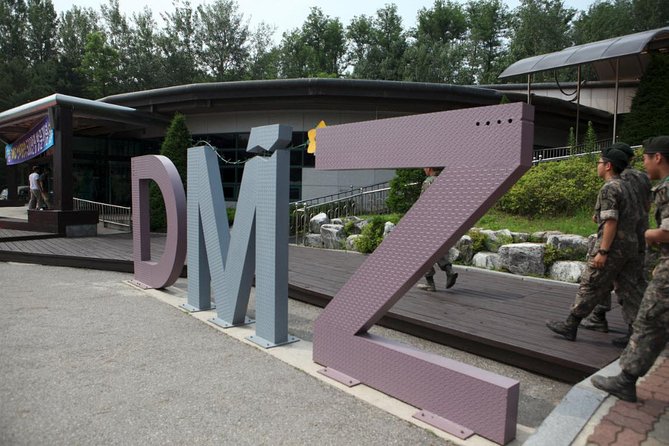
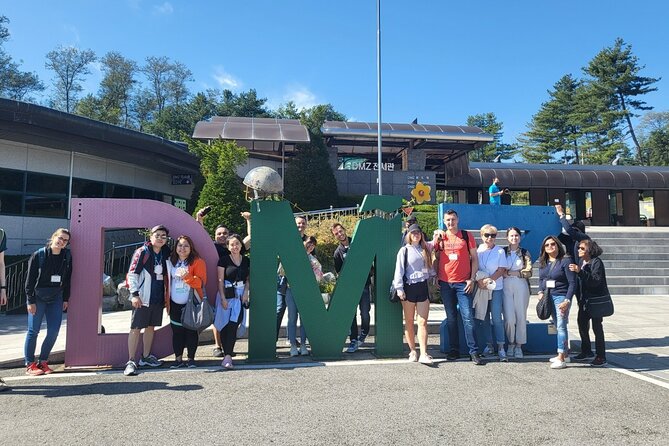
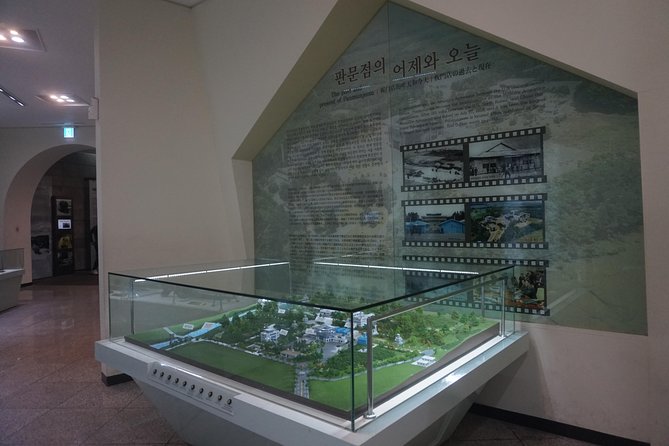
The DMZ Theater and Exhibition Hall provides a compact introduction to the border. It includes photographs and objects connected with the Korean War, along with material that explains why the DMZ exists and how it has shaped relations between North and South Korea.
This stop is useful for first-time visitors because it gives you a basic timeline. The subject can become confusing quickly, especially when military terms, political events, and place names arrive all at once. Guides such as Felicity and Chloe were praised for explaining the background in a way that remained accessible and engaging.
The exhibition stop lasts about an hour. It is less dramatic than the tunnel or the observatory, but I would not skip it mentally. The displays give meaning to the other stops, particularly if you have not studied the Korean War before.
A few more trips of this kind worth comparing:
- Signature DMZ Tour: Exclusive Defector Talk & Suspension Bridge
★ 5.0 · 4,459 reviews - Thrilling Korean DMZ 3rd Tunnel Tour from Seoul + Red Bridge Rush
★ 5.0 · 3,097 reviews - DMZ Past and Present: Korean Demilitarized Zone Tour from Seoul
★ 5.0 · 2,481 reviews - Ultimate Korea DMZ Tour from Seoul (Gondola & Suspension Bridge)
★ 5.0 · 2,396 reviews
Walking through the 3rd Infiltration Tunnel
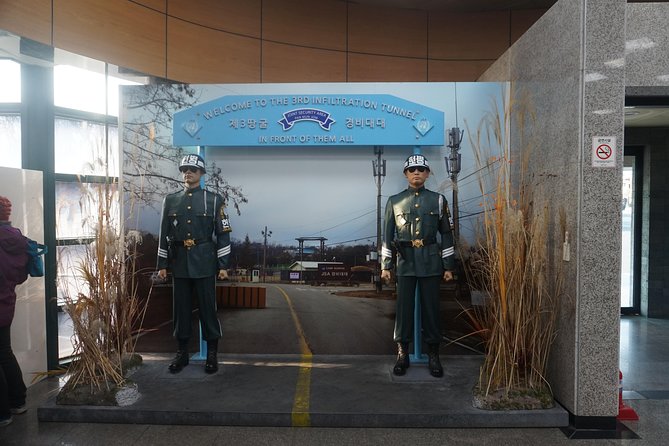
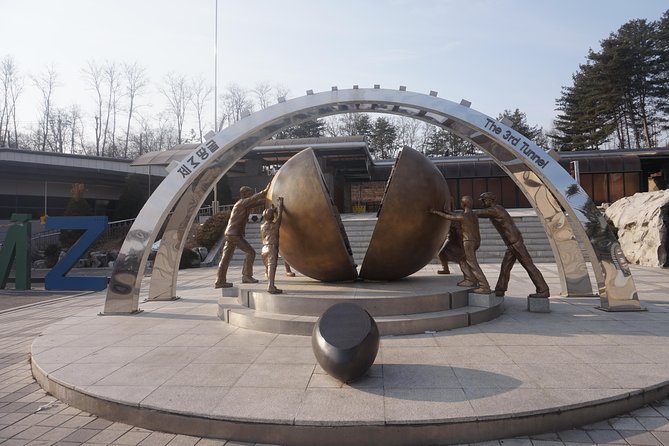
The 3rd Infiltration Tunnel is the most physical part of the tour. South Korea discovered the tunnel in 1978 and believes North Korea built it for a possible military invasion. The South Korean side blocked the passage at the Military Demarcation Line with concrete barriers.
You walk through a section of the tunnel beneath the border area. The route is steep and narrow, and the return journey requires a climb. One practical tip is to leave a heavy coat in a locker before going down if lockers are available at the site. The tunnel can feel warm, and the walk back is harder than many people expect.
Wear shoes with good grip. Comfortable clothing is more important here than looking polished for photographs. The tunnel is not a casual stroll, and anyone with mobility concerns should consider the slope carefully. The tour can accommodate many participants, but it is not described as fully accessible.
The tunnel’s payoff is not a grand underground chamber. Its value comes from the close physical connection to the border and the uneasy thought that this passage was built for war. You feel the effort required to move through it, which makes the military planning less abstract.
Dora Observatory and the view toward North Korea
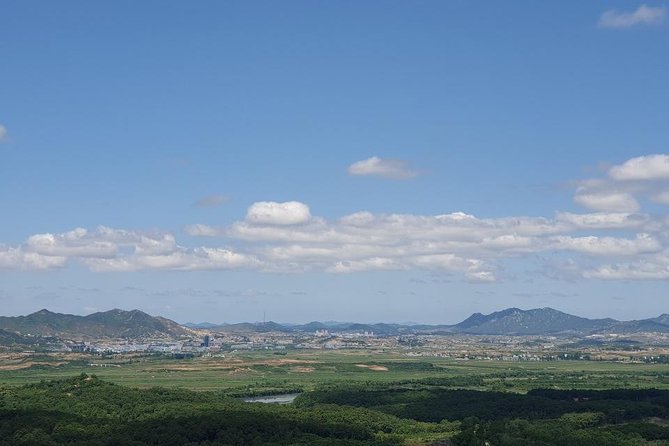
At Dora Observatory, you use provided binoculars to look toward North Korea. The guide explains the view, including Kijongdong, a North Korean model village across the border. From the lookout, the village and surrounding area can appear surprisingly quiet, which is part of the strange power of the place.
Visibility matters. On a clear day, you might see more detail across the border, while haze can reduce the experience to a distant outline. One person on the tour described seeing people in North Korea from the observatory on a clear day, though you should treat that as a possibility rather than a promise.
The stop lasts about 20 minutes. That is enough time to look through the binoculars and hear the main explanation, but it is not a long photography session. Follow the guide’s instructions about where to stand and what areas can be photographed.
I find this stop valuable because it turns the political division into something visible. You are not simply hearing that North Korea is nearby. You are looking across a boundary that separates two different political systems and daily realities.
Unification Village and Dorasan Station
The route includes a stop near Unification Village, a small farming community associated with soybean milk, traditional soy sauce, and corn products. This is a quieter part of the day, but it helps you see that people live and work near the restricted border.
The village is not presented as a theme park version of rural Korea. It is a working community with its own limits and security concerns. The visit gives the tour a useful balance after the military-focused tunnel and observatory.
Dorasan Station carries a different kind of meaning. It once connected North and South Korea and now serves as a symbol of possible future reunification. The station’s importance is less about an active railway journey today and more about what the connection represents.
Your guide fills in the political and historical background while you take in the site. This is where a good guide makes a real difference. Guides including Katie, AJ, Chloe, Lily, and Yoon received strong praise for combining facts with humor, energy, and clear storytelling.
The North Korean defector conversation

The North Korean defector portion is an optional addition or part of the selected experience, so check the exact package when booking. When included, it usually takes the form of a live group conversation and question-and-answer session.
This is one of the strongest reasons to choose this version of a DMZ tour. The monuments and exhibitions explain government policy, military events, and geography. A defector can add personal perspective about life in North Korea and the contrast with South Korea.
You should approach the session with respect. It is not entertainment, and the format may vary depending on the speaker and the questions from the group. The conversation is most useful when you listen carefully rather than expecting a dramatic story on demand.
Several guides, including Sadie, Grace, and Yoon, were praised for making this part meaningful. For me, its value is that it adds a human voice to a subject that can otherwise feel like a collection of military sites and political symbols.
Choosing the full-day bridge option
The half-day route finishes with a drop-off at City Hall after a brief stop at a ginseng center. The full-day option continues after the DMZ with a suspension bridge visit.
Depending on the selected option, the itinerary lists either Gamaksan Chulleong Bridge or the Majang Lake Suspension Bridge. Each adds about an hour. This makes the full-day version a longer outing, not merely a slightly extended DMZ visit.
The bridge option is worth considering if you want a second attraction beyond the border sites. It is less focused on Korean division and more about adding an outdoor viewpoint and a change of pace. If your main goal is the DMZ itself, the half-day version may be enough. If you want to use most of a day outside Seoul, the full-day choice gives better coverage.
Check the precise bridge listed for your booking, since the options are presented separately.
Guides, group rhythm, and organization
The guides are a major part of the experience. Katie is repeatedly praised for high energy, historical knowledge, and taking time to speak with people throughout the group. Sadie is especially strong on practical communication and clear return times. Felicity is praised for modern storytelling and a willingness to answer questions.
Other guides named in the feedback include Yeoni, Chloe, AJ, Lily, Lizzy, Miel, Erica, Lisa, Grace, and Yoon. The repeated pattern is clear: the guide’s delivery can shape the day as much as the sites themselves. You receive more than transportation if your guide explains the significance of each stop before you arrive.
The tour group can reach 40 people, so expect a shared schedule rather than a private pace. Guides give fixed times to return to the coach, and you need to follow them. Military access rules, traffic, and local conditions can affect the order or length of stops.
A memorable guide can also help solo visitors feel included. Erica, for example, was praised for helping a solo participant feel part of the group and offering to take photographs. That is a small touch, but it matters on a tightly scheduled day.
Price, practical comfort, and possible closures
At around $26.04 per person, the tour is inexpensive for a seven-hour excursion from Seoul. The price includes the guide, air-conditioned coach transport, and admission fees. You still need to budget for food, and the tram is not included.
The value is strongest if you want several DMZ sites in one day without arranging transport yourself. The coach saves you the trouble of working through restricted-area rules and rural connections. The guide also gives context that would be difficult to gather from signs alone.
The main limitation is uncertainty. Military conditions or local circumstances can cause part of the route to close. The tour may provide an alternative DMZ-related course, but the supplied terms state that there is no refund when an itinerary section is canceled for these reasons.
JSA access is not part of this tour when the area is closed, and one of the tour experiences described that situation. Do not book this expecting a guaranteed visit to every border site you may have seen in photographs.
Free cancellation is available if you cancel at least 24 hours before the start time. Changes or cancellations inside that window are not accepted for a refund.
Who should book this Seoul DMZ tour?
I would choose this tour if you want a practical first visit to the DMZ, especially if you prefer having the history explained as you go. It suits people interested in Korean history, military geography, modern politics, and personal stories about life on both sides of the border.
It is also a good fit for families and first-time visitors who want a structured day. The guides keep the tone approachable, while the sites provide plenty to think about. The defector conversation is worth adding if you want the human side of the division.
I would hesitate if you dislike fixed schedules, group transport, steep walking, or the possibility of last-minute changes. It is not a scenic countryside tour in the usual sense. Its strongest rewards are educational and emotional, not comfortable or leisurely.
Should you book it?
Yes, if you want a well-priced introduction to the DMZ from Seoul. The 3rd Tunnel gives you a physical sense of the border, Dora Observatory lets you look toward North Korea, and the defector conversation can add a personal dimension that monuments cannot provide.
Choose the half-day route for a focused DMZ visit. Choose the full-day option if you want to add Gamaksan Chulleong Bridge or Majang Lake Suspension Bridge. Confirm your meeting point, carry your passport, wear proper shoes, and accept that the military situation can change the plan. With those expectations, this tour offers a lot of substance for the price.
FAQ
How long does the Seoul DMZ tour last?
The tour lasts approximately seven hours. The half-day route returns you to City Hall, while the full-day option continues to a suspension bridge.
Where does the tour start and finish?
The stated meeting point and end point are both City Hall in Seoul. Some information also refers to hotel pickup, so you should contact the local operator to confirm your exact pickup arrangement.
Is hotel pickup included?
The tour information refers to round-trip hotel pickup but also states that hotel pickup and drop-off are not included. Confirm the arrangement directly with the operator before the tour. Incheon pickup is not available.
Do I need my passport?
Yes. You must bring a current valid passport on the day of travel. You do not need to send a copy of your passport in advance.
Is the North Korean defector conversation included?
The defector conversation is associated with the selected DMZ experience, but availability can depend on the package you book. Check the exact option before payment if this is important to you.
How difficult is the 3rd Infiltration Tunnel?
The tunnel involves a moderate amount of walking through a steep and narrow passage. The return route is uphill, so comfortable clothes and sturdy shoes are recommended.
Is the JSA included?
No guaranteed JSA visit is described. The JSA may be closed because of security or local conditions, and the itinerary can change.
What does the tour price include?
The price includes a guide, transport by air-conditioned coach, and admission fees. Tram tickets, breakfast, and lunch are not included.
Can the itinerary change or be canceled?
Yes. Military conditions or local circumstances can cause part of the itinerary to be canceled or replaced with another DMZ-related course. The stated terms say there is no refund for these changes.
Just added around Seoul
- Seoraksan National Park & Nami Island★ 4.5 · 3 reviews
- Strawberry Picking, Winter Sled with Eobi Ice Valley from Seoul★ 4.5 · 3 reviews
- Seoul Full Day small group Tour★ 5.0 · 3 reviews
- Majang Meat Market Experience: Private Tour with Han-woo Beef BBQ★ 5.0 · 3 reviews
- Seoul Korean BBQ Dinner Experience with Secret Food Tours★ 5.0 · 3 reviews
- Rice Wine Tasting with Sommelier – Finest Makgeolli (& Soju)★ 5.0 · 3 reviews
- Max Out Seoul: Must Visit City Highlights Panoramic Day Tour★ 5.0 · 3 reviews
- Seongsu-dong Walking Tour: K-Pop, Culture, Cheer, Friends & Relax★ 4.5 · 3 reviews
DMZ & Border Tours, compared.

Best DMZ Tour Korea from Seoul (Red Suspension Bridge Optional)
Read our review →
DMZ Tour: 3rd Tunnel, Option(Suspension Bridge, Boat) from Seoul
Read our review →
DMZ Insider Tour: 3rd Tunnel, NK Defector Meet & Red Bridge
Read our review →

Signature DMZ Tour: Exclusive Defector Talk & Suspension Bridge
Read our review →
Thrilling Korean DMZ 3rd Tunnel Tour from Seoul + Red Bridge Rush
Read our review →
DMZ Past and Present: Korean Demilitarized Zone Tour from Seoul
Read our review →
Ultimate Korea DMZ Tour from Seoul (Gondola & Suspension Bridge)
Read our review →Browse the lists this tour appears in