
Reviewed · DMZ & BORDER TOURS
Best DMZ Tour Korea from Seoul (Red Suspension Bridge Optional)
History feels close here. This half-day trip takes you from Seoul to the Korean Demilitarized Zone, where memorial parks, a former prisoner-of-war crossing, an infiltration tunnel, and views into North Korea create a serious but worthwhile day out. I love the way the tour combines major DMZ sights with round-trip transport and clear historical commentary. I also like that the basic option avoids forced shopping, which leaves more time for the places you came to see. The main drawback is that the day can feel long and tightly scheduled, especially if you add one of the optional bridge stops.
You will spend about 7 hours and 30 minutes on the experience, with pickup from a downtown hotel or a nearby main subway station. The Third Tunnel requires a steep walk, and you need a passport or accepted substitute military ID or ARC card. Military conditions can also change the schedule, so this is not a sightseeing day built around perfect predictability.
In This Review
- Key points before you book
- Why the DMZ belongs on your Seoul itinerary
- Imjingak Pyeonghwa-Nuri Park sets the tone
- The Bridge of Freedom connects history to the present
- The DMZ Theater and Exhibition Hall explain the conflict
- The Third Tunnel is the tour’s hardest and best stop
- Dora Observatory gives you a controlled look north
- Choosing the Gamaksan Red Suspension Bridge
- Other add-ons, from Majang Lake to the JSA Museum
- Transport, group size, and the practical details
- Which visitors will get the most from this tour?
- Should you book the Seoul DMZ tour?
- FAQ
- How long does the DMZ tour from Seoul last?
- What is included in the tour price?
- Is lunch included?
- Is hotel drop-off included?
- Do I need a passport?
- Is the Gamaksan Red Suspension Bridge included?
- Can I visit the Majang Lake Bridge or JSA Museum?
- Can the tour schedule change?
Key points before you book
- The Third Tunnel is the physical highlight: Expect a demanding downhill and uphill walk through a narrow passage linked to North Korea’s infiltration plans.
- Dora Observatory gives the tour its most unusual view: High-powered binoculars let you look toward North Korea, including Kijong-dong and distant Kaesong City.
- The human story begins at Imjingak: The park honors Korean War refugees and includes the rusted Iron Horse train, a powerful symbol of the divided railway.
- Guides make a major difference: Guides named Emily, Lina, Alex, Jenny, Ray, Kelly, Diane, Gabby, Hana, Crystal, GoGo, and others have been praised for clear explanations, personal stories, and warm care.
- The red bridge is an optional add-on: Gamaksan Chulleong Bridge adds scenery and a little thrill, but it is not part of the basic DMZ-only option.
- Come prepared for restrictions: Bring your passport, expect possible military-related changes, and remember that lunch and hotel drop-off are not included.
Why the DMZ belongs on your Seoul itinerary
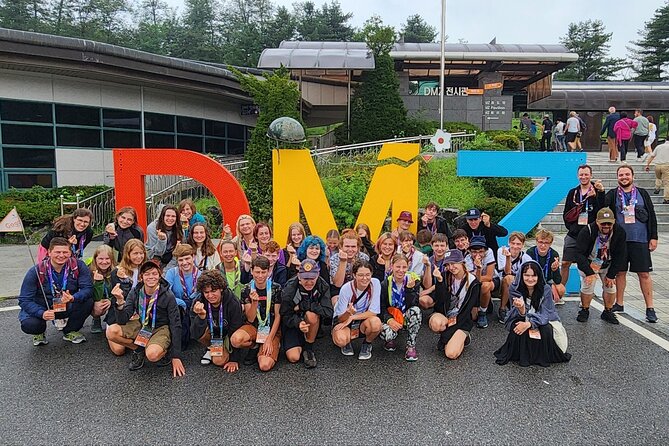
Seoul can feel modern, fast, and densely packed. The DMZ gives you a very different view of Korea. It is not simply a border photo stop. You are visiting places shaped by war, separation, propaganda, family loss, military planning, and an unfinished political story.
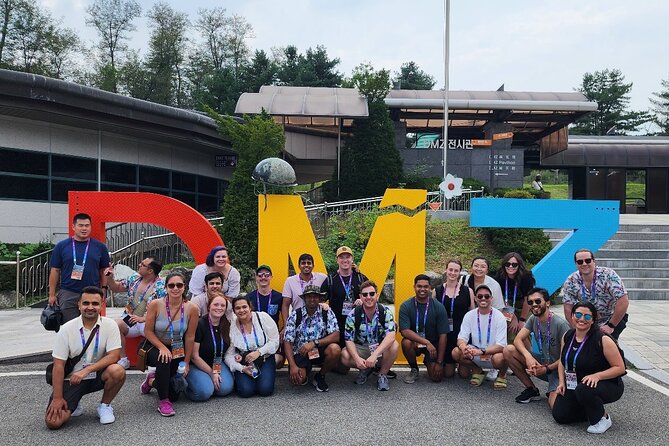
I find the value of this tour comes from the order in which the pieces fit together. At Imjingak, you first encounter the emotional cost of division. At the Bridge of Freedom, the story becomes personal and physical. The tunnel shows the military danger beneath the ground, while Dora Observatory lets you look across the border at a place that is close in distance but difficult to reach.
A guide matters here. Without context, you might see a train, a bridge, a tunnel, and a distant village. With good explanations, each stop carries more weight. The strongest guide reports describe people such as Ray, Emily, Lina, Jenny, and Alex making complicated subjects easy to follow. Jenny also received praise for checking on a guest who felt unwell before entering the tunnel, a useful sign that the guide’s job is more than reciting dates.
At $29.75 per person, the tour is priced well for a full day away from Seoul. Transportation, a professional English or Chinese-speaking guide, and admission to the included museums and DMZ sites are covered. You still need to budget for lunch and your return from the drop-off point, but the basic price offers solid value for someone who wants the main sights without arranging several transfers alone.
More DMZ and border tours:
- DMZ Tour: 3rd Tunnel, Option(Suspension Bridge, Boat) from Seoul
★ 5.0 · 21,373 reviews - DMZ tour south Korea from Seoul (NK experience hall, defector)
★ 5.0 · 20,599 reviews - Seoul: DMZ Tour with Optional Suspension Bridge
★ 4.8 · 5,277 reviews
Imjingak Pyeonghwa-Nuri Park sets the tone
The tour begins at Imjingak Pyeonghwa-Nuri Park, a memorial space created to comfort people displaced by the Korean War. It is a calmer opening than rushing straight to a checkpoint, and it gives you time to think about the millions of lives affected by the division of the peninsula.
One of the park’s most memorable objects is the Iron Horse train. The damaged train recalls the railway that once connected North and South Korea before war and division cut the route apart. It is an easy object to photograph, but its meaning is larger than the picture. A railway normally suggests movement and connection. Here, the train points to a route that was broken.
You have about 30 minutes at the park. That is enough to see the main memorial features and listen to an introduction, though not enough for a slow, detailed visit to every corner. If you like quiet reflection and historical symbols, this will be one of the more affecting stops. If you prefer action from the first minute, it may feel subdued.
The park also helps you understand that the DMZ story is not only about soldiers and strategy. It is about families separated from homes they could not return to, and about a conflict whose effects remain part of everyday Korean life.
The Bridge of Freedom connects history to the present
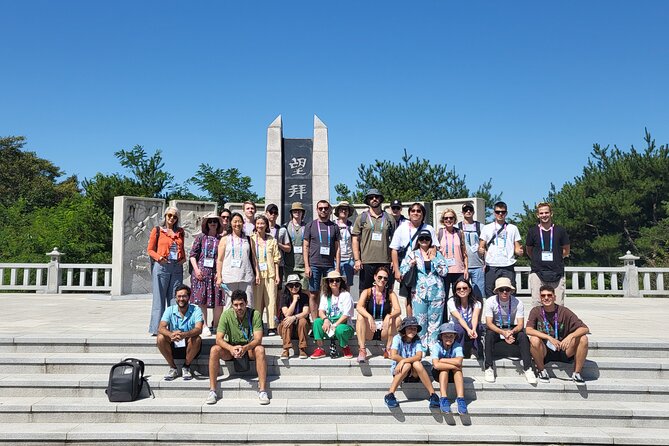
The Bridge of Freedom is a short but meaningful stop. It was used by 12,773 prisoners of war who crossed the Imjin River and returned to South Korea in 1953. Standing on the bridge gives you a direct sense of movement in the opposite direction from the closed railway: people were finally coming home, even though the wider conflict had not produced a permanent peace treaty.
You get around 20 minutes here. That is brief, but the bridge does not require a long guided walk. Your guide can explain the prisoner exchanges, the war, and the continuing division while you take in the river setting.
This is also a good place to notice the contrast between the natural surroundings and the political tension. The river and wooded hills may look peaceful, yet the area remains governed by military rules. That contrast is part of what makes the stop memorable.
Do not expect a long independent stroll. The visit is designed as one part of a larger route, not as a full afternoon at the bridge. The short timing works well if you want variety, but it may disappoint you if bridges, memorials, or war history are your main interest.
The DMZ Theater and Exhibition Hall explain the conflict
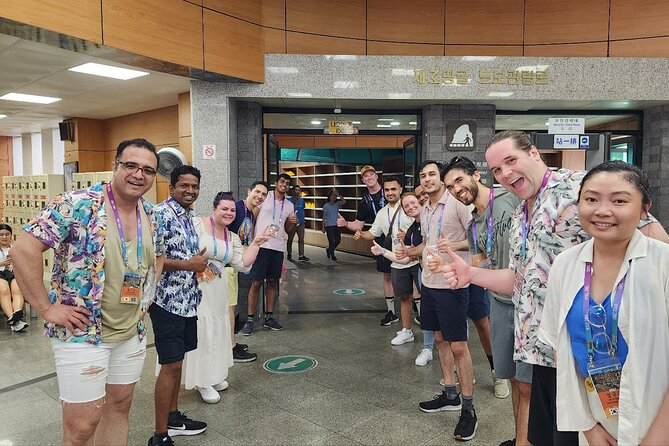
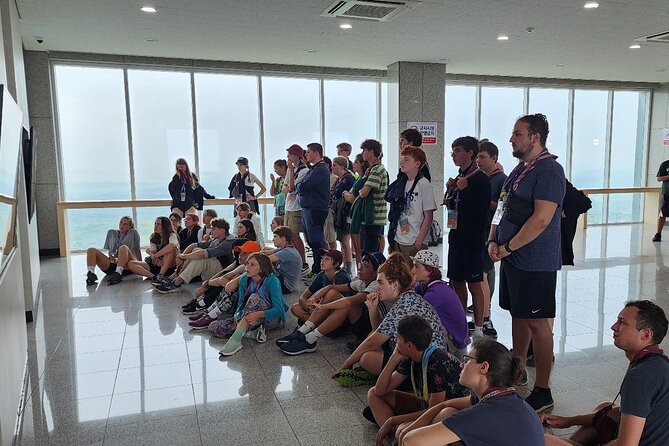
The included DMZ visit adds structure to the history. At the DMZ Theater and Exhibition Hall, you get a South Korean presentation of the Korean War, the division of Korea, and the role of the border zone. Museum admission is included, so you do not need to make a separate payment at this stage.
This stop is especially useful before the tunnel and observatory. You will have a clearer idea of why the DMZ exists, how the military boundary developed, and why apparently ordinary features such as roads, villages, and rail lines carry political meaning.
The scheduled museum and theater time is about an hour. That gives your guide room to explain the material rather than leaving you to read every display on your own. The quality of the day depends partly on how well your guide handles this section. English-speaking guides such as Emily, Alex, GoGo, and Lina have been praised for making difficult history understandable without turning the visit into a dry lecture.
The presentation reflects a South Korean viewpoint. That is important to remember. The tour offers useful context, but it is still one national perspective on a conflict with competing accounts. If you want a full academic treatment of the Korean War, you will need to read more elsewhere. For a one-day visit from Seoul, the museum gives you a practical foundation.
More suspension bridge and cable car trips:
- Signature DMZ Tour: Exclusive Defector Talk & Suspension Bridge
★ 5.0 · 4,459 reviews - Ultimate Korea DMZ Tour from Seoul (Gondola & Suspension Bridge)
★ 5.0 · 2,396 reviews - DMZ; NK Defector, 3rd Tunnel, Suspension Bridge,Hotel pickup
★ 4.9 · 2,055 reviews - DMZ Tour from Seoul – Optional Suspension Bridge Experience
★ 5.0 · 1,918 reviews
The Third Tunnel is the tour’s hardest and best stop
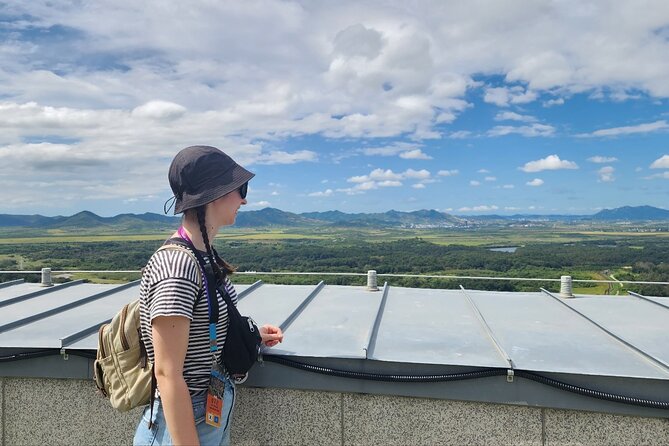
The Third Tunnel of Aggression was discovered in 1978, about 12 kilometers from Munsan and 52 kilometers from Seoul. It was built as part of North Korea’s plan to move forces south, and it is now one of the most tangible reminders of the military tension beneath the border.
You walk into the tunnel rather than simply viewing it from a platform. The route can be physically demanding because it descends and then requires the same climb on the way back. The passage is also low and narrow in places, so you may need to bend or watch your head. The tunnel visit lasts about an hour, including the walk and the guide’s explanation.
This is where practical preparation matters most. Wear shoes suitable for a steep walk, and do not treat the stop as a casual museum visit. One person described it as a useful workout, which is a fair way to think about it. The effort is part of the experience because you are not just looking at a diagram of an infiltration route. You are moving through the space itself.
If you have limited mobility or are feeling unwell, take the physical demands seriously. The tour information says most people can participate, but that does not mean the tunnel will feel easy for everyone. A guide may help you manage the visit, yet you should decide in advance if a steep underground walk is right for you.
The tunnel is often the most memorable part of the day because it combines history, engineering, and bodily effort. You leave with a much clearer sense of how close the military threat once came to Seoul.
Dora Observatory gives you a controlled look north
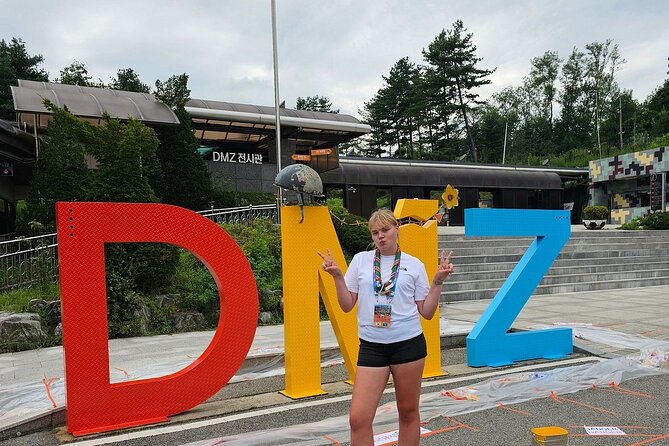
At Dora Observatory, you look across the border toward North Korea. The observatory was rebuilt in 2018, and high-powered binoculars on the third floor allow you to see features including Kijong-dong, often called a propaganda village, as well as Kaesong City in the distance.
You have about an hour here, which is generous enough to hear the explanation, use the binoculars, and take photographs from permitted areas. The view is the tour’s most unusual moment, but it requires realistic expectations. You are not entering North Korea, and distant objects may be difficult to identify without the binoculars or your guide’s help.
The observatory works best when you pay attention to the explanation rather than treating it as a quick photo stop. Your guide can point out the border, the village, and the broader geography. Some of the most enthusiastic accounts describe the strange feeling of seeing both flags and watching daily activity across the line.
This can be a powerful experience for families as well. One guide, Jenny, kept two children aged 10 and 12 engaged through photos, videos, and explanations throughout the day, with the observatory becoming their favorite part. That suggests the stop can work for younger visitors when the guide adjusts the story to the group.
Weather and visibility will affect what you can see. The tour information does not promise a particular view, so consider the observatory a chance to look north, not a guaranteed panorama.
Choosing the Gamaksan Red Suspension Bridge
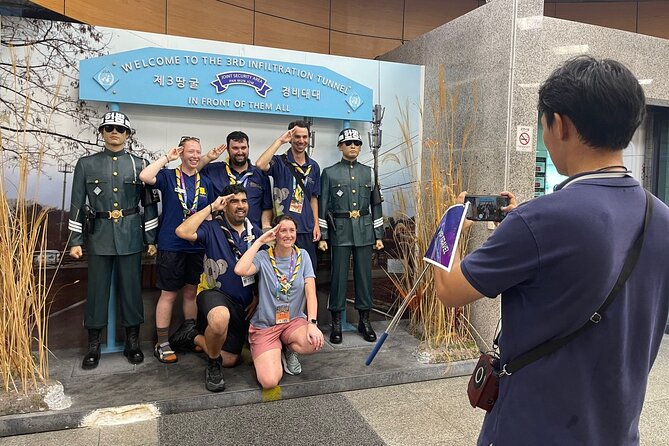
The Gamaksan Chulleong Bridge is an optional one-hour stop. Also known as the Gloucester Heroes Bridge, it honors Korean War service and adds a very different mood after the serious DMZ sites. The red suspension bridge is towerless and described as wobbly, so it brings a small dose of amusement and nerve to the day.
I would choose this add-on if you want scenery, a change of pace, and a memorable photograph. Several people specifically recommended selecting the suspension bridge option, and the combination makes sense: the DMZ portion gives you history, while the bridge gives you an outdoor activity.
The trade-off is time. The full day already lasts about 7 hours and 30 minutes, and the bridge adds another planned stop. If you are tired after the tunnel or want to return to Seoul as early as possible, the DMZ-only option may suit you better.
The red bridge is not included in the basic DMZ tour. You need to select it during checkout. The same applies to the Majang Lake Bridge, JSA Museum, and strawberry picking options.
Other add-ons, from Majang Lake to the JSA Museum
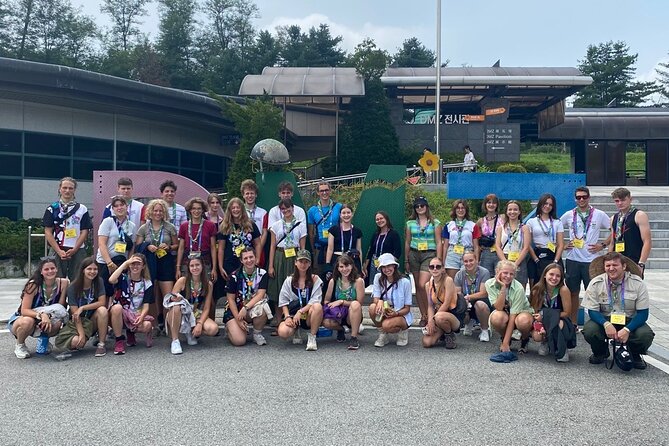
Majang Lake Bridge is another optional one-hour stop. It stretches 220 meters across Majang Reservoir in Paju and offers a scenic walk over the water. It is a good choice if you want your border-history day to include more open-air scenery.
The JSA Museum is listed as an optional 30-minute stop at Tongilchon-gil. Its exhibits cover Panmunjom, the Korean War, and relations between North and South Korea. If you want more political and diplomatic context, this may be the most useful add-on.
Strawberry picking is also available as an optional selection, though no further details are provided about the seasonal schedule or length. I would confirm the exact plan before choosing it, especially because military activity can change the timing of a DMZ visit.
Do not assume every option is part of the advertised base price. The included portion covers the core DMZ route, while the bridges, museum, and strawberry activity depend on what you select.
Transport, group size, and the practical details
Pickup is offered from a downtown hotel or a main subway station near your hotel. The exact meeting place and time can change by location, so check the confirmation carefully and keep your morning open. Round-trip transport removes the awkward part of reaching the northern border area, where independent connections can take planning.
Hotel drop-off is not included. You should also plan for lunch, since food is excluded from the price. The tour returns to Seoul with time left in the evening, but the exact return time can shift because military conditions may affect access or scheduling.
The maximum group size is listed as 200 people. That is a large possible number, so do not book this expecting a private or intimate outing. The experience will depend on the vehicle, the day’s attendance, and how effectively your guide manages the group.
Bring your passport on tour day. A military ID card or ARC card can be used instead, according to the tour information. This is not optional paperwork to leave in your hotel room. Access to the DMZ is controlled, and identification is required.
Cancellation is free if you cancel at least 24 hours before the start time. Changes or cancellations inside that window are not accepted for a refund. If you book through Agoda, Booking.com, or Expedia, the operator asks you to provide contact details such as an email address or WhatsApp number.
Which visitors will get the most from this tour?
I would recommend this trip if you want a clear introduction to the Korean War and the division of the peninsula without arranging transport yourself. It suits first-time visitors to Seoul, families with older children, solo visitors, and anyone who prefers a guide to explain the political and human meaning behind each stop.
It is also a good match if you like variety. In one day, you see a memorial park, a historic bridge, museums, an underground tunnel, a border observatory, and possibly a suspension bridge or lake crossing.
You may want another plan if you dislike group schedules, need a very relaxed pace, or cannot manage the Third Tunnel’s walk. The tour covers a lot of ground, and military restrictions mean you must accept some uncertainty. The price is attractive, but the value depends on your willingness to spend most of a day following a fixed route.
The guides receive the strongest praise. Emily is described as warm and well informed, Lina as funny and personal, Alex as sincere and ready for questions, and Ray as especially strong at presenting the history. Jenny is praised for keeping children involved and looking after an unwell participant. Those details matter because a guide can turn a string of checkpoints into a meaningful day.
Should you book the Seoul DMZ tour?
Yes, I would book it if the DMZ is high on your Seoul list and you want the main sites covered at a modest price. The Third Tunnel and Dora Observatory are the reasons to go, while Imjingak and the Bridge of Freedom give the day its emotional foundation.
Choose the DMZ-only option if you want a focused history trip and an earlier return. Add Gamaksan Red Suspension Bridge if you want a livelier finish and do not mind extending the day. Bring your passport, wear practical shoes, leave room for schedule changes, and expect lunch and hotel drop-off to be your responsibility.
At $29.75, this is a strong-value introduction to one of Korea’s most important and difficult places. It will not answer every question about the peninsula, but with a good guide, it can give you the context to keep asking better ones.
FAQ
How long does the DMZ tour from Seoul last?
The experience lasts approximately 7 hours and 30 minutes, including transportation and the scheduled visits.
What is included in the tour price?
The price includes a professional English or Chinese-speaking guide, pickup from a downtown hotel or nearby main subway station, round-trip transportation, and admission to the included museums and DMZ sites.
Is lunch included?
No. Lunch is not included in the tour price.
Is hotel drop-off included?
No. Hotel pickup is offered, but hotel drop-off is not included.
Do I need a passport?
Yes. You need a passport on the tour day. A military ID card or ARC card can be used instead.
Is the Gamaksan Red Suspension Bridge included?
No. The Gamaksan Red Suspension Bridge is an optional add-on selected during checkout. The basic DMZ-only option does not include it.
Can I visit the Majang Lake Bridge or JSA Museum?
Yes, both are listed as optional selections. The Majang Lake Bridge takes about one hour, while the JSA Museum takes about 30 minutes. They are not included in the DMZ-only option.
Can the tour schedule change?
Yes. The tour time can change because of military issues in the DMZ. Pickup times can also vary depending on your hotel or subway meeting point.
Just added around Seoul
- Seoraksan National Park & Nami Island★ 4.5 · 3 reviews
- Strawberry Picking, Winter Sled with Eobi Ice Valley from Seoul★ 4.5 · 3 reviews
- Seoul Full Day small group Tour★ 5.0 · 3 reviews
- Majang Meat Market Experience: Private Tour with Han-woo Beef BBQ★ 5.0 · 3 reviews
- Seoul Korean BBQ Dinner Experience with Secret Food Tours★ 5.0 · 3 reviews
- Rice Wine Tasting with Sommelier – Finest Makgeolli (& Soju)★ 5.0 · 3 reviews
- Max Out Seoul: Must Visit City Highlights Panoramic Day Tour★ 5.0 · 3 reviews
- Seongsu-dong Walking Tour: K-Pop, Culture, Cheer, Friends & Relax★ 4.5 · 3 reviews
DMZ & Border Tours, compared.

DMZ Tour: 3rd Tunnel, Option(Suspension Bridge, Boat) from Seoul
Read our review →
DMZ tour south Korea from Seoul (NK experience hall, defector)
Read our review →
DMZ Insider Tour: 3rd Tunnel, NK Defector Meet & Red Bridge
Read our review →

Signature DMZ Tour: Exclusive Defector Talk & Suspension Bridge
Read our review →
Thrilling Korean DMZ 3rd Tunnel Tour from Seoul + Red Bridge Rush
Read our review →DMZ Past and Present: Korean Demilitarized Zone Tour from Seoul
Read our review →
Ultimate Korea DMZ Tour from Seoul (Gondola & Suspension Bridge)
Read our review →Browse the lists this tour appears in