
Reviewed · TEMPLE & BUDDHIST HERITAGE
Full Day Busan Tour Including Haedong Yonggungsa Temple
Busan rewards a day spent chasing the sea. This eight-hour small-group tour links beaches, a cliffside temple, a glass skywalk, film architecture, and the UN Memorial Cemetery, giving first-time visitors a useful sweep of the city without wrestling with several subway and bus connections. I especially like the included transportation and the chance to hear Busan’s story from local guides such as Steve, Beth, Chris, and Sue. The main compromise is pace: eight major stops leave limited time to linger.
I also like that the route reaches beyond the usual Haeundae photo stop. Haedong Yonggungsa Temple and the UN Memorial Cemetery give the day cultural and historical weight, while the Korean lunch adds a welcome break from sightseeing. At $159.99 per person, this is not a bargain basement excursion, and the value depends on how much you prize convenience, explanation, and coverage in a single day.
In This Review
- Key points at a glance
- What this Busan day tour is really trying to do
- Dalmaji-gil: a gentle start above the beaches
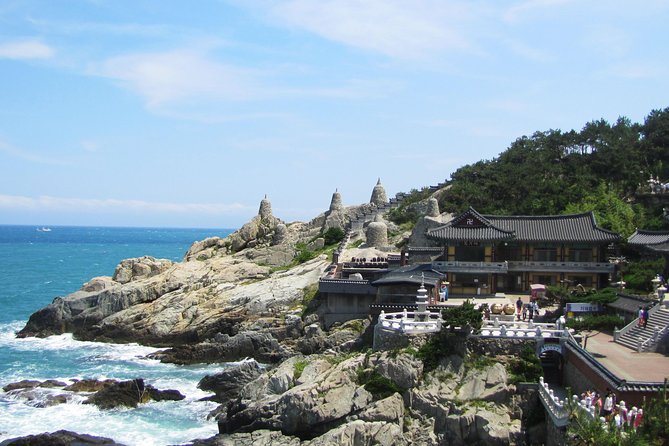
- Haedong Yonggungsa, Busan’s sea-facing temple
- Dongbaek Island and the APEC House
- Haeundae Beach and the modern coast
- Oryukdo Island and the glass-bottom Skywalk
- Busan Cinema Center and Centum City
- The UN Memorial Cemetery: the day’s quiet center
- Lunch, photos, and the human touch
- Does $159.99 offer good value?
- Who should book this experience?
- FAQ
- What time does the tour start?
- How long does the tour last?
- Is hotel pickup available?
- What is the maximum group size?
- Is there a minimum number of people required?
- Is lunch included?
- Is a vegetarian meal available?
- Are entrance fees included?
- Can I cancel for a full refund?
- Should you book the Busan day tour?
Key points at a glance
- Haedong Yonggungsa on the shore: One of Korea’s rare coastal temples, with sea views and a memorable approach.
- A wide look at Busan: The route covers Haeundae, Dongbaek Island, Oryukdo, Centum City, Marine City, and the UN Cemetery.
- A maximum of 10 people: Small numbers can make transport and questions easier than on a large coach.
- Local guides make the difference: Steve, Beth, Chris, Sue, Young, and others have received strong praise for clear English, humor, history, and flexibility.
- Korean lunch is included: Vegetarian food is available if requested at booking.
- The schedule is tight: Plan to return later to any place that deserves more than a quick look.
What this Busan day tour is really trying to do
Busan is spread along a long, hilly coast. Its sights are not arranged in one tidy historic center, so independent sightseeing can involve a fair amount of planning. This tour solves that problem by using a vehicle to connect far-flung places in one day.
The route is best understood as a city sampler. You move from beach scenery to religious architecture, then to modern conference buildings, dramatic coastal views, film culture, and Korean War history. You will not become an expert in any one district, but you will leave with a clear sense of how Busan fits together.
Pickup is offered from centrally located Busan hotels. You may instead meet the guide and group at a subway station. The stated start time is 9:00 a.m., and the tour lasts about eight hours. A maximum of 10 people keeps the group smaller than a standard sightseeing bus, although the actual vehicle and group size can vary.
The strongest part of the experience is the guide. Steve is frequently praised for fluent English, humor, local insight, and the ability to answer questions about customs, politics, history, and daily life. Beth, Chris, Sue, Young, CK, and other guides also receive warm comments for being friendly and attentive. Some guides take photographs and send them afterward, a useful touch for families who rarely get everyone into the same holiday picture.
More Full-Day Tours in Busan
- Small Group Full Day Busan Tour (Max 6 Pax)
★ 5.0 · 1,464 reviews - Authentic Busan Full-Day City Highlights Tour
★ 5.0 · 272 reviews - Full-Day Tour Unmissable things to do in Busan
★ 5.0 · 195 reviews
Dalmaji-gil: a gentle start above the beaches
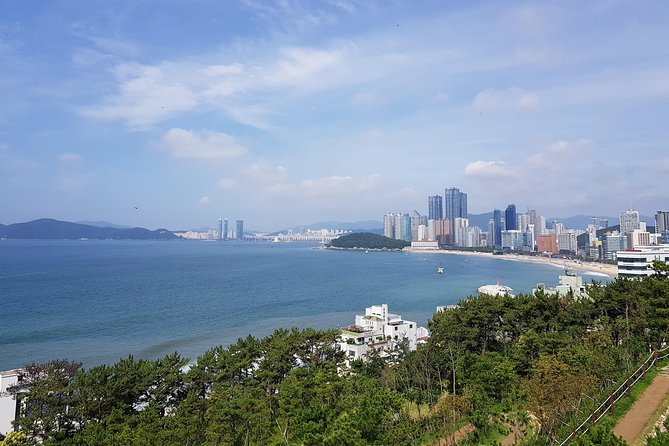
The first stop is Dalmaji-gil Road, a short walkway near the turn toward Songjeong Beach, beyond Haeundae. It runs along the slope of Wausan Mountain and is lined with pine trees and, in season, cherry blossoms.
You get about 30 minutes here, with no admission charge. That is enough for a few photographs and a first look at Busan’s relationship with the sea, but not enough for a long walk. Think of it as an orientation stop rather than a full excursion.
This opening works well because it eases you into the day. You are not immediately dropped at a major attraction with a long list of facts. Instead, you see the coast, learn where Haeundae and Songjeong sit, and begin to understand Busan’s geography.
If you are visiting during cherry blossom season, this road may be especially appealing. The tour does not promise peak blossoms, so keep expectations tied to the season rather than the brochure image.
Haedong Yonggungsa, Busan’s sea-facing temple
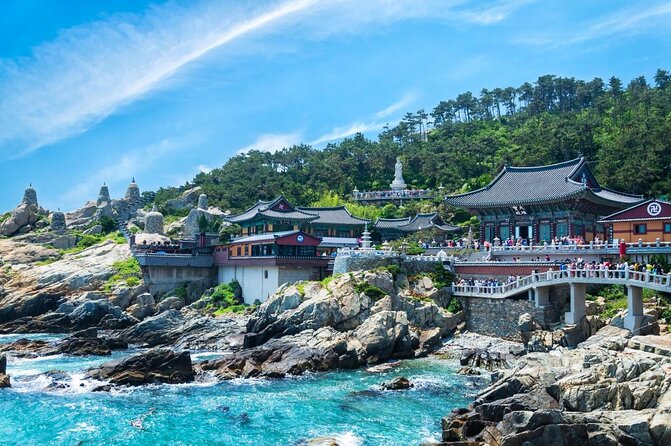
The tour then heads northeast to Haedong Yonggungsa Temple, the day’s main attraction. Most Korean temples are inland or in the mountains, which makes this coastal setting unusual. Here, the temple complex meets the shoreline, giving you a combination of colorful religious buildings, stone features, open water, and sea air.
You have about an hour, and admission is included. That is a reasonable amount of time for a guided introduction and photographs, though you may still wish for longer if you enjoy architecture or quiet religious sites.
The temple is valuable because it gives you something different from Busan’s urban attractions. You are not just looking at another viewpoint or shopping district. The setting shows how Korean religious architecture can work with natural surroundings, and the guide can add context that is easy to miss when you visit alone.
Wear comfortable shoes. The day includes several walking stops, and temple grounds can require movement over uneven or sloping areas. Sunscreen is also sensible, since several parts of the route are exposed.
This is the stop most likely to make the tour feel special. The sea behind the temple gives the visit a strong visual identity, and even a short stay can leave a lasting impression. The limitation is crowding and time. If you want a quiet, unhurried temple visit, return independently on another day.
Dongbaek Island and the APEC House
Dongbaekseom, or Camellia Island, sits at one end of Haeundae Beach. Sedimentation has connected it to the mainland, so you can visit it without a boat. The area combines coastal walking, trees, city views, and the Nurimaru APEC House.
The schedule allows about an hour at Dongbaek Island. The provided route description also highlights Nurimaru APEC House, a building known for combining traditional Korean design with modern architecture. This is one of the more interesting contrasts in the day: natural shoreline beside a formal international meeting venue.
I like this stop for the way it broadens your picture of Busan. The city is not only beaches and seafood. It is also a place of diplomacy, major events, and modern design. The APEC House helps explain why Busan appears on the international stage.
The amount of walking here can make the hour pass quickly. If your priority is the building, stay alert to the guide’s timing and meeting instructions. If your priority is the coastline, you may wish the schedule allowed more independent wandering.
More Temple Visits in Busan
- Busan Tour: Gamcheon Village & Haedong Yonggungsa Temple + Lunch
★ 5.0 · 119 reviews - Private Busan tour with gamcheon culture village and the temple (Customizable)
★ 5.0 · 62 reviews - Busan Full-Day City Tour with Gamcheon Village, Sea Temple & more
★ 4.5 · 27 reviews - Cruise Layover Busan Highlight Tour with Sea temple and Gamcheon
★ 4.5 · 22 reviews
Haeundae Beach and the modern coast
Haeundae Beach is Busan’s best-known stretch of sand. It runs for roughly 1.5 kilometers and forms a broad coastline along a shallow bay. The tour allows about 30 minutes, with no admission fee.
That half-hour gives you time to see the beach and take photographs, but it is not a beach day. You will not have time here for a long swim, a slow café stop, or a full walk along the shore.
Still, this short visit serves a purpose. Haeundae is one of the clearest symbols of modern Busan, and seeing it alongside Dalmaji-gil and Dongbaek Island lets you compare several parts of the same coastal district. The route may also pass through Marine City and Centum City, two areas associated with newer development and large-scale urban design.
If you have several days in Busan, Haeundae deserves a separate evening or morning. On this tour, treat it as a quick city landmark rather than the centerpiece.
Oryukdo Island and the glass-bottom Skywalk
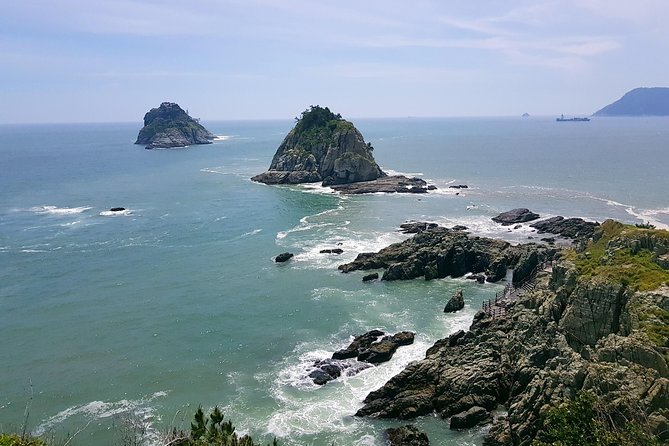
The route moves south to Oryukdo Island and the Oryukdo Skywalk. The old name for the area, Seungdumal, refers to its saddle-like shape. It is also regarded as a dividing point between the East Sea and the South Sea.
The skywalk was completed in 2012 and opened that October. Admission is included, and the scheduled visit is about 30 minutes. The attraction gives you the sensation of standing above the sea, with a transparent section underfoot and open coastal views around you.
This is one of the tour’s more playful moments. After temples, beaches, and memorial grounds, the skywalk changes the mood. You get a dramatic photograph and a quick reminder that Busan’s coast is more than a broad sandy beach.
Thirty minutes is usually enough for the skywalk itself, but not for a long exploration of Oryukdo. The stop may also feel less appealing in poor weather or strong wind. One day of the tour was described as extremely cold, yet the guide adjusted the pace and continued. That kind of flexibility matters, but no guide can turn rough weather into perfect sightseeing.
Busan Cinema Center and Centum City
The Busan Cinema Center is the official venue for the Busan International Film Festival, one of Asia’s major film events. Its huge roof is among the largest in the world, making the building a striking example of modern architecture.
The visit lasts about 30 minutes and has no admission charge. This is not a museum visit with a long indoor program. You are mainly seeing the building and hearing how film culture fits into Busan’s identity.
I appreciate the stop because it prevents the tour from becoming a procession of scenic viewpoints. Busan has a strong connection to cinema, and the center gives that fact a physical address. It also pairs neatly with the nearby Centum City area, where large modern projects show the city’s newer face.
Some people may find this stop less compelling than the temple or skywalk. If architecture and film interest you, it will add useful context. If you prefer markets, food streets, or longer historic visits, the brief stop may feel like a trade-off.
The UN Memorial Cemetery: the day’s quiet center
The UN Memorial Cemetery in Korea honors UN soldiers from 16 countries who died during the Korean War from 1950 to 1953. The grounds cover about 135,000 square meters and form a quiet, grassy memorial park.
You have about an hour here, with admission included. The longer stop is appropriate. This is not a place to rush through for a photograph. The open grounds, graves, flags, and formal memorial spaces call for a slower pace and respectful attention.
The cemetery gives the tour emotional depth. Busan is often presented through beaches, skyscrapers, and food, but the city also played a major role during the Korean War. A guide can help you connect the memorial to South Korea’s modern past without leaving you to decode the site alone.
Timing may occasionally allow you to see the flag-lowering ceremony. One family particularly valued arriving in time for it. The tour does not promise that ceremony, so consider it a fortunate extra rather than a scheduled feature.
For many people, this will be the most moving stop. It is especially meaningful if you have a family connection to the Korean War. Even without one, the calm setting offers a needed pause after a day of roads, viewpoints, and busy attractions.
Lunch, photos, and the human touch
A traditional Korean lunch is included in the price. The tour summary describes Korean barbecue, while individual accounts also refer to bibimbap at a Korean restaurant. The exact meal can therefore vary, but you should expect a substantial Korean restaurant lunch rather than a snack between stops.
A vegetarian option is available if you advise the operator when booking. Do not wait until the morning of the tour if you have dietary needs.
Several guides have offered water, snacks, and even heat packs or frozen water bottles depending on the weather. These extras are not listed as guaranteed inclusions, so I would treat them as thoughtful service rather than something to count on.
Photography is another recurring strength. Guides have taken pictures for couples, families, and solo visitors, then sent them afterward in some cases. That can add real value, especially if you are traveling alone or with children and want a record of the day with everyone included.
The guide’s flexibility also matters. Some accounts describe adjustments to the pace, extra drop-off options, or a special stop added when the schedule allowed. These favors depend on the day and group, but they show why a small group can be more useful than a large coach.
Does $159.99 offer good value?
At $159.99 per person, the tour is a considerable expense. The price makes the most sense if you have only a short stay in Busan and want to cover distant sights without building your own transport plan.
Your payment includes a guide, vehicle transportation, admission to Haedong Yonggungsa, Oryukdo Island and Skywalk, and the UN Memorial Cemetery, plus lunch. Pickup from a centrally located hotel is offered, or you can meet at a subway station. Those details remove several practical costs and decisions.
The value is weaker if you already know Busan well, prefer long visits at fewer places, or are comfortable arranging public transportation yourself. The schedule gives you breadth, not freedom. You are paying to connect the dots and receive explanations.
The maximum group size of 10 is a positive middle ground. It is more personal than a large bus, but it is not necessarily a private tour. A minimum of two passengers is required, so a solo booking depends on another person joining or the operator confirming the departure.
The tour is booked an average of 45 days ahead, which suggests planning early is wise, particularly for a fixed vacation schedule. Free cancellation is available until 24 hours before the 9:00 a.m. start time. If the minimum number is not met and the operator cancels, you are offered another date or experience, or a full refund.
Who should book this experience?
I would choose this tour for a first visit, a short stay, or a cruise stop when Busan’s size makes independent planning feel wasteful. It is also a good fit if you want cultural context, clear English, and a guide who can answer questions as the day unfolds.
Families may appreciate the vehicle, included meal, photographs, and the reported care shown toward children. People with limited mobility should discuss needs in advance. One guide was praised for helping a person using a walker, but the itinerary still includes walking at temples, beaches, the island, and the skywalk.
I would hesitate if you want a slow temple day, an extended beach visit, or long time at the UN Cemetery. The tour touches many places, and even positive accounts differ on whether the pace feels efficient or rushed. That depends partly on the guide, weather, traffic, and the group’s interests.
FAQ
What time does the tour start?
The tour starts at 9:00 a.m.
How long does the tour last?
It lasts approximately eight hours.
Is hotel pickup available?
Yes. Pickup is offered from centrally located Busan hotels. You may also meet the guide and group at a subway station.
What is the maximum group size?
The tour has a maximum of 10 travelers.
Is there a minimum number of people required?
Yes. A minimum of two passengers per booking is required.
Is lunch included?
Yes. A traditional Korean lunch is included. The tour information describes Korean barbecue, while some meal descriptions refer to bibimbap, so the exact dish may vary.
Is a vegetarian meal available?
Yes. A vegetarian option is available if you request it when booking.
Are entrance fees included?
Admission is included for Haedong Yonggungsa Temple, Oryukdo Island, Oryukdo Skywalk, and the UN Memorial Cemetery. Dalmaji-gil Road, Dongbaek Island, Haeundae Beach, and Busan Cinema Center are listed without admission charges.
Can I cancel for a full refund?
Yes. You can cancel at least 24 hours before the experience start time for a full refund. Cancellations or changes made less than 24 hours before the start are not refunded or accepted.
Should you book the Busan day tour?
Book it if you want a well-explained first look at Busan and would rather spend one day sightseeing than planning a web of connections. Haedong Yonggungsa, Oryukdo Skywalk, the APEC House, and the UN Memorial Cemetery create a varied route, while guides such as Steve and Beth can add the local detail that turns a checklist into a story.
Skip it if you have several days and prefer to settle into each place slowly. For most first-time visitors with limited time, though, the convenience, lunch, small group, and broad coverage make the $159.99 price defensible. Just arrive ready to walk, keep your expectations realistic about the tight schedule, and mark the stops you want to revisit on your own.
More Full-Day Tours
- Full Day Private Busan Highlight Tour with Licensed Guide
★ 5.0 · 52 reviews - Busan: Full-Day City Tour with Taejongdae, Gamcheon & More
★ 4.7 · 35 reviews - Busan Full-Day Customizable Private Tour in English
★ 5.0 · 18 reviews - Full-Day Busan Highlights Private Guided Tour
★ 5.0 · 8 reviews
More Temple Visits
- Busan Beomeosa Temple & Hongbeopsa Temple with temple lunch
★ 5.0 · 11 reviews - Busan Sightseeing Tour Including Gamcheon Culture Village and Beomeosa Temple
★ 4.5 · 10 reviews - UNESCO Tongdosa Temple + Gourmet Eonyang Style Bulgogi Lunch
★ 5.0 · 7 reviews - Temple Tour : Byeongpungam Seokbulsa Temple [Hiking+Cable car]
★ 5.0 · 6 reviews
Just added around Busan
- Korean UNESCO World Heritage Tour including Gyeongju, Andong and Daegu(2N3D)★ 5.0 · 3 reviews
- Busan Bliss: Panoramic Yacht & Urban Exploration with Sky Capsule★ 5.0 · 3 reviews
- Busan day trip including Gamcheon culture village from Seoul by KTX train★ 5.0 · 3 reviews
- Busan Seafood Tour : Oyster village Tour with Oyster cuisines★ 5.0 · 3 reviews
- 1 Day Private Busan Guided Tour★ 4.5 · 3 reviews
- 2-DAYS Busan Customized and Included Night tour★ 5.0 · 3 reviews
- Full-Day Jinhae Cherry Blossom festival Private tour★ 5.0 · 3 reviews
- Busan Dialect Class with local snack★ 5.0 · 3 reviews
Temple & Buddhist Heritage, compared.
Mt Seorak + Naksansa Temple or Nami Island Group Tour
Read our review →
Best Things to Do – Half Day Seoul Trip (Seoul Palace & Temple)
Read our review →
Mount Seorak and Naksansa Temple One Day Tour from Seoul
Read our review →
Busan Tour: Gamcheon Village & Haedong Yonggungsa Temple + Lunch
Read our review →
UNESCO Heritage Tour Including Bulguksa Temple
Read our review →
Private Busan tour with gamcheon culture village and the temple (Customizable)
Read our review →
Day Tour of Suwon Hwaseong Fortress Starfield Waujeongsa Temple
Read our review →
Half day Morning Seoul City Tour(Temple & Gyeongbok Palace)
Read our review →Browse the lists this tour appears in