
Reviewed · MORNING
Jinhae Cherry Blossom + Busan Sunrise from Seoul
Cherry blossoms reward good timing. This overnight trip links Seoul, Busan, and Jinhae in one long spring day, giving you a sunrise at Haedong Yonggungsa Temple and a full afternoon among famous cherry trees. I like the round-trip transport from central Seoul, which removes a difficult rail-and-bus puzzle, and I like the pairing of Busan’s coast with Jinhae’s blossoms. The main catch is the schedule: you leave at night, return the next day, and get no proper sleep along the way.
I also like that the tour visits two of Jinhae’s best-known viewing spots, Yeojwacheon Stream and Gyeonghwa Station, rather than stopping at one crowded photo point. The price of $108.49 includes transport, attraction admission, and English-speaking staff, but you pay for your own food and must reach the meeting point yourself.
In This Review
- Key points at a glance
- Why this Seoul spring tour is unusual
- The overnight ride from Seoul to Haeundae
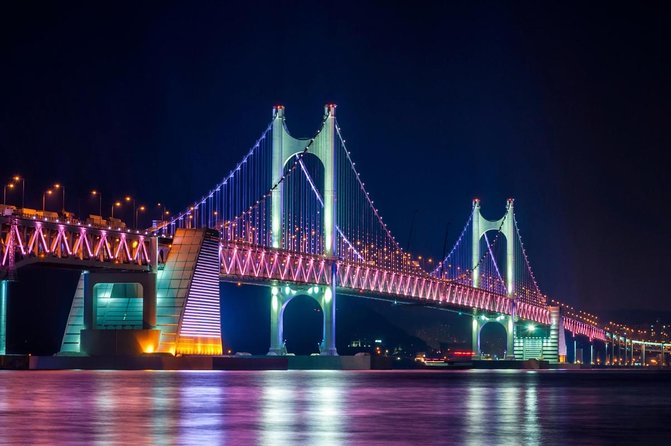
- Haeundae Beach gives you a short morning pause
- Sunrise at Haedong Yonggungsa Temple
- The transfer from Busan to Jinhae
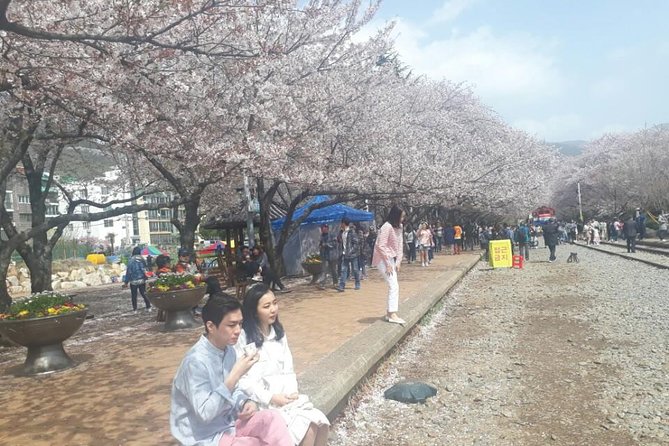
- Yeojwacheon Stream, Jinhae’s classic flower setting
- Gyeonghwa Station and the cherry blossom road
- Four hours of blossoms, with a little flexibility
- The five-hour ride back to Seoul
- Who will get the most from this trip
- Booking, cancellation, and practical planning
- Should you book the Jinhae and Busan tour?
- FAQ
- How long does the tour last?
- Where does the tour start?
- Where can I be dropped off in Seoul?
- Does the tour include breakfast or other meals?
- Which cherry blossom locations will I visit?
- How much time is spent at the two Jinhae blossom stops?
- What happens if the cherry blossoms are not fully open?
- Is transportation included?
- Can I cancel for a full refund?
Key points at a glance
- A night departure from Seoul: You travel south while most of the city is asleep, then begin the day around Busan.
- Sunrise at Haedong Yonggungsa: The coastal temple gives you a striking first stop before the cherry blossom portion begins.
- Two Jinhae viewing areas: You visit Yeojwacheon Stream and Gyeonghwa Station, with about four hours shared between them.
- A timing-sensitive spring trip: If the blossoms are not fully open, the operator may reschedule or cancel the tour.
- A long return to Seoul: The trip lasts about 19 to 20 hours, and traffic can change your arrival time.
- Useful central drop-offs: You return to either Dongdaemun History & Culture Park or Myeongdong Station.
Why this Seoul spring tour is unusual
Many flower trips from Seoul focus only on getting to Jinhae and back. This one adds an early Busan stop, so you see the coast and a historic temple before the festival. That gives the day more variety, but it also makes the schedule demanding.
The tour costs $108.49 per person. For that sum, you receive round-trip transfers, admission to the included attractions, and English-speaking staff. You do not receive meals, drinks, hotel pickup, or hotel drop-off. I consider the price fair if you value convenience and would otherwise need to arrange a long-distance trip, local transfers, and festival transport on your own.
The trade-off is comfort. The advertised duration is about 19 to 20 hours, and the tour starts at night and finishes the following day without sleep. You should see this as an efficient spring excursion, not a restful holiday outing.
The group limit can reach 100 people, although the vehicle type may change according to the number booked. The experience is described with air-conditioned minivan transport, but the vehicle is not guaranteed to remain the same for every departure. If you dislike large groups or need lots of personal space, that detail matters.
A few more trips of this kind worth comparing:
- Mt. Seorak+Nami Island+Garden of Morning Calm Day Trip from Seoul
★ 5.0 · 959 reviews - Seoul: Nami Island and Garden of Morning Calm opt Railbike
★ 4.6 · 907 reviews - Day Trip to Nami Island with Rail bike and The Garden of Morning Calm
★ 4.5 · 459 reviews
The overnight ride from Seoul to Haeundae
The first leg takes about 5 hours and 20 minutes. You depart Seoul at night and ride south toward Haeundae Beach. That long transfer is the price of reaching Busan and Jinhae in one outing.
I would bring a neck pillow, water, and a light jacket. The vehicle is air-conditioned, and temperatures can feel cool during a night ride. Since no meal is supplied, pack something small if you do not want to wait until the Haeundae stop.
This is also where you should set realistic expectations. The schedule gives you access to several major places, but it does not provide much time for sleep. If you need a full night in bed to function well, the trip may leave you worn out before the blossoms even appear.
Haeundae Beach gives you a short morning pause
You spend about 1 hour and 20 minutes at Haeundae Beach. The stop is free to enter, and it offers time for breakfast and a look at one of Busan’s best-known seaside areas.
Breakfast is not included, so use this pause to buy food or eat what you brought. The wording of the schedule describes free breakfast time rather than a supplied breakfast, so do not arrive expecting a prepared meal.
Haeundae works well as a reset after the night ride. You can stretch your legs, get your bearings, and take in the sea before moving on. Still, an hour and 20 minutes is not a long beach visit. I would treat it as a practical break with a scenic setting, not as a full Haeundae sightseeing session.
Sunrise at Haedong Yonggungsa Temple
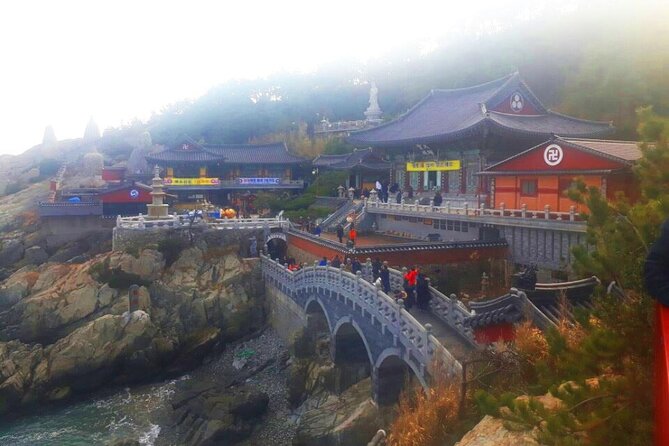
From Haeundae, the ride to Haedong Yonggungsa Temple takes about 30 minutes. You then have about 1 hour and 20 minutes to enjoy the temple and its sunrise setting.
Haedong Yonggungsa is especially memorable because it sits by the coast rather than on an inland mountain site. The combination of temple buildings, open water, and early light gives the morning a strong sense of place. You get a very different view of Korea here than you do among Jinhae’s flower-lined roads.
The timing is one of the tour’s appealing features, but it can also be confusing at first glance. Haeundae appears before the temple in the schedule, while the temple is the sunrise stop. Exact conditions can depend on the day’s departure and transport timing, so listen carefully to the staff.
You should also remember that this is not a private temple visit. The tour’s purpose is to give you a short, scenic introduction before moving to Jinhae. I would focus on the coastal setting and the morning atmosphere rather than trying to inspect every part of the site.
More Busan trips:
- 5-Day Korea Golden route by K-shuttle Tour from Seoul Including Busan, Yeosu
★ 4.5 · 37 reviews - Small Group 7D Korea package Tour with Seoul Gyeongju Busan Jeju
★ 4.5 · 13 reviews - 3-Days 2-Nights Gyeongju UNESCO Sites & Busan City [Private Tour from Seoul]
★ 4.5 · 11 reviews - 7 days Flexible Tour for Major Cities(Seoul,Busan,Gyeongju etc)
★ 5.0 · 5 reviews
The transfer from Busan to Jinhae
After the Busan stops, you travel toward the Jinhae Gunhangje Festival area. The listed transfer takes about 2 hours and 20 minutes. This is another long ride, but it places you close to the heart of South Korea’s best-known spring blossom celebration.
Jinhae’s festival is popular because the flowers line public streets, waterways, and rail areas rather than sitting only inside a formal garden. That makes the visit feel like a whole town has become a spring display. You can walk, take photographs, and compare the different settings at the two scheduled stops.
The timing of the blossoms is the biggest variable. One 3-star account described visiting on April 8, when the cherry blossoms were almost finished. That is a useful warning: a calendar date does not guarantee peak flowers. Warm weather, cold snaps, wind, and rain can all shift the best days.
If the blossoms are not fully open, the operator may reschedule or cancel and contact you beforehand. That policy protects you from making the long trip for bare branches, but it also means your plans may change close to the departure date.
Yeojwacheon Stream, Jinhae’s classic flower setting
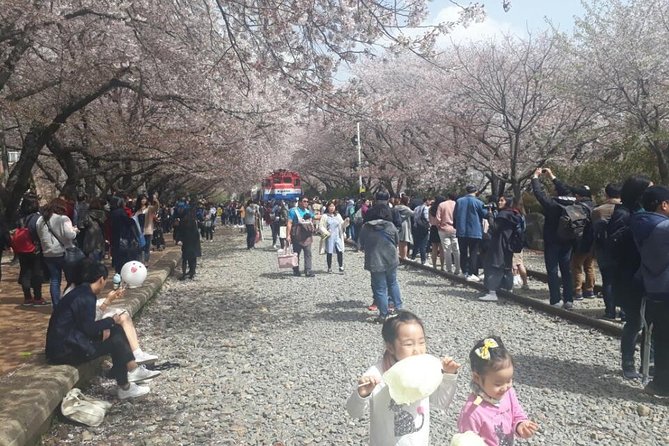
Yeojwacheon Stream is the first cherry blossom stop. You have about two hours here, although the schedule explains that the full four-hour blossom period is shared between Yeojwacheon Stream and Gyeonghwa Station. It does not mean you receive two full hours at each place in every situation.
The stream is one of the most recognizable Jinhae scenes. Water, bridges, walking paths, and cherry trees create a more layered view than a simple roadside row of flowers. This is the place where you may find the most familiar festival-style photographs, especially if the branches are in full bloom.
I would not rush straight to the first photo point. Use part of your time to walk along the stream and look for a quieter angle. The exact amount of freedom depends on the group and the staff instructions, so note the meeting time as soon as you arrive.
The biggest drawback is crowd pressure during peak bloom. The tour brings you to a famous public area, not a private garden. If you want a silent walk with no one else in your photographs, this is the wrong season and location. If you want to see Jinhae’s signature spring scenery without arranging the journey yourself, it is a strong choice.
Gyeonghwa Station and the cherry blossom road
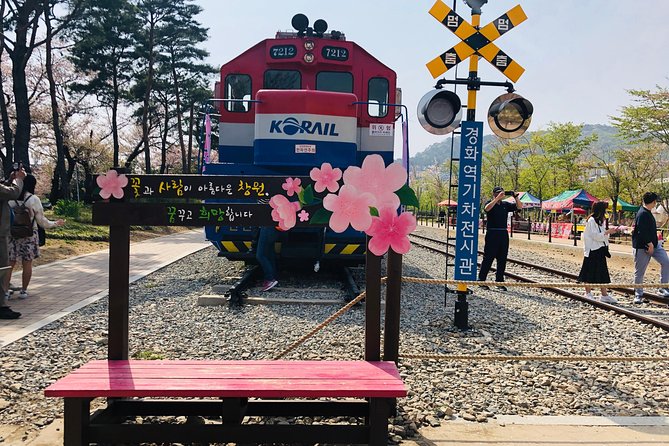
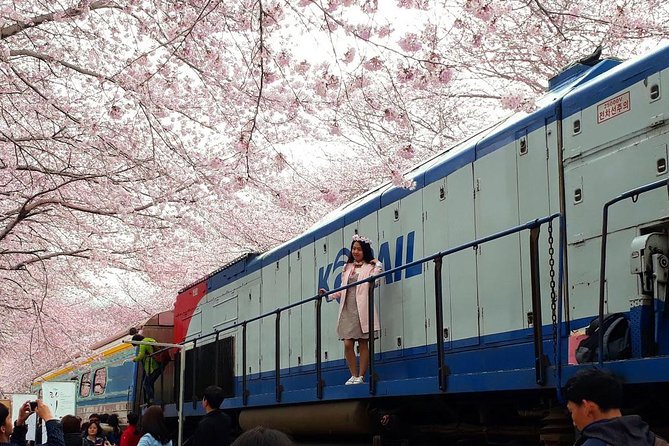
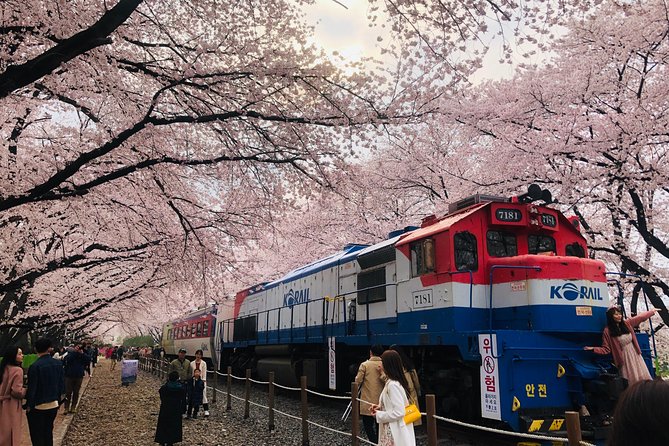
Gyeonghwa Station is the second flower stop and also receives about two hours within the shared four-hour Jinhae visit. The station area is known for its cherry blossom road, where trees frame the railway setting.
This stop gives you a different visual style from Yeojwacheon Stream. At the stream, water and footpaths shape the view. At Gyeonghwa Station, the appeal comes from the long perspective of the road, tracks, and blossoms. I like having both locations in the same tour because you do not spend the entire afternoon looking at one type of scenery.
You should keep your expectations practical. The schedule does not promise a precise two-hour division at each stop, and conditions can change with traffic, crowd levels, and the operator’s timing. Stay aware of the meeting point and do not wander farther than you can comfortably return.
The visit is strongest when the flowers are near peak bloom. If the season is late or early, the famous setting may still be attractive, but the pink canopy will be thinner. That is why the operator’s bloom-based rescheduling policy matters more here than a normal weather policy.
Four hours of blossoms, with a little flexibility
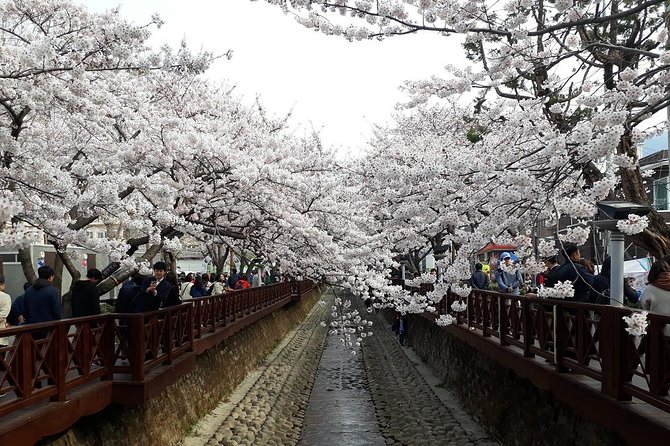
The tour gives you roughly four hours in total at Yeojwacheon Stream and Gyeonghwa Station. That is enough for a meaningful look at both places, but not enough for a slow, unplanned day in Jinhae.
I would use the first few minutes at each stop to identify the meeting location and understand how much free time you have. Then choose your priorities. If photographs matter most, start with the best-known views. If you prefer a calmer experience, spend more time walking away from the first gathering points, while staying within the agreed limits.
No separate festival admission charge is listed, and attraction admission is included. You should still budget for personal purchases and food. Meals and drinks are not included, and the supplied information does not promise a dedicated lunch break.
This is also a good trip for people who prefer a clear plan. You are not left to work out how to connect Busan, Jinhae, Yeojwacheon, and Gyeonghwa Station during one busy spring day. The plan does the hard transport work, while you concentrate on the scenery.
The five-hour ride back to Seoul
After the Jinhae stops, you begin the return journey to Seoul, listed at about five hours. That is a serious final leg after a night without sleep and a full day of sightseeing.
The final arrival time depends on weather and traffic. Do not schedule an important evening reservation, train, flight, or work commitment immediately after the expected return. The safest plan is to keep your evening open.
You are dropped at either Dongdaemun History & Culture Park or Myeongdong Station. If you need to return to Hongik University Station, the operator advises taking Seoul Subway Line 2 from Dongdaemun History & Culture Park. The tour does not return to Hongik University Station because of heavy traffic.
These drop-off points are useful for continuing around central Seoul, but they are not hotel transfers. You must arrange the last part of your journey yourself.
Who will get the most from this trip
I would recommend this experience to you if you have limited time in Korea and want to combine three strong sights in one outing: Busan’s coast, a seaside temple, and Jinhae’s cherry blossoms. It is also a good fit if long-distance driving makes you uneasy or if you do not want to coordinate several trains, buses, and local connections.
The tour suits keen photographers, spring flower fans, and first-time visitors who want an efficient introduction to the southern part of the country. The English-speaking staff should also make the day easier if you do not speak Korean.
I would be cautious about booking it if you need regular sleep, dislike long vehicle rides, or want a relaxed pace. The night departure and next-day return are not minor details. You could spend almost 20 hours in motion and at sightseeing stops before you finally get back to Seoul.
People with a fixed schedule should also consider the traffic risk. The listed duration is approximate, and the return can run later because of road conditions. Finally, check the blossom forecast before departure, knowing that the operator may reschedule or cancel if the flowers are not fully open.
Booking, cancellation, and practical planning
Confirmation is provided when you book, and most people can participate. You need to arrive at the meeting point 10 minutes before departure. Late arrival or a no-show is non-refundable, so give yourself extra time to reach the start point.
Free cancellation is available up to 24 hours before the local start time. Changes or cancellations inside that 24-hour window are not accepted for a refund. The minimum group size also matters. If the operator cancels because that minimum is not met, you can accept another date or experience, or receive a full refund.
Rain alone is not listed as a reason for rescheduling or refund. The policy refers to political conditions, extreme weather, or another unexpected event at the destination. A normal wet day should therefore be treated as part of the risk of a spring flower trip.
Pack a phone charger, comfortable shoes, water, breakfast money, and a light layer. The mobile ticket is convenient, but it does not remove the need to monitor your meeting time and return arrangements.
Should you book the Jinhae and Busan tour?
Book it if your priority is maximum southern Korea sightseeing in one organized trip. The combination of Haedong Yonggungsa, Haeundae, Yeojwacheon Stream, and Gyeonghwa Station gives you more variety than a simple Seoul to Jinhae transfer. At $108.49, the transport convenience makes reasonable value, especially during the difficult cherry blossom season.
Skip it if you want sleep, long meals, or control over every stop. The strongest reason to book is the efficient route. The strongest reason not to book is the exhausting schedule.
My final advice is simple: check the blossom timing, keep your evening after the return free, and accept that this is an overnight sightseeing push. If the flowers are close to full bloom and you can handle the pace, this tour gives you a practical way to see Jinhae without solving the transport puzzle yourself.
FAQ
How long does the tour last?
The experience lasts approximately 19 to 20 hours, including the overnight departure from Seoul and the return the next day.
Where does the tour start?
The tour departs from Seoul, with the specific meeting location provided at booking. Hotel pickup is not included.
Where can I be dropped off in Seoul?
The two listed Seoul drop-off points are Dongdaemun History & Culture Park and Myeongdong Station.
Does the tour include breakfast or other meals?
No. Meals and beverages are not included. You have free breakfast time at Haeundae Beach and must pay for your own food.
Which cherry blossom locations will I visit?
You will visit Yeojwacheon Stream and Gyeonghwa Station Cherry Blossom Road in Jinhae.
How much time is spent at the two Jinhae blossom stops?
About four hours are allocated across both Yeojwacheon Stream and Gyeonghwa Station. The schedule does not guarantee exactly two hours at each stop.
What happens if the cherry blossoms are not fully open?
The tour may be rescheduled or cancelled if the blossoms are not fully bloomed. The supplier will contact you in advance in that situation.
Is transportation included?
Yes. Round-trip transfers are included, along with admission to the attractions and English-speaking staff. The vehicle type may change depending on the number of participants.
Can I cancel for a full refund?
You can cancel for a full refund up to 24 hours before the experience start time. Cancellations or changes made less than 24 hours before the start are not refundable.
Just added around Seoul
- Seoraksan National Park & Nami Island★ 4.5 · 3 reviews
- Strawberry Picking, Winter Sled with Eobi Ice Valley from Seoul★ 4.5 · 3 reviews
- Seoul Full Day small group Tour★ 5.0 · 3 reviews
- Majang Meat Market Experience: Private Tour with Han-woo Beef BBQ★ 5.0 · 3 reviews
- Seoul Korean BBQ Dinner Experience with Secret Food Tours★ 5.0 · 3 reviews
- Rice Wine Tasting with Sommelier – Finest Makgeolli (& Soju)★ 5.0 · 3 reviews
- Seongsu-dong Walking Tour: K-Pop, Culture, Cheer, Friends & Relax★ 4.5 · 3 reviews
- Seoul: Alpaca World and Nami Island (with Garden / Railbike)★ 5.0 · 3 reviews
Morning, compared.
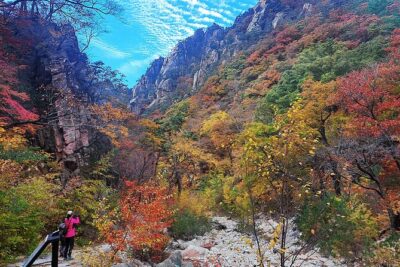
Mt. Seorak+Nami Island+Garden of Morning Calm Day Trip from Seoul
Read our review →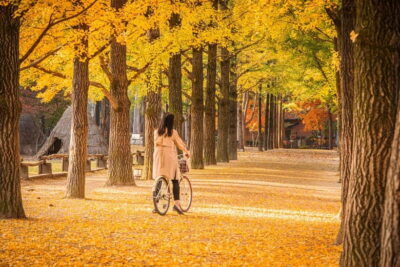
Nami Island and Garden of Morning Calm opt Railbike
Read our review →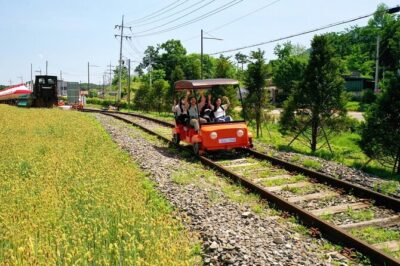
Day Trip to Nami Island with Rail bike and The Garden of Morning Calm
Read our review →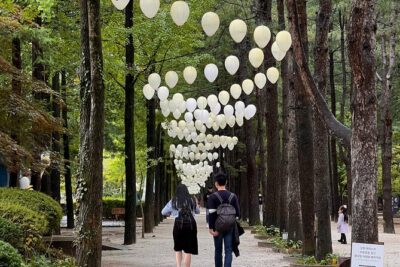
Trip to Nami Island with Petite France & Italian Village, Garden of Morning Calm
Read our review →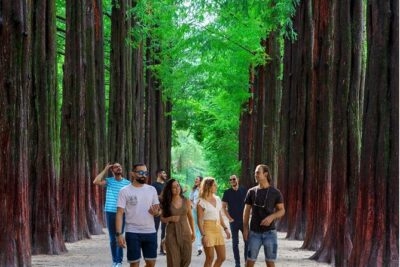
Nami Island & Garden of Morning Calm & Gangchon Railbike Tour
Read our review →
Nami+Alpaca+Garden of Morning Calm (+Rail Bike Option)
Read our review →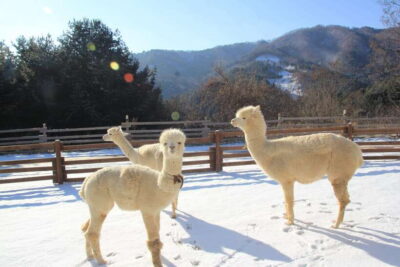
Alpaca, Nami, Morning Calm or Eobi (+Rail Bike)
Read our review →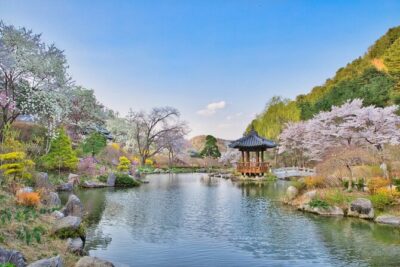
Day Trip to Nami Island with The Garden of Morning Calm
Read our review →Browse the lists this tour appears in