
Reviewed · HANBOK & PALACE EXPERIENCES
Seoul: Deoksugung Palace Night Tour
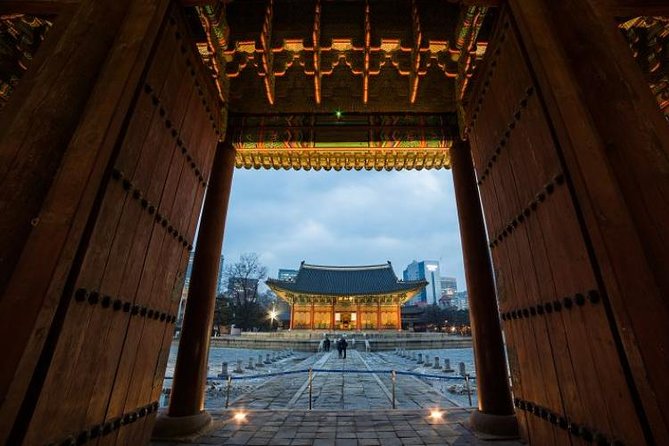
History looks different after sunset. Deoksugung Palace becomes quieter and more atmospheric at night, when its traditional halls and Western-style buildings are softly lit. I especially like the focus on Korea’s short-lived empire, a period often missed in quick palace visits, and the chance to ask questions directly to a guide. The central City Hall meeting point also makes this easy to fit into an evening in Seoul.
I also like the small group size, capped at 20 people, and the strong personal attention reported from guides such as Alan Han and Mr. Lee. The main caution is practical: the tour requires at least four participants, and Monday visits must switch to a Gyeongbokgung Palace tour because Deoksugung is closed.
In This Review
- Key points to know before booking
- Why Deoksugung is one of Seoul’s most revealing palaces
- Meeting at City Hall at 6:20 or 6:30 p.m.
- Junghwajeon, the palace’s main throne hall
- Seokjojeon shows Korea turning westward
- Seokeodang and the personal side of King Gojong
- Hamnyeongjeon, the king’s bed-chamber
- Jeonggwanheon provides a gentle ending
- The value of a $35 guided visit
- How the night setting changes the visit
- Language, questions, and guide style
- Who should book this Deoksugung night tour?
- Weather, Monday closures, and cancellation details
- Should you book it?
- FAQ
- How much does the Deoksugung Palace Night Tour cost?
- How long does the tour last?
- Where does the tour begin?
- Where does the tour end?
- Is the tour available on Mondays?
- What happens if the tour is canceled?
Key points to know before booking
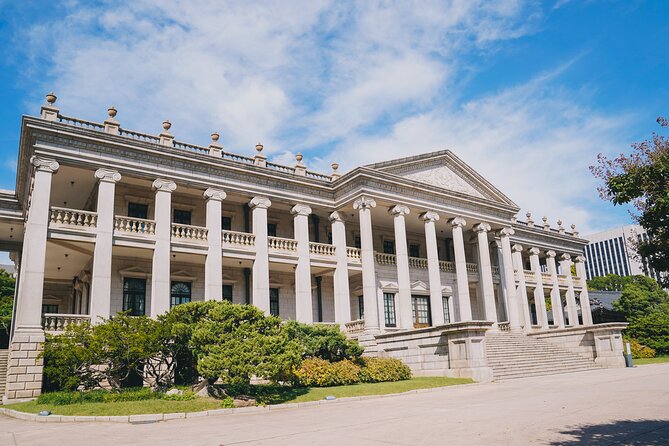
- Night lighting changes the palace: Deoksugung’s buildings take on a calm, carefully framed look after dusk.
- The tour explains the Korean Empire: You learn about the era when Korea was no longer simply Joseon, but not yet modern South Korea.
- Traditional and Western architecture share one palace: Junghwajeon, Seokjojeon, and the other halls show a royal compound in transition.
- Meet near City Hall: The meeting point is in front of Exit 1 of City Hall Station on Lines 1 and 2.
- The tour lasts about two hours: It ends at Jeonggwanheon, inside the palace grounds.
- Group numbers matter: The maximum is 20 people, but the tour may be canceled if fewer than four book.
Why Deoksugung is one of Seoul’s most revealing palaces
Seoul’s major palaces are often introduced through Joseon kings, ornate gates, and formal courtyards. Deoksugung offers a different story. It was important during the final years of the Joseon dynasty and the period of the Korean Empire, roughly one hundred years ago, when Korea was trying to modernize under intense outside pressure.
That gives the palace a more complicated mood. You are not looking only at a preserved royal residence. You are also looking at a place tied to political change, foreign influence, modernization, and the pain caused by Japanese intervention.
I find that setting especially useful for understanding Seoul. The palace sits beside the modern City Hall district, so tall offices and busy streets are close by. Inside the walls, you move among royal halls, sleeping quarters, and a Western-style stone building. That contrast helps you see how quickly Korea was being pulled into a new era.
Deoksugung is also smaller and easier to cover than some of Seoul’s larger palace compounds. A two-hour evening tour gives you enough time to hear the main stories without turning the visit into a long march. You still need to listen and keep pace, but the route is manageable for most people.
More Evening Tours in Seoul
- Seoul: Night Market Food Tour with Local Guide
★ 4.9 · 943 reviews - Seoul: Evening Dark History, Folklore & Ghost Story Walking Tour
★ 5.0 · 593 reviews - Small-Group Night Food Tour in Seoul with Korean BBQ
★ 5.0 · 304 reviews
Meeting at City Hall at 6:20 or 6:30 p.m.
The meeting point is near Exit 1 of City Hall Station, served by Seoul Subway Lines 1 and 2. The supplied details give 6:20 p.m. as the meeting time and 6:30 p.m. as the start time, so I would treat 6:20 as the time to arrive, not the time to leave your hotel.
This is a convenient place to begin. City Hall is central, well served by public transportation, and close to the palace entrance. You do not need to make a special trip to a distant neighborhood just for the tour.
The operator says it will send meeting details by email or WhatsApp. Read those messages carefully, since the exact instructions matter more than a general map pin. Leave a Korean-accessible phone number or a working contact method such as WhatsApp, WeChat, or Line. An incorrect number can cause serious trouble if the meeting plan changes.
Late arrival is not allowed once the group has begun. That rule is strict and fair to the rest of the group, but it means you should build in time for finding the correct station exit. Seoul’s subway system is efficient, yet large stations can still take a few minutes to navigate.
Junghwajeon, the palace’s main throne hall
The first major stop is Junghwajeon, the main throne hall. This is where the formal business of monarchy was presented, so it gives you a clear starting point for the palace story.
A guide can explain more than the roofline and painted details. You will hear how the hall fit into royal government and how Deoksugung became especially important during the final years of the dynasty and the Korean Empire.
The night setting should help here. Lit architecture tends to draw your eye toward roof shapes, wooden details, and the formal arrangement of the courtyard. The quieter atmosphere also makes it easier to focus on the guide rather than rushing from one building to another.
The main limitation is that nighttime viewing can reduce small visual details. If you care most about decorative colors and fine architectural patterns, a daylight visit may show more. The tradeoff is atmosphere, and Deoksugung’s evening appearance is a central reason to choose this tour.
Seokjojeon shows Korea turning westward
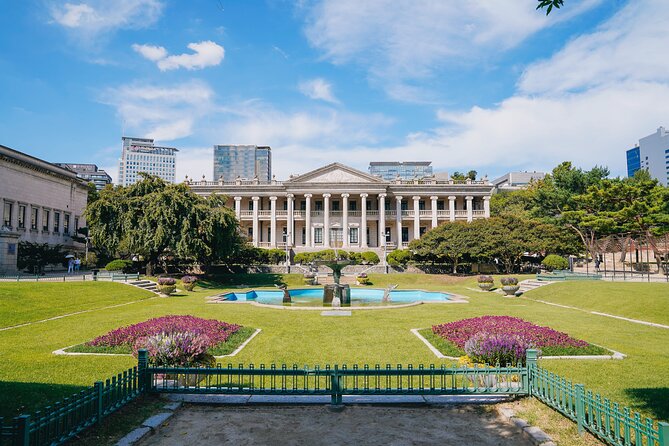
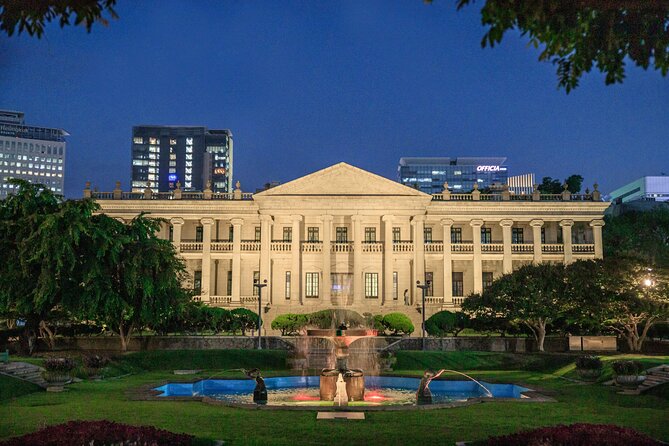
Seokjojeon is the most obvious architectural surprise on the route. It is a Western-style building within a traditional Korean palace complex, and that combination tells you a great deal about Korea’s attempt to modernize.
The guide uses this stop to explain the architecture and the wider political setting. The building is not an unrelated European-looking addition. It belongs to a period when Korean leaders were responding to foreign powers and reconsidering how the state should present itself.
This is where the tour earns its price for me. You can walk past an unusual stone building on your own, but you may not grasp why it is there or why its presence matters. The guide connects the building to the changes taking place around the Korean Empire.
The palace’s mixed design is one of Deoksugung’s defining features. You see traditional Korean royal forms beside Western construction, all within a relatively compact compound. That makes the visit more than a standard palace circuit. It becomes a lesson in a country caught between inherited customs and modern pressure.
More hanbok and palace experiences:
- Seoul: Gyeongbok Palace, Bukchon Village, and Gwangjang Tour
★ 4.9 · 2,321 reviews - Best Seoul City Tour (Gyeongbokgung Palace,Insadong,Namsan Tower)
★ 5.0 · 1,647 reviews - Small-Group Royal Palace and Seoul City Tour (hotel pick-up)
★ 5.0 · 1,474 reviews - Seoul City Sightseeing Tour Including Gyeongbokgung Palace, N Seoul Tower, and Namsangol Hanok Village
★ 5.0 · 1,423 reviews
Seokeodang and the personal side of King Gojong
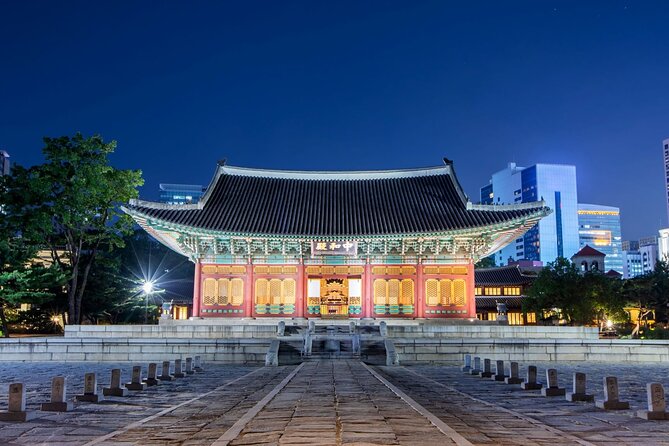
Seokeodang is described as the building most beloved by King Gojong. That detail shifts the tour from government and architecture toward the daily and personal side of royal life.
A building associated with a particular king can make the palace feel less abstract. Instead of viewing every hall as part of one large ceremonial system, you begin to connect specific spaces with individual choices and memories.
King Gojong was central to the Korean Empire period, so his connection to Seokeodang gives the guide another way to explain the era. I would pay close attention here, since this is the kind of detail that can disappear during a self-guided walk.
The stop is also a reminder that palaces were working homes, not just grand stages. Formal ceremonies happened in one place, while private preferences and personal routines shaped other parts of the compound.
Hamnyeongjeon, the king’s bed-chamber
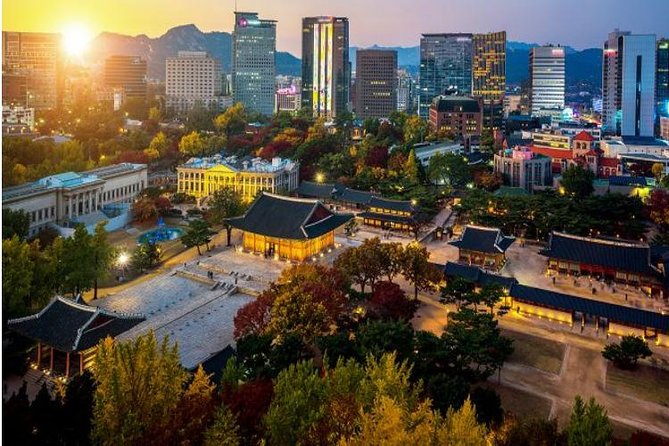
Hamnyeongjeon served as the king’s bed-chamber. It is a quieter stop, but it helps fill out the picture of royal life.
A throne hall tells you how power was displayed. A bed-chamber tells you where the monarch’s private life took place. The contrast matters, especially in a tour that discusses both the state and the people who lived inside it.
The guide can also use this building to connect the palace’s political story with the final years of King Gojong’s life. The supplied tour information places Deoksugung at the center of a period marked by modernization and Japanese invasion, so the private rooms carry more weight than their size might suggest.
Night tours work well for this part of the palace. A quieter route and softer lighting suit spaces connected with private life. Still, the experience depends heavily on the guide’s storytelling, since there may be fewer visual details to inspect than during the day.
Jeonggwanheon provides a gentle ending
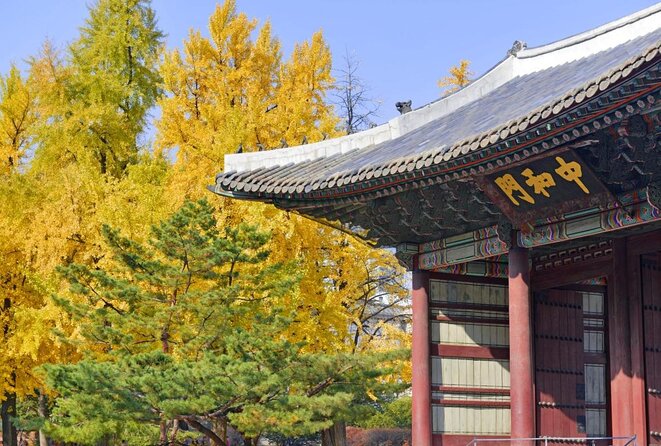
The tour ends at Jeonggwanheon, also written in the meeting details as Jungkwanhun. It is described as a cafeteria in the route information, while the end point is listed as Jeonggwanheon at 99 Sejong-daero.
Because the tour finishes here rather than returning you to City Hall Station, you should note the ending before you begin. You will still be in the central Jung District, but the final point is not the original meeting spot.
Jeonggwanheon gives the route a more relaxed finish after the formal throne hall and royal quarters. It also leaves you close to central Seoul, where you can continue your evening. The supplied information does not promise food, drinks, or a sit-down break, so I would not treat the cafeteria reference as a meal stop.
The end point is useful for anyone planning dinner or another central Seoul activity. Just allow a few minutes to orient yourself after the guide says goodbye.
The value of a $35 guided visit
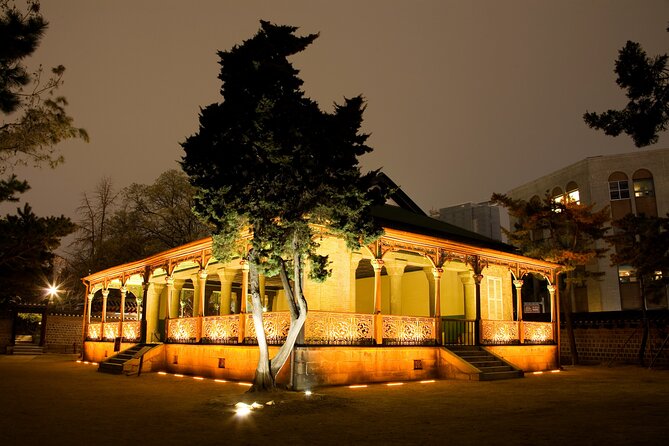
The price is $35 per person, with a mobile ticket. For a two-hour palace visit, that is not the cheapest way to enter Deoksugung. The admission ticket itself is listed as free in the activity details, so you are mainly paying for the guide, organization, interpretation, and evening format.
That can be good value if you want context. The palace’s mixed architecture and Korean Empire story are easy to skim over without help. A guide gives each building a role in the larger story, and you can ask questions as you go.
The strongest praise has focused on the guides. Alan Han provided a one-person tour for a solo booking and explained the end of the Joseon dynasty, the architecture, and the wider history in detail. Another highly positive account names Mr. Lee as a punctual guide and an excellent storyteller.
Those details matter more than polished marketing language. A good guide can turn a short palace walk into something you remember. The risk is that guide quality and group conditions can vary, and the tour is subject to cancellation if fewer than four people book.
With a maximum of 20 people, the group should remain workable. If the number is closer to four or six, you may get the personal question-and-answer format that made the individual tour with Alan Han so effective. If the group fills, stand near the guide and ask questions during natural pauses.
How the night setting changes the visit
Deoksugung is appealing after dark because the buildings are lit at dusk and into the evening. The illumination brings out a different kind of beauty than a daytime visit, especially across the palace courtyards and along the stone walls.
I would choose this experience for mood as much as information. You are still learning about architecture and politics, but the setting feels calmer than a daytime palace stop surrounded by a full sightseeing schedule.
The famous stone wall beside Deoksugung is worth noticing. The tour description specifically calls attention to its beauty, and it is easy to miss when you are focused on the main halls. Give yourself a moment to look at the wall from outside or along the palace edge before or after the formal tour.
There is one clear tradeoff. Night lighting can create atmosphere, but it may not be ideal for photography or close study of painted decoration. If your main goal is to examine colors, roof ornaments, and construction details, consider visiting another palace during daylight and using Deoksugung for its evening mood and historical story.
Language, questions, and guide style
The tour offers explanations in English and Chinese. That makes it useful for visitors who want more than a silent walk through the grounds.
The guide is the heart of this experience. The best reports describe guides who were prepared, punctual, and strong storytellers. One guide handled a private booking when only one person had reserved, while another gave a highly praised explanation of the palace’s history.
You should come ready with questions. The tour specifically encourages questions about Korean history and architecture, and the small maximum group size gives you a reasonable chance to ask them.
Recording and filming are not allowed. Bring your attention instead of planning to capture the entire talk on your phone. You can still use the mobile ticket for entry and keep your phone available for meeting instructions, but the tour itself is meant to be heard rather than recorded.
Who should book this Deoksugung night tour?
I would recommend it to you if you enjoy history, architecture, and guided storytelling. It is especially useful if you want to understand the Korean Empire period, the end of the Joseon dynasty, and the pressure of modernization.
It also suits first-time visitors who want a central activity that fits neatly into an evening. The subway access is simple, the route lasts about two hours, and the palace is close to City Hall and Gwanghwamun.
Solo visitors may like the possibility of a very personal tour if bookings are low. Couples and small groups should also find the format appealing, provided they understand that the minimum number of four still applies.
I would be less likely to recommend it if you only want independent sightseeing, extensive photography, or a daytime look at palace colors. You can visit Deoksugung without paying for a guide, and the $35 fee makes sense only if the explanations and questions are important to you.
The tour is also not ideal for anyone who dislikes fixed meeting times. You must arrive at the correct station exit, provide a working contact number, and avoid being late. Pets are not allowed, and there is no stated place to leave them.
Weather, Monday closures, and cancellation details
This experience requires good weather. If poor weather cancels the tour, you are offered another date or a full refund. The same applies if the minimum number of participants is not reached.
You can cancel for a full refund up to 24 hours before the start time. Cancellations or schedule changes made less than 24 hours before the tour are not accepted.
Deoksugung is closed on Mondays. On that day, the operator says you can book a Gyeongbokgung Palace tour instead, so check the day of the week before paying.
The activity is usually booked about 45 days ahead. That advance pattern suggests you should not leave it until the last moment if the evening timing is important to your Seoul plans, though the supplied information does not promise that every date sells out.
Should you book it?
Book this tour if you want Deoksugung to make sense, not just look pretty. The strongest reasons are the evening lighting, the palace’s unusual mix of Korean and Western buildings, and the chance to hear a focused explanation of Korea’s final royal era.
The $35 price is fair for a good guide, but it is not an entry ticket bargain. You are paying for interpretation and access to a story that is easy to miss on your own. I would choose it for a first or only visit to Deoksugung, especially if history and architecture are high on your list.
Skip it if you prefer wandering alone or need complete control over your schedule. For everyone else, arrive early at City Hall Station, read the WhatsApp or email instructions, and keep an eye out for the stone wall after the sun goes down.
FAQ
How much does the Deoksugung Palace Night Tour cost?
The tour costs $35 per person and uses a mobile ticket.
How long does the tour last?
The experience lasts approximately two hours.
Where does the tour begin?
The meeting point is in front of Exit 1 of City Hall Station, served by Subway Lines 1 and 2. The supplied details list 6:20 p.m. for the meeting and 6:30 p.m. as the start time.
Where does the tour end?
The tour ends at Jeonggwanheon, listed at 99 Sejong-daero in Seoul’s Jung District.
Is the tour available on Mondays?
Deoksugung Palace is closed on Mondays. The operator says you can book a Gyeongbokgung Palace tour instead.
What happens if the tour is canceled?
If poor weather or an insufficient number of participants causes cancellation, you will be offered a different date or experience, or a full refund.
More Evening Tours
- Seoul Night Palace & Market Food Tour with Vehicle
★ 5.0 · 275 reviews - Seoul: Guided City Wall Sunset Hike with Korean Dinner
★ 4.9 · 227 reviews - Special City Night Tour
★ 5.0 · 162 reviews - Korean Drinking Games Night (non-drinkers are also welcome)
★ 5.0 · 125 reviews
Just added around Seoul
- Seoraksan National Park & Nami Island★ 4.5 · 3 reviews
- Strawberry Picking, Winter Sled with Eobi Ice Valley from Seoul★ 4.5 · 3 reviews
- Seoul Full Day small group Tour★ 5.0 · 3 reviews
- Majang Meat Market Experience: Private Tour with Han-woo Beef BBQ★ 5.0 · 3 reviews
- Seoul Korean BBQ Dinner Experience with Secret Food Tours★ 5.0 · 3 reviews
- Rice Wine Tasting with Sommelier – Finest Makgeolli (& Soju)★ 5.0 · 3 reviews
- Seongsu-dong Walking Tour: K-Pop, Culture, Cheer, Friends & Relax★ 4.5 · 3 reviews
- Seoul: Alpaca World and Nami Island (with Garden / Railbike)★ 5.0 · 3 reviews
Hanbok & Palace Experiences, compared.

Gyeongbok Palace, Bukchon Village, and Gwangjang Tour
Read our review →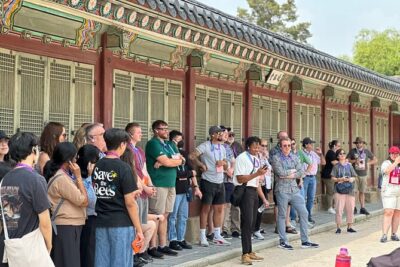
Best Seoul City Tour (Gyeongbokgung Palace,Insadong,Namsan Tower)
Read our review →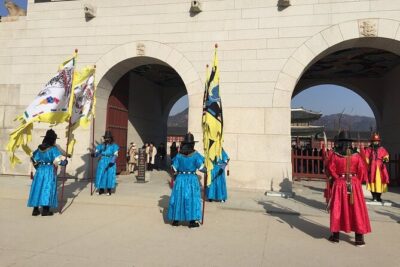
Small-Group Royal Palace and Seoul City Tour (hotel pick-up)
Read our review →
Seoul City Sightseeing Tour Including Gyeongbokgung Palace, N Seoul Tower, and Namsangol Hanok Village
Read our review →Gyeongbok Palace, Bukchon Village, and Gwangjang Tour
Read our review →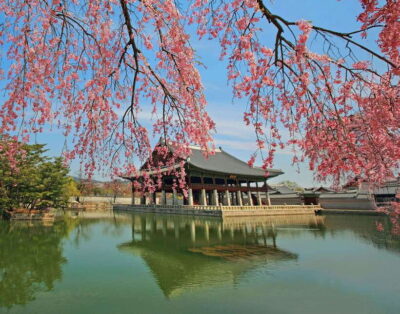
Seoul Highlights: Gyeongbok Palace, Insadong & N Seoul Tower
Read our review →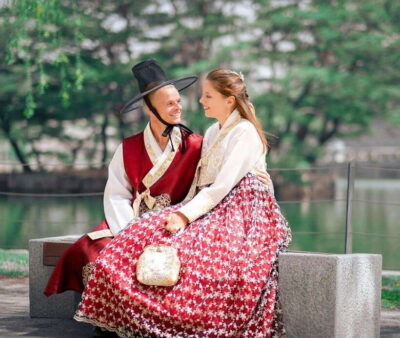
Seoul City Half Day Tour-Gyeongbok Palace Guard Changing Ceremony
Read our review →Browse the lists this tour appears in