
Reviewed · FOOD & DRINK
Seoul Private Food Tours with a Local Foodie: 100% Personalized
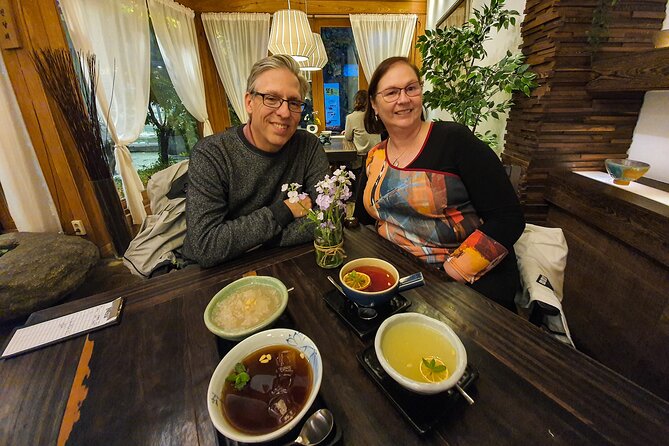
Seoul tastes better on foot. This private food walk pairs six to eight local tastings with market stops, neighborhood food streets, and a sit-down Korean barbecue meal. I like the one-to-one format, which gives you room to ask questions and adjust the pace. I also like that hosts such as Jay, GJ, Andrew, Sujeong, Oky, and Yujin have added city history, photos, and local restaurant advice to the food.
The main caution is the price: at $225.63 per person, this is a serious spend for three hours. The tour can also vary widely by host, since the route is personalized. Some people have enjoyed carefully chosen eateries and special attention, while others expected a more expert-led food adventure and found the experience too casual.
In This Review
- Key points at a glance
- What kind of Seoul food tour is this?
- The first bites: Seoul markets and food towns
- Gwangjang Market and the pleasure of trying something new
- Sindang-dong’s Tteokbokki Town and six to eight tastings
- Myeongdong Street Food Alley and Seoul food culture
- Sillim-dong’s Sundae Town and regional specialties
- The Korean barbecue meal
- Why the guide matters more than the route
- Walking, timing, and meeting arrangements
- Is $225.63 per person fair?
- Who should book this Seoul food walk?
- Should you book it?
- FAQ
- How long does the Seoul private food tour last?
- How many food tastings are included?
- Is Korean barbecue included?
- Is this a private tour?
- Can the meeting point be changed?
- Are transportation and extra food included?
- Can I cancel for a full refund?
Key points at a glance
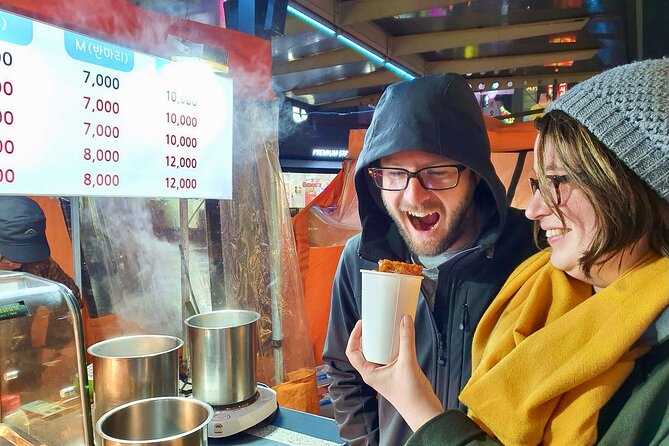
- Six to eight tastings: The tour includes food from two or three eateries, plus one wine, beer, or soft drink.
- Private format: Only your own group takes part, so the host can adjust the pace, food choices, and conversation.
- Markets and food streets: Possible stops include Namdaemun, Gwangjang, Myeongdong, Sindang-dong, Sillim-dong, and Noryangjin.
- Korean barbecue included: The experience is designed to include a traditional sit-down meal, not just samples grabbed from stalls.
- Strong guide factor: Jay, GJ, Andrew, Sujeong, Oky, and Yujin have each been praised for food suggestions, city stories, photos, and flexibility.
- Three hours on foot: Public transport may be used, but transportation costs are not included.
What kind of Seoul food tour is this?
This is less like a fixed restaurant crawl and more like hiring a local companion for a short, food-focused walk. You meet your host at 109 Jae-dong in Jongno District, or arrange another convenient location nearby. A hotel meet-up can be requested if your accommodation is in a central part of Seoul.
The tour lasts about three hours and is private. That matters in Seoul, where market aisles can be crowded, menus may be unfamiliar, and a group of six can move very differently from a couple or family. Your host can spend more time explaining a dish, pause for photographs, or avoid foods that do not suit you.
The tradeoff is less certainty. The advertised food areas are examples rather than a guaranteed route. Your host may choose Namdaemun Market, Gwangjang Market, Myeongdong Street Food Alley, Sindang-dong’s Tteokbokki Town, Sillim-dong’s Sundae Town, or Noryangjin Fish Market. You should discuss your priorities before the walk begins if you have a strong preference for seafood, markets, barbecue, vegetarian dishes, or unusual snacks.
More Private Tours in Seoul
- Private DMZ Tour (No Shopping): 3rd Tunnel & Suspension Bridge
★ 5.0 · 607 reviews - Seoul City Private Full-Day Tour Including Lunch
★ 5.0 · 469 reviews - Private DMZ the 3rd Tunnel Tour from Seoul (optional Red Bridge)
★ 5.0 · 429 reviews
The first bites: Seoul markets and food towns
The experience is built around small tastes rather than one large meal at the start. You can expect to sample six to eight local specialties from two or three eateries, with one included drink. Additional food and drinks cost extra, so pace yourself and keep a little cash or payment capacity available for anything that catches your eye.
Namdaemun Market is a natural introduction. It is one of Seoul’s best-known market areas, with food sellers, shops, and narrow lanes that make walking part of the experience. Here, your host can help you identify what is worth trying and explain how each food fits into daily Korean eating habits.
The value is not only the bite itself. A local host can tell you what to eat first, which flavors may be spicy or sweet, and whether a dish is meant as a snack, side dish, or full meal. That small bit of guidance can make a major difference when you are facing an unfamiliar menu.
Noryangjin Fish Market is another possible stop. It offers a very different food setting from an inland market street, with seafood at the center. If fish is high on your list, tell your host early. The route is flexible, but no single alternative market is guaranteed for every group.
Gwangjang Market and the pleasure of trying something new
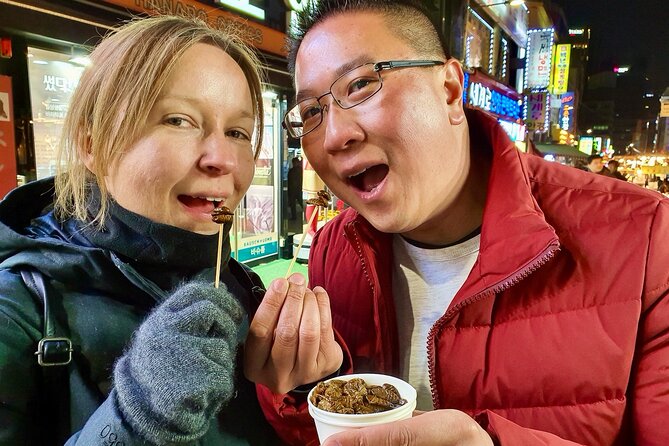
Gwangjang Market is included among the possible stops, and it is a strong choice for anyone who wants a classic Seoul market experience. The focus here is on trying foods, ingredients, and flavors you may not meet elsewhere on your trip.
This part of the tour suits curious eaters who would rather sample several small portions than commit to one unfamiliar restaurant meal. Your host can act as a translator, ordering guide, and cultural interpreter at the same time. That is especially useful if you are unsure how a dish is prepared or how it is normally eaten.
Still, a market stop is not the same as a formal tasting menu. Food may be served from stalls, and the experience can feel informal. One particularly negative account described the tour as walking along and picking up bits of food from stalls, which is exactly why you should clarify your expectations before booking. If you want a polished, seated food tour with long explanations at every course, this may not be the right match.
If you enjoy the energy of markets and do not need every bite presented like a restaurant course, the casual setup can be part of the fun. The host’s judgment becomes the key ingredient.
Sindang-dong’s Tteokbokki Town and six to eight tastings
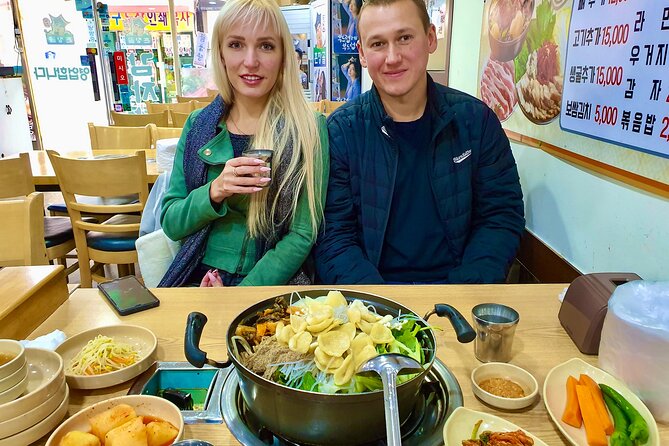
Sindang-dong is associated with Tteokbokki Town, a food area centered on Korea’s famous spicy rice cakes. The planned version of this stop includes six to eight street foods selected by your host, although the exact dishes and route can change.
This is likely to be one of the more useful stops for first-time visitors. Tteokbokki is widely known, but trying it in a district built around the dish gives you a better sense of how a popular Korean snack becomes a neighborhood food tradition. You may also try other street foods nearby, depending on your host and the day’s plan.
The number of tastings sounds generous, but portions are not specified. You should think of the tour as a series of samples plus a meal, not eight full restaurant servings. If you have a small appetite, ask your host to keep portions manageable. If you are traveling with children, the private format makes it easier to slow down and avoid forcing every person to try every dish.
Spice tolerance is another practical concern. The supplied information does not promise mild versions or allergy-free substitutions, so tell your host about allergies, dietary restrictions, and dislikes before the walk. Andrew was specifically praised for accommodating food allergies and jet-lagged children, but that kind of care depends on communication and host matching.
More food tours:
- Seoul Street Food Market Tour
★ 5.0 · 1,226 reviews - Seoul: Night Market Food Tour with Local Guide
★ 4.9 · 943 reviews - Downtown Seoul Guided Food & Market Tour with 8+ Local Tastings
★ 5.0 · 580 reviews - Small-Group Night Food Tour in Seoul with Korean BBQ
★ 5.0 · 304 reviews
Myeongdong Street Food Alley and Seoul food culture
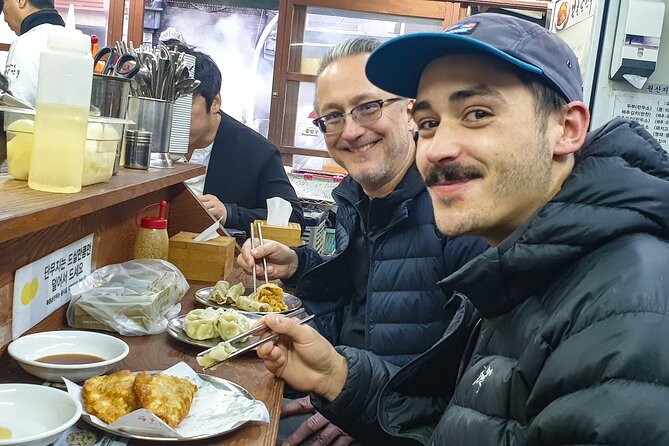
Myeongdong Street Food Alley adds a more central and snack-oriented part of Seoul. Here, your host can explain the origin and cultural role of the foods you try, including dishes developed or refined in Seoul.
This cultural layer is one of the tour’s better ideas. Korean food is not just a list of spicy sauces, grilled meat, and market snacks. Food connects to family habits, workday routines, celebrations, regional identity, and the way people gather. A good host turns a quick bite into a small lesson about Korean society.
Jay received especially strong praise for explaining both the food and the construction of the city. That wider context is valuable because Seoul’s markets and food streets do not exist in isolation. You can ask how a neighborhood changed, why certain food businesses cluster together, or how modern Seoul sits alongside older customs.
Myeongdong can also be a less intimate setting than a quiet restaurant. You may be walking, standing, and eating in short bursts. That is worth knowing if you have mobility concerns or prefer a slower meal.
Sillim-dong’s Sundae Town and regional specialties
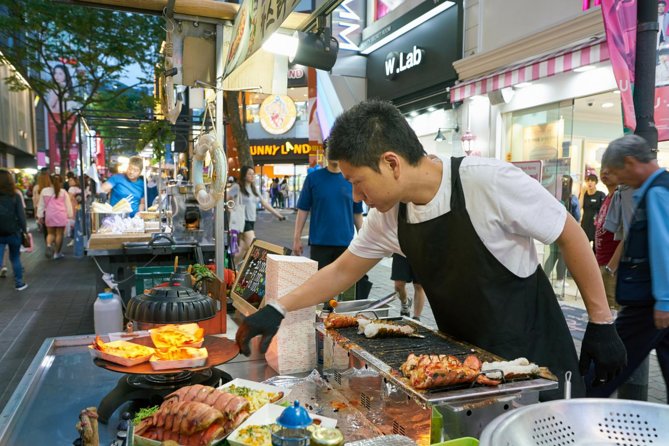
Sillim-dong’s Sundae Town is another possible route choice. The signature dish here is sundae, a Korean sausage-style food that can be unfamiliar to first-time visitors. Your host’s job is to explain what you are eating and help you decide how adventurous you want to be.
This stop may appeal most to people who have already tried the obvious Korean barbecue and fried chicken choices and want something more local. It is also the kind of place where a personal guide adds real value. You can ask about ingredients, preparation, texture, and the social setting around the dish rather than simply pointing at a photograph on a menu.
The limitation is that the experience may not suit cautious eaters. The tour promises new ingredients and flavors, but it does not promise that every dish will be familiar or universally appealing. I would book this with an open mind, not with a fixed list of foods you already know you like.
The Korean barbecue meal
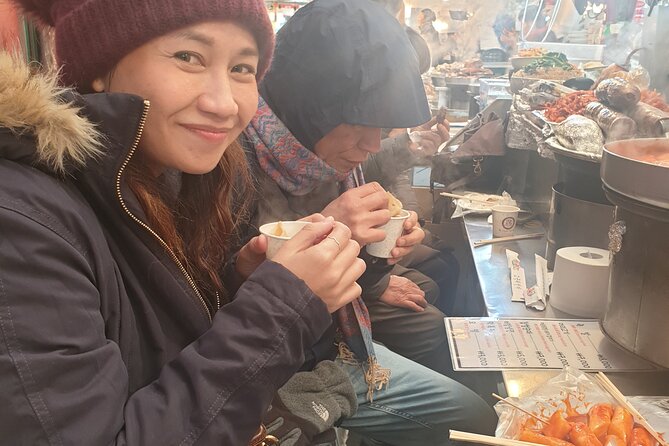
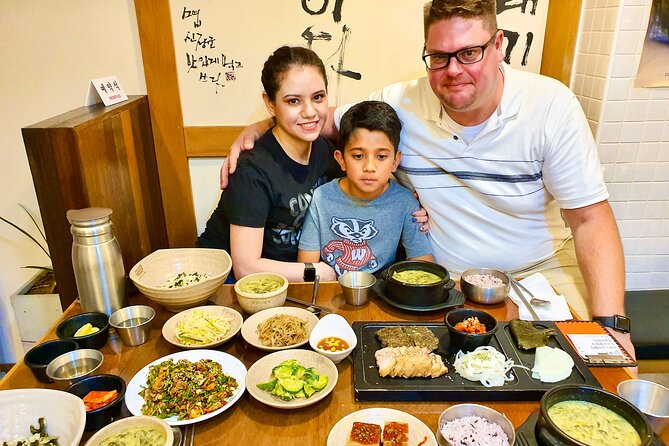
The tour includes a traditional meal at a Korean barbecue restaurant. This is important because it gives the walk a proper meal at the end of the sampling. Korean barbecue is social food, and a host can explain what to grill, how to use side dishes, and how the meal fits together.
The meal also provides a chance to sit down after three hours of walking. That balance is welcome: market snacks keep the route varied, while barbecue gives you something more substantial.
The supplied details do not name a specific restaurant, guarantee a particular cut of meat, or state how much extra food is included beyond the tour’s listed tastings and one drink. Ask your host what is covered if you have a large appetite or specific dietary needs. Additional food and drinks are not included.
Sujeong was praised for taking a group to a good barbecue restaurant while also covering city attractions. Oky was praised for combining local flavors, markets, and Korean barbecue. These examples suggest that the restaurant choice can be a major strength when the host understands what you want.
Why the guide matters more than the route
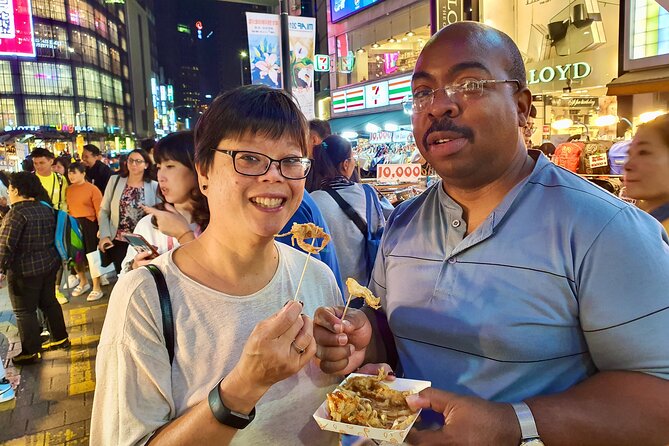
The most important feature here is not any single market. It is the person leading you.
Jay was praised for checking that the walking pace was comfortable, taking photographs, and explaining both food and city development. GJ was credited with finding good food and making the experience enjoyable enough to repeat. Andrew handled food allergies and children well during a long layover. Sujeong added city sights and photographs, while Oky and Yujin were praised for local restaurants and less obvious places to eat.
That is a strong list of useful guide skills. A good host can make an ordinary stall feel worthwhile by giving you context, ordering help, and a sense of what locals actually choose. A weak match can make the same route feel like random grazing.
One serious caution comes from the gap between the promise and the host’s actual food interest. One person found the guide unprepared and not especially focused on food. You should not assume every host is a career chef or dedicated food specialist. This is a personalized local-host experience, and the quality depends heavily on communication before the tour.
Send a short note after booking with three things you want. For example: traditional market food, one seafood stop, and a proper barbecue meal. Also list three things you cannot eat. This gives the host a useful starting point and reduces the chance of a mismatched afternoon.
Walking, timing, and meeting arrangements
Three hours is enough for a first taste of Seoul, but it is not enough to cover every listed food district. The flexible itinerary means your host will choose a practical route rather than take you to all five examples.
The experience is primarily on foot. Public transport may be used, but fares are not included. Wear comfortable shoes, leave room in your schedule, and avoid booking it immediately before a major timed attraction if you dislike rushing.
The meeting point is flexible. The stated starting location is 109 Jae-dong in Jongno District, though you can request a central hotel or accommodation meet-up. Confirm the exact place and route with your host before the day, especially if you have luggage or are joining after a flight.
Most people can take part, and service animals are allowed. Attractions tickets are not included because this is a food and neighborhood walk rather than a ticketed sightseeing tour.
Is $225.63 per person fair?
The price is high for a three-hour experience, especially when you compare it with the cost of eating at Korean markets on your own. The included food is six to eight tastings, one drink, and a meal at a Korean barbecue restaurant. You are also paying for privacy, local guidance, translation help, route planning, and the chance to shape the experience around your group.
That can be good value for a first day in Seoul, a family with different food preferences, or a couple that wants personal attention. It is less appealing if you are comfortable ordering alone, know Seoul’s food districts already, or mainly want maximum quantity for your money.
I would judge the price by the guide and the personalization, not by the number of bites. If you receive careful food explanations, a well-chosen route, and a barbecue meal that fits your interests, the cost is easier to justify. If you simply walk from stall to stall without much context, it feels expensive.
The experience is often booked well ahead, with an average booking lead time of 29 days. That suggests you should reserve early if your Seoul dates are fixed, then use the time before the tour to share your food preferences.
Who should book this Seoul food walk?
I would recommend it to:
- First-time visitors who want help with Korean menus and market foods
- Couples or families who value a private pace
- People who want food combined with city history
- Eaters interested in markets, street snacks, barbecue, and unfamiliar dishes
- Families who need to discuss allergies or children’s needs in advance
- Visitors using Seoul as part of a long layover, provided the timing works
I would be more cautious if you want a formal culinary course, a fixed list of restaurants, or a guide guaranteed to be a specialist in Korean cuisine. I would also think twice if you dislike walking, standing, or trying food from informal stalls.
Free cancellation is available when you cancel at least 24 hours before the local start time. Changes or cancellations inside that window are not accepted for a refund. Gratuities are optional, and transportation, attraction tickets, and extra food or drinks are separate.
Should you book it?
Book this experience if personal attention matters more to you than a fixed route. The private format, flexible meeting point, market tastings, city stories, and Korean barbecue can create a very useful first introduction to Seoul.
Before paying, send your host clear requests about food, spice, allergies, walking pace, and the kind of restaurant you want. That step is especially important here because the tour can be excellent with the right match and disappointing when you expect a formal food expert but receive a casual local companion.
If you want a relaxed, social way to try Seoul foods without planning every market and restaurant yourself, I think it is worth considering. If your main goal is the cheapest or most technically focused food tour, spend your money elsewhere.
FAQ
How long does the Seoul private food tour last?
The walking tour lasts approximately three hours.
How many food tastings are included?
The experience includes six to eight tastings of local foods from two or three eateries, along with one wine, beer, or soft drink.
Is Korean barbecue included?
Yes. The experience includes a traditional meal at a Korean barbecue restaurant.
Is this a private tour?
Yes. Only your own group participates in the private activity.
Can the meeting point be changed?
The meeting point is flexible and should be agreed with your local host. A hotel or accommodation meet-up can be requested when the location is central, or your host can meet you somewhere convenient near the start.
Are transportation and extra food included?
Transportation is not included. The experience is mainly on foot, though public transport may be used. Additional food and drinks are also not included, and attraction tickets are separate.
Can I cancel for a full refund?
You can cancel at least 24 hours before the local start time for a full refund. Cancellations or changes made less than 24 hours before the start are not accepted for a refund.
More Food
- Seoul Night Palace & Market Food Tour with Vehicle
★ 5.0 · 275 reviews - Seoul Fun Food Tour: 12 different food tastings
★ 5.0 · 266 reviews - The Award-Winning PRIVATE Food Tour of Seoul: The 10 Tastings
★ 4.5 · 128 reviews - Afternoon E-bike tour and “Happy Hour” food and drinks
★ 5.0 · 46 reviews
Just added around Seoul
- Seoraksan National Park & Nami Island★ 4.5 · 3 reviews
- Strawberry Picking, Winter Sled with Eobi Ice Valley from Seoul★ 4.5 · 3 reviews
- Seoul Full Day small group Tour★ 5.0 · 3 reviews
- Seoul Korean BBQ Dinner Experience with Secret Food Tours★ 5.0 · 3 reviews
- Rice Wine Tasting with Sommelier – Finest Makgeolli (& Soju)★ 5.0 · 3 reviews
- Majang Meat Market Experience: Private Tour with Han-woo Beef BBQ★ 5.0 · 3 reviews
- Seongsu-dong Walking Tour: K-Pop, Culture, Cheer, Friends & Relax★ 4.5 · 3 reviews
- Seoul: Alpaca World and Nami Island (with Garden / Railbike)★ 5.0 · 3 reviews
Food & Drink, compared.
Downtown Seoul Guided Food & Market Tour with 8+ Local Tastings
Read our review →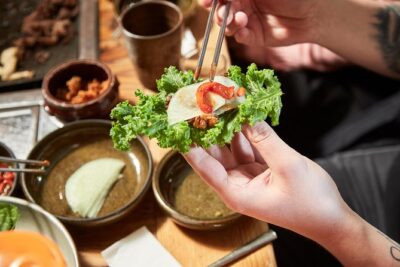
Small-Group Night Food Tour in Seoul with Korean BBQ
Read our review →
Seoul Night Palace & Market Food Tour with Vehicle
Read our review →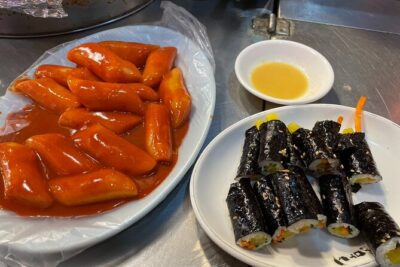
Seoul Fun Food Tour: 12 different food tastings
Read our review →
The Award-Winning PRIVATE Food Tour of Seoul: The 10 Tastings
Read our review →Browse the lists this tour appears in