
Reviewed · 3-DAY EXPERIENCES
3-Day Korea Western course by K-shuttle Tour from Seoul to Busan
Korea’s quieter side rewards curious visitors. This three-day coach tour links royal tombs, old fortresses, gardens, memorials, and coastal-region culture between Seoul and Busan, places that can be awkward to reach by public transport when you do not read Korean. I like the wide range of historic sites and the chance to visit far-flung stops such as Boseong and Jinju without arranging several separate transfers.
I also like that the $749 price includes two nights in 4-star hotels, a guide, coach transport, and breakfasts. The trade-off is a full schedule with long road stretches, no included lunches or dinners, and a first meeting at 8am beside Dongwha Duty Free that has caused confusion for at least one passenger. Arrive early and confirm the bus before settling in.
In This Review
- Key points at a glance
- Why this route works for a first visit
- Day one: Baekje tombs, river views, and Jeonju roofs
- Songsan-ri Tombs and King Muryeong’s royal tomb
- Gongsanseong Fortress above the Geumgang
- Jeonju Hanok Village
- Day two: memory, gardens, and Admiral Yi
- May 18th National Cemetery
- Suncheon Bay Garden
- Admiral Yi Sun-sin’s memorial site
- Day three: Jinjuseong before Busan
- Hotels, meals, and the practical value of $749
- Comfort, luggage, and the pace of the road
- Who will get the most from this trip?
- Should you book the Seoul to Busan western course?
- FAQ
- Where does the tour begin?
- Where does the tour end?
- How many nights of accommodation are included?
- Are meals included?
- Is transport included?
- What room arrangement is provided for two people?
- Can one person book the tour?
Key points at a glance
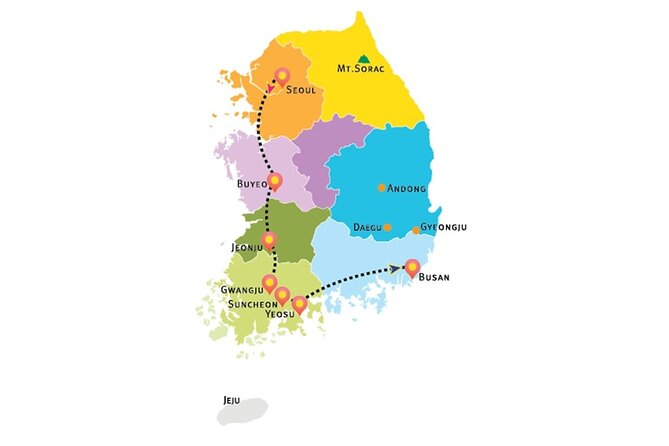
- A practical Seoul-to-Busan route: The tour ends at Busan Station at about 1pm on day three, leaving you free to continue your Korean trip.
- Baekje history on day one: Songsan-ri Tombs and Gongsanseong Fortress offer two of the tour’s strongest historical stops.
- Traditional Jeonju in a short visit: You get time for Hanok Village, local food, and its distinctive curved rooflines.
- A serious look at modern Korea: May 18th National Cemetery gives the route emotional weight beyond palaces and scenic views.
- Hotels and coach travel included: This removes much of the planning work, though meals outside breakfast remain your responsibility.
- Small details matter: Bring only one piece of luggage per person, and request a queen bed or triple room arrangement when booking.
Why this route works for a first visit
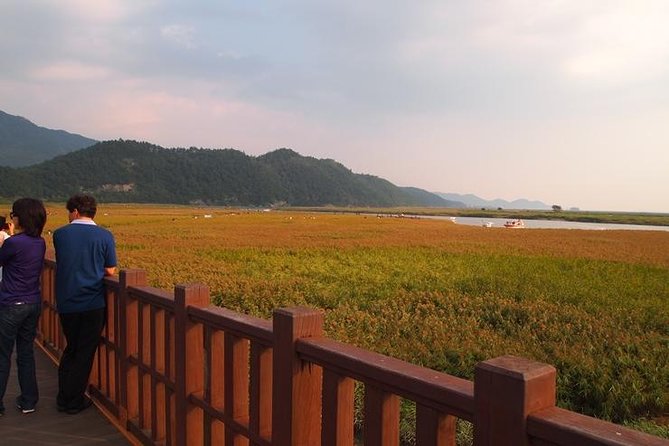
The western and southwestern parts of Korea are easy to miss if you stay in Seoul, Busan, and the usual palace districts. This route gives you a quick look at old Baekje sites, Joseon-era military history, traditional architecture, modern democracy, gardens, and Korean food culture.
That variety is the main reason to consider it. You are not spending three days at similar temples or museums. One morning may focus on royal tombs, while the next takes you through a memorial to citizens killed during the May 1980 democracy movement. The route has more substance than a simple sightseeing transfer.
The coach is also a major advantage. Public transport in Korea is excellent, but reaching several of these locations in a compact three-day trip would require careful connections, advance research, and some flexibility with taxis. Here, the transport, hotel changes, and general timing are handled for you.
The cost is not low. At $749 per person, you are paying for convenience as well as sightseeing. The value improves if you would otherwise need to book two hotels, intercity transport, guided visits, and several local rides separately. It is less attractive if you prefer to travel slowly, choose budget accommodation, or spend time in each town after dark.
More three-day trips:
- Essence Korea 3days Ptivate Tour(West/East)
★ 5.0 · 5 reviews - Jeju English Private Taxi Tour(1day, 2days, 3days & 1 to 12pax)
★ 5.0 · 118 reviews - 3 days Private Taxi Tour in Jeju Island
★ 5.0 · 6 reviews
Day one: Baekje tombs, river views, and Jeonju roofs
The meeting point is the parking area next to Dongwha Duty Free at exit 6 of Gwanghwamun Subway Station. The departure time is 8am. This is a busy part of central Seoul, so I would reach the area early, keep the booking details on your phone, and ask clearly for the K-shuttle bus.
That advice matters. One passenger had trouble finding the correct vehicle and spent about 20 minutes asking around before the booking was recognized. The tour appears to use a multilingual guide system, and this route may not yet be familiar to every staff member at the meeting point. A little extra time at the start can prevent a poor beginning.
Songsan-ri Tombs and King Muryeong’s royal tomb
The first major stop introduces you to Baekje, one of Korea’s ancient kingdoms. Songsan-ri contains tombs connected with the period when Gongju served as Baekje’s capital. Ten tombs are believed to be in the area, though seven have been found.
The most famous is the seventh tomb, the burial place of King Muryeong, who ruled from 462 to 523, and his queen. It was discovered by accident during work to prevent flooding around tombs five and six. The brick construction and objects found inside made it especially useful for scholars studying Baekje culture.
You have about two hours here. That is enough time for a proper look rather than a quick photograph, though the guide’s explanation will shape how much historical detail you receive. This is one of the places where a strong guide adds real value, since the tombs themselves can appear modest without context.
Gongsanseong Fortress above the Geumgang
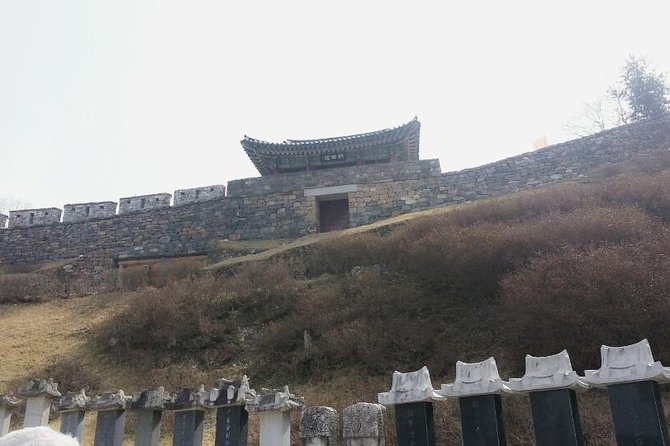
A one-hour visit follows at Gongsanseong Fortress in Gongju. The mountain fortress dates to the Baekje period and gives you views toward the Geumgang riverside.
The appeal here is split between history and walking. A trail leads farther into the fortress toward Imnyugak Pavilion, described as the largest pavilion of its kind within the site. You should wear shoes suitable for an uphill path and allow time for the view, not just the entrance area.
One hour is useful but limited. You can see an important section and enjoy the river, but you will not have time for a leisurely exploration of every path. If you like old walls, outdoor walks, and elevated views, this is a good stop. If you prefer museums and indoor interpretation, it may feel brief.
More Busan trips:
- 5-Day Korea Golden route by K-shuttle Tour from Seoul Including Busan, Yeosu
★ 4.5 · 37 reviews - Small Group 7D Korea package Tour with Seoul Gyeongju Busan Jeju
★ 4.5 · 13 reviews - 3-Days 2-Nights Gyeongju UNESCO Sites & Busan City [Private Tour from Seoul]
★ 4.5 · 11 reviews - 7 days Flexible Tour for Major Cities(Seoul,Busan,Gyeongju etc)
★ 5.0 · 5 reviews
Jeonju Hanok Village
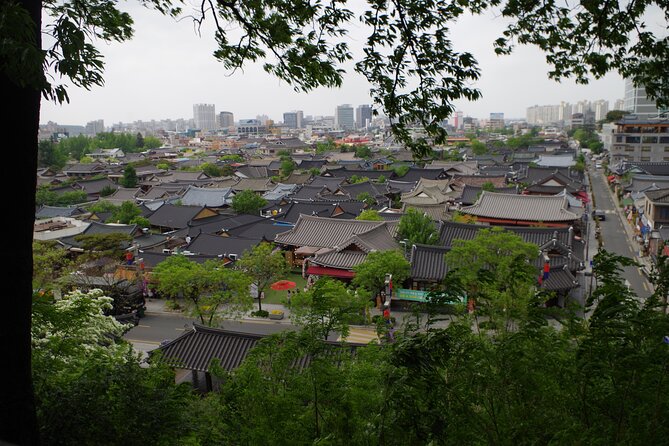
The first day ends at Jeonju Hanok Village, with about two hours to explore. Jeonju has developed into a city, but this district keeps a large collection of traditional Korean houses, known as hanok. Look up at the roof edges, which curve slightly toward the sky and give the streets their particular character.
The village also includes a Hanok Life Experience Hall, where traditional domestic life is presented for visitors. Food is part of the experience, and Jeonju is strongly associated with bibimbap. Lunch and dinner are not included, so this is a useful place to arrange your own meal.
Two hours goes quickly here. You can walk through the main area, take photographs, visit a traditional house display, and eat something local, but you will not cover every lane. The village is designed for visitors, so it is not an untouched old neighborhood. Still, it offers a pleasant introduction to Korean architecture and food without requiring a separate trip from Seoul.
Day two: memory, gardens, and Admiral Yi
Day two shifts from ancient history to modern civic memory, horticulture, and military history. This is arguably the most varied day, but it also includes three two-hour stops, so your time remains carefully managed.
May 18th National Cemetery
The May 18th National Cemetery lies in front of Mudeungsan Mountain and honors people killed during the democracy movement in May 1980. Victims were initially buried using handcarts and garbage trucks. In 1997, the cemetery was reorganized and the remains were reburied at this memorial.
This stop gives the tour moral and political depth. Korea’s modern democracy did not arrive without conflict, and the cemetery asks you to consider that cost. May 18 is now a national day of remembrance for the public demand for democracy.
You have two hours, including an admission ticket. Treat the site with respect. It is not simply another photo stop, and the tone will be quieter than at Jeonju or Suncheon. If modern Korean history matters to you, this may be one of the most meaningful parts of the trip.
Suncheon Bay Garden
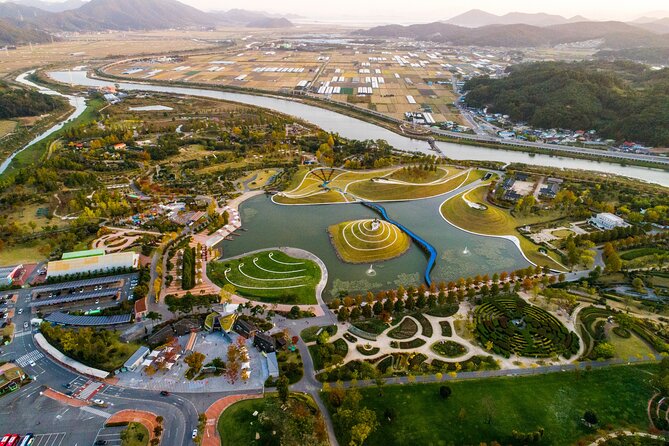
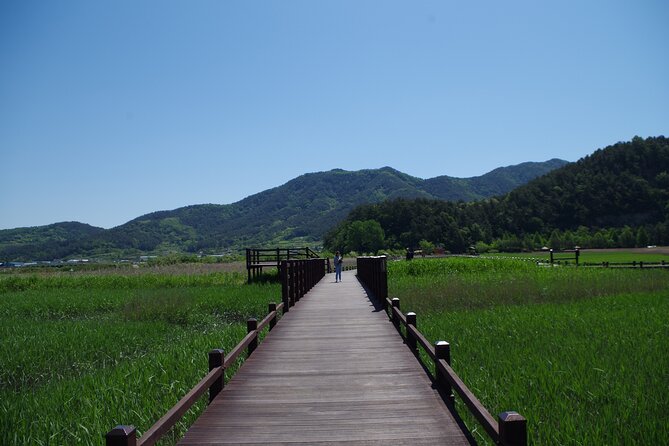
Suncheon Bay Garden covers about 1.12 square kilometers and was created as a conservation area. It contains more than 505 species of trees and 113 species of flowers.
The garden changes with the season. Tulips and royal azaleas are major attractions, while a nearby 30,000-square-meter canola field reaches full bloom in May. The route also includes trees that provide shade, a welcome detail if the weather is warm.
Two hours lets you sample the grounds, but the size means you should not expect to see everything. Wear comfortable shoes and decide early whether you want flowers, planted gardens, or a simple walk under the trees. The experience can vary sharply with the season, so do not judge it only by spring photographs.
Admiral Yi Sun-sin’s memorial site
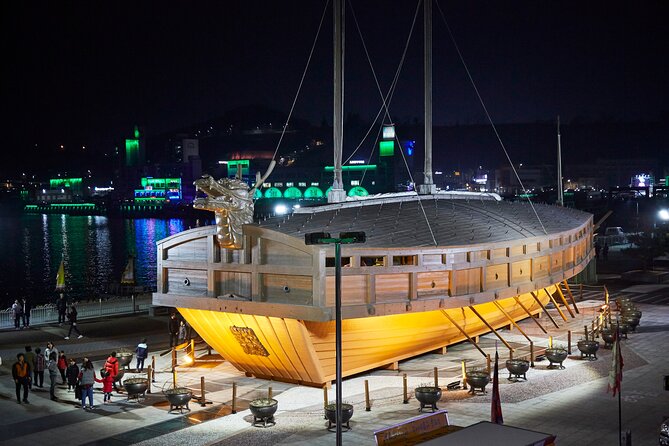
The third stop honors Admiral Yi Sun-sin, the naval commander associated with Korea’s defense during the Japanese invasions from 1592 to 1598. He used this location as a headquarters, and the site now displays artifacts connected with his campaigns and legacy.
The hall itself was designated National Treasure No. 304 in 2011. The visit lasts about two hours, although the provided information does not specify every indoor display or the exact amount of free time.
This is a good place to connect famous Korean history with a physical site. If your guide provides clear context, the stop should make more sense than seeing Admiral Yi’s name on statues and plaques around the country. The main limitation is repetition: after the fortress visits on day one, you may be ready for a different kind of stop.
Day three: Jinjuseong before Busan
The final morning brings you to Jinjuseong Fortress, historically linked to the Japanese invasion of 1592. The site has carried several names over time: Geoyeolseong during the Three Kingdom period, Chokseokseong in the Goryeo Dynasty, and Jinjuseong in the Joseon Dynasty.
You have about one hour. That is enough for a compact visit and a final dose of military history, but not a long independent walk around every section. The stop works best as a final historical chapter before the tour changes from sightseeing to transport.
The coach reaches Busan Station at around 1pm. This is a useful ending point because Busan Station connects with the city’s transport network and long-distance trains. Hotel drop-off is not included, so you will arrange your own onward movement from the station.
Hotels, meals, and the practical value of $749
The package includes two nights in 4-star accommodation and breakfast according to the schedule. The specific hotel names are not provided, so you should not book this expecting a particular neighborhood, room view, or brand.
Double rooms default to two separate twin beds. If you want one queen bed, note it in the special requirements field when booking. Three people can share one double room with a pullout bed at no extra charge, but you must request that setup. If one person wants a separate room, a single supplement applies.
Breakfast is included, but lunch and dinner are not. That gives you freedom to choose local food, yet it also means you should budget for several meals and be ready to eat on the schedule available at each stop. Jeonju is the obvious place to look for bibimbap, though the tour does not promise a specific restaurant.
The transfer and professional guide are where much of the price makes sense. A guide can explain Baekje tombs, the May 18 memorial, and Admiral Yi’s role without forcing you to decode every sign. Past guide feedback has singled out Justin and Mr Kim, also identified as MS, for clear information, cultural advice, help with hotel check-in, and suggestions for evening food and activities.
That kind of help is valuable on a moving three-day tour. It can make arrival at each hotel easier and reduce the small stresses that come with changing cities. The quality of guiding can vary, however, because the tour may operate with a multilingual guide.
Comfort, luggage, and the pace of the road
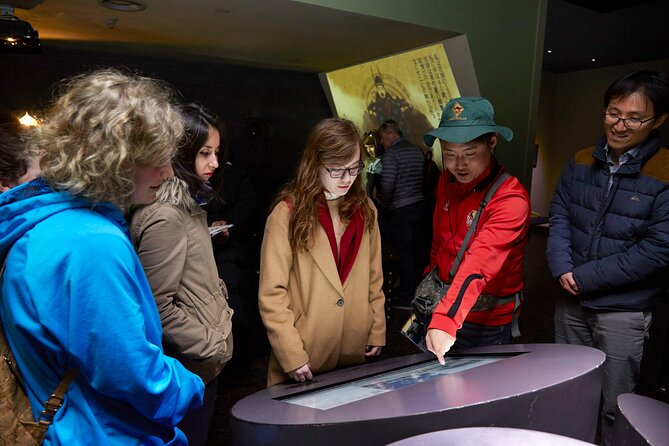
The vehicle is described as a comfortable coach, with a maximum group size of 40 people. A full bus means a social and efficient trip, but it also makes departures and head counts slower. Keep essentials in a small day bag rather than storing medicine, passports, or a camera in the luggage compartment.
Only one piece of luggage per person should be brought because compartment space depends on group size. This is important for anyone packing for several climates or planning to continue beyond Busan. A compact suitcase is a better fit than multiple large bags.
Most people can participate, and the tour is near public transportation at its Seoul starting point and Busan ending point. Children must be with an adult. Children aged three to five receive the child price only when sharing an adult’s bed. A child using their own bed pays the full adult price.
The pace is active but not extreme. You get one to two hours at most places, with the longest visits at the tombs, Jeonju, the cemetery, the garden, and Admiral Yi’s memorial. The bigger challenge is not walking all day. It is changing focus often and spending substantial time on the road.
Who will get the most from this trip?
I would choose this tour if you want to see beyond Seoul and Busan but do not want to plan a complicated route through Gongju, Jeonju, Suncheon, and Jinju. It is especially useful for first-time visitors who want a broad introduction to Korean history and culture in only three days.
It also suits you if you value a guide’s help with logistics. The strongest feedback has focused on informative guides, safe driving, comfortable transport, good hotels, and assistance with check-in and onward travel.
I would hesitate if you want long meals, late evenings, or time to wander without a group. Jeonju Hanok Village and Suncheon Bay Garden both deserve more than a quick sample if you enjoy slow travel. The $749 cost may also feel high if you are comfortable using trains and booking simple hotels yourself.
The tour requires at least two participants to operate, even though one person may book. If there are not enough passengers, the operator may cancel after confirmation and offer an alternative or a full refund. Confirmation is normally sent within 48 hours, subject to availability.
For cancellation, a full refund requires canceling at least six full days before the start time. Canceling two to six days ahead allows a 50 percent refund, while cancellations less than two full days before departure are not refunded.
Should you book the Seoul to Busan western course?
Book it if your priority is coverage with minimal planning. You will see ancient tombs, a fortress, a traditional village, a democracy memorial, a large garden, Admiral Yi’s memorial, and Jinjuseong before reaching Busan. Few independent visitors would link all those sites in three days without spending serious time on research and transport.
Skip it if your ideal Korea trip means lingering in one town, choosing your own hotels, or eating without a timetable. The best decision comes down to pace. For a compact first look at western and southwestern Korea, the coach, guide, breakfasts, and hotels make the price defensible. Just arrive early at Gwanghwamun, pack light, request your preferred bed arrangement, and keep enough room in your budget for meals.
FAQ
Where does the tour begin?
It begins at 8am at the parking lot next to Dongwha Duty Free, beside exit 6 of Gwanghwamun Subway Station in Seoul.
Where does the tour end?
The tour ends at Busan Train Station at about 1pm on the third day.
How many nights of accommodation are included?
Two nights of 4-star accommodation are included.
Are meals included?
Breakfast is included according to the schedule. Lunch and dinner are not included.
Is transport included?
Yes. Coach transfer between the destinations is included, along with a professional guide.
What room arrangement is provided for two people?
The default double room has two separate twin beds. You can request one queen bed in the special requirements field when booking.
Can one person book the tour?
One person can make a booking, but at least two people are required for the tour to operate. If there are not enough passengers, an alternative or full refund may be offered.
Just added around Seoul
- Seoraksan National Park & Nami Island★ 4.5 · 3 reviews
- Strawberry Picking, Winter Sled with Eobi Ice Valley from Seoul★ 4.5 · 3 reviews
- Seoul Full Day small group Tour★ 5.0 · 3 reviews
- Seoul Korean BBQ Dinner Experience with Secret Food Tours★ 5.0 · 3 reviews
- Rice Wine Tasting with Sommelier – Finest Makgeolli (& Soju)★ 5.0 · 3 reviews
- Majang Meat Market Experience: Private Tour with Han-woo Beef BBQ★ 5.0 · 3 reviews
- Seongsu-dong Walking Tour: K-Pop, Culture, Cheer, Friends & Relax★ 4.5 · 3 reviews
- Seoul: Alpaca World and Nami Island (with Garden / Railbike)★ 5.0 · 3 reviews
3-Day Experiences, compared.
Jeju English Private Taxi Tour(1day, 2days, 3days & 1 to 12pax)
Read our review →
3days Private Free Schedule Tour a lot of Experience Driver
Read our review →
All inclusive Jeju island English private taxi tour(1 to 3days)
Read our review →
Browse the lists this tour appears in