
Reviewed · DMZ & BORDER TOURS
DMZ; NK Defector, 3rd Tunnel, Suspension Bridge,Hotel pickup
The border is closer than you think. This Seoul day trip takes you into the Korean Demilitarized Zone, where you can walk through the Third Infiltration Tunnel, look toward North Korea from Dora Observatory, and visit landmarks tied to the Korean War and divided families. I especially like the clear mix of major sights and guided history, plus the chance to add a North Korean defector session at the new North Korea Experience Hall.
I also like how the tour handles the complicated access rules. Round-trip transport, a licensed guide, and DMZ admission are included, while guides such as Yoon, Lily, Grace, Katie, AJ, and Sadie have earned praise for making a serious subject understandable and lively. The main drawback is that the day can run long, and military restrictions or weather may force changes without a refund.
In This Review
- Key points to know before booking
- Why a DMZ visit matters
- Leaving Seoul for Imjingak Park
- Imjingak Park and the symbols of separation
- Crossing the checkpoint toward the restricted zone
- Walking into the Third Infiltration Tunnel
- Looking across North Korea from Dora Observatory
- The North Korea Experience Hall and defector meeting
- Choosing between the two suspension bridges
- Monday’s Aegibong alternative
- What the $45 price delivers
- Who will enjoy this tour most
- Practical advice for a smoother day
- Should you book this Seoul DMZ tour?
- FAQ
- How long does the DMZ tour take?
- What documents do I need to bring?
- Is hotel pickup included?
- Is the North Korean defector meeting included?
- What happens if I book on a Monday?
- What languages are available?
Key points to know before booking
- The Third Tunnel is the physical highlight: You walk into a tunnel North Korea dug beneath the border, ending about 70 meters from North Korea.
- Dora Observatory gives the big-picture view: Binoculars let you look across the DMZ toward North Korean rural areas, though visibility depends on weather and military rules.
- The defector meeting is the strongest optional add-on: The North Korea Experience Hall opened at Imjingak Park on April 22, 2025, with a real North Korean defector and time for questions.
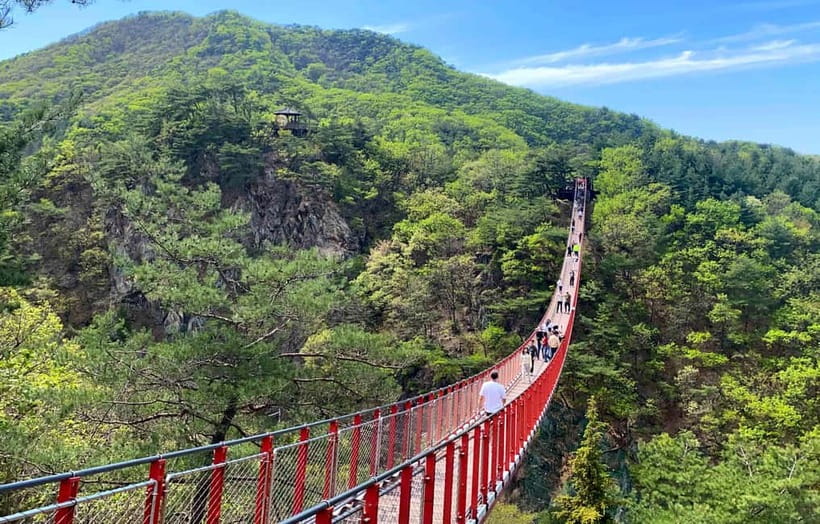
- You choose your outing: Options include the standard DMZ, Mt. Gamaksan’s red bridge, Majang Lake Suspension Bridge, or a private hotel-pickup version.
- Mondays use a different route: Since the original DMZ route is officially closed Mondays, the tour visits Aegibong Peace Park, Aegibong Suspension Bridge, and Jogang Observatory instead.
- Bring your passport: A passport, military ID, or Korean ARC is required for every person entering the restricted area.
Why a DMZ visit matters
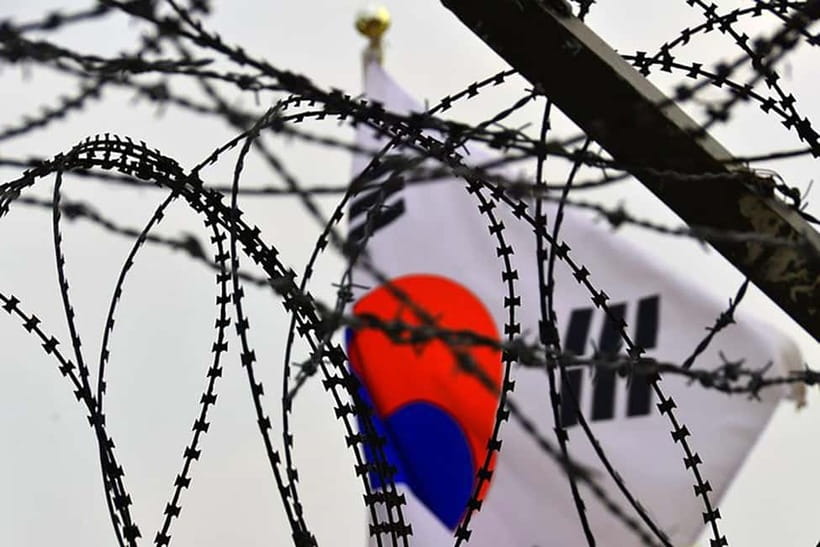
The DMZ is not a theme park border attraction. It is a controlled military zone shaped by the Korean War and the continuing division between North and South Korea. That is why the day can feel unusual: you are visiting a place with tour buses, lookout points, and souvenir shops, but also checkpoints, rules, and a live political tension.
I like having a guide here because the sites mean little without context. A bridge or train engine can look ordinary until you learn how it connects to separated families, military movement, or hopes for reunification. The guides on this tour explain the background during the bus ride and at each stop, which helps the day feel like a history lesson with places attached to it.
The tone is usually energetic rather than solemn. Guides praised for their humor and warmth include Katie, AJ, Yoon, Lily, Grace, Sadie, Chloe, and Felicity. That matters on a long day, especially when the subject is difficult and the rules at the border can make the schedule feel formal.
More DMZ and border tours:
- Best DMZ Tour Korea from Seoul (Red Suspension Bridge Optional)
★ 5.0 · 41,422 reviews - DMZ Tour: 3rd Tunnel, Option(Suspension Bridge, Boat) from Seoul
★ 5.0 · 21,373 reviews - DMZ tour south Korea from Seoul (NK experience hall, defector)
★ 5.0 · 20,599 reviews
Leaving Seoul for Imjingak Park
The standard tour begins at a designated meeting point in Seoul, with pickup varying by the option you select. Shared options return to Seoul City Hall, while the private version can collect you at your hotel and return you there. The bus ride to the DMZ area takes about an hour each way, so transport is a major part of the experience.
The included coach saves you from arranging separate trains, buses, and restricted-area access. It also gives the guide time to explain the Korean War, the division of the peninsula, and the practical rules for the day. A few people have praised the punctual transport and careful reminders to remain seated and wear seat belts.
The exact schedule can change. The military controls access, not the tour company, and unexpected restrictions can lead to an alternative DMZ-related route without a refund. Keep your plans flexible, and do not place an important evening reservation too close to the scheduled return.
Imjingak Park and the symbols of separation
Imjingak Park is the emotional opening to the main route. It includes Mangbaedan, the Freedom Bridge, and a steam locomotive connected with the Korean War period. You get roughly an hour in the park, enough time for the guide’s explanation and some independent looking around.
Mangbaedan is associated with families separated by the division of Korea. The site gives a human face to a conflict often described through military maps and dates. If you have Korean family history, this stop may carry extra weight, but you do not need personal ties to understand its importance.
The Freedom Bridge is one of the park’s most recognizable sights. It is linked with the return of prisoners after the Korean War and today serves as a powerful symbol of movement that remains limited. You have about 30 minutes here, so expect a focused visit rather than a long walk.
The steam locomotive adds another layer. Its damaged body points to the violence of the war, while the park around it turns that history into a place for remembrance. Guides usually help connect these objects to the larger story, so stay near the group when the explanation begins.
Crossing the checkpoint toward the restricted zone
After Imjingak, the bus passes toward Unification Bridge and a checkpoint. This is where the day feels less like a normal sightseeing trip. You must show your passport, military ID, or Korean ARC, and every person in your party needs the correct document.
Bring the original document, not just a photograph on your phone. The supplied information is clear that all people must carry identification. The checkpoint also explains why this trip cannot be treated like an ordinary city excursion: access can be limited by military decisions, and the route can change at short notice.
You may pass through Unification Village during the route. It is generally a brief pass-by of about five minutes, rather than a full village visit. Your guide can explain its place near the border, but do not expect a long stop or extensive independent exploration.
More suspension bridge and cable car trips:
- Seoul: DMZ Tour with Optional Suspension Bridge
★ 4.8 · 5,277 reviews - Signature DMZ Tour: Exclusive Defector Talk & Suspension Bridge
★ 5.0 · 4,459 reviews - Ultimate Korea DMZ Tour from Seoul (Gondola & Suspension Bridge)
★ 5.0 · 2,396 reviews - DMZ Tour from Seoul – Optional Suspension Bridge Experience
★ 5.0 · 1,918 reviews
Walking into the Third Infiltration Tunnel
The Third Infiltration Tunnel is the most physical part of the standard DMZ route. North Korea dug the tunnel under the border into South Korea, and the tour takes you inside for about an hour, including the guide’s explanation and time to experience the passage.
At the end, you are only about 70 meters from North Korea, a detail that gives the tunnel its punch. You are not crossing the border, but the underground route makes the distance feel much smaller than it looks on a map.
The tunnel is more memorable than a simple lookout because you are moving through the evidence itself. It also demands more effort than the other stops. The supplied details do not specify accessibility conditions, so anyone with mobility concerns should confirm suitability before booking. Expect this portion to feel more enclosed and active than the open-air sites.
Follow the guide’s timing closely. The tunnel visit is part of a tightly managed route, and the day has several scheduled stops after it. Comfortable shoes are a sensible choice, even though footwear requirements are not specifically stated.
Looking across North Korea from Dora Observatory
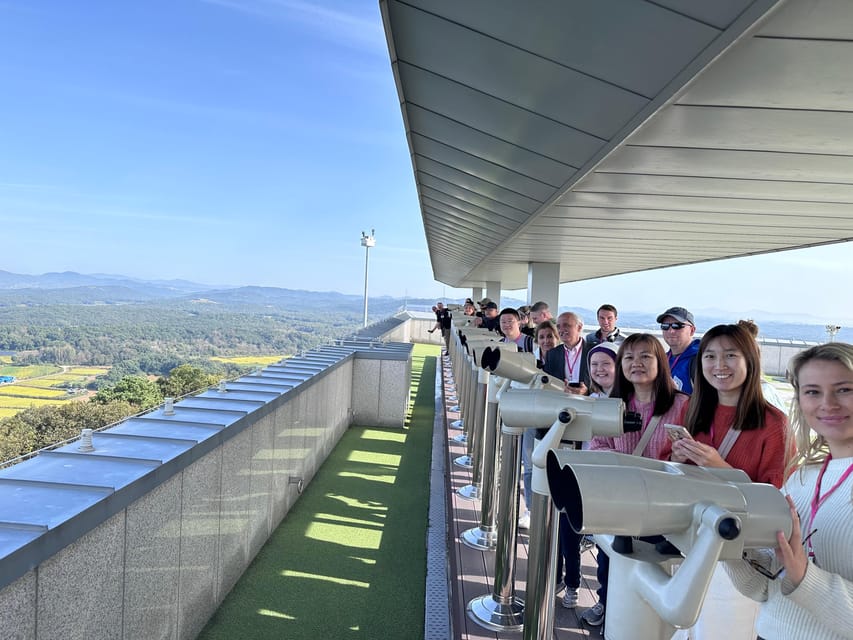
Dora Observatory provides the classic DMZ view. From here, you look across the border toward North Korean territory, with binoculars available to help you see the rural area beyond the DMZ. On a clear day, this can be the moment when the political idea of division becomes a real view in front of you.
The experience depends heavily on weather and visibility. Mist, clouds, or military restrictions may reduce what you can see, so do not judge the stop only by the quality of the panorama. The value is also in standing at a controlled observation point and understanding how close the two countries are.
Several people have found the observatory surreal, particularly on a bright day when North Korean scenery is visible. You get about an hour here, which should allow time for the guide’s talk, the binoculars, and photographs where permitted.
This is also a good place to ask questions. Guides such as Lily, Yoon, and Chloe have been praised for explaining the current situation in clear language rather than turning the stop into a pile of dates and military terms.
The North Korea Experience Hall and defector meeting
If the add-on is available for your booking, I strongly recommend considering it. The North Korea Experience Hall opened at Imjingak Park on April 22, 2025, and offers a meeting with a real North Korean defector, along with exhibits about life in North Korea.
The format gives you something the monuments and observatories cannot: a personal account. You can hear stories, learn more about daily life, and ask questions during the session. It does not replace the wider political history, but it helps you understand the human side of the division.
The defector session has been one of the most praised parts of the experience. People describe it as insightful, clarifying, and worth adding at booking. I would choose it over a minor shopping stop or extra free time, especially if this is your only visit to the border.
Keep your expectations sensible. One meeting cannot explain every part of North Korean society, and personal testimony is exactly that, personal testimony. Still, it adds a rare first-hand voice to a day otherwise built around official sites and military history.
Choosing between the two suspension bridges
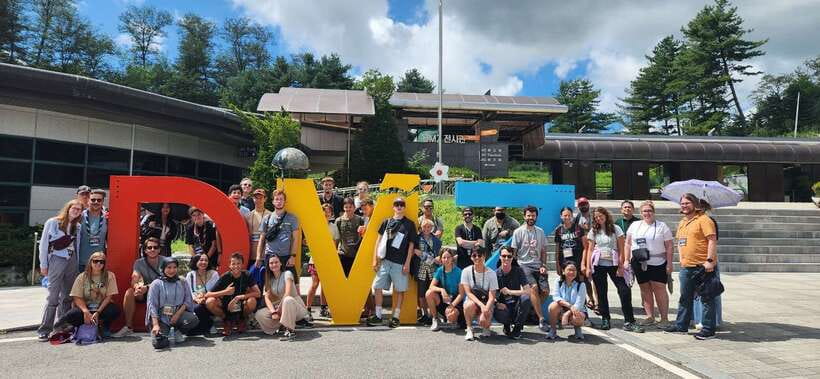
You can add a bridge visit to the DMZ route, but you select one option rather than treating both bridges as required stops.
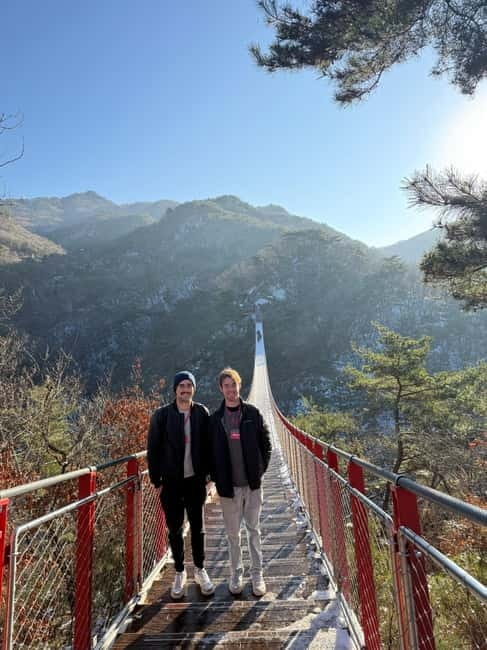
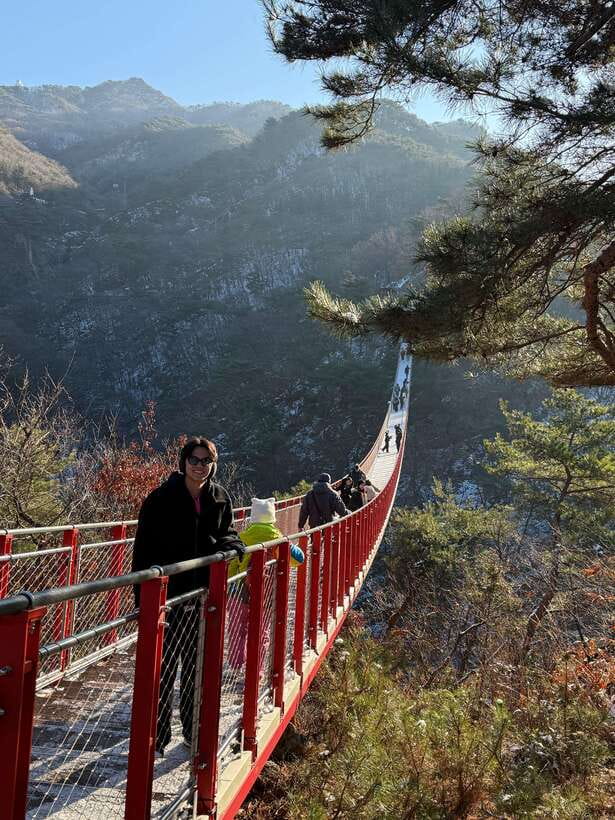
Mt. Gamaksan Suspension Bridge is the red bridge option. It adds about an hour with guided time at the bridge and gives the day a scenic break from war memorials, checkpoints, and observation posts. If you enjoy a striking photo stop, this is likely the more recognizable choice.
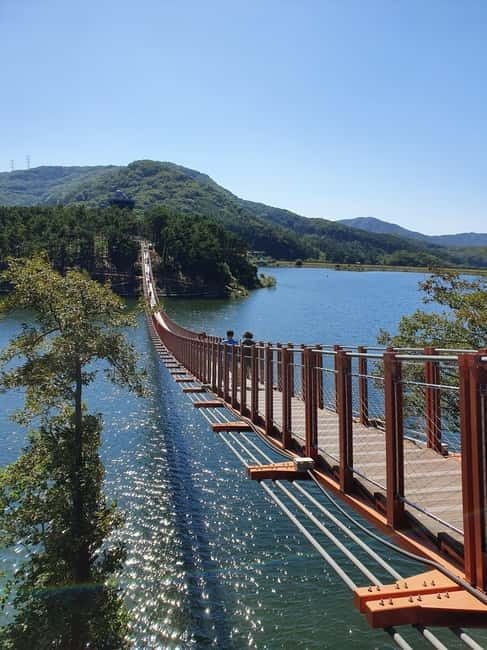
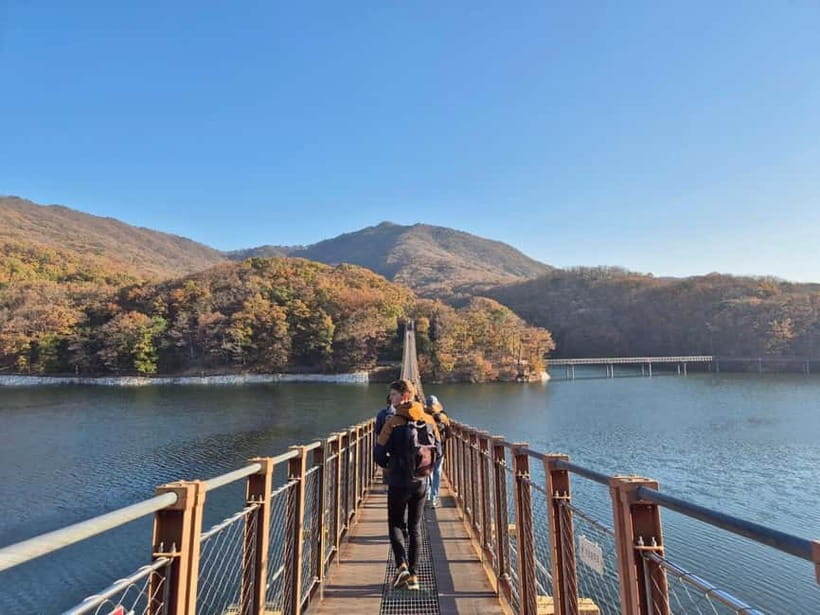
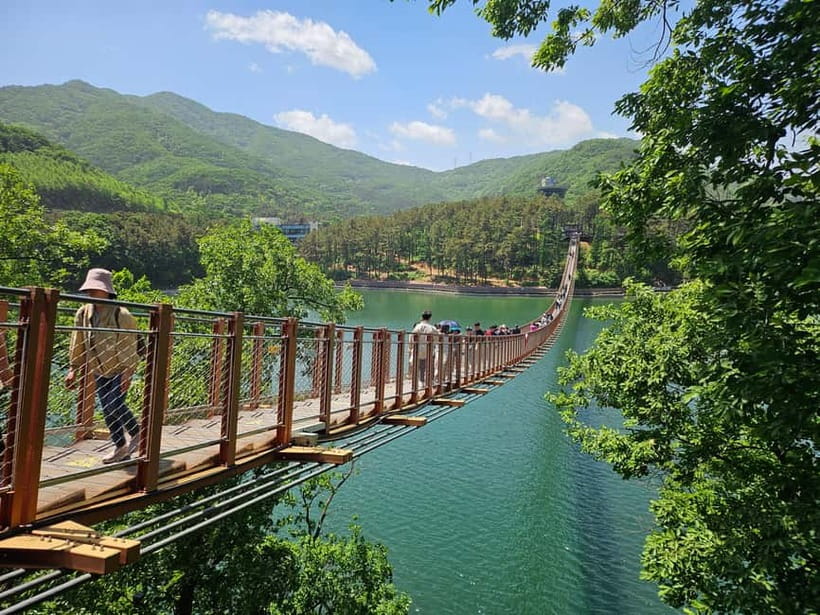
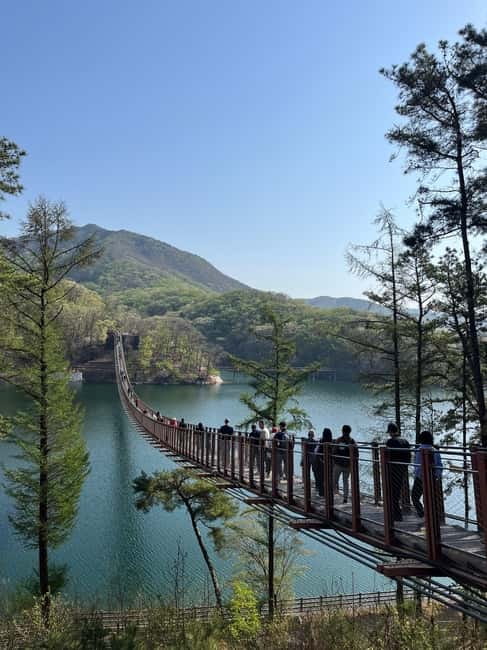
Majang Lake Suspension Bridge offers a different setting over the reservoir. It also takes about an hour, and the water gives the day a calmer visual change. Choose this version if you prefer a lake setting to the bold red structure of Gamaksan.
Neither bridge is essential to understanding the DMZ. The Third Tunnel, Imjingak, and Dora Observatory are the core experience. The bridge option makes sense if you want a fuller day with outdoor scenery, but it also adds another scheduled stop to an already long outing.
Monday’s Aegibong alternative
The regular DMZ route is officially closed every Monday, so Monday departures use the Starbucks DMZ Tour route from 7:30 a.m. to 1 p.m. It begins at Myeongdong Station Exit 9 and visits Aegibong Peace Park, Aegibong Suspension Bridge, and Jogang Observatory, also called the Starbucks Observatory, before dropping you at City Hall.
This is not the same itinerary as the Third Tunnel and Dora Observatory route. If entering the Third Tunnel is your main goal, avoid Monday and select a day when the original DMZ course operates.
The Monday plan still focuses on the border area and views toward North Korea, but it should be treated as a separate experience. Read the selected option carefully before paying, since the meeting point, timing, and sights change.
What the $45 price delivers
At about $45 per person, the standard tour offers solid value for a seven-hour day, though the listed duration also appears as 510 minutes, or eight and a half hours. That difference is worth noting. Traffic, checkpoints, group movement, and military procedures can stretch the day.
The price includes a licensed professional guide, round-trip transport from Seoul, and DMZ admission. Those inclusions matter because arranging access independently is not straightforward, and the bus removes much of the transport planning.
Food and drinks are not included, so plan around the day’s schedule. The tour does not include travel insurance either. Bridge visits and the North Korean defector session are optional additions, with the final cost depending on the option you choose.
A 4.9 rating from 2,055 ratings points to consistently strong service, especially from the guides. The most repeated praise focuses on clear explanations, high energy, careful timing, help with photographs, and attention to people who might otherwise fall behind.
Who will enjoy this tour most
I would recommend this experience to first-time visitors to Seoul who want historical context beyond palaces and shopping streets. It also suits families, solo visitors, and small groups, since private and small-group versions are available.
The tour is a good fit if you like guided history, controlled access, and a full day outside central Seoul. It is less suitable if you want a relaxed schedule, dislike bus travel, or need a guaranteed itinerary. The military can change the route, and the subject matter is serious even when the guide keeps the mood light.
English, Chinese, and Japanese tours are offered. Japanese and Chinese departures require at least three people. If that minimum is not met, the tour runs in English instead, so check the language conditions before booking.
Practical advice for a smoother day
Bring your passport, military ID, or Korean ARC. Without one of these documents, you may not be able to enter the restricted area.
Wear clothes and shoes that work for the Third Tunnel. The tour information does not give specific clothing rules, but the tunnel is the portion most likely to feel physically demanding.
Keep your camera ready at the permitted stops, but listen carefully for instructions. This is a military-controlled area, not a place where you can photograph everything freely.
If you want the defector meeting, select it when booking rather than hoping to add it later. It is a special part of the newer North Korea Experience Hall and can change the meaning of the entire day.
The tour allows cancellation up to 24 hours before departure for a full refund, and you can reserve now and pay later. Those terms help if your Seoul schedule is still moving, but they do not remove the risk of military-related changes after the cancellation window.
Should you book this Seoul DMZ tour?
Yes, if you want an efficient and well-guided introduction to the border. The Third Tunnel gives you a memorable physical connection to the conflict, Dora Observatory lets you look toward North Korea, and Imjingak gives the division a human and historical frame.
I would pay extra for the North Korean defector meeting if the option fits your budget. Choose a suspension bridge only if you want more outdoor scenery, and avoid Monday if the original DMZ sights are your priority.
For the price, the transport and access are useful, and the repeated praise for guides such as Yoon, Lily, Grace, Katie, AJ, and Sadie suggests that the human side of the tour is a major part of its value. Just bring the right identification, allow a full day, and accept that the border makes the final decision.
FAQ
How long does the DMZ tour take?
The activity is described as seven hours, but the duration is also listed as 510 minutes, which equals eight and a half hours. Check the departure option and allow flexibility for traffic and military procedures.
What documents do I need to bring?
Every person must bring a passport. A military ID or Korean ARC is also accepted.
Is hotel pickup included?
Hotel pickup is optional and applies to the private DMZ-only version. Shared tours use designated meeting points, while the private option can pick up and drop off at a hotel in Seoul.
Is the North Korean defector meeting included?
It is an optional add-on that you select during booking. The session takes place at the North Korea Experience Hall at Imjingak Park.
What happens if I book on a Monday?
The regular DMZ route is closed on Mondays. The Monday alternative runs from 7:30 a.m. to 1 p.m. and visits Aegibong Peace Park, Aegibong Suspension Bridge, and Jogang Observatory.
What languages are available?
Tours are offered in English, Chinese, and Japanese. Chinese and Japanese departures require at least three people. If the minimum is not reached, the tour runs in English.
Just added around Seoul
- Seoraksan National Park & Nami Island★ 4.5 · 3 reviews
- Strawberry Picking, Winter Sled with Eobi Ice Valley from Seoul★ 4.5 · 3 reviews
- Seoul Full Day small group Tour★ 5.0 · 3 reviews
- Majang Meat Market Experience: Private Tour with Han-woo Beef BBQ★ 5.0 · 3 reviews
- Seoul Korean BBQ Dinner Experience with Secret Food Tours★ 5.0 · 3 reviews
- Rice Wine Tasting with Sommelier – Finest Makgeolli (& Soju)★ 5.0 · 3 reviews
- Max Out Seoul: Must Visit City Highlights Panoramic Day Tour★ 5.0 · 3 reviews
- Seongsu-dong Walking Tour: K-Pop, Culture, Cheer, Friends & Relax★ 4.5 · 3 reviews
DMZ & Border Tours, compared.

Best DMZ Tour Korea from Seoul (Red Suspension Bridge Optional)
Read our review →
DMZ Tour: 3rd Tunnel, Option(Suspension Bridge, Boat) from Seoul
Read our review →
DMZ tour south Korea from Seoul (NK experience hall, defector)
Read our review →
DMZ Insider Tour: 3rd Tunnel, NK Defector Meet & Red Bridge
Read our review →

Signature DMZ Tour: Exclusive Defector Talk & Suspension Bridge
Read our review →
Thrilling Korean DMZ 3rd Tunnel Tour from Seoul + Red Bridge Rush
Read our review →DMZ Past and Present: Korean Demilitarized Zone Tour from Seoul
Read our review →Browse the lists this tour appears in