
Reviewed · MARKETS
Cook 3 Authentic Korean Dishes with Local Market Tour
Korean food makes more sense at the cutting board. This Seoul experience pairs a walk through Mangwon Market with hands-on cooking in Jomin’s clean home studio, where you prepare three familiar Korean dishes rather than watch a chef work from a distance. I like the market visit because it gives you a quick look at everyday food culture, and I like the personal cooking stations, which let beginners work at their own pace. One thing to check before booking is the group-size information: the experience is promoted as a maximum of four people, while the additional booking details list up to 11.
At $79 per person for about three and a half hours, the class offers more than a meal. You get a guided market walk, fresh ingredients, instruction, three dishes to eat, and a professionally designed cookbook to use at home. The only real limitation is that the menu can vary, so you should not book expecting one fixed combination of dishes.
In This Review
- Key points to know before booking
- Meeting Jomin at Mangwon Station
- What Mangwon Market Adds to the Class
- A Clean Studio With Your Own Cooking Station
- The Three-Dish Menu Can Change
- Soft tofu stew
- Bibimbap
- Bulgogi
- Japchae and other possibilities
- Eating What You Prepare
- Food Culture, Dietary Needs, and Skill Level
- Is $79 a Fair Price?
- Timing, Cancellation, and Practical Details
- Who Should Book This Korean Cooking Class?
- FAQ
- Where does the cooking class meet?
- How long does the experience last?
- Does the class include a market tour?
- Is this a demonstration or a hands-on class?
- What dishes will I cook?
- Are vegetarian and vegan options available?
- Can I choose lunch or dinner?
- What happens if the class does not reach the minimum number of people?
Key points to know before booking
- Mangwon Market comes first: Meet Jomin at Mangwon Station, Line 6, Exit 2, then walk through the market while learning about ingredients used in the class.
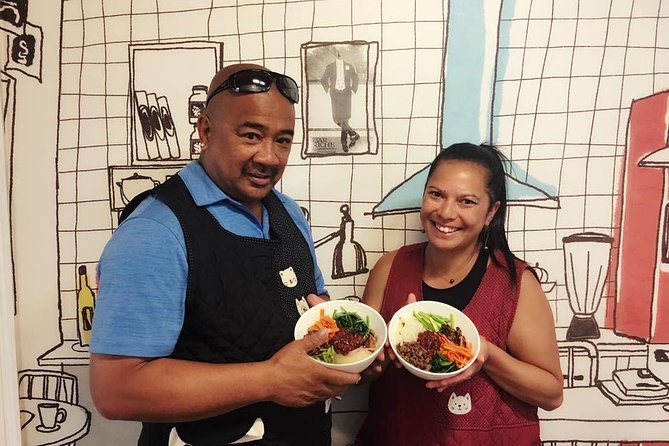
- You cook three dishes yourself: This is a hands-on class with an individual cooking table and cooker, not a demonstration.
- The menu can change: Possible dishes include soft tofu stew, bibimbap, bulgogi, kimchi stew, japchae, and stir-fried pork.
- The setting is small and personal: The experience is advertised for a maximum of four people, though the booking information gives a higher overall maximum.
- Vegetarian and vegan options are available: Tell the provider about your needs when booking so the menu can be adjusted.
- You leave with useful extras: A recipe book, photos, and leftovers are all part of the experience described by past participants.
Seoul has plenty of food tours, but this one works because it connects shopping, cooking, and eating in a single short session. You start at a real neighborhood market, learn what several ingredients are used for, then return to a cooking studio and prepare the meal with Jomin’s help.
The class runs for about three hours and 30 minutes. You can choose a lunch or dinner session, making it easy to fit around sightseeing. Since the activity ends back at the meeting point, you also finish where you began, at Mangwon Station.
The experience is best understood as a compact introduction to Korean home cooking. You are not simply sampling finished food. You are learning how a few everyday ingredients become soup, rice dishes, noodles, or grilled meat.
Meeting Jomin at Mangwon Station
Your starting point is entrance 2 at Mangwon Metro Station on Line 6. This is a useful meeting place because the route begins directly from public transportation, and you do not need to find a private studio on your own.
From the station, Jomin leads you toward Mangwon Market. The walk is part of the lesson, not just a transfer. She points out ingredients used in the class and explains Korean food customs along the way.
Pay attention during this first section. The market visit helps you recognize foods that can otherwise look mysterious in a Korean shop. You might see seafood, tofu, vegetables, anchovies, prawns, kimchi, rice wine, and other products connected with the cooking session.
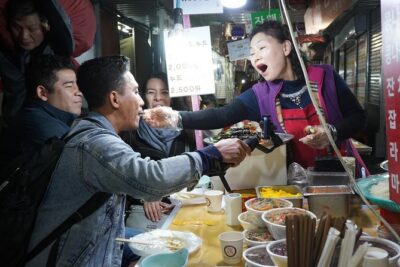
The market also gives the class a local setting. You are seeing where ingredients are bought, rather than receiving everything from a sealed classroom package. Jomin may purchase items such as clams and soft tofu for a stew, and she gives you time to look around and taste street food.
That tasting stop is a nice bonus, but it is not the main meal. If you want to try something from the market, bring a little appetite and avoid filling up before the class begins.
More Market Visits in Seoul
- Seoul Street Food Market Tour
★ 5.0 · 1,226 reviews - Local Home Korean Cooking Class & Market Adventure in Seoul
★ 5.0 · 1,024 reviews - Seoul: Night Market Food Tour with Local Guide
★ 4.9 · 943 reviews
What Mangwon Market Adds to the Class
The market section is short enough to remain manageable, yet useful enough to change how you think about Korean food. Jomin explains ingredients, banchan, kimchi, and other parts of the food culture in plain language.
This context matters. A bowl of tofu stew is easier to understand when you know why stock, seafood, tofu, and seasoning appear together. Bibimbap also becomes more than rice with toppings when you see the vegetables and sauces in their everyday market setting.
Some market stalls may close during holidays such as Chuseok. That does not necessarily cancel the walk, but it can make the market feel quieter and reduce the number of open vendors. If shopping activity is important to you, check the date and local holiday calendar before booking.
One pleasant feature is the chance to ask basic questions without embarrassment. Jomin’s instruction includes explanations for first-time cooks, so you do not need prior knowledge of Korean ingredients.
A Clean Studio With Your Own Cooking Station
After the market, you return to Jomin’s cooking studio. The space is described as clean, organized, and spacious, with a professional setup rather than a casual kitchen crowded with observers.
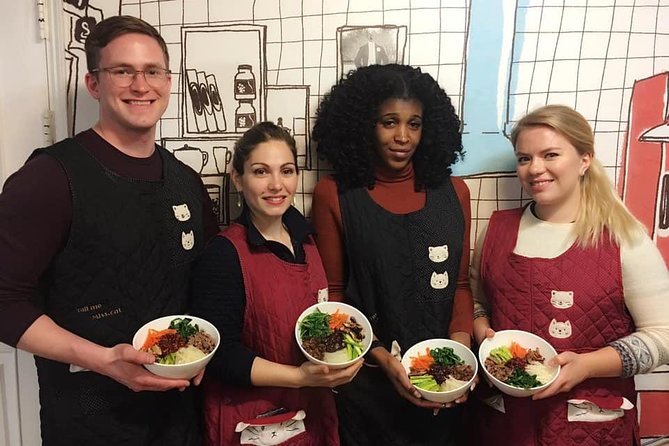
This is a hands-on class. You receive your own cooking table and cooker, and fresh ingredients are prepared for the session. Jomin first explains the menu, then guides you through the work in stages.
That arrangement is especially helpful if you are new to cooking. You can cut, season, stir, and cook your own portions while Jomin watches and offers corrections. You are not left to guess how hot the cooker should be or what texture to aim for.
Past participants have described Jomin as patient, clear, and warm, though one person also called her a strict chef. I see that as a useful distinction. She is friendly, but the goal is to teach you proper technique rather than let every mistake pass unnoticed.
The Three-Dish Menu Can Change
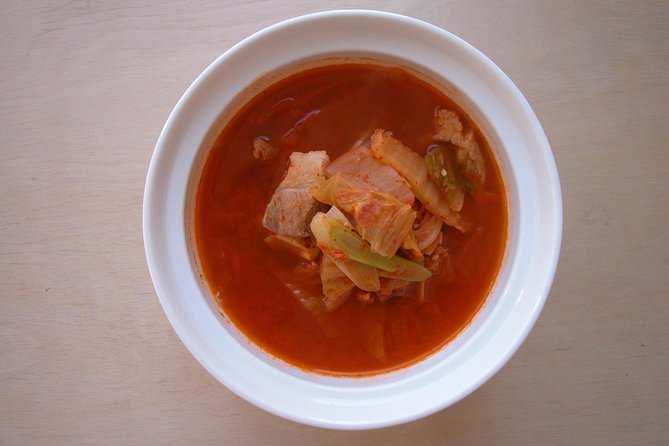
The advertised menu is flexible. Depending on the class, you may prepare soft tofu stew, bibimbap, bulgogi, kimchi stew, japchae, or stir-fried pork.
Several combinations are described in detail. One session included sundubu jjigae, bibimbap, and bulgogi. Another included tofu stew and beef bibimbap, with bulgogi prepared as the final dish. Japchae has also been a favorite for some participants.
This variety is useful for repeat visitors. You can take the class once and later return for a different set of dishes. It also means you should treat the menu as a guide rather than a promise.
More market visits:
- Downtown Seoul Guided Food & Market Tour with 8+ Local Tastings
★ 5.0 · 580 reviews - Seoul: Korean Cooking Class at a Local Home and Market Tour
★ 5.0 · 348 reviews - Seoul Night Palace & Market Food Tour with Vehicle
★ 5.0 · 275 reviews - Korean Palace and Market Tour in Seoul Including Insadong and Gyeongbokgung Palace
★ 4.0 · 174 reviews
Soft tofu stew
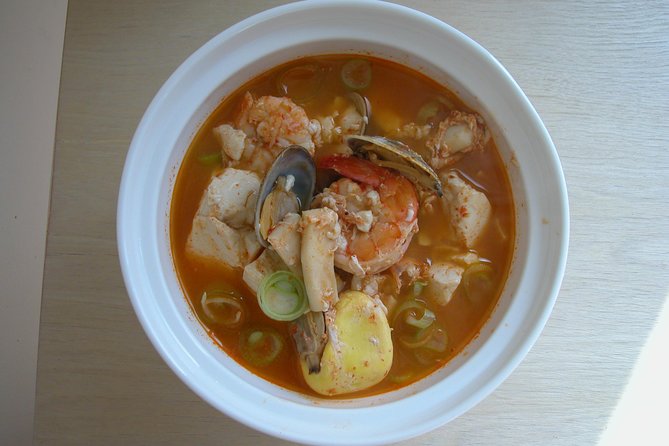
The tofu stew, or sundubu jjigae, introduces you to Korean soup-making. You may help prepare stock from scratch and use ingredients such as clams, prawns, anchovies, or soft tofu.
The stew can be a good choice for people who assume seafood flavors will be too strong. A participant who did not care much for seafood still found the finished dish tasty. The cooking process also shows how a few ingredients create a full, warming bowl.
Bibimbap
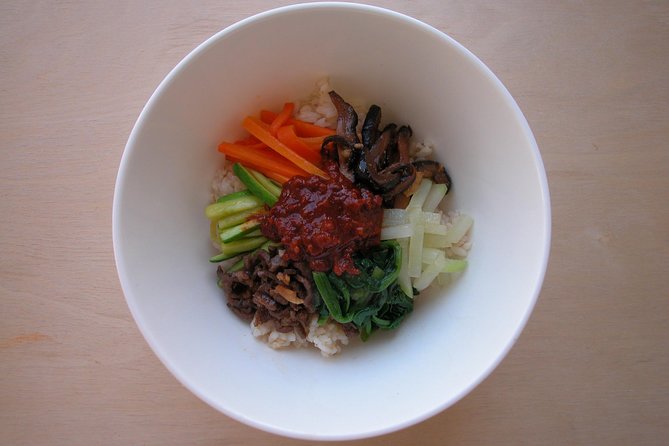
Bibimbap gives you practice with vegetable preparation, rice, seasoning, and cooking on your individual burner. It is a colorful, filling dish, but the real lesson is balance: each topping needs the right cut and seasoning before it meets the rice.
The class may use beef bibimbap. If your menu includes it, Jomin explains how to prepare the vegetables and meat before combining everything.
Bulgogi
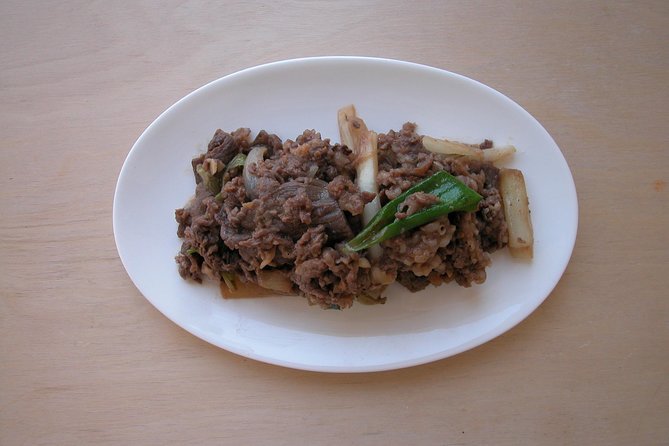
Bulgogi centers on the marinade. You learn how to mix the seasoning and prepare the beef before cooking it. Because the marinade carries much of the flavor, this is one of the easiest dishes to recreate at home after the class.
Japchae and other possibilities
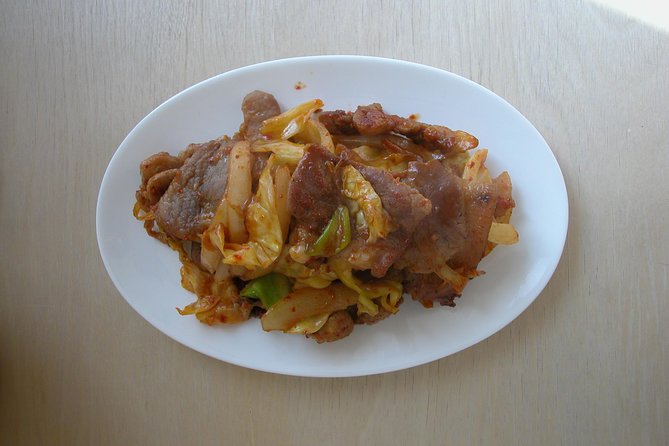
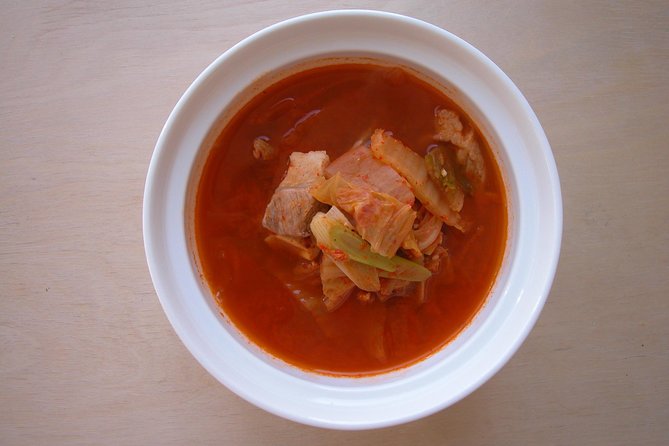
Japchae introduces glass noodles and stir-fried ingredients. Stir-fried pork offers a different seasoning profile and cooking method. Kimchi stew brings another familiar Korean comfort food into the rotation.
The changing menu is the main reason to ask about the dishes before your class begins, especially if you have already taken another cooking session with the same provider.
Eating What You Prepare
The meal is served in stages as the dishes are finished. In one described format, the stew was taken to a dining room first while the next preparation began. Later, the bibimbap and bulgogi were served.
This pacing keeps the food fresh and gives you a chance to eat between cooking tasks. It also prevents the class from turning into one long period of standing over several burners at once.
The dining area is separate from the individual workstations in at least some sessions. That gives the meal a more relaxed finish. You can sit down, taste the results, and compare the dishes with the other people in the class.
You may also take leftovers with you in containers. That adds real value to the $79 price, especially if three dishes produce more food than you can comfortably eat at one sitting.
Food Culture, Dietary Needs, and Skill Level
This class suits both confident cooks and people who rarely cook. The instructions are step by step, and Jomin provides personal help at each station.
You also get more than recipes. The market walk and food explanations cover banchan, kimchi, common ingredients, and Korean eating habits. Some sessions have included rice wine tasting and explanations of prawns, anchovies, and homemade stock.
Vegetarian and vegan options are available. Dietary restrictions have been accommodated during past sessions, but you should communicate your needs in advance. The menu includes meat and seafood possibilities, so do not wait until the cooking begins to mention a restriction.
The class may be a good fit for families, couples, solo visitors, and friends who want a shared activity. It is also suitable for someone who prefers a practical food lesson to a standard restaurant meal.
Is $79 a Fair Price?
At $79 per person, this is not the cheapest way to eat Korean food in Seoul. You could order several dishes at a restaurant for less.
The comparison is not quite fair, though. The fee covers roughly three and a half hours, a market visit, ingredients, cooking equipment, instruction, a full meal, possible leftovers, and a cookbook. You also get the chance to repeat the recipes at home, which gives the experience value after your trip.
The small class format matters most. If the group really is limited to four, you receive much more direct help than in a large demonstration. Still, the supplied booking details give a maximum of 11, so I would confirm the expected group size before paying if personal instruction is your main reason for booking.
The class is strongest for people who want to understand how Korean dishes are made. If you only want a quick meal, a food market visit or restaurant meal will be cheaper and faster.
Timing, Cancellation, and Practical Details
Choose the lunch or dinner option that fits your Seoul plans. The activity starts and ends near Mangwon Station, and the mobile ticket makes the booking easy to keep on your phone.
Free cancellation is available until 24 hours before the local start time. Cancellations or changes made less than 24 hours ahead are not accepted for a refund.
The class requires a minimum of four people. If that minimum is not reached, the provider may cancel or reschedule the session, offering another date or experience, or a full refund.
The meeting point is specific: Mangwon Station, entrance 2. Arrive with enough time to find the correct exit, since Seoul stations can have several underground routes and street entrances.
Who Should Book This Korean Cooking Class?
I would book this if you want a small, useful introduction to Korean cooking and enjoy learning by doing. It is particularly good for first-time visitors who want food culture, market life, and a meal in one activity.
It also suits repeat visitors who want to return for a different menu. The cookbook makes the class more than a one-day memory, and the recipes should help you bring a little Korean cooking into your own kitchen.
I would hesitate only if you need a guaranteed dish list, dislike markets, or want a quiet restaurant meal with no preparation. Also confirm the group size and menu if those details matter to you.
For most people interested in Korean food, this is a worthwhile Seoul activity. You get a friendly guide in Jomin, a real neighborhood market, clear cooking instruction, and three dishes that you help create from start to finish.
FAQ
Where does the cooking class meet?
Meet Jomin at Mangwon Metro Station, Line 6, entrance 2, in Seoul.
How long does the experience last?
The cooking class and market visit last approximately three hours and 30 minutes.
Does the class include a market tour?
Yes. The experience begins with a walk through Mangwon Market, where Jomin explains ingredients and Korean food culture.
Is this a demonstration or a hands-on class?
It is a hands-on class. You have your own cooking table, cooker, and fresh local ingredients.
What dishes will I cook?
The menu may include soft tofu stew, bibimbap, bulgogi, kimchi stew, japchae, or stir-fried pork. The exact three-dish menu can vary.
Are vegetarian and vegan options available?
Yes. Vegetarian and vegan options are available. Share your dietary requirements when booking.
Can I choose lunch or dinner?
Yes. You can choose between a lunch class and a dinner class.
What happens if the class does not reach the minimum number of people?
The experience requires at least four people. If the provider cancels because that minimum is not met, you will be offered another date or experience, or a full refund.
More Shopping Trips
- Private DMZ Tour (No Shopping): 3rd Tunnel & Suspension Bridge
★ 5.0 · 607 reviews - Seoul: Nighttime Tour of Palace, Market, Naksan Park & More
★ 4.9 · 143 reviews - Fortress Night Hike & Snack at a Local Market
★ 5.0 · 112 reviews - Korean Cooking Class with Grocery Shopping at Seoul Local Market
★ 5.0 · 107 reviews
Just added around Seoul
- Seoraksan National Park & Nami Island★ 4.5 · 3 reviews
- Strawberry Picking, Winter Sled with Eobi Ice Valley from Seoul★ 4.5 · 3 reviews
- Seoul Full Day small group Tour★ 5.0 · 3 reviews
- Majang Meat Market Experience: Private Tour with Han-woo Beef BBQ★ 5.0 · 3 reviews
- Seoul Korean BBQ Dinner Experience with Secret Food Tours★ 5.0 · 3 reviews
- Rice Wine Tasting with Sommelier – Finest Makgeolli (& Soju)★ 5.0 · 3 reviews
- Max Out Seoul: Must Visit City Highlights Panoramic Day Tour★ 5.0 · 3 reviews
- Seongsu-dong Walking Tour: K-Pop, Culture, Cheer, Friends & Relax★ 4.5 · 3 reviews
Markets, compared.

Local Home Korean Cooking Class & Market Adventure in Seoul
Read our review →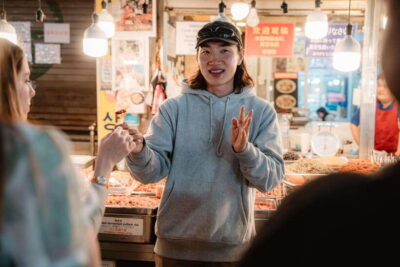
Downtown Seoul Guided Food & Market Tour with 8+ Local Tastings
Read our review →
Korean Cooking Class at a Local Home and Market Tour
Read our review →
Seoul Night Palace & Market Food Tour with Vehicle
Read our review →
Korean Palace and Market Tour in Seoul Including Insadong and Gyeongbokgung Palace
Read our review →
Nighttime Tour of Palace, Market, Naksan Park & More
Read our review →Browse the lists this tour appears in