
Reviewed · COOKING CLASSES
Korean Cooking Class with Grocery Shopping at Seoul Local Market
Korean food makes more sense at the market. This three-hour Seoul experience combines a visit to Mangwon Market with hands-on cooking in a cozy studio, giving you a look at everyday Korean food life rather than a staged restaurant meal. I like the small maximum of eight people, and I like that Phoebe, also known as Sunghyun, teaches the cultural meaning behind each dish. The main consideration is the 10:30 am start and strict late-arrival rule.
I also like the useful menu: bulgogi, gyeran-jjim, and kimbap are dishes you can make again at home. The $91.91 price is not cheap for a three-hour activity, but it covers market guiding, ingredients, instruction, and a full meal, so it can be good value if you want more than a quick cooking demonstration.
In This Review
- Key points at a glance
- Why this Seoul cooking class feels different
- Starting at Mangwon Market at 10:30 am
- Shopping for a Korean home meal
- Cooking three Korean staples in a cozy studio
- Phoebe’s teaching style and the small group
- What the $91.91 price includes in practical terms
- Who should book this experience
- A few practical tips before you go
- Should you book the Mangwon Market cooking class?
- FAQ
- Where does the Korean cooking class begin?
- What time does the experience start?
- How long does the cooking class and market visit last?
- Which dishes will I learn to prepare?
- What happens if I arrive more than 10 minutes late?
- How far in advance can I cancel for a full refund?
Key points at a glance
- Mangwon Market shopping: Start where locals buy food, with time to see ordinary Korean ingredients and market life.
- Three practical dishes: Prepare bulgogi, steamed egg, and kimbap, then eat the meal you helped make.
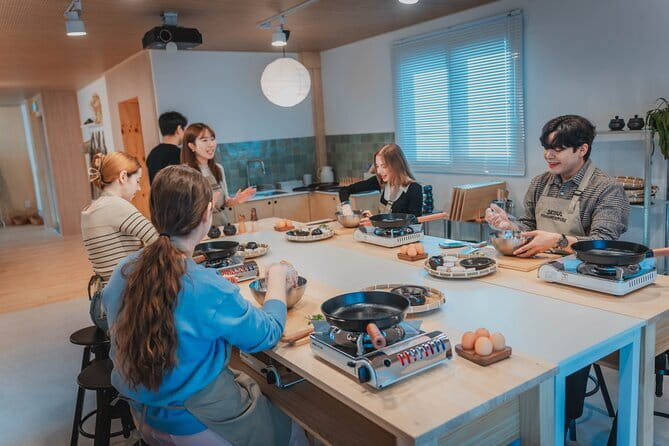
- Small class size: The group is capped at eight, allowing more direct help from Phoebe.
- Near Mangwon Station: The studio is in a convenient location close to public transportation.
- Local picnic idea: Take any leftover kimbap to the Han River for a casual Korean-style picnic.
- Plan your arrival: Reach the meeting point before 10:30 am, since arriving more than 10 minutes late may mean missing the market visit.
Why this Seoul cooking class feels different
Many cooking classes begin with ingredients already measured and arranged on a table. This one begins with the shopping itself. That simple change matters. You see the food before it becomes a recipe, and you get a better sense of how Korean home cooking starts.
Mangwon Market has more than 40 years of history and is a regular shopping stop for Phoebe, a Korean homemaker. You are not simply walking through a market for photographs. You are following the shopping route of someone who uses it in daily life, visiting her preferred stores and choosing the ingredients needed for lunch.
I find that approach more useful than a formal market tour with no connection to the meal. You can ask about unfamiliar items while standing in front of them, then see how they are used a short time later. That helps connect Korean food customs with ordinary routines.
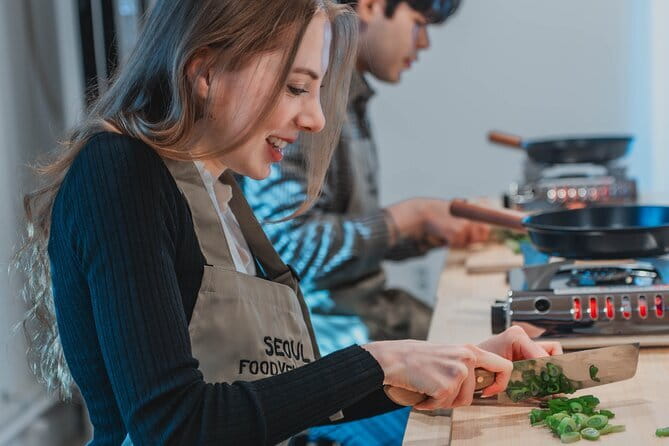
The class is also designed for a wide range of cooking ability. You do not need to arrive with knife skills or experience making Korean food. At the same time, the three-dish menu gives confident cooks enough to do, especially during the preparation of kimbap.
More Cooking Classes in Seoul
- Local Home Korean Cooking Class & Market Adventure in Seoul
★ 5.0 · 1,024 reviews - Master Korean traditional cooking with a Kimchi chef
★ 5.0 · 385 reviews - Seoul: Korean Cooking Class at a Local Home and Market Tour
★ 5.0 · 348 reviews
Starting at Mangwon Market at 10:30 am
The meeting point is Seoul Foodventure at 377-4 Mangwon-dong, Mapo-gu, on the fourth floor. The studio is near Mangwon Station, which makes the area fairly easy to reach by public transportation.
I would treat the start time as firm. You need to arrive before 10:30 am, and arriving more than 10 minutes late may mean missing the market portion. That is important because the market is not a side activity. It is the first half of the experience and one of its strongest features.
Mangwon Market offers a useful middle ground. It is active enough to show you a broad range of stalls and food choices, but the experience is not described as so crowded that moving around becomes difficult. You can expect a traditional local market setting with food shopping, ingredient displays, and the everyday pace of Seoul residents buying what they need.
The market visit also gives you a chance to ask questions that would be awkward or difficult in a restaurant. You can learn what an ingredient is, how it is selected, and which dish it will join later. Since Phoebe shops there regularly, her guidance is tied to real use rather than general sightseeing commentary.
Shopping for a Korean home meal
The shopping section is practical, not just visual. You are picking out fresh ingredients for the cooking session, so each purchase has a clear purpose. That keeps the market walk focused and prevents it from becoming a long list of food names you forget by dinner.
For someone new to Korean cooking, this is especially helpful. Korean markets can present unfamiliar vegetables, sauces, meats, and prepared foods all at once. Having Phoebe explain what matters for the three dishes should make the experience less confusing and give you a better sense of what to look for when shopping at home.
The local setting is valuable because food shopping says a lot about daily life. Restaurants show you the finished product. A market shows you the building blocks, the quantities, and the habits behind it. You get a clearer picture of Korean meals as something prepared at home, not just ordered at a table.
The market may not suit you if you prefer a quiet, polished cooking studio from the first minute. You will be walking, looking, and keeping to a schedule before cooking begins. Wear comfortable clothes and shoes, and leave enough time to reach Mangwon-dong without rushing.
Cooking three Korean staples in a cozy studio
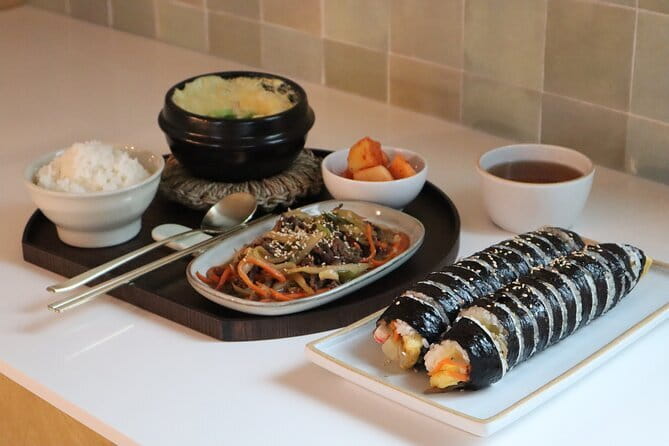
After shopping, you return to the studio to prepare three familiar dishes: bulgogi, gyeran-jjim, and kimbap. Together, they create a complete Korean-style home meal with different cooking methods and textures.
Bulgogi is marinated beef. It introduces you to the balance of seasoning that gives Korean home cooking its familiar sweet and savory character. Because the beef is marinated, the preparation also shows how flavor can be built before anything reaches the pan.
Gyeran-jjim is steamed egg. It is softer and more delicate than the beef, so it adds a different technique to the class. Learning it alongside bulgogi keeps the session from becoming one long exercise in frying or grilling.
Kimbap brings the most hands-on assembly. Rolling the rice and fillings takes care and coordination, but it also gives you one of the most portable Korean foods to recreate later. The suggestion to take leftovers to the Han River is a nice touch. You can turn the extra food into a simple picnic rather than letting it sit in your hotel room.
The class is intended to be participatory. You are not just watching Phoebe cook while someone else handles the work. The point is to shop, prepare, cook, and eat together. That makes the experience more useful for you if your goal is to leave with enough confidence to cook Korean dishes after returning home.
More Market Visits in Seoul
- Seoul Street Food Market Tour
★ 5.0 · 1,226 reviews - Seoul: Night Market Food Tour with Local Guide
★ 4.9 · 943 reviews - Downtown Seoul Guided Food & Market Tour with 8+ Local Tastings
★ 5.0 · 580 reviews - Seoul Night Palace & Market Food Tour with Vehicle
★ 5.0 · 275 reviews
Phoebe’s teaching style and the small group
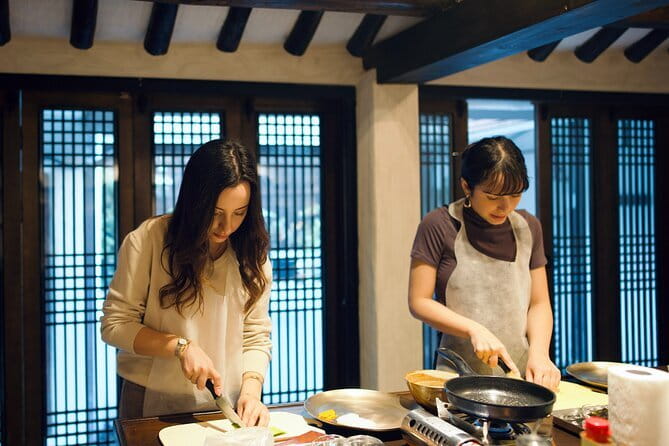
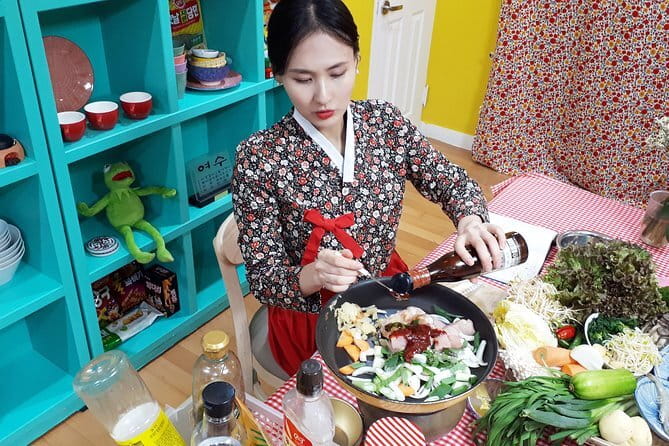
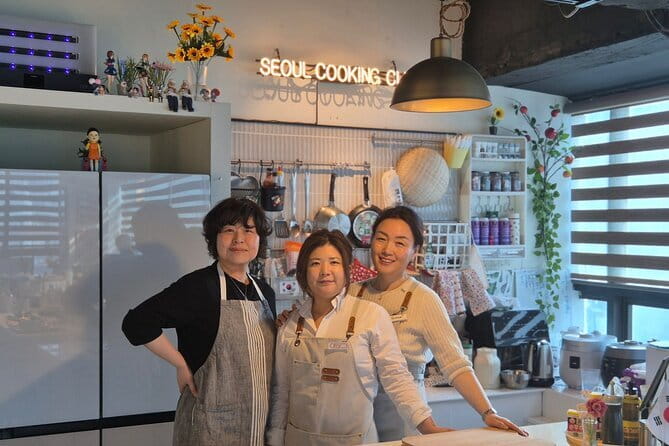
Phoebe is the host and teacher, and Sunghyun is the name associated with her business. She is described as a Korean MZ Ajumma and homemaker, which fits the class’s focus on ordinary food and daily life rather than formal culinary training.
Her role appears to be one of both instructor and host. You can expect explanations about the recipes, but also conversation about Korean food traditions and how people connect through meals. That cultural context gives the cooking more meaning. You are learning why the dishes matter, not only which steps come first.
The maximum group size is eight people. That is small enough to make personal assistance possible, especially for beginners who may need help with preparation or kimbap rolling. It also keeps the studio meal more social and less like a crowded demonstration.
The intimate size has one possible limitation. If you are hoping for a large class full of many different people, this may feel quiet. For most cooks, though, the smaller setting is a plus because the teacher can keep an eye on each person’s work.
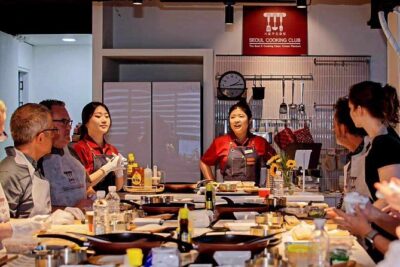
The studio itself is described as cozy and pleasant. It is conveniently located near Mangwon Station, and the compact setting supports the home-meal feeling. Do not expect a large professional kitchen or a restaurant-style production line. The appeal is the shared table and relaxed atmosphere.
What the $91.91 price includes in practical terms
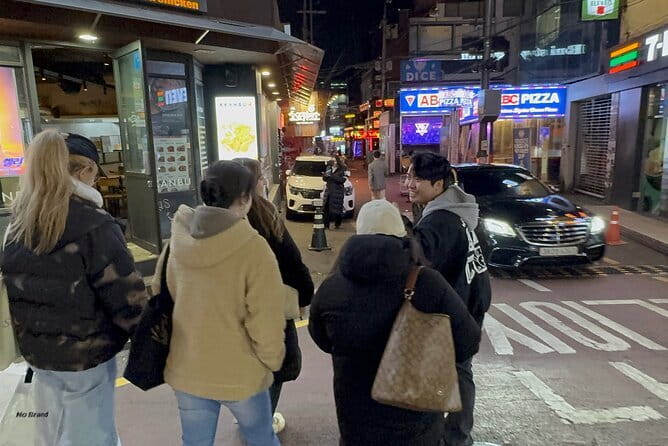
At $91.91 per person, this is priced above a simple food market walk or a short demonstration. The value comes from combining several parts into one experience: a guided visit to Mangwon Market, ingredient shopping, instruction for three dishes, and the meal you prepare.
I would consider it good value if you want a cultural activity that also teaches a repeatable skill. You are paying for context and participation, not just food. The class can also save you the trouble of trying to identify ingredients and cooking methods on your own during a short Seoul visit.
The price may feel high if your main goal is simply to eat bulgogi, egg, and kimbap. Seoul offers many less expensive ways to try those foods. This experience makes more sense when you want to know how the dishes come together and enjoy a direct conversation with a local host.
The advance booking pattern is also worth noting. It is booked, on average, 21 days ahead, so I would not leave it until the last morning of your trip if the schedule matters to you. Confirmation arrives at booking, and mobile tickets make the entry details easy to keep on your phone.
Who should book this experience
I would recommend it most strongly to first-time visitors who want a food activity with a clear local connection. It suits solo visitors, couples, and small groups who enjoy cooking, asking questions, and sitting down to eat what they made.
It is also a strong choice for complete beginners. The class welcomes people with no cooking background, and the menu gives you three useful starting points for Korean meals. You do not have to be an experienced cook to take part.
Families and mixed-ability groups may also find the format approachable, though the supplied information does not specify a minimum age. If you are planning for children, confirm any age requirements before booking.
You should think twice if you dislike early starts, market walking, or hands-on food preparation. The experience is not designed for someone who wants to sit back and watch. Dietary restrictions should be shared in advance so the host can advise whether the menu can work for you.
Service animals are allowed, and the meeting point is near public transportation. The activity ends back at the same meeting point, so you can plan another Mapo-gu activity afterward without arranging a separate return transfer.
A few practical tips before you go
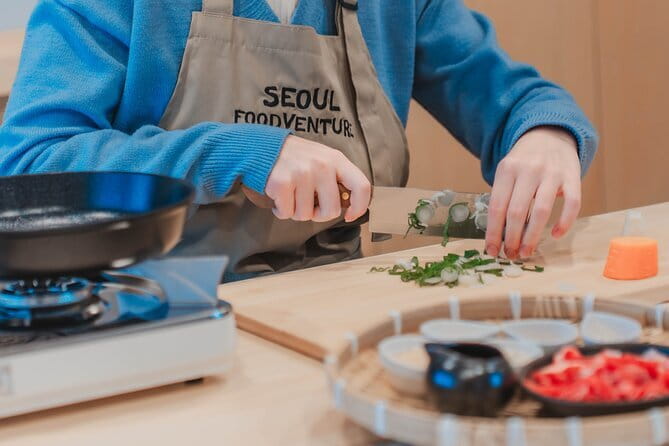
Arrive early enough to find the fourth-floor studio without pressure. The 10-minute late rule is strict for a sensible reason: the group may already be inside Mangwon Market when you arrive.
Bring an appetite. The meal includes three substantial dishes, and the cooking itself adds to the food experience. If you make more kimbap than you can eat, follow the host’s suggestion and take it to the Han River for a picnic.
Tell the host about dietary restrictions before the class date. The menu includes beef and egg, so advance notice is especially important if you avoid either ingredient or follow a specific diet.
Keep your mobile ticket available, and remember that the experience lasts about three hours. Since the class begins at 10:30 am and returns to the meeting point, it should fit neatly into a day of exploring western Seoul.
Free cancellation is available up to 24 hours before the start time for a full refund. Changes or cancellations made less than 24 hours ahead are not accepted, with cut-off times based on Seoul local time.
Should you book the Mangwon Market cooking class?
Book it if you want food to be your way into Korean daily life. The market visit, small group, and three-dish meal give you more than a recipe lesson, while Phoebe’s personal connection to Mangwon Market keeps the experience grounded.
Skip it if you only want a cheap meal or a quick market photo stop. At $91.91, the value depends on your willingness to participate and listen.
For most food-minded visitors, I think the combination is strong. You shop where a local host shops, cook dishes you can repeat at home, and finish with a meal that carries a little more meaning than something ordered from a menu.
FAQ
Where does the Korean cooking class begin?
It begins at Seoul Foodventure, South Korea, Seoul, Mapo-gu, Mangwon-dong, 377-4, fourth floor.
What time does the experience start?
The class starts at 10:30 am.
How long does the cooking class and market visit last?
The experience lasts approximately three hours.
Which dishes will I learn to prepare?
You will prepare bulgogi, which is marinated beef, gyeran-jjim, which is steamed egg, and kimbap.
What happens if I arrive more than 10 minutes late?
You may miss the market tour, so you should arrive before the 10:30 am start.
How far in advance can I cancel for a full refund?
You can cancel at least 24 hours before the start time for a full refund. Cancellations made less than 24 hours before the experience are not refunded.
More Cooking Classes
- Seoul: Korean Cooking at Seoul Cooking Club!
★ 5.0 · 311 reviews - Korean Cooking at Seoul Cooking Club
★ 5.0 · 220 reviews - Experience Korean Cooking in Modern Hanok Kitchen
★ 5.0 · 118 reviews - Korean Kimchi Making Day Experience with a Local Market Tour
★ 5.0 · 99 reviews
More Workshops in Seoul
- Yongpyong Ski Resort from Seoul with Optional Lesson and Packages
★ 5.0 · 217 reviews - Royal Seoul Cooking Class in a 100-Year-Old Hanok
★ 5.0 · 81 reviews - Seoul : Taste of Korea, Authentic Home-Style Cooking Class
★ 5.0 · 64 reviews - K-pop Dance Class in Seoul (Incl. video shooting & editing)
★ 5.0 · 52 reviews
Just added around Seoul
- Seoraksan National Park & Nami Island★ 4.5 · 3 reviews
- Strawberry Picking, Winter Sled with Eobi Ice Valley from Seoul★ 4.5 · 3 reviews
- Seoul Full Day small group Tour★ 5.0 · 3 reviews
- Majang Meat Market Experience: Private Tour with Han-woo Beef BBQ★ 5.0 · 3 reviews
- Seoul Korean BBQ Dinner Experience with Secret Food Tours★ 5.0 · 3 reviews
- Rice Wine Tasting with Sommelier – Finest Makgeolli (& Soju)★ 5.0 · 3 reviews
- Max Out Seoul: Must Visit City Highlights Panoramic Day Tour★ 5.0 · 3 reviews
- Seongsu-dong Walking Tour: K-Pop, Culture, Cheer, Friends & Relax★ 4.5 · 3 reviews
Cooking Classes, compared.

Local Home Korean Cooking Class & Market Adventure in Seoul
Read our review →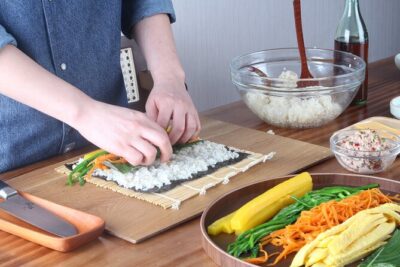
Master Korean traditional cooking with a Kimchi chef
Read our review →
Korean Cooking Class at a Local Home and Market Tour
Read our review →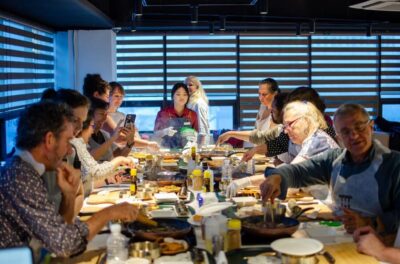

Experience Korean Cooking in Modern Hanok Kitchen
Read our review →
Korean Kimchi Making Day Experience with a Local Market Tour
Read our review →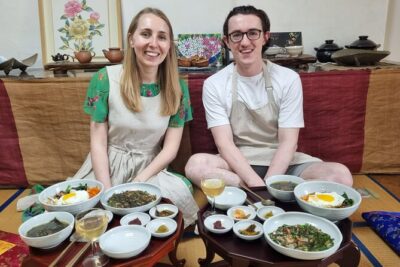
Browse the lists this tour appears in