
Reviewed · COOKING CLASSES
Seoul: Korean Cooking Class at a Local Home and Market Tour
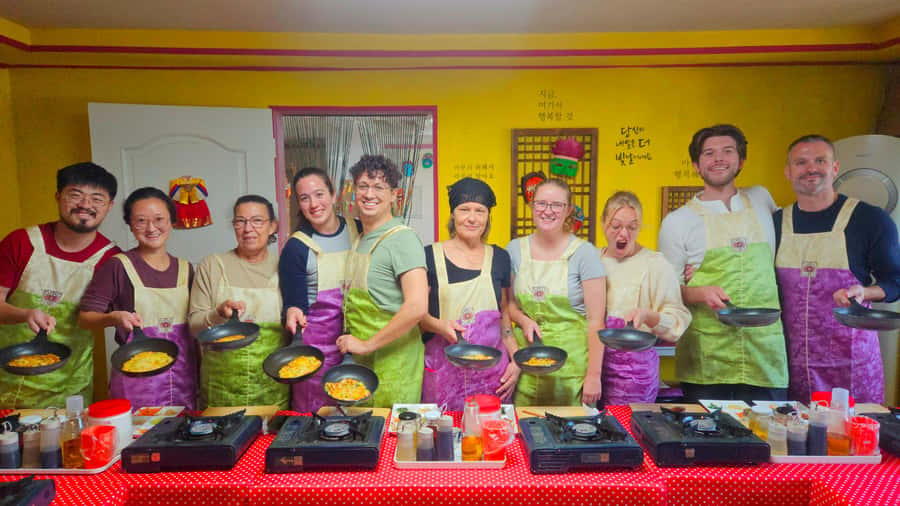
Food is often the best way into Seoul. This experience pairs a walk through a local market with a hands-on cooking class in a Korean home, giving you much more than a restaurant meal. I especially like the chance to shop for ingredients before cooking and the personal guidance from hosts such as Sarah and Junghee, who are praised for their humor, warmth, and clear English. The small group, limited to 10 people, also keeps the class friendly rather than factory-like.
The class covers four substantial dishes, including bibimbap, dakgalbi, haemul-pajeon, and doenjang-jjigae. You also taste market snacks, learn a few Korean phrases, try on a Tal mask, and sit down to a Hanjeongsik-style meal with more than 10 side dishes. The main drawback is practical: you must reach Mangwon Station on your own, and the local home has no elevator, so the stairs may be difficult for some people.
In This Review
- Quick reasons to book this Seoul food experience
- Starting at Mangwon Station and entering local Seoul
- Walking through Mangwon Market for ingredients and snacks
- From the market to a welcoming Korean home
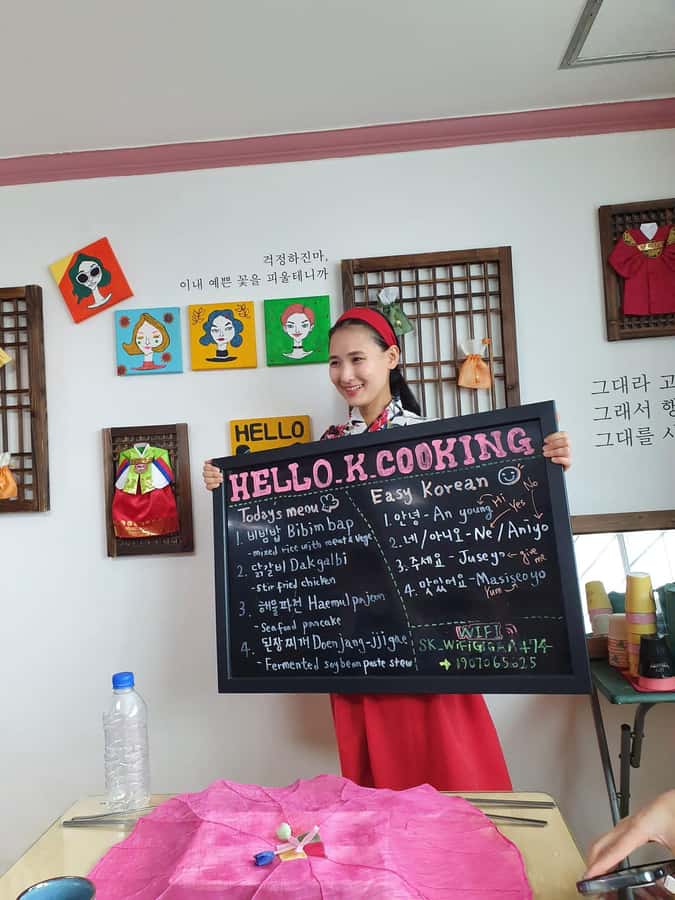
- Cooking bibimbap, dakgalbi, haemul-pajeon, and doenjang-jjigae
- Sitting down to Hanjeongsik after the work
- Tal masks, photos, and the cultural extras
- How the $98 price compares with the experience
- Who will enjoy this cooking class most
- Practical tips for a smoother afternoon
- Should you book this Seoul cooking class?
- FAQ
- Where does the Korean cooking class begin?
- How long does the activity last?
- Does the tour include hotel pickup and drop-off?
- What dishes will I learn to cook?
- Is food included beyond the dishes I cook?
- Is the class taught in English?
- How many people can join the class?
- Is the home accessible by elevator?
Quick reasons to book this Seoul food experience
- Mangwon market before the cooking begins: Shop for fresh ingredients and taste street food in a popular local market that feels less aimed at tourists.
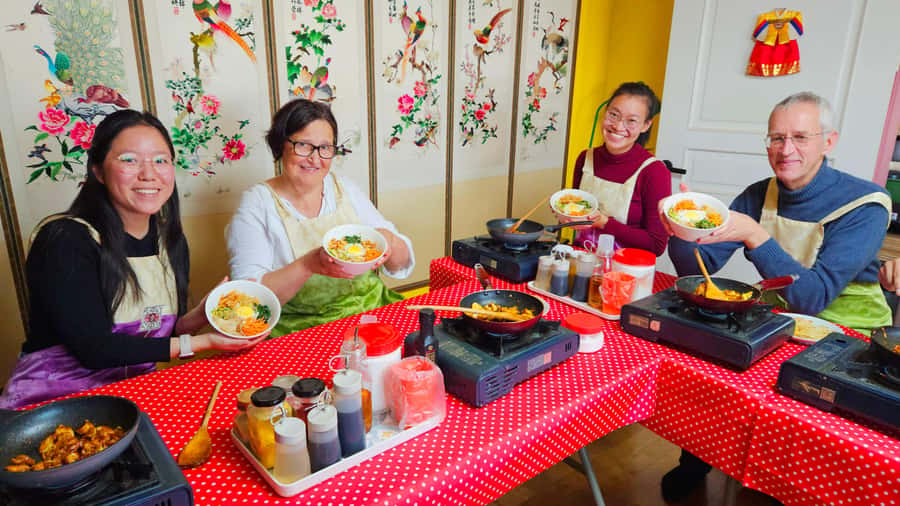
- Four Korean dishes in one class: Make bibimbap, stir-fried chicken, seafood and green onion pancake, and soybean paste stew.
- A meal in a real local home: The cooking ends with Hanjeongsik, rice, seasonal fruit, rice wine, and more than 10 side dishes.
- Hosts who set the tone: Sarah and Junghee are praised for their energy, humor, patience, and ability to include beginners.
- A useful souvenir: Recipes are provided, with past participants receiving them through WhatsApp.
- Small-group format: A maximum of 10 people gives you room to cook, ask questions, and meet others.
Starting at Mangwon Station and entering local Seoul
The experience begins outside Mangwon Station at Exit 2. This is an important detail because there is no hotel pickup or drop-off. You need to plan your own route to the station and return from the same meeting point when the class ends.
The total time is about 3.5 hours. That is long enough to give the market and cooking class real attention, but short enough to fit into a busy Seoul sightseeing plan. I would avoid scheduling a major attraction immediately afterward. Market stops can take time, and a shared meal is more enjoyable when you are not watching the clock.
Mangwon is a useful setting for a food class because the experience starts in an ordinary shopping district rather than at a tourist landmark. The class is not just about learning recipes in isolation. You first see where ingredients are bought, how food is presented, and what daily shopping can look like in Seoul.
Your guide also teaches a few Korean phrases along the way. Do not expect a full language lesson, but these small phrases help you interact with the setting and make the visit feel less like a cooking demonstration.
More Cooking Classes in Seoul
- Local Home Korean Cooking Class & Market Adventure in Seoul
★ 5.0 · 1,024 reviews - Master Korean traditional cooking with a Kimchi chef
★ 5.0 · 385 reviews - Seoul: Korean Cooking at Seoul Cooking Club!
★ 5.0 · 311 reviews
Walking through Mangwon Market for ingredients and snacks
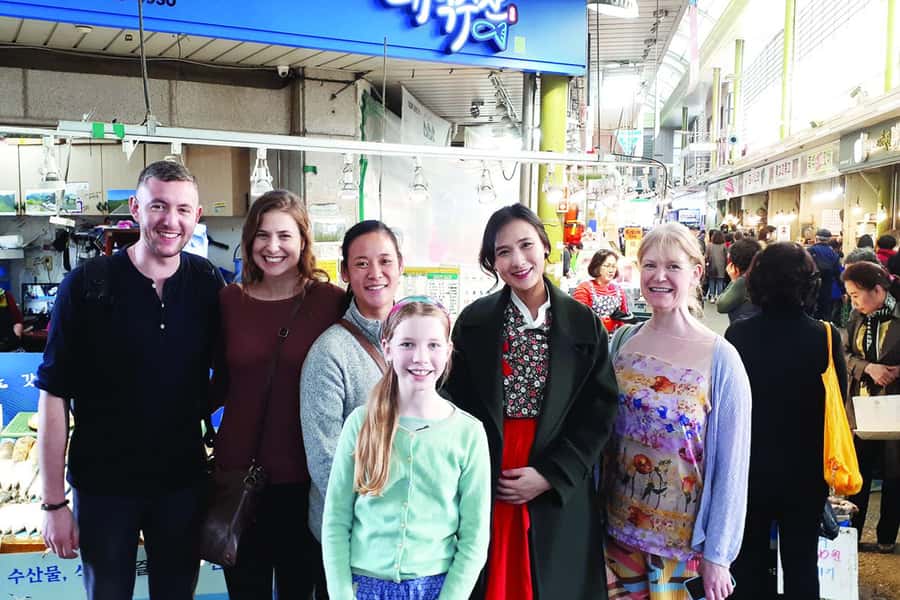
The market tour is one of the strongest parts of the experience. You walk through the stalls with your guide, look at the ingredients needed for the class, and taste local street food. The guide explains items you might otherwise pass without recognizing.
That context matters. Korean markets can be visually busy, with unfamiliar vegetables, seafood, sauces, pickles, and prepared foods. A native Korean chef can explain what you are seeing and how those ingredients are used at home. Instead of simply sampling a snack, you start to connect the market stall with the dishes you will later prepare.
The market is described as popular but less tourist-focused. That means you get a look at a regular neighborhood food center rather than a staged food attraction. The trade-off is that the surroundings may feel less polished and less predictable than a dedicated cooking school. That is part of the point, but visitors who want a quiet, controlled start should know what they are choosing.
The street-food tasting is included, though the exact snacks can vary. The available information does not promise a fixed menu of market samples, so you should treat this as an introduction to local flavors rather than a full street-food crawl.
You will also buy or help select fresh ingredients for the class. This gives the cooking a clear beginning. You are not just handed premeasured items in a studio kitchen. You see the products first, then learn how they become lunch.
From the market to a welcoming Korean home
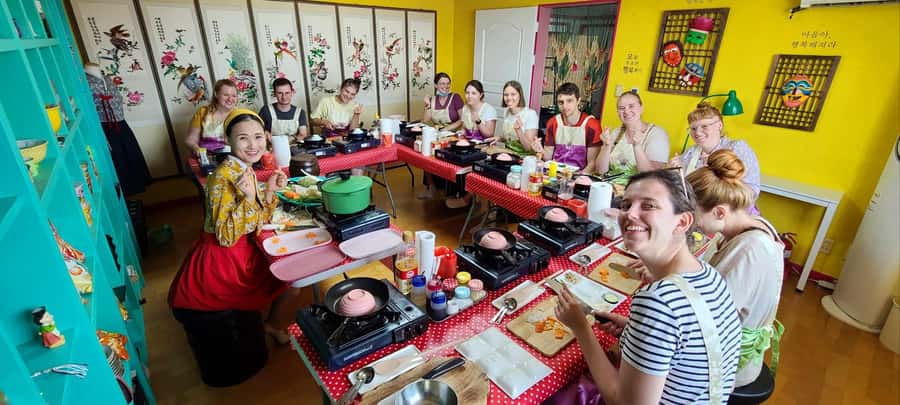
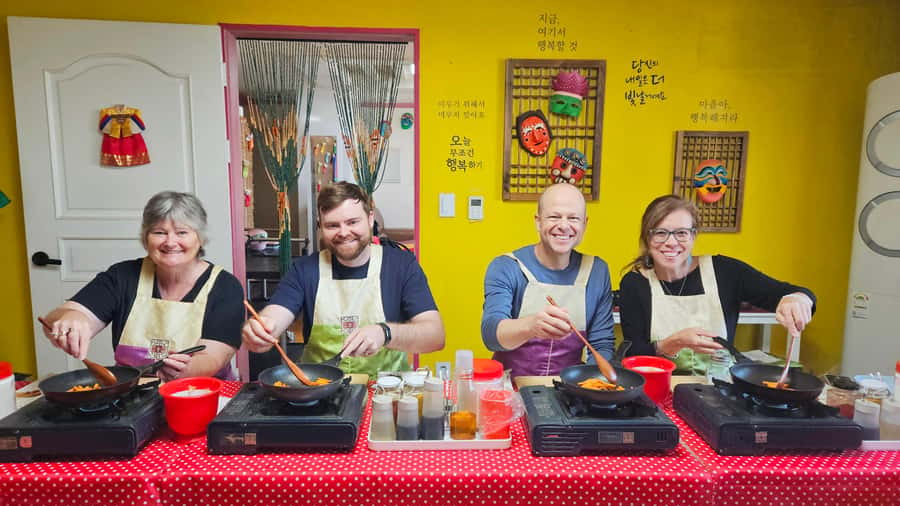
After the market, the group heads to the local home where the class takes place. The home setting is a major part of the appeal. It offers a more personal look at Korean food culture than a commercial classroom, and the hosts make a point of welcoming the group with a drink before cooking starts.
The welcome tea gives everyone time to settle in. You can learn a few more Korean words, hear about the food, and get comfortable with the kitchen before the work begins. Past participants have singled out the hosts’ ability to keep conversation moving without making the class feel forced.
The setting also has a small practical catch. There is no elevator to the home, so you need to be comfortable using stairs. This is worth considering before you book, especially if you have mobility concerns or are carrying heavy bags from a day of sightseeing.
The group size is capped at 10. That is a good middle ground. You get the social feel of a group activity, but there should still be enough space for the chef-guide to check your work and answer questions. Several participants have enjoyed having their own cooking area and preparing the dishes themselves rather than watching one person do everything.
Cooking bibimbap, dakgalbi, haemul-pajeon, and doenjang-jjigae
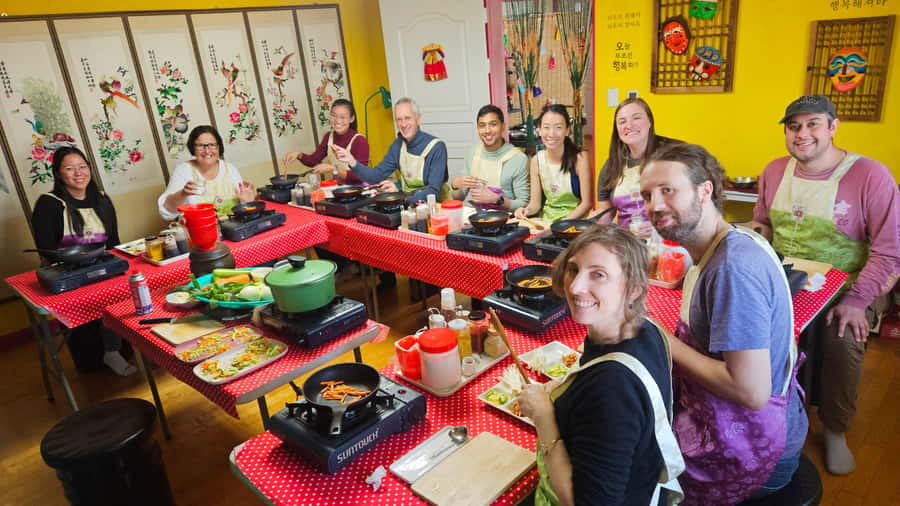
The menu gives you a broad introduction to Korean home cooking. You prepare three main dishes and one stew, with the chef-guide explaining the ingredients and method as you work.
Bibimbap combines rice, meat, and vegetables. It is a useful dish for learning how Korean meals bring different colors, textures, and flavors into one bowl. The recipe also gives you something practical to recreate at home because you can adapt the vegetable mix to what is available.
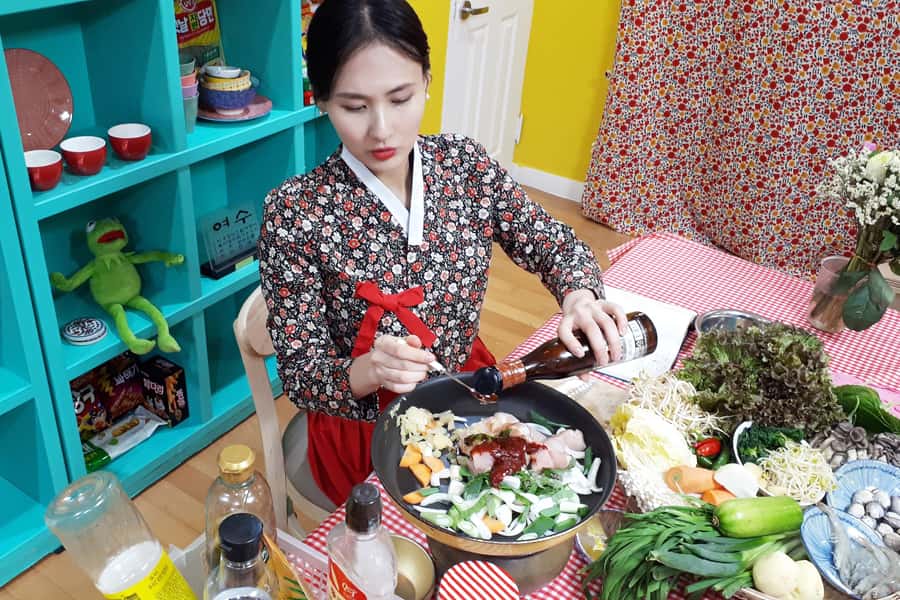
Dakgalbi is stir-fried chicken. This brings a different style of cooking to the class, with direct heat and active preparation. It is a good chance to see how seasoning and timing affect a dish that cooks quickly.
Haemul-pajeon is a seafood and green onion pancake. This is likely to be one of the most playful parts of the class. Participants specifically enjoyed flipping the pancake, which adds a hands-on challenge and a little harmless competition to the cooking.
Doenjang-jjigae is a stew made with fermented soybean paste. It introduces one of the familiar savory flavors of Korean food and helps explain how fermentation shapes the cuisine. You do not just eat the stew at the end. You learn how it is assembled and prepared.
The chef-guide demonstrates each stage, then lets you take part. That makes the activity suitable for beginners. You do not need advanced cooking skills, and the host is there to explain the process in detail. At the same time, confident home cooks will still find value in learning how these dishes are handled in a Korean kitchen.
The class is taught in English and Korean. English ability appears to be a strong point for the hosts, especially Sarah, who is described as clear, organized, and easy to understand. Still, cooking involves physical demonstration, so you do not need perfect language skills to follow along.
More Market Visits in Seoul
- Seoul Street Food Market Tour
★ 5.0 · 1,226 reviews - Seoul: Night Market Food Tour with Local Guide
★ 4.9 · 943 reviews - Downtown Seoul Guided Food & Market Tour with 8+ Local Tastings
★ 5.0 · 580 reviews - Seoul Night Palace & Market Food Tour with Vehicle
★ 5.0 · 275 reviews
Sitting down to Hanjeongsik after the work
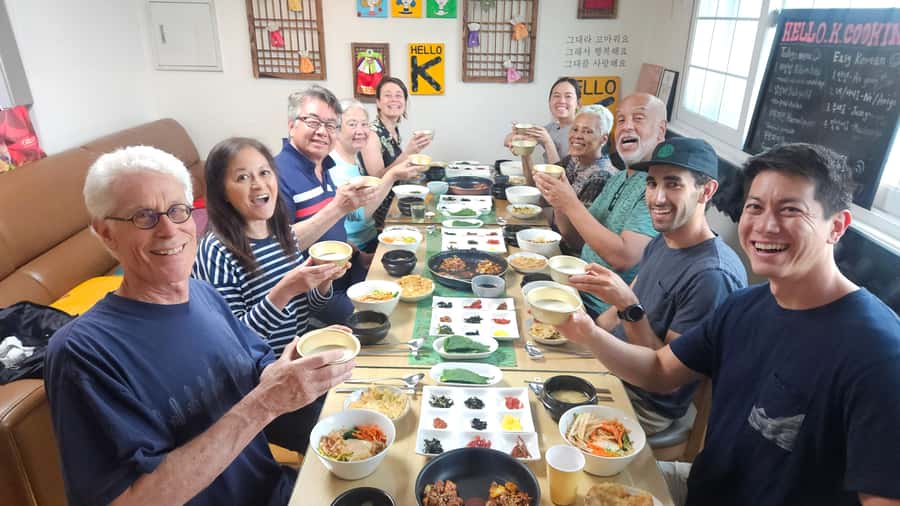
Once the cooking is finished, you sit down to eat. Your own dishes form the center of the meal, but the host also provides a Hanjeongsik-style spread with more than 10 side dishes, rice, seasonal fruit, and rice wine.
Hanjeongsik is a traditional Korean course meal built around many accompanying dishes. The value here is not only the amount of food. It shows how Korean dining often works through variety, with small portions of different flavors set around the main dishes.
This makes the final meal feel more like a cultural lesson than a simple reward for finishing the recipes. You can compare what you cooked with the side dishes provided by the host and get a better sense of how a Korean meal is assembled.
Rice wine is included, along with water and the welcome tea. If you do not drink alcohol, the class still includes plenty of food and nonalcoholic drinks. Dietary restrictions and allergies should be discussed with the local host in advance. The provided information does not give a specific alternative menu, so do not wait until the class begins to raise an important food concern.
The meal also gives the group time to talk. This social part is repeatedly praised, with hosts making an effort to involve each person. If you enjoy meeting people from different countries, the 10-person maximum works in your favor. If you prefer a private meal with only your own party, a small-group class may still feel more communal than intimate.
Tal masks, photos, and the cultural extras
The cooking is the main attraction, but several smaller additions make the class more memorable. You can try on an artful Tal mask, the kind associated with Korean heritage festivals. This is a quick cultural activity rather than a full mask-making workshop, but it adds a visual connection to Korean performance traditions.
Photo and video service is included. That is useful during a hands-on class because your attention is usually on chopping, mixing, or flipping the pancake. You can focus on the activity instead of asking a companion to document every step.
Recipes are also included. Some participants received them through WhatsApp and found that useful for cooking the dishes again at home. One practical limitation is that the recipe format may be digital rather than a printed keepsake cookbook. If you like collecting paper recipes, save the digital material carefully after the class.
The experience is strongest when these extras support the food rather than distract from it. The Tal mask, language phrases, photos, and market explanations are short additions around a substantial cooking session.
How the $98 price compares with the experience
At $98 per person, this is not a budget market walk. The price needs to be judged as a combined experience: a guided market visit, street-food samples, four-dish cooking instruction, ingredients, equipment, a full meal with side dishes, drinks, recipes, and photo or video service.
That package gives the price a reasonable case, particularly if you would otherwise pay separately for a food tour and a cooking class. You are also paying for a native host, a home setting, and a small group limited to 10 people. Those personal details are difficult to duplicate with a self-guided market visit.
The value is less convincing if you mainly want a quick meal or a short demonstration. You are committing 3.5 hours, plus the time needed to reach Mangwon Station. You should book this because you want to learn and participate, not simply because you want to eat Korean food.
The class also gives you recipes you can use after Seoul. That matters. A restaurant meal ends when the bill arrives, but a good cooking lesson can continue in your own kitchen. The four dishes offer enough variety to make the class useful, and bibimbap in particular is adaptable for home cooking.
Free cancellation up to 24 hours before the activity and the option to reserve now and pay later make the $98 commitment easier to manage. These policies are helpful if your Seoul schedule is still changing.
Who will enjoy this cooking class most
I would recommend this experience to several kinds of visitors:
- First-time Korean cooks: The chef-guide explains each dish clearly and assists beginners.
- Food-focused visitors: You get market ingredients, street-food samples, cooking, and a traditional meal in one outing.
- Couples and small groups: The activity gives you a shared task, followed by a relaxed meal.
- Solo visitors: The small group and welcoming hosts make it easier to meet people.
- Cultural learners: The market, language phrases, home setting, Tal mask, and Hanjeongsik meal add context beyond recipes.
- Visitors staying near western Seoul: Mangwon Station is the start and end point, so the location may be convenient depending on your plans.
I would hesitate if you have serious mobility limitations because of the stairs to the home. I would also check dietary needs before booking, since the menu includes meat, seafood, fermented soybean paste, and rice wine, and no specific substitutions are provided.
Practical tips for a smoother afternoon
Arrive at Mangwon Station Exit 2 with enough time to find the meeting point. The activity begins outside the station, and there is no hotel transportation.
Wear comfortable clothes for walking and cooking. The market portion involves moving through stalls, and the class requires active participation rather than sitting back for the whole session.
Tell the host about allergies and dietary restrictions before the class. This is especially important because the dishes include chicken, seafood, meat, and fermented ingredients.
Come hungry, but not starving. You will taste food at the market and then eat a full meal later, so a light breakfast or lunch is sensible.
If you want to recreate the recipes, keep the digital recipe messages after the class. The recipes are a useful benefit, though you may need to organize them yourself rather than receiving a printed booklet.
Should you book this Seoul cooking class?
Book it if you want a personal introduction to Korean food that combines shopping, cooking, and eating. The market visit gives the class a real sense of place, while the home kitchen and friendly hosts turn the recipes into a social experience.
The strongest reasons to go are the four-dish menu, the Hanjeongsik meal, and the hosts’ warm teaching style. Sarah and Junghee have earned praise for making beginners feel included, keeping the mood light, and explaining Korean food without turning the session into a lecture.
Skip it if you want a polished studio, private transportation, or a short tasting-only activity. For everyone else, $98 is a fair price for 3.5 hours of instruction, food, cultural context, and recipes you can take home. Just plan your route to Mangwon Station, prepare for stairs, and contact the host about dietary needs before you arrive.
FAQ
Where does the Korean cooking class begin?
Meet the guide outside Mangwon Station at Exit 2.
How long does the activity last?
The experience lasts about 3.5 hours. Starting times vary, so check availability when booking.
Does the tour include hotel pickup and drop-off?
No. You are responsible for getting to Mangwon Station and returning from the meeting point after the activity.
What dishes will I learn to cook?
You will prepare bibimbap, dakgalbi, haemul-pajeon, and doenjang-jjigae.
Is food included beyond the dishes I cook?
Yes. The experience includes market street-food samples, a welcome tea, a meal with side dishes, rice, seasonal fruit, rice wine, and water.
Is the class taught in English?
Yes. The instructors speak English and Korean.
How many people can join the class?
The class is limited to 10 participants.
Is the home accessible by elevator?
No. There is no elevator to reach the local home, so you should be prepared to use stairs.
More Cooking Classes
- Korean Cooking at Seoul Cooking Club
★ 5.0 · 220 reviews - Experience Korean Cooking in Modern Hanok Kitchen
★ 5.0 · 118 reviews - Korean Kimchi Making Day Experience with a Local Market Tour
★ 5.0 · 99 reviews - Traditional Korean 6-Dish Cooking Class + Hidden Alley Tour Seoul
★ 5.0 · 42 reviews
More Workshops in Seoul
- Yongpyong Ski Resort from Seoul with Optional Lesson and Packages
★ 5.0 · 217 reviews - Korean Cooking Class with Grocery Shopping at Seoul Local Market
★ 5.0 · 107 reviews - Royal Seoul Cooking Class in a 100-Year-Old Hanok
★ 5.0 · 81 reviews - Seoul : Taste of Korea, Authentic Home-Style Cooking Class
★ 5.0 · 64 reviews
Just added around Seoul
- Seoraksan National Park & Nami Island★ 4.5 · 3 reviews
- Strawberry Picking, Winter Sled with Eobi Ice Valley from Seoul★ 4.5 · 3 reviews
- Seoul Full Day small group Tour★ 5.0 · 3 reviews
- Rice Wine Tasting with Sommelier – Finest Makgeolli (& Soju)★ 5.0 · 3 reviews
- Majang Meat Market Experience: Private Tour with Han-woo Beef BBQ★ 5.0 · 3 reviews
- Seoul Korean BBQ Dinner Experience with Secret Food Tours★ 5.0 · 3 reviews
- Seoul: Alpaca World and Nami Island (with Garden / Railbike)★ 5.0 · 3 reviews
- Max Out Seoul: Must Visit City Highlights Panoramic Day Tour★ 5.0 · 3 reviews
Cooking Classes, compared.

Local Home Korean Cooking Class & Market Adventure in Seoul
Read our review →
Master Korean traditional cooking with a Kimchi chef
Read our review →

Experience Korean Cooking in Modern Hanok Kitchen
Read our review →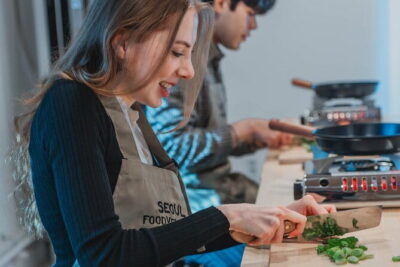
Korean Cooking Class with Grocery Shopping at Seoul Local Market
Read our review →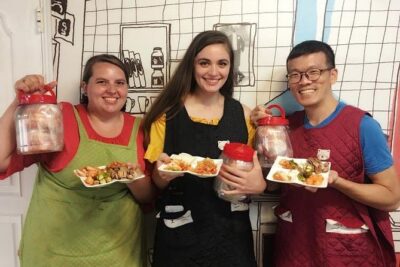
Korean Kimchi Making Day Experience with a Local Market Tour
Read our review →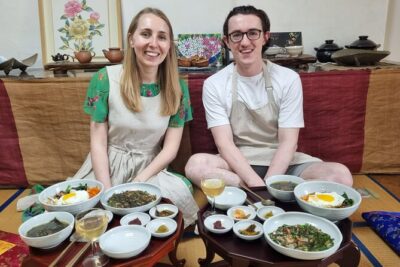
Browse the lists this tour appears in