
Reviewed · DMZ & BORDER TOURS
DMZ Tour (Exclusive offer: NK Defector meet up & Experience Hall)
History feels close here. This day trip gives you a clear look at the Korean divide, with the Third Infiltration Tunnel and Dora Observatory providing the strongest sense of place. I like the comfortable round-trip coach and the guide-led explanations, especially when guides such as Felicity, Miel, Katie, and Grace turn difficult history into something easy to follow. The main drawback is that the military controls the schedule, so parts of the route can close without a refund.
I also like that the tour avoids a compulsory shopping stop, leaving more time for the actual sites. The North Korean defector session adds a human voice to a subject often reduced to maps and headlines. You should still expect a long, busy day, a group of up to 40 people, and a steep walk through a narrow tunnel.
In This Review
- Key points to know before booking
- Why the DMZ makes a worthwhile day from Seoul
- Starting at City Hall Station
- Imjingak Park and Freedom Bridge
- Walking into the Third Infiltration Tunnel
- Dora Observatory and looking north
- Dorasan Station and the promise of connection
- The North Korean defector meeting
- How the guides shape the experience
- What the $35 price really covers
- Practical advice for a smoother day
- Who should book this DMZ tour?
- Should you book it?
- FAQ
- Where does the DMZ tour start and end?
- How long does the tour last?
- Is hotel pickup included?
- What is included in the tour price?
- Is lunch included?
- Do I need my passport?
- Can the itinerary change?
Key points to know before booking
- The Third Infiltration Tunnel is physically demanding: The route down is steep, and the climb back up can feel like a workout.
- The defector meeting adds personal context: You may hear directly from someone who left North Korea and ask questions, subject to the booked option and local arrangements.
- Dora Observatory offers a rare view north: Binoculars let you look toward North Korea, though visibility and military rules affect what you can see and photograph.
- Imjingak Park and Freedom Bridge frame the war’s human cost: Military artifacts and the former POW crossing make these more than quick photo stops.
- Guides are a major strength: Felicity, Katie, Miel, Grace, Yeoni, AJ, Erica, Charles Park, Laura, Chloe, and others are praised for clear explanations, timing, patience, and friendly group management.
- The $35 price is strong value: Transport, admission, and guiding are included, but lunch, the tunnel tram, and hotel pickup or drop-off are not.
Why the DMZ makes a worthwhile day from Seoul
Seoul can feel fast, polished, and crowded. The DMZ offers a sharp change of pace, with military checkpoints, quiet riverbanks, observation facilities, and reminders of a war that technically never ended with a peace treaty.
I like this tour because it gives you several ways to understand the division of Korea. You see physical evidence at Imjingak Park, look across the border from Dora Observatory, walk through a tunnel built beneath the boundary, and hear personal testimony from a North Korean defector if your chosen package includes that meeting.
The subject is serious, but the day is not presented as a lecture from beginning to end. Guides explain the Korean War, the creation of the DMZ, and the continuing tension between North and South Korea while keeping the group moving. Katie, for example, is praised for holding the attention of children, while Miel is noted for using maps and simple hand gestures to make the political history easier to grasp.
That guide-led context matters. Without it, you might see a tunnel, a bridge, and a distant view of North Korea without understanding why each place matters.
More DMZ and border tours:
- Best DMZ Tour Korea from Seoul (Red Suspension Bridge Optional)
★ 5.0 · 41,422 reviews - DMZ Tour: 3rd Tunnel, Option(Suspension Bridge, Boat) from Seoul
★ 5.0 · 21,373 reviews - DMZ tour south Korea from Seoul (NK experience hall, defector)
★ 5.0 · 20,599 reviews
Starting at City Hall Station
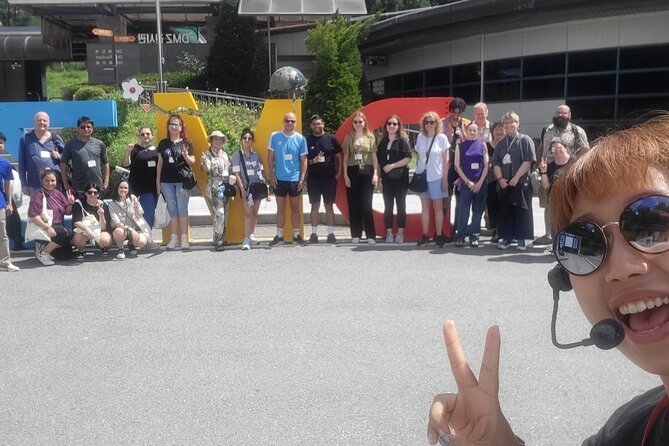
The listed meeting point is City Hall Station in central Seoul, with the tour returning there at the end. The experience lasts about seven hours, so plan most of your day around it rather than trying to squeeze in another major attraction afterward.
Transport is by air-conditioned coach. That is a practical advantage because the DMZ lies outside Seoul, and the route includes several stops that would be difficult to connect independently in one day. The coach also gives you a place to rest between visits.
Hotel pickup and drop-off are not included in the stated package. One review describes a direct pickup near Lotte City Hotel Myeongdong, but you should not assume that arrangement applies to every booking. Follow the meeting instructions you receive and allow extra time to reach City Hall Station.
The group can include up to 40 people. That is not an intimate outing, but it is still small enough for a strong guide to keep everyone on schedule. Katie is praised for giving clear instructions without treating the group like schoolchildren, an important detail on a day with military restrictions and fixed entry times.
Imjingak Park and Freedom Bridge
Imjingak Park is one of the first places where the division becomes more than an abstract line on a map. Along the Imjin River, you can see artillery and other war artifacts connected to the Korean conflict.
The park also leads toward Freedom Bridge. Nearly 13,000 Korean prisoners of war crossed here on their return to South Korea, giving the bridge a strong emotional weight despite its simple appearance.
I find this part of the route useful because it introduces the human cost before you reach the more unusual DMZ attractions. The bridge is not just a border photograph. It represents separation, return, and families divided by politics and war.
Your guide’s explanation will shape how much you get from the stop. Sadie is praised for sharing the painful story of the Korean people, while other guides are noted for making the subject accessible to families and children. Listen before taking pictures, since the guide will explain where photography is allowed.
Walking into the Third Infiltration Tunnel
The Third Infiltration Tunnel is likely to be the day’s most physical stop. The tunnel was built beneath the border area, and South Korea blocked the route at the Military Demarcation Line.
You walk down a steep path into the tunnel, then return by the same route. The passage is narrow, and the walk can be more tiring than the simple itinerary description suggests. Several people describe the climb back out as a serious workout, so comfortable shoes and clothing are not optional advice here.
A tunnel tram is not included in the price. The available information does not specify when or where a tram can be used, so ask your guide about the current arrangement rather than counting on it. If you have limited mobility or dislike confined spaces, this is the stop to consider carefully.
The tunnel’s value is its physical reality. You are not merely looking at a museum model or reading about an escape route. You are walking through a place built for a military purpose, close to one of the world’s most heavily watched borders.
Keep your pace sensible. Miel is praised for allowing people to move at their own physical speed, but the tour still has a timetable. You need to balance your comfort with the group’s departure time.
A few more trips of this kind worth comparing:
- Seoul: DMZ Tour with Optional Suspension Bridge
★ 4.8 · 5,277 reviews - Signature DMZ Tour: Exclusive Defector Talk & Suspension Bridge
★ 5.0 · 4,459 reviews - Thrilling Korean DMZ 3rd Tunnel Tour from Seoul + Red Bridge Rush
★ 5.0 · 3,097 reviews - DMZ Past and Present: Korean Demilitarized Zone Tour from Seoul
★ 5.0 · 2,481 reviews
Dora Observatory and looking north
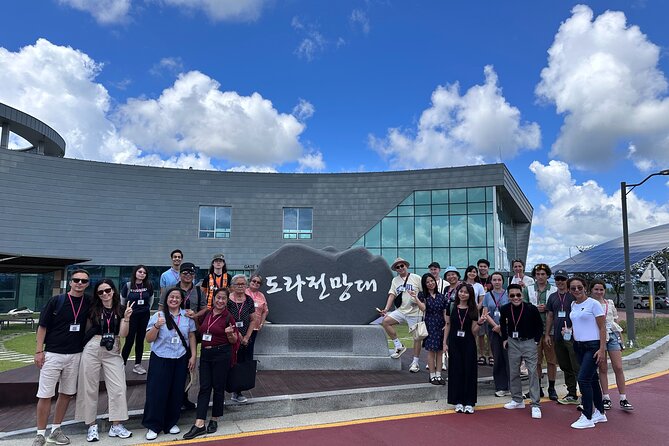
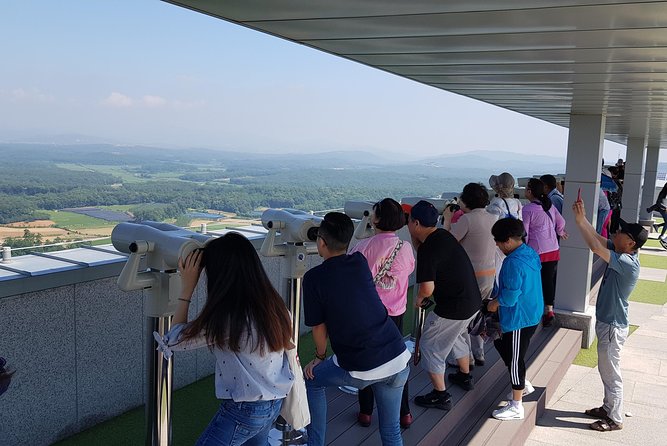
Dora Observatory provides the clearest visual connection with North Korea. From the viewing area, you can use binoculars to look toward the northern side of the border.
The experience depends heavily on weather and visibility. Even on a clear day, you may see more broad terrain than fine detail. That is part of the point. The view makes you aware of how close the two countries are geographically, despite their enormous political separation.
Photography rules matter here. Military conditions determine where and when you may take pictures, and your guide will tell you what is allowed. Do not treat the observation area like an ordinary scenic overlook.
I like this stop because it gives the tour a quiet pause after the tunnel. Instead of walking through a historic site, you are asked to look outward and think about the people and communities on the other side. The binoculars make the visit feel unusually direct, even though the view remains controlled and distant.
Dorasan Station and the promise of connection
Dorasan Station is another important stop on the route. Its meaning comes from what it represents: a railway connection associated with hopes for contact and eventual reunification between North and South Korea.
The station is not simply a transport stop for your day. It reflects the tension between infrastructure and politics. Railways suggest movement and connection, while the border still limits ordinary travel.
Your guide’s background talk is particularly useful here. The tour’s aim is not only to show landmarks but to explain how the division developed and how it continues to affect Korean life. Guides such as Erica, AJ, and Yeoni receive praise for making those explanations engaging and easy to understand.
The exact order and availability of stops can change. Military conditions and local circumstances may force the operator to cancel part of the route, and the stated policy says there is no refund in that case. That uncertainty is part of visiting an active border zone, not a standard sightseeing district.
The North Korean defector meeting
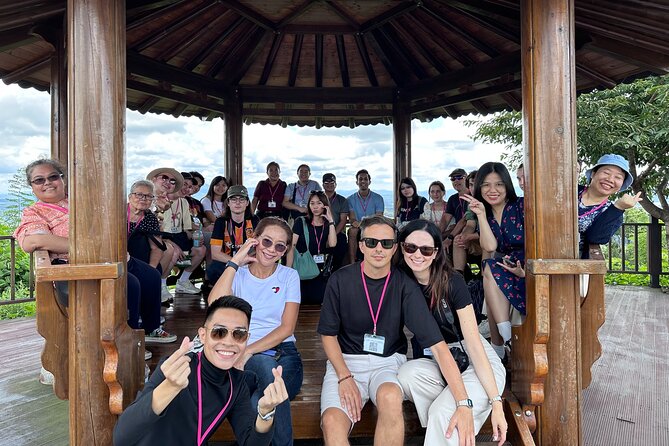
The defector meeting is the feature that gives this package its strongest human element. Rather than hearing only official explanations, you have the chance to meet someone who left North Korea and ask questions about life there and the experience of leaving.
The session can change the tone of the day. You may have just been looking at maps, tunnels, and border markers, then suddenly hear about the division from a person whose life was directly shaped by it. Several guides, including Felicity, Yeoni, Miel, and Erika, are praised for making this part especially meaningful.
Check that your booking includes the defector option. Some versions of the day have not included the meeting or have offered it as an add-on, and availability can vary. The tour title identifies the defector meetup and Experience Hall, but the supplied details do not explain every part of the Experience Hall program, so confirm the exact inclusions at booking.
Approach the conversation with respect. This is not a staged stunt or a chance to demand sensational stories. The value comes from listening carefully and placing personal experience alongside the wider history presented by your guide.
How the guides shape the experience
The strongest pattern in the feedback is guide quality. Names that receive repeated praise include Felicity, Katie, Miel, Grace, Yeoni, Charles Park, Laura, Chloe, Erica, AJ, Yoon, and Sadie.
The praise is not limited to historical knowledge. You also get strong organization, clear English, good timing, patience, and help with photographs. Miel is noted for keeping people informed about pickup details and explaining the DMZ with maps. Katie is praised for balancing serious information with humor and keeping four children engaged.
That matters because the day has many moving parts. You need to board on time, follow military instructions, stay with the group, and understand photography limits. A friendly guide who gives clear directions can make the whole outing feel calm instead of rushed.
The tour is still guide-dependent. Your exact experience will vary with the person leading your group, the size of the coach, weather, and which sites remain open. The consistently high rating suggests strong performance overall, but no border tour can promise identical conditions each day.
What the $35 price really covers
At $35 per person, this is an inexpensive way to reach several DMZ sites from Seoul. The price includes an expert guide, air-conditioned coach transport, and admission fees.
That is good value if you want a single organized day. You avoid arranging separate transport to a restricted border area, and you receive explanations that make the sites easier to understand. The defector meeting, if included in your chosen option, adds even more value because it brings a personal perspective that a basic sightseeing transfer cannot provide.
You still need to budget for lunch. Lunch is not included, and the available details do not specify the meal arrangement, so ask your guide when and where you will have time to eat. The tunnel tram is also excluded.
There is no compulsory shopping break, which I consider a real advantage. Your time remains focused on the DMZ rather than being redirected toward commercial stops.
Practical advice for a smoother day
Bring your current valid passport. You do not need to send a copy in advance, but you must have the passport with you on the day.
Wear comfortable shoes and clothes that let you manage a steep, narrow tunnel. Keep your belongings manageable, since you will board and leave the coach several times and move through controlled sites.
Listen closely to every photography instruction. Rules can vary by location, and the guide will tell you when cameras are allowed. A photograph taken in the wrong place is not worth creating a problem at a military site.
Do not book this as a casual half-day outing. The duration is about seven hours, and the schedule can feel full even when it is well paced. Felicity receives praise for maintaining a comfortable rhythm without making the day feel rushed, but you should still expect an early start or a substantial portion of your afternoon, depending on the departure time.
Cancellation is free up to 24 hours before the start time. Cancellations or changes made less than 24 hours ahead are not accepted for a refund. If you miss the coach because of a late arrival or confusion about the date, the stated policy provides no refund.
Who should book this DMZ tour?
I would choose this tour if you want the main DMZ sights in one organized day and prefer having a guide explain the political and human background. It suits first-time visitors, families whose children can manage the long day, and anyone interested in modern Korean history.
The defector session makes it especially appealing if you want more than border photographs. It gives the subject a personal dimension and can become the most memorable part of the day.
I would hesitate if you have difficulty with steep walking or narrow spaces, or if you need a fixed itinerary with guaranteed access to every stop. Military conditions can change the route, including major attractions such as the Joint Security Area, which one group found closed. The tour operator states that canceled sections caused by military or local conditions do not receive a refund.
Should you book it?
Yes, if you accept a little uncertainty and want strong value from a day outside Seoul. The $35 price covers transport, admissions, and guiding across several significant locations, while the defector meeting can add a personal voice that many standard tours lack.
Choose it with realistic expectations. You are not buying a relaxed scenic excursion, and the tunnel demands effort. But if you bring your passport, wear proper shoes, follow instructions, and confirm that your package includes the defector session, this is a thoughtful and unusually direct way to understand the Korean divide.
FAQ
Where does the DMZ tour start and end?
The listed meeting point is City Hall Station in Seoul, and the tour ends at City Hall Station.
How long does the tour last?
The tour lasts approximately seven hours.
Is hotel pickup included?
Hotel pickup and drop-off are not included in the stated package. The listed meeting point is City Hall Station.
What is included in the tour price?
The price includes an expert guide, transport in an air-conditioned coach, and admission fees.
Is lunch included?
No. Lunch is not included.
Do I need my passport?
Yes. You must bring a current valid passport on the day of the tour. You do not need to send a copy in advance.
Can the itinerary change?
Yes. Military conditions or local circumstances can lead to the cancellation of part of the itinerary, with no refund for that canceled section under the stated policy.
Just added around Seoul
- Seoraksan National Park & Nami Island★ 4.5 · 3 reviews
- Strawberry Picking, Winter Sled with Eobi Ice Valley from Seoul★ 4.5 · 3 reviews
- Seoul Full Day small group Tour★ 5.0 · 3 reviews
- Seoul Korean BBQ Dinner Experience with Secret Food Tours★ 5.0 · 3 reviews
- Rice Wine Tasting with Sommelier – Finest Makgeolli (& Soju)★ 5.0 · 3 reviews
- Majang Meat Market Experience: Private Tour with Han-woo Beef BBQ★ 5.0 · 3 reviews
- Seongsu-dong Walking Tour: K-Pop, Culture, Cheer, Friends & Relax★ 4.5 · 3 reviews
- Seoul: Alpaca World and Nami Island (with Garden / Railbike)★ 5.0 · 3 reviews
DMZ & Border Tours, compared.

Best DMZ Tour Korea from Seoul (Red Suspension Bridge Optional)
Read our review →
DMZ Tour: 3rd Tunnel, Option(Suspension Bridge, Boat) from Seoul
Read our review →
DMZ tour south Korea from Seoul (NK experience hall, defector)
Read our review →
DMZ Insider Tour: 3rd Tunnel, NK Defector Meet & Red Bridge
Read our review →

Signature DMZ Tour: Exclusive Defector Talk & Suspension Bridge
Read our review →
Thrilling Korean DMZ 3rd Tunnel Tour from Seoul + Red Bridge Rush
Read our review →DMZ Past and Present: Korean Demilitarized Zone Tour from Seoul
Read our review →Browse the lists this tour appears in