
Reviewed · DMZ & BORDER TOURS
DMZ Tour Seoul to North Korea’s 3rd Tunnel & Majang Lake Crossing
The border is closer than you think. This eight-hour trip from Seoul gives you a clear look at the Korean Demilitarized Zone, from war memorials and the Bridge of Freedom to the Third Tunnel and Dora Observatory. I like the way it combines serious history with striking views, and I especially like that you get to see North Korea through a telescope rather than only hearing about it.
I also value the practical setup: a professional English or Chinese-speaking guide, coach transport, and pickup around central Seoul. Guides such as Nancy, Alex, Kelly, Moon, Crystal, and Lina have been praised for keeping the day moving while adding personal stories and useful explanations. The main drawback is the pace. Military rules, early closures, traffic, and a large group of up to 150 people can affect the schedule.
In This Review
- Key points before you book
- Why this Seoul DMZ tour is worth your day
- Meeting in Seoul and reaching the controlled zone
- Imjingak Park and the Bridge of Freedom
- Optional Peace Gondola over the Imjin River
- Passing Unification Bridge with your identification ready
- Walking through the Third Tunnel
- Dora Observatory and the view into North Korea
- Tongilchon and the final countryside stop
- Optional Majang Lake Suspension Bridge
- Guides, group size, and the value of $35
- What to bring and how to prepare
- Who should book this DMZ experience?
- Should you book it?
- FAQ
- How long does the DMZ tour from Seoul last?
- What languages are available?
- Is hotel pickup included?
- Do I need to bring my passport?
- Is lunch included?
- Is the Majang Lake bridge included?
- Where can I get off in Seoul at the end?
Key points before you book
- The Third Tunnel requires effort: Expect inclines, stairs, and low ceilings. Anyone taller than six feet should secure the hard hat carefully.
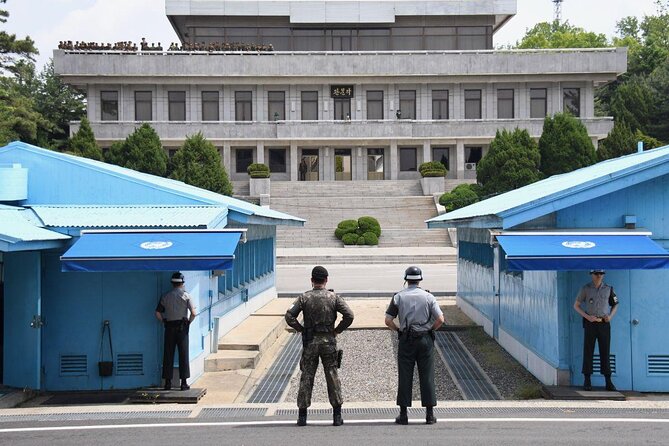
- Dora Observatory gives you the headline view: Telescopes let you look toward North Korea, though visibility depends on weather and operating conditions.
- Imjingak adds the human story: The Bridge of Freedom, Mangbaedan altar, Peace Bell, and damaged steam locomotive show how division affected ordinary families.
- Majang Lake is an optional finale: The 262-meter suspension bridge provides a lighter, scenic ending after a solemn day.
- Your passport matters: Military personnel inspect identification at Unification Bridge, so bring your passport or an accepted ID.
- The $35 base price is strong value: Transport, guide service, and core DMZ admissions are included, but lunch and optional bridges cost extra.
Why this Seoul DMZ tour is worth your day
A DMZ visit can feel like a checklist if it only takes you to a viewpoint and a souvenir shop. This trip gives you several angles on the subject. You see memorials for separated families, military checkpoints, a tunnel built for infiltration, and the modern border facilities that face North Korea today.
The day also has a useful rhythm. Imjingak provides context first. The tunnel adds physical drama. Dora Observatory delivers the visual payoff. Optional stops such as the Peace Gondola and Majang Lake then give you a break from the heavier material.
I like that the tour does not treat the DMZ as a simple photo stop. The best guides add family stories and explain how the Korean War and continuing division affect life in South Korea. Alex, in particular, has been praised for sharing personal connections to the subject, while Nancy is known for high energy, clear directions, and a cheerful approach.
Still, you need to accept some uncertainty. The DMZ is a controlled military zone, not a normal sightseeing district. A checkpoint, military exercise, fog, or early closing can change the order or shorten time at a stop. Flexibility is part of the deal.
More DMZ and border tours:
- Best DMZ Tour Korea from Seoul (Red Suspension Bridge Optional)
★ 5.0 · 41,422 reviews - DMZ Tour: 3rd Tunnel, Option(Suspension Bridge, Boat) from Seoul
★ 5.0 · 21,373 reviews - DMZ tour south Korea from Seoul (NK experience hall, defector)
★ 5.0 · 20,599 reviews
Meeting in Seoul and reaching the controlled zone
The coach uses three central meeting points:
- Myeongdong Subway Station Exit 9
- Seoul City Hall Subway Station Exit 6
- Hongdae Subway Station Exit 3
The first and third stops ask you to arrive 10 to 15 minutes early. The City Hall stop also requires punctuality because the coach is collecting people on a fixed route. If your hotel is outside the central area, the included pickup may be arranged at a nearby main subway station or downtown point rather than directly at your door.
The ride toward the DMZ takes about an hour in the stated schedule, though the total road time can change with Seoul traffic. Use the journey for the guide’s introduction to the Korean War, the armistice, and the 4-kilometer-wide buffer zone created in 1953.
At the Imjingak Tourist Information Center, the guide handles entrance clearance and tickets for the civilian-controlled areas. This administrative stop may feel plain, but it explains why you cannot simply wander into the DMZ on your own.
Imjingak Park and the Bridge of Freedom
Imjingak Resort, also called Imjingak Park, begins the emotional part of the tour. Created in 1972, it honors people separated from relatives in North Korea. The grounds include memorials, the Bell Tower, the 21-ton Peace Bell, and the Mangbaedan altar.
Mangbaedan is particularly meaningful during major Korean holidays. Families with roots in the North use the altar to remember relatives they cannot visit. You may find the site quiet and reflective, even when the wider park is busy with tour groups.
The preserved steam locomotive at Jangdan Station adds another solid piece of evidence. The train was damaged during the Korean War, and its interrupted journey along the Gyeongui Line became a physical reminder of a railway cut by conflict. It is easier to understand the war when you can look at something scarred and real, not only read dates on a sign.
The Bridge of Freedom is a short wooden crossing built in 1953 to replace a destroyed railroad bridge. It became the route used by 12,773 prisoners of war returning to South Korea. The bridge is modest, which is part of its power. It does not need grand architecture to carry the weight of those reunions.
You get about 20 minutes at the bridge and roughly 30 minutes around Imjingak. That is enough for key sights and photographs, but not enough for a slow museum visit or long independent wandering.
Optional Peace Gondola over the Imjin River
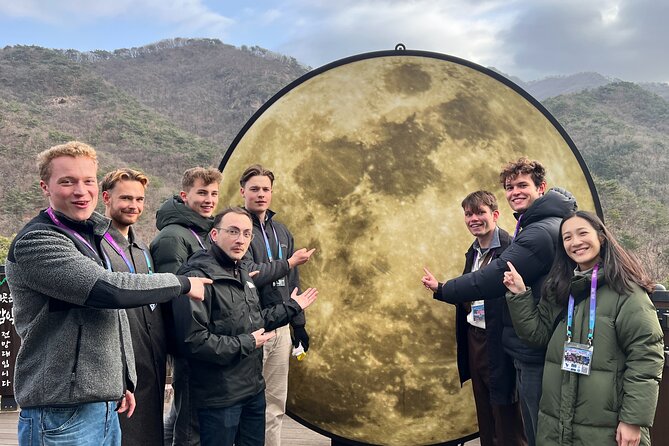
The Paju Imjingak Peace Gondola is optional and takes about an hour. Opened in 2020, it crosses the Imjin River at about 20 meters above the water and gives you a different view of the edge of the DMZ.
I see this as a choice rather than an essential part of the historical visit. Choose it if you want a broad view and a calmer break from memorials. Skip it if you prefer more time at Imjingak’s monuments, or if your priority is the tunnel and observatory.
The river itself is worth watching from the coach. Since the armistice restricted development along much of the border, wildlife and birds have had room to continue. It is a rare case where a heavily armed boundary has also left stretches of nature relatively undisturbed.
A few more trips of this kind worth comparing:
- Seoul: DMZ Tour with Optional Suspension Bridge
★ 4.8 · 5,277 reviews - Signature DMZ Tour: Exclusive Defector Talk & Suspension Bridge
★ 5.0 · 4,459 reviews - Thrilling Korean DMZ 3rd Tunnel Tour from Seoul + Red Bridge Rush
★ 5.0 · 3,097 reviews - DMZ Past and Present: Korean Demilitarized Zone Tour from Seoul
★ 5.0 · 2,481 reviews
Passing Unification Bridge with your identification ready
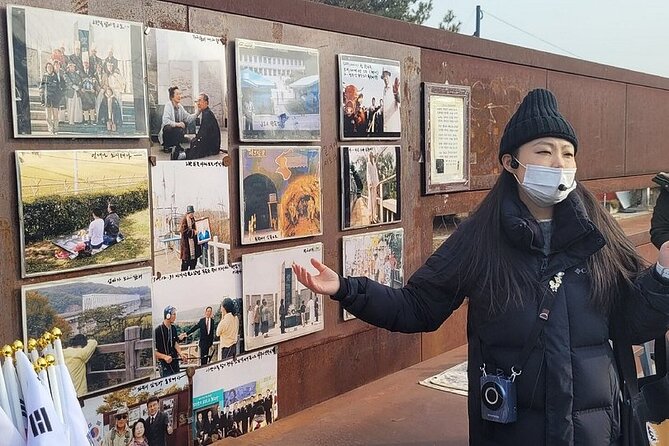
Unification Bridge is a military checkpoint. Soldiers inspect the bus and check identification before allowing entry into the civilian-controlled zone.
Bring your passport. The stated alternatives are a Military ID Card or a South Korea-issued ID, but an ordinary international visitor should rely on a valid passport. Do not leave it in your hotel room or on the coach.
This stop can slow the day, and it is one reason the timetable cannot be treated like a normal city tour. You are entering an active security area, not a theme park. Follow the guide’s instructions and expect rules about where you can walk and what you can photograph.
Walking through the Third Tunnel
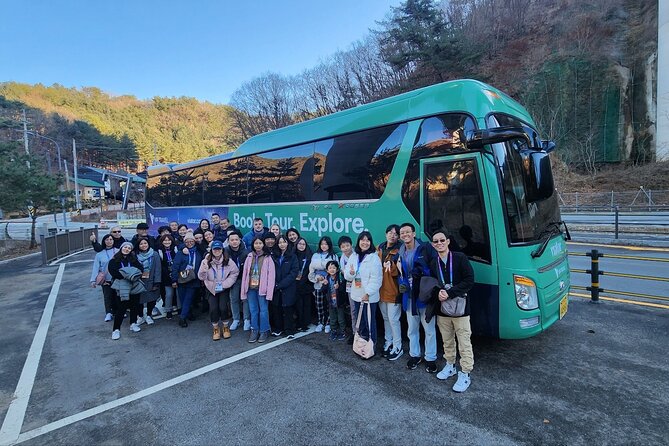
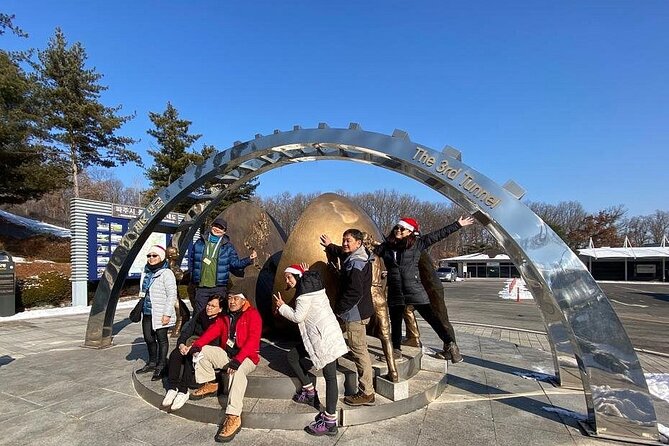
The Third Tunnel of Aggression is the most physical stop. South Korean authorities discovered the 1,635-meter tunnel in 1978, about 52 kilometers from Seoul and 12 kilometers from Munsan. It is one of several tunnels attributed to North Korean efforts to move beneath the border.
You walk downhill into the tunnel, then back uphill again. The passage is narrow in places and has a low ceiling, so hard hats are required. A practical tip: fasten yours securely, especially if you are taller than six feet. One careless bump can turn a memorable history lesson into a sore forehead.
The tunnel takes about an hour, including the walk and the guide’s explanation. Wear comfortable shoes and bring water. The hot and humid conditions can make the climb harder, and the effort may be uncomfortable for anyone with limited stamina.
This stop works because it makes military history physical. The scale of the excavation, the confined space, and the knowledge that it was intended to pass beneath the border create a stronger impression than a display case can provide. On the other hand, people who dislike enclosed spaces or steep walking may find it the hardest part of the day.
Dora Observatory and the view into North Korea
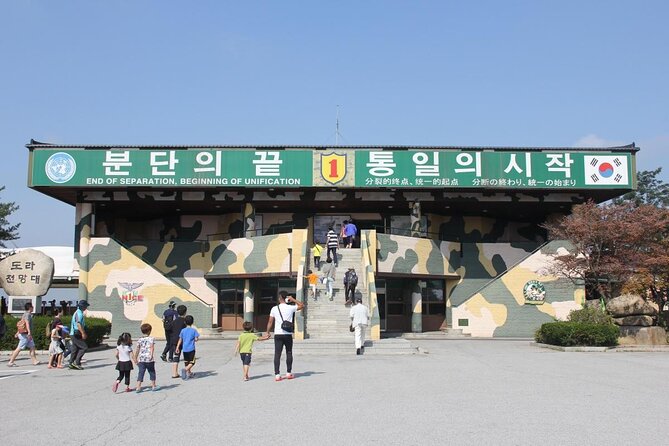
Dora Observatory, on Dorasan, is the visual high point. Built in 1986 and renovated in 2018, it offers one of the closest public viewpoints from South Korea toward North Korea.
Telescopes let you examine the area across the border. On a clear day, you may see buildings, farmland, roads, and the general shape of settlements. Do not expect a dramatic city panorama every time. Fog, haze, distance, and security restrictions can limit the view.
The observatory stop lasts about 40 minutes. That is a useful amount of time for the guide’s briefing, telescope viewing, and photographs, but visibility is never guaranteed. A smart tour operator may change the order if fog affects the morning. One schedule was reportedly reversed so the group reached the observatory after conditions improved.
North Korean products are available for purchase at the observatory. Treat this as an optional souvenir stop, not a reason to book the tour. The real value is the chance to look across a closed border while the guide explains what you are seeing.
Tongilchon and the final countryside stop
Tongilchon-gil leads to Tongilchon Jangdankong Maeul, a village just beyond the Civilian Control Line. The village is associated with Jangdan soybeans, grown in local soil and sold as a regional product.
You have about 20 minutes here. This is a short stop, so do not plan on a long meal, extended shopping, and a full village visit all at once. Lunch is not included in the tour price, and the amount of time available for eating can be limited. Bring a snack or confirm the day’s meal arrangement with the operator before leaving Seoul.
This stop helps you see that the area is not only a military boundary. People farm, sell local goods, and maintain daily routines beside one of the world’s most closely watched borders.
Optional Majang Lake Suspension Bridge
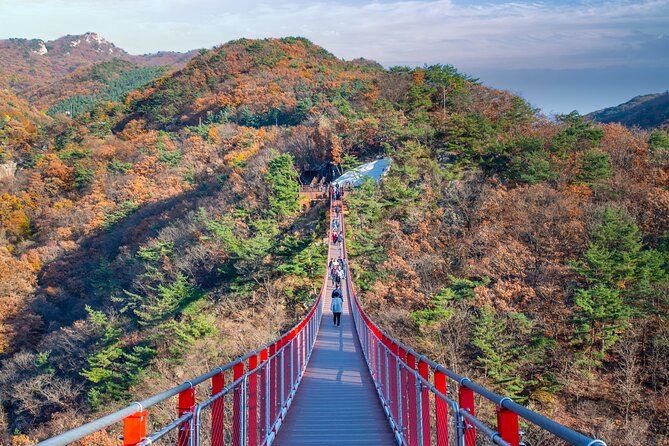
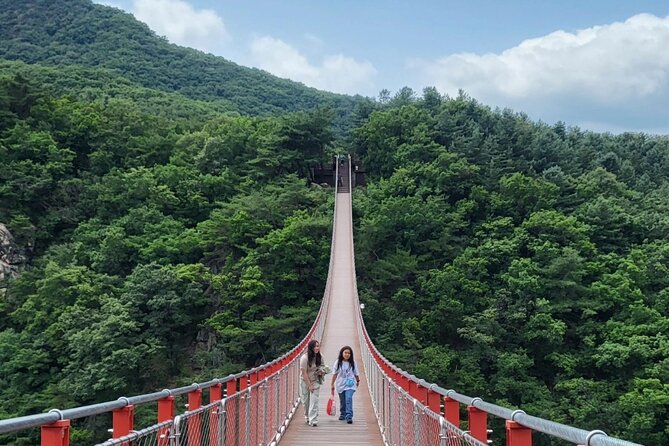
The Majang Lake stop changes the tone completely. The 262-meter suspension bridge opened in 2020 and crosses about 25 meters above the reservoir. It takes about an hour and is optional, depending on the package selected at checkout.
I like this addition for people who want scenery and a little excitement after the serious DMZ material. The bridge is also a good reason to choose this version of the day trip over a basic DMZ-only tour. The drawback is simple: after a long day, another walk may feel like work, especially after the Third Tunnel.
The package information also lists an optional Gamaksan Red Suspension Bridge and optional strawberry picking. These are not part of the DMZ-only price, so check exactly which option you selected. The tour title highlights Majang Lake, but the inclusions make clear that the bridges must be added during booking.
Guides, group size, and the value of $35
At about $35 per person, the base tour offers good value for a full day outside Seoul. You receive coach transport, a professional English or Chinese-speaking guide, core admissions, and help with the controlled-zone paperwork. Reaching these sites independently would require more planning and would not provide the same running commentary.
The large maximum capacity of 150 people is the main tradeoff. A group that size can mean waiting for people at checkpoints, gathering around the guide, and moving on when the schedule says so. It is not the right format for a quiet private visit.
The guide can make a major difference. Nancy is repeatedly praised for energy and organization. Alex is valued for clear explanations and personal context. Kelly is described as warm and efficient, while Moon, Crystal, Lina, Emily, Hana, Gogo, Ray, and K have also received strong praise for keeping the day informative and enjoyable.
These names are not a promise that you will receive a particular guide. They do show the level of service the company aims for. A good guide matters here because the sites need explanation. Without context, a damaged locomotive is just an old train and a telescope is just a telescope.
What to bring and how to prepare
Keep your preparation simple:
- Bring your passport for the military checkpoint.
- Wear walking shoes for the Third Tunnel and suspension bridge.
- Carry water and a snack because lunch is not included.
- Pack a jacket. The day can feel cool near the border, and the tunnel conditions differ from the weather outside.
- Arrive 10 to 15 minutes early at your selected Seoul meeting point.
- Expect stairs, inclines, and a low ceiling in the tunnel.
- Keep your schedule flexible in case military exercises, weather, or early closures change the order.
Hotel drop-off is not included. At the end, the coach drops you at Myeongdong, Hongik University Subway Station, or City Hall. That is useful for continuing an evening in Seoul, but you should allow time to reach your accommodation afterward.
Who should book this DMZ experience?
I recommend it to first-time visitors who want the main DMZ sights in one organized day. It suits you especially well if you enjoy history, political geography, memorials, and unusual border experiences, and if you prefer a guide to explain what you are seeing.
Families with older children may appreciate the mix of a tunnel, telescopes, trains, bridges, and open-air sites. People who want a relaxed day with long meals and plenty of free time should choose carefully. The schedule is full, and the military setting limits your freedom.
Free cancellation is available up to 24 hours before departure for a full refund. Changes or cancellations inside that window are not accepted for a refund.
Should you book it?
Book this tour if you want a well-priced, full-day introduction to the DMZ with the Third Tunnel, Dora Observatory, Imjingak memorials, and an optional Majang Lake crossing. The combination gives you both the human cost of division and a direct look toward North Korea.
Skip it if you dislike group transport, strict schedules, enclosed tunnels, or the possibility that weather and military controls will alter the plan. For most visitors with reasonable stamina, a passport, and an interest in modern Korean history, the $35 base price is a sensible buy. Add Majang Lake if you want a scenic finish, but do not mistake the optional bridge for the main event. The Third Tunnel and Dora Observatory are the core of the day.
FAQ
How long does the DMZ tour from Seoul last?
The tour lasts approximately eight hours, including the Seoul meeting points, DMZ visits, and return drop-off.
What languages are available?
A professional guide is provided in English or Chinese.
Is hotel pickup included?
Pickup is provided at a main subway station near the hotel or in the downtown area. The tour also uses meeting points at Myeongdong, City Hall, and Hongdae.
Do I need to bring my passport?
Yes. At Unification Bridge, soldiers inspect identification. Visitors should bring a passport. A Military ID Card or South Korea-issued ID is also listed as an accepted alternative.
Is lunch included?
No. Lunch is not included in the tour price.
Is the Majang Lake bridge included?
The Majang Lake Suspension Bridge is optional and must be selected during checkout. The Gamaksan Red Suspension Bridge and strawberry picking are also optional additions.
Where can I get off in Seoul at the end?
The available drop-off points are Myeongdong, Hongik University Subway Station, and City Hall. Hotel drop-off is not included.
Just added around Seoul
- Seoraksan National Park & Nami Island★ 4.5 · 3 reviews
- Strawberry Picking, Winter Sled with Eobi Ice Valley from Seoul★ 4.5 · 3 reviews
- Seoul Full Day small group Tour★ 5.0 · 3 reviews
- Seoul Korean BBQ Dinner Experience with Secret Food Tours★ 5.0 · 3 reviews
- Rice Wine Tasting with Sommelier – Finest Makgeolli (& Soju)★ 5.0 · 3 reviews
- Majang Meat Market Experience: Private Tour with Han-woo Beef BBQ★ 5.0 · 3 reviews
- Seongsu-dong Walking Tour: K-Pop, Culture, Cheer, Friends & Relax★ 4.5 · 3 reviews
- Seoul: Alpaca World and Nami Island (with Garden / Railbike)★ 5.0 · 3 reviews
DMZ & Border Tours, compared.

Best DMZ Tour Korea from Seoul (Red Suspension Bridge Optional)
Read our review →
DMZ Tour: 3rd Tunnel, Option(Suspension Bridge, Boat) from Seoul
Read our review →
DMZ tour south Korea from Seoul (NK experience hall, defector)
Read our review →
DMZ Insider Tour: 3rd Tunnel, NK Defector Meet & Red Bridge
Read our review →

Signature DMZ Tour: Exclusive Defector Talk & Suspension Bridge
Read our review →
Thrilling Korean DMZ 3rd Tunnel Tour from Seoul + Red Bridge Rush
Read our review →DMZ Past and Present: Korean Demilitarized Zone Tour from Seoul
Read our review →Browse the lists this tour appears in