Reviewed · SEOUL TOURS
Gwanghwamun Tour l 120 minutes to Understand Local Korean Society
History still shapes daily life here. This two-hour walk links Seoul’s royal center, foreign influence, neighborhood change, and North Korean politics in a way that makes the city easier to understand. I especially like the clear historical thread and guide June’s ability to connect large events with ordinary customs, from age hierarchy to coffee and Korean spa culture. The $14.10 price is also hard to beat for a small-group experience.
The main consideration is pace. You cover several important places in only 120 minutes, so this is more about explanation and context than long sightseeing stops or museum visits. A few uphill sections also require comfortable shoes, and the tour depends on good weather.
In This Review
- Key Points to Know Before You Book
- Why This Short Walk Explains Seoul So Well
- Gwanghwamun Square and 600 Years of Central Seoul
- The U.S. Embassy and Korea’s Complicated American Connection
- Samcheongdong-gil and the Price of Rapid Growth
- Bukchon Hanok Village and the Tension Between Old and New
- The University of North Korean Studies and a Difficult Relationship
- The Everyday Culture Behind the Big Historical Themes
- Is $14.10 Good Value for Two Hours?
- Timing, Transport, and Practical Comfort
- Who Will Get the Most From This Tour?
- Should You Book the Gwanghwamun Tour?
- FAQ
- How long is the Gwanghwamun Tour?
- Where does the tour begin?
- What time does the tour start?
- Where does the tour finish?
- How much does the tour cost?
- Is the walk difficult?
- Can I cancel for a full refund?
Key Points to Know Before You Book
- June brings a historian’s eye: His explanations connect Joseon-era ideas, postwar capitalism, politics, and everyday Korean behavior.
- The route covers five distinct subjects: You move from Gwanghwamun Square and the U.S. Embassy to Samcheongdong, Bukchon Hanok Village, and the University of North Korean Studies.
- It goes beyond palace sightseeing: The focus is Korean society today, including opinions about North Korea, Japan, and the United States.
- Two hours keeps the experience focused: You get a useful introduction without giving up a full day in Seoul.
- The walk is easy overall: Expect some uphill stretches, but most participants can take part.
- The value is excellent: At $14.10 per person, the tour costs less than many ordinary Seoul attractions and offers a personal guide throughout.
Why This Short Walk Explains Seoul So Well
Many first visits to Seoul focus on palaces, shopping streets, and food. Those are worthwhile, but they do not always explain why Korean society works as it does. This tour takes a different route. It uses places in central Seoul as evidence, then connects them to history, politics, work, family life, and social habits.
I like this approach because it avoids treating Korea as a collection of attractive buildings. Gwanghwamun is not just a square for photographs. Bukchon is not just a row of traditional homes. The U.S. Embassy is not merely a secure building on a city street. Each stop becomes part of a larger conversation about power, modernization, memory, and identity.
Guide June is a history major, and that background shapes the experience. His style is described as clear, structured, fluent, and occasionally funny. You should expect something closer to a friendly outdoor lecture than a casual stroll with a few quick facts.
That suits you if you enjoy asking why. Why does age matter so much in Korean speech and social behavior? Why did rapid economic growth bring both opportunity and pressure? Why do opinions about Japan, America, and North Korea remain complicated? The tour is designed to address those questions in plain language.
The group can have up to 20 people. That is large enough to provide some social energy, but still small enough for a walking guide to speak directly to the group. The fixed start time is 10:30 a.m., so you can use the afternoon for a palace, museum, market, or neighborhood meal.
A few more trips of this kind worth comparing:
- Best DMZ Tour Korea from Seoul (Red Suspension Bridge Optional)
★ 5.0 · 41,422 reviews - DMZ Tour: 3rd Tunnel, Option(Suspension Bridge, Boat) from Seoul
★ 5.0 · 21,373 reviews - DMZ tour south Korea from Seoul (NK experience hall, defector)
★ 5.0 · 20,599 reviews
Gwanghwamun Square and 600 Years of Central Seoul
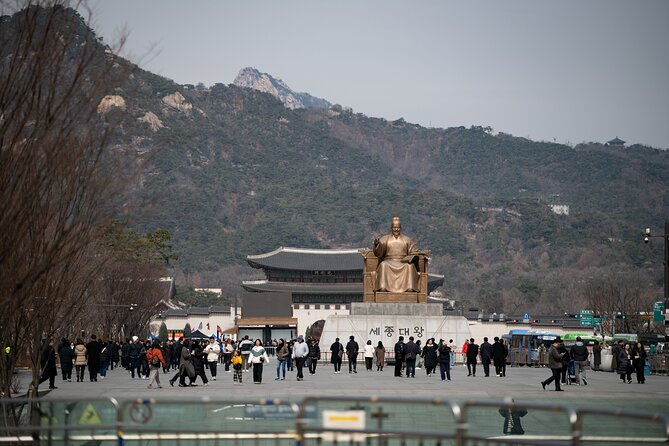
The tour begins at Gwanghwamun Square, at 172 Sejong-daero in Jongno District. This is one of the best places in Seoul to begin a history lesson because the area has served as a center of political and public life for more than 600 years.
The stop lasts about 15 minutes. That is not enough time for an extended historical tour, but it gives June a strong opening point. You learn about the Joseon kingdom and how its principles continue to affect Korean society.
This is where the tour introduces the idea that history is not safely locked in the past. Joseon institutions, Confucian values, and social rank still help explain modern patterns of respect and age hierarchy. You may also gain a better sense of why public space in central Seoul carries such political weight.
The square is a practical meeting point. It is near public transportation, easy to find, and useful for orienting yourself in the city center. If you arrive early, you can get familiar with the area before the walk starts.
Do not expect a long stop for independent photographs or a detailed tour of every monument. June uses the square as a starting chapter, then moves the group onward.
The U.S. Embassy and Korea’s Complicated American Connection
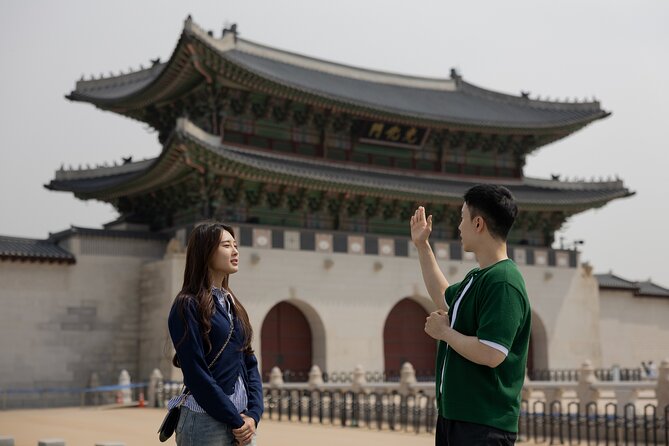
The next stop is the U.S. Embassy and Consulate in the Republic of Korea, also for about 15 minutes. The focus is not on entering the building. Instead, you look at the place as a symbol of American influence in Korea, from the country’s establishment to the present day.
This part adds needed balance to a Seoul history tour. Korea’s modern story cannot be explained only through royal history or traditional neighborhoods. The postwar period, international alliances, security concerns, and economic change all matter.
June also addresses how Koreans think about the United States. That is useful because a visitor’s outside view can be too simple. A country can have close political and military ties with America while public attitudes remain varied and subject to debate.
The stop is brief, so you will not receive a full course in Korean foreign policy. You will, however, get a framework for understanding why American influence remains visible in Seoul and why local opinions are not all the same.
Samcheongdong-gil and the Price of Rapid Growth
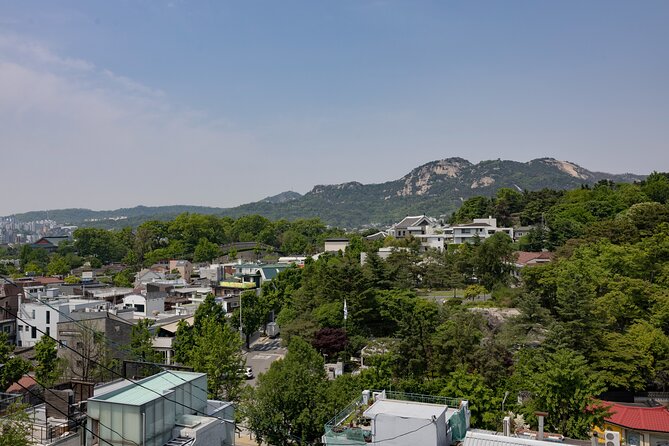
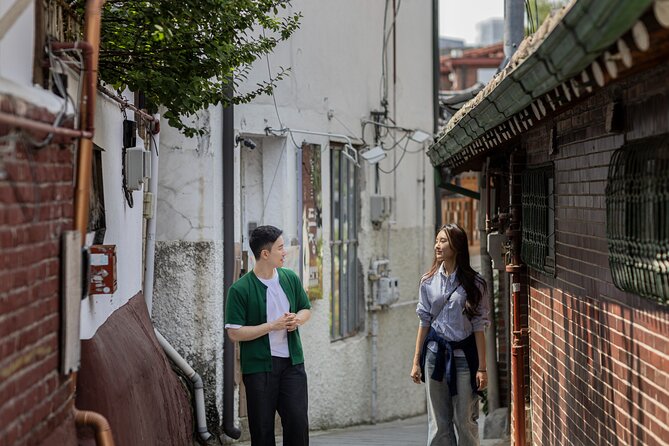
Samcheongdong-gil shifts the subject from national politics to modern urban life. This retro-style street has shops and restaurants, but June uses it to discuss Korea’s rapid development and some of its side effects.
The stop lasts around 15 minutes. The setting helps you think about how old and new Seoul meet in the same neighborhood. Traditional-looking surroundings, modern businesses, and changing commercial life all raise questions about who benefits from development and what may be lost along the way.
This is also the point where the tour turns toward Korean working culture. That makes the walk more useful than a simple architecture tour. You begin to connect economic growth with the way people work, spend time, and adapt to a fast-changing city.
Because the stop is short, you probably will not have time to browse every shop or sit down for a meal. Think of Samcheongdong as a living example for June’s explanation, not a shopping break.
The route’s mix of streets and alleyways is one of its strengths. Seoul often reveals more in side lanes than on its major avenues, and the change in atmosphere helps keep the two-hour walk from feeling like a classroom with walls.
A completely different kind of day out in Seoul:
- Seoul: DMZ Tour with Optional Suspension Bridge
★ 4.8 · 5,277 reviews - Signature DMZ Tour: Exclusive Defector Talk & Suspension Bridge
★ 5.0 · 4,459 reviews - Thrilling Korean DMZ 3rd Tunnel Tour from Seoul + Red Bridge Rush
★ 5.0 · 3,097 reviews - DMZ Past and Present: Korean Demilitarized Zone Tour from Seoul
★ 5.0 · 2,481 reviews
Bukchon Hanok Village and the Tension Between Old and New
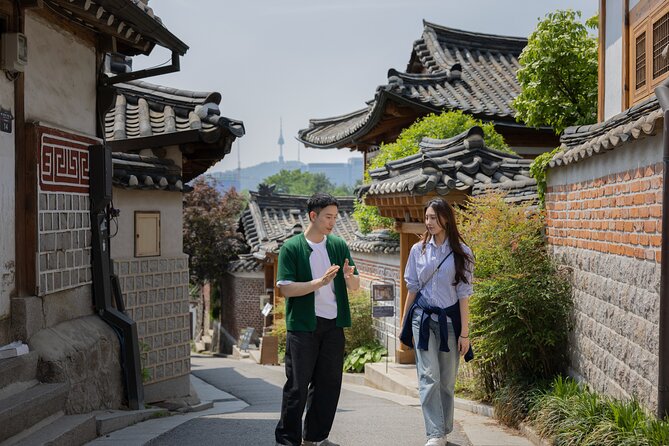
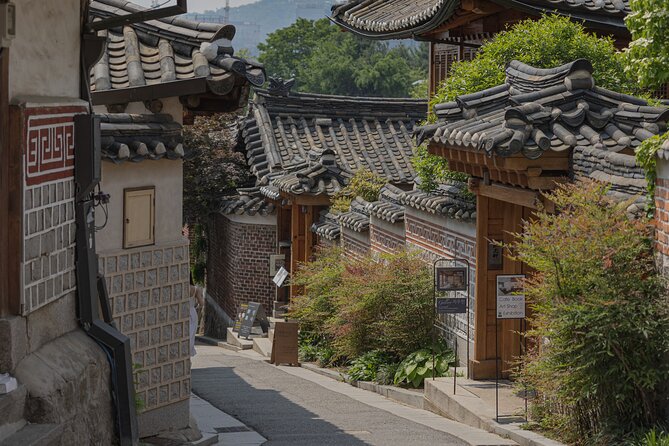
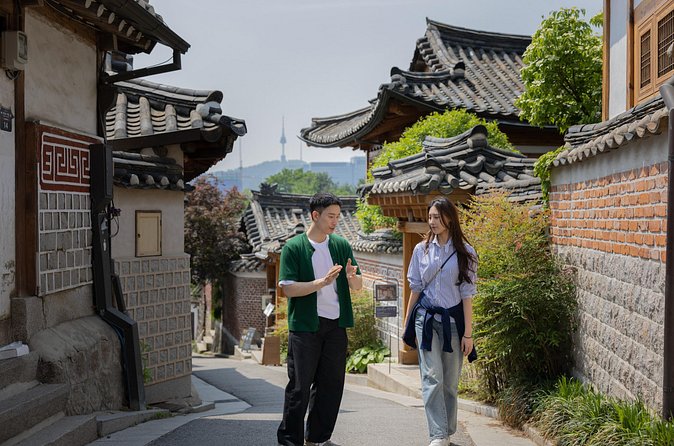
The walk continues to Bukchon Hanok Village for about 25 minutes. This is the longest stop, and it makes sense. Bukchon’s traditional hanok homes offer a clear view of older Korean residential design, while the neighborhood’s current role raises difficult questions about preservation and development.
June explains the tension between protecting traditional houses and allowing a living neighborhood to change. That distinction matters. Bukchon is not simply an open-air museum. It is also a place shaped by residents, businesses, tourism, and urban policy.
You will likely appreciate this stop most if you want more than attractive rooflines. The physical setting gives the discussion a clear focus: How does a modern capital preserve its older character without freezing a neighborhood in time?
The village also includes uphill sections. The walk is described as easy overall, but you should wear comfortable shoes and be ready for a few slopes. The route does not require a high level of fitness, though the hills may feel more tiring in hot or humid weather.
A 25-minute visit is enough for explanation and some views, but not for a leisurely exploration of every lane. If Bukchon is a major priority for you, leave time to return independently after the tour.
The University of North Korean Studies and a Difficult Relationship
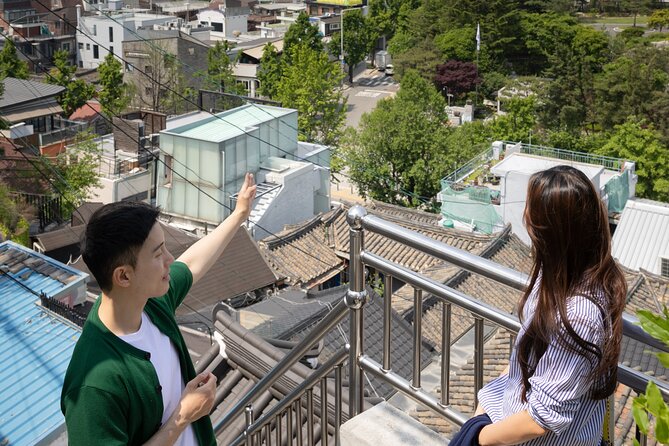
The final main stop is the University of North Korean Studies, described as the only college specializing solely in North Korea. The group spends about 20 minutes here, looking at the relationship between South and North Korea and how people in the South think about the North.
This is one of the most unusual parts of the route. Many Seoul tours mention the Korean War or the Demilitarized Zone, but fewer use a university devoted to North Korean studies as a place to discuss public attitudes and political history.
The subject is not simple. South Korean views of North Korea can include security concerns, family history, cultural connection, frustration, curiosity, and changing political opinions. A short stop cannot cover every position, but it can help you avoid the easy assumption that the relationship is understood in only one way.
This section may appeal especially to visitors who want to understand the Korean Peninsula beyond a standard Cold War explanation. It also completes the route’s movement from royal history to modern national identity.
The tour finishes in front of the Blue House, or Cheong Wa Dae, at 1 Cheongwadae-ro. That is a useful ending because you finish near another important symbol of Korean government and political power.
The Everyday Culture Behind the Big Historical Themes
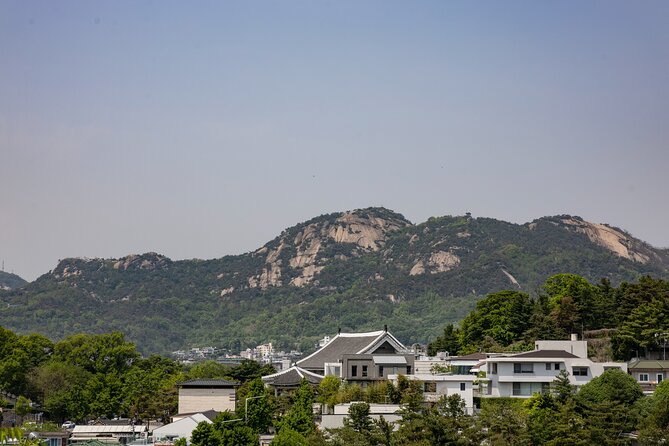
One of the tour’s strongest features is the effort to connect public history with daily habits. June discusses Korean age hierarchy, which can help you understand why introductions, language, and social behavior may feel different from what you know at home.
The tour also touches on Korea’s thriving coffee culture and spa culture. These details give the history room to breathe. You are not left with only dates, presidents, dynasties, and foreign policy. You also learn how broad social values can appear in ordinary leisure and communication.
I find this kind of explanation particularly useful early in a Seoul visit. It can help you interpret later experiences, such as meeting Korean friends, ordering in a café, visiting a spa, or noticing how people of different ages interact.
The experience is not presented as a food tour, despite the broader discussion of culture and daily life. You should not book it expecting tastings or restaurant visits. Its purpose is explanation through walking and conversation.
Is $14.10 Good Value for Two Hours?
At $14.10 per person, this is a very strong value if you want a guide who can provide context. The admission cost at each listed stop is free, so most of what you are paying for is June’s preparation, commentary, route planning, and ability to answer questions.
The price is especially reasonable compared with booking a private guide. The group may include up to 20 people, so this is not a one-on-one experience, but the size remains manageable for an outdoor talk.
The value depends on your interests. If you prefer to explore at your own pace, shop, take photographs, or spend long periods inside attractions, the schedule may feel too structured. If you want a focused introduction to Korean history and society, the two-hour format works well.
The tour is also a good choice for solo visitors. The walk provides a shared activity without taking up an entire day, and the group format gives you a chance to mingle with other participants. June is also known for offering personal tips at the end based on individual interests.
Timing, Transport, and Practical Comfort
The start time is 10:30 a.m. at Gwanghwamun Square. Since the meeting point is near public transportation, reaching the tour should be straightforward, though you should allow enough time to find the exact location in a large city center.
The finish is at the Blue House, not back at the starting point. Plan your afternoon from that location. You can continue exploring Jongno and nearby sights, or use public transportation from the area.
The walk is suitable for most people, but the route includes a few uphill sections. Comfortable footwear matters more than speed. Bring weather-appropriate clothing because the experience takes place outdoors and requires good weather.
Confirmation arrives at booking, and the activity uses a mobile ticket. Cancellation is free up to 24 hours before the 10:30 a.m. start time. Changes or cancellations inside that window are not accepted for a refund.
The experience also requires a minimum number of participants. If that minimum is not reached, or if poor weather forces cancellation, you are offered another date or experience, or a full refund.
Who Will Get the Most From This Tour?
You should consider booking this walk if you want:
- A short introduction to Korean history and present-day society
- Clear explanations rather than a list of dates
- A guide who can discuss politics and social customs
- A route combining famous areas with a less usual academic stop
- A small-group experience at a modest price
- Practical cultural context for the rest of your Seoul visit
It is particularly well suited to first-time visitors who have already seen the basic palace sights, or who want a stronger foundation before exploring them. It also suits couples, solo participants, and people in their 30s or older who enjoy history, politics, and social questions.
You may want something else if your priority is shopping, food, interior access, or extensive time at each location. The tour visits important areas, but it does not function as a detailed Bukchon photography walk or a full palace tour.
Should You Book the Gwanghwamun Tour?
I would book this tour if you want Seoul to make more sense, not just look attractive. For $14.10, June offers a focused explanation of how Joseon traditions, postwar development, international relationships, and modern social habits connect.
The best reason to choose it is the range of subjects packed into two hours. You move from Gwanghwamun’s royal and political past to American influence, urban change, hanok preservation, and North Korean studies. That is a lot, but the route has a clear purpose.
Book it near the beginning of your stay so June’s advice can help shape the rest of your visit. Skip it if you want a slow sightseeing walk with plenty of free time. For an easy, thoughtful introduction to the ideas behind modern Korean society, it offers unusually good value.
FAQ
How long is the Gwanghwamun Tour?
The tour lasts approximately two hours, or 120 minutes.
Where does the tour begin?
It begins at Gwanghwamun Square, located at 172 Sejong-daero in Jongno District, Seoul.
What time does the tour start?
The scheduled start time is 10:30 a.m.
Where does the tour finish?
The tour finishes in front of the Blue House, also called Cheong Wa Dae, at 1 Cheongwadae-ro in Jongno District.
How much does the tour cost?
The listed price is $14.10 per person.
Is the walk difficult?
The walk is described as easy, though a few parts include uphill sections. Most people can participate, but comfortable shoes are recommended.
Can I cancel for a full refund?
Yes. You can cancel at least 24 hours before the experience start time for a full refund. Poor weather or failure to meet the minimum number of participants may also result in an alternative date or a full refund.
Just added around Seoul
- Seoraksan National Park & Nami Island★ 4.5 · 3 reviews
- Strawberry Picking, Winter Sled with Eobi Ice Valley from Seoul★ 4.5 · 3 reviews
- Seoul Full Day small group Tour★ 5.0 · 3 reviews
- Majang Meat Market Experience: Private Tour with Han-woo Beef BBQ★ 5.0 · 3 reviews
- Seoul Korean BBQ Dinner Experience with Secret Food Tours★ 5.0 · 3 reviews
- Rice Wine Tasting with Sommelier – Finest Makgeolli (& Soju)★ 5.0 · 3 reviews
- Max Out Seoul: Must Visit City Highlights Panoramic Day Tour★ 5.0 · 3 reviews
- Seongsu-dong Walking Tour: K-Pop, Culture, Cheer, Friends & Relax★ 4.5 · 3 reviews
Seoul Tours, compared.

Best DMZ Tour Korea from Seoul (Red Suspension Bridge Optional)
Read our review →
DMZ Tour: 3rd Tunnel, Option(Suspension Bridge, Boat) from Seoul
Read our review →
DMZ tour south Korea from Seoul (NK experience hall, defector)
Read our review →

Signature DMZ Tour: Exclusive Defector Talk & Suspension Bridge
Read our review →
Thrilling Korean DMZ 3rd Tunnel Tour from Seoul + Red Bridge Rush
Read our review →DMZ Past and Present: Korean Demilitarized Zone Tour from Seoul
Read our review →