
Reviewed · HISTORICAL TOURS
Incheon Port History Tour by 19th Century Electric Car, KTourTOP10
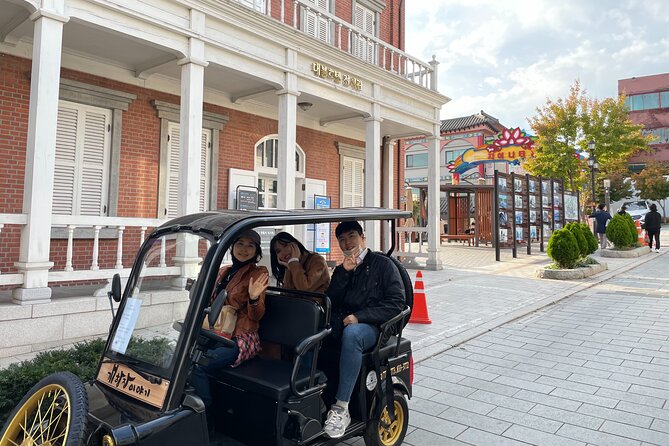
Old Incheon rolls by in bright, easy fashion. This 50-minute electric-car tour gives you a quick look at the Open Port area, with two clear strengths: the unusual 19th-century-style vehicle and a route packed with memorable stops, including Chinatown, the Jjajangmyeon Museum, and Jemulpo Club. The $45 price covers a private group of up to three, which is good value for a couple or small family.
The main caution is communication. Some rides use prerecorded commentary, and one driver spoke no English, while guide Soonie earned warm praise for her patient historical explanations and flexibility. I would confirm the language and departure before arriving, especially if you are fitting this into a long layover.
In This Review
- Key points to know before booking
- Why old Incheon deserves a short tour
- Starting at Incheon Art Platform
- The Cheongiljogyeji Stairway and the port’s foreign quarters
- Haean Catholic Church and overseas Chinese history
- Jjajangmyeon Museum and the story of black-bean noodles
- Euiseon-dang in Chinatown
- Donghwa Village and the playful side of the route
- Chohanji and Three Kingdoms mural streets
- Jemulpo Club, the tour’s strongest historical finish
- What the electric car adds
- Price, group size, and guide quality
- Who should book this Incheon tour?
- Should you book the 50-minute electric-car tour?
- FAQ
- Where does the Incheon Port History Tour begin?
- Where does the tour finish?
- How long does the tour last?
- How much does the tour cost?
- Is food included?
- What type of vehicle is used?
- Which places are included on the route?
- Is the tour available at different times?
- Can I cancel for a full refund?
Key points to know before booking
- A compact ride through old Incheon: You cover the Open Port district in about 50 minutes, making this useful when time is tight.
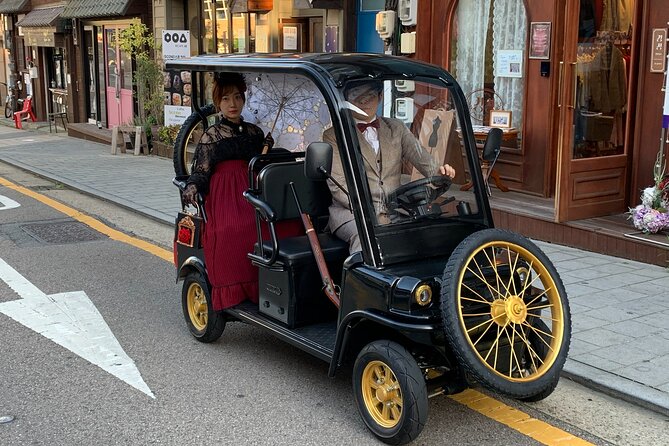
- The vehicle is part of the fun: The electric car has a 19th-century style without the noise or fumes of a traditional sightseeing vehicle.
- Chinatown and jjajangmyeon anchor the route: You see the neighborhood tied to Chinese immigration and the origins of Korea’s famous black-bean noodles.
- The tour mixes real history with playful attractions: Historic stairways and churches share the route with Donghwa Village and colorful mural streets.
- Guide quality can shape the outing: Soonie received especially strong praise, but English service may vary by departure.
- The price works best for small parties: At $45 per group of up to three, the cost is more attractive when shared.
Why old Incheon deserves a short tour
Incheon is often treated as Seoul’s airport city, but its port district tells a separate Korean story. The harbor opened in 1883, bringing foreign trade, Chinese and Japanese communities, Christian groups, clubs, restaurants, and new cultural influences into one compact area.
That mix is what makes the ride worthwhile. You are not only looking at old buildings. You are seeing the places where migration, commerce, religion, food, and colonial-era politics met.
I like this tour because it gives you that context without asking you to spend half a day walking from site to site. The car carries you through streets that can feel scattered on a map. You get a quick orientation, then you can return on foot to the places that catch your interest.
The route also has a slightly odd but enjoyable balance. Some sights are serious and historically important. Others are colorful, theatrical, or plainly designed for photographs. That contrast is part of modern Incheon, and the ride does not pretend every stop has the same weight.
More historical tours:
- From Busan: Gyeongju UNESCO World Heritage Guided Day Tour
★ 4.8 · 1,250 reviews - Gyeongju UNESCO World Heritage Guided Day Tour from Busan
★ 5.0 · 660 reviews - Seoul: Evening Dark History, Folklore & Ghost Story Walking Tour
★ 5.0 · 593 reviews
Starting at Incheon Art Platform
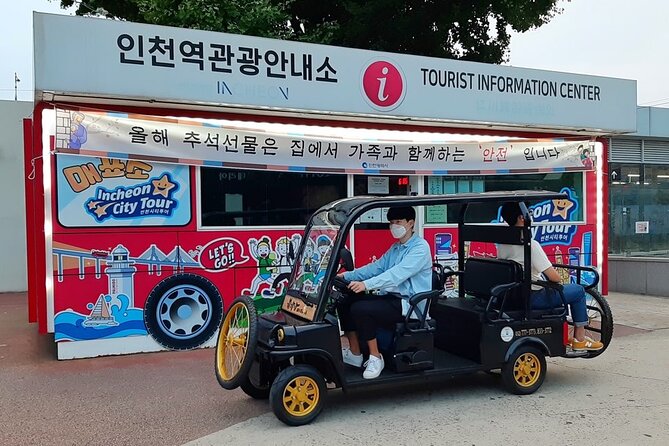
The meeting point is 266 Jemullyang-ro in Jung-gu, near the Incheon Art Platform. This red-brick complex is a fitting starting point because it connects the old port district with present-day art.
The buildings contain the story of the Open Port area, while the complex now hosts exhibitions and performances involving art, music, literature, and film. From a sightseeing point of view, it gives you an early clue about the neighborhood’s character: old commercial architecture has been given a newer public role.
You should arrive ready to begin at the stated time. The tour lasts only 50 minutes, so a late start cuts into the actual route. The experience is booked well ahead on average, about 38 days in advance, which suggests that popular departure times can fill before a trip.
Several departure times are offered, a useful feature if you are working around a flight or a larger Incheon itinerary. One passenger used the tour while waiting for a delayed flight, so the short format can serve as a practical stopgap. Still, do not treat it as completely spontaneous. Confirm that the ride is operating before you set out, particularly if your schedule is tight.
The Cheongiljogyeji Stairway and the port’s foreign quarters
One of the more meaningful sights is the Cheongiljogyeji Stairway, associated with the old foreign settlements. The area around the stairs was divided between Chinese and Japanese buildings, reflecting the way foreign residents and trade were organized after the port opened.
The term Jogye refers to a designated area for foreign residents or commerce. The stairs also connect toward Jayu Park, and the route gives you views toward the Incheon Sea.
This is the sort of stop where a guide adds real value. Without explanation, you may see a staircase and a few old structures. With context, the area becomes evidence of how international trade changed the city and how separate communities occupied the same port district.
The drawback is that the car cannot provide a long walking visit at every place. You may get a view, a brief explanation, or a pass by a landmark rather than a full stop with time for close inspection. If the stairway is your main interest, plan to return independently after the ride.
Haean Catholic Church and overseas Chinese history
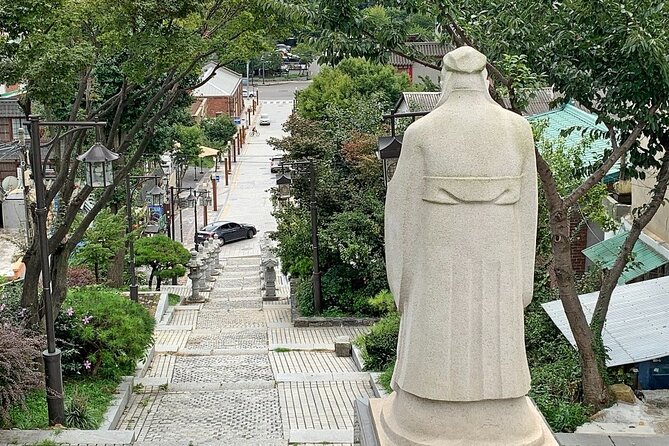
Haean Catholic Church adds another layer to the route. It was created in the 1960s for devout Catholics among Incheon’s overseas Chinese community, giving the church both religious and migration-related importance.
This detail helps you see Chinatown as more than a restaurant strip. The district grew from people who left China, built new lives near the port, and created institutions that helped them maintain community ties.
The church is also a reminder that the area’s history did not end with the opening of the port in 1883. Communities changed over time, and some of the most interesting buildings reflect later chapters rather than the first years of foreign trade.
Do not expect a full religious tour. The church is one part of a moving route, and the amount of time devoted to it depends on the guide and the pace of the vehicle.
More Incheon trips:
- Private Airport Transfer: Incheon Airport to Seoul City (1-5 pax)
★ 5.0 · 92 reviews - Private Layover Tour from Incheon Airport to Seoul
★ 5.0 · 78 reviews - Seoul Layover Private Tour from Incheon Airport
★ 5.0 · 65 reviews - (P/Transfer) Incheon Airport ↔ Seoul (Up to 5 Pax)
★ 5.0 · 61 reviews
Jjajangmyeon Museum and the story of black-bean noodles
For many people, the Jjajangmyeon Museum will be the most immediately appealing stop. It occupies the former site of Gonghwachun, the restaurant associated with the first original jjajangmyeon.
Jjajangmyeon, noodles covered with a savory black-bean sauce, is one of Korea’s best-known comfort foods. Its connection with Incheon makes sense here, since the port linked Korean and Chinese communities, ingredients, cooking traditions, and working-class dining.
Inside, the museum displays objects connected with jjajangmyeon and Gonghwachun. You can also learn how the dish became part of everyday Korean food culture.
This stop gives the tour a welcome change of pace. After hearing about foreign settlements and religious communities, you get a story you can taste later. If you have never tried jjajangmyeon, Chinatown is a natural place to order it, although food is not included in the $45 tour price.
The practical limitation is time. A 50-minute ride cannot give you a long museum visit and a leisurely meal. Think of the museum as an introduction, then decide if you want to return on foot for more time.
Euiseon-dang in Chinatown
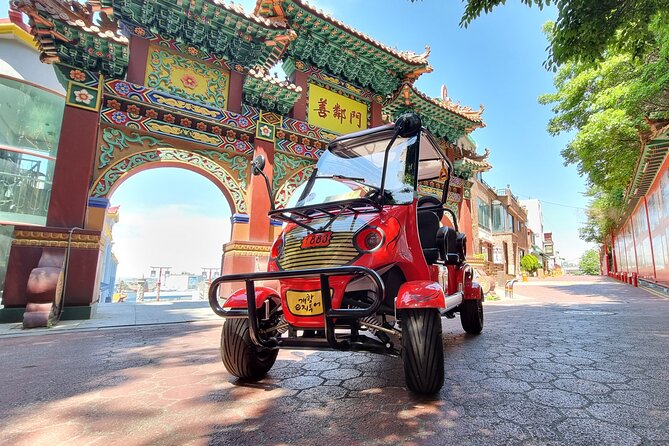
Euiseon-dang is a Chinese-style shrine inside Chinatown. Chinese immigrants built it as a place of comfort while dealing with the loneliness and hardship of leaving home.
That small detail makes the shrine worth noticing. Chinatown is easy to treat as a decorated entertainment district, especially when you are moving through colorful streets. Euiseon-dang points to the private side of immigration: faith, homesickness, and the need for familiar customs in a new country.
The route may not give you enough time to study every architectural feature. I would listen closely to the explanation here, because the human story matters more than simply taking a picture of the building.
Donghwa Village and the playful side of the route
When Incheon Port opened, Songwol-dong became home to foreign residents and prosperous communities. Decades later, many younger people had moved away, leaving an older population behind.
The neighborhood was later remade as Donghwa Village, a fairytale-themed area. Painted scenes and cheerful designs give the streets a very different mood from the port’s older religious and commercial sites.
This is where expectations matter. The colorful streets can be fun, especially if you enjoy simple photo stops or are traveling with children. One passenger called the fairytale street especially enjoyable, while another felt some of the sights were a little cheesy.
I think that is a fair reading. Donghwa Village is playful rather than historically profound. It works as a visual break in the route, but I would not book this tour solely for serious architecture or museum study.
Chohanji and Three Kingdoms mural streets
The Chohanji Mural Street and Three Kingdoms Mural Street focus on Chinese literary and historical stories. Murals depict scenes connected with Chohanji and the Three Kingdoms, two major bodies of Chinese storytelling.
These streets are useful if you want to understand how Chinatown presents Chinese culture to the public. The murals are designed to be seen quickly, so the electric car can give you a good first look at the overall theme.
You may not know every character or episode shown on the walls. That is not a problem, but it makes the guide’s explanation more useful. If the commentary is prerecorded or brief, you will get the visual display without much background.
For me, this stop captures the tour’s main tradeoff. You see a lot in a short time, but the route favors broad impressions over lengthy discussion.
Jemulpo Club, the tour’s strongest historical finish
The ride finishes at Jemulpo Club, a social club established in 1981 for foreigners living in Incheon. The building included a social room, billiard room, and reading room, with a tennis court outside. It later passed through another period of use during the Japanese colonial era in 1914.
The building offers a glimpse of the social world created around the port. Trade brought officials, merchants, and other foreign residents, and clubs gave them places to meet and spend time.
Jemulpo Club is listed with free admission, and the stop is given about five minutes. That is enough for a quick look, but not a slow architectural visit. If you want to study the building carefully, you may need to return independently.
I would pay close attention here because it ties several earlier themes together: foreign residence, colonial-era change, and the social structures that grew around Incheon’s port. It is a better historical finish than ending only with the colorful streets of Chinatown.
What the electric car adds
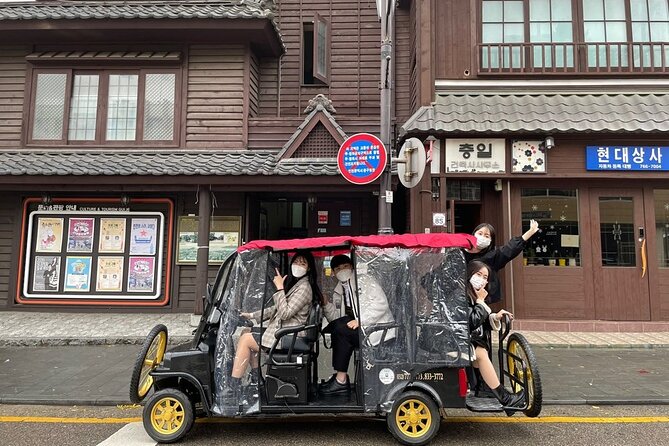
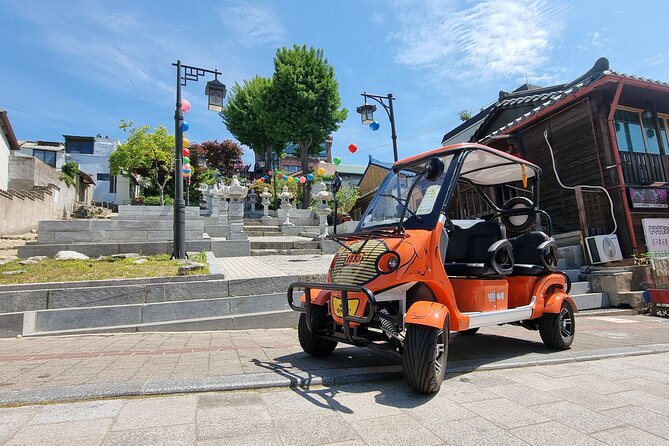
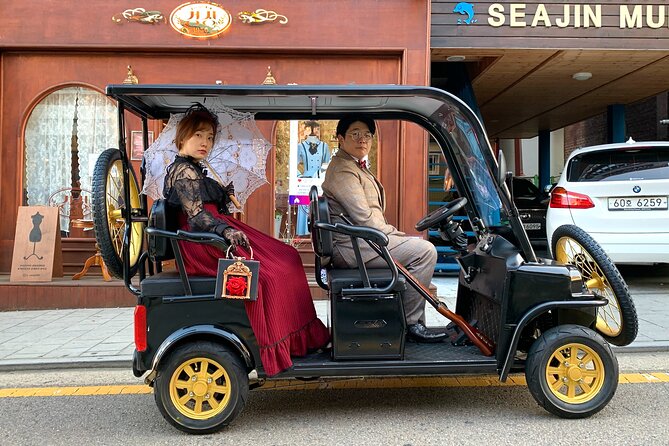
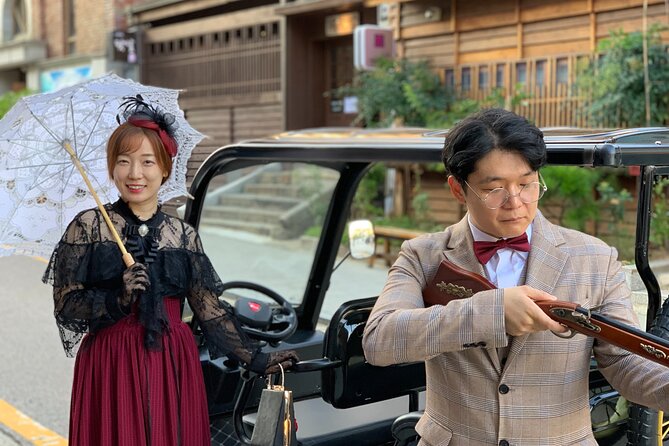
The vehicle is not a restored antique. It is an electric car designed in a 19th-century style, so you get the old-fashioned appearance with a quieter, cleaner ride.
That design gives the tour its charm. A standard van would get you around, but it would feel like transportation. This car turns the movement between stops into part of the outing.
It also helps when you want an overview without committing to a long walk. Most people can participate, and the activity is near public transportation. Service animals are allowed.
The car cannot replace walking altogether. You will see many places from a short distance or during a brief stop. I would use it as an introduction to Open Port Street, then spend extra time on foot at the museum, Chinatown, stairway, or Jemulpo Club that interests you most.
Price, group size, and guide quality
The listed price is $45 per group of up to three people, not $45 per person. That makes the cost reasonable for a couple or small family, especially since the guide fee and 50-minute electric-car ride are included.
For one person, the price feels less generous. For three people, it works out to $15 each before any food or other spending. Meals and snacks are not included, so plan separately if you want jjajangmyeon or another Chinatown meal.
The maximum group size is 20, although the booking is priced for up to three people. Ask how your reservation will be arranged if you care about a fully private experience. The small-group format is intended to allow more attention from the guide, but the quality depends heavily on who is leading your departure.
Soonie received especially strong praise for patiently explaining old Incheon and accommodating a request to move to a later time. That kind of flexibility is valuable when flights or airport plans shift.
At the same time, one ride relied on prerecorded commentary, and the driver did not speak English. That is the most important question to settle before booking. If you need detailed English explanations, confirm that an English-speaking guide is assigned, rather than assuming every departure offers the same service.
Who should book this Incheon tour?
I would recommend it to you if you have a short window in Incheon, want a gentle introduction to the port district, or prefer riding between sights instead of walking the full area. It is also a sensible choice for a couple or family of three because the group price spreads well.
It suits visitors who enjoy a mix of history, food culture, murals, and light entertainment. You will see old port themes beside fairytale streets and Chinese historical art. That variety keeps the ride lively, but it may disappoint you if you want a focused architecture tour.
I would be cautious if you have only one chance to visit Incheon and require extensive English commentary. Confirm the guide language and operation before arrival. Also allow extra time if you want to enter museums, eat in Chinatown, or explore the streets properly.
The activity offers free cancellation up to 24 hours before departure. Changes or cancellations inside that window are not refunded, and poor weather or failure to meet the minimum group size can lead to a new date or a full refund.
Should you book the 50-minute electric-car tour?
Book it if you want a friendly, compact introduction to old Incheon and value an unusual vehicle, a convenient route, and a fair group price. The strongest experiences come when the guide is as engaging as Soonie and gives the historical background that turns quick views into meaningful places.
Skip it if you want a long walking tour, a full museum visit, or guaranteed live English commentary without confirming first. The best way to use this ride is as a first look at the Open Port district, followed by your own walk through the places that catch your attention.
FAQ
Where does the Incheon Port History Tour begin?
The tour begins at 266 Jemullyang-ro, Jung-gu, Incheon, South Korea.
Where does the tour finish?
The electric-car ride returns to the original meeting point.
How long does the tour last?
The tour lasts approximately 50 minutes.
How much does the tour cost?
The listed price is $45 per group of up to three people.
Is food included?
No. Meals and snacks are not included in the tour price.
What type of vehicle is used?
You ride in an electric vehicle designed in a 19th-century style.
Which places are included on the route?
The route includes Incheon Art Platform, Cheongiljogyeji Stairway, Haean Catholic Church, Jjajangmyeon Museum, Euiseon-dang, Donghwa Village, Chohanji and Three Kingdoms Mural Street, Chinatown, and Jemulpo Club.
Is the tour available at different times?
Yes. Several tour times are offered.
Can I cancel for a full refund?
Yes, if you cancel at least 24 hours before the experience start time. Cancellations made less than 24 hours before departure are not refunded.
Just added around Incheon
- 24/7 Private Airport Transfer: Incheon/Gimpo ↔ Seoul (Up To 10)★ 5.0 · 3 reviews
- Glimpse into North Korea in 4 hours’ layover tour★ 5.0 · 3 reviews
- Layover Tour from Incheon Airport to Seoul with a Tour Specialist★ 5.0 · 5 reviews
- Half or Day Private Tour For Cruise Incheon and Seoul City Tour★ 4.5 · 6 reviews
- Incheon Airport Pickup★ 4.5 · 7 reviews
- Incheon Cruise Shore Excursion private Tour to Seoul★ 5.0 · 8 reviews
- Layover Tour for essential Seoul City & Gourmet tour(Incl. Lunch)★ 5.0 · 8 reviews
- Korea SIM Card with SKT Unlimited Local Data & Voice Calls★ 4.5 · 9 reviews
Historical Tours, compared.

Gyeongju UNESCO World Heritage Guided Day Tour
Read our review →
Gyeongju UNESCO World Heritage Guided Day Tour from Busan
Read our review →
Evening Dark History, Folklore & Ghost Story Walking Tour
Read our review →
Old Korea Thousand History Tour of Gyeongju from Busan
Read our review →
Hanbok Photoshoot and History Tour at Gyeongbokgung Palace
Read our review →

UNESCO Heritage Tour Including Bulguksa Temple
Read our review →
Gyeongju UNESCO World Heritage Sites and History Full-Day Tour with Lunch
Read our review →Browse the lists this tour appears in