
Reviewed · GYEONGJU HERITAGE TOURS
Gyeongju UNESCO World Heritage Sites and History Full-Day Tour with Lunch
Ancient Korea comes alive in Gyeongju. This full-day outing gives you an efficient way to see the old Silla capital, combining Bulguksa Temple and Seokguram Grotto with royal tombs, palace ruins, a traditional village, and the famous Cheomseongdae Observatory. I especially like the included lunch and the hotel pickup, since getting between Gyeongju’s spread-out sights by public transport can consume much of your day.
I also like the small-group feel reported on many departures, with guides such as Steve, Chris, Sue, and Jina praised for clear English and friendly explanations. The main consideration is time: the tour lasts about eight hours overall, but the drive from Busan means only part of that day is spent inside Gyeongju. At $189.99 per person, you are paying for convenience, transport, guiding, admission, and lunch, not simply sightseeing tickets.
In This Review
- Key points to know before booking
- Why Gyeongju makes a strong day trip from Busan
- Cheomseongdae Observatory and the first look at Silla science
- Donggung Palace and Wolji Pond after sunset history
- Gyochon Traditional Village and the Choi family legacy
- Daereungwon Tomb Complex and the Silla burial mounds
- Seokguram Grotto on Tohamsan Mountain
- Bulguksa Temple, the strongest stop of the day
- What the guide and vehicle add to the day
- Lunch, dietary needs, and the Korean food experience
- Is $189.99 good value?
- Walking, weather, and the right type of visitor
- Should you book this Gyeongju tour?
- FAQ
- How long does the Gyeongju tour last?
- Does the tour include pickup and drop-off?
- Is lunch included?
- Are entrance fees included?
- Which UNESCO sites are included?
- What other places does the tour visit?
- Is a vegetarian lunch available?
- Can children join the tour?
- How much walking should I expect?
- What is the cancellation policy?
Key points to know before booking
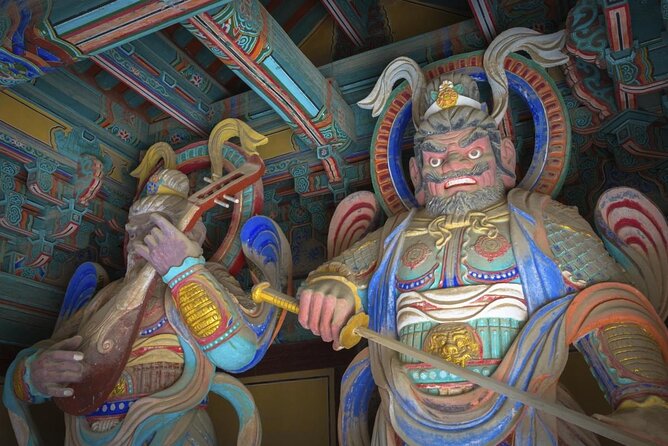
- Bulguksa and Seokguram are the day’s major prizes: These UNESCO-listed sites provide the strongest cultural and artistic experiences.
- Pickup and drop-off save serious effort: An air-conditioned minivan handles the long transfers and connects sights that are not all close together.
- The itinerary covers six important stops: You visit Cheomseongdae, Donggung Palace and Wolji Pond, Gyochon Village, Daereungwon, Seokguram, and Bulguksa.
- Lunch and entrance fees are included: Vegetarian meals are available if requested when you book.
- Expect a lot of walking: Comfortable shoes matter more than dressy clothes, and sunscreen is useful in warm weather.
- The tour works best from Busan: If you are already staying in Gyeongju, you may be able to visit the central sights independently for less.
Why Gyeongju makes a strong day trip from Busan
Gyeongju was the capital of the Silla Kingdom for centuries, from 57 BC to AD 935. That long period left the city filled with tombs, temples, palace remains, stone sculpture, and old village traditions. The challenge is that these sights are spread across town and into the hills east of the city.
That geography is the main reason to consider this tour. You do not have to work out buses, taxis, transfers, or the best order for the stops. A driver takes you close to the entrance areas, then collects you again, reducing unnecessary walking between sites.
The day begins at 8:00 am. From Busan, the road time can be significant, especially around traffic. One important point is that an eight-hour tour does not mean eight hours of sightseeing in Gyeongju. You should think of it as a full day away from Busan, with a packed sightseeing schedule once you arrive.
The tour has a maximum capacity of 40 people, though several departures have been much smaller. Groups of three, four, or five have sometimes traveled in a comfortable minivan, and a few bookings have operated as private tours when demand was low. Group size can affect how personal the guiding feels, so it is worth understanding that the experience may range from intimate to more structured.
More Historical Tours in Gyeongju
- From Busan: Gyeongju UNESCO World Heritage Guided Day Tour
★ 4.8 · 1,250 reviews - Gyeongju UNESCO World Heritage Guided Day Tour from Busan
★ 5.0 · 660 reviews - Old Korea Thousand History Tour of Gyeongju from Busan
★ 5.0 · 518 reviews
Cheomseongdae Observatory and the first look at Silla science
The first stop is Cheomseongdae Observatory, an unusual stone structure associated with Queen Seon-deok’s reign from 632 to 647. It is described as the oldest existing astronomical observatory in Asia and was used to watch the stars and help forecast weather.
You get about 30 minutes here. The stop is short and the structure itself is compact, so do not expect a museum visit or a long indoor presentation. The value comes from seeing an early scientific building in the setting of the former Silla capital. Your guide can help explain why astronomy mattered to royal government and farming communities.
One practical warning: this is an open outdoor stop, and it can become crowded during holiday periods. One departure skipped it because of exceptionally heavy crowds. If you care strongly about seeing Cheomseongdae, ask your guide about timing, but understand that the order can change.
Donggung Palace and Wolji Pond after sunset history
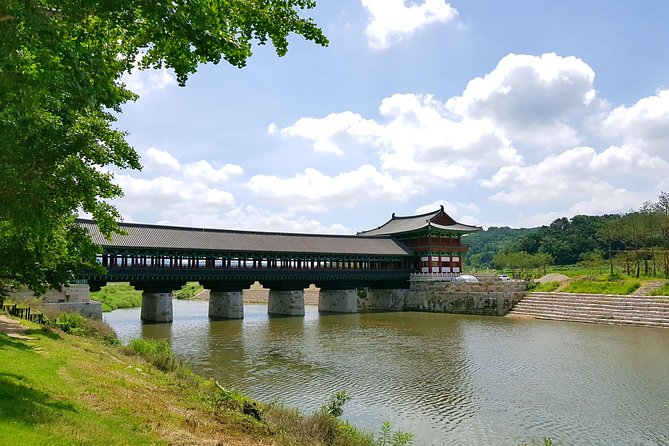
Next comes Donggung Palace and Wolji Pond, with about an hour allocated. Historical records place the creation of the pond during the reign of King Munmu in the seventh century. The site once formed part of a royal palace complex, with carefully planned water, islands, and small mountains.
Today, you see the pond and surviving structures rather than a complete palace. That distinction matters. This is not a grand rebuilt royal residence. It is a place where the layout, water, pavilions, and setting help you picture the ceremonial world of Silla.
I find this kind of site most rewarding when the guide explains what is known and what must be imagined. Without context, you might see a pond and several buildings and wonder where the palace went. With a good explanation, the empty space becomes part of the story.
The hour gives you time to walk and take photographs. The path is manageable, but it adds to the day’s total walking. On hot days, shade and water become important.
Gyochon Traditional Village and the Choi family legacy
Gyochon Traditional Village offers a change of pace from royal ruins and temple grounds. You spend about 45 minutes among traditional hanok buildings connected with the Gyeongju Choi Clan. The village gives you a look at Korean family life and architecture rather than only monumental Silla sites.
This is a shorter stop, and expectations are important. Gyochon is not a large open-air museum with dozens of fully furnished historic homes. Some buildings may be closed, and the village experience can feel modest compared with Bulguksa or Daereungwon.
Still, I like its place in the schedule. After several ancient sites, a traditional neighborhood helps connect history with domestic life. You can look at the curved rooflines, wooden details, and village layout while your guide explains the Choi family and local customs.
The stop may be less satisfying if you want a major attraction at every turn. It works better as a brief cultural interlude.
A few more trips of this kind worth comparing:
- Seoul City Private Full-Day Tour Including Lunch
★ 5.0 · 469 reviews - Premium Private DMZ Tour & (Suspension Bridge or N-Tower) include lunch
★ 5.0 · 348 reviews - Private DMZ Tour with North Korean Defector + N Korean Lunch
★ 5.0 · 122 reviews - Busan Tour: Gamcheon Village & Haedong Yonggungsa Temple + Lunch
★ 5.0 · 119 reviews
Daereungwon Tomb Complex and the Silla burial mounds
Daereungwon Tomb Complex is one of the most visually distinctive parts of Gyeongju. Large grassy burial mounds rise across the area, marking the tombs of Silla kings and nobles. Twenty-three large tombs are located here, including Cheonmachong Tomb.
The tour allows about an hour. You can walk among the mounds and enter the open tomb area included in the visit. Seeing the scale of the tombs from the outside is impressive, but the interior gives you a better sense of how the Silla elite were buried and why the city is sometimes described as an archaeological center.
Do not expect a conventional cemetery with rows of carved headstones. These rounded earth mounds are broad, quiet, and almost park-like. Their simple appearance can hide the importance of what lies beneath.
This stop also shows why a guide helps. The shapes are easy to appreciate, but the burial customs, political power, and artifacts associated with the tombs are harder to understand without explanation. If you want to see the wider range of Silla objects, Gyeongju National Museum would be a useful addition, but it is not part of this schedule.
Seokguram Grotto on Tohamsan Mountain
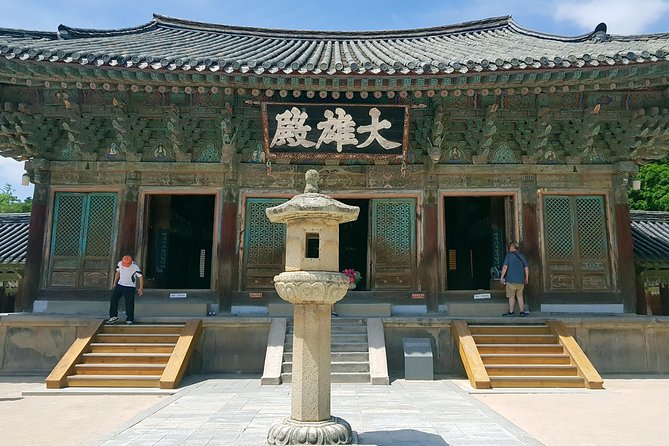
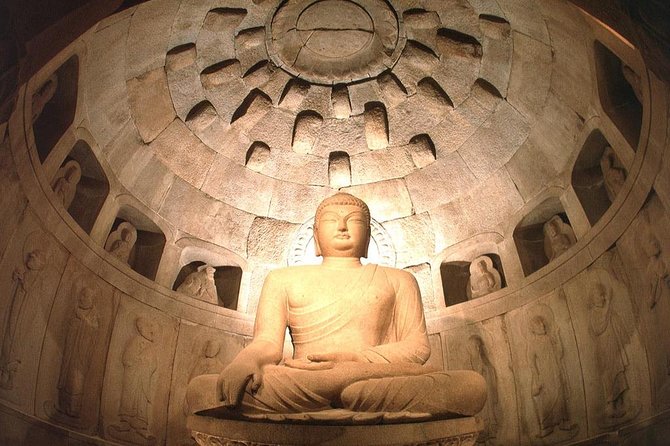
The drive then heads toward Seokguram, located on Tohamsan Mountain. You have about an hour here. Seokguram is a stone temple and one of Korea’s most important cultural sites, designated National Treasure No. 24 and recognized as a UNESCO World Heritage site.
The central attraction is the stone Buddha inside the grotto. The experience is quieter and more focused than the larger temple complex that follows. You should know that photography is not allowed inside the grotto, so this is a place to pay attention to the sculpture rather than concentrate on taking pictures.
The mountain setting adds travel time but also gives the stop a different feel from the city sites. You may find the approach more physically demanding than the earlier walks, though the tour information describes the walking as manageable rather than strenuous. Wear shoes with good support.
This is one of the stops where the guide’s explanation matters most. The stonework, religious purpose, and position on the mountain can be easy to miss if you rush through. Allow yourself time to look carefully, even though the schedule is tight.
Bulguksa Temple, the strongest stop of the day
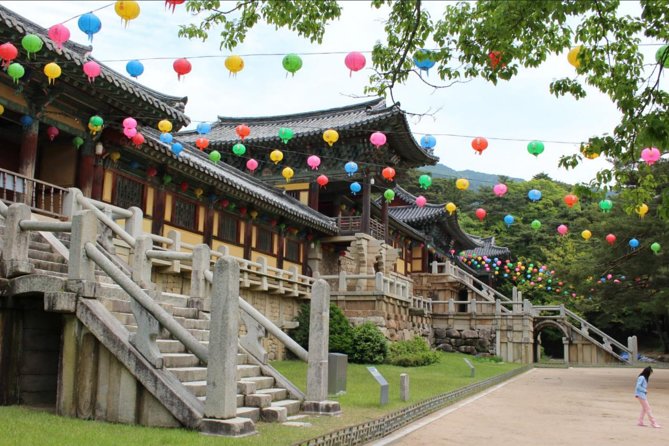
Bulguksa Temple is the tour’s centerpiece for many people. UNESCO recognized it as a World Cultural Asset in 1995, and the temple is widely regarded as the representative historic site of Gyeongju.
You have about an hour to explore. The complex is known for its balanced architecture, stone terraces, stairways, pagodas, and carefully arranged courtyards. The beauty is not limited to one building. It comes from the way the temple’s wooden structures and stone elements work together.
Bulguksa is also the stop most likely to reward a slower pace, but the tour’s schedule does not allow unlimited time. Your guide can point out the main features and explain the temple’s place in Silla Buddhism. You will then have some time to walk, look around, and take photographs.
Bulguksa and Seokguram are close enough to combine efficiently by vehicle, but they are different experiences. Seokguram is intimate and sculptural. Bulguksa is broader, architectural, and more open. Seeing both in one day gives you a useful picture of Silla religious art.
What the guide and vehicle add to the day
The guides are a major part of the experience. Steve is repeatedly praised for fluent English, engaging explanations, and the ability to bring ancient events to life. Chris is described as friendly and well informed, while Sue received particular praise for her historical explanations and care with dietary needs. Jina is also noted for clear explanations at each site.
That said, the guiding style may vary. One person wanted more commentary during the drives, while other departures benefited from guides who explained each stop in detail. If you want constant narration about every road and building, say so early. Some guides may give you more quiet time between attractions.
The driver is useful in practical ways. On some departures, the driver dropped people near the gate and returned to collect them, reducing the distance walked. Pickup and drop-off were also described as smooth, including one case where a guide corrected a pickup-address problem quickly.
The air-conditioned minivan is especially valuable in summer. One group completed the outing during temperatures in the high 90s Fahrenheit, while another continued despite heavy rain. Weather can change how tiring the day feels, so bring sun protection and prepare for outdoor walking.
Lunch, dietary needs, and the Korean food experience
Lunch is included, and the meal has been a popular part of the day. It is served at a local restaurant and has been described as filling, tasty, and a pleasant surprise. That is useful because a rushed sightseeing day can feel much better when the meal is handled for you.
Vegetarian food is available if you advise the operator at booking. A gluten-free request was also accommodated on one departure, but I would still state your needs clearly in advance rather than rely on an informal request at lunchtime.
Lunch is not only a convenience. It gives you a chance to try Korean food without spending time choosing a restaurant in an unfamiliar city. The exact menu is not specified, so you should not book expecting one particular dish.
Is $189.99 good value?
At $189.99 per person, this is not a low-cost sightseeing day. The price includes pickup and drop-off, an air-conditioned minivan, lunch, entrance fees, and a guide. From Busan, the transport alone has real value because the tour connects central Gyeongju with Tohamsan Mountain and handles the return journey.
The price makes more sense if you are short on time, do not have a car, or dislike managing several bus and taxi connections. It is also attractive for solo visitors, since arranging a private vehicle independently could cost more.
The calculation changes if you are staying in Gyeongju. Several central stops are close enough to visit independently, and taxis can connect Bulguksa with Seokguram. A self-guided day may cost less, especially if you are comfortable using public transport and researching the history yourself.
I would also compare the tour’s priorities with your interests. The schedule focuses on major outdoor sites and does not include Gyeongju National Museum. If museum displays and original artifacts are essential to you, you may prefer to build your own day or choose a different tour.
Walking, weather, and the right type of visitor
You should wear comfortable walking shoes. The total can reach roughly 11,000 steps on some departures, though that is less than some people expect because the driver reduces walking between gates and parking areas.
The tour suits you best if you want a broad introduction rather than a slow study of one or two sites. It is useful for a first visit, a short stay, or a day trip from Busan. Most people can participate, but children must be accompanied by an adult.
Bring sunscreen, water, and clothing suited to the forecast. High heels are a poor choice, and hot weather can make the outdoor stops tiring. Rain does not necessarily cancel the sightseeing, but it can make stone paths and temple grounds less pleasant.
The 4.8 rating from 104 reviews and 94 percent recommendation rate reflect a strong overall response, especially for the guides, food, transport, and efficient schedule. The lower ratings focus mainly on price, limited time in Gyeongju, modest appeal of some smaller stops, and a lack of drive-by commentary.
Should you book this Gyeongju tour?
Book it if you are based in Busan and want to see Gyeongju’s major heritage sites in one organized day. The combination of Bulguksa, Seokguram, Daereungwon, Donggung Palace and Wolji Pond gives you a solid introduction to Silla culture, while pickup and lunch remove much of the day’s friction.
Think twice if you are already staying in Gyeongju, want long visits at each site, or place high value on museums and original artifacts. You may get better value by visiting independently and adding the National Museum.
For most first-time visitors coming from Busan, I see this as a practical, well-filled day rather than a relaxed one. Go for the transport, the guide, and the chance to cover distant sights. Go with realistic expectations about the shorter stops, and wear shoes made for walking.
FAQ
How long does the Gyeongju tour last?
The experience lasts approximately eight hours, beginning at 8:00 am. The total time includes transportation between Busan and Gyeongju and travel between the sites.
Does the tour include pickup and drop-off?
Yes. Pickup and drop-off are included, with transport provided in an air-conditioned minivan.
Is lunch included?
Yes. Lunch is included at a local restaurant.
Are entrance fees included?
Yes. Entrance fees for the included attractions are covered.
Which UNESCO sites are included?
The tour visits Bulguksa Temple and Seokguram Grotto, both UNESCO-listed cultural sites.
What other places does the tour visit?
The schedule includes Cheomseongdae Observatory, Donggung Palace and Wolji Pond, Gyochon Traditional Village, and Daereungwon Tomb Complex.
Is a vegetarian lunch available?
Yes. A vegetarian option is available, but you should advise the operator when booking.
Can children join the tour?
Yes. Children can participate, but they must be accompanied by an adult.
How much walking should I expect?
You should expect a fair amount of walking across temple grounds, tomb areas, village paths, and outdoor historic sites. Comfortable shoes are recommended, and one departure reported about 11,000 steps.
What is the cancellation policy?
You can cancel at least 24 hours before the start time for a full refund. Cancellations or changes made less than 24 hours before the start time are not refunded or accepted.
More Full-Day Tours
- From Busan: Gyeongju Full-Day Historical Tour
★ 4.1 · 6 reviews - Full Day Private car tour to UNESCO Gyeongju&Yangdong village
★ 5.0 · 5 reviews - Full Day Busan and Gyeongju Guided Tour
★ 5.0 · 4 reviews - Full Day Tour In The Soop BTS Ver in PyeongChang Filming Location
★ 5.0 · 1,709 reviews
More Historical Tours
- Gyeongju: UNESCO Heritage Tour Including Bulguksa Temple
★ 4.8 · 104 reviews - Full day Private Gyeongju UNESCO Heritage Tour : a glimpse into Silla
★ 5.0 · 60 reviews - From Busan: Echoes of Silla Gyeongju Historical Day Tour
★ 4.8 · 55 reviews - Gyeongju Historic Areas Day Tour with Sky Capsule from Busan
★ 5.0 · 18 reviews
Just added around Gyeongju
- 7 Day Essential Korea Tour(Seoul, Nami, DMZ, Andong, Gyeongju, Busan_Meal Incl.)★ 5.0 · 3 reviews
- Korean UNESCO World Heritage Tour including Gyeongju, Andong and Daegu(2N3D)★ 5.0 · 3 reviews
- From Busan: Gyeongju Small Group Photo Tour & Hotel Pick-up★ 5.0 · 3 reviews
- Full Day Busan and Gyeongju Guided Tour★ 5.0 · 4 reviews
- Gyeongju private tour with an official tour guide (Unesco)★ 4.5 · 4 reviews
- UNESCO Listed Historic Sites in Gyeongju National Park★ 5.0 · 5 reviews
- Full Day Private car tour to UNESCO Gyeongju&Yangdong village★ 5.0 · 5 reviews
- From Daegu: Gyeongju UNESCO Tour 7 Highlights with Bulguksa★ 4.6 · 5 reviews
Gyeongju Heritage Tours, compared.

Gyeongju Guided Day Trip to Three Kingdoms Capital
Read our review →
Gyeongju UNESCO World Heritage Guided Day Tour
Read our review →
Gyeongju UNESCO World Heritage Guided Day Tour from Busan
Read our review →
Old Korea Thousand History Tour of Gyeongju from Busan
Read our review →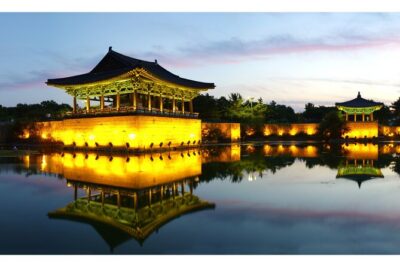
Gyeongju UNESCO sites Private tour with licensed tour guide
Read our review →
Private Gyeongju Tour – Explore Gyeongju UNESCO Sites
Read our review →
Gyeongju UNESCO Legacy Tour with National Museum
Read our review →
UNESCO Heritage Tour Including Bulguksa Temple
Read our review →Browse the lists this tour appears in