
Reviewed · GYEONGJU HERITAGE TOURS
Old Korea Thousand History Tour of Gyeongju from Busan
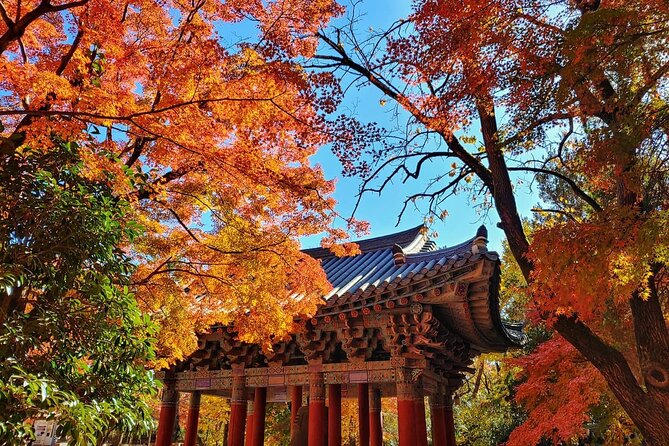
Ancient Korea makes a fine day trip. This full-day outing takes you from Busan to Gyeongju, the old capital of the Silla kingdom, with round-trip transport, entrance fees, and a guide included. I especially like the wide range of sights, from Bulguksa Temple and royal tombs to a traditional village and illuminated palace ruins. I also like the evening finish at Donggung Palace and Wolji Pond, when reflections on the water give the final stop a special mood.
The trade-off is time. This is a roughly 12-hour day, often running from about 10 in the morning to 10 at night, with plenty of walking and a full schedule. On hot, humid days, the pace can feel demanding, and some stops may seem too brief if you want long photo sessions or quiet exploration.
In This Review
- Key points before you book
- Why Gyeongju is worth a full day from Busan
- Starting from Busan Station, Seomyeon, or Haeundae
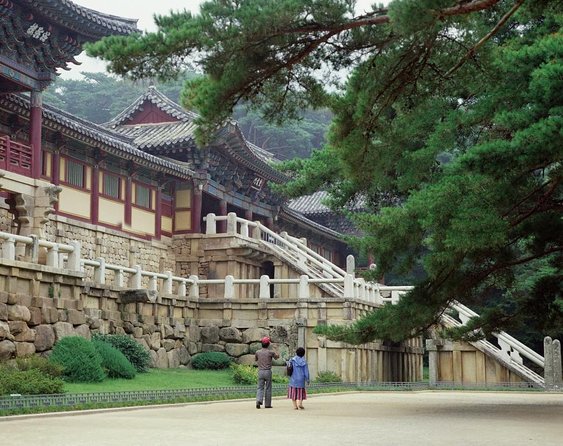
- Bulguksa Temple: the strongest first stop
- Gyochon Village and Woljeonggyo Bridge by daylight
- Daereungwon’s royal tombs and the limits of the stop
- Hwangridan-gil gives the day breathing room
- Donggung Palace and Wolji Pond after dark
- Woljeonggyo Bridge at night
- The guides can make or break a long day
- Heat, walking, and the real pace
- Who gets the best value from this tour?
- Should you book the Gyeongju day trip?
- FAQ
- Where does the tour depart in Busan?
- How long does the Gyeongju tour last?
- What is included in the price?
- Are meals included?
- Which attractions are visited?
- How much walking is involved?
- What happens if bad weather cancels the tour?
Key points before you book
- Bulguksa Temple opens the day with Silla-era stonework, mountain scenery, and UNESCO status.
- Gyochon Traditional Village and Woljeonggyo Bridge show Gyeongju beyond its major monuments.
- Daereungwon’s huge grassy burial mounds are striking, though the stop is more about atmosphere than visible tomb interiors.
- Hwangridan-gil gives you two hours for food, shops, old buildings, and a break from formal sightseeing.
- Donggung Palace and Wolji Pond are saved for evening, with the best chance of seeing the water lit up.
- Guides such as Bada, Erica, Kayla, Hyony, Katrina, Eva, and Jino are praised for clear explanations, humor, photos, and helpful care.
Why Gyeongju is worth a full day from Busan
Busan is a modern port city with beaches, markets, and high-rise views. Gyeongju feels different from the moment you begin seeing broad stretches of old royal ground and temple sites. It was the capital of Silla for centuries, and much of the city’s appeal comes from the way ancient monuments sit among ordinary streets, restaurants, cafés, and parks.
If you have only one free day, arranging Gyeongju on your own can take effort. You need to work out transport from Busan, connect several sites, buy entrance tickets, and keep an eye on the clock for the return journey. This tour handles the long transfers and gives you a guide to explain what you are seeing.
The price is about $64 per person, which is fair for a 12-hour trip when round-trip transport, a professional guide, and admission to the paid attractions are included. Meals and personal spending are extra, so you should not treat the price as an all-inclusive day. Still, the value is strong if you want to cover several major sights without renting a car or piecing together local transport.
More Historical Tours in Busan
- From Busan: Gyeongju UNESCO World Heritage Guided Day Tour
★ 4.8 · 1,250 reviews - Gyeongju UNESCO World Heritage Guided Day Tour from Busan
★ 5.0 · 660 reviews - Busan history and market food tour with local chef
★ 5.0 · 58 reviews
Starting from Busan Station, Seomyeon, or Haeundae
Pickup is arranged at Busan Station, Seomyeon Station, and Haeundae Station. During the summer schedule from April through September, the listed Busan Station departure is 10:00, followed by Seomyeon at 10:20 and Haeundae later. Check the exact meeting time on your booking confirmation, since the available information does not give the full Haeundae time or every seasonal variation.
This is a meeting-point tour rather than a hotel pickup service. You need to reach one of the stated stations yourself, and hotel pickup and drop-off are not included. That is simple enough if you are already near a station, but it adds a small planning step for anyone staying far from these areas.
The bus is an important part of the experience. Gyeongju is inland, and the return ride to Busan gives you an air-conditioned break between stops. On a hot day, that cool-down matters. Several people also found the bus comfortable, especially after logging more than 18,000 steps.
Bulguksa Temple: the strongest first stop
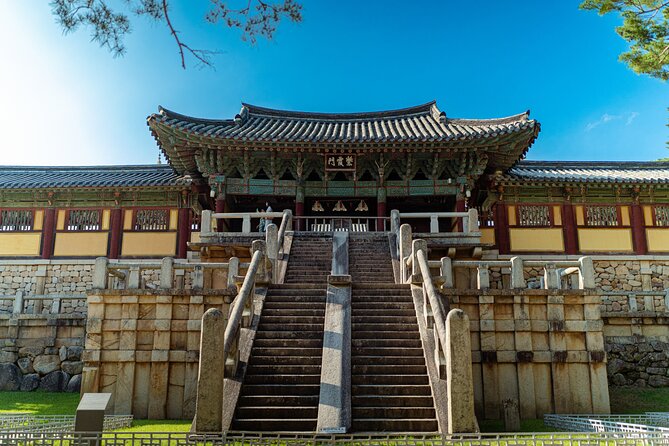
The day begins at Bulguksa Temple, one of Korea’s best-known Buddhist sites and a UNESCO World Heritage Site. It represents the Silla period and blends carefully made stone structures with wooded surroundings. The setting helps explain why this is more than a quick photo stop.
You receive about one hour here, with admission included. That gives you enough time to see the main areas and listen to the guide’s explanation, but not enough for a slow, detailed study of every feature. If temple architecture interests you, keep your camera ready and stay aware of the meeting time.
Bulguksa is also a good introduction to the day because it gives you a clear sense of Silla craftsmanship. The rest of the tour then adds royal burial grounds, residential traditions, palace remains, and a modern food street. I would consider the temple the stop least likely to disappoint, even for someone who is not normally drawn to historical sites.
Gyochon Village and Woljeonggyo Bridge by daylight
Next comes Gyeongju Gyochon Traditional Village, also associated with the area around Woljeonggyo Bridge. The village includes hanok houses, Gyeongju Hyanggyo, traditional walls, restaurants, and streets where you can get a feel for older Korean building styles.
The scheduled visit is about one hour. That is enough to walk along the stone wall roads and see the village setting, but the stop may feel short if you expect a detailed visit inside many houses. The guided portion can focus on one house, leaving less time than some people want for independent wandering.
This is a useful contrast with Bulguksa. Instead of looking at a major religious monument, you are seeing the shape of a historic neighborhood. You may also find high-end Korean restaurants and small local businesses here, though meals are not included in the tour.
Woljeonggyo Bridge is visited again later for its night view, so try to remember its daytime setting. The bridge’s traditional design looks different after dark, when lights reflect across the water.
More Historical Tours in Gyeongju
- From Busan: Echoes of Silla Gyeongju Historical Day Tour
★ 4.8 · 55 reviews - Gyeongju Historic Areas Day Tour with Sky Capsule from Busan
★ 5.0 · 18 reviews - From Busan: Gyeongju Historical Day Tour with Sky Capsule
★ 4.7 · 17 reviews - Gyeongju The UNESCO World heritage sites tour(Private tour)
★ 5.0 · 17 reviews
Daereungwon’s royal tombs and the limits of the stop
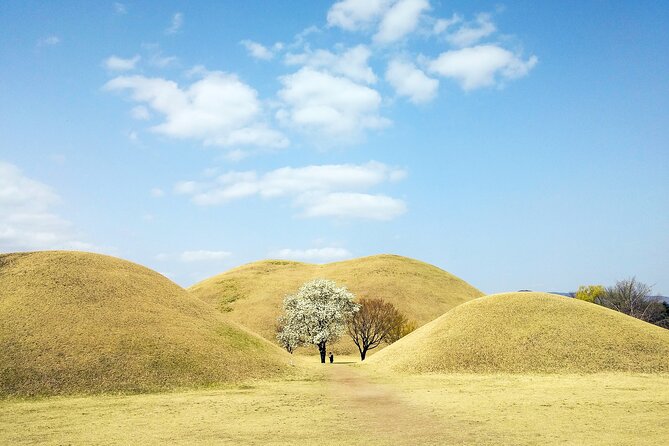
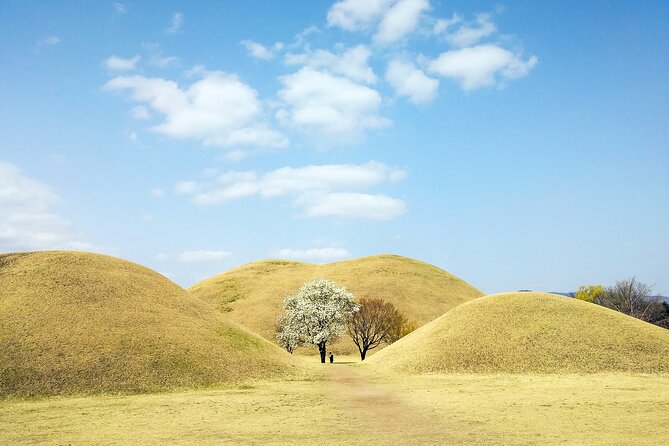
Daereungwon Tomb Complex is one of the clearest symbols of Gyeongju. Large rounded burial mounds fill the area, marking the graves of Silla kings, queens, and aristocrats. From the ground, these grassy mounds look like smooth hills spread through an open park.
The stop lasts about one hour and admission is included. The appeal is visual and historical rather than architectural. You do not walk into a grand stone mausoleum at every turn, and the tombs can seem like simple hills if the guide does not explain what they represent.
That context is important. The mounds are not random earthworks. They reflect the scale and status of the old Silla court, and their presence in the middle of modern Gyeongju gives the city an unusual character. I like this stop best when you approach it as a chance to understand royal burial customs, not as a room-by-room museum visit.
If you prefer active sightseeing, you may find the stop underwhelming. If you enjoy wide open spaces, old burial traditions, and a slower visual change from city streets, it provides a useful pause.
Hwangridan-gil gives the day breathing room
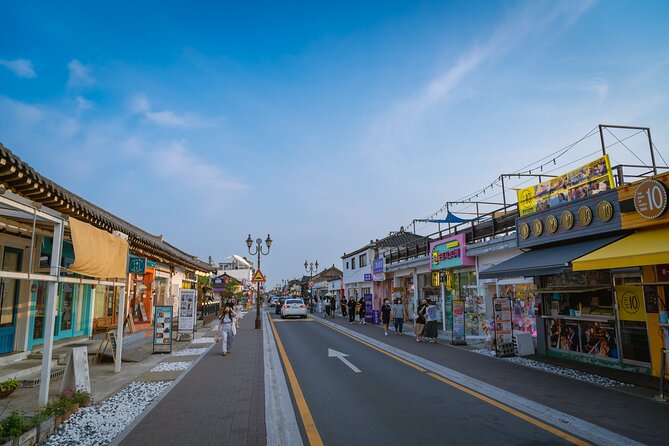
The tour allows about two hours at Hwangridan-gil, the longest independent portion of the day. This street preserves older buildings, including structures dating from the 1960s, while adding shops, cafés, and places to eat.
This is where you can choose your own pace. You might stop for lunch, browse small shops, take photographs, or simply sit down after the morning’s walking. Since food is not included, this is also the natural time to buy a meal.
I value this break because a full day of monuments can become tiring. Hwangridan-gil gives you a change of scene and lets you decide what sounds good. It is not an untouched historic quarter, and people looking for a quiet ancient village may find it more commercial than expected. Still, it makes the schedule more practical and gives you room to recharge.
The two-hour window also helps balance the shorter guided stops. You are not being talked through every minute of the day. You get a chance to explore on your own, provided you return to the meeting point on time.
Donggung Palace and Wolji Pond after dark
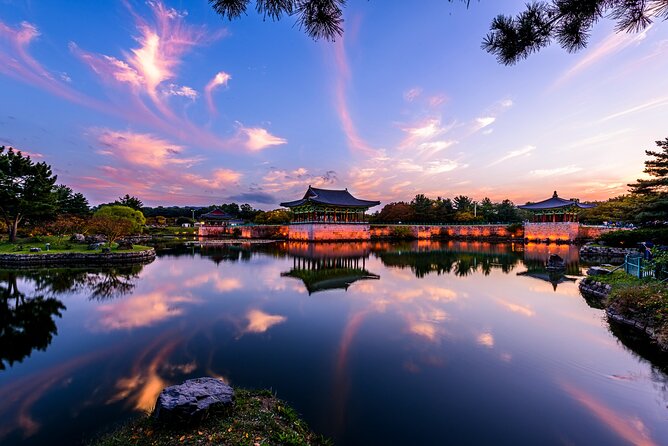
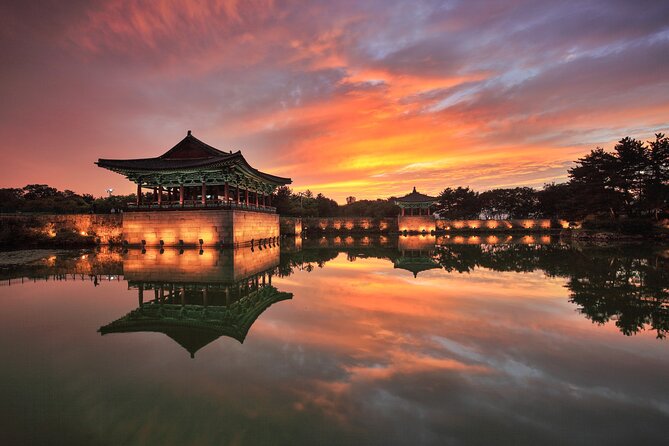
The final major attraction is Donggung Palace and Wolji Pond, the remains of a palace complex from the Unified Silla period. The palace buildings are not fully preserved, so you are seeing an archaeological site with reconstructed structures rather than a complete royal residence.
The pond is the real star. Palace buildings and trees reflect on the water, and the evening lighting adds a quiet, polished look. This is one of the most memorable parts of the day because it feels different from the earlier stops. You are no longer looking at temple stonework or grassy tombs. You are seeing how water, architecture, and night lighting shape the site.
You receive about one hour here, including admission. Bring patience for photos, since this is a popular place and the schedule is fixed. The stop may feel rushed if you want to wait for several compositions, but the timing is well chosen. Ending here gives the tour a clear visual finish.
Some people expect a fully restored palace and may be surprised by the limited reconstruction. I think the site works better when you understand it as a palace setting brought back through ruins, water, and selected rebuilt structures.
Woljeonggyo Bridge at night
The final photo stop lasts about 30 minutes at Woljeonggyo Bridge. At night, its illuminated form reflects in the water and shows off traditional Korean design from a distance.
Thirty minutes is not a long time, but it is enough for a walk and a few photographs. The bridge works especially well as a closing stop because it is visually simple. After a day of explanations and many historic sites, you can enjoy the view without needing to absorb another large block of information.
The bridge and Wolji Pond are also the reason you should not assume this is a daytime-only excursion. The tour returns to Busan after the evening visits, so plan for a late arrival and avoid booking anything time-sensitive that night.
The guides can make or break a long day
The guide is central to this experience. Bada is praised for clear delivery, humor, photo help, and reminders to stay cool in the heat. Kayla is often described as lively and funny, with a knack for keeping energy up during a long day. Erica is praised for being upbeat, informative, helpful with photographs, and willing to answer questions.
Hyony is noted for explaining Korean culture and history while also helping solo people take pictures. Katrina receives credit for careful explanations and good time management. Eva is praised for being attentive and making sure people could follow the group at each site. Jino and Noah are also named positively as part of the guiding team.
The pattern is clear: good guides add real value here. Gyeongju’s mounds, ruins, and reconstructed structures do not always explain themselves. A strong guide connects each place to Silla life, housing, food, relationships, religion, and royal customs.
Guide quality can vary on any group tour. One experience included complaints about rushing, too much talking, and pressure for tips or a five-star rating. Tipping is optional, and Korea is generally a non-tipping culture, so you should not feel obliged. If a guide asks for a particular rating or tip, you can make your own decision.
Heat, walking, and the real pace
Prepare for a physically active day. One person recorded more than 18,000 steps, and several people warned that Gyeongju can feel much hotter and more humid than Busan. Comfortable walking shoes are essential.
Bring:
- Plenty of water
- Sunscreen
- A hat or parasol
- Light clothing for warm weather
- A phone or camera with enough battery
- Some cash or a payment method for food and personal purchases
The bus offers welcome air-conditioning between stops, but you will spend much of the sightseeing time outside. Bulguksa, the tomb complex, the village, and the bridges all involve walking. You need a moderate level of physical fitness, and the long duration may be hard for young children or anyone who tires quickly.
The tour can include up to 400 people, although the English-speaking portion may sometimes feel smaller. A large overall group means you should pay close attention to meeting times and stay near the guide. The upside is an efficient route and included transport. The downside is less freedom than you would have with a private guide.
Who gets the best value from this tour?
I would choose this trip if you are staying in Busan and want to see Gyeongju in one day without handling the transport yourself. It suits first-time visitors, solo people who appreciate help with photos, couples, and families with older children who can manage a late finish.
It is also a good fit if you want a broad introduction rather than one site studied in great depth. You see a temple, village, burial complex, modern food street, palace pond, and bridge in one sweep.
I would hesitate if you dislike group schedules, need long periods of quiet at each monument, or want to choose every restaurant and route yourself. The tombs may feel too simple, Gyochon may feel too short, and the evening sites can be rushed for serious photographers.
Free cancellation is available up to 24 hours before the start time for a full refund. The tour requires good weather, and poor weather may lead to a new date or a full refund. That is useful protection for an outdoor day.
Should you book the Gyeongju day trip?
Book it if you want maximum coverage with minimum planning. The combination of transport, admission, a guide, and evening sights makes $64 a sensible price for a long day from Busan. Bulguksa and the palace pond are the strongest reasons to go, while Hwangridan-gil gives you food and breathing space.
Skip it if you want a slow, private exploration of Gyeongju or if a 10 a.m. to 10 p.m. schedule sounds exhausting. For most people with limited time in Busan, though, this is a practical way to see the old Silla capital, provided you arrive ready for heat, walking, and a firm timetable.
FAQ
Where does the tour depart in Busan?
Pickup points are listed at Busan Station, Seomyeon Station, and Haeundae Station. Hotel pickup and drop-off are not included.
How long does the Gyeongju tour last?
The experience lasts about 12 hours. Some schedules run from around 10 in the morning until around 10 at night.
What is included in the price?
Round-trip transfers, admission to the included attractions, and a professional tour guide are included.
Are meals included?
No. Meals and personal expenses are not included. Hwangridan-gil provides about two hours when you can arrange food at your own cost.
Which attractions are visited?
The stops include Bulguksa Temple, Gyeongju Gyochon Traditional Village, Daereungwon Tomb Complex, Hwangridan-gil, Donggung Palace and Wolji Pond, and Woljeonggyo Bridge.
How much walking is involved?
You should expect substantial walking and have a moderate level of physical fitness. One account of the day recorded more than 18,000 steps.
What happens if bad weather cancels the tour?
If poor weather causes a cancellation, you can be offered another date or a full refund. For a normal cancellation, you must cancel at least 24 hours before the start time to receive a full refund.
More Busan Trips
- Busan: Gyeongju Guided Day Trip to Three Kingdoms Capital
★ 4.8 · 1,925 reviews - Small Group Full Day Busan Tour (Max 6 Pax)
★ 5.0 · 1,464 reviews - Busan Private Tour with licensed tour guide + private vehicle
★ 5.0 · 1,143 reviews - Busan: Coastal Treasures Beach Train, Culture Village & More
★ 4.7 · 832 reviews
More Historical Tours
- Echoes of Silla Gyeongju Historical Guided Day Tour from Busan
★ 5.0 · 14 reviews - UNESCO World Heritage Gyeongju & Busan Two-city Private Tour.
★ 5.0 · 7 reviews - From Busan: Gyeongju Full-Day Historical Tour
★ 4.1 · 6 reviews - Korean UNESCO World Heritage Tour including Gyeongju, Andong and Daegu(2N3D)
★ 5.0 · 3 reviews
Just added around Busan
- Korean UNESCO World Heritage Tour including Gyeongju, Andong and Daegu(2N3D)★ 5.0 · 3 reviews
- Busan Bliss: Panoramic Yacht & Urban Exploration with Sky Capsule★ 5.0 · 3 reviews
- Busan day trip including Gamcheon culture village from Seoul by KTX train★ 5.0 · 3 reviews
- Busan Seafood Tour : Oyster village Tour with Oyster cuisines★ 5.0 · 3 reviews
- 1 Day Private Busan Guided Tour★ 4.5 · 3 reviews
- 2-DAYS Busan Customized and Included Night tour★ 5.0 · 3 reviews
- Full-Day Jinhae Cherry Blossom festival Private tour★ 5.0 · 3 reviews
- Busan Dialect Class with local snack★ 5.0 · 3 reviews
Gyeongju Heritage Tours, compared.

Gyeongju Guided Day Trip to Three Kingdoms Capital
Read our review →
Gyeongju UNESCO World Heritage Guided Day Tour
Read our review →
Gyeongju UNESCO World Heritage Guided Day Tour from Busan
Read our review →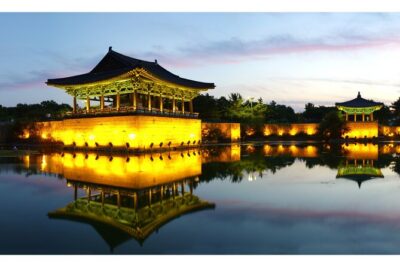
Gyeongju UNESCO sites Private tour with licensed tour guide
Read our review →
Private Gyeongju Tour – Explore Gyeongju UNESCO Sites
Read our review →
Gyeongju UNESCO Legacy Tour with National Museum
Read our review →
UNESCO Heritage Tour Including Bulguksa Temple
Read our review →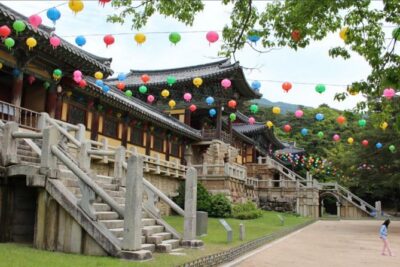
Gyeongju UNESCO World Heritage Sites and History Full-Day Tour with Lunch
Read our review →Browse the lists this tour appears in