
Reviewed · HANOK VILLAGE & FOLK CULTURE
Jeonju – Southern Korea (Private tour)
Jeonju serves culture with every meal. This eight-hour private walking tour combines Jeonju Hanok Village, historic shrines, traditional crafts, a family tea ceremony, kimchi making, and two substantial Korean meals. I like the mix of food and history, especially the chance to make kimchi with a local master rather than only eating it. I also like that the guide stays with you throughout, which is useful when menus, customs, and language get complicated.
The main drawback is the pace. Thirteen scheduled stops fill roughly eight hours, and transportation between attractions is not included. The tour description also refers to Seoul in a few places, but the meeting point and full program are in Jeonju, so you should plan around Jeonju Hanok Village, not Seoul.
In This Review
- Key points to know before booking
- Starting at Jeonju Hanok Village at 10 a.m.
- Poetry, fans, and Jeondong Catholic Church
- A full Korean lunch with dozens of side dishes
- Korean brewing traditions at the Wine Museum
- Gyeonggijeon Shrine and the Joseon royal connection
- Hanji paper and the life of the Joseon elite
- Omokdae and Imokdae for a hilltop view
- Jeonjuhyanggyo and the Confucian school tradition
- Tea in a former noble family residence
- Making kimchi with a local master
- Finishing with bibimbap and bean sprout soup
- Is $75 good value for eight hours?
- Who should book this Jeonju day?
- Final verdict: a full plate of Jeonju
- FAQ
- Where does the Jeonju private tour start?
- What time does the experience begin?
- Where does the tour finish?
- How long does the tour last?
- Are lunch and dinner included?
- Is the kimchi-making class included?
- Can I request vegetarian food?
- What happens if I cancel?
Key points to know before booking
- Kimchi making is a hands-on highlight: You prepare kimchi with a local kimchi master, then return to that food tradition at dinner.
- Two meals are included: Lunch is a full Korean spread with many side dishes, followed by Jeonju bean sprout soup with rice and bibimbap.
- The tour covers major Jeonju sights: Gyeonggijeon Shrine, Jeondong Catholic Church, Omokdae and Imokdae, and Jeonjuhyanggyo Confucian School all appear in one long day.
- Traditional crafts get real attention: You visit the Fan Culture Center and Hanji Museum, focusing on handmade fans and Korean paper.
- The tea ceremony takes place in an old noble residence: Descendants of a noble family host this 50-minute experience.
- It suits active visitors: Expect several hours on foot, all weather conditions, and a moderate level of fitness.
Starting at Jeonju Hanok Village at 10 a.m.
The tour starts at 10 a.m. at 99 Girin-daero in Jeonju Hanok Village and finishes at the same meeting point. That return arrangement makes the day easier to manage, especially if you are staying near the village or using it as your base for exploring Jeonju.
This is a private activity, so only your group participates. The published maximum is 15 people per booking. That is a fairly large ceiling for something described as private, but a smaller booking should feel more personal and make the walking portions easier.
You should wear comfortable shoes. The program moves through museums, shrines, historic buildings, a hilltop pavilion, restaurants, and traditional residences. Transportation to and from the attractions is not included, so the practical assumption is that you will walk between the stops unless your guide advises otherwise.
One useful point: the tour operates in all weather. Bring suitable clothing rather than hoping for a perfect day. Rain or heat could make the schedule feel more demanding because the program is full and outdoor stops are part of it.
More hanok village visits:
- Seoul: Gyeongbok Palace, Bukchon Village, and Gwangjang Tour
★ 4.9 · 2,321 reviews - Seoul City Sightseeing Tour Including Gyeongbokgung Palace, N Seoul Tower, and Namsangol Hanok Village
★ 5.0 · 1,423 reviews - Seoul: Gyeongbok Palace, Bukchon Village, and Gwangjang Tour
★ 5.0 · 1,044 reviews
Poetry, fans, and Jeondong Catholic Church
The first stop is the Chae Myeong-sun Poetry Museum, with about 20 minutes to look at Korean poetry written in Korean rather than Chinese characters. That detail matters because it points to a distinctly Korean literary tradition. It is a short visit, but it gives you a cultural starting point before the food and architecture take over.
Next comes the Jeonju Fan Culture Center. You spend another 20 minutes learning how handmade fans combine art, tradition, and practical design. This is the kind of small museum stop that can be easy to skip on your own, yet it helps explain why everyday objects in Korean culture can carry so much craft and ceremony.
The 30-minute visit to Jeondong Catholic Church changes the mood. It is one of Korea’s early Western-style churches and was built on sacred ground. The church adds a religious and architectural layer to the day, showing that Jeonju’s story is not limited to traditional Korean buildings.
These first three stops are relatively short. I would treat them as introductions rather than full museum visits. If you prefer long, quiet time in galleries, the schedule may feel brisk. If you enjoy variety, the quick changes keep the morning moving.
A full Korean lunch with dozens of side dishes
Lunch takes place in Jeonju Hanok Village and lasts about 50 minutes. The meal is a full-course Korean spread, served with dozens of colorful side dishes. This is one of the strongest reasons to choose the tour because Jeonju is closely associated with food, and a table crowded with small dishes lets you sample several flavors in one sitting.
A meal like this also helps explain Korean dining customs better than a single bowl of food can. You see how vegetables, pickles, sauces, seafood, and other accompaniments work together. Your guide can help you understand what you are eating and how to approach the meal, a real benefit if you are unfamiliar with Korean restaurant customs.
Lunch is included in the $75 price. That makes the cost easier to justify, particularly because the day also includes dinner, entrance to the listed stops, the guide, the tea ceremony, and the kimchi class. Alcohol is not included, but alcoholic drinks can be purchased separately.
The 50-minute timing is enough for a proper meal, though it leaves little room for a leisurely restaurant experience. You are paying for a full day of food and culture, not for a long restaurant stay.
Korean brewing traditions at the Wine Museum
After lunch, the tour visits the Jeonju Korean Traditional Wine Museum for about 30 minutes. Here you learn about older Korean brewing methods and taste regional rice wines.
The tasting adds another practical food lesson. Korean cuisine is not only about dishes on a plate. Rice also becomes the basis for drinks with their own regional traditions. If you do not drink alcohol, you should note that the included details specifically mention alcoholic drinks as extra, and the tasting element may not suit you.
This stop is compact, so expect an introduction rather than an extended tasting session. Still, it gives useful context before the tour returns to architecture, royal history, and traditional domestic life.
More Jeonju trips:
- Jeonju Hanok Village Full-Day Tour:Jangtaesan Autumn Foliage
★ 4.7 · 45 reviews - Jeonju Hanok Village Full-Day Tour: Jangtaesan Autumn Foliage
★ 5.0 · 16 reviews - Jeonju Hanok Village and Maisan Tapsa Temple Day Tour From Seoul
★ 5.0 · 12 reviews - Jeonju: Private Taxi Tour Car Charter
★ 4.8 · 8 reviews
Gyeonggijeon Shrine and the Joseon royal connection
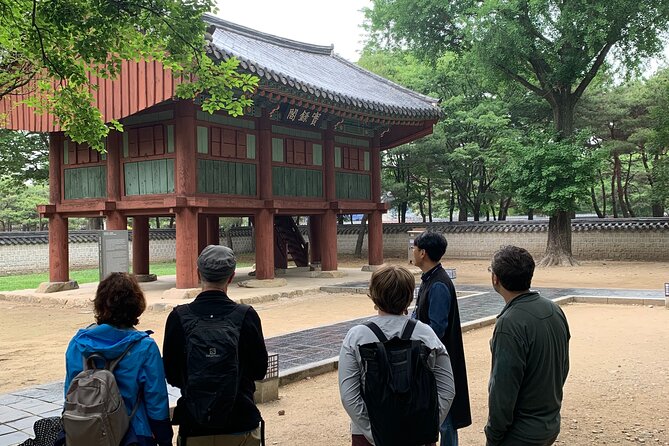
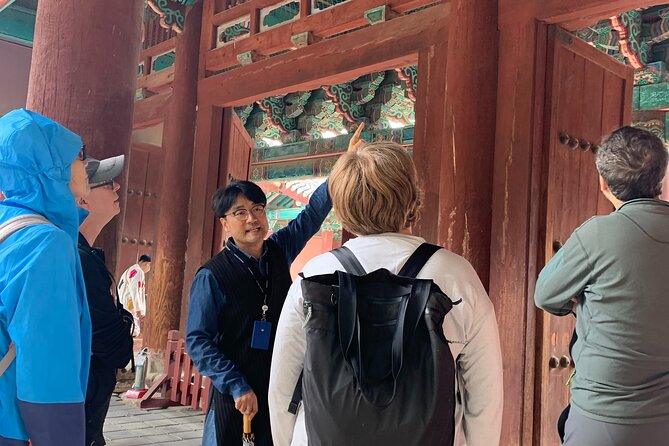
Gyeonggijeon Shrine receives about 40 minutes. The shrine holds the portrait of King Taejo, founder of the Joseon Dynasty. This is one of the day’s most important historical stops because it connects Jeonju to the ruling house that shaped Korea for centuries.
The visit also provides a change from food-centered activities. You can consider how royal memory, ritual, and place fit into the wider story of Jeonju. The guide’s presence should help you make sense of the site rather than simply walk through attractive old buildings.
The schedule gives you enough time for a focused visit. It does not promise a long, unhurried historical tour, so ask questions as you go. A private format is especially useful here because the guide can spend more time on the parts that interest your group.
Hanji paper and the life of the Joseon elite
The Hanji Museum is a 30-minute stop focused on traditional Korean paper. Hanji has long been valued for its strength, texture, and many uses. The museum visit lets you see the craft behind an object that can otherwise seem simple when encountered in a shop.
After that, the Yangban Culture Museum takes you into the world of the Joseon noble class. The 30-minute visit looks at the refined lifestyle of the yangban, Korea’s traditional scholar and aristocratic class. Placing this stop after the paper museum works well because it shifts from how objects were made to how people of status lived and studied.
Neither museum gets a huge block of time. I would enjoy them as focused windows into Korean life, not as places for a long independent study. The benefit is breadth: in one day, you see food, religion, paper, social class, literature, and architecture.
Omokdae and Imokdae for a hilltop view
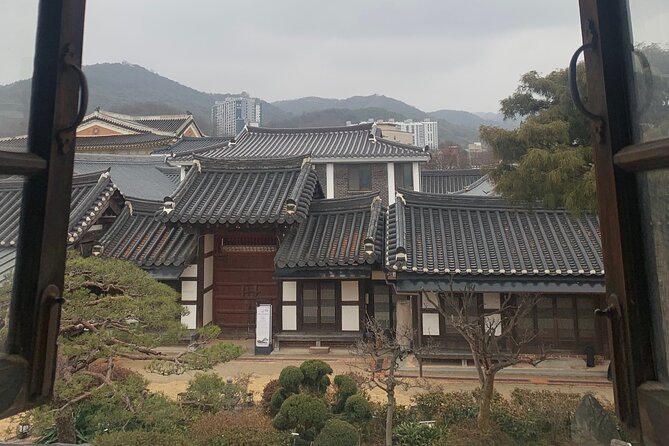
The visit to Omokdae and Imokdae lasts about 40 minutes. These historic hilltop pavilions provide panoramic views over the Hanok Village.
This is likely to be one of the day’s visual highlights. After several indoor stops, the climb and open view give you a chance to see how the village fits together. It also helps you understand the scale of the traditional rooflines and the dense arrangement of the old neighborhood.
The hilltop setting is one reason comfortable footwear matters. The tour requires a moderate level of physical fitness, and the program does not leave much spare time for a slow climb. Take the walk at a sensible pace and tell your guide if your group needs a moment to rest.
Jeonjuhyanggyo and the Confucian school tradition
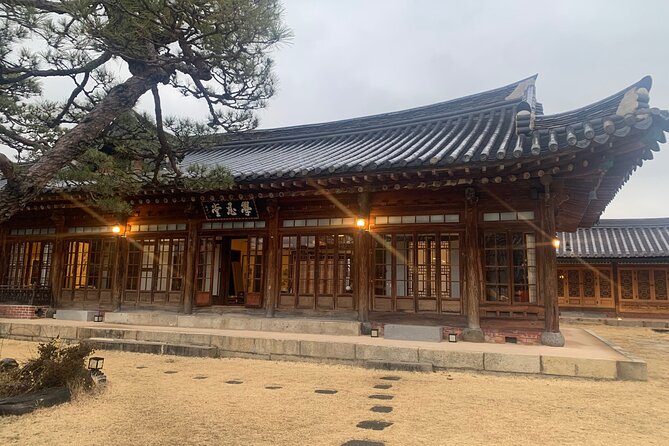
The 30-minute visit to Jeonjuhyanggyo Confucian School introduces the academic side of old Korea. Scholars once studied here, and the site helps explain the role of Confucian education in Joseon society.
This stop pairs nicely with the Yangban Culture Museum. One shows the lifestyle of the noble class, while the other points to the education and values that shaped that class. You get more from the visit if you ask your guide how the school functioned and who studied there.
Again, the time is enough for orientation, photographs, and questions, but not for a slow architectural survey. The tour favors a broad, connected picture of Jeonju over long stays at a single attraction.
Tea in a former noble family residence
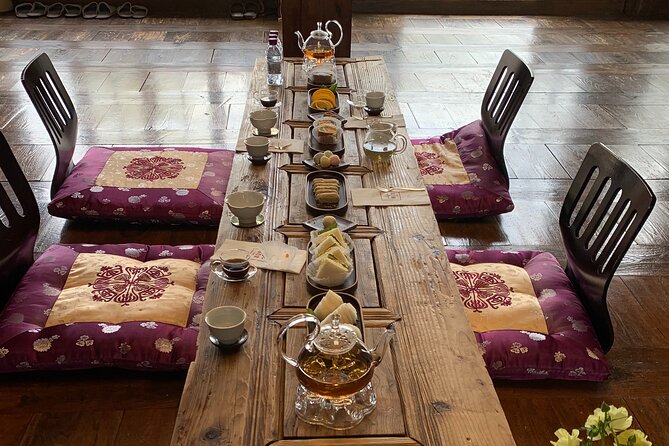
The Noble Family Tea Experience lasts about 50 minutes and takes place in an old noble residence. Descendants of the noble family host the traditional tea ceremony.
This is a more personal cultural encounter than a museum visit. You are not only looking at an old residence. You are taking part in a ritual connected to the family and the house. The slower pace also gives your feet a break before the final food activities.
Tea ceremonies can feel formal if you do not know what to do. Having a guide nearby helps with the language barrier and the small details of etiquette. You do not need to arrive as a tea expert. Pay attention, follow the host’s lead, and let the ceremony unfold at its own pace.
For me, this is one of the tour’s best balances: the morning and afternoon provide movement and sightseeing, while the tea experience creates a quiet pause.
Making kimchi with a local master
The 50-minute kimchi cooking class is the tour’s most hands-on food activity. A kimchi master leads the session, so you learn by doing rather than simply watching a demonstration.
Kimchi is familiar to many people who have eaten Korean food, but making it gives you a better sense of the work behind the flavor. You handle the ingredients, follow the process, and gain a stronger understanding of why kimchi varies from one preparation to another.
The class also makes the final meal more meaningful. You are not just finishing the day at another restaurant. The kimchi master prepares the closing dishes, linking the lesson to the food on your table.
Vegetarian options are available, but you need to request one when booking. This is important for a food tour because Korean dishes can contain fish sauce, seafood, meat, or other ingredients that are not obvious at first glance.
Finishing with bibimbap and bean sprout soup
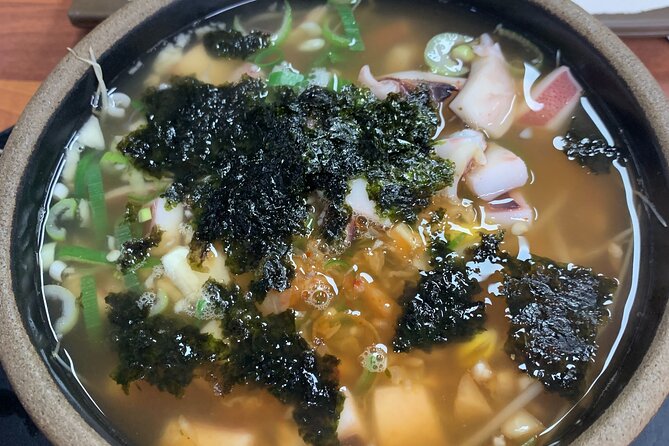
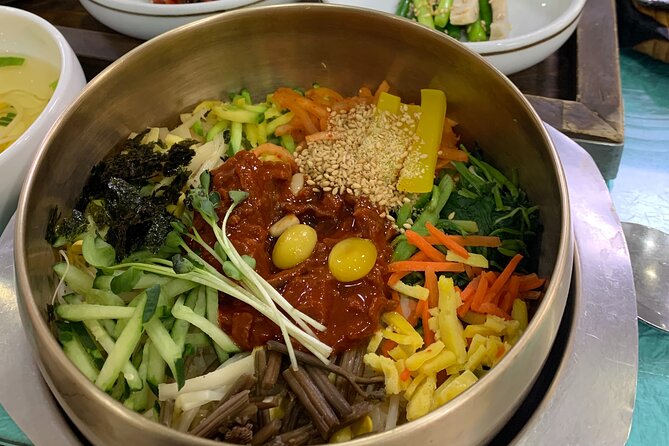
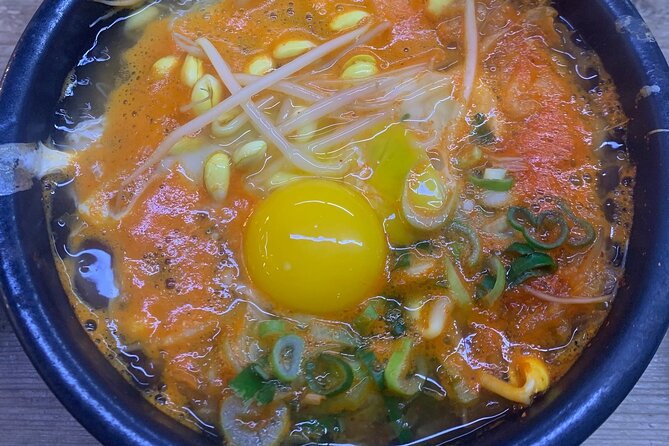
The final 50 minutes are devoted to Jeonju comfort food: bean sprout soup with rice and bibimbap. Both dishes are strongly associated with the city, and they provide a fitting finish after a full day of sampling Korean food.
Bibimbap gives you a bowl of rice with varied toppings and seasonings, while bean sprout soup offers something lighter and soothing. The combination means dinner is not just another repeat of lunch. It closes the day with two recognizable Jeonju specialties.
Because dinner follows lunch, tea, wine tasting, and a cooking class, you should arrive hungry enough to enjoy it. The schedule is food-heavy, which is a strength for anyone choosing this tour for culinary reasons. It may be too much for someone who prefers light meals or long gaps between tastings.
Is $75 good value for eight hours?
At $75, the tour offers a solid package if you plan to use most of what it includes. You receive a professional guide, lunch, dinner, admission to the scheduled attractions, a kimchi-making class, and the tea experience. That is a lot of coverage for one day.
The price is less attractive if you are mainly interested in wandering the Hanok Village at your own speed. Several of the sights can be visited as part of an independent day, and the schedule leaves limited free time.
The strongest value comes from the access and organization. A guide helps with language issues, connects the stops, and explains food customs. You also avoid having to arrange separate museum visits, a class, a tea ceremony, and two meals.
Transportation is not included, and alcohol costs extra. Keep those points in mind when setting your daily budget. The activity requires at least two participants and can be canceled if that minimum is not met, with a different date or experience, or a full refund, offered in that situation.
Who should book this Jeonju day?
I would recommend it to first-time visitors who want a strong introduction to Jeonju without spending hours planning each stop. It is particularly suitable if food is a major reason you came to Korea, but you still want history, religion, craft, and architecture in the same day.
It also suits small private groups that value direct help with translation and local customs. Families or friends with different interests can split their attention across food, museums, views, and old buildings without booking several separate activities.
I would be more cautious if you want a slow travel day. The schedule is packed, the walking is substantial, and the thirteen stops leave little room to linger. People with dietary restrictions should request a vegetarian option when booking and confirm any other needs with the provider.
Free cancellation is available up to 24 hours before the 10 a.m. start time for a full refund. Changes or cancellations inside that 24-hour window are not accepted or refunded.
Final verdict: a full plate of Jeonju
This is a busy but appealing introduction to Jeonju. I like that it connects the city’s food culture to the places, crafts, beliefs, and social traditions that shaped it. The kimchi class, family-hosted tea ceremony, full Korean lunch, and Jeonju-style dinner give the day experiences you would not get from sightseeing alone.
Book it if you want structure, interpretation, and plenty to eat. Skip it if you prefer to explore independently or need a relaxed pace. For the right group, $75 is fair value for an eight-hour private program with two meals and several included cultural activities.
FAQ
Where does the Jeonju private tour start?
It starts at Jeonju Hanok Village, at 99 Girin-daero, Wansan-gu, Jeonju, Jeonbuk State, South Korea.
What time does the experience begin?
The tour begins at 10 a.m.
Where does the tour finish?
The activity ends back at the meeting point in Jeonju Hanok Village.
How long does the tour last?
The experience lasts approximately eight hours.
Are lunch and dinner included?
Yes. Lunch is included, along with dinner featuring bean sprout soup with rice and bibimbap.
Is the kimchi-making class included?
Yes. The tour includes a kimchi-making class led by a kimchi master.
Can I request vegetarian food?
Yes. A vegetarian option is available, but you should advise the provider when booking.
What happens if I cancel?
You can receive a full refund if you cancel at least 24 hours before the local start time. Cancellations or changes made less than 24 hours before the start time are not refunded or accepted.
Just added around South Korea
- Seoraksan National Park & Nami Island★ 4.5 · 3 reviews
- East of jeju tour for Seogwipo Gangjeong Cruise Customers★ 4.5 · 3 reviews
- Strawberry Picking, Winter Sled with Eobi Ice Valley from Seoul★ 4.5 · 3 reviews
- Seoul: Seohaerang Cable Car, Gwangmyeong Cave, etc (EG Tour)★ 5.0 · 3 reviews
- Seoul: Seorak Mountain, East DMZ, and Sokcho Tour★ 5.0 · 3 reviews
- Seoul Full Day small group Tour★ 5.0 · 3 reviews
- Rice Wine Tasting with Sommelier – Finest Makgeolli (& Soju)★ 5.0 · 3 reviews
- Majang Meat Market Experience: Private Tour with Han-woo Beef BBQ★ 5.0 · 3 reviews
Hanok Village & Folk Culture, compared.

Gyeongbok Palace, Bukchon Village, and Gwangjang Tour
Read our review →
Seoul City Sightseeing Tour Including Gyeongbokgung Palace, N Seoul Tower, and Namsangol Hanok Village
Read our review →Gyeongbok Palace, Bukchon Village, and Gwangjang Tour
Read our review →
Suwon Hwaseong Fortress & Korean Folk Village Tour
Read our review →
Gyeongbok Palace and Bukchon Hanok Walking Tour
Read our review →
Best Walking Tour to Gyeongbok Palace Bukchon Hanok Village
Read our review →
Experience Korean Cooking in Modern Hanok Kitchen
Read our review →
Royal Seoul Cooking Class in a 100-Year-Old Hanok
Read our review →Browse the lists this tour appears in