
Reviewed · HANOK VILLAGE & FOLK CULTURE
Experience Korean Cooking in Modern Hanok Kitchen
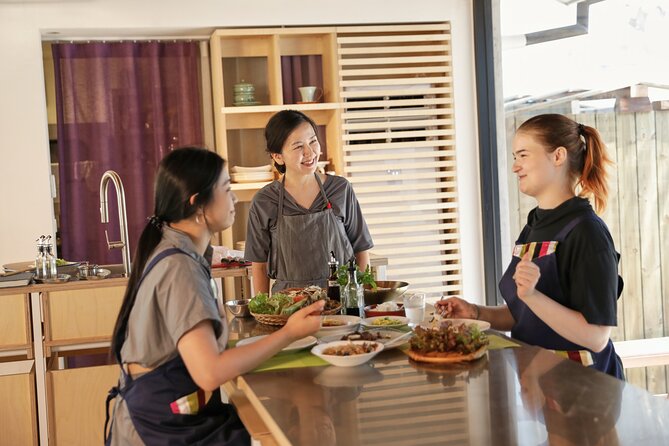
Cook Seoul, then eat the lesson. This two-hour class at O’ngo Food Communications gives you a hands-on introduction to Korean food in a clean, air-conditioned kitchen near Bukchon Hanok Village. I like the professional equipment and the chance to cook with chefs trained in Korea and abroad, rather than simply watching a demonstration.
I also like the small-group feel, the included lunch, and the market visit available before some classes. The main drawback is practical: the school can be hard to find, and it is on the third floor of a building without an elevator. Arrive early, especially if you are unfamiliar with the Bukchon area.
In This Review
- Key Points Before You Book
- Why This Seoul Cooking Class Works for Beginners
- Inside O’ngo Food Communications Near Bukchon
- The Optional Market Walk Before Class
- Choosing Your Korean Menu
- What the Cooking Process Feels Like
- Eating Lunch You Prepared
- The Chefs and Personal Attention
- Is $87 a Fair Price?
- Timing, Transport, and Cancellation Details
- Who Should Book This Class?
- Should You Book the O’ngo Korean Cooking Class?
- FAQ
- Where does the Korean cooking class meet?
- What time does the class begin?
- How long does the experience last?
- Is hotel pickup included?
- What is included in the $87 price?
- What dishes will I cook?
- Can children participate?
- Is the class accessible by public transportation?
- Can I cancel for a full refund?
Key Points Before You Book
- You cook the food yourself: Chop, slice, mix, season, and cook at your own workstation instead of standing back while a chef does the work.
- The class is built for beginners: Clear instructions, safety guidance, and help from English-speaking chefs make this a good first Korean cooking lesson.
- Menus vary by class: Past sessions have included japchae, chicken stew, bibimbap, bulgogi, kimchi, kimchi pancakes, and soup.
- A local market visit may be available: Some sessions include a walk through a nearby market before cooking, with advice on ingredients and shopping habits.
- Lunch is part of the experience: You eat the dishes you prepare, with rice and one beverage included.
- Plan for the meeting point: The class begins at 10:30 am at 137-11 Bukchon-ro. Arrive at least 10 minutes early.
Why This Seoul Cooking Class Works for Beginners
Korean food can look simple on the table, but the balance of seasoning, texture, and preparation takes practice. This class gives you a useful introduction without assuming that you already know how to handle Korean ingredients or cooking methods.
Before you start, the chef provides safety instructions and an overview of Korean flavors. You also learn how to choose ingredients, which is a valuable part of the lesson. It helps you understand why one type of vegetable, noodle, paste, or cut of meat works better than another.
The instruction is designed for participation. You are expected to do the preparation, not just watch someone cook. Depending on the menu, that can mean slicing vegetables, mixing sauces, grinding or combining ingredients, and managing the cooking steps at your own station.
That matters because many cooking classes give you one token task before the chef takes over. Here, the format gives you a better chance of remembering the recipe later. You can also adjust the seasoning in your own dish before sitting down to eat it.
The class is suitable for people with little or no cooking experience. One parent and an 11-year-old daughter found the instruction clear and patient, and another participant with no cooking skills said the chef explained each step well. The minimum age for participation is 11, although younger children may attend without taking part.
More Cooking Classes in Seoul
- Local Home Korean Cooking Class & Market Adventure in Seoul
★ 5.0 · 1,024 reviews - Master Korean traditional cooking with a Kimchi chef
★ 5.0 · 385 reviews - Seoul: Korean Cooking Class at a Local Home and Market Tour
★ 5.0 · 348 reviews
Inside O’ngo Food Communications Near Bukchon
The school is located at 137-11 Bukchon-ro in Jongno District, close to the Bukchon area and public transportation. The kitchen is modern, fully air conditioned, and equipped with the tools you need, so you do not need to bring cooking equipment or ingredients.
The setting combines a professional school feel with the atmosphere of a Seoul neighborhood. The location is useful if you are already visiting Bukchon Hanok Village, but it is not necessarily the easiest place to find on your first morning in the city.
Several people had trouble locating the building, and even a taxi driver needed GPS assistance. I would not cut this close. Give yourself extra time, keep the address ready on your phone, and arrive at least 10 minutes before the 10:30 am start.
The classroom is on the third floor without an elevator. That is not a major problem for most people, but it is worth knowing before you arrive, particularly if you have mobility concerns or are carrying heavy luggage.
The school can host up to 22 people. Actual class size may be much smaller, and several sessions had only a few participants. A small class means more direct help when you are chopping or seasoning, though you should not assume every date will have the same group size.
The Optional Market Walk Before Class
Some sessions include a walk through a nearby market before the cooking lesson. This is one of the most useful additions because it places the food in a daily Korean setting instead of treating each ingredient as an isolated item on a kitchen counter.
The market portion helps explain how local shoppers choose and buy ingredients. You may see a different side of food shopping than you would in a supermarket, and a local guide can explain what you are looking at and how the ingredients fit Korean cooking.
One helpful tip is to arrive around 30 minutes early if a market walk is offered for your session. The cooking class begins at 10:30 am, so check the instructions you receive and do not assume that the market portion happens automatically on every date.
The market visit is not the strongest part for everyone. If you have already spent time in large traditional markets, you may find this walk fairly brief. Still, it adds context and can make the cooking lesson easier to follow.
Choosing Your Korean Menu
The available dishes depend on the class you book. The menus described in the experience include several familiar Korean favorites, but you should check the specific option for your date rather than assume you will cook every dish listed.
Past classes have included:
- Japchae, glass noodles mixed with vegetables and seasoning
- Chicken stew
- Bibimbap
- Bulgogi
- Kimchi
- Kimchi pancakes
- Soup
This range gives you a good look at different parts of Korean cooking. Japchae teaches you how to balance soft noodles with vegetables and seasoning. Bulgogi introduces the sweet and savory marinade many people first associate with Korean food. Kimchi gives you a closer look at fermentation and seasoning, while bibimbap shows how separate ingredients come together in one bowl.
The beginner format keeps the recipes manageable. One participant particularly liked a japchae class because the dish was both simple and easy to recreate at home. Another person learned kimchi and bulgogi together and found the bulgogi recipe practical enough to use later.
The class is not a specialist workshop in one regional style of Korean cuisine. It is better understood as a friendly starting point, giving you a few core recipes and a wider sense of how Korean ingredients work together.
More hanok village visits:
- Seoul: Gyeongbok Palace, Bukchon Village, and Gwangjang Tour
★ 4.9 · 2,321 reviews - Seoul City Sightseeing Tour Including Gyeongbokgung Palace, N Seoul Tower, and Namsangol Hanok Village
★ 5.0 · 1,423 reviews - Seoul: Gyeongbok Palace, Bukchon Village, and Gwangjang Tour
★ 5.0 · 1,044 reviews - Seoul: Suwon Hwaseong Fortress & Korean Folk Village Tour
★ 4.7 · 214 reviews
What the Cooking Process Feels Like
The chef first demonstrates the recipe and explains the steps. You then move to your own clean workstation and repeat the process, with staff moving around the room to help.
This setup gives you independence without leaving you stranded. If you are unsure how thinly to slice something or how much seasoning to add, the chef can step in before a small mistake becomes a ruined dish.
The English instruction is a major benefit. The chefs are professional English-speaking instructors, and several participants praised the clarity of the explanations. You get more than a list of measurements because the teacher can explain the purpose of ingredients and the reason behind each step.
The kitchen is prepared in advance, but that does not mean the class is passive. You still take part in slicing, dicing, mixing, and cooking. The preparation is organized enough to keep the class moving during its roughly two-hour schedule.
If you have a food allergy, tell the staff before cooking begins. Participants with allergies received help altering their food and advice about ingredients to avoid. The class also received praise for cleanliness and attention to preventing cross contamination. Still, you should communicate your needs clearly at booking and again when you arrive.
Eating Lunch You Prepared
At the end, you sit down and eat the dishes you made. Rice and one beverage are included, and the meal gives you a chance to taste the results while the instructions are still fresh in your mind.
This is more satisfying than receiving a small sample at the end of a demonstration. You can see how the ingredients change during cooking, notice the texture of the finished dish, and decide how you might adjust the seasoning at home.
Portions are substantial enough that you should arrive hungry. One class included bibimbap and soup, while another included two main recipes such as japchae and chicken stew. The exact meal depends on the selected workshop.
The shared meal also gives you time to talk with the other participants and the chefs. Solo visitors can meet people without needing to arrange a separate social activity, while couples and families have an easy meal built into the morning.
The recipes have received especially strong praise for being fresh, tasty, and realistic for home cooking. That last point matters. A recipe can be delicious in class but too complicated to repeat. These beginner menus are meant to give you something useful to take back to your own kitchen.
The Chefs and Personal Attention
The teaching staff are the heart of the experience. Instructors such as Ran and Yibben were singled out for patient, clear teaching, while other chefs were praised for being friendly, funny, and attentive.
Small groups can make a real difference. When only two or four people attended, the chef had time to watch each person’s progress and offer individual help. A larger class may feel less personal, though the school limits the group to a maximum of 22 participants.
The staff also seem comfortable working with different skill levels. A complete beginner can follow along, while a more confident cook can ask about seasoning, ingredients, or technique.
The cultural explanations add value too. One class explained the historical purpose of each ingredient in Korean cooking. That kind of detail helps you understand food as part of everyday life, not just as a set of recipes.
Is $87 a Fair Price?
At $87 per person, this is not the cheapest meal you will eat in Seoul. You can find excellent Korean food for much less, and a short cooking class will never compete with a simple restaurant lunch on price alone.
The value comes from what is included: instruction from professional chefs, ingredients, equipment, a modern air-conditioned kitchen, lunch, rice, and one beverage. You are also paying for the chance to repeat the dishes later, which makes the class more useful than a meal that disappears as soon as you finish it.
The market walk, when included in your session, adds another layer of local context. The class is also a practical choice if you want a structured activity near Bukchon rather than another sightseeing stop.
I would consider the price reasonable for visitors who enjoy food and want to learn a skill. It is less appealing if you only want a quick taste of Korean cuisine or are trying to keep activity costs low.
The experience is commonly booked about 21 days in advance. That suggests you should reserve ahead during busy periods, especially if you need a certain date or want to attend with family or friends.
Timing, Transport, and Cancellation Details
The class starts at 10:30 am and lasts about two hours. It ends back at the meeting point, with no hotel pickup or drop-off included.
You will need to make your own way to O’ngo Food Communications. The location is near public transportation, but the address can be difficult to spot, so I recommend allowing extra time beyond the required 10-minute early arrival.
Your booking confirmation is provided at the time of reservation. Free cancellation is available if you cancel at least 24 hours before the local start time. Changes or cancellations made within 24 hours are not refunded.
The class requires a minimum number of participants. Saturday sessions specifically require at least five participants, and any session can be canceled if the minimum is not met. If that happens, you will be offered another date or experience, or a full refund.
Who Should Book This Class?
I would recommend it to food-focused visitors, solo visitors who enjoy meeting people, couples, and families with children aged 11 or older. It is also a good choice if you want to learn recipes you can actually try at home.
Beginners will get the most from the clear instruction and personal help. You do not need to arrive with Korean cooking experience, and the class is structured to keep the steps approachable.
It may not suit you if you dislike group activities, have difficulty climbing stairs, or want a highly advanced culinary course. The class introduces Korean cooking rather than training professional chefs.
For the best experience, arrive early, wear something comfortable, tell the staff about allergies, and check which menu you have selected. If the market walk is offered, aim to reach the area about 30 minutes early so you can take part without rushing.
Should You Book the O’ngo Korean Cooking Class?
Yes, if you want more than another restaurant meal in Seoul. The strongest reasons to book are the hands-on format, patient English-speaking chefs, clean modern kitchen, and the chance to eat food you prepared yourself.
I especially like that the class connects ingredients, technique, and Korean food culture. It is not perfect: the building can be tricky to find, the third-floor walk may be inconvenient, and the market portion may feel short if you have already visited several markets.
Still, the $87 cost buys a useful two-hour activity, a full meal, and recipes you can use after your trip. Choose your menu carefully, arrive early, and this is a very good introduction to Korean cooking near Bukchon.
FAQ
Where does the Korean cooking class meet?
The class meets at O’ngo Food Communications, 137-11 Bukchon-ro, Jongno District, Seoul, South Korea.
What time does the class begin?
The cooking class begins at 10:30 am. You should arrive at least 10 minutes before the start time.
How long does the experience last?
The class lasts approximately two hours.
Is hotel pickup included?
No. Hotel pickup and drop-off are not included. You must make your own way to the meeting point.
What is included in the $87 price?
The price includes the beginner cooking class, all ingredients and equipment, use of the fully air-conditioned modern kitchen, lunch, professional English-speaking chefs, and one beverage.
What dishes will I cook?
The menu depends on the class you choose. Options described include japchae, chicken stew, bibimbap, bulgogi, kimchi, kimchi pancakes, and soup.
Can children participate?
The minimum age for participation is 11. Children younger than 11 may attend but cannot take part in the cooking class.
Is the class accessible by public transportation?
The meeting point is near public transportation. The school is on the third floor of a building without an elevator.
Can I cancel for a full refund?
Yes. You can cancel at least 24 hours before the experience start time for a full refund. Cancellations or changes made less than 24 hours before the start time are not refunded.
More Cooking Classes
- Seoul: Korean Cooking at Seoul Cooking Club!
★ 5.0 · 311 reviews - Korean Cooking at Seoul Cooking Club
★ 5.0 · 220 reviews - Korean Cooking Class with Grocery Shopping at Seoul Local Market
★ 5.0 · 107 reviews - Korean Kimchi Making Day Experience with a Local Market Tour
★ 5.0 · 99 reviews
Just added around Seoul
- Seoraksan National Park & Nami Island★ 4.5 · 3 reviews
- Strawberry Picking, Winter Sled with Eobi Ice Valley from Seoul★ 4.5 · 3 reviews
- Seoul Full Day small group Tour★ 5.0 · 3 reviews
- Majang Meat Market Experience: Private Tour with Han-woo Beef BBQ★ 5.0 · 3 reviews
- Seoul Korean BBQ Dinner Experience with Secret Food Tours★ 5.0 · 3 reviews
- Rice Wine Tasting with Sommelier – Finest Makgeolli (& Soju)★ 5.0 · 3 reviews
- Max Out Seoul: Must Visit City Highlights Panoramic Day Tour★ 5.0 · 3 reviews
- Seongsu-dong Walking Tour: K-Pop, Culture, Cheer, Friends & Relax★ 4.5 · 3 reviews
Hanok Village & Folk Culture, compared.

Gyeongbok Palace, Bukchon Village, and Gwangjang Tour
Read our review →
Seoul City Sightseeing Tour Including Gyeongbokgung Palace, N Seoul Tower, and Namsangol Hanok Village
Read our review →Gyeongbok Palace, Bukchon Village, and Gwangjang Tour
Read our review →
Suwon Hwaseong Fortress & Korean Folk Village Tour
Read our review →
Gyeongbok Palace and Bukchon Hanok Walking Tour
Read our review →
Best Walking Tour to Gyeongbok Palace Bukchon Hanok Village
Read our review →
Royal Seoul Cooking Class in a 100-Year-Old Hanok
Read our review →
Korean Folk Village and Suwon Hwaseong Fortress Day Tour(EG Tour)
Read our review →Browse the lists this tour appears in