
Reviewed · HANOK VILLAGE & FOLK CULTURE
Royal Seoul Cooking Class in a 100-Year-Old Hanok
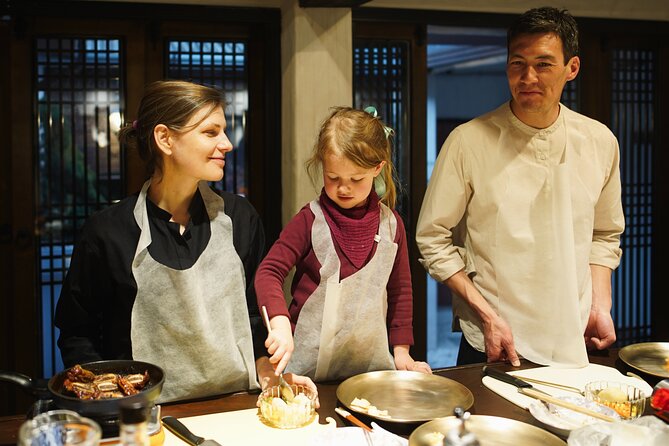
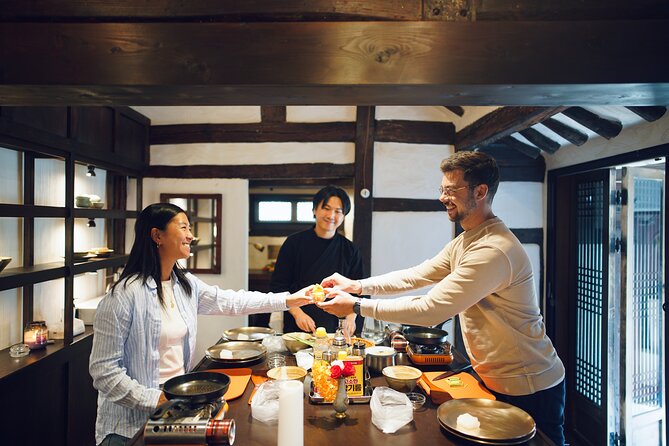
Come hungry, leave with recipes. This small cooking class brings you into a restored 100-year-old hanok in central Seoul, where you prepare Korean dishes, hear the stories behind them, and eat your work from handmade Bangjja bronze tableware. I especially like the maximum group of six, which gives chef Park, also called Ricky by some participants, time to help each person. I also like the setting: this is a real residential-style Korean home, not a large cooking studio dressed up with old furniture.
The main thing to consider is the price, about $98.98 per person for roughly two hours and 15 minutes. That is not a cheap meal, but it covers instruction, ingredients, several dishes, drinks, dessert, and a cultural setting near Ikseon-dong. You should also understand that the listed palace and market sights are nearby Seoul landmarks, not necessarily a guided sightseeing route during the cooking lesson.
In This Review
- Key details before you book
- Entering a 100-year-old hanok in Ikseon-dong
- What you cook: four dishes with different roles
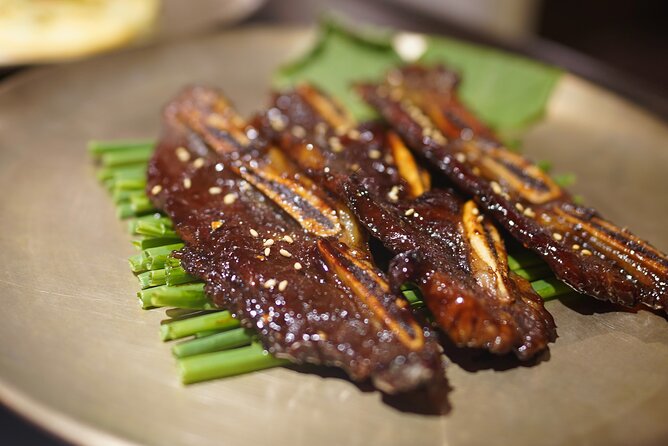
- LA Galbi
- Fresh kimchi
- Haemul pajeon
- Tangpyeongchae
- Chef Park and the small-group teaching style
- Dining like royalty with Bangjja bronzeware
- The nearby Seoul sights and how to use them
- Gyeongbokgung Palace
- Changdeokgung Palace
- Kwangjang Market
- Ikseon-dong Hanok Street
- Gwanghwamun Square
- Is $98.98 good value?
- Who should book this cooking class?
- Booking and cancellation advice
- Should you book Royal Seoul Cooking Class?
- FAQ
- How long does the Royal Seoul Cooking Class last?
- Where does the class begin?
- Where does the activity end?
- How many people can join the class?
- What dishes do you prepare?
- Is food and drink included?
- Do I need cooking experience?
- Can I cancel for a full refund?
Key details before you book
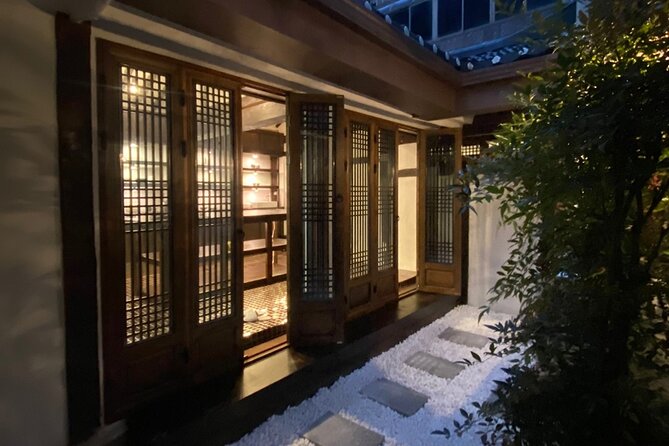
- A 100-year-old hanok: Cook and dine in a restored traditional Korean home in the Jongno area.
- A six-person maximum: The small class size allows direct help from chef Park and keeps the meal social without feeling crowded.
- Four Korean dishes: Prepare LA Galbi, fresh kimchi, haemul pajeon, and tangpyeongchae, with recipes designed to be manageable at home.
- Bangjja bronzeware dining: Eat your finished dishes from handmade Korean metal tableware in a classic dining room.
- Makgeolli and dessert included: The meal ends with freshly brewed makgeolli and traditional Korean sweets.
- Easy cancellation terms: Cancel at least 24 hours before the start time for a full refund.
Entering a 100-year-old hanok in Ikseon-dong
The address is 25 Samil-daero 32ga-gil in Jongno District, and the class ends at the same meeting point. The location puts you close to Ikseon-dong Hanok Street, one of Seoul’s most enjoyable areas for a walk before or after class.
The house is a major part of the appeal. The hanok has been lovingly restored, and chef Park is said to have remodeled the space himself. That gives the evening a personal feel. You are not simply following instructions in a commercial kitchen. You are stepping into a home connected to Korean domestic culture.
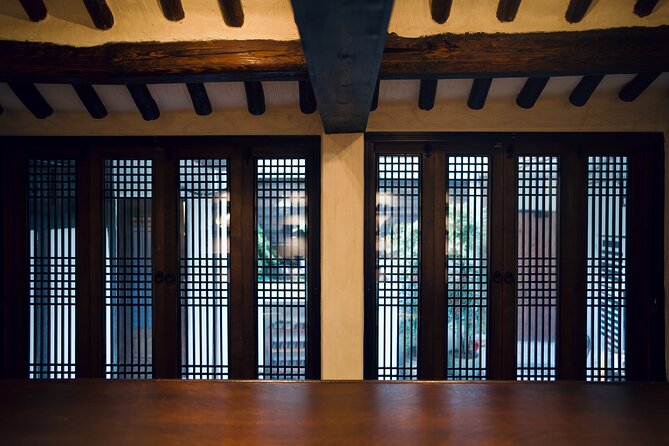
The atmosphere also gets high marks for its warmth and comfort. The dining room is described as cozy, with classical music and traditional design. That matters because the class is not just about chopping vegetables and turning on a burner. The surroundings slow the pace and help connect the food with the way it has been prepared and served in Korean homes.
You should allow extra time to find the house in Seoul’s narrow lanes. The host sends directions and photos to help with arrival, which is useful around Ikseon-dong. The activity is also near public transportation, so you do not need a car.
More Cooking Classes in Seoul
- Local Home Korean Cooking Class & Market Adventure in Seoul
★ 5.0 · 1,024 reviews - Master Korean traditional cooking with a Kimchi chef
★ 5.0 · 385 reviews - Seoul: Korean Cooking Class at a Local Home and Market Tour
★ 5.0 · 348 reviews
What you cook: four dishes with different roles
The menu gives you a good spread of Korean cooking rather than repeating the same flavors. You work with meat, seafood, vegetables, fermented ingredients, and a savory pancake.
LA Galbi
LA Galbi is Korean-style marinated beef short ribs. It is one of the more familiar dishes on the menu, but preparing it yourself gives you a better sense of the balance between the marinade and the meat.
This is a good choice for a class because the dish feels festive without being impossibly technical. You can expect chef Park to explain the preparation and guide you through the cooking, while the small group format makes it easier to ask questions.
Fresh kimchi
Fresh kimchi gives you a look at Korean fermentation culture without requiring you to wait weeks for a finished batch. The focus here is on the ingredients and seasoning, along with the role kimchi plays at a Korean meal.
It is also one of the easiest parts of the class to repeat at home. Several participants returned from Seoul eager to recreate the recipes, and the host provides recipe information after the class. You will still need access to Korean ingredients or suitable substitutes, but the instruction aims to make the dishes approachable.
More Workshops in Seoul
- Yongpyong Ski Resort from Seoul with Optional Lesson and Packages
★ 5.0 · 217 reviews - Korean Cooking Class with Grocery Shopping at Seoul Local Market
★ 5.0 · 107 reviews - Seoul : Taste of Korea, Authentic Home-Style Cooking Class
★ 5.0 · 64 reviews - K-pop Dance Class in Seoul (Incl. video shooting & editing)
★ 5.0 · 52 reviews
Haemul pajeon
Haemul pajeon is a savory seafood and green onion pancake. It is a friendly dish for beginners because the steps are easy to understand, yet the result feels distinctly Korean.
The class includes hands-on preparation, not just a chef demonstration. If you cook often, you may find the technique familiar. If you are new to Korean food, it gives you a useful starting point for making a classic dish at home.
Tangpyeongchae
Tangpyeongchae is a traditional Korean mixed dish made with mung bean jelly and other ingredients. It is less familiar to many international visitors than galbi or pajeon, which makes it an especially useful part of the menu.
This dish adds a more ceremonial and historical side to the meal. Chef Park uses the food as a way to discuss Korean culture, regional cooking, and the background of the dishes. That storytelling is one of the strongest reasons to choose this class over a simple recipe lesson.
Chef Park and the small-group teaching style
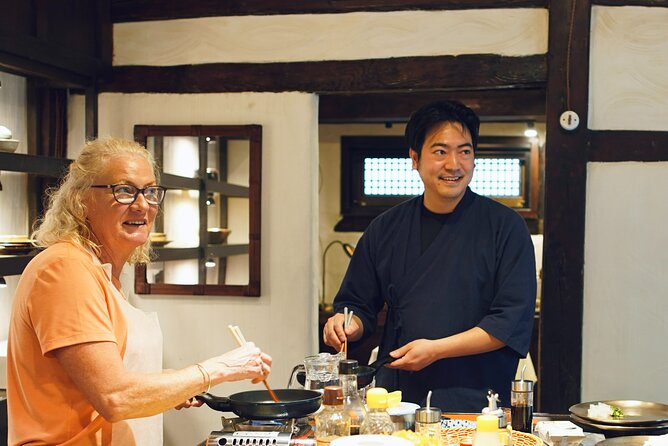
The host is repeatedly praised for being warm, funny, patient, and clear. He also has official culinary certification, and his teaching includes more than kitchen technique. You can expect stories about Korean food, older traditions, modern Korean life, and even aspects of the country’s colonial period.
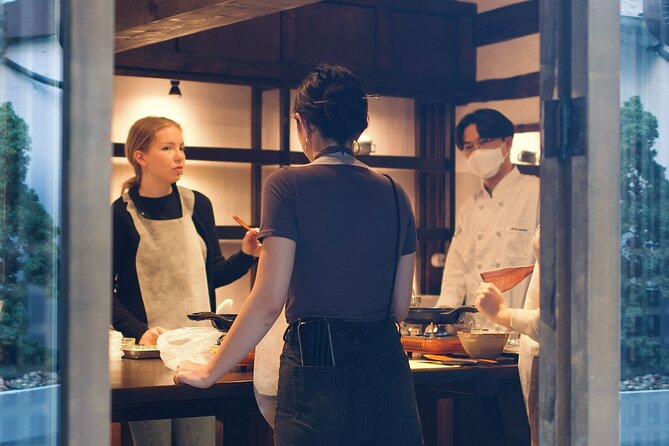
The small group makes a real difference. With no more than six people, the class can adjust to different skill levels. Families with children aged 11 and 13 found the instruction workable, and one participant with leg problems was able to use a stool during cooking. That does not mean every mobility need can be met, so you should contact the provider in advance if you require a particular setup. Still, the willingness to adjust is encouraging.
Solo visitors fit in well here. The class creates an easy way to meet people without forcing you into a large tour group. Couples, families, and friends can also book it as a shared evening. The range of ages described in the feedback suggests that you do not need to be an experienced cook, or even especially confident in the kitchen.
Chef Park also shares restaurant suggestions for the rest of your stay. That is a useful extra, especially on your first nights in Seoul when you are still learning how to read menus and choose neighborhoods for dinner.
Dining like royalty with Bangjja bronzeware
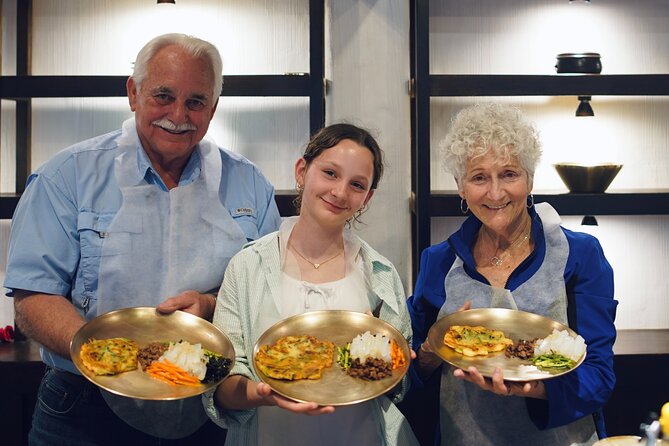
Once the cooking is finished, you sit down to eat together. The food is served on Bangjja, traditional Korean bronzeware made by hand. The tableware adds weight and ceremony to the meal, and it makes the class feel more like a cultural evening than a casual cooking workshop.
The meal includes the dishes you prepare, freshly brewed makgeolli, and traditional Korean desserts. Makgeolli is a mildly sweet rice drink with a soft, cloudy appearance. Since alcohol is part of the meal, check with the provider before booking if you need a nonalcoholic alternative. The supplied details do not confirm one.
The dining portion is also where the social side of the class comes into its own. You sit with the people who cooked alongside you, compare results, and continue the conversation with Park. The format works well for a first night in Seoul because it combines food, local contact, and a gentle introduction to Korean customs.
Portion details are not specified, but participants consistently describe the meal as delicious and satisfying. You should treat the class as both a lesson and dinner, not as a quick tasting.
The nearby Seoul sights and how to use them
The itinerary names five Seoul landmarks:
- Gyeongbokgung Palace
- Changdeokgung Palace
- Kwangjang Market
- Ikseon-dong Hanok Street
- Gwanghwamun Square
These places help explain the class’s setting, but you should not assume the two-hour lesson includes a guided visit to all five. The meeting point is in Jongno, close to several of them, and the activity returns to that same point.
Gyeongbokgung Palace
Gyeongbokgung is Seoul’s best-known royal palace and gives useful context for the class’s royal cuisine theme. It is a natural place to visit before the cooking session if you want to connect palace culture with the dishes you will prepare later.
The drawback is time. You cannot realistically combine a proper palace visit, the market, both palaces, the square, and the cooking class within two hours and 15 minutes. Plan those sights separately.
Changdeokgung Palace
Changdeokgung offers another look at Korea’s royal past and pairs well with a class centered on court-style food. Its proximity to Jongno makes it convenient to combine with the hanok neighborhood on the same day.
Give yourself a separate block of time here rather than squeezing it in before class. Seoul’s central neighborhoods are walkable in parts, but traffic, crowds, and palace admission schedules can affect your timing.
Kwangjang Market
Kwangjang Market is a strong choice after the class if you still want to explore Korean food. It gives you a more informal counterpoint to the careful preparation and plated meal in the hanok.
Do not expect the cooking class to take you through the market as part of the lesson. Use it as an add-on in your Jongno food itinerary.
Ikseon-dong Hanok Street
This is the most directly connected stop because the class is in the Ikseon-dong area. The lanes are full of old-style buildings, cafes, restaurants, and shops, making the neighborhood ideal for a before-or-after stroll.
The area can be busy, and the lanes are not the place to rush. Arrive early enough to find the meeting point without stress, then explore after class if you want to continue the evening.
Gwanghwamun Square
Gwanghwamun Square is farther across central Seoul but still fits into a Jongno sightseeing day. It is useful as part of a broader route linking the palaces with central Seoul.
Again, treat it as independent sightseeing. The cooking experience itself begins and ends at the hanok address.
Is $98.98 good value?
At nearly $100, this class costs more than an ordinary Seoul meal. The comparison is not quite fair, though, because you are paying for several things at once: a certified instructor, ingredients, hands-on teaching, a private-feeling setting, dinner, drinks, dessert, and cultural explanation.
The price makes the most sense if you value setting and personal attention. A larger class might offer a lower rate, but it would not provide the same access to the instructor or the same quiet hanok atmosphere. Here, the six-person limit is part of what you are buying.
I would be less enthusiastic about the price if you mainly want to eat Korean food. Seoul has many cheaper ways to do that. Choose this class if you want to understand how the dishes are made and take practical recipes home with you.
The host’s follow-up also adds value. Recipe information and photos are sent after the class, according to the details provided. That turns the evening into something you can revisit in your own kitchen.
Who should book this cooking class?
I would recommend it to:
- First-time visitors who want an easy introduction to Korean food and customs
- Couples looking for a relaxed evening activity
- Solo visitors who enjoy meeting people in a small setting
- Families with older children and several generations
- Home cooks who want recipes they can attempt after returning home
- Anyone staying near Jongno, Insadong, or Ikseon-dong
You do not need previous cooking experience. The recipes are described as accessible, and the chef prepares much of the setup so you can focus on learning and cooking rather than spending the whole lesson on basic preparation.
I would think twice if you dislike group dining, cannot eat the listed ingredients, or want a full sightseeing tour. The class is intimate, but it is still shared with other people. The provided information also does not list substitutions for dietary restrictions, so ask before paying if that is important to you.
The activity lasts about two hours and 15 minutes. That is long enough for cooking, conversation, and a proper meal without taking your entire day. It is especially convenient as an evening plan after visiting Jongno’s palaces or as a memorable first-night activity.
Booking and cancellation advice
Your confirmation arrives when you book, and mobile tickets are accepted. The activity is near public transportation, and the return point is the original meeting address.
Free cancellation is available if you cancel at least 24 hours before the local start time. Changes or cancellations inside that 24-hour window are not accepted for a refund, so check your Seoul schedule before booking.
Should you book Royal Seoul Cooking Class?
Yes, if you want food with a sense of place. The restored hanok, six-person limit, clear instruction, and stories from chef Park make this more personal than a standard cooking lesson. The menu is broad enough to show several sides of Korean cuisine, and the Bangjja tableware, makgeolli, and dessert give the evening a pleasant finish.
The price is the main reservation, and the listed landmarks should be treated as nearby sights rather than stops on a sightseeing tour. For a hands-on cultural evening with dinner included, though, this is a strong choice. Book it early if the small class size matters to you, then pair it with Ikseon-dong or the palaces on the same day.
FAQ
How long does the Royal Seoul Cooking Class last?
The class lasts approximately two hours and 15 minutes.
Where does the class begin?
It begins at 25 Samil-daero 32ga-gil in Jongno District, Seoul, South Korea.
Where does the activity end?
It ends back at the same meeting point.
How many people can join the class?
The activity has a maximum of six participants.
What dishes do you prepare?
The menu includes LA Galbi, fresh kimchi, haemul pajeon, and tangpyeongchae.
Is food and drink included?
Yes. You eat the dishes prepared during the class, and the experience includes freshly brewed makgeolli and traditional Korean desserts.
Do I need cooking experience?
No. The class is designed to be accessible to people without cooking skills, with guidance from certified culinary instructors.
Can I cancel for a full refund?
Yes, if you cancel at least 24 hours before the experience start time. Cancellations or changes made less than 24 hours in advance are not accepted for a refund.
More Cooking Classes
- Seoul: Korean Cooking at Seoul Cooking Club!
★ 5.0 · 311 reviews - Korean Cooking at Seoul Cooking Club
★ 5.0 · 220 reviews - Experience Korean Cooking in Modern Hanok Kitchen
★ 5.0 · 118 reviews - Korean Kimchi Making Day Experience with a Local Market Tour
★ 5.0 · 99 reviews
More Hanok Village Visits
- Seoul: Gyeongbok Palace, Bukchon Village, and Gwangjang Tour
★ 4.9 · 2,321 reviews - Seoul City Sightseeing Tour Including Gyeongbokgung Palace, N Seoul Tower, and Namsangol Hanok Village
★ 5.0 · 1,423 reviews - Seoul: Gyeongbok Palace, Bukchon Village, and Gwangjang Tour
★ 5.0 · 1,044 reviews - Seoul: Suwon Hwaseong Fortress & Korean Folk Village Tour
★ 4.7 · 214 reviews
Just added around Seoul
- Seoraksan National Park & Nami Island★ 4.5 · 3 reviews
- Strawberry Picking, Winter Sled with Eobi Ice Valley from Seoul★ 4.5 · 3 reviews
- Seoul Full Day small group Tour★ 5.0 · 3 reviews
- Majang Meat Market Experience: Private Tour with Han-woo Beef BBQ★ 5.0 · 3 reviews
- Seoul Korean BBQ Dinner Experience with Secret Food Tours★ 5.0 · 3 reviews
- Rice Wine Tasting with Sommelier – Finest Makgeolli (& Soju)★ 5.0 · 3 reviews
- Seongsu-dong Walking Tour: K-Pop, Culture, Cheer, Friends & Relax★ 4.5 · 3 reviews
- Seoul: Alpaca World and Nami Island (with Garden / Railbike)★ 5.0 · 3 reviews
Hanok Village & Folk Culture, compared.

Gyeongbok Palace, Bukchon Village, and Gwangjang Tour
Read our review →
Seoul City Sightseeing Tour Including Gyeongbokgung Palace, N Seoul Tower, and Namsangol Hanok Village
Read our review →Gyeongbok Palace, Bukchon Village, and Gwangjang Tour
Read our review →
Suwon Hwaseong Fortress & Korean Folk Village Tour
Read our review →
Gyeongbok Palace and Bukchon Hanok Walking Tour
Read our review →
Best Walking Tour to Gyeongbok Palace Bukchon Hanok Village
Read our review →
Experience Korean Cooking in Modern Hanok Kitchen
Read our review →
Korean Folk Village and Suwon Hwaseong Fortress Day Tour(EG Tour)
Read our review →Browse the lists this tour appears in