
Reviewed · HANOK VILLAGE & FOLK CULTURE
Korean Folk Village Half-day Guided Tour from Seoul
Step into Korea’s Joseon past. This half-day outing takes you from central Seoul to the Korean Folk Village, where restored homes, working craftspeople, and traditional performances make old customs easier to understand. I like the included transport and entrance fee, and I like the chance to see live music, dance, and acrobatics rather than only museum displays.
The main drawback is the limited time. You spend about an hour each way on the bus, leaving roughly two hours and 50 minutes at the village. The site is large, and the tour is not a good fit if walking is difficult or if you want to explore every corner at a relaxed pace.
In This Review
- Key points at a glance
- Why the Korean Folk Village is worth the ride from Seoul
- Meeting near Myeongdong and the one-hour bus ride
- Entering the Joseon-era homes
- Watching artisans make traditional goods
- Nongak, dance, and jultagi performances
- What the $63 price really covers
- Guides who make a short visit count
- The return to Myeongdong
- Who should book this half-day tour?
- Should you book the Korean Folk Village tour?
- FAQ
- How long does the Korean Folk Village tour last?
- What time does the tour start?
- Where does the tour meet?
- Where does the tour finish?
- Is transportation included?
- Is the entrance fee included?
- Are food and drinks included?
- Can children join the tour?
- What happens if the tour is canceled?
Key points at a glance
- More than 270 Joseon-era homes: Enter restored houses relocated from different parts of Korea and compare regional building styles.
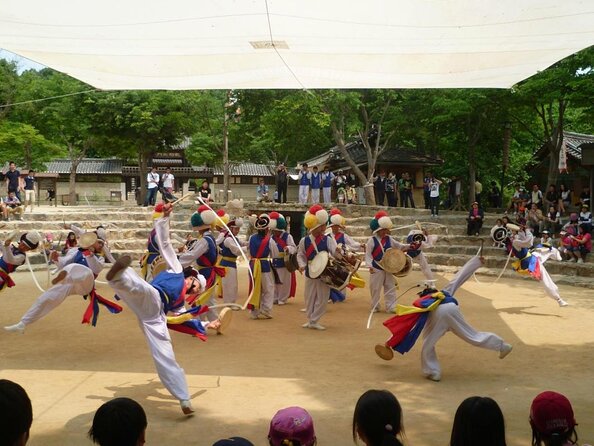
- Live traditional performances: Look for nongak music, dance, and jultagi tightrope acrobatics, weather permitting.
- Strong guide element: Guides such as Veronica, Jenny, and Anna have been praised for clear explanations and for helping visitors catch scheduled shows.
- Afternoon departure from Seoul: Meet near Myeongdong Station around 12:30 p.m., then return to the same area after the visit.
- Transport and admission included: The $63 price covers the guide, vehicle, entrance fees, and taxes, but not food or drinks.
- A compact taste of Korean culture: The tour works best if you want a structured introduction instead of arranging transport and admission yourself.
Why the Korean Folk Village is worth the ride from Seoul
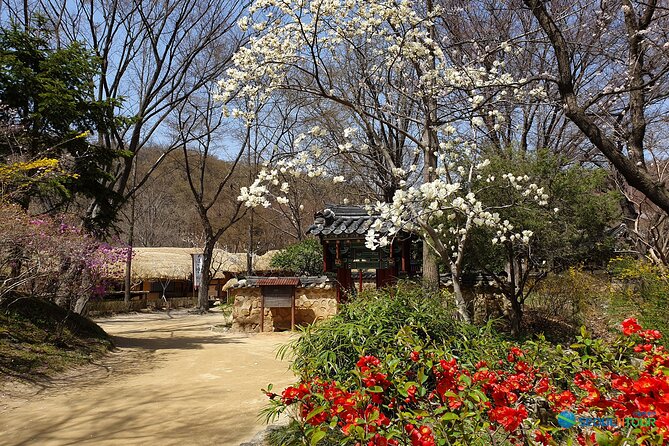
Seoul gives you palaces, markets, skyscrapers, and busy shopping streets. The Korean Folk Village offers a different picture of Korea, one built around farmhouses, workshops, household tools, and customs from the late Joseon period.
Founded in 1974, the village brings together more than 270 traditional homes. These buildings were relocated and reconstructed from several parts of Korea, so the setting is not one single original town. Still, the houses and their furnishings offer a useful look at how people lived in different regions.
I find this approach more helpful than a display of isolated objects behind glass. You can walk through the homes, look at their construction, and connect tools and household goods with daily life. The buildings show architectural details from the Joseon era, while the workshops and performances add movement and sound.
The site has also been used for historical Korean television dramas. That does not make the visit more authentic by itself, but it helps explain why the setting feels so carefully preserved and visually familiar.
More hanok village visits:
- Seoul: Gyeongbok Palace, Bukchon Village, and Gwangjang Tour
★ 4.9 · 2,321 reviews - Seoul City Sightseeing Tour Including Gyeongbokgung Palace, N Seoul Tower, and Namsangol Hanok Village
★ 5.0 · 1,423 reviews - Seoul: Gyeongbok Palace, Bukchon Village, and Gwangjang Tour
★ 5.0 · 1,044 reviews
Meeting near Myeongdong and the one-hour bus ride
The tour begins in Seoul at around 12:30 p.m. The stated meeting point is Myeongdong Station Exit 10, at 61-7 Chungmuro 2-ga, Jung-gu, Seoul. The supplied address also appears as 1061-7 Chungmuro 2(i)-ga, so I would check the exact meeting instructions before setting out.
One part of the schedule places the group near Seoul at 12:20 p.m., while the published start time is 12:30 p.m. That small difference is worth noting. Arrive early rather than trying to match the bus at the last minute, especially in the busy Myeongdong area.
The ride to the village takes about an hour in a climate-controlled bus. That is a practical benefit in Seoul’s hot, cold, or rainy weather, and it saves you from working out the route on your own. The guide uses the journey to provide background on Korea, according to the tour experience described by people who had guides Jenny, Anna, and Veronica.
That ride is not just dead time. A good introduction can help you recognize the difference between a Joseon household, a workshop, and a performance when you arrive. Jenny, in particular, was praised for making the trip out useful with historical context and then continuing those explanations at the village.
The trade-off is clear: you are committing around two hours to transportation. If your Seoul schedule is tight, the distance matters. If you want an easy half-day outside the city, the organized bus is part of the value.
Entering the Joseon-era homes
The village visit lasts about two hours and 50 minutes. That is enough time to see the main areas and attend some performances, but you will need to keep moving.
The restored homes are the heart of the visit. You can enter many of them rather than viewing the exteriors from behind a barrier. Their construction and household artifacts help show how regional life differed across Korea. The houses came from different parts of the country, so look for contrasts in layout, materials, and the objects used inside.
A guide adds useful context here. Without explanations, a traditional house can become a series of attractive wooden buildings. With the right commentary, you begin to understand how the structure connected to family life, work, and local customs.
This is also where the tour’s group format has both an advantage and a limit. You do not have to plan a route through a large site, and the guide can point out details you might miss. At the same time, you may not be able to linger at every house or revisit a favorite spot.
Wear comfortable shoes. The tour information specifically warns that it is not recommended for people with walking problems. The site is large, and the visit involves moving between homes, workshops, and performance areas.
Watching artisans make traditional goods
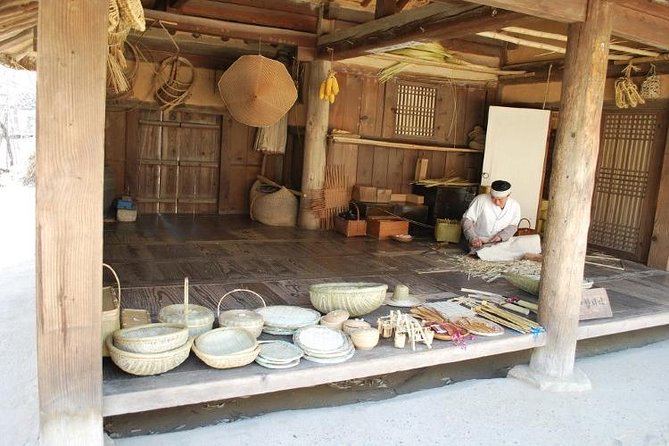
The village is not only an open-air collection of old buildings. You might see artisans working in areas devoted to pottery, baskets, brassware, and blacksmithing.
These workshops give the visit a practical edge. A finished basket or piece of brassware tells you something about traditional craft, but watching an artisan shape or produce an object shows the labor behind it. You can connect the tools and materials with the homes you have just entered.
The available demonstrations may vary, so I would treat the workshops as an important possibility rather than a guaranteed sequence. The same applies to the live performances. Weather can affect outdoor activities, and the schedule may require your guide to make choices about what the group can catch.
That is one reason the guide matters so much. Anna was praised for making sure the group reached the live-action shows and for explaining the village in clear English. If a performance is high on your list, tell the guide early and pay attention to the timing.
More half-day tours:
- Half-Day DMZ Tour Led by a Retired Military Officer from Seoul
★ 5.0 · 1,774 reviews - Seoul: Half-Day DMZ Tour Led by a Retired Military Officer
★ 4.9 · 1,399 reviews - Half-Day South Korea DMZ Small-Group Tour from Seoul
★ 5.0 · 43 reviews - Busan Half-Day Customizable Private Tour in English
★ 5.0 · 34 reviews
Nongak, dance, and jultagi performances
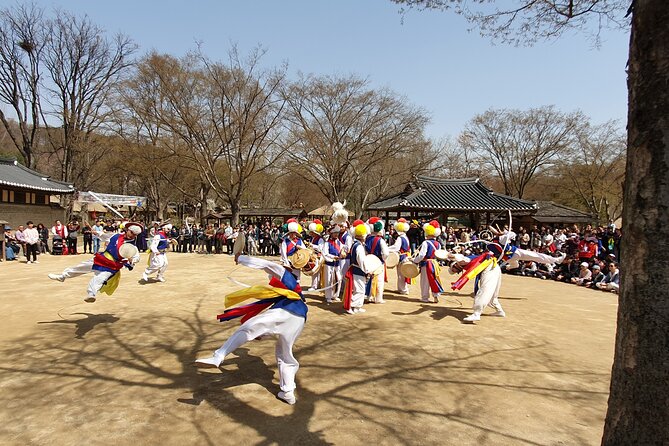
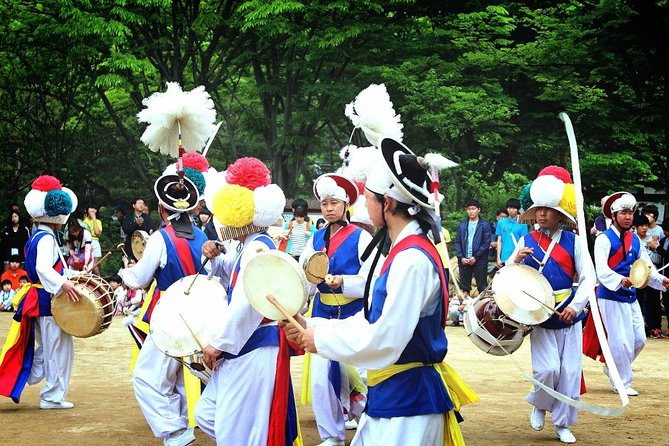
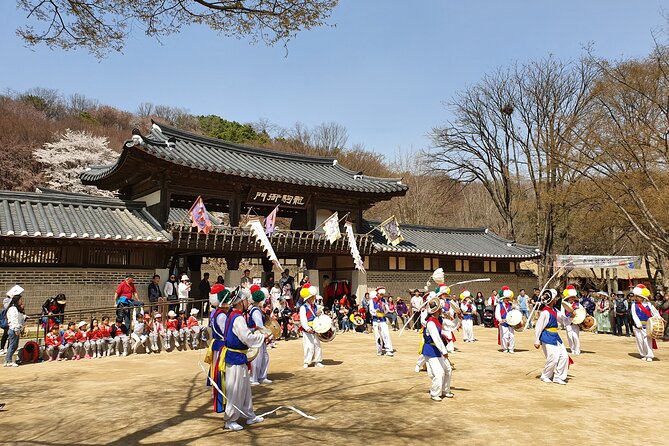
Traditional performances give the village more energy than a quiet walk through historic buildings. You might see nongak musical performances, traditional dance, or jultagi, the Korean art of tightrope acrobatics. These demonstrations are offered weather permitting.
The performers may also be willing to pose for photographs. That can make the experience feel more immediate, though you should stay aware of the show and avoid treating the performers as scenery.
The live elements are especially useful if you have only a basic knowledge of Korean culture. Music, movement, costume, and physical skill communicate things that a written sign cannot. You do not need to prepare for a history exam, but you will come away with a clearer sense of how traditional customs were performed and shared.
Timing is the key concern. With less than three hours on site, the group cannot wait indefinitely for each event. Stay close to the guide when a show is approaching. Anna’s effort to get the group to the scheduled performances is the kind of practical help that makes a short visit work.
What the $63 price really covers
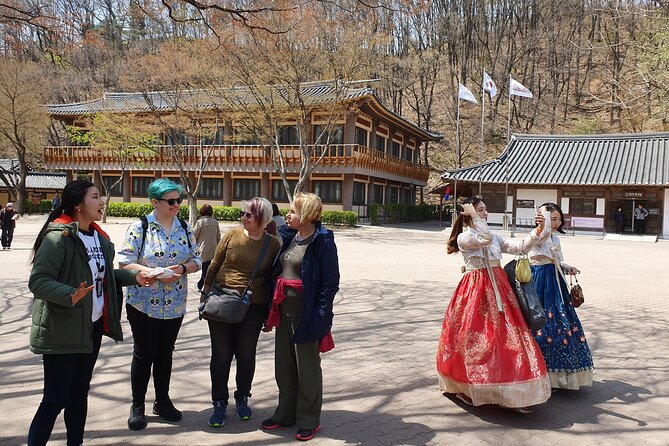
At $63 per person, this is not the cheapest possible way to spend an afternoon near Seoul. The price makes more sense when you count what is included: the professional guide, transport, entrance fees, and taxes.
You are paying for convenience and interpretation as much as admission. Reaching the village independently would require arranging your own route, buying admission, checking performance times, and getting back to Seoul. The bus also removes the uncertainty of navigating an unfamiliar destination outside the city center.
The value depends on your priorities. If you enjoy planning every detail and want several hours to explore at your own pace, an independent visit may suit you better. If you prefer a clear schedule, English-language explanations, and a direct return to Myeongdong, the tour is easier to justify.
Food and drinks are not included. Plan to eat before the afternoon departure or bring money for refreshments if they are available at the site. Do not expect the $63 fee to cover lunch.
The group can contain up to 40 people, so this is not a private or small-group experience. A larger group can make the guide’s commentary harder to hear, and you will have less freedom to set your own pace. On the other hand, the tour has been well received overall, with a 4.9 rating from 13 reviews and 100 percent recommending it. The most consistent praise centers on the guides, especially their explanations, politeness, and help with the performance schedule.
Guides who make a short visit count
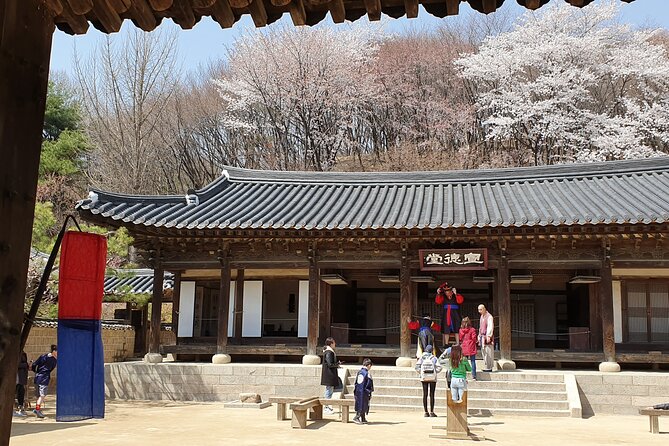
The guide is the biggest variable in a tour like this, and the named guides received unusually strong praise. Veronica was described as wonderful, while Jenny was credited with giving useful historical background on the drive and explaining the Joseon setting once inside the village.
Anna’s strength was practical. She helped the group reach the live-action shows and gave thorough explanations in excellent English. That combination matters because the village is broad and the tour clock keeps running.
The guide is not there only to recite dates. The best role is to connect what you are seeing with Korean customs and daily life. If you have questions about a house, craft, or performance, ask while you are there. You will get more from the visit than by simply following the group and taking photographs.
A guide also helps you avoid a common problem with large cultural sites: seeing many things but understanding very little. The tour’s strongest feature is not simply access to the village. It is having someone explain why the homes, crafts, and shows matter.
The return to Myeongdong
After the village visit, the bus returns to Seoul and drops you at Myeongdong Station Exit 10. The return drive takes about an hour, so the full outing works out to roughly five hours even though the village portion is described as a four-hour afternoon tour in some parts of the schedule.
That makes the tour easy to pair with an evening in central Seoul. You finish where you started, near restaurants, shops, and public transport. The fixed return point also makes planning simpler than arranging a pickup at your hotel.
Hotel pickup and drop-off are not included. You need to reach the meeting point yourself, and you should allow extra time to find the correct station exit. Pickup is listed at two places in Seoul, but Myeongdong Station Exit 10 is the clearly provided start and end point.
Who should book this half-day tour?
I would choose this tour if you want a straightforward introduction to traditional Korean homes and customs without giving up a full day in Seoul. It suits first-time visitors, families with older children, and anyone who values clear English explanations and arranged transport.
It is also a good choice if live demonstrations matter to you. The possibility of nongak, dance, jultagi, and working craftspeople gives the visit more life than a simple walk through reconstructed buildings.
I would think twice if you have walking difficulties, dislike fixed schedules, or want time for detailed photography and quiet exploration. The village is large, the bus ride takes about an hour each way, and the maximum group size is 40 people.
The tour requires at least five participants. If that minimum is not reached, the operator may move the booking to another date or cancel it. Poor weather can also cause a change or cancellation because some of the experience depends on outdoor performances.
Free cancellation is available up to 24 hours before the start time for a full refund. Cancellations or changes made less than 24 hours before departure are not accepted for a refund.
Should you book the Korean Folk Village tour?
Book it if you want to see traditional Korean homes, crafts, and performances in one organized afternoon. The strongest reason to go is the guide support, with Veronica, Jenny, and Anna each praised for clear cultural explanations and helpful handling of the performance schedule.
Skip it if your Seoul visit is too short for two hours of driving, or if you prefer an unhurried independent visit. For most people who want an efficient introduction to Joseon-era culture, the $63 fee is fair because it includes transport, admission, taxes, and a guide. Just arrive early at Myeongdong, wear comfortable shoes, and keep your schedule flexible for weather.
FAQ
How long does the Korean Folk Village tour last?
The tour takes approximately five hours in total, including about one hour of travel each way. The village visit lasts around two hours and 50 minutes.
What time does the tour start?
The published start time is 12:30 p.m. One schedule note asks you to be in Seoul around 12:20 p.m., so arriving early is sensible.
Where does the tour meet?
The stated meeting point is Myeongdong Station Exit 10, at 61-7 Chungmuro 2-ga, Jung-gu, Seoul. The supplied address also appears as 1061-7 Chungmuro 2(i)-ga.
Where does the tour finish?
The tour ends with drop-off at Myeongdong Station Exit 10, the same general area as the meeting point.
Is transportation included?
Yes. Transportation between Seoul and the Korean Folk Village is included in a climate-controlled bus.
Is the entrance fee included?
Yes. The village admission fee, guide, and all fees and taxes are included.
Are food and drinks included?
No. Food and drinks are not included in the tour price.
Can children join the tour?
Most people can participate, and a child rate is available when the child shares with two paying adults.
What happens if the tour is canceled?
If poor weather causes cancellation, you can receive a different date or a full refund. If fewer than five people book and the minimum is not met, you will be offered another date or experience, or a full refund.
Just added around Seoul
- Seoraksan National Park & Nami Island★ 4.5 · 3 reviews
- Strawberry Picking, Winter Sled with Eobi Ice Valley from Seoul★ 4.5 · 3 reviews
- Seoul Full Day small group Tour★ 5.0 · 3 reviews
- Majang Meat Market Experience: Private Tour with Han-woo Beef BBQ★ 5.0 · 3 reviews
- Seoul Korean BBQ Dinner Experience with Secret Food Tours★ 5.0 · 3 reviews
- Rice Wine Tasting with Sommelier – Finest Makgeolli (& Soju)★ 5.0 · 3 reviews
- Max Out Seoul: Must Visit City Highlights Panoramic Day Tour★ 5.0 · 3 reviews
- Seongsu-dong Walking Tour: K-Pop, Culture, Cheer, Friends & Relax★ 4.5 · 3 reviews
Hanok Village & Folk Culture, compared.

Gyeongbok Palace, Bukchon Village, and Gwangjang Tour
Read our review →
Seoul City Sightseeing Tour Including Gyeongbokgung Palace, N Seoul Tower, and Namsangol Hanok Village
Read our review →Gyeongbok Palace, Bukchon Village, and Gwangjang Tour
Read our review →
Suwon Hwaseong Fortress & Korean Folk Village Tour
Read our review →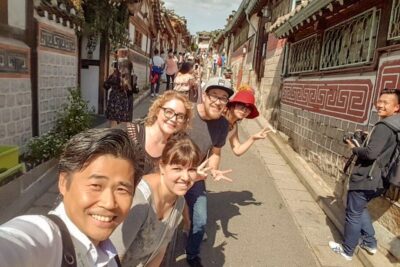
Gyeongbok Palace and Bukchon Hanok Walking Tour
Read our review →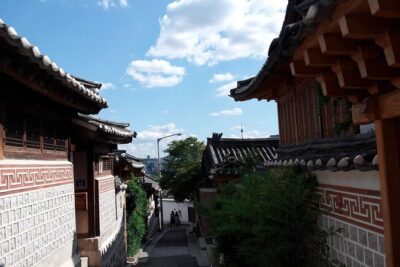
Best Walking Tour to Gyeongbok Palace Bukchon Hanok Village
Read our review →
Experience Korean Cooking in Modern Hanok Kitchen
Read our review →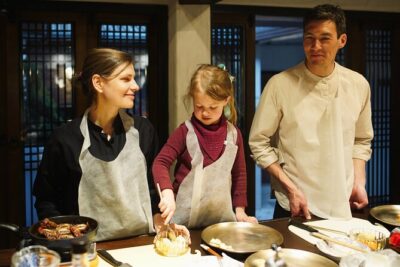
Royal Seoul Cooking Class in a 100-Year-Old Hanok
Read our review →Browse the lists this tour appears in