
Reviewed · DMZ & BORDER TOURS
Half-Day South Korea DMZ Small-Group Tour from Seoul
History feels close here. This half-day DMZ tour takes you from central Seoul to the former frontline, where you can walk through the 3rd Tunnel and look toward North Korea from Dora Observatory. I especially like the small-group format, capped at 10 people, and the chance to see several key sites without arranging separate transport. The tour also includes an English-speaking guide, all transportation, and entrance fees, which keeps the morning fairly simple to manage.
I also like the practical focus: the tour combines war memorials, the Freedom Bridge, a tunnel built for military use, and a lookout with views across the border. The main drawback is that access to the DMZ can change with political conditions, weather, and daily ticket limits. Your original passport is mandatory, and a copy or photograph will not work.
In This Review
- Key Points to Know Before You Book
- Why the DMZ Makes Such a Strong Seoul Side Trip
- Starting at City Hall at 8:00 a.m.
- Imjingak Pyeonghoa-Nuri Park: Remembrance Before the Border
- Freedom Bridge and the Human Cost of Division
- The 3rd Tunnel: The Most Physical Part of the Morning
- Dora Observatory and the View Toward North Korea
- The Guide Can Shape the Whole Experience
- Ginseng Museum and Duty-Free Shopping
- What the $500 Group Price Really Buys You
- Important Rules, Risks, and Planning Tips
- Who Should Book This DMZ Tour?
- Should You Book It?
- FAQ
- Where does the tour start?
- What time does the tour begin?
- How long does the tour last?
- Is an original passport required?
- How many people can join the tour?
- What is included in the price?
- Is lunch included?
- Which places does the tour visit?
- Can weather affect the tour?
- Can I cancel or change my booking?
Key Points to Know Before You Book
- The original passport is required: Bring the physical passport used for your booking. No copy or phone image is accepted for DMZ entry.
- The 3rd Tunnel is the active highlight: You walk into a tunnel discovered in 1978, so expect a more physical visit than at the other stops.
- Dora Observatory faces North Korea: On a clear day, you may see Gaeseong, Songaksan, and the Kim Il-Sung statue area.
- The tour starts at 8:00 a.m.: The meeting point is Seoul City Hall, near Subway Line 1.
- The price is per group: The listed cost is $500 for up to four people, with a maximum tour size of 10.
- Schedules are not fully guaranteed: DMZ tickets are limited and sold first come, first served, while political and weather conditions can affect access.
Why the DMZ Makes Such a Strong Seoul Side Trip
Seoul is full of palaces, markets, cafés, and modern shopping streets. The DMZ gives you a very different view of South Korea. It is not simply another sightseeing stop. It is a place shaped by war, separation, military caution, and the long hope of reunification.
This tour works well because you see several parts of that story in a single morning. At Imjingak Pyeonghoa-Nuri Park, the subject is remembrance and hope. At the Freedom Bridge, it becomes personal and tied to the movement of people after the Korean War. At the 3rd Tunnel, the military threat feels physical. At Dora Observatory, the division becomes visible across the hills and fields.
I appreciate that sequence. You are not rushed through one isolated viewpoint and sent back to Seoul. The stops build a clearer picture of why this border remains important.
The drive from Seoul and the 6.5-hour schedule also make this a practical choice for a short visit. You return to Seoul the same day, with time left for an afternoon meal or another activity. Just keep your expectations realistic: this is a controlled border zone, not a normal open countryside excursion.
More DMZ and border tours:
- Best DMZ Tour Korea from Seoul (Red Suspension Bridge Optional)
★ 5.0 · 41,422 reviews - DMZ Tour: 3rd Tunnel, Option(Suspension Bridge, Boat) from Seoul
★ 5.0 · 21,373 reviews - DMZ tour south Korea from Seoul (NK experience hall, defector)
★ 5.0 · 20,599 reviews
Starting at City Hall at 8:00 a.m.
The tour begins at Seoul City Hall at 8:00 a.m., close to Subway Line 1. That central meeting point is useful if you are staying in central Seoul, but you will need to make your own way there because hotel accommodation is not included.
All transportation during the tour is included. That matters here. The DMZ sites are spread around Paju, and using public transport independently would add planning, transfers, and uncertainty. With a guide and vehicle, you can focus on the explanations and the changing scenery rather than figuring out each connection.
The group limit is listed as 10 people. That is small enough to make questions practical, though it is worth noting that the advertised price is $500 per group of up to four. For four people, that works out to $125 per person before considering the convenience of private transport and included fees. For only one or two people, the cost feels much higher, so the value improves when you can share it with family or friends.
The exact schedule can depend on DMZ access. Confirmation is sent within 48 hours of booking, subject to availability. Since daily tickets are limited and sold first come, first served, booking about a month ahead is sensible. Last-minute bookings may be possible, but the available schedule can be random.
Imjingak Pyeonghoa-Nuri Park: Remembrance Before the Border
Your first stop is Imjingak Pyeonghoa-Nuri Park, about 7 kilometers from the Military Demarcation Line. The park contains statues and monuments connected to the Korean War and was created in 1972 with the hope that reunification might one day be possible.
This is a useful place to begin because it gives emotional and political context before you reach the more restricted sites. You are not just looking at a line on a map. You are seeing how the division has been remembered in public life for decades.
The planned visit lasts about 45 minutes, and admission is included. That gives you enough time to look around and listen to the guide without treating the park as a quick photo stop. The setting also helps explain how close Seoul is to the border, even though the two places feel very different in purpose and mood.
You should expect a reflective visit rather than a lighthearted one. The monuments address loss, separation, and hope. I find this makes the later tunnel and observatory stops easier to understand.
Freedom Bridge and the Human Cost of Division
The Freedom Bridge is in Paju and receives about 20 minutes of the schedule. Architecturally, it is modest. Its importance comes from its use by South Koreans returning through the area after the war.
That distinction is worth keeping in mind. You do not visit this bridge for grand design or a long walking route. You visit because it connects a real human movement with the larger story of the border. The guide’s commentary is especially important here, since the meaning of the place is not obvious from its appearance alone.
With only 20 minutes, this is a brief stop. You should be ready to listen, take a few photographs, and move on. The short visit is not necessarily a weakness, since the 3rd Tunnel and Dora Observatory require more time, but anyone hoping for a long, quiet walk should adjust expectations.
More half-day tours:
- Half-Day DMZ Tour Led by a Retired Military Officer from Seoul
★ 5.0 · 1,774 reviews - Seoul: Half-Day DMZ Tour Led by a Retired Military Officer
★ 4.9 · 1,399 reviews - Korean Folk Village Half-day Guided Tour from Seoul
★ 5.0 · 13 reviews - Busan Half-Day Customizable Private Tour in English
★ 5.0 · 34 reviews
The 3rd Tunnel: The Most Physical Part of the Morning
The 3rd Tunnel is likely to be the tour’s most memorable stop. South Korean forces discovered it in 1978. The tunnel runs about 1,635 meters, is roughly 2 meters wide and 2 meters high, and is located about 52 kilometers from Seoul.
It was built as a military passage, and estimates suggest it could have moved approximately 30,000 soldiers. That figure gives the tunnel a serious purpose beyond its engineering. You are walking through a space connected directly to plans for military movement beneath the border.
The visit lasts about 45 minutes. The tunnel is not just a viewing platform or museum display. You walk through part of it, which makes this stop more demanding than the memorial park or observatory. The listed dimensions also explain why you should prepare for a confined space and a low ceiling. The tour information does not give a detailed accessibility assessment, so anyone with mobility concerns should ask the operator before booking.
Admission is listed as free, though the tour includes transportation and other fees. Your guide can help turn the physical visit into a clearer lesson about the military tension that shaped the area.
I like this stop because it gives you something concrete. Political division can feel abstract when you read about it in a book. A long, narrow tunnel built beneath the ground is harder to dismiss as distant history.
Dora Observatory and the View Toward North Korea
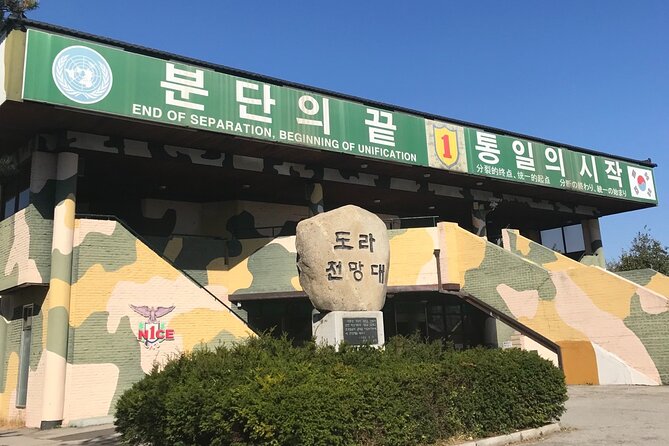
Dora Observatory opened to the public in 1987 and sits near the 3rd Tunnel. From here, you can look toward North Korea and, under suitable viewing conditions, see locations including Gaeseong, Songaksan, and the area associated with the Kim Il-Sung statue.
This is the point where the border becomes a visible geographic reality. The view can also be affected by weather and operating conditions, so you should not treat a clear, detailed panorama as guaranteed. The tour requires good weather, and poor conditions can lead to cancellation or a change of date.
The stop lasts about 45 minutes and admission is included. That is a reasonable amount of time to hear the guide’s explanation, look through the viewing area, and take in the unusual experience of seeing another country that is physically close but politically sealed off.
The observatory is also a reminder that the DMZ is not a normal sightseeing area. Rules and access can change. Some areas may be closed because of the current political situation, as happened during one reported experience where not everything expected was available. A strong guide can make a real difference when the itinerary changes.
The Guide Can Shape the Whole Experience
The guide is one of the tour’s most important practical features. The strongest praise connected with this operator centers on Henry Park, who is described as friendly, organized, professional, and generous with his time. His driving and time management were also singled out, along with his ability to answer questions and explain Korean culture.
That matters on a DMZ visit. The sites are meaningful, but several of them are visually simple. A bridge, a tunnel entrance, or a distant view toward North Korea will not explain itself. Good commentary helps connect each place to the Korean War, the border, and present-day conditions.
Henry Park is also praised for food suggestions and for helping with wider Seoul experiences. Some of the available praise refers to longer private tours that included Seoul heritage sites, shopping, and meals, so you should not assume every extra activity belongs to this half-day DMZ program. Still, the consistent picture is of a guide who pays close attention to questions, timing, and personal needs.
Political conditions can limit what you see. That is where an experienced guide is most useful. A professional response cannot reopen a closed area, but it can keep the day informative rather than disappointing.
Ginseng Museum and Duty-Free Shopping
The final Seoul stops are the Ginseng Museum and a duty-free shop, with about 30 minutes allocated in total.
At the Ginseng Museum, you can learn about the history of ginseng, its different types, and its claimed positive effects. This is a short educational stop, not a full museum visit. It also gives you an introduction to a product with an important place in Korean culture and commerce.
The duty-free shop offers a chance to buy luxury fashion brands. Some people will find this useful, especially if shopping is already part of their Seoul plans. Others may see it as a less relevant ending after a serious visit to the DMZ.
I would treat these stops as an add-on rather than a central reason to book. The border sites are the heart of the morning. The museum and shopping visit may suit you if you want a little retail time, but they can feel commercial after the more meaningful parts of the route.
What the $500 Group Price Really Buys You
The listed price is $500 per group of up to four people. It includes all transportation, an English-speaking guide, entrance fees, and taxes. Lunch, accommodation, and personal expenses are not included.
The value is strongest for a group of four. You receive door-to-door-style transport during the outing, a guide who can explain the sites, and access to a route that would be awkward to organize alone. The price also protects you from having to coordinate each stop around limited DMZ access.
For two people, the cost is $250 each. For one person, it is a large outlay for a half-day tour. In that case, you should compare it with other group options in Seoul, though this tour’s maximum of 10 people may offer a more personal setting than a large coach.
Lunch is not included, but the tour lasts about 6 hours and 30 minutes. You will need to plan your meal around the return to Seoul or carry whatever is permitted during the day. Personal spending at the ginseng and duty-free stops is also up to you.
Important Rules, Risks, and Planning Tips
Bring your original passport. This is the most important rule in the supplied information. A photocopy and a photograph on your phone are not accepted for DMZ entry.
Book early if the DMZ is a priority. The recommended booking time is about one month before the visit because tickets are limited and sold first come, first served. Confirmation is subject to availability and should arrive within 48 hours of booking.
The tour is non-refundable and cannot be changed for personal reasons. If poor weather causes the operator to cancel, you will be offered another date or a full refund. Weather is not the only variable, since current political conditions can also affect access to specific sites.
Most people can participate, but the 3rd Tunnel involves walking in a confined space. The supplied information does not specify detailed accessibility arrangements, so ask before booking if you need special assistance.
Who Should Book This DMZ Tour?
I would recommend it to anyone visiting Seoul who wants historical context rather than another shopping district. It suits first-time visitors, families with older children, couples, and small groups who value a guide and included transport.
It is especially useful if you have only one free morning. You get the main sites in a structured route and return to Seoul the same day. The tour also suits people who prefer asking questions instead of reading signs on their own.
I would hesitate if your main interest is shopping, if you dislike controlled border zones, or if you need a relaxed morning with no schedule changes. The DMZ is serious, and access is never entirely in your hands. The duty-free stop may also feel unnecessary if you want a purely historical outing.
Should You Book It?
Book this tour if you can share the $500 group price, want the 3rd Tunnel and Dora Observatory in one morning, and value clear English commentary. The combination of Imjingak, Freedom Bridge, the tunnel, and the observatory gives you a fuller understanding of the border than a single viewpoint would.
Before paying, make sure every person has an original passport and accepts the non-refundable terms. Book early, allow for weather or political changes, and remember that the strongest part of the experience is the DMZ itself, not the later shopping stop. If that balance suits you, this is a practical and thoughtful way to reach one of South Korea’s most important places.
FAQ
Where does the tour start?
The tour starts at Seoul City Hall, 110 Sejong-daero, Jung District, Seoul. The meeting point is near City Hall Station on Subway Line 1.
What time does the tour begin?
The stated start time is 8:00 a.m.
How long does the tour last?
The experience lasts approximately 6 hours and 30 minutes.
Is an original passport required?
Yes. You must bring your original passport to enter the DMZ. A copy or photograph of the passport is not accepted.
How many people can join the tour?
The tour has a maximum of 10 travelers. The listed price is $500 per group for up to four people.
What is included in the price?
The price includes all fees and taxes, transportation, and an English-speaking guide with commentary.
Is lunch included?
No. Lunch is not included.
Which places does the tour visit?
The route includes Imjingak Pyeonghoa-Nuri Park, the Freedom Bridge, the 3rd Tunnel, Dora Observatory, the Ginseng Museum, and a duty-free shop.
Can weather affect the tour?
Yes. The experience requires good weather. If poor weather causes cancellation, you will be offered a different date or a full refund.
Can I cancel or change my booking?
No. The experience is non-refundable and cannot be changed for any reason.
Just added around Seoul
- Seoraksan National Park & Nami Island★ 4.5 · 3 reviews
- Strawberry Picking, Winter Sled with Eobi Ice Valley from Seoul★ 4.5 · 3 reviews
- Seoul Full Day small group Tour★ 5.0 · 3 reviews
- Majang Meat Market Experience: Private Tour with Han-woo Beef BBQ★ 5.0 · 3 reviews
- Seoul Korean BBQ Dinner Experience with Secret Food Tours★ 5.0 · 3 reviews
- Rice Wine Tasting with Sommelier – Finest Makgeolli (& Soju)★ 5.0 · 3 reviews
- Seongsu-dong Walking Tour: K-Pop, Culture, Cheer, Friends & Relax★ 4.5 · 3 reviews
- Seoul: Alpaca World and Nami Island (with Garden / Railbike)★ 5.0 · 3 reviews
DMZ & Border Tours, compared.

Best DMZ Tour Korea from Seoul (Red Suspension Bridge Optional)
Read our review →
DMZ Tour: 3rd Tunnel, Option(Suspension Bridge, Boat) from Seoul
Read our review →
DMZ tour south Korea from Seoul (NK experience hall, defector)
Read our review →
DMZ Insider Tour: 3rd Tunnel, NK Defector Meet & Red Bridge
Read our review →

Signature DMZ Tour: Exclusive Defector Talk & Suspension Bridge
Read our review →
Thrilling Korean DMZ 3rd Tunnel Tour from Seoul + Red Bridge Rush
Read our review →DMZ Past and Present: Korean Demilitarized Zone Tour from Seoul
Read our review →Browse the lists this tour appears in