
Reviewed · HANBOK & PALACE EXPERIENCES
Korean Heritage Tour: Palaces and Villages of Seoul Including Gyeongbokgung Palace
Seoul’s old royal world comes into focus fast. This full-day tour combines Gyeongbokgung Palace, the National Folk Museum, Jogyesa Temple, a traditional Korean lunch, and the Korean Folk Village, with hotel pickup and drop-off by air-conditioned coach. I like the efficient mix of major sights and the small group size, capped at 10 people. I also like that lunch is included, which makes a long sightseeing day easier. The main drawback is the stop at a ginseng center, and sometimes other shopping outlets, which can feel more commercial than cultural.
You’ll spend about 8 hours and 30 minutes on the experience, beginning around 8:30 am. The guides can add a great deal, with Sunny, Winnie, David, Michelle, and Dora receiving especially warm praise for clear English, humor, and useful explanations. Still, the quality can vary, and some groups have found the morning rushed or difficult to hear.
In This Review
- Key points at a glance
- Why this tour works as a first day in Seoul
- Gyeongbokgung Palace and the royal morning
- The National Folk Museum in 20 minutes
- Jogyesa Temple, a brief but worthwhile stop
- Lunch at a traditional Korean restaurant
- The ginseng center and the commercial detour
- Korean Folk Village: crafts, buildings, and a staged past
- Guide quality and the pace of the day
- What $140 includes, and what it does not
- Tuesday changes the palace visit
- Who should book this Seoul heritage tour?
- FAQ
- How long does the Korean Heritage Tour last?
- Is hotel transportation included?
- Is lunch included?
- What happens if I book for Tuesday?
- How much walking is involved?
- What is the group size?
- Should you book it?
Key points at a glance
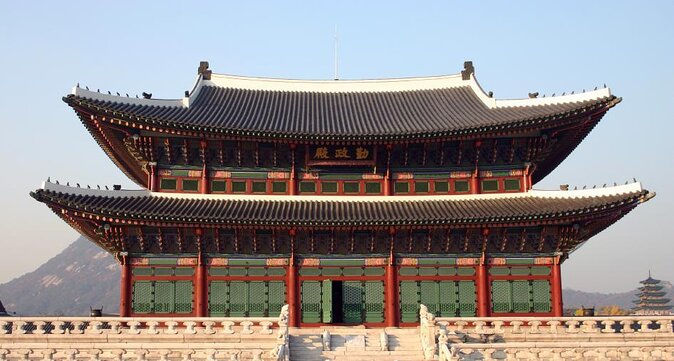
- Gyeongbokgung Palace anchors the morning: See the largest of Seoul’s Five Grand Palaces, including its gates, pavilions, and royal halls.
- The day links royal and everyday Korea: The palace shows court life, while the National Folk Museum and Korean Folk Village focus on ordinary homes, crafts, and customs.
- Lunch is part of the experience: A traditional Korean meal at a local restaurant gives the day a welcome pause.
- The Korean Folk Village is outside central Seoul: It offers craft demonstrations and historic-style buildings, but some visitors find it more like a staged cultural park than an untouched village.
- Shopping stops need a clear-eyed approach: The ginseng center takes about 30 minutes and may include a sales pitch. Some departures have also included an amethyst stop.
- The small group is a real advantage: With a maximum of 10 people, it can feel personal, though the tour requires at least four participants to operate.
Why this tour works as a first day in Seoul
Seoul can feel enormous at first. Modern districts, royal compounds, Buddhist temples, museums, and traditional neighborhoods all sit within the same city, but they do not always connect neatly for a first-time visitor. This tour gives you a broad introduction without making you solve the transport puzzle yourself.
The air-conditioned coach collects you from your Seoul hotel and carries you between the main stops. That matters most in a full day, when walking through palace courtyards is followed by more walking at the folk village. You do not have to arrange several taxis or work out transfers between central Seoul and the afternoon attraction.
The format also gives you both explanation and free time. Guides first provide context, then allow you to look around. That balance is important at Gyeongbokgung, where the gates and halls are impressive but become much more meaningful once you understand their role in the Joseon royal court.
This is not a tiny specialist history seminar. It is a brisk overview designed to show you several important sides of Korean culture in one day. If you want long, quiet visits at every museum gallery, the schedule may feel tight. If you want to get your bearings and see a lot, the pace makes sense.
More Historical Tours in Seoul
- Seoul: Evening Dark History, Folklore & Ghost Story Walking Tour
★ 5.0 · 593 reviews - Hanbok Photoshoot and History Tour at Gyeongbokgung Palace
★ 5.0 · 276 reviews - From Seoul: Dae Jang Geum Park Historic K-Drama Set Tour
★ 4.9 · 143 reviews
Gyeongbokgung Palace and the royal morning
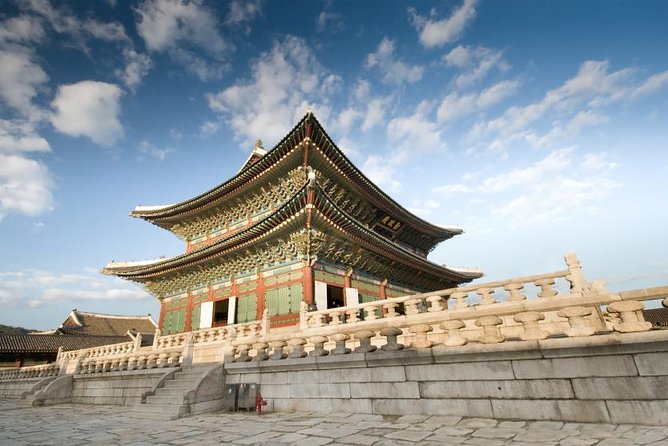
Gyeongbokgung Palace is the strongest stop on the tour. Built in 1395 as the first royal palace of the Joseon Dynasty, it is also the largest of Seoul’s Five Grand Palaces. Its broad courtyards, formal gates, pavilions, and royal halls give you a clear sense of the scale and order of court life.
Much of the palace was destroyed during the Japanese occupation, so what you see today includes a major restoration effort. That is worth knowing before you arrive. The compound is not simply an untouched medieval site, but the restoration helps visitors understand how the royal complex was arranged and used.
You have about one hour here, with admission included. That is enough to see the principal areas with a guide, take photographs, and appreciate the architecture. It is not enough for every corner of the grounds, so stay close when the explanation begins and save longer photography stops for later.
The changing of the guard can be a highlight if the timing works. Several people have singled it out as a moment not to miss, though the precise schedule is not provided here and should not be assumed. Ask your guide at the start of the morning if it is likely to take place during your visit.
Wear comfortable shoes. The walking is not described as strenuous, but the palace grounds are open and spread out, and the tour continues on foot at later stops. Rain can also change how enjoyable the courtyards feel, so a light rain layer is sensible.
The National Folk Museum in 20 minutes
Inside the palace grounds, the National Folk Museum of Korea shifts the focus from kings and ceremonies to daily life. Its displays use artifacts, replicas, and models to explain traditional Korean life from ancient times through the 20th century. The collection includes more than 90,000 artifacts.
The scheduled visit lasts about 20 minutes. That is a useful introduction, but it is short for a museum with this much material. You will get the broad story rather than a careful look at several galleries.
I like this pairing with Gyeongbokgung. The palace can make Korea’s past seem centered only on royalty, while the museum brings in food, homes, work, customs, and family life. If the museum interests you, note the exhibits you would like to revisit independently later, because this tour does not leave much time for lingering.
Jogyesa Temple, a brief but worthwhile stop
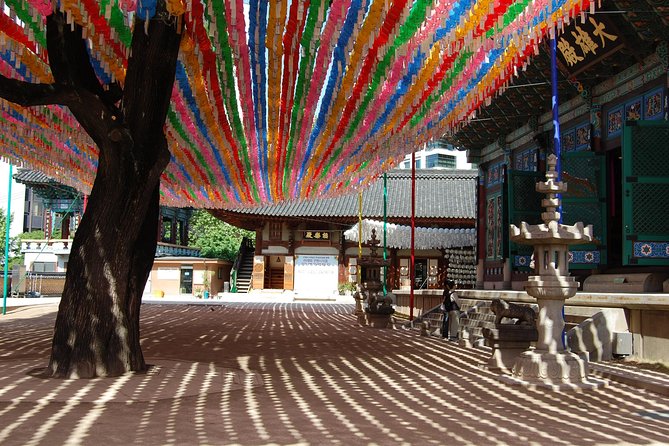
Jogyesa Buddhist Temple is the chief temple of the Jogye Order of Korean Buddhism. Its main hall, Daeungjeon, contains an enlightened Buddha and dates back 500 years according to the tour description. At the entrance, you can see the locust and baeksong trees that line the approach.
The planned stop is extremely brief, listed at about two minutes. Treat it as a quick introduction and a chance to see the temple setting, not as a full temple visit. The guide can point out the main building and explain its place in Korean Buddhism, but you are unlikely to have time for quiet reflection or a detailed look at the grounds.
That short timing is one of the tour’s weaker points. Jogyesa deserves more than a hurried glance, especially if Buddhist art or religious sites matter to you. Still, it adds an important spiritual dimension to a morning otherwise centered on royal power and museum displays.
More hanbok and palace experiences:
- Seoul: Gyeongbok Palace, Bukchon Village, and Gwangjang Tour
★ 4.9 · 2,321 reviews - Best Seoul City Tour (Gyeongbokgung Palace,Insadong,Namsan Tower)
★ 5.0 · 1,647 reviews - Small-Group Royal Palace and Seoul City Tour (hotel pick-up)
★ 5.0 · 1,474 reviews - Seoul City Sightseeing Tour Including Gyeongbokgung Palace, N Seoul Tower, and Namsangol Hanok Village
★ 5.0 · 1,423 reviews
Lunch at a traditional Korean restaurant
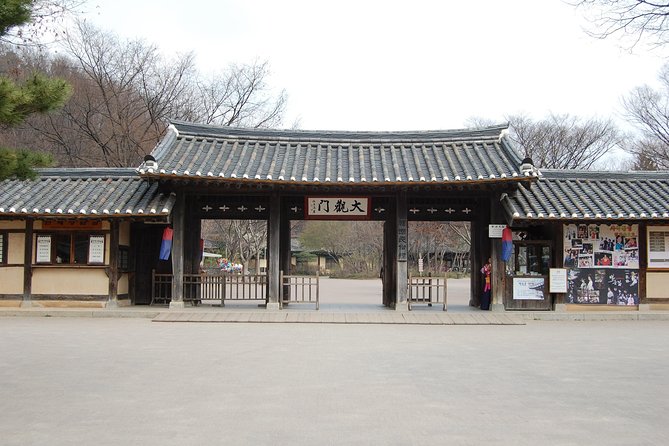
Around midday, the coach takes you to a traditional Korean restaurant for lunch. The meal is included, and dietary requirements should be given when you book. The exact menu is not specified, so you should not expect to select a particular dish unless the operator confirms that in advance.
Lunch is more than a practical break. After a morning of palace courtyards and museum information, sitting down to a Korean meal gives you time to reset. Several people have praised the food and the setting, describing the restaurant as picturesque and the meal as a good cultural experience.
The lunch stop lasts about one hour. That is long enough to eat without turning the day into a restaurant excursion. If you have allergies or strict dietary needs, communicate them early. The tour specifically asks for this information at booking, and it is better to be clear before the coach leaves the hotel.
The ginseng center and the commercial detour
Before lunch, or around the midday portion of the schedule, the tour stops at a Korean Ginseng Center for about 30 minutes. You receive an explanation of ginseng and have the chance to buy products.
This is the point where the tour’s cultural focus becomes less consistent. Ginseng is an important Korean product, but a sales-oriented stop is not the same as visiting a historic site or seeing how the product is traditionally made. Some people have felt pressured to purchase, while others simply treated it as an optional shopping stop.
A few accounts also describe an amethyst factory or outlet on certain departures. That stop is not included in the detailed scheduled list, so it may depend on the operating arrangement or the departure. If shopping presentations are not your thing, ask clearly at the start of the day which commercial stops are planned.
I would not let this automatically rule out the tour, but I would factor it into the value. The stop takes time that could otherwise go to the museum, Jogyesa, or the palace grounds. Keep your expectations firm: you can listen, browse, and decline to buy.
Korean Folk Village: crafts, buildings, and a staged past
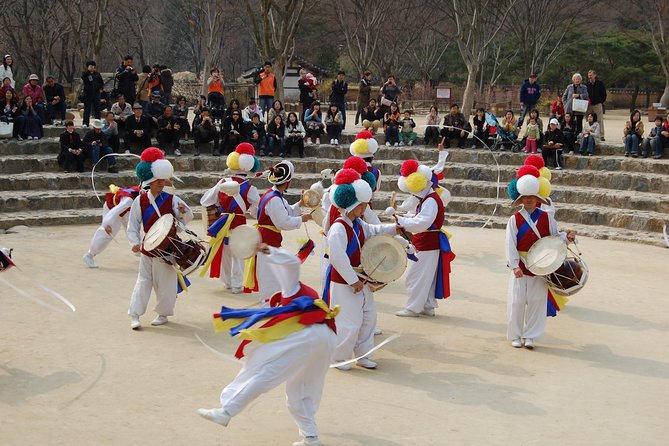
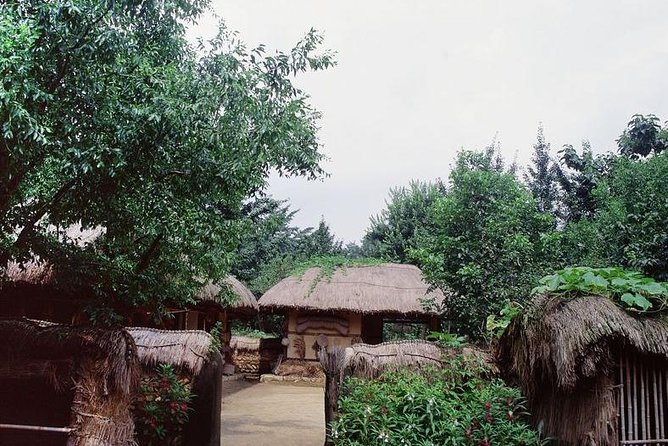
The afternoon visit to the Korean Folk Village lasts about 1 hour and 20 minutes. It is a living museum devoted to traditional Korean life and folk culture, with demonstrations of pottery making, basket weaving, embroidery, bamboo work, woodwork, brassware, musical instruments, and the hand-making of winnows.
This is the tour’s most hands-on cultural stop. Instead of only looking at objects behind glass, you can watch traditional skills being demonstrated. The variety helps you see how practical household goods were made and used.
The setting also explains the mixed response. The village is a constructed cultural attraction, not an untouched historic settlement. Some people enjoy its accessible demonstrations and well-preserved traditional-style buildings. Others arrive expecting an authentic village where ordinary life continues and instead find something closer to a folk park or cultural theme park.
Know which version you want before booking. If you enjoy crafts, recreated homes, and demonstrations, the visit can be rewarding. If you prefer original neighborhoods and unstage-managed daily life, it may feel artificial.
The afternoon can also feel better paced than the morning. One departure had only two people for this section, allowing the guide to adjust the visit and spend more time where it mattered. That kind of flexibility is possible with a maximum group size of 10, but it is not guaranteed.
Guide quality and the pace of the day
The guide can make or break this experience. Strong guides have been praised for clear English, humor, punctuality, and useful explanations about Korean culture. Sunny and Winnie are names to remember, and David, Michelle, and Dora have also been warmly noted for their work.
The weaker issue is consistency. Some groups have found the first guide too quiet, with explanations difficult to hear. Others felt the morning guide moved too fast, requiring the group to hurry between stops. In a small group, a confident guide can make the day feel almost private. With a less effective guide, the same schedule can feel like a race.
There may also be two guides during the day, one for the morning city sights and another for the Korean Folk Village. That arrangement can be perfectly practical, but it means the tone and level of explanation may change after lunch.
If you have trouble hearing, tell the guide immediately rather than waiting. The tour is in English, but the quality of spoken explanation can vary. Keep the guide’s meeting instructions in mind at each stop, especially at the palace and folk village, where it is easy to pause for photographs and lose sight of the group.
What $140 includes, and what it does not
At $140 per person, this is not the cheapest way to see Seoul’s historic sights. The price includes hotel pickup and drop-off, an air-conditioned vehicle, a professional guide, lunch, and admission to Gyeongbokgung Palace and the Korean Folk Village.
That package has real value if you want convenience. You avoid arranging transport, admission, and lunch separately, and you cover sights spread across different parts of the city and its outskirts. A maximum of 10 people is also more appealing than a large coach group.
The value drops if you mainly want Gyeongbokgung Palace. You could spend a longer, slower morning around the palace and museum on your own, then choose a separate neighborhood or temple visit. You are paying for the full-day structure and transport, not just for palace entry.
The commercial stops also affect the calculation. If you dislike sales presentations, part of the $140 buys time you may not enjoy. If you see the ginseng stop as a short cultural and shopping break, the cost may still feel fair.
The tour requires at least four participants and accepts a maximum of 10. It is commonly booked well ahead, with an average booking time of about 38 days before the date. That suggests planning early if your Seoul schedule is fixed, particularly if you want a specific morning.
Tuesday changes the palace visit
Gyeongbokgung Palace is closed on Tuesdays. On that day, the tour substitutes Deoksugung Palace, a walled palace compound that is also home to the Seoul Museum of History.
This is an important detail when planning. Deoksugung is not the same experience as Gyeongbokgung, so do not book a Tuesday expecting the largest Joseon palace. The replacement still gives you a royal compound and a museum visit, but the emphasis changes.
Check the day of the week before you pay, especially if Gyeongbokgung is the main reason you want this tour.
Who should book this Seoul heritage tour?
I would recommend it to a first-time Seoul visitor who wants a guided overview in one day. It suits you especially well if you value hotel transport, included lunch, a small group, and a mix of architecture, museums, religion, food, and traditional crafts.
It also works for visitors with limited time. You can see several major cultural sights without spending half the day navigating public transport. Families and older visitors may appreciate the coach, though you still need to manage a moderate amount of walking.
I would hesitate if your priority is slow museum time, original historic neighborhoods, or a strictly noncommercial cultural program. In that case, the ginseng stop and possible amethyst stop may frustrate you, while the Korean Folk Village may feel too manufactured.
Book with comfortable walking shoes, give dietary needs at the time of booking, and ask about the day’s shopping stops before departure. Those three steps will help you decide if the schedule matches your interests.
FAQ
How long does the Korean Heritage Tour last?
The tour lasts approximately 8 hours and 30 minutes, beginning around 8:30 am.
Is hotel transportation included?
Yes. Hotel pickup and drop-off are included, with transport provided by an air-conditioned coach.
Is lunch included?
Yes. A traditional Korean lunch at a local restaurant is included. You should provide any specific dietary requirements when booking.
What happens if I book for Tuesday?
Gyeongbokgung Palace is closed on Tuesdays. The tour visits Deoksugung Palace instead and includes the Seoul Museum of History.
How much walking is involved?
A moderate amount of walking is involved. Comfortable walking shoes are recommended.
What is the group size?
The tour requires a minimum of four people and has a maximum of 10 participants.
Should you book it?
Book this tour if you want an organized introduction to Seoul’s royal sites and traditional culture, with transport and lunch handled for you. Gyeongbokgung, the museum, and the craft demonstrations at the Korean Folk Village give you a useful range in one day, and a strong guide such as Sunny, Winnie, David, Michelle, or Dora can make the history easy to follow.
Skip it if you want every minute devoted to heritage sites. The ginseng center, possible amethyst stop, short Jogyesa visit, and brisk morning pace are genuine compromises. At $140, the tour earns its price through convenience and variety, not through slow, specialist-level exploration.
More Historical Tours
- Seoul: City Highlights and Historical Experience No Shopping
★ 5.0 · 74 reviews - Street photoshoot and Seoul Hidden gem History Walking Tour
★ 5.0 · 68 reviews - Discover Seoul: Local Life and History
★ 4.5 · 53 reviews - Korean History & Heritage Tour
★ 5.0 · 51 reviews
Just added around Seoul
- Seoraksan National Park & Nami Island★ 4.5 · 3 reviews
- Strawberry Picking, Winter Sled with Eobi Ice Valley from Seoul★ 4.5 · 3 reviews
- Seoul Full Day small group Tour★ 5.0 · 3 reviews
- Majang Meat Market Experience: Private Tour with Han-woo Beef BBQ★ 5.0 · 3 reviews
- Seoul Korean BBQ Dinner Experience with Secret Food Tours★ 5.0 · 3 reviews
- Rice Wine Tasting with Sommelier – Finest Makgeolli (& Soju)★ 5.0 · 3 reviews
- Max Out Seoul: Must Visit City Highlights Panoramic Day Tour★ 5.0 · 3 reviews
- Seongsu-dong Walking Tour: K-Pop, Culture, Cheer, Friends & Relax★ 4.5 · 3 reviews
Hanbok & Palace Experiences, compared.

Gyeongbok Palace, Bukchon Village, and Gwangjang Tour
Read our review →
Best Seoul City Tour (Gyeongbokgung Palace,Insadong,Namsan Tower)
Read our review →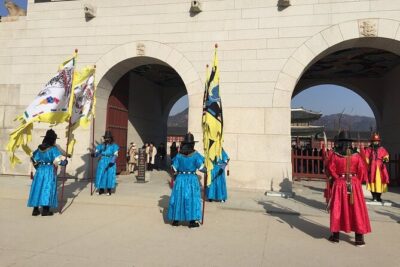
Small-Group Royal Palace and Seoul City Tour (hotel pick-up)
Read our review →
Seoul City Sightseeing Tour Including Gyeongbokgung Palace, N Seoul Tower, and Namsangol Hanok Village
Read our review →Gyeongbok Palace, Bukchon Village, and Gwangjang Tour
Read our review →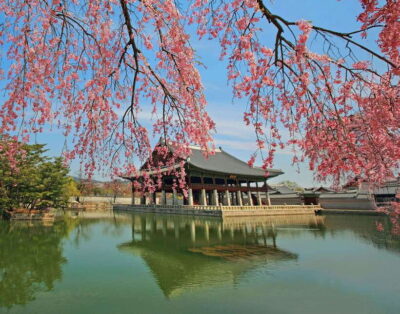
Seoul Highlights: Gyeongbok Palace, Insadong & N Seoul Tower
Read our review →
Seoul City Half Day Tour-Gyeongbok Palace Guard Changing Ceremony
Read our review →Browse the lists this tour appears in