
Reviewed · HISTORICAL TOURS
Korean History & Heritage Tour
History feels most useful when you can walk through it. This seven-hour Seoul tour links Gyeongbokgung Palace with markets, temples, museums, and old neighborhoods, giving you a clear look at how royal life, religion, art, and ordinary Korean routines fit together. I like the private format, and I like having hotel pickup with an air-conditioned vehicle. The main thing to consider is that palace admission and lunch cost extra, and one serious complaint raised questions about how much driving versus walking was provided on that particular departure.
You pay $475 per group of up to six, not per person. That can be good value for a family or small group that wants a private guide and door-to-door transport. The advertised route runs from 9 a.m. for about seven hours, but the sightseeing stops add up to four hours, so expect the remaining time to cover driving, transitions, and lunch.
In This Review
- Key points at a glance
- Why this route works for a first day in Seoul
- 9 a.m. at Gyeongbokgung Palace
- National Folk Museum: Korean life from birth to afterlife
- Bukchon Hanok Village, a living neighborhood
- Insadong and the old royal arts connection
- Jogyesa Temple and Korea’s Buddhist past
- Cheonggyecheon Stream and a city rebuilt around water
- Kwangjang Market: finish with Korean comfort food
- What $475 means for your group
- Guide quality can make or break the day
- Who should book this Seoul heritage day?
- Should you book the Korean History & Heritage Tour?
- FAQ
- How long does the Korean History & Heritage Tour last?
- How many people can join the private tour?
- Is hotel pickup included?
- Is there an extra pickup charge outside Seoul?
- Is palace admission included?
- Is lunch included?
- Is transportation provided during the tour?
- Are the National Folk Museum, Bukchon, Insadong, Jogyesa Temple, Cheonggyecheon Stream, and Kwangjang Market included?
- Can I cancel for a full refund?
Key points at a glance
- Seven stops in Seoul’s Gangbuk district: The day moves from a royal palace and folk museum to Bukchon, Insadong, Jogyesa Temple, Cheonggyecheon Stream, and Kwangjang Market.
- Private pricing for up to six people: At $475 per group, the cost becomes more reasonable when shared by several people.
- Hotel pickup across Seoul: Pickup and drop-off are included within Seoul, with a $50 surcharge for pickups outside Seoul in Gyeonggi Province.
- A strong guide can shape the whole day: Michael received praise for explaining Korean life and history, while Judy was praised for patience, friendliness, and a comfortable ride.
- Food is part of the finish: Lunch is not included, but the tour ends at Kwangjang Market, a longtime market known today for Korean comfort food stalls.
- Check the vehicle arrangement: One very unhappy customer said a private car tour became mostly walking. I would confirm the pickup, parking, and driving plan before departure.
Why this route works for a first day in Seoul
This is not a single-site palace visit. It is a day of contrasts. You begin with the royal court, then see ordinary homes, artistic traditions, Buddhist practice, public space, and street food. That range gives you more useful context than spending seven hours in one museum.
The focus is Seoul’s traditional Gangbuk area, north of the Han River. You will move between stops in a private air-conditioned vehicle, then walk at each location. That matters in Seoul, where several major sights are close on a map but still tiring to connect on foot.
I especially like the way the route shifts from official history to daily life. Gyeongbokgung shows power from the top down. Bukchon shows how traditional homes still shape a living neighborhood. Kwangjang Market brings the day back to food, shopping, and ordinary Seoul life.
The pace is fairly brisk. A 45-minute palace visit, 30 minutes at the museum, and 40 minutes in Bukchon do not allow for a slow, exhaustive look at every corner. You get an introduction to many places, not a scholarly examination of any one of them.
More Historical Tours in Seoul
- Seoul: Evening Dark History, Folklore & Ghost Story Walking Tour
★ 5.0 · 593 reviews - Hanbok Photoshoot and History Tour at Gyeongbokgung Palace
★ 5.0 · 276 reviews - From Seoul: Dae Jang Geum Park Historic K-Drama Set Tour
★ 4.9 · 143 reviews
9 a.m. at Gyeongbokgung Palace
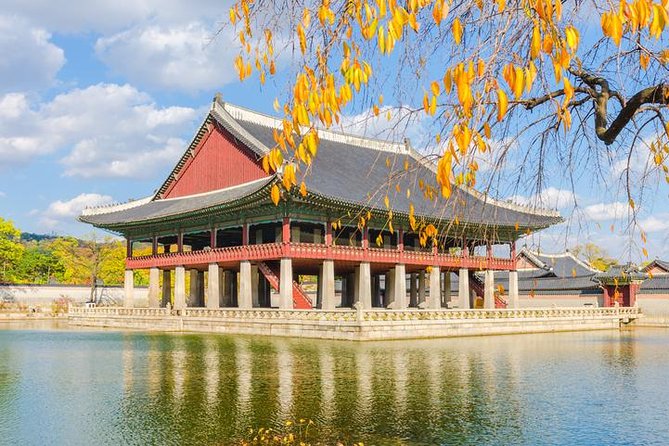
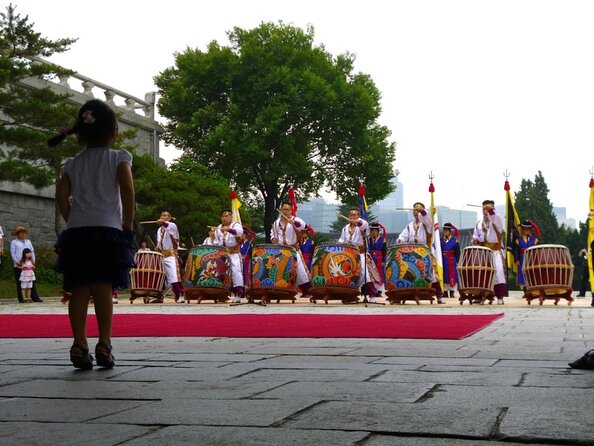
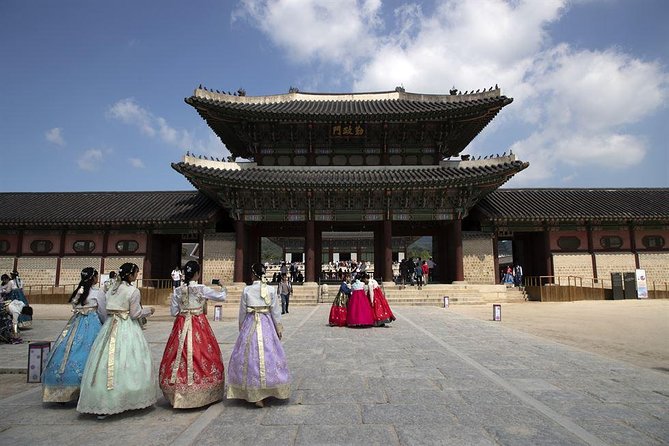
The tour opens at Seoul’s best-known royal palace, where you are scheduled to see the changing of the guard ceremony before going farther inside the grounds. The palace stop lasts about 45 minutes, so the guide’s explanations will help you focus on architecture and the life of the king rather than simply wandering from gate to gate.
This is a useful first stop because it establishes the Joseon-era setting for the rest of the day. You can expect discussion of royal life, palace design, and the relationship between the court and the wider city. The ceremony adds movement and color, but it can also draw a crowd, so stay close to your guide when the performance ends.
Palace admission is not included. That is a small but important cost to remember when comparing the $475 group price with a self-guided day. Ask about the current admission charge when booking or before you go, since the tour details do not provide the amount.
The short visit is both a strength and a weakness. You get an efficient introduction without spending half the day in one complex. If palace architecture is your main reason for visiting Seoul, you may want extra time here on another day.
National Folk Museum: Korean life from birth to afterlife
The National Folk Museum of Korea follows the palace with a 30-minute visit. The stated theme runs through the life of a Korean person, from birth and adulthood to death and the afterlife.
That approach makes the museum more useful than a quick collection of old objects. You are meant to look at customs and beliefs as part of a human life cycle. It also broadens the day beyond kings and court buildings. After seeing where rulers lived, you get a sense of how Korean society understood family, ritual, work, and death.
Admission is free, which helps the overall value. The drawback is time. Thirty minutes is enough for a guided orientation, but you will not cover every display at a relaxed pace. If you enjoy museums, note the areas that interest you and return later if your schedule allows.
Bukchon Hanok Village, a living neighborhood
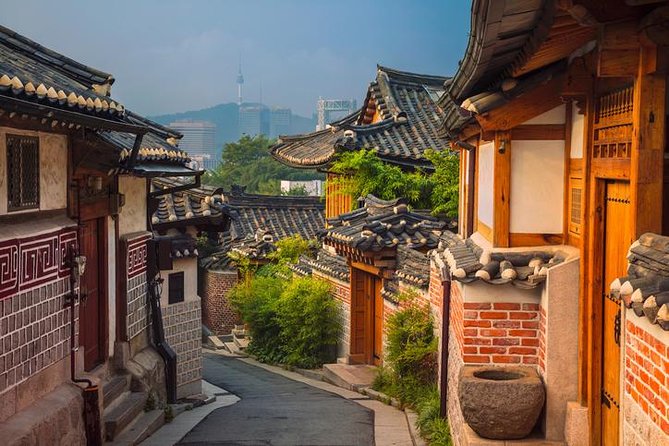
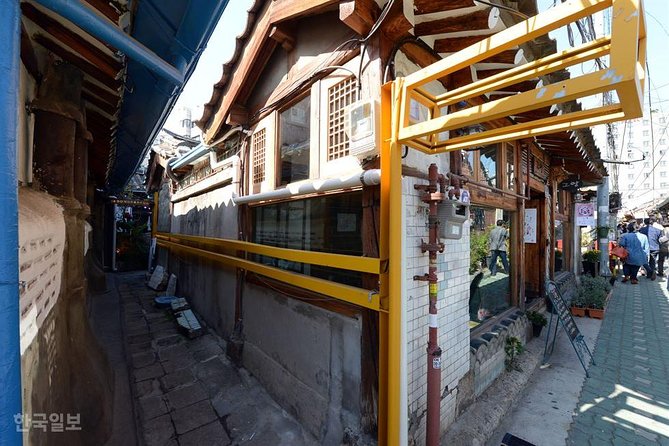
The next stop is Bukchon Hanok Village, where traditional Korean houses remain part of a lived-in neighborhood. You are not simply walking through a preserved open-air museum. People still live here, which makes the visit more meaningful and calls for quiet, respectful behavior.
The planned visit lasts about 40 minutes. Expect walking on neighborhood streets and an explanation of the traditional homes and village setting. Wear shoes that are comfortable for uneven streets and short uphill stretches, although the supplied information does not specify the exact walking route.
Bukchon can be one of the day’s most memorable stops because it connects architecture with modern life. You see how an older residential pattern survives inside a large capital city. At the same time, the short visit means you should not expect an extensive neighborhood walk or long photo stops.
Keep your voice down near homes, do not block narrow lanes, and follow the guide’s lead. The value here is not only the appearance of the buildings. It is the reminder that this is still a neighborhood, not a stage set.
More historical tours:
- Seoul: City Highlights and Historical Experience No Shopping
★ 5.0 · 74 reviews - Street photoshoot and Seoul Hidden gem History Walking Tour
★ 5.0 · 68 reviews - Discover Seoul: Local Life and History
★ 4.5 · 53 reviews - Namhansanseong UNESCO Historical Sites and Korean Folk Village-Private Tour
★ 5.0 · 29 reviews
Insadong and the old royal arts connection
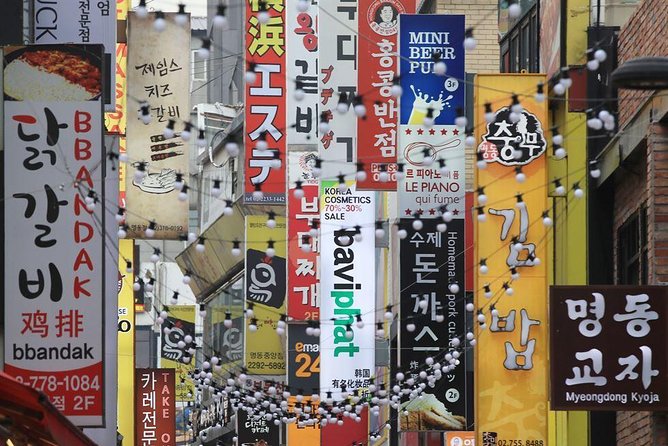
Insadong receives about 45 minutes. The tour presents it as the former guild area connected with artists and designers commissioned by the king, now known for antique shops and Korean souvenirs.
This is the place to look for objects tied to Korean design and craft traditions. You might find shops that appeal to you, but the tour does not promise a specific purchase or provide a shopping allowance. I would treat the stop as an introduction rather than a dedicated shopping trip.
The connection between royal commissions and today’s antique alley gives the area a useful angle. You are not just being sent to a souvenir street. You are hearing how art once served the court and how that creative tradition continues in a commercial setting.
Forty-five minutes is enough to stroll and browse, but not enough for serious comparison shopping. If you want to buy gifts, ask your guide how much time you can spend in shops without losing the rest of the route.
Jogyesa Temple and Korea’s Buddhist past
At Jogyesa Temple, the tour spends about 20 minutes discussing Buddhism, which once served as Korea’s national religion. This is a short stop, but it adds a religious layer that the palace and market cannot provide.
You will see a functioning Buddhist temple rather than only reading about religion in a museum. The guide can help explain the site’s place in Korean culture and point out details you might otherwise pass without noticing.
Twenty minutes is enough for a brief visit and explanation. It is not enough for quiet reflection or a detailed study of temple design. Be prepared to keep the visit moving, and dress and behave respectfully in the sacred space.
I like this stop because it prevents the day from presenting Korean heritage as only royal or commercial. The route gives you court life, folk customs, neighborhood architecture, art, religion, public works, and food.
Cheonggyecheon Stream and a city rebuilt around water
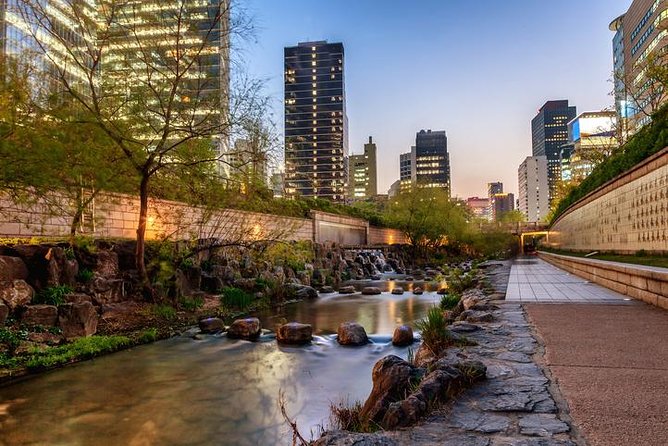
The tour then reaches Cheonggyecheon Stream for a 30-minute walk and a talk about the stories behind it. The stop offers a change of pace after the palace, museum, and shopping streets.
The stream is especially useful as a public-space stop. You can walk beside the water while hearing how the place fits into Seoul’s urban story. The tour information does not give a detailed account of which stories the guide will cover, so expect a general explanation rather than a specialist lecture.
Thirty minutes gives you time to stroll and take photographs. It also provides a chance to stretch your legs before the final market stop. As with Bukchon, comfortable shoes will make the day easier because the tour includes repeated walks between vehicle drop-offs and sights.
Kwangjang Market: finish with Korean comfort food
The final stop is Kwangjang Market, described as about 600 years old. It began by selling linens for special occasions and later became a well-known place for Korean comfort food served from street stalls.
This is a fitting ending. After a day of palaces and museums, you can see how food and commerce bring tradition into everyday life. The market is not presented as a formal tasting tour, so you should plan to choose and pay for food yourself.
Lunch is not included. That gives you freedom, but it also means the $475 price is not the complete cost of the day. Ask your guide for help if you are unsure what to order. One strong five-star account described a meal of ginseng black chicken arranged by Michael, so that dish may be worth asking about, though it is not guaranteed as part of the tour.
The scheduled market visit is only 30 minutes. That is enough for a walk-through and a quick bite, but you may feel rushed if you want to eat slowly or browse the stalls. If market food is a major priority, ask whether the schedule allows extra time.
What $475 means for your group
The price is $475 for up to six people. For six participants, that works out to about $79 per person before palace admission and food. For two people, it is about $238 each, which is a much larger spend than joining a shared group or using public transport.
The price buys privacy, a guide, hotel pickup and drop-off within Seoul, and an air-conditioned vehicle. Those benefits matter most if you are traveling with family, have limited time, or want explanations at each stop without keeping up with strangers.
I see the strongest value for three to six people. A family can share the vehicle and avoid working out several subway and walking connections. A small group of friends can also use the guide to shape the day around questions and interests.
For a solo visitor or couple on a tight budget, the cost is harder to justify. The route includes several places that you can reach independently, and admission is not fully covered. The private format is the reason to pay more, not the number of included tickets.
Guide quality can make or break the day
The experience appears to depend heavily on the individual guide. Michael was praised for explaining South Korean life, history, and culture, and for taking guests to a favorite restaurant for ginseng black chicken. Judy was praised for being friendly and patient, especially while walking, and for providing a comfortable car ride.
Those details point to what you should want from the day: clear cultural explanations, patience at walking stops, and practical help with food and local customs. A private guide can turn seven separate stops into one connected story.
There is also one serious warning. One one-star account described the guide, identified as YT Kim, as unprofessional and claimed that a private car tour became a walking tour after the first stop. Since this was a single poor experience against otherwise strong overall scores, I would not treat it as proof that every departure has the same problem. I would treat it as a reason to confirm the details.
Before the day begins, confirm that the vehicle will be used between the scheduled stops, where the guide will park, and how much walking is expected. That quick check can prevent a mismatch between what you pay for and what you receive.
Who should book this Seoul heritage day?
I would recommend this tour to a family or small group wanting a broad first look at traditional Seoul. It suits you if you value a private guide, hotel pickup, and a vehicle more than the lowest possible price.
It also works well if you want history explained in plain terms. The route covers royal life, Korean customs, traditional housing, court arts, Buddhism, urban development, and food without requiring you to plan seven separate visits.
You should think twice if you prefer slow sightseeing. The stop times are short, and the day includes frequent changes of setting. You should also compare costs carefully if you are a couple, since the group price becomes much better when split among several people.
The tour is accessible to most participants according to the supplied details, and service animals are allowed. It is near public transportation, but the package is built around pickup and vehicle travel rather than independent transit.
Free cancellation is available if you cancel at least 24 hours before the local start time. Changes or cancellations inside that window are not accepted for a refund.
Should you book the Korean History & Heritage Tour?
Book it if you want one private day that connects Seoul’s major traditional sights and you are willing to pay for convenience. The combination of palace, museum, village, temple, stream, and market gives you a useful first framework for the city.
I would book for three to six people, confirm the vehicle plan, and budget separately for palace admission and lunch. If your group is small, you love slow museum visits, or you mainly want food, a self-planned day may offer better value and more control.
For a compact introduction with strong potential from a good guide, this is a solid choice. Just remember that the guide and the pacing matter as much as the places themselves.
FAQ
How long does the Korean History & Heritage Tour last?
The tour lasts about seven hours, beginning at 9 a.m.
How many people can join the private tour?
The price covers one private group of up to six people.
Is hotel pickup included?
Yes. Free pickup and drop-off are provided from anywhere in Seoul.
Is there an extra pickup charge outside Seoul?
Yes. Pickup outside Seoul but within Gyeonggi Province adds a $50 surcharge.
Is palace admission included?
No. Admission to Gyeongbokgung Palace is not included.
Is lunch included?
No. Lunch is not included in the tour price.
Is transportation provided during the tour?
An air-conditioned vehicle is included. Because one account raised a concern about the amount of driving provided, confirm the vehicle and parking arrangements before departure.
Are the National Folk Museum, Bukchon, Insadong, Jogyesa Temple, Cheonggyecheon Stream, and Kwangjang Market included?
Yes. These six stops are part of the planned route, along with Gyeongbokgung Palace.
Can I cancel for a full refund?
Yes, if you cancel at least 24 hours before the experience start time. Cancellations or changes made less than 24 hours in advance are not accepted for a refund.
Just added around Seoul
- Seoraksan National Park & Nami Island★ 4.5 · 3 reviews
- Strawberry Picking, Winter Sled with Eobi Ice Valley from Seoul★ 4.5 · 3 reviews
- Seoul Full Day small group Tour★ 5.0 · 3 reviews
- Majang Meat Market Experience: Private Tour with Han-woo Beef BBQ★ 5.0 · 3 reviews
- Seoul Korean BBQ Dinner Experience with Secret Food Tours★ 5.0 · 3 reviews
- Rice Wine Tasting with Sommelier – Finest Makgeolli (& Soju)★ 5.0 · 3 reviews
- Max Out Seoul: Must Visit City Highlights Panoramic Day Tour★ 5.0 · 3 reviews
- Seongsu-dong Walking Tour: K-Pop, Culture, Cheer, Friends & Relax★ 4.5 · 3 reviews
Historical Tours, compared.

Gyeongju UNESCO World Heritage Guided Day Tour
Read our review →
Gyeongju UNESCO World Heritage Guided Day Tour from Busan
Read our review →
Evening Dark History, Folklore & Ghost Story Walking Tour
Read our review →
Old Korea Thousand History Tour of Gyeongju from Busan
Read our review →
Hanbok Photoshoot and History Tour at Gyeongbokgung Palace
Read our review →

UNESCO Heritage Tour Including Bulguksa Temple
Read our review →
Gyeongju UNESCO World Heritage Sites and History Full-Day Tour with Lunch
Read our review →Browse the lists this tour appears in