Reviewed · SEOUL TOURS
Learn and Make Your Very Own Craft Makgeolli
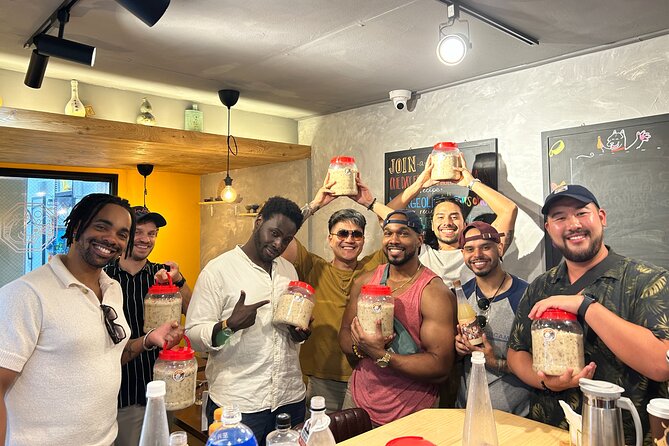
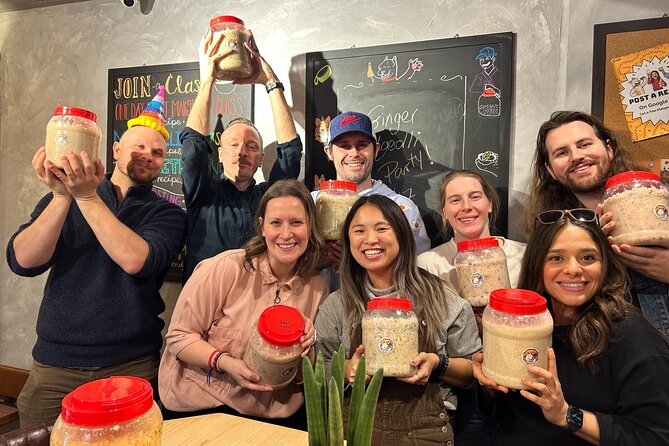
Korean rice wine is better when you make it. This two-hour class at Baekusaeng Makgeolli combines tasting, cultural context, and hands-on brewing in a small Seoul setting. I like the chance to sample several styles before making your own batch, and I like that you leave with about 1.2 liters to continue fermenting at home. The main consideration is that this is a working class, not simply a tasting session, so you should be ready to handle ingredients and follow the process closely.
The class costs $70.70 per person and takes place at 346-35 Ahyeon-dong, Mapo-gu. I also like the small maximum of 15 people, which leaves room for questions. Still, the intimate venue can feel tight if you prefer a large, polished visitor center.
In This Review
- Key Details at a Glance
- Why Makgeolli Makes a Good Seoul Class
- Arriving at the Small Ahyeon-dong Brewery
- The Opening Tasting: Flavor Before Technique
- Understanding Nuruk, Yeast, and Fermentation
- Making Your Own Batch by Hand
- What the Take-Home Bottle Adds
- Joe’s Teaching Style and the Group Atmosphere
- Is $70.70 a Fair Price?
- Practical Details Before You Book
- Who Will Enjoy This Class Most?
- Should You Book the Makgeolli Class?
- FAQ
- Where does the makgeolli class take place?
- How long does the experience last?
- Where does the activity end?
- How much does the class cost?
- What do you do during the class?
- How much makgeolli can you take home?
- Does the class explain traditional brewing methods?
- How many people can join the class?
- Is the class available with a mobile ticket?
- Can I cancel for a full refund?
Key Details at a Glance
- Taste several kinds of makgeolli: Compare sweetness, acidity, aroma, texture, and different brewing styles before making your own.
- Make about 1.2 liters to take home: Your batch continues fermenting after class, giving you a second stage of the experience.
- Learn traditional brewing methods: The class uses real ingredients and explains nuruk, yeast, fermentation, filtering, and conditioning.
- Study with Joe: Joe leads the session in clear English and has helped students from many countries understand the process.
- Meet in Ahyeon-dong: The class begins and ends at 346-35 Ahyeon-dong, Mapo-gu, near public transportation.
- Plan around a two-hour session: The format is compact but active, with tasting and practical work packed into the visit.
Why Makgeolli Makes a Good Seoul Class
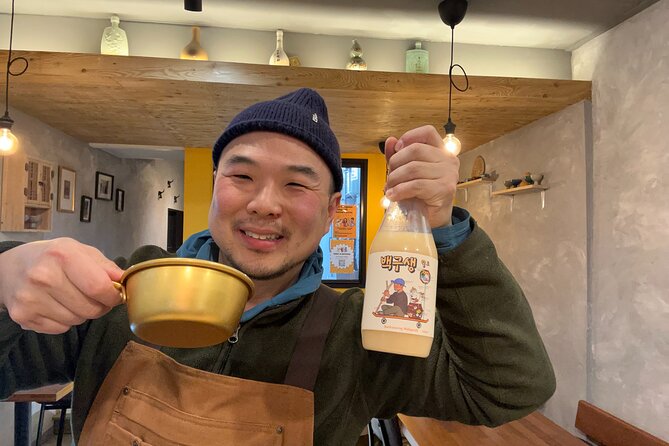
Makgeolli is often introduced to visitors as a cloudy Korean rice wine. That description is accurate, but it does not tell you much about the drink itself. Makgeolli can be sweet, tart, creamy, dry, fragrant, light, or surprisingly complex. The differences become clearer when you taste several versions side by side.
This class helps you move past the supermarket bottle. You learn how ingredients, fermentation, filtering, and conditioning affect the final drink. That matters because many people first meet makgeolli in a restaurant, served cold in a metal bowl or plastic bottle, without learning what created its flavor.
The session is also a useful way to connect food and culture. Rice, water, yeast, and nuruk are not abstract ingredients here. They are part of a process that you can see, touch, smell, and later monitor at home.
Baekusaeng Makgeolli presents itself as more than a place offering a one-day activity. Its wider goal is to help people continue brewing after leaving Korea. That makes the class more useful than a quick demonstration, especially if you enjoy cooking, fermentation, or making drinks from scratch.
A few more trips of this kind worth comparing:
- Best DMZ Tour Korea from Seoul (Red Suspension Bridge Optional)
★ 5.0 · 41,422 reviews - DMZ Tour: 3rd Tunnel, Option(Suspension Bridge, Boat) from Seoul
★ 5.0 · 21,373 reviews - DMZ tour south Korea from Seoul (NK experience hall, defector)
★ 5.0 · 20,599 reviews
Arriving at the Small Ahyeon-dong Brewery
The meeting point is 346-35 Ahyeon-dong in Seoul’s Mapo-gu. The activity begins and ends at the same place, which keeps the logistics simple. It is near public transportation, but the address is worth saving carefully before you set out.
One participant had trouble finding the shop despite receiving clear directions. Joe helped sort out the route, which is reassuring if Seoul’s smaller streets and local businesses leave you uncertain. I would still allow a little extra time for arrival. A phone with the address ready is a sensible precaution.
The venue is described as a small, cozy makgeolli bar or microbrewery. It is used for the class during the day, so do not expect a large industrial brewery with rows of tanks and a formal visitor gallery. The appeal is the close setting. You are close to the instructor, the ingredients, and the other people at your table.
The space accommodates no more than 15 people. That is large enough for a social class but small enough to keep the practical work manageable. If fewer people book, the session can become especially personal. One person received a one-on-one class, with Joe able to explain the differences between brewing methods at length.
The Opening Tasting: Flavor Before Technique
The class begins with an introduction to makgeolli and a tasting of selected examples. This is an important choice in the teaching order. You first learn what the drink can taste like, then work toward understanding how those results are made.
Pay attention to four basic qualities:
- Aroma: Some makgeolli may smell fresh, grainy, fruity, or fermented.
- Sweetness: Sugar levels can make one version feel soft and easy while another tastes more restrained.
- Acidity: A sharper edge can give the drink lift and keep it from tasting heavy.
- Texture: Cloudiness, body, and smoothness help distinguish one bottle from another.
The tasting is more than a generous pour before the work starts. It gives you a reference point. When Joe explains fermentation or filtering, you can connect the terms to something you have already tasted.
The range is one of the strongest parts of the session. Several people especially enjoyed comparing the different options and noticing how much the flavors changed from one makgeolli to the next. The drinks continue during the class, but the sensible approach is to treat this as a guided tasting rather than a race. The session includes alcohol, and the focus is learning.
You also learn the difference between traditional makgeolli and the more familiar commercial versions available in supermarkets or restaurants. That comparison can change how you order drinks for the rest of your time in Korea. Instead of treating makgeolli as one fixed style, you start asking what kind you are being served.
Understanding Nuruk, Yeast, and Fermentation
The technical part of the class explains the ingredients and tools behind makgeolli. The central idea is fermentation, the slow work that turns a rice mixture into an alcoholic drink with its own aroma, acidity, sweetness, and texture.
Nuruk is a key term. It helps drive the fermentation process and is part of the traditional character of Korean brewing. You also learn about yeast activity and how the mixture changes over time.
This section is valuable because it prevents the process from seeming like a magic trick. You are not simply adding ingredients and waiting for alcohol to appear. Temperature, timing, handling, filtering, and conditioning all affect the result.
Baekusaeng Makgeolli places emphasis on fresh, real ingredients and traditional methods rather than shortcuts. That does not mean the class is old-fashioned or difficult for its own sake. It means you get an honest look at what makes brewing different from mixing a powdered drink.
Joe teaches in English, and the class is designed for an international audience. One Japanese-speaking couple found that he used translation tools when needed, while the practical work made communication easier. You will still get the most from the session if you are comfortable following spoken instruction, but you do not need to be a brewing expert.
A particularly helpful touch is Joe’s use of Korean terms during explanations. He has written key words on a whiteboard to help students hear and remember them. That gives the class a small language lesson along with its food and drink lesson.
A completely different kind of day out in Seoul:
- Seoul: DMZ Tour with Optional Suspension Bridge
★ 4.8 · 5,277 reviews - Signature DMZ Tour: Exclusive Defector Talk & Suspension Bridge
★ 5.0 · 4,459 reviews - Thrilling Korean DMZ 3rd Tunnel Tour from Seoul + Red Bridge Rush
★ 5.0 · 3,097 reviews - DMZ Past and Present: Korean Demilitarized Zone Tour from Seoul
★ 5.0 · 2,481 reviews
Making Your Own Batch by Hand
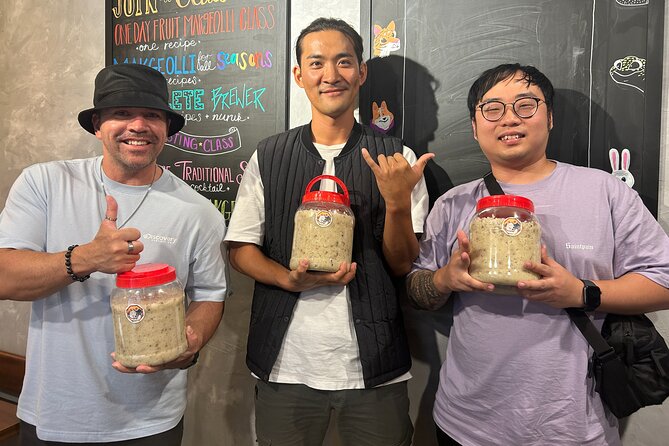
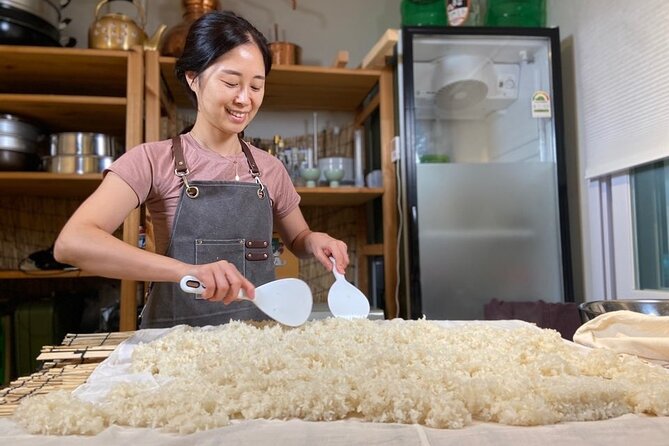
After tasting and instruction, you begin the hands-on brewing work. This is not a sit-back-and-watch demonstration. You handle the ingredients, follow the steps, and prepare your own makgeolli base.
The physical work is a big reason to choose this activity. You understand the process differently after mixing the ingredients yourself. A traditional beverage becomes a real project rather than a menu item.
The class may include a pumpkin mash, depending on the session. One participant described making a pumpkin-based batch, which shows how the basic method can support personal expression. The exact recipe or flavor may vary, so you should think of the class as an introduction to a brewing method rather than a promise of one fixed final taste.
Joe guides the group through each stage and answers questions as you work. His role is part teacher and part practical coach. You can ask about the ingredients, the fermentation process, and the differences between styles. The small group size helps here, since you are not trying to catch every detail from the back of a crowded room.
By the end, you package approximately 1.2 liters of your makgeolli to take home. At this stage, it is not simply a finished drink ready for immediate consumption. It continues fermenting, and you take responsibility for the next part of the process.
That is the most unusual feature of the class. Many food activities end when you leave the venue. This one sends you home with an active project. You get to see what happens after the lesson, provided you can manage the batch according to the instructions you receive.
What the Take-Home Bottle Adds
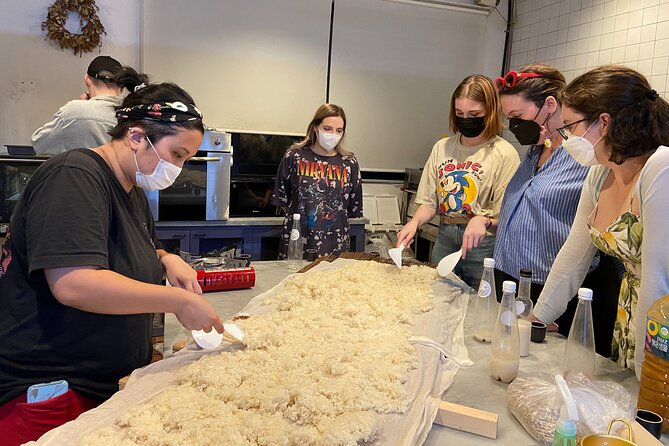
The take-home batch gives the experience lasting value. You are not just buying a souvenir bottle. You are carrying home the result of your own work and continuing the fermentation process yourself.
That also means you need to pay attention. The class gives you a foundation, but brewing does not end at the door. You should be prepared to follow the care instructions and accept that your finished drink may reflect your own handling as well as the original recipe.
For people who enjoy cooking or fermentation, this is a strong bonus. You can compare the final result with the samples tasted in class and begin to understand how technique affects the drink. For someone seeking a quick, effortless souvenir, the extra responsibility may feel less appealing.
Baekusaeng Makgeolli also aims to help students brew independently in their own countries. The class is therefore built to give you repeatable knowledge, not just one enjoyable afternoon. If you later buy supplies and try again, you will have a better sense of what the ingredients are doing.
Joe’s Teaching Style and the Group Atmosphere
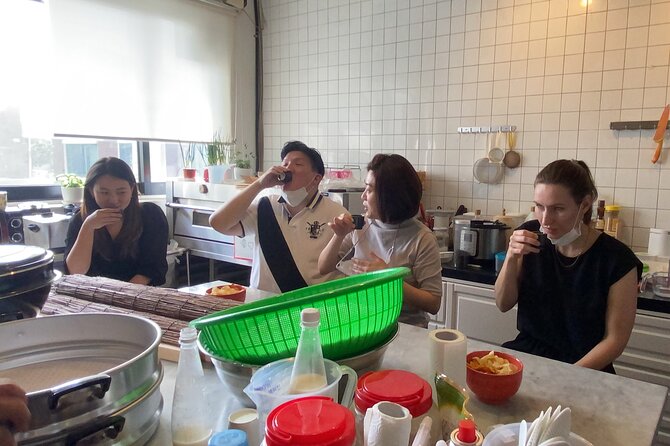
Joe receives the strongest praise for his teaching and communication. He is described as friendly, patient, organized, and easy to understand. He also responds quickly to questions before class and has shown flexibility when a date change was requested in advance.
That personal approach matters in a hands-on activity. Brewing has enough unfamiliar terms and steps to make a rushed instructor frustrating. Joe takes time to make sure people understand what they are doing, including students attending alone.
The mood is social without being formal. You meet other people from different countries, work together, taste together, and share the small satisfaction of making something with your hands. One couple described the class as a good way to spend an early evening in Seoul.
The English-language format is a practical strength. If English is not your first language, Joe’s clear speaking and willingness to use translation support can help. Still, the class is not a language-free activity. You will need to listen to instructions, so keep your phone ready if you need translation help.
Is $70.70 a Fair Price?
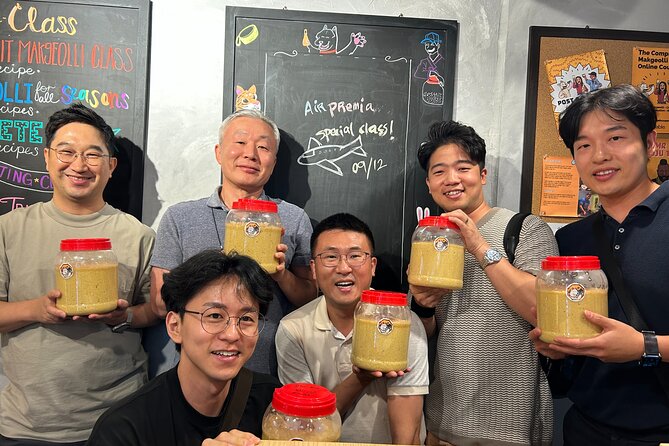
At $70.70 per person, this is not the cheapest way to drink makgeolli in Seoul. You could buy several bottles for less. That comparison, however, misses what you are paying for.
The price includes about two hours of instruction, a guided tasting of multiple styles, hands-on preparation, and approximately 1.2 liters of your own makgeolli to continue fermenting. You are also paying for access to Joe’s brewing experience and for a class designed to help you repeat the process at home.
I consider the price fair for anyone who wants an activity rather than a drink stop. It is especially good value if you are curious about fermentation and expect to use the knowledge again. If you only want to sample Korean alcohol, a bar or restaurant will cost less and require less time.
The value also depends on your interest in participation. The more questions you ask and the more attention you give to the process, the more useful the class becomes. Go in expecting a polished show, and you may find the small venue modest. Go in ready to learn and work, and the price makes more sense.
Practical Details Before You Book
The activity lasts about two hours, so it fits neatly into a Seoul itinerary. Since it begins and ends at the same address, you do not need to arrange a separate return transfer.
A mobile ticket is provided, and confirmation arrives at booking. The class is near public transportation and allows service animals. The maximum group size is 15 people.
You can cancel for a full refund if you do so at least 24 hours before the start time. Changes made less than 24 hours ahead are not accepted, and late cancellations are not refunded. The cut-off follows Seoul local time, so check the clock carefully if you are booking from another country.
The activity is often booked about 23 days in advance. That suggests you should not leave it until the last minute if your Seoul dates are fixed, especially if you want a particular day.
Who Will Enjoy This Class Most?
I would recommend it to curious drinkers, home cooks, fermentation fans, and anyone who wants a cultural activity with something tangible to take away. It also suits people who enjoy meeting others in small groups rather than moving through a large attraction.
It is a good choice for couples, solo visitors, and friends. One solo participant received especially close instruction, while couples appreciated the relaxed teamwork.
You may want to skip it if you dislike alcoholic tastings, do not want to handle ingredients, or need an activity with no follow-up at home. The class is practical and active. It is not simply a lecture, and it is not only a drinking session.
Should You Book the Makgeolli Class?
Book this class if you want to understand Korean makgeolli from the inside out. The tasting shows you the drink’s range, Joe explains the process in approachable terms, and the take-home batch gives you a reason to keep learning after Seoul.
The best reason to go is the combination of tasting and making. You do not just hear about traditional brewing. You compare different styles, prepare your own batch, and continue the fermentation at home.
I would choose it over a standard bar visit if you enjoy hands-on food experiences. If you simply want a night out with Korean drinks, spend the $70.70 elsewhere. For everyone curious about how makgeolli is made, this is a friendly, useful, and unusually memorable Seoul class.
FAQ
Where does the makgeolli class take place?
The class takes place at 346-35 Ahyeon-dong, Mapo-gu, Seoul, South Korea.
How long does the experience last?
The class lasts approximately two hours.
Where does the activity end?
The activity ends back at the meeting point in Ahyeon-dong.
How much does the class cost?
The listed price is $70.70 per person.
What do you do during the class?
You taste selected makgeolli, learn about ingredients and brewing tools, study fermentation, and make your own makgeolli batch.
How much makgeolli can you take home?
You take home approximately 1.2 liters of your own makgeolli to continue fermenting.
Does the class explain traditional brewing methods?
Yes. The class covers traditional methods, fresh ingredients, nuruk, yeast activity, filtering, and conditioning.
How many people can join the class?
The activity has a maximum of 15 travelers.
Is the class available with a mobile ticket?
Yes. A mobile ticket is provided, and confirmation is received when you book.
Can I cancel for a full refund?
Yes. You can receive a full refund if you cancel at least 24 hours before the experience start time. Late cancellations and changes made less than 24 hours before the start time are not accepted.
Just added around Seoul
- Seoraksan National Park & Nami Island★ 4.5 · 3 reviews
- Strawberry Picking, Winter Sled with Eobi Ice Valley from Seoul★ 4.5 · 3 reviews
- Seoul Full Day small group Tour★ 5.0 · 3 reviews
- Majang Meat Market Experience: Private Tour with Han-woo Beef BBQ★ 5.0 · 3 reviews
- Seoul Korean BBQ Dinner Experience with Secret Food Tours★ 5.0 · 3 reviews
- Rice Wine Tasting with Sommelier – Finest Makgeolli (& Soju)★ 5.0 · 3 reviews
- Max Out Seoul: Must Visit City Highlights Panoramic Day Tour★ 5.0 · 3 reviews
- Seongsu-dong Walking Tour: K-Pop, Culture, Cheer, Friends & Relax★ 4.5 · 3 reviews
Seoul Tours, compared.

Best DMZ Tour Korea from Seoul (Red Suspension Bridge Optional)
Read our review →
DMZ Tour: 3rd Tunnel, Option(Suspension Bridge, Boat) from Seoul
Read our review →
DMZ tour south Korea from Seoul (NK experience hall, defector)
Read our review →

Signature DMZ Tour: Exclusive Defector Talk & Suspension Bridge
Read our review →
Thrilling Korean DMZ 3rd Tunnel Tour from Seoul + Red Bridge Rush
Read our review →DMZ Past and Present: Korean Demilitarized Zone Tour from Seoul
Read our review →