Reviewed · SEOUL TOURS
Savoring Authentic Korean Liquor and Cuisine
Korean liquor is far more than green bottles. This 90-minute tasting with Chef Hyesun introduces you to three traditional styles made from rice, mountain water, and naturally fermented yeast, then pairs them with Korean anju, the food served with drinks. I like the small maximum of six people, and I like that Hyesun selects bottles from local breweries you may not find in ordinary shops or restaurants.
The strongest part is the range of flavors, from takju to cheongju and distilled liquor, with food such as vegetable pancake, meat pancake, and kimchi bibim noodles. The main consideration is location: you must reach Lodge Magok in Seoul’s Gangseo-gu district, and the experience is focused on tasting and conversation rather than a broad sightseeing tour.
In This Review
- Key points about this Korean liquor tasting
- Why Korean liquor deserves a proper tasting
- Meeting Chef Hyesun at Lodge Magok
- The 90-minute tasting: what the session covers
- Anju turns the tasting into a meal
- Takju, cheongju, and distilled liquor
- Why the small group and personal setting matter
- Getting to the Magok meeting point
- Who should book this Seoul experience
- Booking, cancellation, and final advice
- FAQ
- How long does the Korean liquor experience last?
- How much does the experience cost?
- Where does the tasting begin?
- Where does the experience end?
- Which kinds of Korean liquor are included?
- What food is served with the alcohol?
- What age must I be to drink?
- Can I cancel for a full refund?
Key points about this Korean liquor tasting
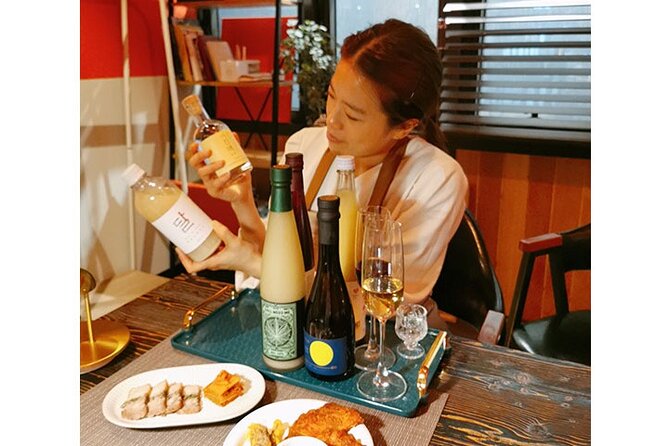
- Three distinct liquor styles: Taste takju, cheongju, and a Korean distilled spirit rather than only factory-made green-bottle soju.
- Chef Hyesun leads the session: She runs a restaurant specializing in traditional liquor and shares her knowledge in a friendly, personal setting.
- Small group of six maximum: The size should allow time for questions, food pairings, and travel stories.
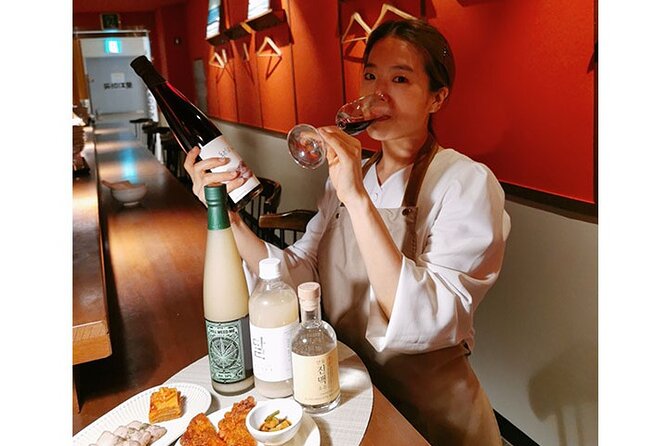
- Anju changes with ingredients: Expect Korean drinking foods such as vegetable pancake, meat pancake, or kimchi bibim noodles, depending on supply.
- Rare local bottles: Hyesun’s selection comes from breweries around Korea and may not be available in regular stores or restaurants.
- Central practical details: The tasting lasts about 90 minutes, costs $59 per person, and ends where it begins at Lodge Magok.
Why Korean liquor deserves a proper tasting
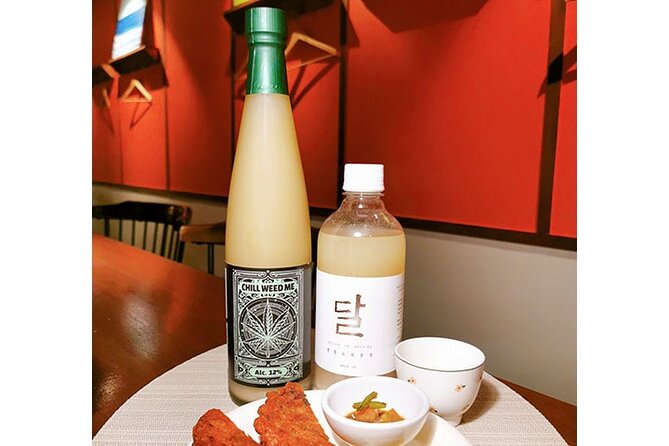
Many first-time visitors know Korean alcohol through green-bottle soju or a bowl of sweet, cloudy makgeolli. Those drinks have their place, but they represent only a small part of Korea’s drinking culture.
Traditional Korean liquor is made with three basic ingredients: Korean rice, mineral water from a mountain, and naturally fermented yeast. That simple formula can produce very different results depending on the brewer, the rice, the water, and the fermentation method.
This is what makes Chef Hyesun’s session useful. Instead of handing you one standard bottle and calling it Korean liquor, she presents three categories. You get a clearer sense of how texture, sweetness, clarity, weight, and alcohol strength can change from one style to the next.
I especially like the contrast with ordinary factory-made liquor. The experience is designed to show you traditional drinks made by small producers, including bottles from different parts of Korea. With more than 1,400 small traditional liquor breweries in the country, there is plenty of local variation to explore.
You should arrive curious rather than expecting every drink to taste familiar. Some samples may remind you of rice wine, sake, or spirits, but the Korean versions have their own character. The point is not to declare one drink the winner. It is to notice how each one works with food.
A few more trips of this kind worth comparing:
- Best DMZ Tour Korea from Seoul (Red Suspension Bridge Optional)
★ 5.0 · 41,422 reviews - DMZ Tour: 3rd Tunnel, Option(Suspension Bridge, Boat) from Seoul
★ 5.0 · 21,373 reviews - DMZ tour south Korea from Seoul (NK experience hall, defector)
★ 5.0 · 20,599 reviews
Meeting Chef Hyesun at Lodge Magok
The meeting point is Lodge Magok, at 171 Jungang-ro, Magok-dong, in Gangseo-gu, Seoul, at the Naru Station Private Tower II, room 207. The experience starts and ends at this same address.
The host is Hyesun, a world traveler and owner-chef of a restaurant focused on traditional liquor. That background matters. You are not simply being handed samples by a server. The format is built around a chef who understands both Korean food and the social role of drinking.
The small group limit is six people. I see that as a major advantage for this particular activity. A tasting works best when you can ask why one liquor is cloudy, how another is served, or which dish suits a particular sample. A large group could turn the session into a lecture. Six people leaves more room for conversation.
Hyesun also invites you to share travel stories and talk about food. That personal touch makes the experience feel less formal than a standard alcohol flight. It also gives solo visitors and couples a natural way to meet people without signing up for a full-day group tour.
You should contact Hyesun through WhatsApp after your reservation is automatically confirmed. The number provided is +82 10 2661 7832. Use that message to double-check the schedule, discuss food allergies, and confirm any other details before you arrive.
The 90-minute tasting: what the session covers
The activity lasts about one hour and 30 minutes, so it fits neatly into a Seoul evening or a free part of your day. It is long enough for a guided tasting and food pairings, but short enough that you will not need to build an entire day around it.
The session begins with an introduction to Korean traditional liquor. Hyesun explains the basic ingredients and the difference between traditional brewing and mass-produced alcohol. This background helps you understand what is in your glass instead of treating each sample as just another drink.
The main tasting includes three styles:
- Takju, generally a cloudy traditional rice liquor
- Cheongju, a clear rice liquor
- Distilled liquor, made through distillation rather than simple fermentation
The supplied information does not give exact brands, alcohol levels, serving sizes, or the order of the samples. That is useful to remember when setting expectations. You are booking a guided introduction to categories and local producers, not a fixed bottle list.
The selection comes from breweries around Korea. Hyesun chooses bottles that are difficult to find in regular stores or restaurants, giving the session a discovery element without requiring you to travel around the country looking for them.
You should expect plenty of explanation and several samples. One especially strong feature is the chance to compare different local expressions of Korean liquor. The contrast may be more important than any single sample, since it shows how broad the category can be.
Anju turns the tasting into a meal
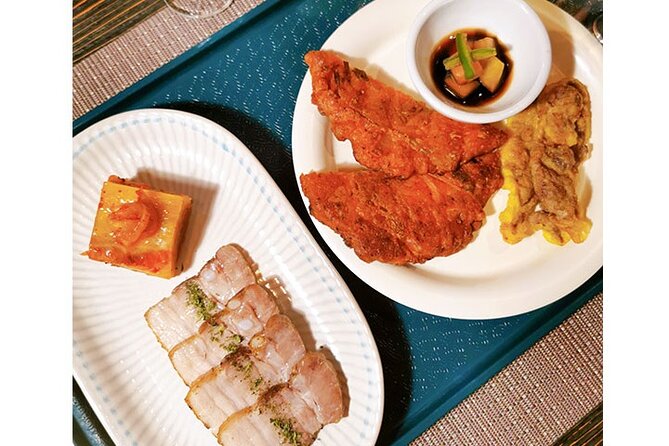
Korean drinking culture is closely linked with anju, the food served alongside alcohol. This is not just a plate of snacks added for decoration. The food softens, sharpens, or balances the drink and gives you a better way to judge its character.
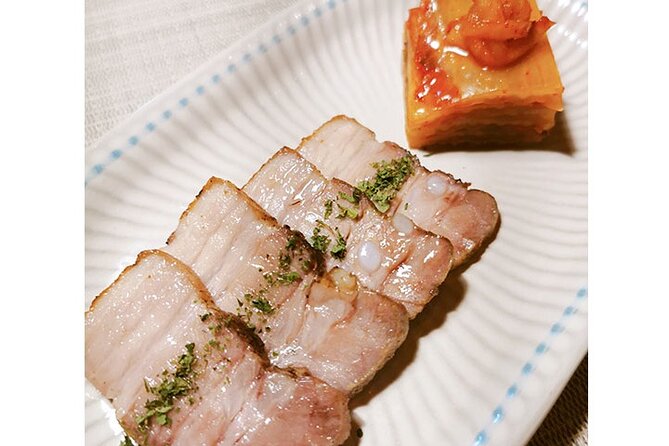
Hyesun prepares Korean dishes to pair with the liquor. Examples include vegetable pancake, meat pancake, and kimchi bibim noodles. The exact menu may change with ingredient supply and demand, so you should not book this expecting a guaranteed list of dishes.
That flexibility is reasonable for a small restaurant kitchen, but it matters if you have a strict food preference. Send your allergies and dietary concerns to Hyesun through WhatsApp before the session. The activity information confirms that menu items can vary, but it does not promise specific substitutions.
The pairings are one of the most appealing parts of the experience. A cloudy takju with a savory pancake offers a different effect from a clear cheongju with noodles or a stronger distilled drink with meat. Even if you know little about Korean liquor, food gives you an immediate point of comparison.
I like this approach because it keeps the tasting connected to everyday Korean culture. You are not studying alcohol in isolation. You are seeing how people actually enjoy it at the table, with shared dishes and conversation.
A completely different kind of day out in Seoul:
- Seoul: DMZ Tour with Optional Suspension Bridge
★ 4.8 · 5,277 reviews - Signature DMZ Tour: Exclusive Defector Talk & Suspension Bridge
★ 5.0 · 4,459 reviews - Thrilling Korean DMZ 3rd Tunnel Tour from Seoul + Red Bridge Rush
★ 5.0 · 3,097 reviews - DMZ Past and Present: Korean Demilitarized Zone Tour from Seoul
★ 5.0 · 2,481 reviews
Takju, cheongju, and distilled liquor
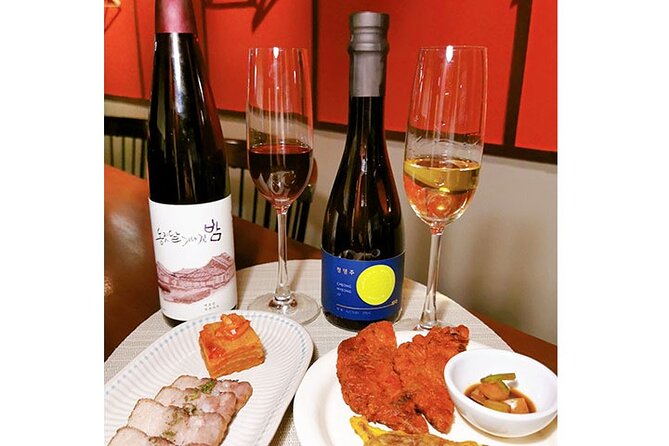
Takju is likely to be the most recognizable style for visitors who have tried makgeolli. It is traditionally associated with a cloudy appearance and a soft rice-based texture. The tasting gives you a chance to consider how traditional takju differs from the more common commercial versions found in many Korean restaurants.
Cheongju offers a useful contrast. It is clear rather than cloudy, and its presentation can feel closer to the polished side of rice wine. Comparing it directly with takju makes the differences easier to notice than trying each drink months apart.
The distilled liquor adds a third point of reference. It lets you move beyond fermented rice drinks and consider a stronger, more concentrated style. The provided information does not specify the exact spirit or its alcohol percentage, so you should ask Hyesun if strength is important to you.
The benefit of tasting all three is balance. You do not leave with the idea that Korean liquor means only makgeolli, or only soju. You get a compact introduction to the main ways traditional Korean brewing and distilling can produce different drinks.
The experience may also change your view of Korean alcohol. A drink you thought would be rough or sweet may turn out to be more refined. Another may be too strong for your taste. That is part of a useful tasting: you learn what you like before spending money on full bottles.
Why the small group and personal setting matter
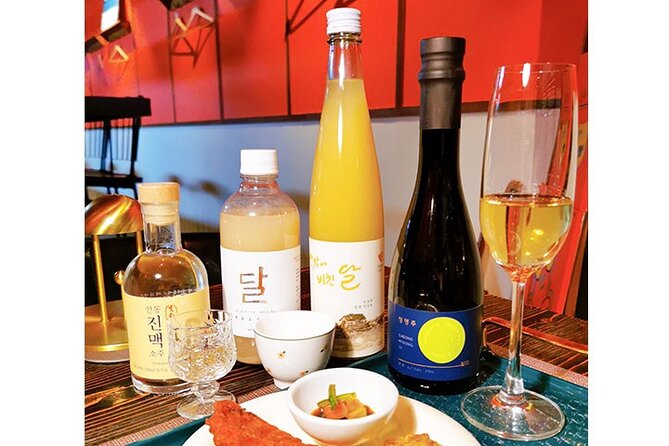
A group of six maximum is not a minor detail here. Traditional liquor is not a landmark you can simply photograph and move on from. The value comes from tasting, asking questions, and making comparisons while the samples are in front of you.
With Hyesun leading the session, you can ask about the drinks, the breweries, and the food. The information provided does not promise a formal printed tasting sheet or a brewery visit, so do not expect an educational seminar with extensive materials. The strength is direct conversation with the owner-chef.
The social side also matters. Hyesun encourages people to share stories from their trips and enjoy the evening together. If you like meeting people over food, this should feel natural. If you prefer a silent, highly technical tasting, the conversational tone may feel less structured.
I would also consider the group size when comparing the $59 price. You are paying for more than liquid in small glasses. The cost includes a hosted introduction, three categories of traditional alcohol, Korean anju, and access to bottles that may be difficult to find elsewhere.
That makes the price fair for someone who values context and food. It may feel high if you only want a quick drink or if you already know Korean liquor well. For a first introduction, the combination is stronger than buying one ordinary bottle at a convenience store.
Getting to the Magok meeting point
Lodge Magok is near public transportation, which helps, but the information provided does not name a specific station, route, or walking time. Use the full address and room number when planning your arrival, and confirm the meeting details with Hyesun after booking.
The location in Gangseo-gu may be less convenient if your day is centered in another part of Seoul. That is the clearest practical drawback. You should allow enough time to cross the city rather than trying to arrive just as the tasting begins.
The mobile ticket is convenient, but it does not replace the WhatsApp confirmation request. Once the booking is confirmed, send Hyesun a message to verify the schedule and share allergy information.
The activity returns to Lodge Magok, so there is no second drop-off point to arrange. That makes the end simple, especially if you plan to continue your evening nearby. The exact closing time depends on the start time you select.
Alcohol is offered only to people aged 18 and older. Service animals are allowed, and the activity is near public transportation. No broader accessibility details are provided, so contact the host directly if you need specific access information.
Who should book this Seoul experience
I would recommend this tasting to you if you want food and drink tied to Korean culture rather than another sightseeing stop. It suits people who have tried ordinary soju and want to understand what traditional Korean liquor can be.
It is also a good choice for food-focused visitors. The anju is not an afterthought, and the changing menu gives you several ways to compare drink and dish. Couples, solo visitors, and small groups who enjoy conversation should get the most from the format.
The experience is less suitable if you do not drink alcohol, need a guaranteed menu, or want a large brewery tour with a long production walk. It is also not the right pick if reaching Magok from your Seoul base would take too much time for a 90-minute activity.
You should also remember that the tasting is for adults aged 18 and older. Since the activity centers on alcohol, children would not be able to take part in the drinking portion.
Booking, cancellation, and final advice
The price is $59 per person, and the experience is commonly reserved about 12 days ahead. I would not wait until the last minute if your Seoul schedule is tight, especially because the group limit is six.
Free cancellation is available when you cancel at least 24 hours before the start time. Cancellations or changes made inside that 24-hour window are not accepted for a refund, with cut-off times based on Seoul local time.
Should you book it? Yes, if you want a compact, personal introduction to Korean liquor and anju. The strongest reasons are Hyesun’s chef-led format, the rare local selections, the three-style comparison, and the small group size.
I would skip it if you are mainly looking for sightseeing, a fixed menu, or a tour in central Seoul. For everyone else, this is a smart way to spend 90 minutes learning why Korean traditional liquor is much broader than green-bottle soju, with enough food to make the lesson pleasurable.
FAQ
How long does the Korean liquor experience last?
The experience lasts approximately one hour and 30 minutes.
How much does the experience cost?
The price is $59 per person.
Where does the tasting begin?
It begins at Lodge Magok, located at 171 Jungang-ro, Magok-dong, Gangseo-gu, Seoul, in Naru Station Private Tower II, room 207.
Where does the experience end?
The activity ends back at the Lodge Magok meeting point.
Which kinds of Korean liquor are included?
The tasting includes three types of traditional liquor: takju, cheongju, and distilled liquor.
What food is served with the alcohol?
Anju is served with the drinks. Possible dishes include vegetable pancake, meat pancake, and kimchi bibim noodles, although the menu can change according to ingredient supply and demand.
What age must I be to drink?
Alcoholic beverages are available only to people aged 18 and older.
Can I cancel for a full refund?
Yes. You can receive a full refund by canceling at least 24 hours before the experience start time. Changes or cancellations made less than 24 hours before the start time are not accepted for a refund.
Just added around Seoul
- Seoraksan National Park & Nami Island★ 4.5 · 3 reviews
- Strawberry Picking, Winter Sled with Eobi Ice Valley from Seoul★ 4.5 · 3 reviews
- Seoul Full Day small group Tour★ 5.0 · 3 reviews
- Majang Meat Market Experience: Private Tour with Han-woo Beef BBQ★ 5.0 · 3 reviews
- Seoul Korean BBQ Dinner Experience with Secret Food Tours★ 5.0 · 3 reviews
- Rice Wine Tasting with Sommelier – Finest Makgeolli (& Soju)★ 5.0 · 3 reviews
- Seongsu-dong Walking Tour: K-Pop, Culture, Cheer, Friends & Relax★ 4.5 · 3 reviews
- Seoul: Alpaca World and Nami Island (with Garden / Railbike)★ 5.0 · 3 reviews
Seoul Tours, compared.

Best DMZ Tour Korea from Seoul (Red Suspension Bridge Optional)
Read our review →
DMZ Tour: 3rd Tunnel, Option(Suspension Bridge, Boat) from Seoul
Read our review →
DMZ tour south Korea from Seoul (NK experience hall, defector)
Read our review →

Signature DMZ Tour: Exclusive Defector Talk & Suspension Bridge
Read our review →
Thrilling Korean DMZ 3rd Tunnel Tour from Seoul + Red Bridge Rush
Read our review →DMZ Past and Present: Korean Demilitarized Zone Tour from Seoul
Read our review →