
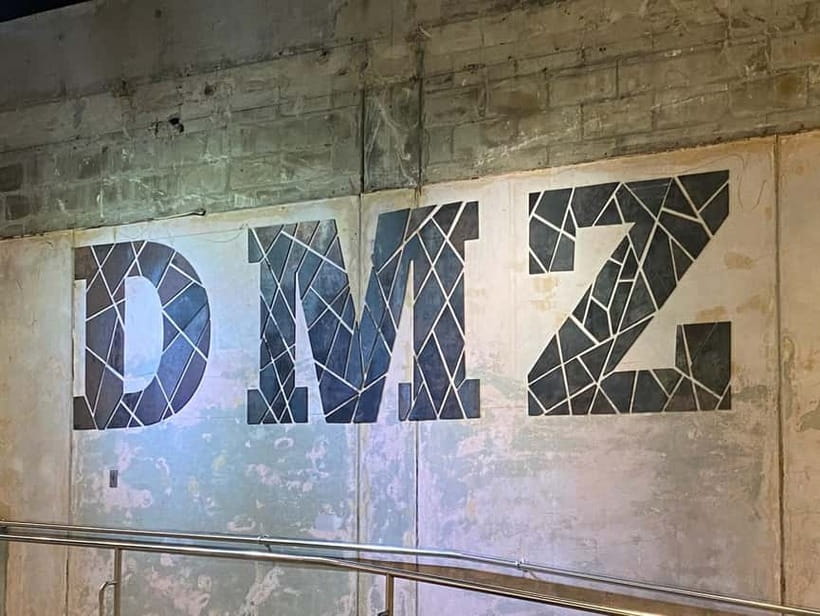
Reviewed · DMZ & BORDER TOURS
Seoul: DMZ & Live Talk with North Korean Defector
The border is closer than you think. This seven-hour trip packs in the Third Infiltration Tunnel and Dora Observatory, then adds something most DMZ outings skip: a live question-and-answer session with a North Korean defector. I also like the steady pacing and strong guides, including AJ, Katie, Lily, Miel, and Erica, who have been praised for making a serious subject clear and engaging.
The main drawback is the defector talk may not meet every expectation. One attendee found the answers too brief and scattered, while others found the session moving and memorable. You’ll also need your passport, and the tour does not include lunch or hotel drop-off.
In This Review
- Key points to know before you book
- Why this DMZ tour is different
- Getting from Seoul to the border
- Imjingak Peace Park and Mangbaedan
- Freedom Bridge and the divided family story
- The North Korea Experience Hall and defector conversation
- Entering the Third Infiltration Tunnel
- Dora Observatory and the view toward North Korea
- Unification Village and the final stop
- Guides and the pace of the day
- Lunch, the optional suspension bridge, and other practical points
- Who should book this $50 DMZ experience?
- FAQ
- How long does the DMZ tour last?
- Where does the tour start?
- Where does the tour finish?
- Is the North Korean defector meeting included?
- Do I need to bring my passport?
- Is lunch included?
- Can I add the suspension bridge?
Key points to know before you book
- A personal North Korean perspective: Watch a short film about defectors, then take part in a live interview and question period.
- The Third Tunnel is physical: You walk underground through a tunnel built by North Korea, with a one-hour visit scheduled.
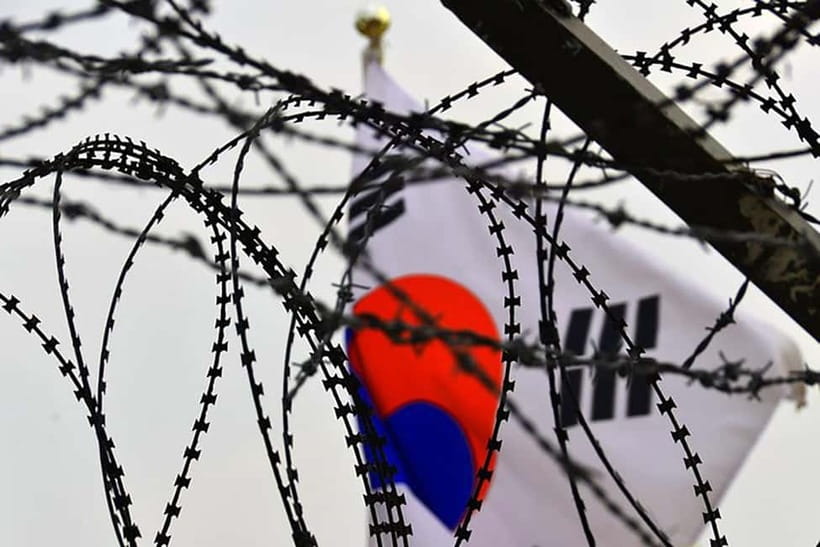
- Dora Observatory offers the big view: On a clear day, you can look across the border toward North Korea.
- The day begins and ends in central Seoul: Pickup options include Myeongdong, Hongik University Station, and THE PLAZA Seoul, with the return at Seoul City Hall.
- Bring your passport: Every participant must carry a passport, military ID, or Korean alien registration card.
- Lunch is your responsibility: You can bring food or buy something at one of the stops, but no formal lunch break is included.
Why this DMZ tour is different
Many visits to the Demilitarized Zone focus on military sites, lookout points, and the mechanics of crossing into a tightly controlled area. This trip adds a human voice. The North Korean defector meeting gives you a chance to ask about life beyond the border and the difficult process of escape.
That extra hour or so changes the tone of the day. You are not just looking at fences and distant hills. You are hearing how political division affects a real person and, in some cases, that person’s family.
The tour costs about $50 per person, which is a fair price for seven hours of transport, an English-speaking guide, admission fees, and several DMZ sites. You could spend less by arranging individual transport, but the restricted border area is not simple to visit independently. The value here comes from having transportation, entry arrangements, timing, and explanations handled together.
I would book this for a first visit to the DMZ, especially if you want context rather than a quick photo stop. If your main goal is only to see the border from a viewpoint, a shorter outing may be enough.
More DMZ and border tours:
- Best DMZ Tour Korea from Seoul (Red Suspension Bridge Optional)
★ 5.0 · 41,422 reviews - DMZ Tour: 3rd Tunnel, Option(Suspension Bridge, Boat) from Seoul
★ 5.0 · 21,373 reviews - DMZ tour south Korea from Seoul (NK experience hall, defector)
★ 5.0 · 20,599 reviews
Getting from Seoul to the border
The bus ride from Seoul takes about one hour each way. That is a sizable part of the seven-hour schedule, but it also makes the trip easy for visitors staying in the capital.
You can choose among three starting points:
- Hotel Skypark Myeongdong 3
- Hongik University Station Exit 3
- THE PLAZA Seoul, Autograph Collection
The exact meeting point depends on the option you book. The tour finishes at Seoul City Hall, not at your hotel, so plan the rest of your day around that return point.
Transportation is air-conditioned, which matters on a long day with several stops. The trip is guided in English, and timing is handled closely. Guides such as Katie, AJ, Lily, and Miel have been praised for keeping the group moving without making the day feel rushed.
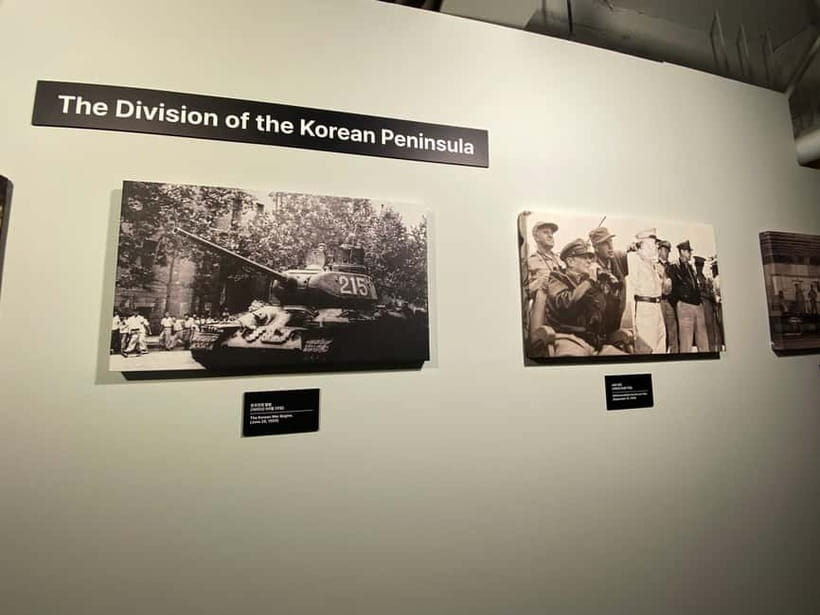
Do not assume you can sleep through the bus ride and catch up later. The guide uses travel time to explain the Korean War, the division of the peninsula, and what you are seeing at the border. That background helps the later stops make sense.
Imjingak Peace Park and Mangbaedan
Imjingak Peace Park is the first major stop and a useful introduction to the emotional side of the border. It is not simply a military site. The park includes monuments and places connected with families separated by the division of Korea.
Mangbaedan is especially tied to those separated families. It is a place where people from North Korea can remember relatives they may never see again. Your guide explains why these sites matter, rather than leaving you to read a few signs and move on.
You’ll have about an hour in the Imjingak area. That gives you time to walk around, listen to the introduction, and look at the memorial features. There are also places to buy food and drinks here, making it one of the practical points to handle lunch.
The park can feel more commercial than solemn in places. Shops and market stalls are part of the stop, and one attendee found the farmers market too geared toward tourists. I would treat it as a mixed-use visitor area: meaningful memorials sit alongside souvenirs, snacks, and casual sightseeing.
Freedom Bridge and the divided family story
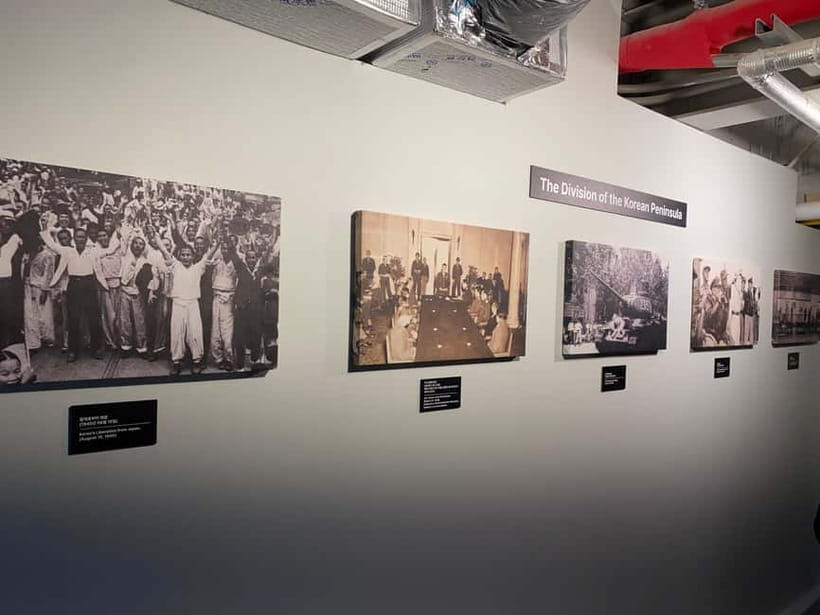
Freedom Bridge is another place where the human cost of the division comes into view. The bridge is connected with exchanges and hopes of return, and it helps you picture the border as more than an abstract line on a map.
This part of the visit is guided, so listen closely to the explanation. The details can be easy to miss if you simply walk to the end, take a few pictures, and follow the group back.
Photography rules vary across the DMZ. You are not allowed to photograph certain areas, and your guide will tell you when cameras must stay down. This can disappoint visitors hoping to document every moment, but the restrictions are part of visiting an active military zone.
The best approach is to keep your passport ready, follow instructions, and enjoy the places where photography is allowed. Do not wander ahead for a better angle. The border is not a normal sightseeing district.
A few more trips of this kind worth comparing:
- Seoul: DMZ Tour with Optional Suspension Bridge
★ 4.8 · 5,277 reviews - Signature DMZ Tour: Exclusive Defector Talk & Suspension Bridge
★ 5.0 · 4,459 reviews - Thrilling Korean DMZ 3rd Tunnel Tour from Seoul + Red Bridge Rush
★ 5.0 · 3,097 reviews - DMZ Past and Present: Korean Demilitarized Zone Tour from Seoul
★ 5.0 · 2,481 reviews
The North Korea Experience Hall and defector conversation
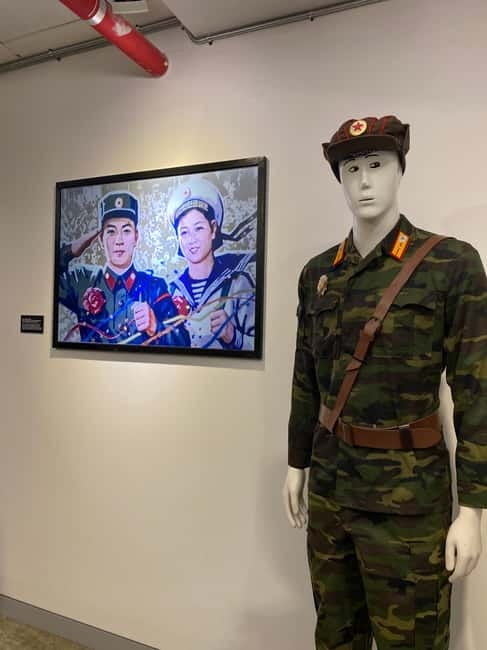
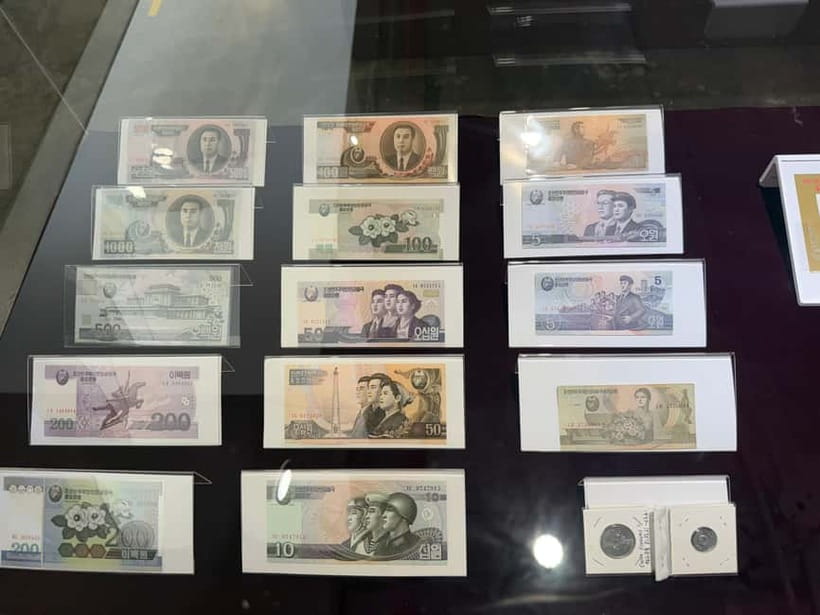
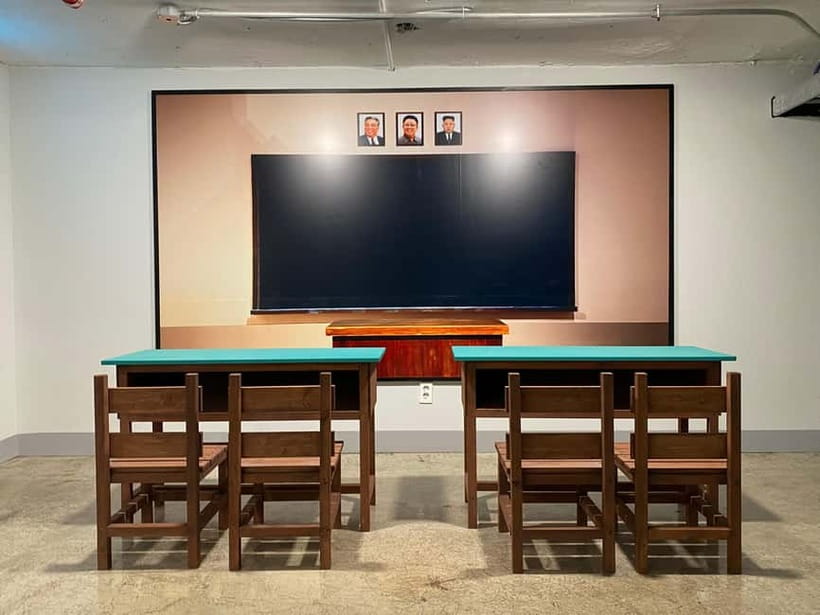
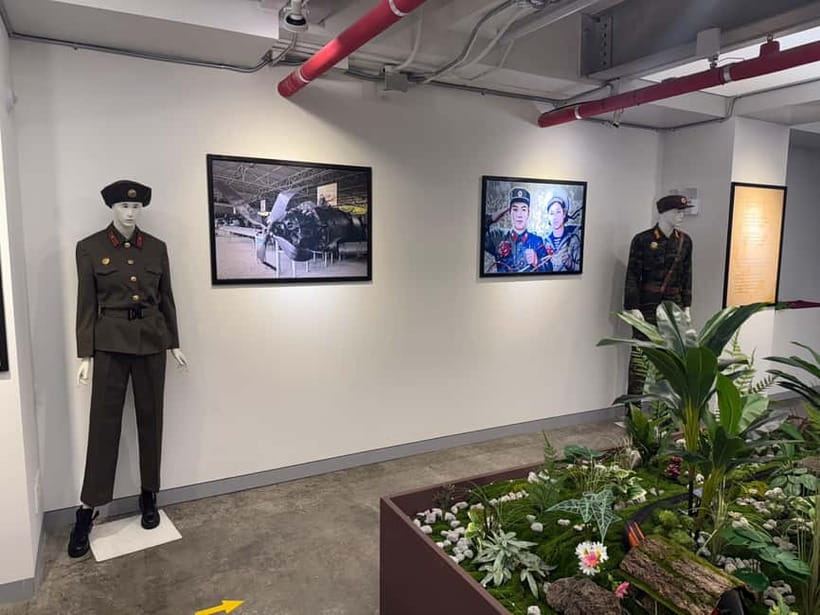
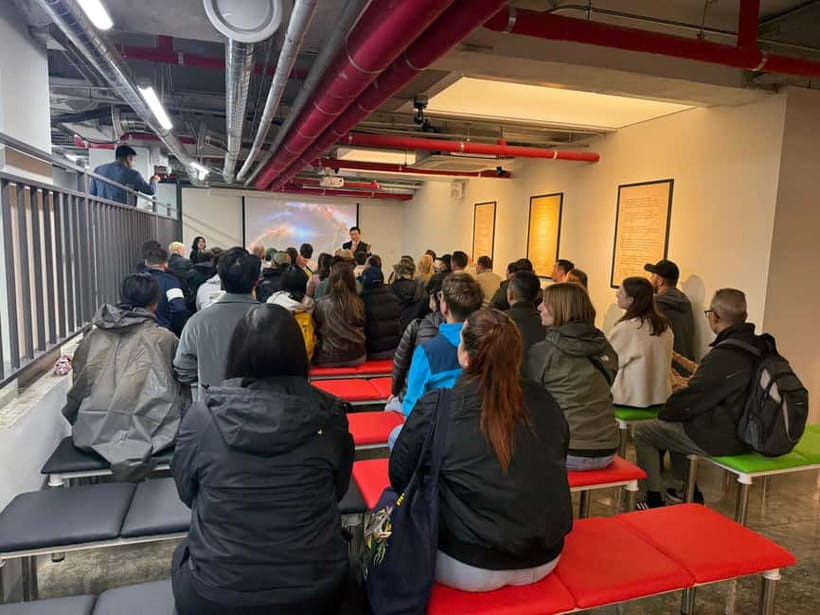
The North Korea Experience Hall supplies the part that gives this outing its title. You watch a film of about ten minutes about North Korean defectors before meeting a defector for an interview and question period.
The format is important. You are not promised a long personal lecture with a fixed story from beginning to end. The session is built around an interview and audience questions, so the quality depends partly on the questions asked and on the speaker’s presentation.
Some people have found the meeting deeply affecting, especially when the speaker described escaping and later bringing children out through a broker in China. Others wanted a clearer opening explanation of ordinary life in North Korea and found the answers less satisfying.
I recommend preparing a few thoughtful questions before you go. Ask about family separation, education, work, leaving North Korea, or adjusting to life in South Korea. Questions that invite a personal answer are likely to produce more useful conversation than broad political questions.
The session also calls for a little care. A defector is sharing an intensely personal experience, not performing a simple tourist attraction. Listen respectfully, avoid treating escape as an adventure story, and remember that one person cannot represent every life in North Korea.
This is the most distinctive part of the day, but it is also the least predictable. If the speaker is warm and open, the meeting can become the emotional center of the trip. If the exchange stays short or the questions feel random, it may seem less substantial than expected.
Entering the Third Infiltration Tunnel
The Third Tunnel of Aggression is the most physical stop. North Korea dug this passage into the South, and you enter part of it on foot.
The scheduled visit lasts about one hour. The tunnel gives you a direct sense of how much work went into creating a covert route beneath the border. Rather than viewing the DMZ only from a bus or platform, you walk through a space built for infiltration.
Be ready for a walk that requires some effort. The information supplied for this tour does not give a detailed accessibility description, so anyone with mobility concerns should confirm conditions before booking. Comfortable shoes are a sensible choice.
The tunnel is also not the best place for a leisurely photo session. Military rules apply, and your guide will explain where photography is prohibited. The experience works best when you pay attention to the construction and the guide’s explanation instead of treating the tunnel as a quick underground novelty.
For many people, this is the clearest physical reminder that the border is not just a political dispute. It is a heavily controlled zone shaped by real military planning.
Dora Observatory and the view toward North Korea
Dora Observatory provides the visual high point of the outing. From the lookout, you can look across the DMZ toward North Korea.
The quality of the view depends on conditions. Haze can soften the distance, so you may see less than you hoped. Even on a clear day, the view is about scale and separation rather than close-up detail.
Your guide points out features across the border and explains the terrain. At times, the viewing area can make it hard for shorter people to hear or see over the crowd. One guide, Dora, dealt with this by taking a few people aside and drawing a simple picture of the topography so they could understand the view.
That small detail says something useful about the guiding style on this tour. The best guides do not merely repeat a speech. They notice when someone is lost and explain the scene in another way.
You’ll have about 50 minutes at the observatory. That is enough time to hear the explanation, look through the viewing area, and take permitted photographs. Keep your expectations realistic: the observatory is valuable for what it represents, not because North Korea will appear in crisp detail.
Unification Village and the final stop
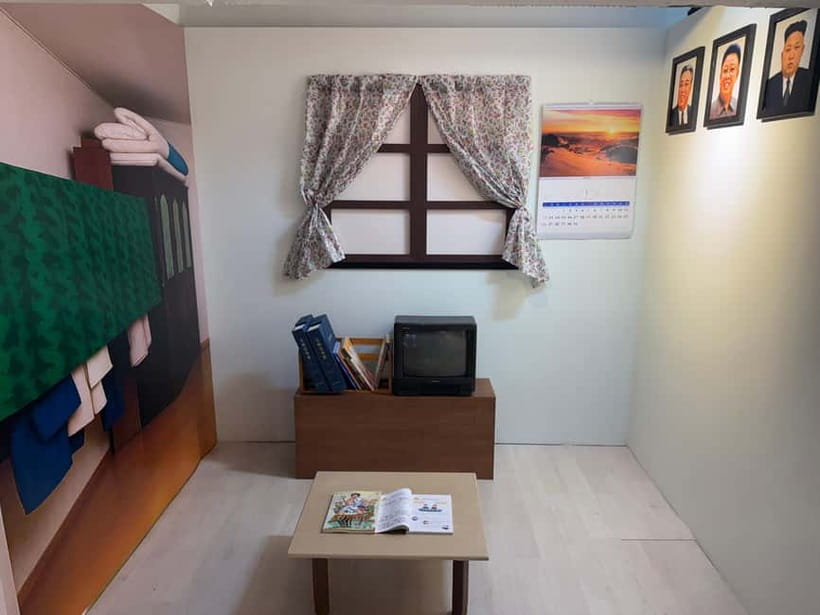
The itinerary ends near Unification Village, with about 15 minutes scheduled. This is a short stop, so think of it as a final glimpse rather than a full village visit.
The village adds another layer to the border story. People live and work in areas close to the DMZ, under conditions shaped by security rules and the border economy. The stop also gives you a final chance to ask your guide about what you have seen.
Because only 15 minutes are allocated, do not expect a long walk or extensive independent exploration. Stay close to the group and use the time efficiently.
The bus then returns to Seoul, taking about an hour. The official finish is Seoul City Hall. You may be tired by then, but the schedule gives you a full day without adding a late-night return.
Guides and the pace of the day
The guides receive some of the strongest praise connected with this experience. AJ is described as informed, funny, and good at making the subject approachable. Katie is praised for energy, warmth, and careful scheduling. Lily receives credit for answering questions and keeping the day efficient, while Miel combines humor with strong historical explanations.
Other guides named in connection with the trip include Yoon, Sadie, Erica, Grace, Chloe, Lisa, and Dora. The common thread is not a single scripted personality. It is the ability to explain a serious subject in clear English while keeping the group on time.
That matters because the DMZ can feel confusing. You are moving through memorials, military sites, an underground tunnel, a viewing platform, and a village in one day. A weak guide would make this feel like a string of unrelated stops. A good guide connects them.
The pace is fairly full, but the stops are not all long. You usually have enough free time to look around, yet not so much that the day drifts. If you prefer slow, independent sightseeing, this may feel organized to the point of restriction. If you want to see several major sites without solving the transport puzzle yourself, the structure is a major benefit.
Lunch, the optional suspension bridge, and other practical points
No meal is included. Bring your own food or buy something at one of the two stops with cafes and shops. You will need to eat during your free time, so do not wait for a formal lunch break to appear.
The suspension bridge can be added as an option, but only on the earlier tour departure. It may add around 90 minutes to the day and is not central to the DMZ experience. I would choose it only if you specifically want the bridge and are comfortable with a longer outing.
Your passport is mandatory. A military ID or Korean alien registration card is also accepted. This is not a detail to leave in your hotel room, since the tour enters a controlled military area.
Free cancellation is available up to 24 hours before departure, and you can reserve now and pay later. If military conditions or another unexpected issue causes cancellation, the operator may substitute a DMZ-related route rather than refunding the trip. That policy is worth understanding before you book.
Who should book this $50 DMZ experience?
I would recommend it to you if you want a well-organized first visit with more than a lookout and a souvenir stop. The combination of Imjingak, Freedom Bridge, the Third Tunnel, Dora Observatory, Unification Village, and the defector session gives you both physical sites and personal context.
It is also a strong choice for anyone interested in modern Korean history, divided families, military borders, or current affairs. The guides help make difficult material understandable without turning the day into a lecture.
You may want another option if you need a relaxed schedule, a guaranteed full meal, extensive photography, or a highly structured defector presentation. The meeting is valuable but not fully predictable, and military rules can limit what you see and photograph.
At $50, the tour offers good value for a full seven-hour day. Just bring your passport, wear practical shoes, pack food, and keep your expectations focused on understanding the border rather than collecting perfect photographs.
FAQ
How long does the DMZ tour last?
The experience lasts seven hours, including about one hour of travel from Seoul and about one hour for the return journey.
Where does the tour start?
The available starting points are Hotel Skypark Myeongdong 3, Hongik University Station Exit 3, and THE PLAZA Seoul, Autograph Collection. The exact meeting point depends on the option booked.
Where does the tour finish?
The tour finishes at Seoul City Hall. Hotel drop-off is not included.
Is the North Korean defector meeting included?
The experience includes a visit to the North Korea Experience Hall, a short film about defectors, and an interview and question period with a North Korean defector.
Do I need to bring my passport?
Yes. Every participant must bring a passport. A military ID or Korean alien registration card is also accepted.
Is lunch included?
No. Food and drinks are not included. You can bring food or buy something at cafes and shops during the scheduled free time.
Can I add the suspension bridge?
The suspension bridge is an optional addition available only with the earlier departure. It can add about 90 minutes to the tour.
Just added around Seoul
- Seoraksan National Park & Nami Island★ 4.5 · 3 reviews
- Strawberry Picking, Winter Sled with Eobi Ice Valley from Seoul★ 4.5 · 3 reviews
- Seoul Full Day small group Tour★ 5.0 · 3 reviews
- Rice Wine Tasting with Sommelier – Finest Makgeolli (& Soju)★ 5.0 · 3 reviews
- Majang Meat Market Experience: Private Tour with Han-woo Beef BBQ★ 5.0 · 3 reviews
- Seoul Korean BBQ Dinner Experience with Secret Food Tours★ 5.0 · 3 reviews
- Seoul: Alpaca World and Nami Island (with Garden / Railbike)★ 5.0 · 3 reviews
- Max Out Seoul: Must Visit City Highlights Panoramic Day Tour★ 5.0 · 3 reviews
DMZ & Border Tours, compared.

Best DMZ Tour Korea from Seoul (Red Suspension Bridge Optional)
Read our review →
DMZ Tour: 3rd Tunnel, Option(Suspension Bridge, Boat) from Seoul
Read our review →
DMZ tour south Korea from Seoul (NK experience hall, defector)
Read our review →
DMZ Insider Tour: 3rd Tunnel, NK Defector Meet & Red Bridge
Read our review →

Signature DMZ Tour: Exclusive Defector Talk & Suspension Bridge
Read our review →
Thrilling Korean DMZ 3rd Tunnel Tour from Seoul + Red Bridge Rush
Read our review →DMZ Past and Present: Korean Demilitarized Zone Tour from Seoul
Read our review →Browse the lists this tour appears in