
Reviewed · HANBOK & PALACE EXPERIENCES
Seoul: Gyeongbokgung Palace Half day Tour
Royal Seoul begins at the gate. This two-hour walk through Gyeongbokgung Palace brings the Joseon Dynasty to life through English explanations, architectural details, and stories behind the animal statues around the grounds. I like the focused route, which covers the palace’s most important buildings without asking you to spend a full day on one site.
I also like that admission is included in the $35 price and that you can ask questions throughout the visit. Guide Gabriela made a particularly kind impression by going to find a participant who had walked to the wrong meeting point. The main drawback is the fixed start: joining after the tour begins is not allowed, so you need to reach the National Palace Museum of Korea on time.
In This Review
- Key Things To Know Before You Book
- Why Gyeongbokgung Palace Matters
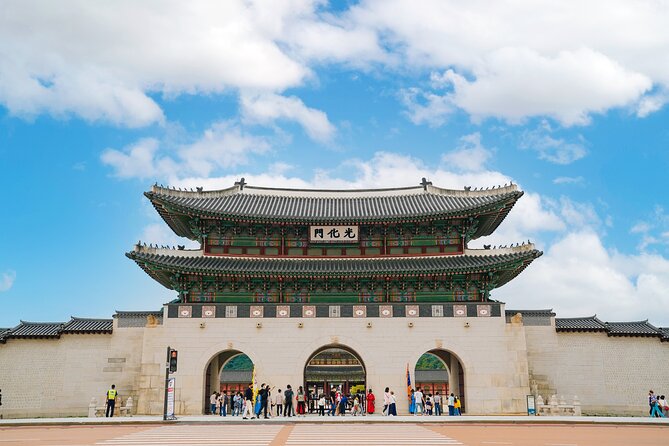
- Starting at Gwanghwamun Gate
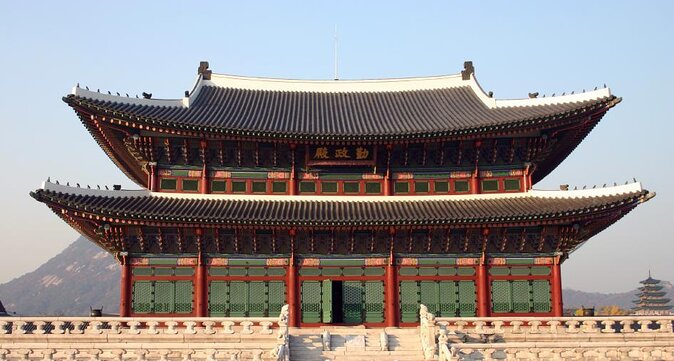
- Geunjeongjeon, The Palace Throne Hall
- Sajeongjeon and the Work of the King
- Gangnyeongjeon and Gyotaejeon, Private Royal Rooms
- Gyeonghoeru Pavilion and the Closing View
- What The $35 Price Really Buys
- Guide Quality and The Human Side of the Visit
- Who Will Get The Most From This Tour
- Smart Planning Before You Go
- Should You Book The Gyeongbokgung Palace Tour?
- FAQ
- How long does the Gyeongbokgung Palace tour last?
- What is included in the price?
- Is the tour offered in English?
- Where does the tour begin?
- Where does the tour end?
- Is Gyeongbokgung Palace open for this tour on Tuesdays?
- How large can the tour group be?
- Can I cancel for a full refund?
Key Things To Know Before You Book
- Six major palace stops in two hours: The route includes Gwanghwamun Gate, Geunjeongjeon, Sajeongjeon, Gangnyeongjeon, Gyotaejeon, and Gyeonghoeru Pavilion.
- English explanations are the main reason to book: You get stories about Joseon kings, palace design, royal rooms, and animal statues that are easy to miss on your own.
- Admission is included: The $35 fee covers entry to Gyeongbokgung Palace, giving the tour good value if you want context rather than a silent walk through the grounds.
- Small minimum, larger possible group: The tour may be canceled if fewer than four people book, while the maximum group size is 20.
- Tuesday is not an option here: Gyeongbokgung Palace is closed on Tuesdays, when the operator offers a Deoksugung night tour instead.
- Meet outside the National Palace Museum of Korea: The start point is at 12 Hyoja-ro, in Seoul’s Jongno District, and the tour ends at 7-25 Tongui-dong.
Why Gyeongbokgung Palace Matters
Gyeongbokgung Palace was built in 1394 and became the main palace of the Joseon Dynasty. It is the oldest and most important of Seoul’s five major palaces, making it one of the clearest places to connect modern Seoul with the country’s royal past.
That importance is easy to miss if you simply walk through the gates, take a few photos, and leave. The palace is large enough to feel impressive, but its meaning is spread across separate halls, offices, sleeping quarters, courtyards, and ceremonial spaces. An English-speaking guide gives those buildings a purpose.
The palace also carries the scars of the Japanese colonial period, when much of it was damaged. Restoration work continues to protect and rebuild its former character. That makes the site more than a polished royal setting. You are seeing both an architectural landmark and a place tied to Korea’s difficult past.
I find the animal statues especially useful as a guide theme. They appear throughout the palace, and a guide can explain why they were placed there and what they represent. Those small details often stay with you longer than a list of dates.
More hanbok and palace experiences:
- Seoul: Gyeongbok Palace, Bukchon Village, and Gwangjang Tour
★ 4.9 · 2,321 reviews - Best Seoul City Tour (Gyeongbokgung Palace,Insadong,Namsan Tower)
★ 5.0 · 1,647 reviews - Small-Group Royal Palace and Seoul City Tour (hotel pick-up)
★ 5.0 · 1,474 reviews
Starting at Gwanghwamun Gate
Your meeting point is the National Palace Museum of Korea, at 12 Hyoja-ro. From there, the visit begins at Gwanghwamun Gate, the grand south gate of Gyeongbokgung Palace.
Gwanghwamun is the right place to begin because it introduces the palace as a planned royal center rather than a collection of isolated buildings. The guide can set the scene here, explain the palace’s role, and connect its construction in 1394 to the start of the Joseon period.
You should pay close attention to the meeting instructions sent by email or WhatsApp. The operator requires your name and a contact number, or a working messaging service such as WeChat or Line. If you provide a wrong number or one that does not work in Korea, the operator says it is not responsible for missed tours or related changes.
This is also the point where time matters. The group will not wait for late arrivals, since joining after the tour has started is not allowed. I would arrive early enough to find the museum and gate area without rushing.
Geunjeongjeon, The Palace Throne Hall
The route continues to Geunjeongjeon, the main throne hall. This is the ceremonial heart of the palace, where royal authority was displayed through formal events and court rituals.
A guide adds value here by explaining how the building functioned, not just pointing out its roofline. You can ask about the kings of Joseon, the design of the hall, and the way the palace expressed rank and power through space.
The tour description promises stories about famous Joseon kings, so this is one of the places where those stories should fit naturally. I would expect the guide to connect the hall’s grand appearance with the daily and ceremonial duties of the monarchy.
The tradeoff is time. Two hours is enough for an organized introduction, but not enough for every corner of the palace. You will get a clear route through the major buildings, not a slow architectural study of every structure.
Sajeongjeon and the Work of the King
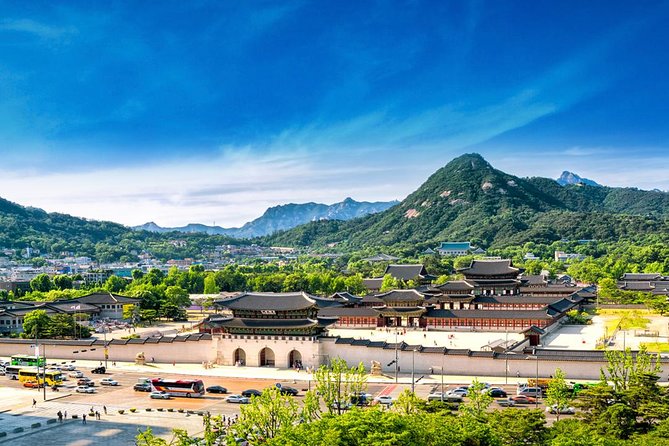
Sajeongjeon was the king’s office space. This stop shifts the focus from ceremony to government, showing that the palace was also a working center where decisions were made.
That contrast is one of the strongest parts of the itinerary. Geunjeongjeon represents public authority and royal display. Sajeongjeon helps you picture the less theatrical work of ruling Joseon.
The English explanation matters here because the building itself may not tell you how it was used. Without context, a royal office can look like another handsome hall. With a guide, it becomes part of a larger picture of how the court operated.
If you enjoy history and architecture, this is a good point to ask questions. The tour specifically encourages you to ask the professional guide about Gyeongbokgung Palace. Since the group can include up to 20 people, you may need to speak up when the guide pauses.
A few more trips of this kind worth comparing:
- Best DMZ Tour Korea from Seoul (Red Suspension Bridge Optional)
★ 5.0 · 41,422 reviews - DMZ Tour: 3rd Tunnel, Option(Suspension Bridge, Boat) from Seoul
★ 5.0 · 21,373 reviews - DMZ tour south Korea from Seoul (NK experience hall, defector)
★ 5.0 · 20,599 reviews - Seoul: DMZ Tour with Optional Suspension Bridge
★ 4.8 · 5,277 reviews
Gangnyeongjeon and Gyotaejeon, Private Royal Rooms
Gangnyeongjeon was the king’s bed-chamber, while Gyotaejeon served as the queen’s bed-chamber. These rooms offer a more personal view of palace life after the formal halls and government offices.
I like this part of the route because it rounds out the picture of royal life. A palace was not only a place for ceremonies and official work. It was also a home, though one governed by strict court rules and hierarchy.
The names and uses of these buildings are easy to forget when you explore alone. An English-speaking guide can give you a simple framework: public ceremony, government work, royal rest, and the queen’s private quarters. That structure helps you remember what you saw after the visit ends.
Do not expect a full account of every royal resident or every room. The tour lasts about two hours, and the published route names only the principal buildings. Its strength is a well-shaped introduction rather than a complete palace study.
Gyeonghoeru Pavilion and the Closing View
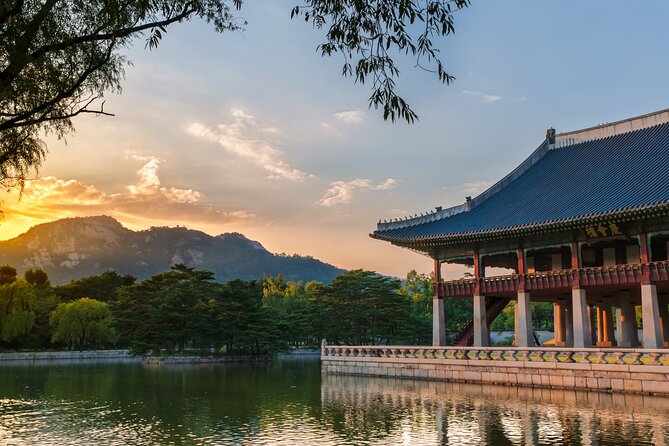
The final named stop is Gyeonghoeru Pavilion, described as an event hall. Its role brings the tour back to public occasions, after you have seen the king’s working and sleeping spaces.
This is a useful ending because it returns to the palace’s ceremonial side. The route moves from the entrance and royal authority through administration and private rooms, then finishes with a building associated with events.
At this point, the guide may also return to the palace’s architecture and animal figures. Those themes run through the whole visit and help connect the individual stops. You are not simply collecting six building names. You are seeing how the palace was organized around royal power, work, private life, and ceremony.
The stated end point is 7-25 Tongui-dong in Jongno District. The tour does not finish at the same address listed for the start, so check the final location before planning your next stop.
What The $35 Price Really Buys
At $35 per person, this is not the cheapest way to enter a palace. The value depends on how much you want from the visit.
If you only want to walk through the grounds and take photographs, you may prefer visiting without a guide. If you want the buildings explained in English, the fee is easier to justify because admission is included and the route is organized around the palace’s central sights.
The strongest value is the information you would likely miss alone: the stories of Joseon kings, the purpose of each major building, the palace’s architectural details, and the meaning of the animal statues. Those explanations turn a large complex into a readable place.
The tour also helps if you have limited time in Seoul. Two hours gives you a focused introduction without taking an entire morning or afternoon. I would pair it with other Jongno sights only if you leave enough time to reach the meeting point and finish at the separate Tongui-dong address.
The group can reach 20 people, so the experience may not feel personal at the upper limit. On the other hand, fewer than four participants can lead to cancellation. That creates a practical uncertainty for anyone building a tightly scheduled Seoul itinerary.
Guide Quality and The Human Side of the Visit
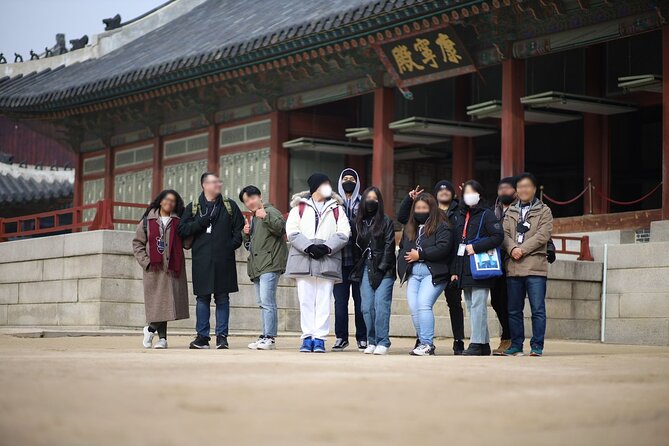
The clearest praise attached to this experience concerns guide Gabriela. She was described as kind, offered insight that would have been missed on a self-guided visit, and went out of her way to locate someone who had gone to the wrong meeting point.
That detail matters because palace tours depend on more than memorized facts. Clear directions, patience, and willingness to answer questions can make a short visit much easier.
The tour promises detailed explanations in English and invites questions about the palace. I would book it if you want to talk through what you are seeing rather than listen to a short script and move on.
Still, no guide can solve every practical problem. You must leave a usable Korean contact number or messaging account, follow the meeting details, and arrive before the start. The operator also prohibits recording and filming, so plan to listen and take mental notes rather than make a video record.
Who Will Get The Most From This Tour
This experience suits you best if:
- You want a clear English introduction to Joseon history.
- You have about two hours for Seoul sightseeing.
- You care about architecture but do not want to research every building beforehand.
- You prefer asking questions during a visit.
- You want palace admission included in one price.
- You are comfortable with a group tour of up to 20 people.
It may be less suitable if you want a private experience, extensive time for photography, or a completely flexible arrival. A private tour estimate must be requested by email, so the advertised $35 price applies to the shared experience rather than a private visit.
Families and most people who can use public transportation can participate, according to the tour information. Pets are not allowed, and there is no special place to leave them. The experience also depends on good weather, so poor conditions can lead to a new date or a full refund.
Smart Planning Before You Go
Check the day carefully. Gyeongbokgung Palace is closed on Tuesdays, and this tour does not operate there that day. The operator offers a Deoksugung night tour as an alternative.
Keep your phone available before the visit because the meeting place and time are communicated by email or WhatsApp. Save the contact details and make sure the number you provide works in Korea.
I would not schedule an important timed activity immediately after the tour. The duration is approximately two hours, but group movement, questions, and the separate ending point can affect your plans.
The cancellation terms are generous if you act early. You can cancel at least 24 hours before the local start time for a full refund. Changes or cancellations inside that 24-hour window are not accepted, and the amount paid is not refunded.
If the minimum group size is not met, or if bad weather forces cancellation, you are offered another date, another experience, or a full refund. That is fair, but the minimum of four means you should keep a backup plan during a short Seoul stay.
Should You Book The Gyeongbokgung Palace Tour?
I would book this tour if Gyeongbokgung Palace is on your Seoul list and you want more than attractive buildings. The route covers the palace’s essential royal, administrative, private, and ceremonial spaces, while the English explanations give you a useful way to understand what you are seeing.
The $35 price makes sense for a first visit, especially with admission included and a guide available for questions. Gabriela’s personal help in finding a misplaced participant is also a good sign for anyone who values calm, attentive support.
Skip it if you prefer wandering alone, need a private schedule, or plan to visit on Tuesday. Otherwise, arrive early at the National Palace Museum of Korea, keep your phone on, and give yourself two hours to meet Joseon Seoul one important building at a time.
FAQ
How long does the Gyeongbokgung Palace tour last?
The tour lasts approximately two hours.
What is included in the price?
Admission to Gyeongbokgung Palace is included in the $35 per-person price.
Is the tour offered in English?
Yes. The experience provides detailed explanations in English.
Where does the tour begin?
The meeting point is the National Palace Museum of Korea, 12 Hyoja-ro, Jongno District, Seoul, South Korea.
Where does the tour end?
The listed end point is 7-25 Tongui-dong, Jongno District, Seoul, South Korea.
Is Gyeongbokgung Palace open for this tour on Tuesdays?
No. Gyeongbokgung Palace is closed on Tuesdays. A Deoksugung night tour can be booked instead.
How large can the tour group be?
The maximum group size is 20 people. The tour may be canceled if fewer than four people participate.
Can I cancel for a full refund?
Yes. You can cancel at least 24 hours before the local start time for a full refund. Cancellations or changes made less than 24 hours before the start are not accepted.
Just added around Seoul
- Seoraksan National Park & Nami Island★ 4.5 · 3 reviews
- Strawberry Picking, Winter Sled with Eobi Ice Valley from Seoul★ 4.5 · 3 reviews
- Seoul Full Day small group Tour★ 5.0 · 3 reviews
- Majang Meat Market Experience: Private Tour with Han-woo Beef BBQ★ 5.0 · 3 reviews
- Seoul Korean BBQ Dinner Experience with Secret Food Tours★ 5.0 · 3 reviews
- Rice Wine Tasting with Sommelier – Finest Makgeolli (& Soju)★ 5.0 · 3 reviews
- Max Out Seoul: Must Visit City Highlights Panoramic Day Tour★ 5.0 · 3 reviews
- Seongsu-dong Walking Tour: K-Pop, Culture, Cheer, Friends & Relax★ 4.5 · 3 reviews
Hanbok & Palace Experiences, compared.

Gyeongbok Palace, Bukchon Village, and Gwangjang Tour
Read our review →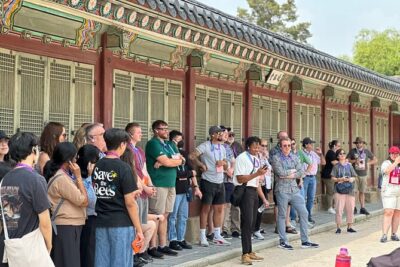
Best Seoul City Tour (Gyeongbokgung Palace,Insadong,Namsan Tower)
Read our review →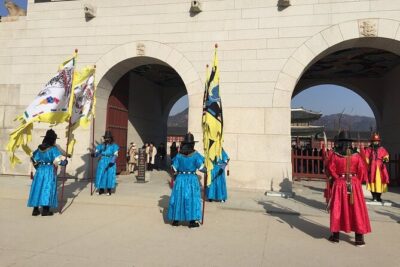
Small-Group Royal Palace and Seoul City Tour (hotel pick-up)
Read our review →
Seoul City Sightseeing Tour Including Gyeongbokgung Palace, N Seoul Tower, and Namsangol Hanok Village
Read our review →Gyeongbok Palace, Bukchon Village, and Gwangjang Tour
Read our review →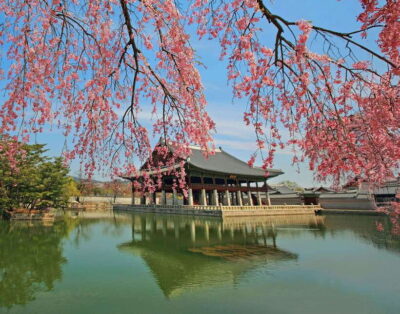
Seoul Highlights: Gyeongbok Palace, Insadong & N Seoul Tower
Read our review →
Seoul City Half Day Tour-Gyeongbok Palace Guard Changing Ceremony
Read our review →Browse the lists this tour appears in