
Reviewed · HANBOK & PALACE EXPERIENCES
Seoul Royal Palace,Bukchon Hanok Village & Gwangjang Market Feast
Seoul’s past and present meet in three busy hours. This tour gives you Bukchon Hanok Village, the grand grounds of Gyeongbokgung Palace, and the food stalls of Gwangjang Market without making you solve Seoul’s transport puzzle alone. I like the mix of royal sights and everyday food, and the $29 price is hard to beat for a guided outing with palace admission and an air-conditioned vehicle included. The main caution is the stop at the Korean ginseng center, which can feel sales-oriented rather than like a cultural museum.
The guides are a major strength. Eva receives repeated praise for her warmth and clear explanations, while Kelly is noted for strong storytelling and keeping the whole group engaged. Sunny also earned high marks for giving a small group extra attention. Still, you should know that Tuesday follows a different plan: Changdeokgung Palace and Insadong replace Gyeongbokgung Palace and the Guard Changing Ceremony.
In This Review
- The five details that shape your day
- Starting near Myeongdong or Seoul City Hall
- Bukchon Hanok Village and its quiet-looking lanes
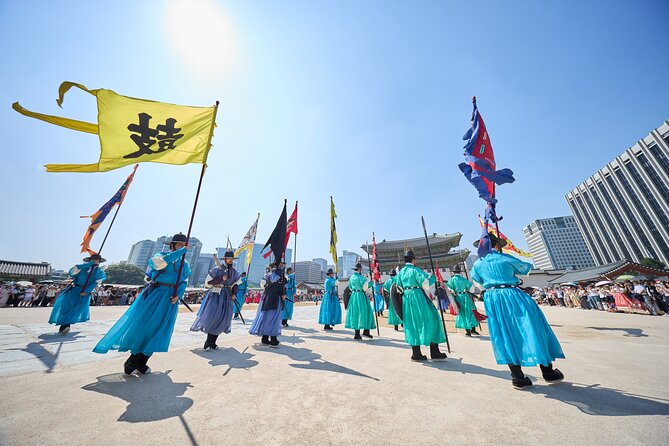
- Gyeongbokgung, the royal centerpiece
- Tuesday changes the palace plan
- The ginseng center: useful introduction or shopping stop?
- Gwangjang Market and the cost of eating
- What the $29 price really buys
- The guides make the difference
- Who should book this Seoul tour?
- My booking verdict
- FAQ
- How long does the Seoul palace and market tour last?
- Where does the tour start?
- Is palace admission included?
- Does the tour include the Guard Changing Ceremony?
- Is food at Gwangjang Market included?
- What happens on Tuesdays?
- Where does the tour finish?
The five details that shape your day
- Bukchon begins the tour with old Seoul: You get about an hour among traditional hanok homes and narrow lanes.
- Gyeongbokgung includes the Guard Changing Ceremony: On every day except Tuesday, palace admission is included.
- Tuesday is not a lesser tour, but it is a different one: You visit Changdeokgung and Insadong instead.
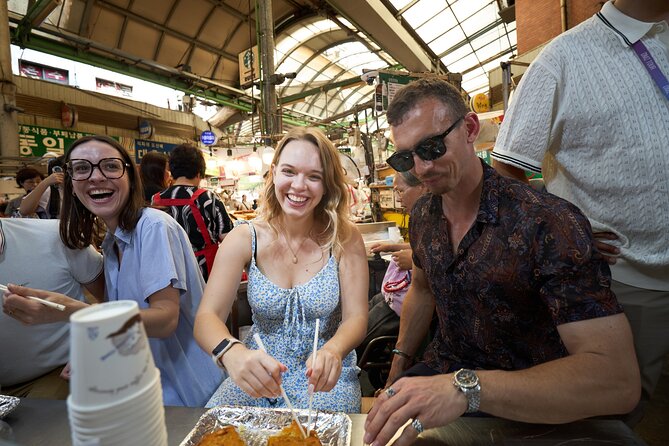
- Gwangjang Market is the food finale: You can try bindaetteok, mayak gimbap, tteokbokki, and other Korean market dishes, but food costs extra.
- The price is unusually low for a guided half-day: At $29, the tour offers transport, an English-speaking guide, and palace entry.
- The ginseng stop needs a practical warning: Treat it as an introduction to a Korean specialty, not a required shopping stop.
Starting near Myeongdong or Seoul City Hall
You have two listed meeting options. The first is at Myeongdong Subway Station Exit 8, a useful choice if you are staying near Myeongdong’s hotels, shops, and restaurants. The second is at Seoul City Hall Subway Station Exit 6.
You join the tour bus at one of these points and spend the day with an English-speaking guide. The vehicle is air-conditioned, which matters in Seoul’s hot summer weather or on a cold winter morning. The group can reach as many as 100 people, though some departures may be much smaller. A few people have even found themselves on a nearly private outing, but you should not book expecting that.
The tour lasts about three and a half hours. That is enough time to sample several important parts of central Seoul, but not enough for a leisurely palace study or a long meal. Think of it as a useful first orientation, not a full archaeological or food tour.
One small practical issue is worth noting. There was a reported mix-up at the beginning of one outing, though the guide and operator found a solution. Arrive early, confirm your meeting point, and keep the mobile ticket easy to open on your phone.
More Market Visits in Seoul
- Seoul Street Food Market Tour
★ 5.0 · 1,226 reviews - Local Home Korean Cooking Class & Market Adventure in Seoul
★ 5.0 · 1,024 reviews - Seoul: Night Market Food Tour with Local Guide
★ 4.9 · 943 reviews
Bukchon Hanok Village and its quiet-looking lanes
Bukchon Hanok Village is an appealing first stop because it looks and feels different from the commercial center. The area is known for hundreds of traditional hanok houses, many connected with the Joseon period. Their tiled roofs, wooden details, and sloping lanes give you a quick sense of older Korean housing.
You receive about an hour here, with no separate admission fee. That timing is useful for first-time visitors. You can see the main character of Bukchon, take photos, and listen to the guide explain how the neighborhood fits into Seoul’s past without spending half a day wandering and wondering which lanes are worth your time.
The village is still a lived-in neighborhood, not a theme park. Keep your voice down and follow the guide’s instructions about photography. The most scenic alleys can involve slopes and uneven walking, so comfortable shoes are a good idea.
I especially like placing Bukchon before the palace. The hanok lanes give you a close, human-scale view of Korean tradition. Gyeongbokgung then expands that picture into the formal world of kings, gates, courtyards, and ceremonies.
The drawback is that one hour passes quickly. If you want quiet photography, detailed architectural study, or time inside craft shops, you will probably want to return on your own. This guided visit is more about getting your bearings and seeing the area’s key character.
Gyeongbokgung, the royal centerpiece
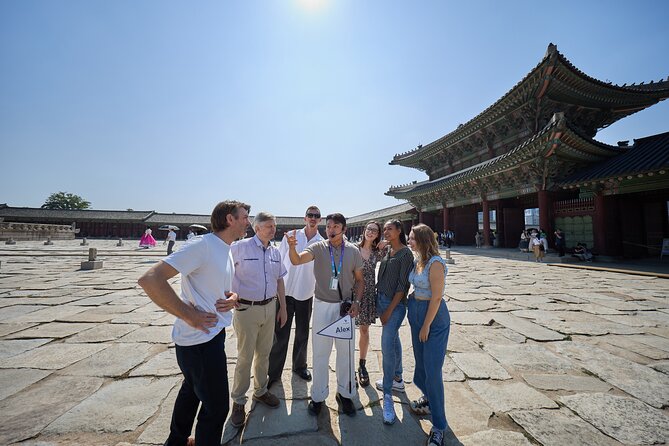
On every day except Tuesday, the tour continues through Gwanghwa Square and past Gwanghwamun Gate before entering Gyeongbokgung Palace. Gwanghwa Square is a broad public space in central Seoul, useful for photos and a quick look at how modern Seoul frames its older monuments.
Gwanghwamun Gate is the dramatic front door to Gyeongbokgung. The Guard Changing Ceremony takes place here as a reenactment of a royal-era ritual, with colorful uniforms and formal movements. It is a visual event, so have your phone or camera ready, but remember that crowds and viewing positions can affect what you see.
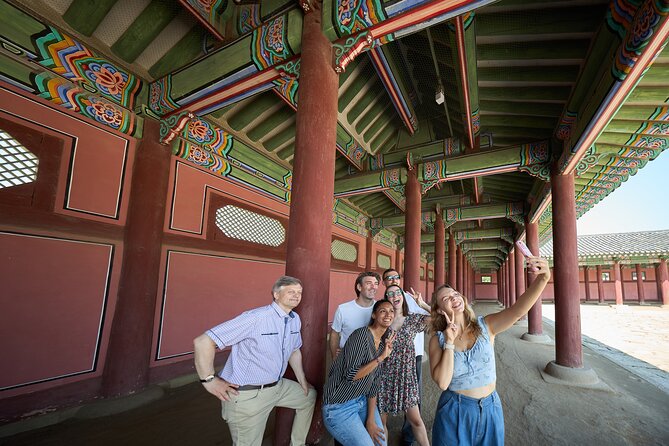
The palace itself is the largest and grandest of the Joseon royal complexes. Built more than 600 years ago, it spreads across gates, halls, courtyards, and open grounds. The tour allows about an hour and includes admission, giving you enough time to see the main royal setting and hear the basic story behind it.
This is the part of the day most likely to satisfy visitors who want classic Seoul photographs. The architecture is formal and spacious, while the surrounding city reminds you that this is not an isolated historic site. You are seeing a royal center inside a modern capital.
Still, one hour is a short visit. You will not explore every hall or understand every layer of palace history. The guide’s storytelling becomes especially valuable here. Kelly is praised for holding attention with clear stories, and Eva receives similar praise for explaining what you are seeing in an approachable way.
The tour also passes by the Blue House, Korea’s former Presidential residence, with Bugaksan Mountain behind it. This is a pass-by rather than a full visit, so consider it a photo opportunity and a quick piece of modern political history, not a museum stop.
Tuesday changes the palace plan
Tuesday follows a separate route. Instead of Gyeongbokgung, Gwanghwamun Gate, and the Guard Changing Ceremony, you visit Changdeokgung Palace and Insadong.
Changdeokgung was built in 1405 and is listed as a UNESCO World Heritage Site. Its buildings are known for working with the natural setting rather than imposing a strict formal plan. That gives Tuesday’s palace visit a different mood from Gyeongbokgung’s grand front gates and broad ceremonial spaces.
Insadong adds a traditional arts and shopping district to the day. You can expect antique shops, handmade crafts, tea houses, art galleries, and street food. It is a good replacement if you care about crafts and local design, but it is not the same experience as seeing the Guard Changing Ceremony.
Read the Tuesday wording carefully before paying. The tour still covers important Korean culture, but anyone specifically booking for Gyeongbokgung or the guards should choose another day.
More hanbok and palace experiences:
- Seoul: Gyeongbok Palace, Bukchon Village, and Gwangjang Tour
★ 4.9 · 2,321 reviews - Best Seoul City Tour (Gyeongbokgung Palace,Insadong,Namsan Tower)
★ 5.0 · 1,647 reviews - Small-Group Royal Palace and Seoul City Tour (hotel pick-up)
★ 5.0 · 1,474 reviews - Seoul City Sightseeing Tour Including Gyeongbokgung Palace, N Seoul Tower, and Namsangol Hanok Village
★ 5.0 · 1,423 reviews
The ginseng center: useful introduction or shopping stop?
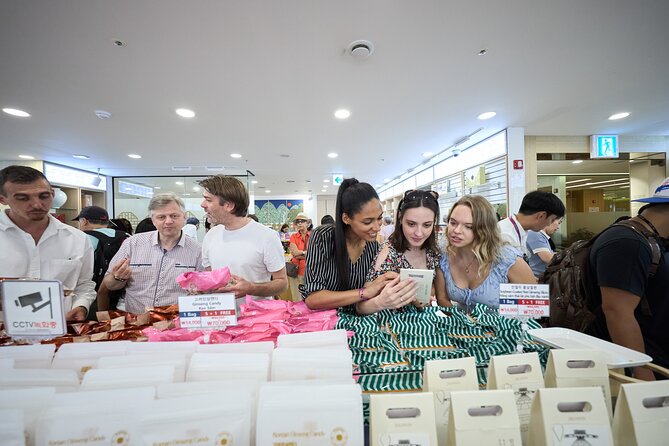
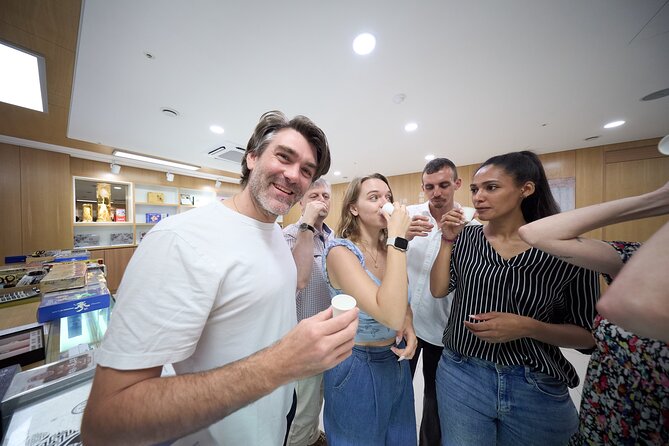
The 30-minute visit to the Cheongha Korean Ginseng Center explains Korean ginseng, known locally as insam, and its traditional health uses. Ginseng has a long place in Korean food, medicine, and gift culture, so the stop can help you understand why it appears in shops and markets throughout the country.
The concern is the commercial tone. One dissatisfied participant called the stop a tourist trap and strongly advised against buying. That is a fair warning, especially if you feel pressure to purchase health products or expensive gift items.
I would treat this stop as optional education. Listen to the explanation, ask questions if you are curious, and do not assume that a sales presentation is the same as independent medical advice. The tour description does not require you to buy anything, and the experience price does not include products.
This stop also affects the tour’s balance. Thirty minutes is a substantial slice of a three-and-a-half-hour outing. If the center is not your kind of place, the time may feel less valuable than another few minutes at the palace or market. If you enjoy learning about Korean specialties and shopping for gifts, you may find it more useful.
Gwangjang Market and the cost of eating
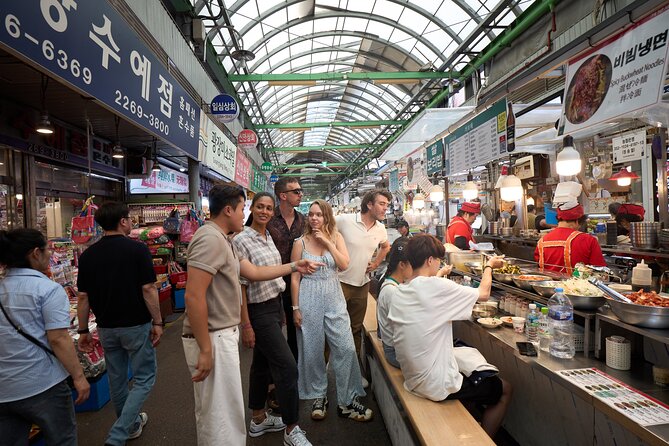
The final major stop is Gwangjang Market, Seoul’s oldest traditional market, operating since 1905. This is where the tour becomes most sensory and informal. Instead of palace gates and formal courtyards, you get food counters, local shoppers, close-packed stalls, and the sound of cooking.
The tour gives you about an hour here. That is enough to sample several foods if you move with purpose. Look for bindaetteok, a crisp mung bean pancake, and mayak gimbap, small rolls of rice and fillings often seasoned with sesame and served as an easy snack. Tteokbokki and other market foods may also be available.
The word feast should not be taken too literally. Meals are not included, so bring Korean won or another accepted payment method and budget separately for what you want to eat. The tour gets you to the market and gives you time to choose, but it does not cover your plate.
I like ending here because it leaves you with something active to do. You can continue eating after the formal tour ends, buy souvenirs, browse local clothing, or simply watch the market work. One drop-off option lets you finish at Gwangjang Market, which is the better choice if you want extra food time.
The other drop-off is Myeongdong. That suits you if you want to return to shopping, Korean beauty products, clothing stores, street food, or Myeongdong Cathedral. Ask about the final drop-off plan during the tour so you can choose the ending that fits your evening.
What the $29 price really buys
At $29 per person, this is a strong value if you are new to Seoul and want several major sights in one compact outing. The cost includes an English-speaking guide, air-conditioned transportation, and admission to the palace portion of the tour. It does not include meals, ginseng purchases, or market food.
You are paying for convenience as much as sightseeing. Seoul’s subway is excellent, but moving from Bukchon to Gyeongbokgung to Gwangjang Market takes planning, especially when you want a guide to explain what you are seeing. The bus removes some of that work.
The tradeoff is limited time. A do-it-yourself day could let you linger in Bukchon, explore more palace buildings, and eat slowly at Gwangjang Market. The guided tour gives you an efficient sample instead. For a first day in Seoul, a short layover, or anyone who prefers structure, that exchange makes sense.
The low price also means you should keep your expectations measured. This is not a private history lesson or a dedicated food crawl. The group may be large, and the ginseng visit may feel commercially motivated. Yet the core combination of Bukchon, palace culture, and Gwangjang Market offers plenty for the money.
The guides make the difference
The strongest part of this experience is the guide-led interpretation. Eva is repeatedly praised for being warm, upbeat, and helpful, including during a small scheduling problem. Kelly receives high marks for storytelling, clear communication, flexibility, and remembering people in her group. Sunny is praised for personal attention and for extending time with a group of six women.
Those details matter because the tour moves quickly. At Bukchon, a guide can help you understand more than tiled roofs and pretty lanes. At Gyeongbokgung, good explanations turn a collection of halls into a royal center with purpose. At Gwangjang Market, guidance can help you recognize foods you might otherwise pass by.
The operator is VIP TRAVEL Co. Ltd. The overall score is 4.7 from 16 ratings, with 94 percent recommending the experience. That is a positive record, but the sample is not large, so I would place the most weight on the repeated praise for the guides and the clear warning about the ginseng stop.
Who should book this Seoul tour?
I would recommend it most strongly if you are visiting Seoul for the first time, have only a short window, or want help connecting historic sights with local food. It is also a good fit if you prefer a vehicle and guide rather than changing trains and planning every transfer.
You will likely appreciate it if you enjoy variety. In one morning or afternoon, you move from residential hanok lanes to a royal palace, a former presidential site, a Korean specialty center, and a century-old food market.
I would hesitate if your main goal is deep palace exploration. You may prefer a longer independent visit to Gyeongbokgung, especially if you want to see more than the main courtyards. I would also skip this booking if you dislike shopping-oriented stops or do not want to pay separately for food.
Choose a non-Tuesday date if the Guard Changing Ceremony and Gyeongbokgung are essential. Choose Tuesday if Changdeokgung’s UNESCO status and Insadong’s craft shops sound more appealing.
Cancellation is free when you cancel at least 24 hours before the start time. Changes or cancellations inside that window are not accepted for a refund. Most people can participate, and the tour runs near public transportation, but the itinerary includes walking through village lanes and palace grounds.
My booking verdict
Book this tour if you want a low-cost introduction to Seoul with a strong cultural spread and a lively food finish. The best reasons are the efficient route, included palace admission, and the quality of guides such as Eva, Kelly, and Sunny.
Go in with two clear expectations: market food costs extra, and the ginseng center may feel like a sales stop. If you accept those limits, this tour gives you a useful first look at Seoul’s old neighborhoods, royal past, and everyday eating culture in just three and a half hours.
FAQ
How long does the Seoul palace and market tour last?
The tour lasts approximately 3 hours and 30 minutes.
Where does the tour start?
You can meet the tour at Myeongdong Subway Station Exit 8 or Seoul City Hall Subway Station Exit 6, depending on the assigned meeting option.
Is palace admission included?
Palace admission is included in the tour. On regular days, the visit is to Gyeongbokgung Palace. On Tuesdays, the tour visits Changdeokgung Palace instead.
Does the tour include the Guard Changing Ceremony?
The Guard Changing Ceremony is included in the regular route every day except Tuesday. Tuesday uses a different schedule with Changdeokgung Palace and Insadong.
Is food at Gwangjang Market included?
No. Meals and market food are not included. You pay separately for dishes such as bindaetteok, mayak gimbap, and tteokbokki.
What happens on Tuesdays?
On Tuesdays, the tour visits Changdeokgung Palace and Insadong instead of Gyeongbokgung Palace and the Royal Guard Ceremony.
Where does the tour finish?
You can finish at Gwangjang Market or return to Myeongdong. The Myeongdong drop-off is near shopping, street food, and Myeongdong Cathedral.
More Street Food Tours
- Small-Group Night Food Tour in Seoul with Korean BBQ
★ 5.0 · 304 reviews - Seoul Night Palace & Market Food Tour with Vehicle
★ 5.0 · 275 reviews - Seoul Fun Food Tour: 12 different food tastings
★ 5.0 · 266 reviews - The Award-Winning PRIVATE Food Tour of Seoul: The 10 Tastings
★ 4.5 · 128 reviews
More Hanok Village Visits
- Seoul: Gyeongbok Palace, Bukchon Village, and Gwangjang Tour
★ 5.0 · 1,044 reviews - Seoul: Suwon Hwaseong Fortress & Korean Folk Village Tour
★ 4.7 · 214 reviews - Seoul: Gyeongbok Palace and Bukchon Hanok Walking Tour
★ 4.8 · 157 reviews - Best Walking Tour to Gyeongbok Palace Bukchon Hanok Village
★ 5.0 · 138 reviews
Just added around Seoul
- Seoraksan National Park & Nami Island★ 4.5 · 3 reviews
- Strawberry Picking, Winter Sled with Eobi Ice Valley from Seoul★ 4.5 · 3 reviews
- Seoul Full Day small group Tour★ 5.0 · 3 reviews
- Majang Meat Market Experience: Private Tour with Han-woo Beef BBQ★ 5.0 · 3 reviews
- Seoul Korean BBQ Dinner Experience with Secret Food Tours★ 5.0 · 3 reviews
- Rice Wine Tasting with Sommelier – Finest Makgeolli (& Soju)★ 5.0 · 3 reviews
- Max Out Seoul: Must Visit City Highlights Panoramic Day Tour★ 5.0 · 3 reviews
- Seongsu-dong Walking Tour: K-Pop, Culture, Cheer, Friends & Relax★ 4.5 · 3 reviews
Hanbok & Palace Experiences, compared.

Gyeongbok Palace, Bukchon Village, and Gwangjang Tour
Read our review →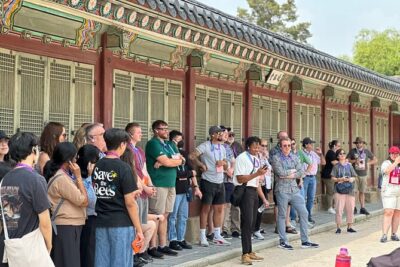
Best Seoul City Tour (Gyeongbokgung Palace,Insadong,Namsan Tower)
Read our review →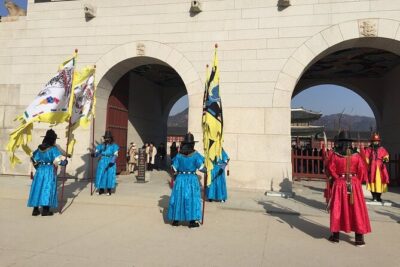
Small-Group Royal Palace and Seoul City Tour (hotel pick-up)
Read our review →
Seoul City Sightseeing Tour Including Gyeongbokgung Palace, N Seoul Tower, and Namsangol Hanok Village
Read our review →Gyeongbok Palace, Bukchon Village, and Gwangjang Tour
Read our review →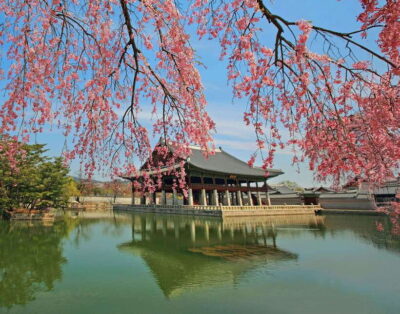
Seoul Highlights: Gyeongbok Palace, Insadong & N Seoul Tower
Read our review →
Seoul City Half Day Tour-Gyeongbok Palace Guard Changing Ceremony
Read our review →Browse the lists this tour appears in