
Reviewed · HANBOK & PALACE EXPERIENCES
(Small Group) Palace & Seoul Old Town Highlights
Seoul’s past is packed into a short walk. This three-hour outing links Insadong, Jogyesa Temple, Gwanghwamun Square, Gyeongbokgung Palace, Tongin Market, and Bukchon Hanok Village, giving you a useful first look at the city’s Joseon-era core and its modern tourist districts. With no more than 10 people, the tour should feel more like a guided walk than a large bus excursion.
I especially like the small group limit and the way the route joins several major sights in one morning or afternoon. I also like that guide Lee adds quizzes, traditional Korean games, and everyday cultural details rather than giving only a list of dates. The main trade-off is pace: three hours is enough for an introduction, but not enough for a slow, detailed visit to every stop.
This is a good choice if you have limited time in Seoul or want help getting oriented before exploring alone. The walking is central to the experience, and palace grounds, city squares, temple courtyards, markets, and residential lanes all form part of the day. Plan for changing weather, comfortable shoes, and a willingness to keep moving.
In This Review
- Key points to know before you book
- Why this route works for a first look at Seoul
- Starting at Anguk Station and walking through Insadong
- Finding calm at Jogyesa Temple
- Reading Korea’s story at Gwanghwamun Square
- Spending the most time at Gyeongbokgung Palace
- A quick look at Tongin Market and local food culture
- Seeing everyday architecture in Bukchon Hanok Village
- What the small group changes
- Is $60.27 a fair price?
- Practical details that affect your day
- Who should book this Seoul walking tour?
- Should you book Palace and Seoul Old Town Highlights?
- FAQ
- How long does the tour last?
- Where does the tour begin?
- Where does the tour end?
- What attractions are included?
- Is the Gyeongbokgung Palace ticket included?
- How large is the group?
- What happens if the weather is poor?
- Can I cancel for a refund?
Key points to know before you book
- Maximum 10 people: A small group makes it easier to ask questions and stay connected with the guide.
- Gyeongbokgung admission is included: You do not need to buy a separate ticket for the main palace visit.
- Lee receives especially warm praise: Her tours combine Joseon history, modern Korean life, questions, games, and patient answers.
- Five main sightseeing areas fit into about three hours: You see a lot, but individual stops are necessarily selective.
- Anguk Station Exit 6 is the meeting point: The tour begins outside the station and is listed as ending back there.
- The price is $60.27 per person: That is fair for a small guided walk with palace entry, especially for a first visit.
Why this route works for a first look at Seoul
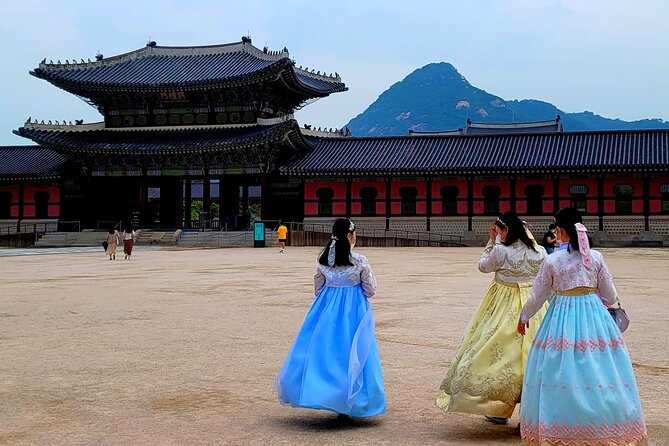
Seoul can feel enormous when you first arrive. This tour gives you a practical starting map by moving through several districts that sit close to the city’s historic center. You begin near Anguk Subway Station, then walk through traditional shopping streets, a Buddhist temple, a large civic square, the principal Joseon palace, a food market area, and a preserved hanok neighborhood.
I like this structure because it shows Seoul as a living city rather than a collection of isolated monuments. You see religious life at Jogyesa, royal power at Gyeongbokgung, public memory at Gwanghwamun Square, traditional architecture in Bukchon, and shopping and food culture around Insadong and Tongin Market.
The route also helps you decide where to return later. You may want more time in Insadong’s tea houses, another look at the palace grounds, a meal at Tongin Market, or a slower walk through Bukchon’s lanes. Think of the tour as an introduction with direction, not a complete study of old Seoul.
More hanbok and palace experiences:
- Seoul: Gyeongbok Palace, Bukchon Village, and Gwangjang Tour
★ 4.9 · 2,321 reviews - Best Seoul City Tour (Gyeongbokgung Palace,Insadong,Namsan Tower)
★ 5.0 · 1,647 reviews - Small-Group Royal Palace and Seoul City Tour (hotel pick-up)
★ 5.0 · 1,474 reviews
Starting at Anguk Station and walking through Insadong
The meeting point is outside Anguk Subway Station at Exit 6. This is a useful location because it places you near several traditional neighborhoods from the start. You should arrive with enough time to find the correct exit and meet the guide before the group moves off.
The first walk leads into Insadong, known for traditional goods, restaurants, and tea houses. The scheduled visit is about 10 minutes, so this is more of an orientation than a shopping session. You will get a quick sense of the area and its role as one of Seoul’s main traditional culture districts.
That short stop makes sense in a packed itinerary, but it also creates a limitation. If you want time to browse craft shops, compare souvenirs, or sit down for tea, you will need to return on your own. The tour introduces Insadong rather than giving you time to shop.
I like having this neighborhood at the front of the route. It eases you into the older side of Seoul before the larger sights appear. The guide can also help explain how traditional Korean goods and customs fit into present-day city life.
Finding calm at Jogyesa Temple
Jogyesa Temple receives about 30 minutes, enough for a proper look at the grounds and a short explanation of its place in Korean Buddhism. It is the head temple of the Jogye Order and was founded in 1910. Its location in central Seoul makes the quiet courtyard feel especially striking after the city streets.
This stop adds a religious and daily-life angle to the tour. You are not only seeing palaces built for royalty. You are also seeing a functioning Buddhist center that remains part of the city.
The temple is free to enter, which keeps the stop easy and low-cost. Your guide’s commentary matters here because a quick visit without context can feel like simply looking at a large building. Lee’s style, based on the available feedback, includes historical facts alongside present-day Korean culture, so this is likely one of the places where her explanations add real value.
Thirty minutes is a sensible amount of time for a first visit. If you are especially interested in Buddhism, temple architecture, or religious practice, you may want a longer return visit later. The tour gives you an introduction, not an extended spiritual or architectural study.
Reading Korea’s story at Gwanghwamun Square
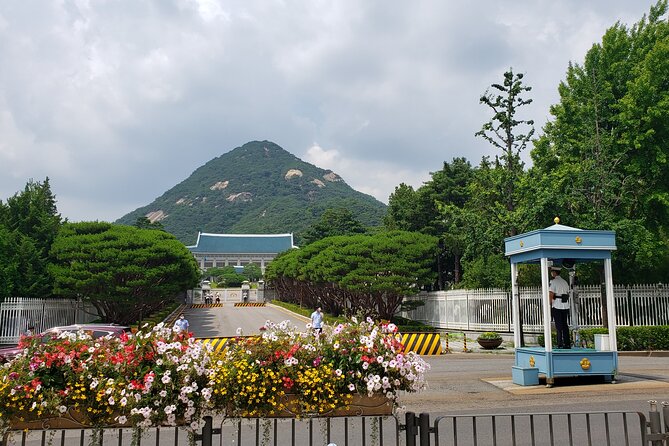
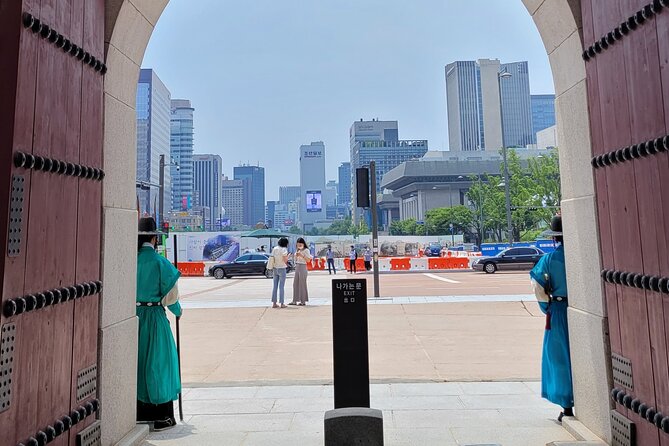
Gwanghwamun Square is a broad public plaza in front of Gyeongbokgung Palace. The stop lasts about 20 minutes and focuses on major figures in Korean history, including King Sejong the Great and Admiral Yi Sun-sin.
This is an important pause before entering the palace. The square connects national memory, public space, and the royal district. It also gives you a clear sense of how old Seoul and modern Seoul sit side by side.
King Sejong is associated with the creation of Hangul, the Korean alphabet, while Admiral Yi Sun-sin is remembered as a major military leader. The statues provide an easy way for a guide to explain key parts of Korea’s past without turning the walk into a lecture.
The square itself is open and exposed, so weather can affect your comfort. On a hot, rainy, or cold day, the 20-minute stop may feel long, especially because the tour requires outdoor walking. Still, its position in the route is valuable. You arrive at the palace with a better idea of the people and events represented in the surrounding area.
A few more trips of this kind worth comparing:
- Best DMZ Tour Korea from Seoul (Red Suspension Bridge Optional)
★ 5.0 · 41,422 reviews - DMZ Tour: 3rd Tunnel, Option(Suspension Bridge, Boat) from Seoul
★ 5.0 · 21,373 reviews - DMZ tour south Korea from Seoul (NK experience hall, defector)
★ 5.0 · 20,599 reviews - Seoul: DMZ Tour with Optional Suspension Bridge
★ 4.8 · 5,277 reviews
Spending the most time at Gyeongbokgung Palace
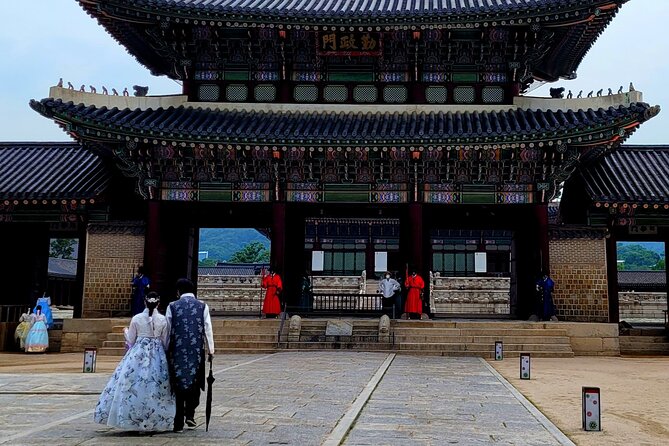
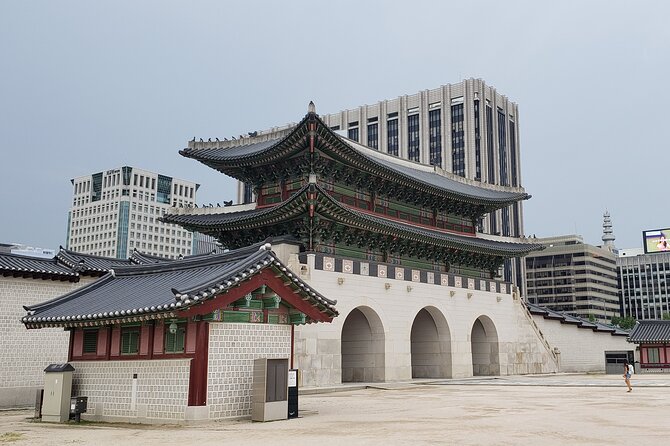
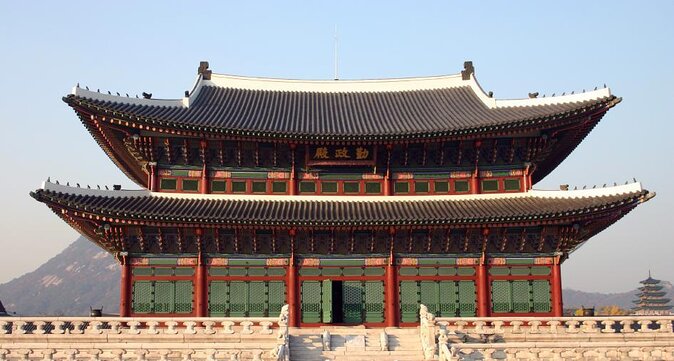
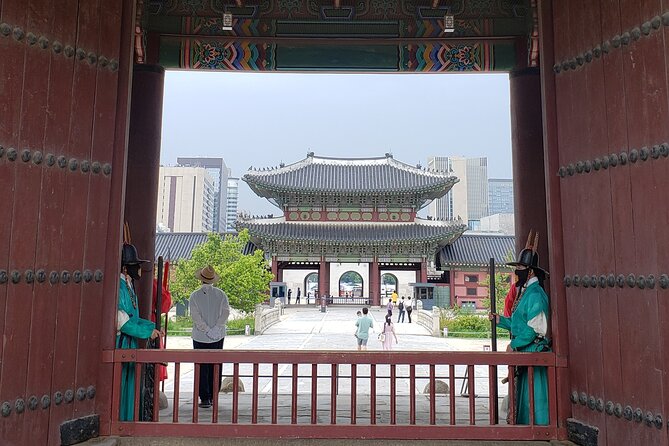
Gyeongbokgung is the centerpiece of the experience, with about 90 minutes set aside for the visit. The palace was built in 1395 as the main royal palace of the Joseon Dynasty. Mountains rise behind it, while modern Seoul spreads out in front, giving you one of the clearest views of the city’s historical setting.
The palace represents royal authority, traditional Korean design, and the political heart of old Seoul. Its courtyards and buildings are more rewarding when you understand their purpose, so this is the part of the tour where guided commentary is most useful.
Your entrance ticket is included in the $60.27 price. That improves the value, since you are paying for both access and a small-group guide rather than arranging separate entry and sightseeing on your own.
Ninety minutes is enough to see major palace areas and hear a solid introduction to the Joseon period. It is not enough to inspect every building at a leisurely pace. If you are passionate about Korean architecture or palace history, you may leave wishing for more time. That is a fair trade for a route that also includes four other areas.
The guide’s approach seems to be one of the strongest parts of this visit. Lee has been praised for explaining both Joseon history and modern Korean culture, answering many questions, and remaining patient with different members of the group. One particularly appealing touch is her use of mini quizzes and Korean traditional games during breaks. That can help younger participants stay involved, but adults may enjoy it too, especially during a long walking route.
A palace visit also gives you some of the tour’s best photo opportunities. Still, remember that the experience is not built around photography alone. The group needs to keep to its schedule, so you may need to take quick pictures and continue.
A quick look at Tongin Market and local food culture
Tongin Market is mentioned among the tour highlights, although the timed stop list gives detailed durations for Insadong, Jogyesa Temple, Gwanghwamun Square, Gyeongbokgung Palace, and Bukchon Hanok Village. Because of that, you should treat Tongin Market as part of the surrounding route rather than assume you will have a long, independent food stop.
That distinction matters. If you hope to eat a full meal, browse every stall, or spend time sampling local dishes, three hours may not allow it. The value here is the chance to see a working market area as part of a broader walk through old Seoul.
Ask the guide about the market if food is a priority for you. Lee’s willingness to answer questions about Seoul and Korea is one of the qualities repeatedly praised, and a short explanation can help you decide if you want to return for a separate visit.
Seeing everyday architecture in Bukchon Hanok Village
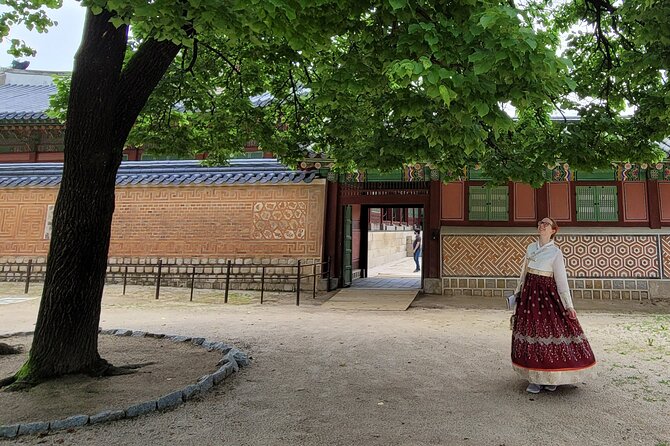
The final major stop is Bukchon Hanok Village, a historic neighborhood between two royal palaces. Its traditional Korean homes, known as hanok, line winding lanes and hillsides that show how people lived during the Joseon period.
Bukchon gives the tour a more residential feel. Gyeongbokgung shows royal buildings, while Bukchon shows the domestic side of traditional Seoul. The contrast is useful and helps you understand that old Seoul was not only a palace complex.
The scheduled time is about 30 minutes. That is enough to walk through a few lanes and appreciate the rooftops, but it is not a full neighborhood exploration. The lanes can be narrow and the area is residential, so you should follow the guide’s direction and keep your visit respectful.
The hills and uneven streets may be tiring for some people, even though most participants can take part according to the tour information. Good walking shoes are sensible. If you have mobility concerns, ask before booking because the experience is a walking tour through historic streets, not a vehicle-based sightseeing trip.
The tour is listed as ending back at the meeting point. Since the route includes several districts, confirm the final return details with the provider on the day if you need to connect to a timed reservation.
What the small group changes
The group limit is 10 people. That number is small enough for the guide to answer questions without shouting, and it is easier to remain together while crossing busy streets or moving through palace grounds.
There is also a chance the booking will operate with fewer people. Lee has led tours for groups of three, and one booking became a private tour. You should not assume a private experience, but a small turnout can make the walk more personal.
The strongest praise focuses on Lee’s manner. She is described as charming, caring, patient, and helpful with questions. That combination matters on a history tour. A guide who can explain dates but also discuss ordinary Korean life gives the sights more meaning.
The quizzes and traditional games are another useful detail. They are not the reason to book if you want a formal academic tour. But they can make the three-hour walk feel lighter and help families or mixed-age groups stay engaged.
Is $60.27 a fair price?
At $60.27 per person, this is not the cheapest way to walk around Seoul. You can visit several public areas on your own for little or no admission cost. Jogyesa Temple, Gwanghwamun Square, Insadong streets, and Bukchon can all be approached independently, while only the palace ticket is included here.
The value comes from saving planning time and gaining a guide for the entire route. In three hours, you move between several places that might otherwise require separate research. The small group also gives the tour more personal attention than a large coach outing.
I would consider the price fair for a first day in Seoul, especially if you want historical context and practical orientation. It is less compelling for repeat visitors who already know these neighborhoods or prefer to set their own pace.
The tour is also most useful when your time is tight. A long weekend, a short stop in Seoul, or the first day of a larger Korea trip are all good occasions. If you have a full week in the city, you might prefer independent visits with more time at each site.
Practical details that affect your day
Confirmation arrives at booking, and the activity uses a mobile ticket. The meeting point is outside Anguk Subway Station, Exit 6, in Seoul. The tour is near public transportation, service animals are allowed, and the operator states that most people can participate.
The experience requires good weather. If poor weather cancels the outing, you can choose another date or receive a full refund. A minimum number of participants is also required, and a cancellation for that reason brings the same choice of another date or a refund.
You can cancel for a full refund up to 24 hours before the start time. Cancellations and changes made within 24 hours are not accepted for a refund, so keep the local cut-off time in mind.
Pack water, wear shoes suited to several hours of walking, and avoid scheduling another fixed activity immediately afterward. The route contains open plazas, temple grounds, palace courtyards, market streets, and residential lanes, so the conditions will change as you go.
Who should book this Seoul walking tour?
I would recommend it to first-time visitors who want a clear introduction without spending a full day on a single palace. It also suits solo visitors and couples who like asking questions, families who appreciate interactive touches, and anyone who wants a guide to connect historical sites with modern Korean life.
It is a particularly good fit if you value human guidance over a rigid audio tour. Lee’s patient answers and personal approach are central strengths, and the small group gives that style room to work.
I would hesitate if you dislike walking, need long periods for photography, or want a deep visit to Gyeongbokgung alone. I would also think twice if your main goal is food shopping at Tongin Market or extended browsing in Insadong, since the route gives only a short look at those areas.
Should you book Palace and Seoul Old Town Highlights?
Book it if you want to cover Seoul’s historic center quickly and understand what you are seeing. The mix of palace, temple, square, market area, and traditional neighborhood gives you a useful first framework for the city, while the 10-person limit keeps the experience personal.
The best reason to choose this tour is Lee’s style. Her mix of history, current culture, questions, quizzes, and traditional games makes the walk more lively than a simple monument-to-monument route. The main compromise is limited time at each stop, but that is exactly what makes the tour useful for a short visit.
At $60.27, the experience is a reasonable buy for a first-time visitor who wants an efficient introduction and included palace admission. If you want slow, independent exploration, use the tour as an orientation and return to your favorite areas afterward.
FAQ
How long does the tour last?
The tour lasts approximately three hours.
Where does the tour begin?
It begins outside Anguk Subway Station at Exit 6 in Seoul.
Where does the tour end?
The activity is listed as ending back at the meeting point.
What attractions are included?
The route includes Insadong, Jogyesa Temple, Gwanghwamun Square, Gyeongbokgung Palace, Tongin Market, and Bukchon Hanok Village.
Is the Gyeongbokgung Palace ticket included?
Yes. Admission to Gyeongbokgung Palace is included in the tour price.
How large is the group?
The tour has a maximum of 10 participants.
What happens if the weather is poor?
The experience may be canceled because it requires good weather. You will then be offered another date or a full refund.
Can I cancel for a refund?
Yes. You can cancel at least 24 hours before the start time for a full refund. Cancellations made less than 24 hours before the start time are not refunded.
Just added around Seoul
- Seoraksan National Park & Nami Island★ 4.5 · 3 reviews
- Strawberry Picking, Winter Sled with Eobi Ice Valley from Seoul★ 4.5 · 3 reviews
- Seoul Full Day small group Tour★ 5.0 · 3 reviews
- Seoul Korean BBQ Dinner Experience with Secret Food Tours★ 5.0 · 3 reviews
- Rice Wine Tasting with Sommelier – Finest Makgeolli (& Soju)★ 5.0 · 3 reviews
- Majang Meat Market Experience: Private Tour with Han-woo Beef BBQ★ 5.0 · 3 reviews
- Seoul: Alpaca World and Nami Island (with Garden / Railbike)★ 5.0 · 3 reviews
- Max Out Seoul: Must Visit City Highlights Panoramic Day Tour★ 5.0 · 3 reviews
Hanbok & Palace Experiences, compared.

Gyeongbok Palace, Bukchon Village, and Gwangjang Tour
Read our review →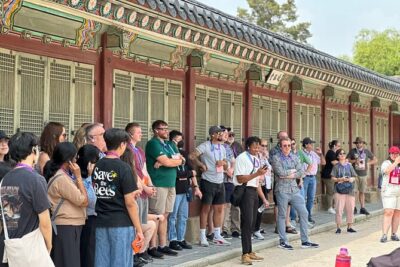
Best Seoul City Tour (Gyeongbokgung Palace,Insadong,Namsan Tower)
Read our review →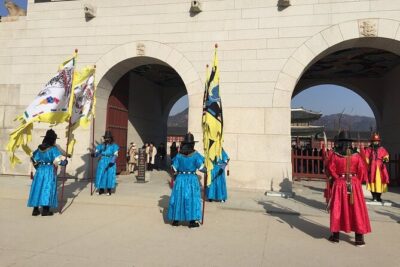
Small-Group Royal Palace and Seoul City Tour (hotel pick-up)
Read our review →
Seoul City Sightseeing Tour Including Gyeongbokgung Palace, N Seoul Tower, and Namsangol Hanok Village
Read our review →Gyeongbok Palace, Bukchon Village, and Gwangjang Tour
Read our review →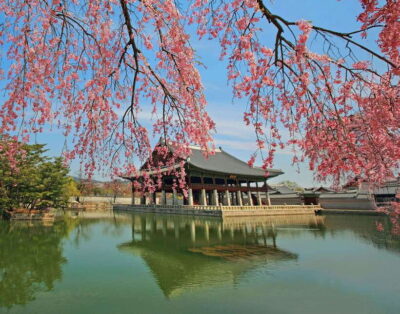
Seoul Highlights: Gyeongbok Palace, Insadong & N Seoul Tower
Read our review →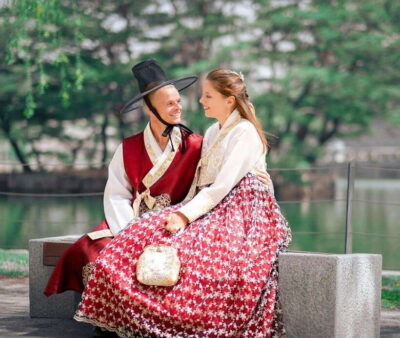
Seoul City Half Day Tour-Gyeongbok Palace Guard Changing Ceremony
Read our review →Browse the lists this tour appears in