Reviewed · SEOUL TOURS
Traditional Gourmet
Seoul tastes better on foot. This three-hour outing pairs traditional Korean food with Bukchon’s old lanes, historic homes, and helpful local context. I like the unusual mix of lunch, tea, and neighborhood walking, and I like that guide Veronica brings food customs and fermentation into the conversation. The main caution is the walking: hills and uneven streets call for comfortable shoes.
I also like the small group size, limited to 12 people, and the chance to eat in a traditional Korean house called a hanok. The $120 price is not cheap, but it includes a full lunch, coffee or tea, and a guide who can help you order, understand etiquette, and find quality food after the tour.
In This Review
- At a glance
- Why this food walk works so well in Seoul
- Starting in Anguk and entering Bukchon
- House of Baek Inje and a preserved hanok
- A rare mansion linked to Yun Bo-seon
- What lunch adds to the experience
- Tea, dessert, and practical food advice
- Veronica and the value of a food guide
- Walking, weather, and who should book
- Is the $120 price worth it?
- Should you book Traditional Gourmet?
- FAQ
- Where does the Traditional Gourmet tour start?
- What time does the tour begin?
- How long does the experience last?
- Where does the tour finish?
- Is lunch included?
- Are coffee or tea included?
- Is a vegetarian option available?
- How many people can join the tour?
At a glance
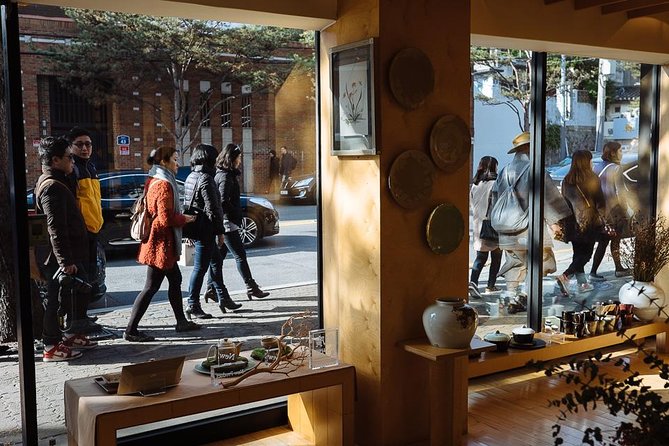
- Lunch in a traditional hanok: The included meal is made up of authentic Korean dishes served in a traditional Korean house.
- Bukchon beyond the postcard view: Allow about 90 minutes to walk among old homes, workshops, and shops in one of Seoul’s most atmospheric neighborhoods.
- A Michelin surprise may be part of the meal: One described outing included lunch at a Michelin restaurant, though this should not be treated as a guarantee for every departure.
- Veronica’s food and culture guidance: She explains Korean eating customs, food culture, history, and fermentation in clear, practical terms.
- Tea and street dessert: The food experience can continue after lunch with a tea stop and a freshly prepared street-food dessert.
- A compact afternoon plan: Meet at 1 p.m. in Anguk-dong and finish back at the same meeting point after roughly three hours.
Why this food walk works so well in Seoul
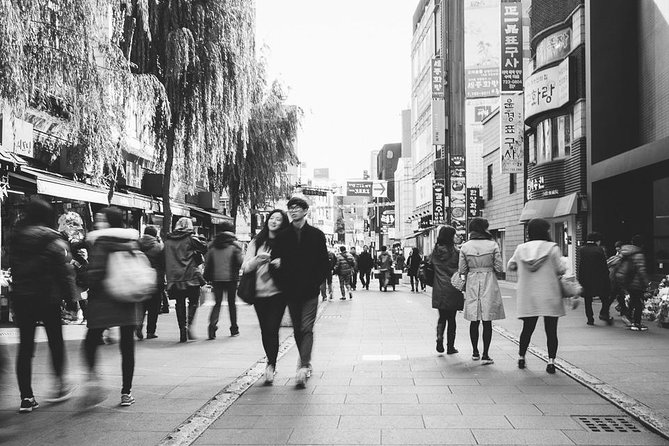
Many first visits to Seoul focus on famous markets, barbecue restaurants, and bright shopping streets. Those are worthwhile, but they do not always explain how Korean food fits into daily life. This experience takes a quieter route through Jongno, where old houses and food traditions sit close to modern Seoul.
I like that the tour is not only a meal. You walk through Bukchon Hanok Village, stop at historic homes, sit down for a substantial lunch, and finish with tea. That gives you several ways to understand Korea: through architecture, table manners, ingredients, neighborhood life, and the stories attached to old homes.
The format is especially useful if you are new to Korean cuisine. A guide can explain what is being served, how dishes are meant to be eaten, and what you might want to order later on your own. That help matters when menus are unfamiliar and restaurant customs are different from what you know at home.
The tour is listed at $120 per person. I would consider that fair value if you want a guided introduction rather than simply a restaurant reservation. Lunch, coffee or tea, and professional guiding are included. You are also paying for local recommendations and a more personal look at Bukchon.
Still, this is not the right choice if you want a cheap food crawl or a long list of stops. Three hours passes quickly, and the tour spends real time walking and talking. You will sample food, but the bigger purpose is to understand it.
A few more trips of this kind worth comparing:
- Best DMZ Tour Korea from Seoul (Red Suspension Bridge Optional)
★ 5.0 · 41,422 reviews - DMZ Tour: 3rd Tunnel, Option(Suspension Bridge, Boat) from Seoul
★ 5.0 · 21,373 reviews - DMZ tour south Korea from Seoul (NK experience hall, defector)
★ 5.0 · 20,599 reviews
Starting in Anguk and entering Bukchon
Meet at 1 p.m. at 164-6 Anguk-dong in Seoul’s Jongno District. The meeting point is near public transportation, but transportation to and from the attractions is not included. You should plan your route to the start point before lunch, since the activity begins promptly in the afternoon.
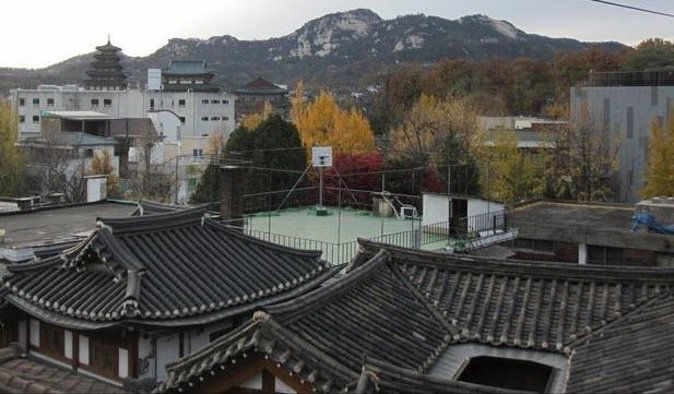
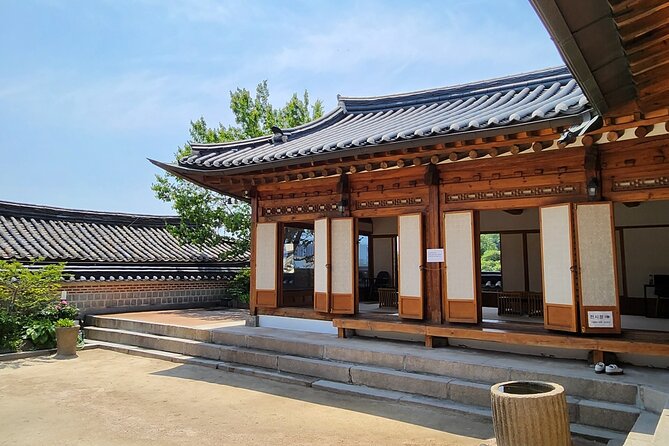
Bukchon Hanok Village takes up about 90 minutes of the experience. The area is known for its traditional Korean houses, or hanok, many of which line sloping lanes between larger Seoul streets. You can expect a walking tour rather than a quick photo stop.
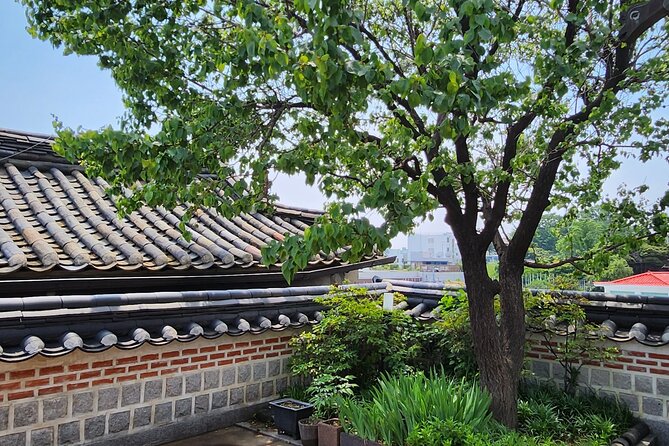
The appeal is the change of pace. One moment you are in a major city, and the next you are looking at tiled roofs, timber details, small workshops, and local shops. The area offers a useful introduction to how older Korean architecture fits into present-day Seoul.
Bukchon is also an active neighborhood, not an open-air museum built only for sightseeing. That means you should keep your voice low, avoid blocking narrow lanes, and follow your guide’s lead about where to stop. Some streets are steep, so the moderate fitness requirement is worth taking seriously.
The guide adds the most value here. Without context, a hanok can look simply attractive. With explanation, you can better understand why the homes are built as they are and how they relate to Korean family life and local customs.
House of Baek Inje and a preserved hanok
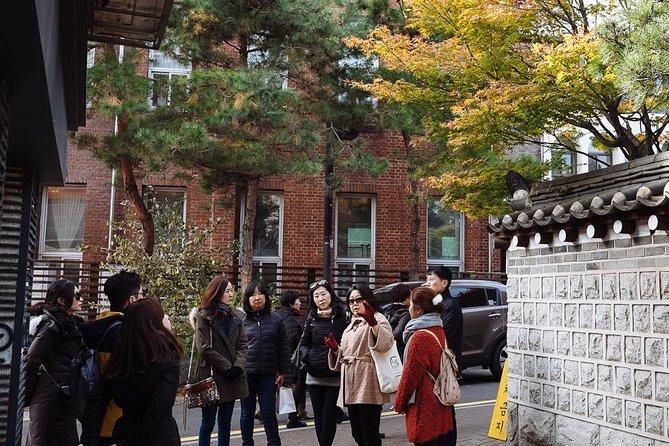
The next planned stop is the House of Baek Inje, with about 30 minutes set aside for the visit. Built around 1900, it is a hanok preserved for its architectural value and for the quality of its construction at the time.
This stop gives the walk a stronger historical focus. Instead of seeing only a series of picturesque façades, you get a chance to consider how a prominent family once lived in a large traditional home. The property is now managed by the Seoul Metropolitan Government, according to the supplied details.
I like this part of the route because it gives shape to the architecture. Bukchon’s lanes can feel like a pleasant maze, but a preserved house lets you look at the design more carefully. You may find that the visit is as useful for understanding space and household life as it is for taking photographs.
The stop is free of an additional admission charge. Keep in mind that the time listed is approximate, and the exact pace can depend on the group and the guide’s explanations.
A rare mansion linked to Yun Bo-seon
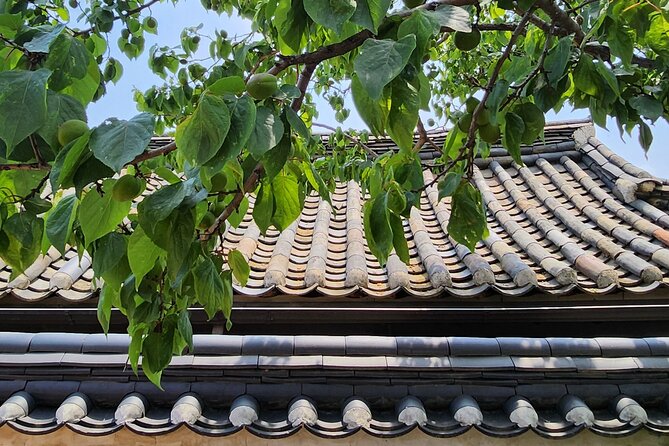
The itinerary also includes the birthplace of Yun Bo-seon, Korea’s second president. It is described as a large, well-built hanok mansion, a relatively rare sight in Seoul.
This home adds another layer to the afternoon. Bukchon is not only a pretty district of old houses. It also contains residences connected to important Korean families and public figures. The property remains associated with Yun Bo-seon’s family, and his granddaughter-in-law currently lives there, according to the supplied information.
Because the stop is less familiar than the main village lanes, it can feel like a useful addition for anyone who wants more than food photographs. The guide can connect the building to Korean history while keeping the afternoon centered on the neighborhood.
The available details do not specify a fixed time for this stop. You should think of it as part of the walking route rather than a separate, long museum visit.
A completely different kind of day out in Seoul:
- Seoul: DMZ Tour with Optional Suspension Bridge
★ 4.8 · 5,277 reviews - Signature DMZ Tour: Exclusive Defector Talk & Suspension Bridge
★ 5.0 · 4,459 reviews - Thrilling Korean DMZ 3rd Tunnel Tour from Seoul + Red Bridge Rush
★ 5.0 · 3,097 reviews - DMZ Past and Present: Korean Demilitarized Zone Tour from Seoul
★ 5.0 · 2,481 reviews
What lunch adds to the experience
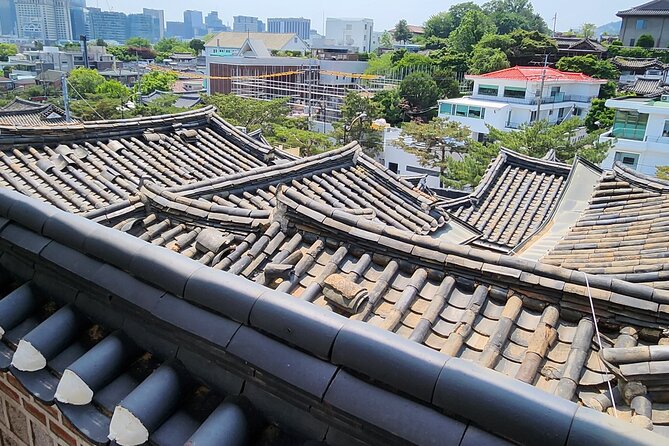
Lunch is the heart of the tour. It is included in the $120 price and is served in a traditional Korean house. The meal has been described as a broad, multi-course spread of traditional Korean food, rather than one simple entrée.
That format is valuable because Korean meals often work through several shared dishes. You get to see how different flavors and textures sit together on the table. A guide can also explain eating etiquette and help you understand what to do with unfamiliar side dishes.
One account of the experience described lunch at a Michelin restaurant in a particularly attractive setting. That sounds like a welcome surprise, but restaurant arrangements can change, so I would not book this expecting a Michelin designation every time. The safer expectation is a traditional Korean meal in a hanok setting.
The food is described as nourishing and authentic, with enough variety to make lunch feel like a real introduction to Korean cooking. You may want to arrive hungry. Extra food and drinks are not included, and alcohol is available only for purchase.
Vegetarian food is available if requested at booking. Be sure to raise the issue in advance rather than waiting until you sit down, especially if you have strict dietary needs. The supplied details confirm a vegetarian option, but they do not provide a full list of allergies or substitutions.
Tea, dessert, and practical food advice
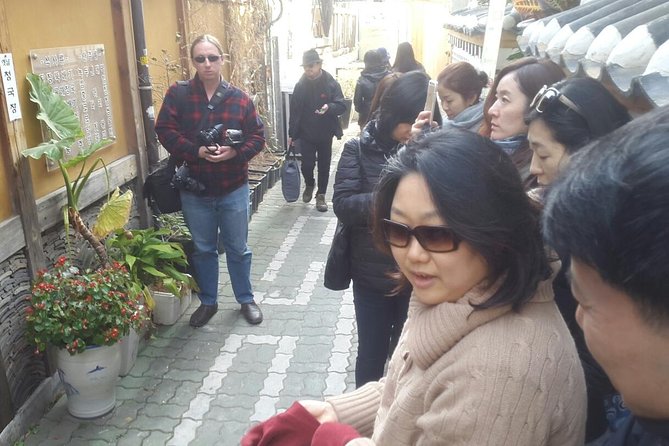
After the main meal, the experience can continue with coffee or tea, and the included plan features a traditional tea stop. The tea house setting gives the afternoon a calmer finish and lets the guide explain another part of Korean food culture.
Some outings have also included a freshly made street-food dessert after lunch. That small stop is useful because it shifts from formal traditional dining to the casual food you might encounter while exploring Seoul by yourself.
The tea and dessert can make the tour feel more generous than a standard lunch walk. They also offer a chance to ask final questions. Veronica has shared guidance about purchasing quality food products and has discussed fermentation recipes, so food enthusiasts may get especially good value from the conversation.
You should remember that the tour is not designed as an all-day eating marathon. The focus is on selected traditional dishes and the ideas behind them. If you want a night market route, Korean barbecue, or a large number of street-food samples, this is probably not the best match.
Veronica and the value of a food guide
Veronica is the guide most closely associated with the experience. She brings together Korean food, culture, history, and eating etiquette in a way that suits first-time visitors.
Her strongest contribution appears to be interpretation. She can help you move from this tastes good to a better understanding of why a dish is served that way, how it fits into Korean meals, and what food products are worth seeking out later.
A guide also helps with the language barrier. That does not mean every communication problem disappears, but it does give you a clearer path through menus, food shops, and local customs. If you are nervous about ordering Korean dishes on your own, this kind of introduction can pay off for the rest of your trip.
There is one useful caution for group bookings. A four-star account described a situation in which explanations were easier to hear for people walking nearest the guide. That is a reminder to stay close when the group moves and to speak up if you miss an explanation. The maximum group size is 12, so this is smaller than a large coach tour, but it is still a group experience.
Walking, weather, and who should book
The tour operates in all weather. Seoul’s conditions can change, so dress for the forecast and wear comfortable walking shoes. The route includes neighborhood streets and historic areas, and the moderate fitness recommendation suggests that you should be ready for a fair amount of walking.
I would recommend this experience to:
- First-time visitors who want food context, not just restaurant names
- People interested in Korean homes, history, and local customs
- Food enthusiasts who enjoy traditional meals and tea
- Couples, families, and small groups that prefer a guided afternoon
- Anyone who wants personalized suggestions for food shopping and later meals
I would be more cautious about booking it if you have difficulty walking on hills or narrow streets. It may also disappoint you if your main goal is a fast-moving street-food crawl with many small tastings.
The group minimum is two people. Solo visitors are asked to contact the provider individually, so a single person should not assume that an ordinary online booking will operate as normal. The maximum is 12 people, which keeps the group fairly contained but does not promise a private tour.
The activity ends back at the meeting point. Hotel pickup and drop-off are not included, and you must arrange your own transportation to and from the Anguk-dong start point.
Is the $120 price worth it?
At $120, this is a premium half-day food experience. I would not compare it with the cost of grabbing lunch at a neighborhood restaurant. Compare it instead with the cost of a meal, a guide, cultural interpretation, a historic neighborhood walk, tea, and advice you can use for the rest of your stay.
The value is strongest when you want a smooth first introduction to Korean food. You are not simply handed a plate and left to guess. You get help with customs, ingredients, the neighborhood, and food shopping.
The value is weaker if you already know Seoul’s food scene well or if you prefer to explore without a schedule. You may be able to eat for less on your own, but you will give up the explanations and access to traditional settings that make this experience different.
Free cancellation is available if you cancel at least 24 hours before the 1 p.m. start time. Changes or cancellations inside that window are not accepted for a refund. The tour can also be canceled if the minimum number is not reached, in which case an alternative or full refund is offered.
Should you book Traditional Gourmet?
Book this tour if you want your first Korean meal to come with useful context. The combination of Bukchon, historic hanok homes, a substantial traditional lunch, tea, and Veronica’s food guidance gives you more than a simple tasting.
I would especially choose it early in a Seoul visit. Advice about ordering, etiquette, fermentation, and quality food products can improve the meals that follow. Book at least a day ahead if your plans are firm, and ask for the vegetarian option when you reserve.
Skip it if you want a bargain meal, a private guide, or a route built around nonstop street food. For the right person, though, the $120 cost buys a thoughtful introduction to Seoul’s food culture, with enough history and walking to make the meal feel connected to the city around it.
FAQ
Where does the Traditional Gourmet tour start?
It starts at 164-6 Anguk-dong in Seoul’s Jongno District, South Korea.
What time does the tour begin?
The start time is 1 p.m.
How long does the experience last?
The tour lasts approximately three hours.
Where does the tour finish?
The activity ends back at the meeting point.
Is lunch included?
Yes. Lunch is included and features traditional Korean dishes prepared in a traditional Korean house called a hanok.
Are coffee or tea included?
Yes. Coffee and/or tea are included. Alcoholic drinks and extra food or drinks cost extra.
Is a vegetarian option available?
Yes. A vegetarian option is available, but you should advise the provider when booking.
How many people can join the tour?
The maximum is 12 people per booking. At least two people are required for the tour to operate, and solo visitors should contact the provider individually.
Just added around Seoul
- Seoraksan National Park & Nami Island★ 4.5 · 3 reviews
- Strawberry Picking, Winter Sled with Eobi Ice Valley from Seoul★ 4.5 · 3 reviews
- Seoul Full Day small group Tour★ 5.0 · 3 reviews
- Rice Wine Tasting with Sommelier – Finest Makgeolli (& Soju)★ 5.0 · 3 reviews
- Majang Meat Market Experience: Private Tour with Han-woo Beef BBQ★ 5.0 · 3 reviews
- Seoul Korean BBQ Dinner Experience with Secret Food Tours★ 5.0 · 3 reviews
- Max Out Seoul: Must Visit City Highlights Panoramic Day Tour★ 5.0 · 3 reviews
- Seongsu-dong Walking Tour: K-Pop, Culture, Cheer, Friends & Relax★ 4.5 · 3 reviews
Seoul Tours, compared.

Best DMZ Tour Korea from Seoul (Red Suspension Bridge Optional)
Read our review →
DMZ Tour: 3rd Tunnel, Option(Suspension Bridge, Boat) from Seoul
Read our review →
DMZ tour south Korea from Seoul (NK experience hall, defector)
Read our review →

Signature DMZ Tour: Exclusive Defector Talk & Suspension Bridge
Read our review →
Thrilling Korean DMZ 3rd Tunnel Tour from Seoul + Red Bridge Rush
Read our review →DMZ Past and Present: Korean Demilitarized Zone Tour from Seoul
Read our review →