Reviewed · SEOUL TOURS
Traditional Korean Bookbinding Experience in Seoul, Hongdae
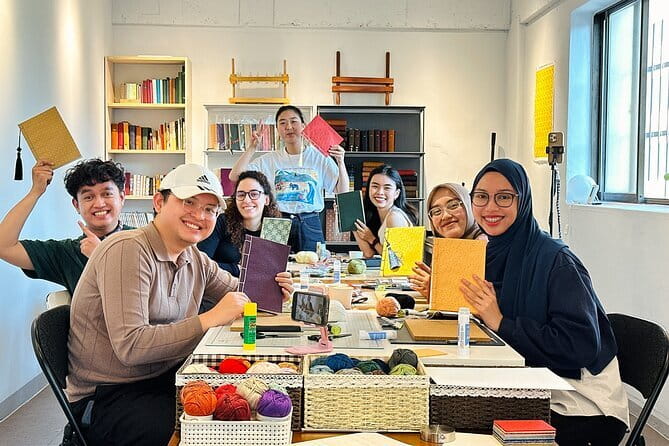
Make something that lasts. This two-hour Korean bookbinding class gives you a hands-on way to learn about Hanji, the handmade paper used for important Joseon-era records, while creating a notebook you can take home. I like the choice of 22 silk covers and the chance to select your own thread and Norigae ornament. The main consideration is age: only people 17 and older may participate.
I also like the small-group format, limited to 12 people, and the fact that all tools and materials are supplied. Your finished notebook is more than a pretty souvenir, but this is a craft class, not a broad tour of Seoul, so it suits you best if you enjoy making things and want a quiet cultural activity.
In This Review
- At a glance
- Why this Seoul craft class is worth two hours
- Choosing silk before the binding begins
- Understanding why Hanji matters
- Selecting thread and a Norigae ornament
- Binding silk and Hanji by hand
- Adding the final Korean knot
- Packing a useful Seoul souvenir
- Who will enjoy this activity most
- Planning your morning in Mapo-gu
- The best reasons to book, and the reasons to skip it
- FAQ
- Where does the Korean bookbinding class meet?
- What time does the experience start?
- How long does the bookbinding experience last?
- What is included in the price?
- What age must participants be?
- Can I cancel for a full refund?
At a glance
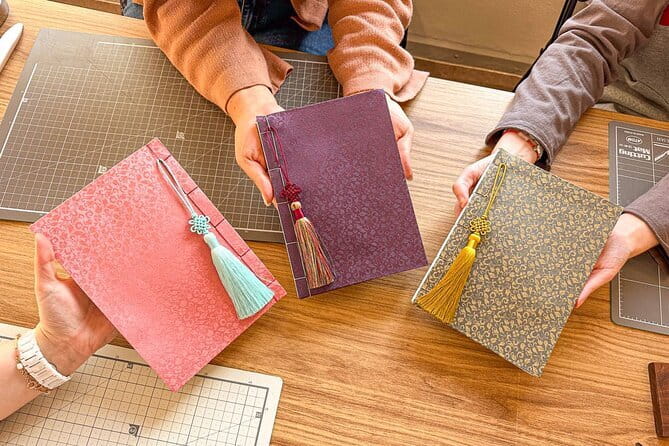
- Choose from 22 silk covers: Each cover uses a Korean traditional pattern, giving you plenty of room to make a notebook that feels personal.
- Work with genuine Hanji: Learn about the handmade Korean paper connected with the Annals of the Joseon Dynasty, listed on the UNESCO Memory of the World register.
- Use traditional binding methods: The class teaches a Korean bookbinding style rather than a modern glue-and-wire notebook format.
- Finish with a Norigae knot: A traditional Korean ornament and colored thread provide the final decorative touch.
- Small group of up to 12 people: The limited size should give you a better chance to follow the instructions and get help.
- Leave with a gift-ready souvenir: Your notebook is packed for you at the end, so it is easy to carry home or give as a present.
Why this Seoul craft class is worth two hours
Seoul offers plenty of quick souvenir shopping, but a handmade notebook gives you a stronger connection to the place. Here, you do not simply buy an object with a Korean design. You choose the materials, learn what they mean, and take part in the work of putting them together.
The class focuses on traditional Korean bookbinding. That makes it a good fit for anyone interested in paper, textiles, Korean culture, stationery, or practical crafts. You will also have a useful keepsake at the end, rather than a souvenir that sits on a shelf and collects dust.
The activity lasts about two hours. That is long enough to make the notebook without taking over your day in Seoul. You can schedule it as a calm morning activity before lunch, or fit it between visits to other parts of Mapo-gu and Hongdae.
The 10:30 am start is fixed in the supplied details, so plan around it rather than assuming flexible entry. The meeting point is Danchoodan at 100 Daeheung-ro, third floor, in Daeheung-dong, Mapo-gu. The activity finishes back there.
A few more trips of this kind worth comparing:
- Best DMZ Tour Korea from Seoul (Red Suspension Bridge Optional)
★ 5.0 · 41,422 reviews - DMZ Tour: 3rd Tunnel, Option(Suspension Bridge, Boat) from Seoul
★ 5.0 · 21,373 reviews - DMZ tour south Korea from Seoul (NK experience hall, defector)
★ 5.0 · 20,599 reviews
Choosing silk before the binding begins
The first decision is your silk cover. You can pick from 22 silk covers decorated with Korean traditional patterns. That choice matters because the cover gives the notebook most of its visual character, and you will be looking at it long after the class ends.
This is a nice part of the experience for people who enjoy making design decisions. You can choose a pattern that feels traditional, colorful, subtle, or simply attractive to you. Since the cover is made from Korean silk, the finished item has a more distinctive feel than a standard paper notebook.
I would take a moment with this choice rather than grabbing the first design you see. The class is short, but the cover is the part you will remember most clearly. If you are making the notebook as a gift, think about the recipient before the activity begins.
The supplied information does not specify the exact colors or motifs in each design, so availability may vary. Still, 22 options give you a useful range without turning the selection into an exhausting shopping session.
Understanding why Hanji matters
Hanji is traditional Korean paper made by hand. In this class, it is not just a material chosen for its appearance. You learn why it has been valued in Korea and how it was used for important writing.
The Annals of the Joseon Dynasty, a major record of the Joseon royal court, were made using Hanji. Those annals are listed on the UNESCO Memory of the World register. Joseon royalty, Confucian scholars, and Korean intellectuals also used this paper for diaries and notes.
That background gives the notebook some weight. You are working with a material connected to record keeping, study, and daily writing across Korean history. The point is not to pretend your small notebook is a royal archive. It is to understand why handmade paper has mattered for so long.
The class also shares a traditional saying: silk lasts 500 years, while Hanji lasts 1,000 years. That is an appealing thought for a travel souvenir, although you should take it as a cultural saying rather than a guarantee about the precise lifespan of your finished notebook.
Selecting thread and a Norigae ornament
After choosing the cover, you select your thread color and Norigae. A Norigae is a traditional Korean ornament, often used as a decorative accessory. Here, it becomes the finishing detail tied onto your notebook.
The thread gives you another chance to shape the look of the book. A strong contrast may make the binding more noticeable, while a closer color can produce a quieter result. The supplied details note that dozens of colorful threads and silk options are available, so you should have room to make a personal combination.
This stage is useful because it shows how decoration and construction work together in Korean bookbinding. The Norigae is not an afterthought added by someone else. You choose it and use it as the final touch on your own notebook.
If you are not confident with color matching, ask the guide for help. The class includes a licensed guide, and the teaching style described in the supplied feedback emphasizes patience, kindness, and help during the work. One guide was also praised for sharing information about Hanji and Korean culture while keeping the class moving at a comfortable pace.
A completely different kind of day out in Seoul:
- Seoul: DMZ Tour with Optional Suspension Bridge
★ 4.8 · 5,277 reviews - Signature DMZ Tour: Exclusive Defector Talk & Suspension Bridge
★ 5.0 · 4,459 reviews - Thrilling Korean DMZ 3rd Tunnel Tour from Seoul + Red Bridge Rush
★ 5.0 · 3,097 reviews - DMZ Past and Present: Korean Demilitarized Zone Tour from Seoul
★ 5.0 · 2,481 reviews
Binding silk and Hanji by hand
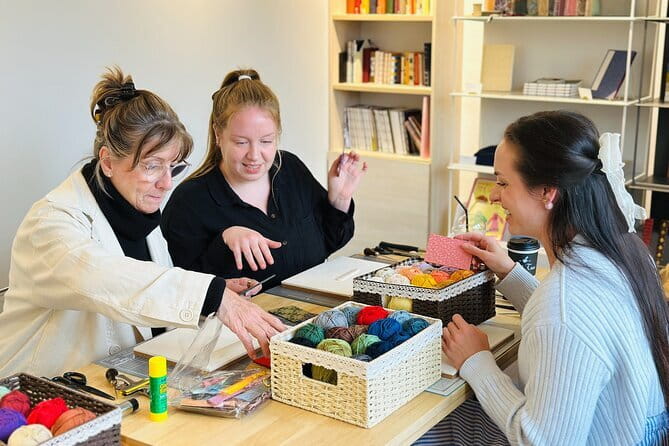
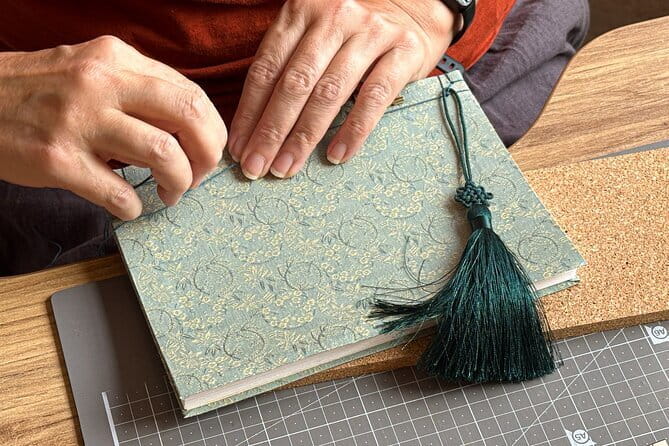
The central part of the class is making the notebook. You bind the silk and Hanji using a traditional Korean method, with the necessary tools and materials supplied.
This is where the experience becomes more than a design workshop. The binding process requires you to follow the sequence carefully, so you get a feel for how the pages, paper, cover, and thread become one object. The work is practical and tactile. You handle the materials instead of only watching a demonstration.
The class is designed for participation, not just observation. You should expect to spend much of the two hours making, adjusting, and decorating. The guide helps you through the method, which is important because traditional binding may not be familiar if your experience is limited to modern notebooks.
The small maximum of 12 people is a real advantage here. With a group this size, you have a better chance of receiving personal help if your thread placement or binding technique needs correction. The experience is not private, but it is more focused than a large group workshop.
You should also keep your expectations sensible. This is a guided craft class with a finished project, not a professional bookbinding apprenticeship. You will learn the basic process and complete a notebook during the session.
Adding the final Korean knot

Once the book is assembled, you decorate it with the Norigae knot. This gives the notebook its final Korean detail and helps distinguish it from a generic handmade journal.
The knot is a small feature, but it carries much of the visual appeal. It adds color and movement to the cover, and it connects the finished object with a familiar Korean decorative tradition. For many people, this will be the detail that makes the notebook feel specifically Korean rather than simply handmade.
The craft activity also has a scrapbook quality. One piece of feedback described the finished notebook as a place to keep memories from a Korean journey. You could use it for trip notes, sketches, short diary entries, receipts, photographs, or plans for your next visit.
The finished product is not only decorative. It remains a usable notebook, which improves its value as a souvenir. You have a reason to keep it in use, and each page can add another memory to the object.
Packing a useful Seoul souvenir

At the end, the notebook is packed in a gift-ready package. That is a practical touch, especially if you are making it for someone else or need to protect it in your luggage.
You also take the finished notebook home immediately. There is no waiting for shipping and no need to return to the studio later. For a short activity, that instant result is satisfying.
At $49 per person, the value depends on what you want from a Seoul tour. It is not the cheapest way to buy a notebook, but the price includes the materials, tools, instruction, and the activity itself. You are paying for a two-hour cultural craft session and a finished item made by you.
I think the price makes the most sense for you if you value personal instruction and want a souvenir with a story. If you only want an inexpensive journal, a stationery shop will cost less. If you want to understand a Korean material and create something with traditional design elements, the class offers more than a retail purchase.
Five or more bookings were recorded in the previous month, and the activity has a five-star rating from 16 reviews, with 100 percent recommending it. That is a small sample, so I would not treat the rating as a guarantee. Still, the pattern of praise is clear: people especially value the beautiful finished notebook, the friendly instruction, the educational Hanji content, and the relaxed pace.
Who will enjoy this activity most
I would recommend this class to:
- People who enjoy stationery, paper, textiles, and handcrafts
- Visitors seeking a personal Korean souvenir
- Couples or friends who want a shared activity rather than another sightseeing stop
- Anyone interested in Joseon-era culture and traditional materials
- Book lovers and scrapbook makers
- Adults looking for a quiet break from Seoul’s busy shopping streets
It also works well for someone who does not usually make crafts but wants a structured introduction. The guide provides the method, while you make the design choices.
The minimum age is 17, so families with younger children cannot include them in the class. Service animals are allowed, and the studio is near public transportation. Most people can participate, but the supplied information does not provide detailed accessibility specifications, so contact the provider if you need a particular arrangement.
Only people included in the reservation may enter the studio. Keep that rule in mind if you are meeting friends nearby or expecting someone to watch the activity without taking part.
Planning your morning in Mapo-gu
The class meets at Danchoodan, 100 Daeheung-ro, third floor, in Daeheung-dong, Mapo-gu. The tour information places it in the Hongdae area of Seoul, though the precise meeting address is in Daeheung-dong. Check your route carefully and allow enough time to reach the building before the 10:30 am start.
The experience ends at the same meeting point. That makes onward planning simple, since you do not need to arrange a separate pickup or find your way back from another neighborhood.
A mobile ticket is provided, which means you can keep the booking on your phone. Confirmation is normally sent at booking. If you book within one day of the activity, confirmation arrives as soon as possible and depends on availability.
The tour does not include an air-conditioned vehicle. That is not a major issue because this is a studio-based activity, but it confirms that you are responsible for reaching the meeting point on your own.
Free cancellation is available if you cancel at least 24 hours before the local start time. Cancellations or changes made less than 24 hours before the activity are not accepted for a refund.
The best reasons to book, and the reasons to skip it
Book this experience if you want to do something with your hands and leave Seoul with a souvenir that carries a clear cultural connection. The Hanji lesson, silk selection, traditional binding, and Norigae knot give the two hours a logical shape, while the small group should make instruction manageable.
I especially like that the finished notebook is both attractive and useful. The activity also avoids the usual rushed souvenir stop. You choose the materials, learn the context, and produce the final item yourself.
Skip it if you prefer a fast sightseeing tour, dislike careful craft work, or want an activity suitable for children under 17. It is also not the best value for someone interested only in buying a cheap notebook.
For the right person, $49 is a fair price for an intimate cultural workshop and a gift-ready handmade book. I would book it if you want a calm Seoul morning, enjoy Korean design, and like souvenirs that remind you not only where you went, but what you learned there.
FAQ
Where does the Korean bookbinding class meet?
The class meets at Danchoodan, South Korea, at 100 Daeheung-ro, Daeheung-dong, Mapo-gu, on the third floor.
What time does the experience start?
The listed start time is 10:30 am.
How long does the bookbinding experience last?
The activity lasts approximately two hours.
What is included in the price?
The price includes the bookbinding tools, materials, and a licensed guide.
What age must participants be?
Reservations are available only to people aged 17 or older.
Can I cancel for a full refund?
Yes. You can cancel for a full refund up to 24 hours before the experience start time. Changes or cancellations made less than 24 hours in advance are not accepted for a refund.
Just added around Seoul
- Seoraksan National Park & Nami Island★ 4.5 · 3 reviews
- Strawberry Picking, Winter Sled with Eobi Ice Valley from Seoul★ 4.5 · 3 reviews
- Seoul Full Day small group Tour★ 5.0 · 3 reviews
- Seoul Korean BBQ Dinner Experience with Secret Food Tours★ 5.0 · 3 reviews
- Rice Wine Tasting with Sommelier – Finest Makgeolli (& Soju)★ 5.0 · 3 reviews
- Majang Meat Market Experience: Private Tour with Han-woo Beef BBQ★ 5.0 · 3 reviews
- Seongsu-dong Walking Tour: K-Pop, Culture, Cheer, Friends & Relax★ 4.5 · 3 reviews
- Seoul: Alpaca World and Nami Island (with Garden / Railbike)★ 5.0 · 3 reviews
Seoul Tours, compared.

Best DMZ Tour Korea from Seoul (Red Suspension Bridge Optional)
Read our review →
DMZ Tour: 3rd Tunnel, Option(Suspension Bridge, Boat) from Seoul
Read our review →
DMZ tour south Korea from Seoul (NK experience hall, defector)
Read our review →

Signature DMZ Tour: Exclusive Defector Talk & Suspension Bridge
Read our review →
Thrilling Korean DMZ 3rd Tunnel Tour from Seoul + Red Bridge Rush
Read our review →DMZ Past and Present: Korean Demilitarized Zone Tour from Seoul
Read our review →