
Reviewed · DMZ & BORDER TOURS
DMZ 2nd Tunnel and Cheorwon Peace Observatory with Admission
History feels close here. This eight-hour private tour from Seoul reaches the 2nd Tunnel, Cheorwon Peace Observatory, and Woljeongri Station, offering a more focused look at the Korean War and the divided peninsula. I especially like the chance to enter the civilian-controlled area in your own tour vehicle, rather than changing to a large group bus, and the observatory’s round-trip monorail makes the mountain visit easier.
I also like the human side of the experience. Guides Jun, Moon, and Wendy are praised for clear historical explanations and warm, personal service. The main consideration is the price: at $245.29 per person, this is costly for a day trip, and lunch costs an additional 15,000 Korean won per person.
In This Review
- Key points to know before you book
- Why this Cheorwon DMZ tour feels different
- Registration at the Cheorwon DMZ Peace Center
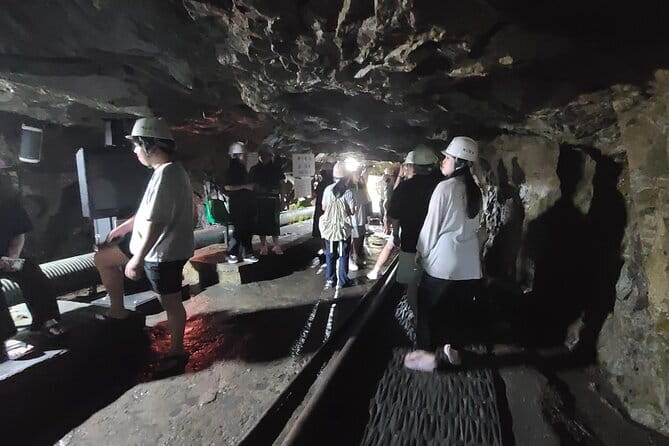
- Walking through the 2nd Tunnel
- Taking the monorail to Cheorwon Peace Observatory
- Woljeongri Station and its ruined train
- What the private format adds
- Is $245.29 a fair price?
- Who should book this experience?
- Should you book the Cheorwon DMZ tour?
- FAQ
- How long does the tour take?
- Where does the tour take place?
- Is pickup available?
- Is this a private tour?
- Do you need to change to a group tourist bus?
- What is included in the price?
- Is lunch included?
- How close does the 2nd Tunnel come to the border?
- Can you cancel for a full refund?
Key points to know before you book
- The 2nd Tunnel reaches within 300 meters of the Military Demarcation Line, giving you a direct sense of how close the underground route came to the border.
- You stay in your own tour vehicle while entering the civilian-controlled area, following a lead vehicle in single file.
- The Cheorwon Peace Observatory uses a monorail, with views toward North Korean territory, the DMZ ecosystem, and major Korean War battle sites.
- Woljeongri Station includes a bombed train wreck, a stark reminder of the Korean War’s destruction.
- The tour is private, so only your group participates, making it easier to ask questions and keep the day personal.
- Lunch is not included, and you should allow 15,000 Korean won per person for it.
Why this Cheorwon DMZ tour feels different
Many DMZ visits focus on the best-known sites near Seoul. This tour heads to Cheorwon, a more rural part of the border area, and builds the day around military remains, war memory, and the continuing wish for Korean reunification.
That setting matters. The DMZ has been largely untouched by people for more than 70 years. As a result, it has become a protected home for cranes, migratory birds, and other animals. You are not simply looking at a political boundary. You are seeing an area where military separation has also allowed nature to continue with little human disturbance.
The day lasts about eight hours, including transportation from Seoul. That makes it a serious outing rather than a quick photo stop. I would choose this experience if you want time to understand what you are seeing, not just collect a picture beside a border sign.
The tour is private, which is another major advantage. Only your group takes part, so you can ask about the Korean War, the tunnel, the border, or reunification without competing with a large crowd. Guides Jun and Moon are praised for sharing the history with feeling, while Wendy receives strong praise for keeping the day personable and active.
There is still a tradeoff. The price is high for one day, especially when lunch is extra. You are paying for private transportation, admission, the monorail, and a more personal format. If you simply want a basic DMZ visit, cheaper choices may exist. If you want Cheorwon’s particular sites and a private guide, the cost is easier to justify.
More DMZ and border tours:
- Best DMZ Tour Korea from Seoul (Red Suspension Bridge Optional)
★ 5.0 · 41,422 reviews - DMZ Tour: 3rd Tunnel, Option(Suspension Bridge, Boat) from Seoul
★ 5.0 · 21,373 reviews - DMZ tour south Korea from Seoul (NK experience hall, defector)
★ 5.0 · 20,599 reviews
Registration at the Cheorwon DMZ Peace Center
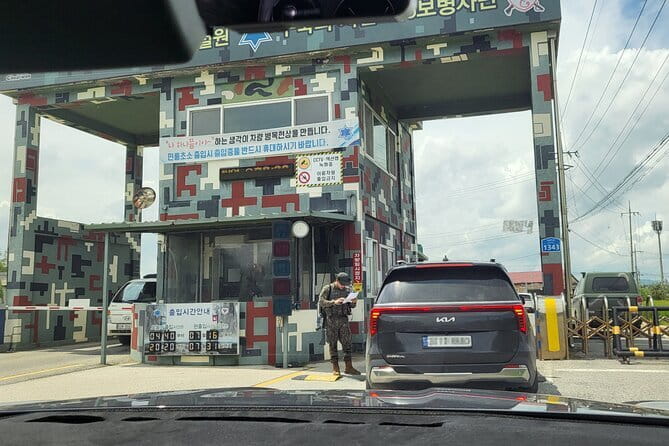
The first formal stop is the Cheorwon DMZ Peace Center. This is where the vehicle license number and visitor names are registered before the group enters the civilian-controlled area.
This procedure is important because the tour does not operate like a normal open-road sightseeing trip. Access is controlled, and the vehicle must be registered before continuing. You should expect the border portion to follow official rules and instructions closely.
The practical benefit is that you remain with your own vehicle. You do not need to leave it and transfer to a separate group tour bus, as is required on some other DMZ routes. Your vehicle follows a lead vehicle in single file through the controlled zone.
That arrangement gives the day a private, less fragmented feel. It also means you can stay with your guide and your own group throughout the visit. For families or small groups, this can be much more comfortable than being separated into a large bus with unfamiliar people.
The vehicle includes air conditioning and bottled water. Pickup is offered, and confirmation is provided at booking. The tour also accepts mobile tickets, which keeps the practical side simple.
Walking through the 2nd Tunnel
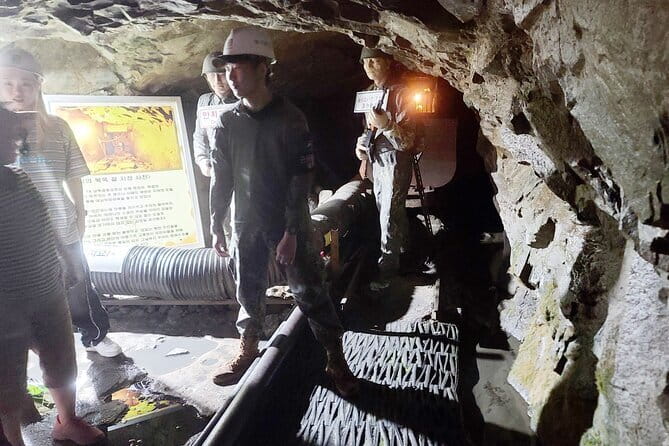
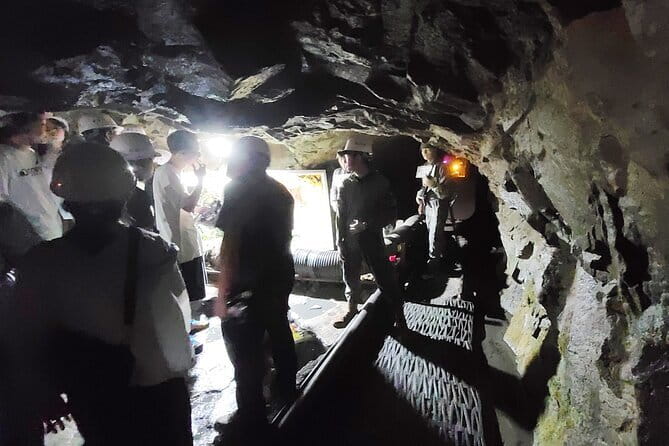
The 2nd Tunnel was found on March 24, 1975, after two soldiers reported hearing explosions during sentry duty on November 20, 1973. Those reports led to excavation and the discovery of a passage built by North Korea for possible military use.
The tunnel is described as twice longer and deeper than the 3rd Tunnel. More striking still, the route open to the public reaches an ending point only 300 meters from the Military Demarcation Line.
That distance gives the visit its force. You are not viewing a military map from a comfortable distance. You are underground, standing inside a passage that was constructed to move soldiers toward the South. The physical setting helps explain why tunnel discoveries created such alarm during the Cold War.
You can walk inside up to the permitted ending point. Expect the tunnel itself to be the focus, rather than a polished museum-style attraction. The value comes from the original military purpose and the chance to understand the engineering and danger involved.
Your guide adds essential context here. Without explanation, a tunnel can become just a narrow passage and a memorable photograph. With the history of the excavation and its connection to the border, the visit becomes a lesson in how the Korean conflict continued after the 1953 armistice.
This stop may not suit everyone equally. Anyone uncomfortable with enclosed underground spaces should think carefully before booking. The supplied information does not describe the walking conditions in detail, so you should be prepared for a physically active visit inside the tunnel.
Taking the monorail to Cheorwon Peace Observatory

The Cheorwon Peace Observatory is the scenic and geographic center of the tour. You can take a monorail to the top of the mountain, with a round-trip ticket included in the tour price.
The monorail is a welcome feature. It saves energy on the climb and gives the stop a clear viewing platform without asking you to make the ascent on foot. Once at the observatory, the view helps place the DMZ in physical terms.
From here, you can observe the surrounding ecosystem and several important sites connected with the Korean War and the division of Korea. These include the Battle of Blood Ridge, Kim Il-sung’s highland, the former fortress area of Gung-Ye Castle town, the Pyeonggang tableland, and a North Korean propaganda town inside the DMZ.
The Battle of Blood Ridge carries a heavy human cost. The supplied figures record the deaths of 1,250 North Korean soldiers and 1,030 South Korean soldiers during the battle. These numbers are not just military statistics. They remind you that the quiet hills around the observatory were once places of intense fighting.
The tour also points toward Kim Il-sung’s highland. According to the historical account presented on the tour, he cried for three days after losing the Cheorwon area. Details like this help show the emotional and political importance attached to the region by both sides.
The view toward the North Korean propaganda town offers another lesson. From a distance, political messages can become part of the scenery, but your guide can explain why the town exists and how it fits into the broader division of the peninsula.
I would give yourself time at the observatory. The point is not simply to look north and leave. Use the view to connect the tunnel, the battle sites, the border, and the present-day division into one story.
More tower and observatory tickets:
- Best Seoul City Tour (Gyeongbokgung Palace,Insadong,Namsan Tower)
★ 5.0 · 1,647 reviews - Seoul City Sightseeing Tour Including Gyeongbokgung Palace, N Seoul Tower, and Namsangol Hanok Village
★ 5.0 · 1,423 reviews - Seoul Highlights: Gyeongbok Palace, Insadong & N Seoul Tower
★ 4.7 · 726 reviews - Closest Observatory to DMZ & Suspension Bridge Tour from Seoul
★ 5.0 · 664 reviews
Woljeongri Station and its ruined train
Woljeongri Station is a brief but powerful stop. Behind the station building sits the wreck of a train bombed during the Korean War.
The train was used by the North Korean army and was bombed by United Nations forces. Its damaged remains have been left in place, turning the station into a physical record of wartime destruction.
This stop works because it is easy to understand. You do not need a long explanation to see what happened to the train. The twisted wreckage gives the war a human scale and provides a sharp contrast with the natural setting around the DMZ.
Woljeongri Station also connects the border to ordinary transportation. Railways normally link towns, workers, and families. Here, the ruined train shows how war broke those connections and left them unfinished.
The stop is not a long museum visit based on the information provided. Think of it as a focused historical pause, best understood with your guide’s explanation. If you prefer sites with extensive indoor displays, this may feel limited. If you value original remains and simple, direct reminders of the past, it earns its place on the route.
What the private format adds
A private tour changes the rhythm of the day. Only your group takes part, and your transportation remains with you as you enter the civilian-controlled area. You do not have to switch to a shared tourist bus for the border portion.
That matters in several ways. First, you avoid the delays and confusion that can come with moving between vehicles. Second, you can ask questions as they arise. Third, the guide can shape the historical explanation around your group rather than delivering a fixed speech to a large crowd.
The praised guides bring different names into the experience. Jun and Moon are specifically recognized for explaining the Korean War and expressing the pain connected with the conflict. Wendy is praised for being personable and making sure no part of the DMZ visit felt wasted.
I would consider this format especially useful for families, couples, and small groups with a strong interest in modern Korean history. It is also a good fit for anyone who prefers a quieter day and direct contact with a guide.
The private setup does not make the tour short. You still spend about eight hours on the outing, and the distance from Seoul means transportation takes a meaningful part of the day. That is normal for Cheorwon, but you should not book it if you want a quick half-day activity.
Is $245.29 a fair price?
At $245.29 per person, this is not a budget excursion. The price includes private transportation, an air-conditioned vehicle, bottled water, DMZ admission, and the round-trip monorail ticket.
Lunch is separate at 15,000 Korean won per person. That extra cost is modest compared with the tour price, but you should include it when working out your day’s budget.
The value depends on what you want. If your goal is simply to see the DMZ with minimal explanation, this tour may feel expensive. If you want the 2nd Tunnel, Cheorwon Observatory, Woljeongri Station, private transportation, and a guide who can explain the emotional side of the Korean War, the package offers more than a basic border excursion.
The private format is the key reason the price can make sense. You are not paying only for admission. You are paying to keep your own vehicle, avoid a bus transfer, and have a guide focused on your group.
Group discounts may be available, which could improve the value for a larger party. Since only your group participates, families and friends can also treat the tour as a shared history lesson rather than a standard group outing.
Who should book this experience?

I would recommend this tour to people who want a serious look at the Korean War and the divided peninsula. It is particularly suitable for:
- Families with children who can engage with historical explanations
- Small groups wanting a private guide and vehicle
- Visitors interested in military history and Korean reunification
- People who want to see Cheorwon rather than only the most familiar DMZ stops
- Anyone who values original sites, such as the tunnel and bombed train
The tour is also educational for children, provided they are comfortable with the subject matter and the physical setting of the tunnel. Young Korean students visit the DMZ each year for lessons about the Cold War, and this route offers that same link between classroom history and real places.
I would be more cautious if you want a relaxed countryside tour with little walking or military subject matter. The day centers on war, separation, and loss. Its power comes from that seriousness.
Free cancellation is available if you cancel at least 24 hours before the start time. Changes or cancellations made within 24 hours are not accepted for a refund.
Should you book the Cheorwon DMZ tour?
Book it if you want a private, detailed, and emotionally grounded DMZ visit. The 2nd Tunnel comes remarkably close to the Military Demarcation Line, the observatory connects the view with major battle sites, and Woljeongri Station supplies a stark final image of war’s damage.
Skip it if the $245.29 price feels too high or if you only want a quick border photo. For the right reader, though, this is a worthwhile full-day history outing from Seoul, with strong guiding, a useful private format, and sites that give the Korean division real physical weight.
FAQ
How long does the tour take?
The tour lasts approximately eight hours.
Where does the tour take place?
The tour is based in Seoul and visits Cheorwon-gun, the 2nd Tunnel, Cheorwon Peace Observatory, and Woljeongri Station.
Is pickup available?
Yes, pickup is offered.
Is this a private tour?
Yes. Only your group participates in the activity.
Do you need to change to a group tourist bus?
No. You enter the civilian-controlled area in your own tour vehicle and follow a lead vehicle in single file.
What is included in the price?
The tour includes an air-conditioned vehicle, private transportation, bottled water, DMZ admission, and a round-trip monorail ticket.
Is lunch included?
No. Lunch costs 15,000 Korean won per person.
How close does the 2nd Tunnel come to the border?
The tunnel visit reaches an ending point 300 meters from the Military Demarcation Line.
Can you cancel for a full refund?
Yes, if you cancel at least 24 hours before the experience start time. Cancellations made less than 24 hours before the start time are not refunded.
Just added around Seoul
- Seoraksan National Park & Nami Island★ 4.5 · 3 reviews
- Strawberry Picking, Winter Sled with Eobi Ice Valley from Seoul★ 4.5 · 3 reviews
- Seoul Full Day small group Tour★ 5.0 · 3 reviews
- Seoul Korean BBQ Dinner Experience with Secret Food Tours★ 5.0 · 3 reviews
- Rice Wine Tasting with Sommelier – Finest Makgeolli (& Soju)★ 5.0 · 3 reviews
- Majang Meat Market Experience: Private Tour with Han-woo Beef BBQ★ 5.0 · 3 reviews
- Seoul: Alpaca World and Nami Island (with Garden / Railbike)★ 5.0 · 3 reviews
- Max Out Seoul: Must Visit City Highlights Panoramic Day Tour★ 5.0 · 3 reviews
DMZ & Border Tours, compared.

Best DMZ Tour Korea from Seoul (Red Suspension Bridge Optional)
Read our review →
DMZ Tour: 3rd Tunnel, Option(Suspension Bridge, Boat) from Seoul
Read our review →
DMZ tour south Korea from Seoul (NK experience hall, defector)
Read our review →
DMZ Insider Tour: 3rd Tunnel, NK Defector Meet & Red Bridge
Read our review →

Signature DMZ Tour: Exclusive Defector Talk & Suspension Bridge
Read our review →
Thrilling Korean DMZ 3rd Tunnel Tour from Seoul + Red Bridge Rush
Read our review →DMZ Past and Present: Korean Demilitarized Zone Tour from Seoul
Read our review →Browse the lists this tour appears in