
Reviewed · HANOK VILLAGE & FOLK CULTURE
Hwaseong Fortress and Korean Folk Village Tour from Seoul
History gets room to breathe here. This full-day outing pairs Hwaseong Fortress in Suwon with the Korean Folk Village, giving you two different views of Korea’s Joseon period: one military and royal, the other domestic and hands-on. I like the comfortable coach transport from Seoul and the chance to see artisans, performances, and traditional homes in one day. The main drawback is that the guide experience can vary, and the lunch arrangements are not completely clear.
I also like the sensible order of the day. You visit the fortress in the morning, while you are fresh for walking along its walls, then spend the afternoon at the folk village, where the pace is more flexible. Guides such as Richard have earned praise for clear explanations, useful Seoul tips, and kind service, but one account describes a guide who knew little about the fortress.
At $91 per person, the tour can be good value if you want hotel pickup, transport, admission, and an English-speaking guide without arranging the day yourself. It is less appealing if you prefer long independent visits, quiet museum time, or the freedom to stop wherever you like.
In This Review
- Key points to know before booking
- Two very different sides of Joseon Korea
- Morning at Hwaseong Fortress in Suwon
- Why the fortress guide matters
- The Korean Folk Village after lunch
- Craft workshops, performances, and old homes
- How much free time will you get?
- Transport, pickup, and the return to Seoul
- Is $91 a fair price?
- Who should book this day trip?
- Final verdict: a useful Seoul side trip with a few checks
- FAQ
- How long does the tour last?
- What time does the tour start?
- Does the tour pick me up at my Seoul hotel?
- Where does the tour finish?
- Is Hwaseong Fortress a UNESCO World Heritage site?
- How far is Hwaseong Fortress from Seoul?
- Is admission included?
- Is lunch included?
- What food is available at the Korean Folk Village?
- How large is the tour group?
- Does the tour include an English-speaking guide?
- Do the village performances run every day?
- Is the tour suitable for people with limited fitness?
- Can I cancel for a full refund?
Key points to know before booking
- Two major sights in one day: See Suwon’s UNESCO-listed fortress in the morning and the Korean Folk Village in the afternoon.
- A small group on paper: The maximum is nine people, though one booking had only two participants and felt more like a private tour.
- Richard received especially warm praise: He was described as attentive, clear, helpful, and generous with food and Seoul advice.
- The folk village is more than old houses: You may see nongak music, tightrope acrobatics, martial arts on horseback, traditional weddings, and working craft shops, depending on the date.
- Lunch details need checking: The description refers to bibimbap at the market, but the formal inclusions say lunch is not included.
- The return point may be Myeongdong Station: Pickup is offered from your Seoul hotel, but drop-off information does not consistently promise hotel return.
Two very different sides of Joseon Korea
This outing works because the two stops complement each other. Hwaseong Fortress gives you grand walls, gates, artillery towers, and royal ambition. The Korean Folk Village shifts the focus to homes, food, craft work, music, and ordinary routines.
The contrast helps you understand the Joseon period in a way that a single palace visit cannot. At the fortress, you learn how power and defense shaped a city. At the folk village, you see how people lived, worked, worshipped, and celebrated.
The tour lasts about eight hours, including the drive from Seoul to Suwon and the return journey. That makes it a full day rather than a quick side trip. I would set aside the rest of your evening for an easy meal near your hotel, especially if you spend much of the day walking.
More hanok village visits:
- Seoul: Gyeongbok Palace, Bukchon Village, and Gwangjang Tour
★ 4.9 · 2,321 reviews - Seoul City Sightseeing Tour Including Gyeongbokgung Palace, N Seoul Tower, and Namsangol Hanok Village
★ 5.0 · 1,423 reviews - Seoul: Gyeongbok Palace, Bukchon Village, and Gwangjang Tour
★ 5.0 · 1,044 reviews
Morning at Hwaseong Fortress in Suwon
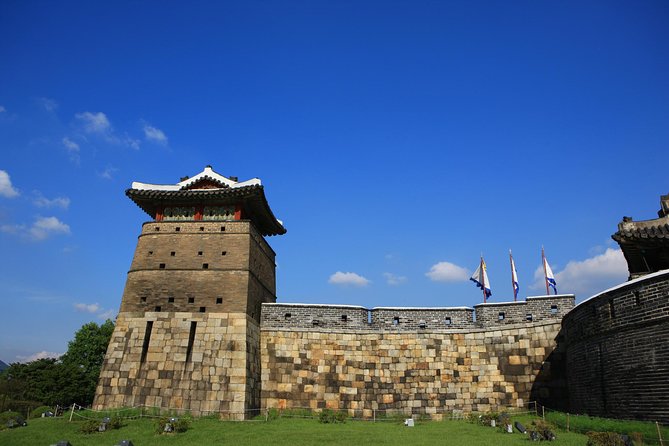
Hwaseong Fortress sits about 30 kilometers from Seoul, in Suwon. The coach ride gives your guide time to explain the site before you arrive, which is useful because the fortress makes more sense once you know why it was built.
Construction took place from 1794 to 1796, near the end of the Joseon Dynasty. King Jeongjo built the fortress partly to honor his father and partly to develop Suwon as a strong, independent city with its own economic base. This was not simply a defensive wall. It was also a statement about royal duty, planning, and the future of the city.
Once you leave the coach, the route takes you along sections of the fortified walls and to features such as gates and artillery towers. The official description lists about one hour at the fortress, though the entire stop may vary with traffic, weather, walking pace, and the guide’s plan.
You should expect some uphill and uneven walking. The fortress is linked with Paldalsan Mountain, so this is not a flat museum visit. You do not need an athlete’s fitness level, but the tour asks for moderate physical fitness. Wear shoes that can handle paved paths, slopes, and changing weather.
The architecture is the main attraction. Stone walls, defensive structures, gates, and lookout points show how late Joseon builders combined practical military needs with careful design. You may find the visit more rewarding if you listen closely to the guide’s explanation rather than treating it as a photo stop.
The fortress also has performances on some days, and Suwon holds a cultural festival each fall. The supplied information does not promise a particular performance during this tour, so treat those events as a possible bonus rather than part of the guaranteed schedule.
Rain can affect the morning. One guest had an enjoyable visit with Richard, but a sudden downpour shortened the day. Bring rain protection if the forecast looks uncertain. A wet fortress wall is not the place to discover that your shoes have no grip.
Why the fortress guide matters
Hwaseong is a site where a good guide adds real value. Without context, you see walls and towers. With clear explanations, you can understand how the fortress protected the city, why its location mattered, and how it fit into King Jeongjo’s plans.
This is also where the tour’s mixed guide feedback matters most. Richard was praised for explaining the site clearly and taking care of practical needs. Another guide was friendly and interested in the group but reportedly knew little about the fortress. That difference could shape your morning more than the vehicle or admission ticket.
The operator is Kim’s M&T, and the tour promises a professional English-speaking guide. Still, I would book this tour mainly for the convenience of the combined route, not on the assumption that every guide will provide a specialist-level history lesson.
The Korean Folk Village after lunch
After Hwaseong Fortress, the coach continues to the Korean Folk Village. The village opened in 1974 and uses more than 260 restored traditional houses to show aspects of late Joseon life. Homes from different regions were brought together and fitted with household goods and objects connected with past daily life.
This stop feels less formal than a palace or fortress. You walk between traditional houses, workshops, market areas, and performance spaces. The point is not only to look at buildings. It is to see how food, tools, clothing, work, music, and belief shaped everyday life.
The market is meant to be the lunch stop. Bibimbap, a rice dish with meat and vegetables, is identified as the typical meal. You can also find Korean rice cakes and traditional liquor for an additional charge.
Here is the important catch: the overview says a Korean-style lunch is included, but the formal list of exclusions says food and drinks are not included and specifically lists lunch as excluded. That is a meaningful difference at a $91 price point. Confirm the lunch arrangement before booking, and carry money for food and optional market purchases.
A few more trips of this kind worth comparing:
- Best DMZ Tour Korea from Seoul (Red Suspension Bridge Optional)
★ 5.0 · 41,422 reviews - DMZ Tour: 3rd Tunnel, Option(Suspension Bridge, Boat) from Seoul
★ 5.0 · 21,373 reviews - DMZ tour south Korea from Seoul (NK experience hall, defector)
★ 5.0 · 20,599 reviews - Seoul: DMZ Tour with Optional Suspension Bridge
★ 4.8 · 5,277 reviews
Craft workshops, performances, and old homes
The village’s best feature is its range. You can look inside traditional houses, then watch an artisan work with pottery, baskets, bamboo, paper, brass, fans, musical instruments, or embroidery. These workshops give the old buildings a practical purpose.
The village also presents folk customs and staged events. Nongak, or farmer’s music, may be performed, and jultagi features tightrope acrobatics. Depending on the season, you might also see martial arts on horseback or a traditional wedding ceremony.
Do not assume every show will run on every visit. One account describes a guide who hurried the group and did not seem interested in stopping for the performances, while the shows were apparently canceled that day. Weather, scheduling, and seasonal programming can change what is available.
If performances matter to you, say so early in the day. Ask your guide about the schedule and make it clear that you want time to watch. The village is large enough that following a fast-moving guide can mean missing the very activities that make the stop special.
The museum area also receives particular praise and may suit you if you want more explanation than the outdoor houses provide. The village includes a family-friendly theme park with 15 attractions, but this tour is focused on traditional culture, not rides. You should not expect free time to cover every corner.
How much free time will you get?
This is a guided sightseeing day, not an open-ended visit. The guide leads you through both major sites, and one private-tour booking noted that there was less independent time for shopping or wandering than expected.
That is not necessarily a flaw. If you are visiting Seoul for the first time, a guided route keeps the day organized and removes the need to work out transport between Seoul, Suwon, and the folk village. You also get background as you go.
Still, you should tell the guide what matters to you. If you want craft demonstrations, museum time, market browsing, or performances, mention it before the group moves on. A small group gives you a better chance of asking for adjustments, especially when only two people are booked.
The stated maximum is nine people. That is much more personal than a large coach group, although the actual number depends on bookings. A small party can make the day friendly and flexible, but it can also feel more dependent on one guide’s pace and interests.
Transport, pickup, and the return to Seoul
Round-trip transport is one of the strongest practical reasons to choose this experience. Hwaseong Fortress is outside central Seoul, and combining it with the Korean Folk Village would require planning separate routes and admissions on your own.
The vehicle is described as a comfortable, climate-controlled coach or van. A small group may receive a van rather than a full-size coach. One guest specifically praised the vehicle and found the ride comfortable.
Hotel pickup is offered, with an advertised start time of 8:30 a.m. Confirmation is provided when you book. The end point needs more attention: the included services specify drop-off at Myeongdong Station, while the broader description refers to return hotel transport. Confirm your exact pickup and return points before payment, especially if your hotel is outside central Seoul.
The distance and traffic can affect the schedule. Seoul roads may be slow, and a sudden rainstorm can shorten outdoor touring. Keep your evening plans loose.
Is $91 a fair price?
At $91 per person, I see the price as reasonable for someone who values convenience. The fee combines transportation, hotel pickup, admission to both attractions, and an English-speaking guide. It also saves you from arranging two out-of-town stops in one day.
The value drops if lunch is not included, as the exclusions suggest. Add your meal, rice cakes, drinks, and any market purchases to the real cost. Admission is included, but optional food and extra purchases are not.
You may get particularly good value from this tour if you are staying in Seoul for a short time. It covers a UNESCO World Heritage site and a large cultural attraction in one day. For a longer stay, you could visit Suwon independently and spend more time at the fortress, or give the folk village an entire afternoon at your own pace.
The tour requires at least two people per booking and accepts children older than age two at the adult price. Children age two and under are the exception. The walking and full-day schedule may suit families well, but young children may find the long transport and outdoor sections tiring.
Who should book this day trip?
I would choose this tour if you want a structured cultural day outside Seoul and prefer not to manage trains, buses, admission tickets, and timing yourself. It is especially useful for first-time visitors who want more than central Seoul’s palaces and shopping streets.
It also suits you if you enjoy seeing traditional crafts and staged folk events, not just taking photos of old buildings. The two stops offer a useful mix of military architecture, royal history, domestic life, market food, and cultural performance.
I would hesitate if you want a slow, independent day. The schedule can feel rushed, particularly if performances are important to you or if the weather interferes. Guide quality is another variable. Richard received strong praise, but the guide’s depth of fortress knowledge may not be consistent.
Ask two questions before booking: Is lunch included on your date, and where exactly will you be dropped off? Those answers will tell you more about the practical value than the headline price.
Final verdict: a useful Seoul side trip with a few checks
Book this tour if you want to see Hwaseong Fortress and the Korean Folk Village in one organized day. The combination is strong, the transport is convenient, and the small-group limit can make the outing feel personal. Richard’s attentive manner and helpful Seoul advice are good examples of what the right guide can add.
Skip it if you want extensive free time, guaranteed performances, or a specialist history guide. The lunch wording is unclear, the return point needs confirmation, and the day may move quickly.
For most short Seoul visits, I think the tour is worth considering. Just confirm the food and drop-off details, wear solid walking shoes, and tell your guide which performances or workshops you most want to see.
FAQ
How long does the tour last?
The experience lasts approximately eight hours, including transportation between Seoul, Suwon, the Korean Folk Village, and the return point.
What time does the tour start?
The stated start time is 8:30 a.m.
Does the tour pick me up at my Seoul hotel?
Hotel pickup service is offered. Your booking confirmation should provide the exact pickup details.
Where does the tour finish?
The included information specifies drop-off at Myeongdong Station. The broader description also refers to hotel return transport, so confirm the exact end point before booking.
Is Hwaseong Fortress a UNESCO World Heritage site?
Yes. Hwaseong Fortress was designated a UNESCO World Heritage Site on December 12, 1997.
How far is Hwaseong Fortress from Seoul?
The fortress is about 30 kilometers from Seoul.
Is admission included?
Admission tickets for Hwaseong Fortress and the Korean Folk Village are included.
Is lunch included?
The information is inconsistent. The description refers to bibimbap at the Korean Folk Village market, but the formal exclusions list lunch and food as not included. Confirm this before booking.
What food is available at the Korean Folk Village?
The market offers bibimbap, Korean rice cakes, and traditional liquor. Rice cakes and liquor may cost extra.
How large is the tour group?
The maximum group size is nine people. A minimum of two people is required for a booking.
Does the tour include an English-speaking guide?
Yes. An English-speaking guide is included.
Do the village performances run every day?
The village offers performances and seasonal events, but a specific performance is not guaranteed. Events can change with the season or other conditions.
Is the tour suitable for people with limited fitness?
The tour asks for a moderate level of physical fitness. You should expect walking at Hwaseong Fortress and around the folk village.
Can I cancel for a full refund?
You can cancel at least 24 hours before the start time for a full refund. Cancellations or changes made less than 24 hours before the start time are not accepted for a refund.
Just added around Seoul
- Seoraksan National Park & Nami Island★ 4.5 · 3 reviews
- Strawberry Picking, Winter Sled with Eobi Ice Valley from Seoul★ 4.5 · 3 reviews
- Seoul Full Day small group Tour★ 5.0 · 3 reviews
- Majang Meat Market Experience: Private Tour with Han-woo Beef BBQ★ 5.0 · 3 reviews
- Seoul Korean BBQ Dinner Experience with Secret Food Tours★ 5.0 · 3 reviews
- Rice Wine Tasting with Sommelier – Finest Makgeolli (& Soju)★ 5.0 · 3 reviews
- Max Out Seoul: Must Visit City Highlights Panoramic Day Tour★ 5.0 · 3 reviews
- Seongsu-dong Walking Tour: K-Pop, Culture, Cheer, Friends & Relax★ 4.5 · 3 reviews
Hanok Village & Folk Culture, compared.

Gyeongbok Palace, Bukchon Village, and Gwangjang Tour
Read our review →
Seoul City Sightseeing Tour Including Gyeongbokgung Palace, N Seoul Tower, and Namsangol Hanok Village
Read our review →Gyeongbok Palace, Bukchon Village, and Gwangjang Tour
Read our review →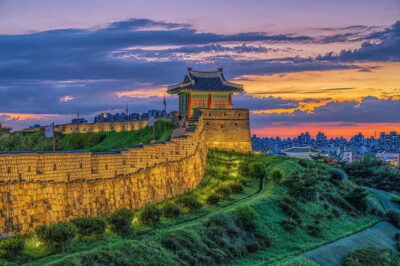
Suwon Hwaseong Fortress & Korean Folk Village Tour
Read our review →
Gyeongbok Palace and Bukchon Hanok Walking Tour
Read our review →
Best Walking Tour to Gyeongbok Palace Bukchon Hanok Village
Read our review →
Experience Korean Cooking in Modern Hanok Kitchen
Read our review →
Royal Seoul Cooking Class in a 100-Year-Old Hanok
Read our review →Browse the lists this tour appears in